
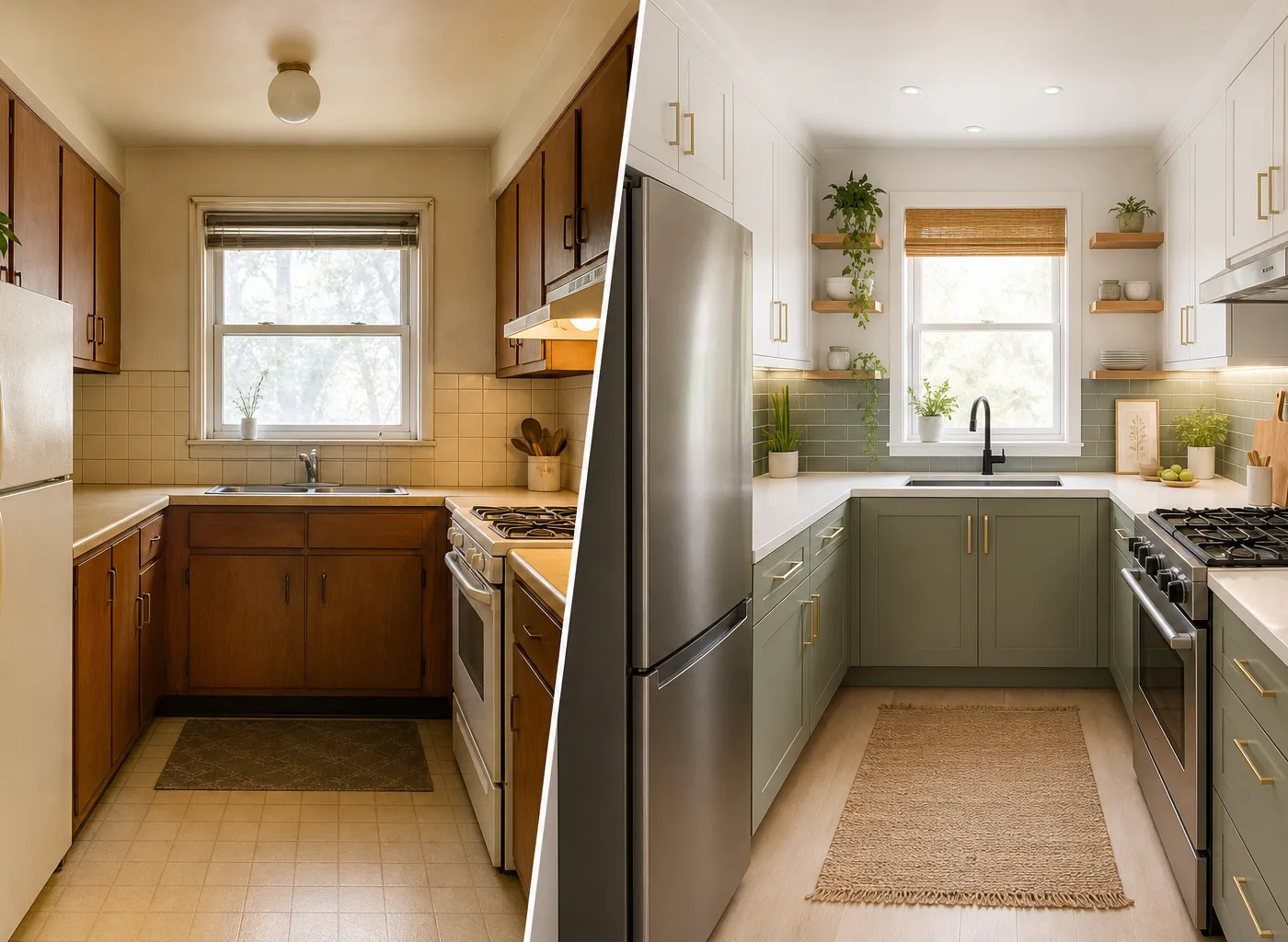
A small kitchen makeover on a budget does not require new cabinetry, moved plumbing, or a contractor-led renovation. In fact, compact kitchens often respond best to a focused set of affordable changes: better lighting, clearer counters, smarter storage, a more cohesive color palette, and a few finishes that look intentional.
The key is to solve the problems you notice every day before buying decorative extras. Is the room dark? Do the counters collect clutter? Are the cabinet doors dated but structurally sound? Does food storage feel chaotic? Addressing those issues can make a small kitchen feel larger, cleaner, and much more enjoyable to use—often for a fraction of the cost of a remodel.
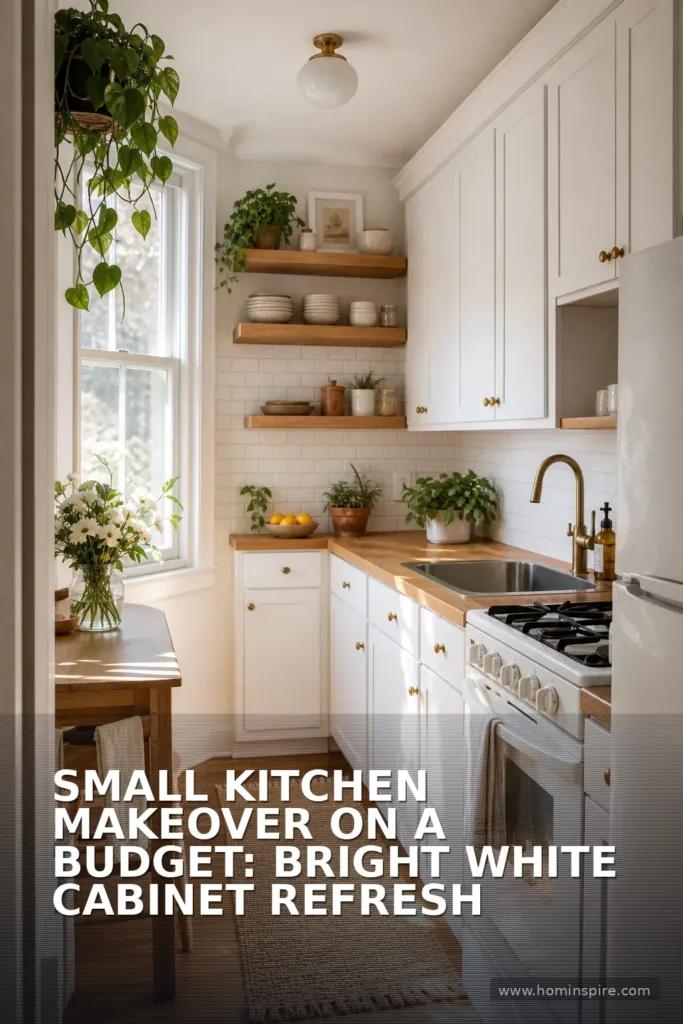
This guide walks through practical upgrades, realistic spending priorities, and design choices that deliver a polished result in a small footprint.
Start With a Simple Makeover Plan
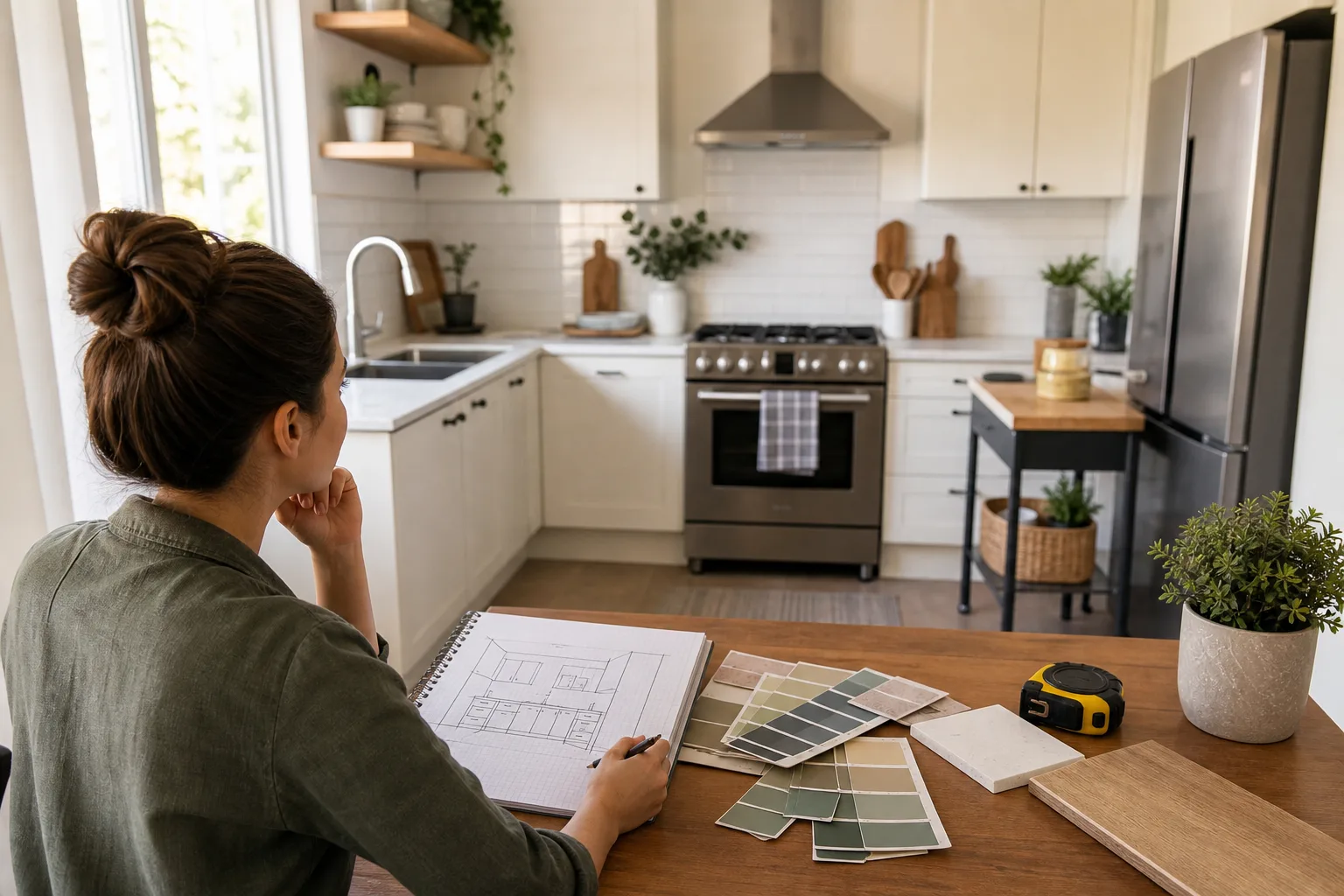
Budget makeovers work best when they are planned around function rather than a single trend. Before shopping, spend a few days noticing how you use the kitchen. Write down what slows you down, what looks messy, and what you would like to see every time you walk in.
Then divide the project into three categories:
- Must-fix issues: poor task lighting, broken hardware, inefficient storage, damaged caulk, or peeling paint.
- High-visibility updates: cabinet color, backsplash, countertops, faucet, and window treatments.
- Finishing touches: a runner, counter organization, plants, art, and styled open shelves.
Measure cabinets, walls, backsplash areas, and open floor space before ordering anything. In a small room, even a few inches matter. Measurements prevent expensive returns and help you avoid accessories that crowd the space.
Set a Budget by Impact, Not by Room Category
A modest budget can go surprisingly far when the largest portion is reserved for changes you will see and use daily. For example, a $500 to $1,500 makeover might allocate funds to paint, hardware, lighting, a peel-and-stick backsplash, storage organizers, and one focal upgrade such as a faucet or countertop refresh.
Keep 10 to 15 percent unassigned for supplies and surprises. Primer, painter’s tape, screws, caulk, outlet covers, fillers, and extra tile or flooring material are small costs that add up quickly.
1. Declutter First to Create Instant Visual Space
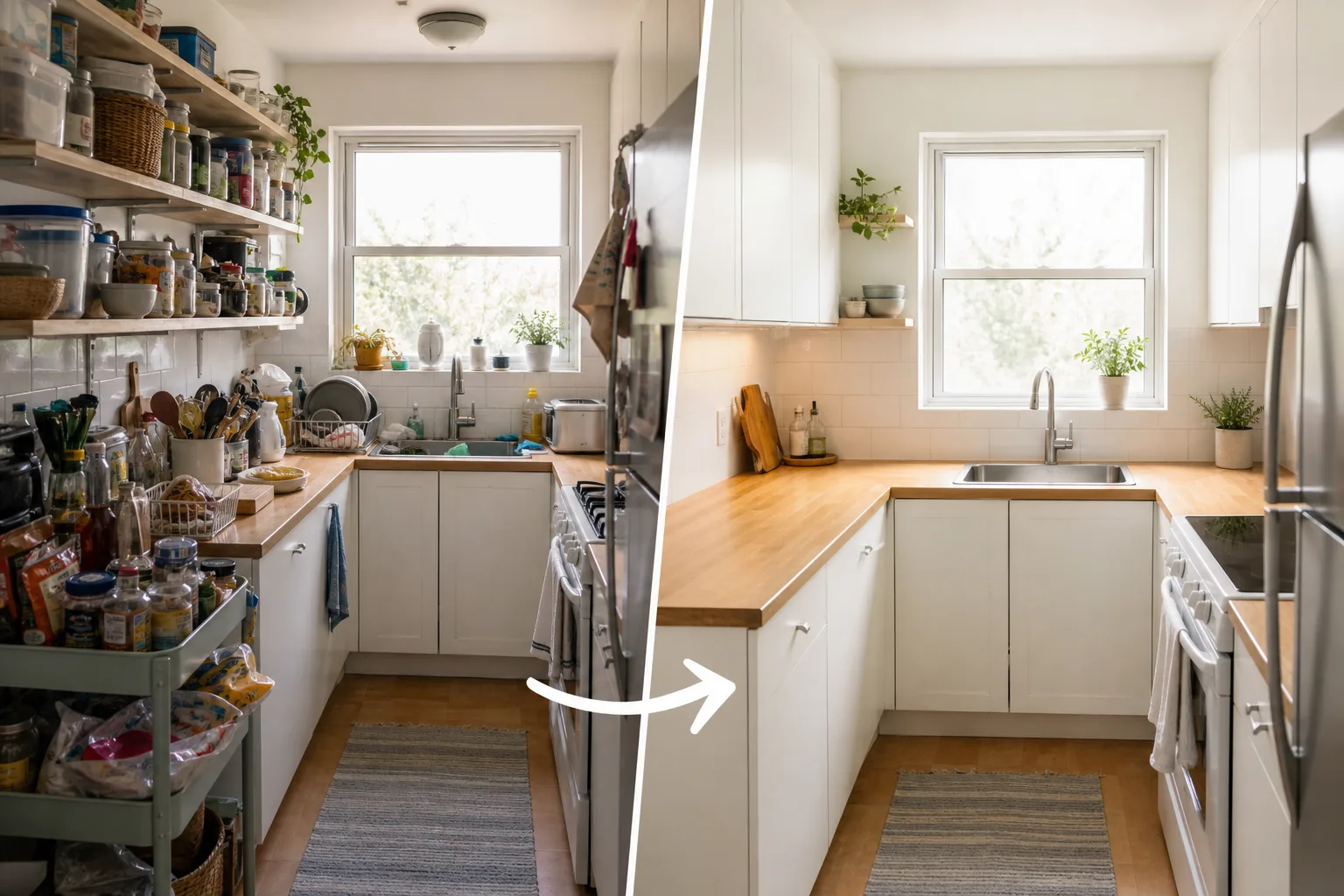
The fastest no-cost makeover is editing what stays out. Small kitchens look cramped when every appliance, utensil, and grocery item lives on the counter. Clear the work surfaces, then return only the items used nearly every day.
Choose a dedicated home for the coffee maker, toaster, cooking oils, and dish soap. Decanting every pantry item is not necessary; a few matching bins or trays can create order without making the kitchen feel overly styled. For more practical ways to keep surfaces attractive, see Kitchen Counter Decor Ideas Without Clutter.
A clear counter line helps the eye travel across the room, making limited square footage feel more open. It also gives new paint, hardware, or lighting a chance to stand out.
2. Paint Cabinets Instead of Replacing Them
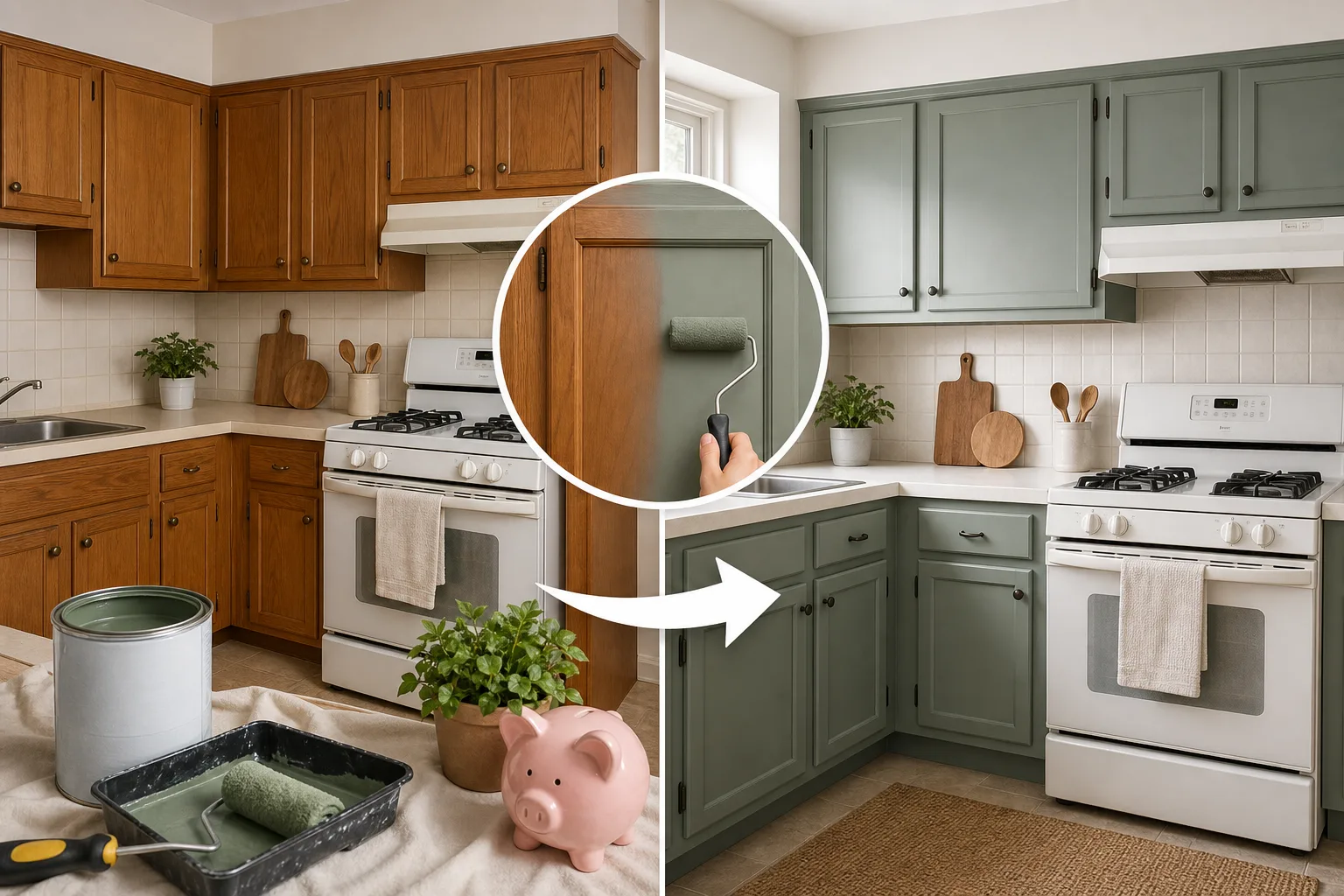
If cabinet boxes are sturdy and the layout works, painting the doors can be the most transformative budget upgrade. Replacement cabinets can consume most of a renovation budget, while paint changes the room’s dominant surface for comparatively little money.
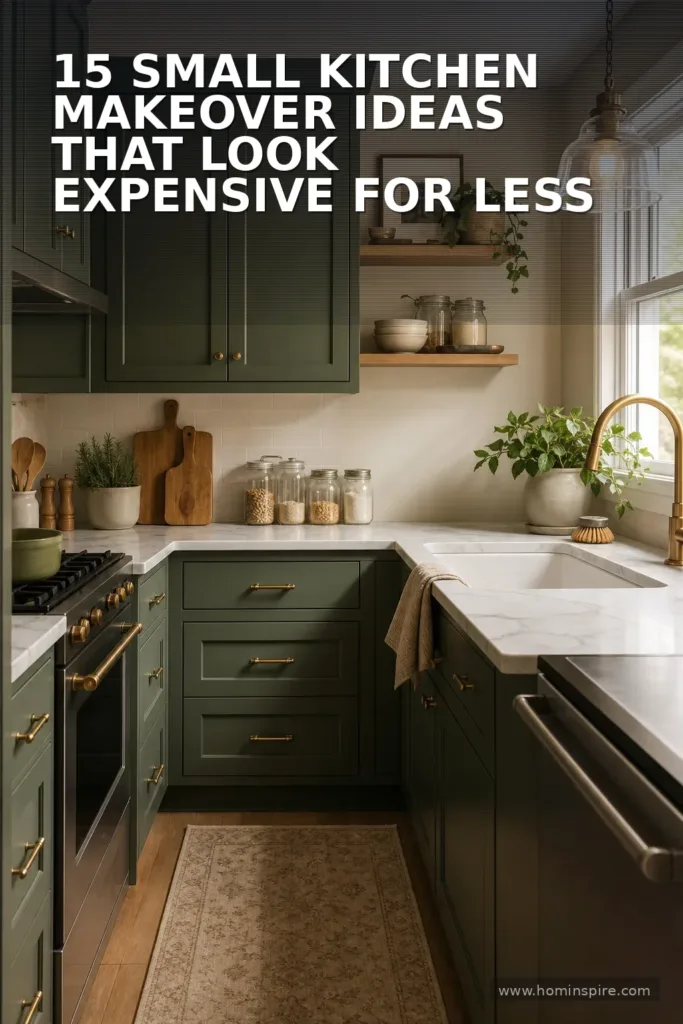
Soft white, warm greige, muted sage, dusty blue, and deep charcoal are popular choices, but the best color depends on the light in your kitchen. Dark cabinets can look sophisticated in a tiny kitchen when paired with pale walls, good lighting, and lighter counters. If the room receives little natural light, warm whites or light neutral colors usually make it feel more expansive.
For a durable DIY finish, remove doors and hardware, clean thoroughly with a degreaser, sand or degloss glossy surfaces, use a bonding primer, and apply cabinet-grade paint in thin coats. Allow full cure time before reinstalling doors. Rushing this step is one of the main reasons painted cabinets chip early.
If paint is not the right solution, consider other affordable refreshes in Kitchen Makeover Ideas Without Replacing the Cabinets.
3. Replace Hardware for a Custom Look
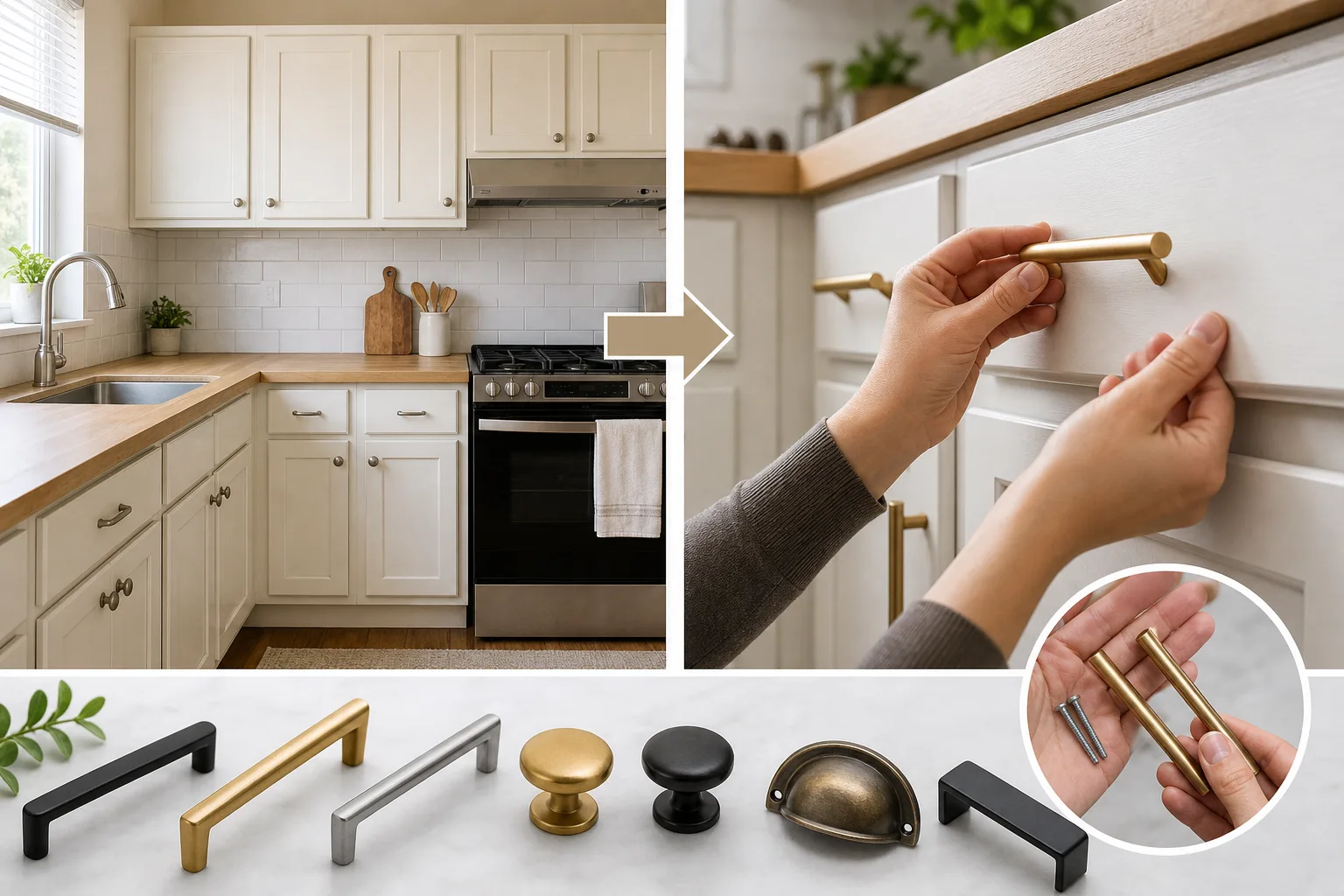
New knobs and pulls are a small detail with a big visual return. They can make plain cabinets look cleaner and more current, especially after painting. Matte black offers contrast against white or light wood cabinets; brushed brass brings warmth; brushed nickel is versatile and easy to match with existing stainless appliances.
Count every drawer and door before ordering. Standardizing the finish throughout a small kitchen creates a calmer look, but you can mix knobs on doors with pulls on drawers for a tailored effect. Confirm hole spacing on existing pulls so you do not create extra drilling or patching work.
For a cost-conscious approach, update only the most visible hardware first, such as upper cabinet doors and main drawers. A coordinated faucet or light fixture can later tie the finish together.
4. Upgrade Lighting in Layers
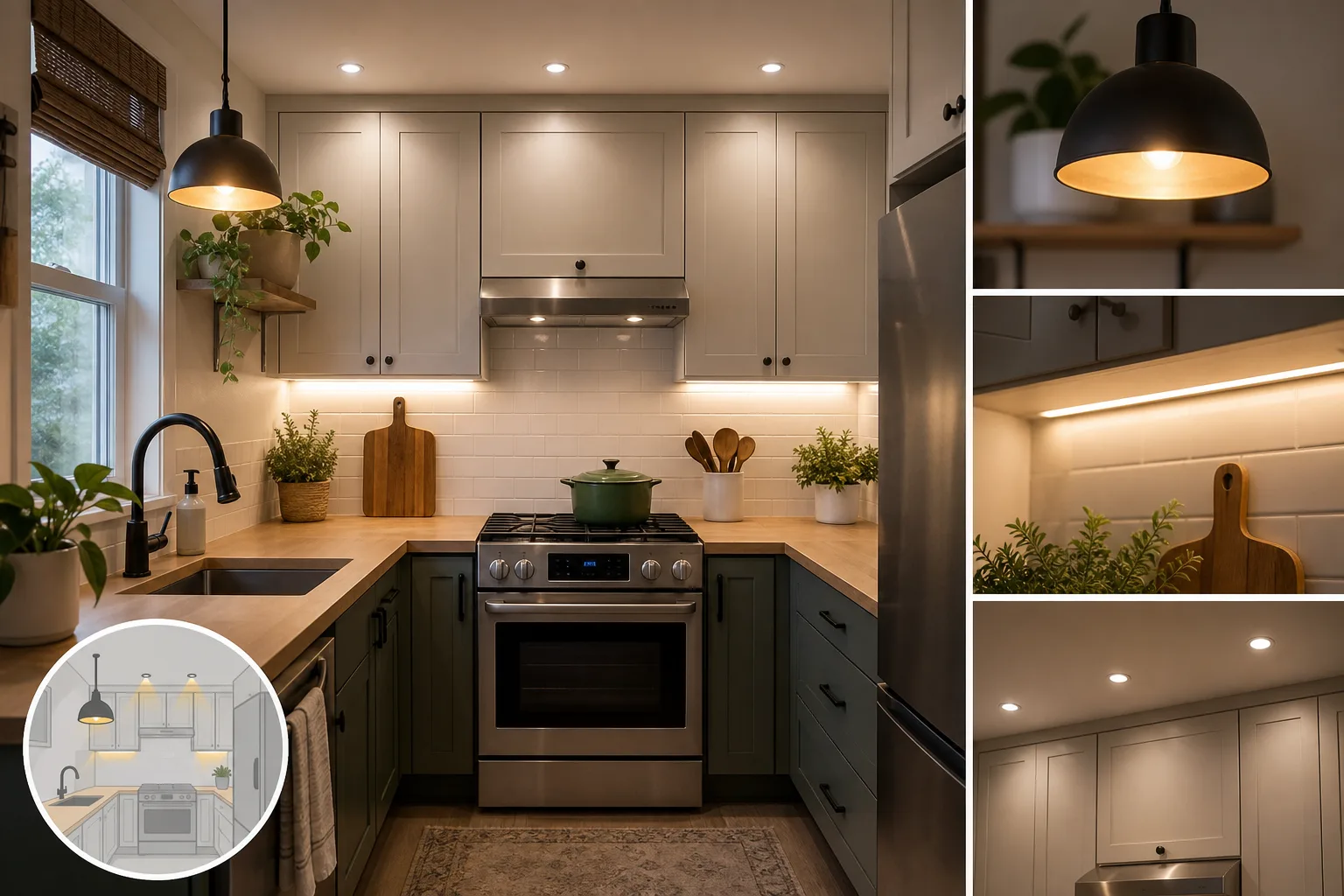
Lighting changes both the appearance and usability of a small kitchen. One ceiling fixture rarely provides enough illumination for chopping, cooking, and cleaning. Add light in layers whenever possible:
- Ambient lighting: a flush mount, semi-flush fixture, or updated ceiling light for overall brightness.
- Task lighting: plug-in or adhesive LED strips under upper cabinets for countertops.
- Accent lighting: a small lamp on a safe, dry counter corner or interior cabinet lighting for display areas.
Select bulbs around 2700K to 3000K for a warm, welcoming residential feel. A high color rendering index (CRI) also makes paint, food, and finishes look more accurate. In a low-light kitchen, brighter walls and under-cabinet lighting can feel more impactful than an expensive decorative fixture alone.
5. Add a Budget Backsplash With Big Personality
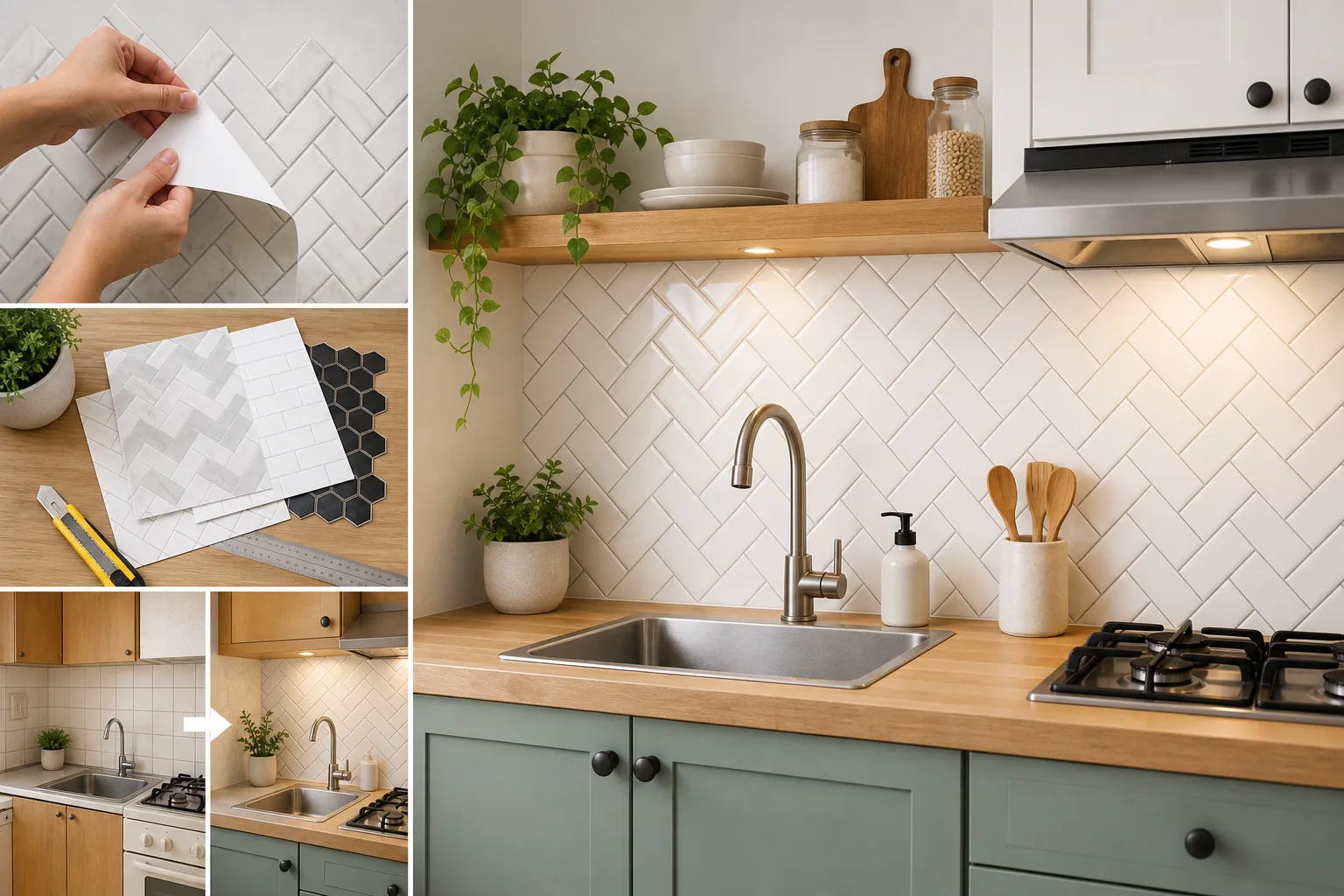
A backsplash is a natural focal point because it sits at eye level and occupies a contained area. Peel-and-stick tile, beadboard panels, painted beadboard, and removable backsplash products can offer an affordable upgrade, particularly for renters or homeowners testing a style before committing.
For the most polished result, start with a smooth, clean, dry wall. Align the first row carefully, use a level, and plan cuts around outlets before applying adhesive. Simple white subway tile patterns, warm off-white zellige-look sheets, or small geometric designs can work well in a compact kitchen. Avoid overly busy patterns if the counters, flooring, and cabinet color already compete for attention.
Always check heat and moisture ratings, especially behind a range. If you are renting, review lease rules and choose a removable product designed to come off cleanly.
6. Refresh Countertops Without a Full Replacement
Replacing counters is not always necessary for a small kitchen makeover on a budget. If the surface is structurally sound, countertop refinishing kits, carefully installed contact paper, or a new large cutting board can improve the look while you save for a permanent upgrade.
Countertop paint or epoxy kits require careful prep and adequate curing time. They may be cost-effective, but durability varies by product and use, so follow the manufacturer’s instructions closely. For an even simpler refresh, remove visual clutter, use one attractive tray for daily essentials, and replace worn caulk where the counter meets the backsplash.
A compact wood board placed near the prep zone can add warmth and protect a tired surface. Keep the rest of the counter open so the kitchen still feels spacious. Explore more organized styling in Kitchen Counter Tray Decor Ideas.
7. Make Storage Work Harder, Not Harder to Reach
Storage is often the real issue in a small kitchen. Before adding furniture, improve the capacity of the cabinets and walls you already have. Pull-out bins, shelf risers, drawer dividers, turntables, pot-lid organizers, and door-mounted racks can make awkward spaces functional.
Use vertical space deliberately. A narrow wall rail, slim shelving, or a magnetic knife strip can free a drawer and keep frequently used tools close to the prep area. Leave enough blank wall and counter space so storage solutions do not become visual clutter.
Renters have especially flexible options, including adhesive hooks, tension shelves, rolling carts, and freestanding drawer units. Read Renter Friendly Kitchen Storage Ideas Without Drilling for damage-conscious solutions, or browse Small Kitchen Storage Ideas for Renters for more ways to maximize a compact layout.
8. Create a Small, Organized Pantry Zone
You do not need a walk-in pantry to store food efficiently. Dedicate one cabinet, a rolling cart, or a shallow shelf unit to dry goods. Group items by use—breakfast, baking, snacks, pasta, canned goods—and use labeled bins only where they genuinely improve access.
Clear containers are useful for staples such as flour, rice, and cereal, but they are optional. The real goal is visibility and easy rotation, not a picture-perfect shelf. Store heavier items low, place everyday goods at eye level, and keep backups together so you know what you have.
If your kitchen lacks a traditional pantry, these hidden pantry ideas can help you uncover underused storage opportunities without crowding the room.
9. Use Color to Make the Kitchen Feel Larger
A limited palette makes a small kitchen feel deliberate rather than busy. Start with two or three main finishes: for example, warm white walls, light oak accents, and matte black hardware. Repeating these colors in the lighting, runner, cabinet hardware, and accessories creates cohesion.
Light colors reflect more light, but an all-white kitchen is not the only route to an airy look. A pale wall paired with natural wood, soft green lower cabinets, or a dark accent on one grounded surface can provide depth. Keep the biggest visual planes relatively simple, then add personality with removable items such as textiles, art, or ceramics.
For more space-conscious styling inspiration, visit Modern Small Kitchen Decor Ideas That Make Every Inch Look Stylish.
10. Choose a Runner That Adds Warmth Without Blocking Traffic
A washable runner can make a narrow kitchen feel more finished while softening hard flooring. Choose a low-pile option with a nonslip backing and leave clearance around cabinet doors, appliances, and major walkways. In a galley layout, a long runner visually emphasizes the length of the room and adds color without taking up counter space.
Look for a small-scale pattern or a muted vintage-inspired design that can hide minor spills. Avoid thick mats that become a tripping hazard or make doors difficult to open.
11. Update the Faucet and Small Fixtures
A faucet is a hardworking focal point, and a simple replacement can modernize the sink area immediately. A high-arc pull-down faucet is convenient for washing large pots, but confirm the height fits below upper cabinets or window trim. For a classic smaller sink, a compact single-handle model may be a better fit.
Coordinating the faucet with cabinet hardware is helpful, but exact matching is not mandatory. Brushed nickel, stainless steel, and chrome often coexist well when the overall palette is restrained. Replacing an outdated soap dispenser, switch plates, or a worn sink strainer can provide inexpensive finishing polish.
12. Add Open Shelves Carefully
Open shelving can make a small kitchen feel lighter, but it is not automatically more functional. Use it only if you can keep it edited and if you have enough closed storage for less attractive necessities. One or two short shelves are often plenty.
Display everyday items in a consistent color family: white dishes, clear glasses, wood boards, and a small plant, for example. Avoid stacking shelves with too many mugs, packages, or novelty decor. If you prefer a cleaner look, glass-front cabinet inserts or a single display ledge may offer the same airy effect with less maintenance.
13. Make Appliances Look Intentional
Small kitchens can quickly feel crowded with appliances. Keep only the ones you use frequently on the counter. Store occasional-use items in a lower cabinet, on a cart, or in another nearby closet if possible.
If replacing an appliance is necessary, prioritize compact models with dimensions that suit the layout. Counter-depth refrigerators, slim dishwashers, and combination microwave-vent units can preserve circulation in tight kitchens. Do not purchase a larger appliance simply because it is on sale; a poor fit can make the entire room less functional.
14. Finish With Minimal, Useful Decor
Decor should support the kitchen’s function, not consume its workspace. A small framed print, a low-maintenance herb plant near a bright window, a bowl of fruit, or a wood utensil crock can add warmth. Choose one or two moments rather than decorating every open surface.
Use trays to corral oils and spices near the cooktop, but keep them away from direct heat. A hand towel in a color repeated elsewhere in the room is another inexpensive way to make the design feel connected. The best small-kitchen decor leaves plenty of breathing room.
15. Know When to DIY and When to Hire Help
Painting, installing hardware, organizing cabinets, and applying many removable backsplash products are manageable DIY projects for many homeowners. Electrical work, gas lines, major plumbing changes, structural modifications, and some countertop installations are better left to licensed professionals.
Hiring help for one technical task can protect the rest of your budget. For instance, paying an electrician to safely install a new fixture may cost less than fixing a wiring mistake later. Get written estimates, confirm permits where required, and reserve DIY time for projects you can complete carefully.
A Sample Small Kitchen Makeover Budget
Here is one example of how a homeowner might distribute an $800 budget. Actual prices vary by region, material, and project scope.
- Cabinet paint, primer, rollers, and prep supplies: $180
- New hardware: $90
- Under-cabinet LED lighting and ceiling fixture: $120
- Peel-and-stick backsplash materials: $130
- Drawer organizers, shelf risers, and bins: $100
- Runner, towels, and minimal decor: $80
- Contingency fund: $100
If your budget is tighter, begin with cleaning, decluttering, paint, hardware, and organization. For additional affordable project ideas, see Budget Kitchen Makeover Ideas: 18 Affordable Upgrades That Make a Big Impact.
Common Budget Makeover Mistakes to Avoid
- Buying decor before solving storage: Pretty accessories will not fix a crowded, inefficient workspace.
- Using too many finishes: Limit metal tones, colors, and patterns so the small room feels calm.
- Skipping surface prep: Paint, adhesive tile, and refinishing products depend on clean, properly prepared surfaces.
- Blocking work zones: Keep landing space beside the sink, range, and refrigerator as clear as possible.
- Forgetting scale: Oversized pendants, bulky stools, and deep shelves can overwhelm a compact layout.
- Spending on temporary fixes without a plan: Choose reversible options intentionally, especially if a future renovation is likely.
Final Thoughts
The most successful small kitchen makeover on a budget is not about making the room look expensive. It is about making every inch feel useful, clean, and cohesive. Start with the changes that improve your daily routine, invest in visible upgrades such as paint and lighting, and keep decorative elements simple.
Even a weekend of decluttering, organizing, and updating hardware can shift the entire feel of the room. Add one project at a time, track spending, and let the kitchen’s function guide every decision. For broader planning inspiration, explore Small Kitchen Design Ideas on a Budget.
Frequently Asked Questions
What is the cheapest way to makeover a small kitchen?
The cheapest approach is to declutter, deep clean, organize cabinets, replace worn hardware, and repaint walls or cabinets if needed. These changes address the largest visual surfaces and can make the kitchen feel new without changing the layout.
Can I makeover a small kitchen for $1,000?
Yes. A $1,000 budget can often cover cabinet paint, hardware, basic lighting, storage organizers, a runner, and a peel-and-stick backsplash. Prioritize the updates that solve your biggest functional and visual problems first.
Should I paint cabinets in a small dark kitchen?
Painting cabinets can be an excellent choice if the cabinetry is in sound condition. Light warm neutrals usually brighten a dark kitchen, while deeper colors can work if you add strong lighting and keep walls and counters relatively light.
How can renters update a small kitchen on a budget?
Renters can use removable backsplash materials, adhesive lighting, tension shelves, rolling carts, peel-and-stick hooks, freestanding organizers, and temporary decor. Always check the lease and test removable products in an inconspicuous spot first.
What should I avoid in a small kitchen?
Avoid crowded counters, oversized furniture, too many competing finishes, deep open shelves, and decor that reduces prep space. In a small kitchen, clear circulation and accessible storage matter more than adding lots of accessories.
