
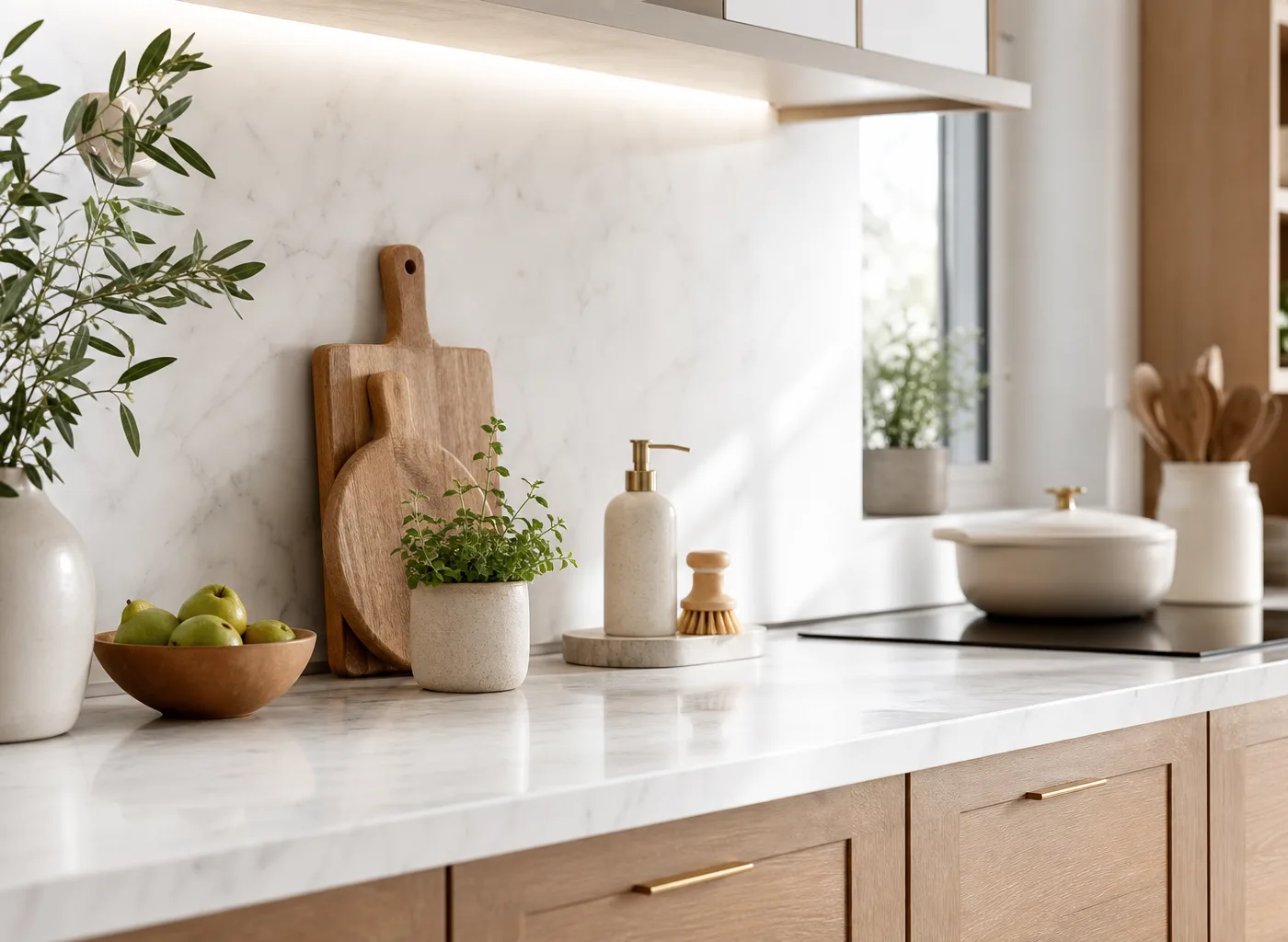
Kitchen counters work hard. They hold groceries, support meal prep, collect mail, and often become the first landing spot for everyday items. That is why decorating them can feel tricky: you want the room to look warm and finished, but you also need room to cook, clean, and live.
The best kitchen counter decor ideas without clutter are built around one simple principle: every item should either serve a useful purpose, add clear visual value, or ideally do both. Rather than filling every open surface, use a few intentional pieces, create dedicated work zones, and choose decor that is easy to move when it is time to cook.
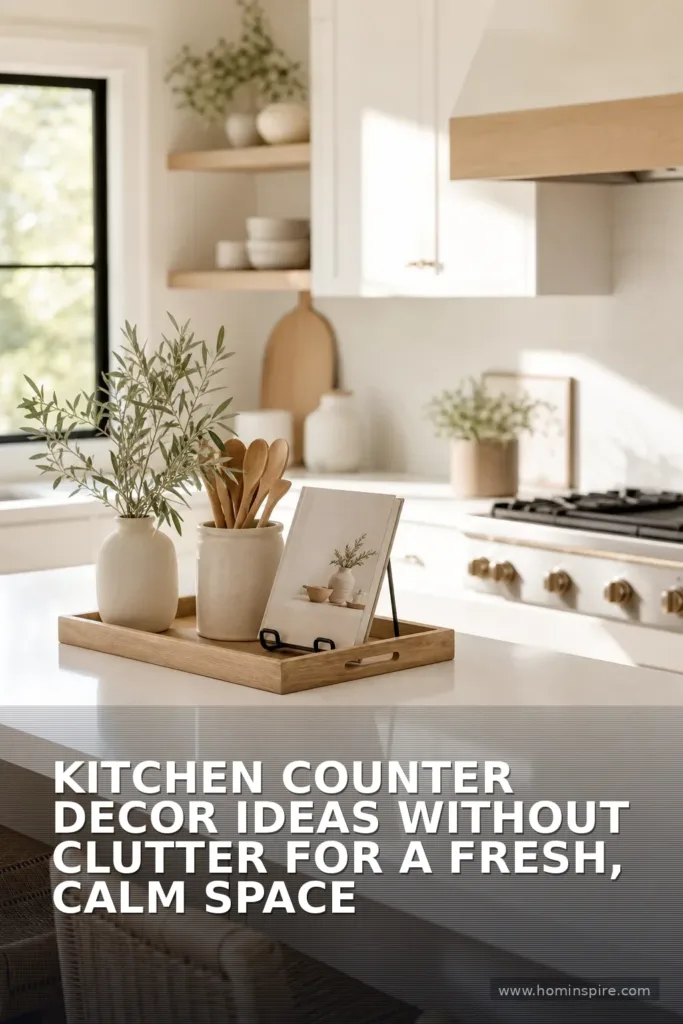
Whether you have a compact apartment kitchen, a busy family kitchen, or a large open-plan space, these practical ideas can help you create counters that feel styled, calm, and genuinely usable.
Start With a Clear-Counter Mindset
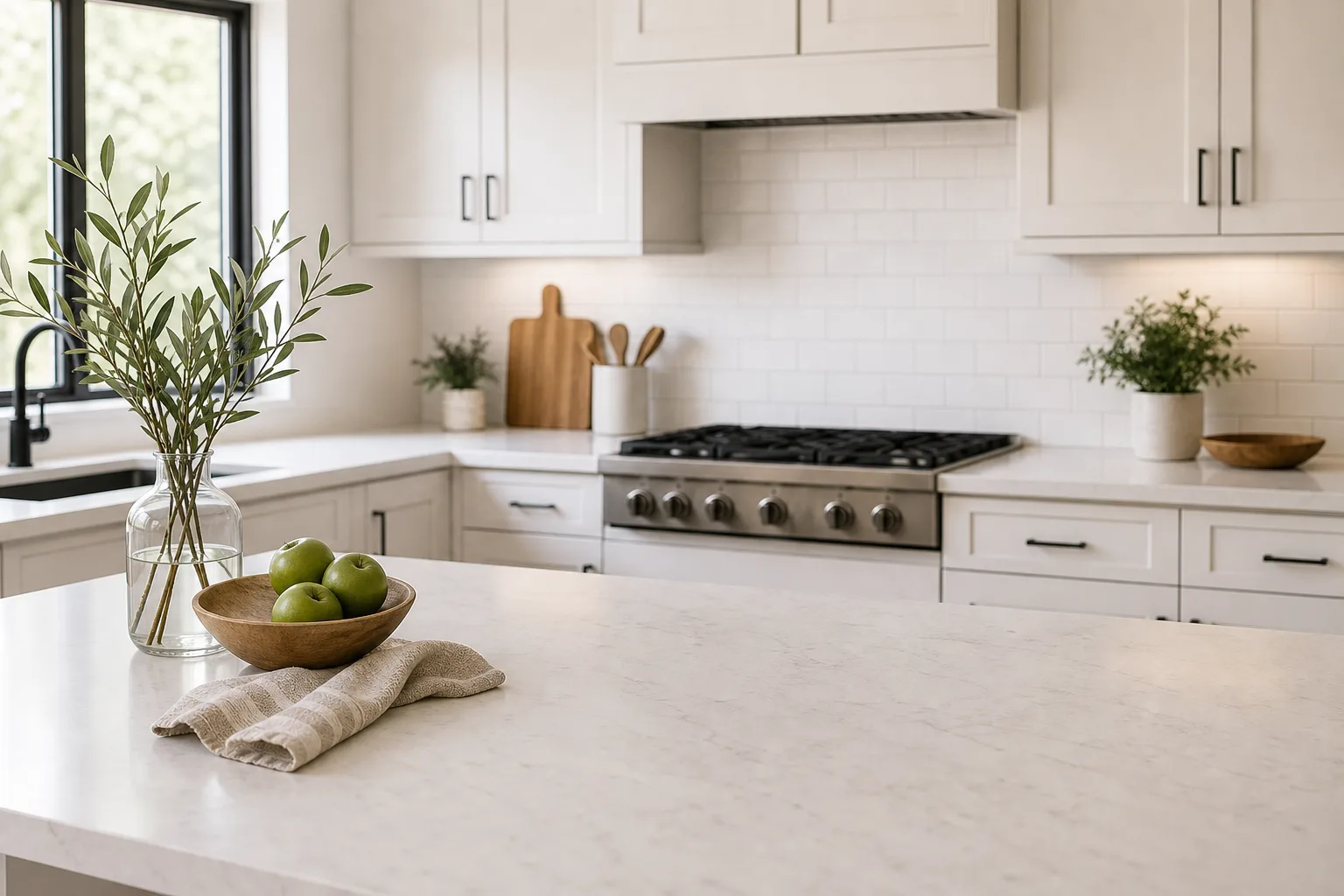
A clear counter is not an empty counter. It is a counter with enough breathing room to make the kitchen feel orderly and efficient. Before adding decor, remove anything that does not belong there permanently. Paperwork, duplicate appliances, unopened packages, and rarely used tools should be stored elsewhere.
Then decide which tasks happen on each stretch of counter. You may need a prep area near the stove, a coffee area near an outlet, or a drop zone near the entry. Once those functional zones are established, decorate around them rather than over them.
A helpful rule is to keep at least one substantial section of countertop completely open. In a small kitchen, that may be the only main prep area. In a larger kitchen, it may be the space between the sink and cooktop. This visual pause makes even a modest amount of decor look intentional instead of crowded.
1. Use a Small Tray to Create One Intentional Vignette
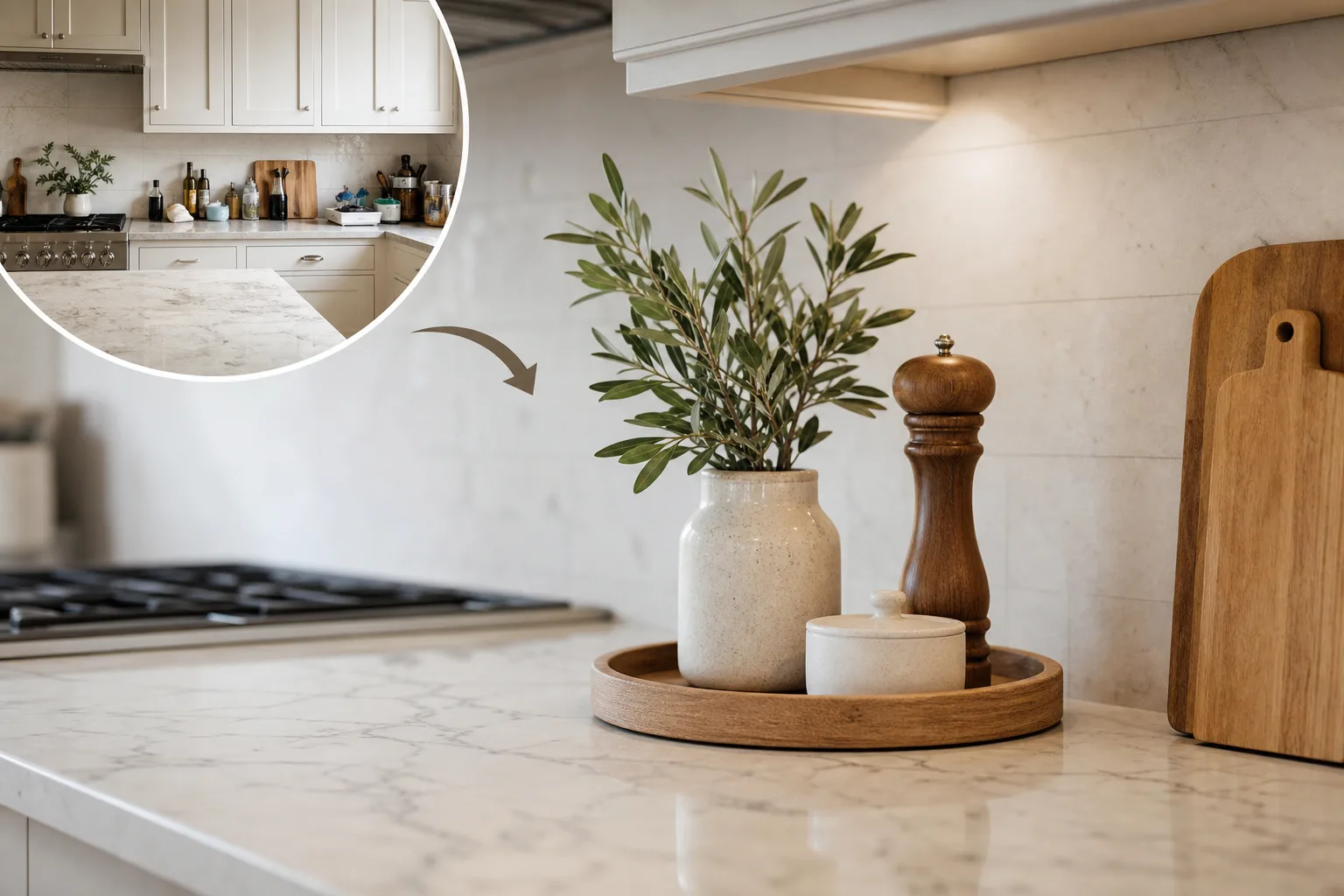
A tray is one of the easiest ways to make countertop decor look organized. It visually groups a few items that might otherwise appear scattered, such as a candle, a small vase, and a salt cellar. It also makes cleaning easier because you can lift the entire arrangement at once.
Choose a tray that fits the scale of your counter. A narrow wood, marble, ceramic, or woven tray works especially well beside a range, at the end of an island, or in an unused corner. Keep it to two or three objects, not a collection of tiny accessories. For more focused styling inspiration, see these kitchen counter tray decor ideas.
2. Display Everyday Cooking Essentials Beautifully
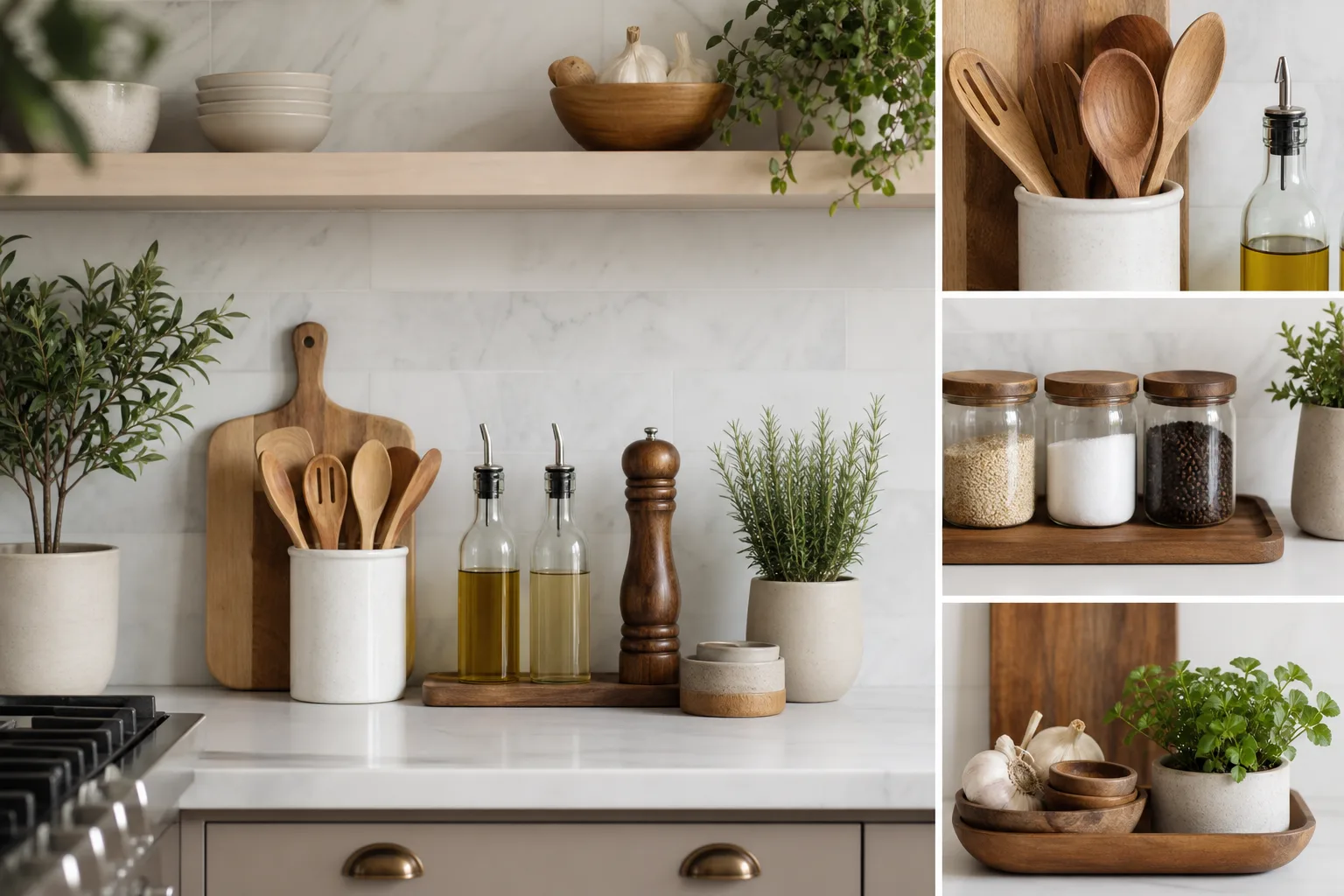
The most successful kitchen counter decor is often functional. Instead of hiding everything away, choose attractive versions of the items you use daily. A stoneware utensil crock, a matching set of oil bottles, a salt and pepper mill set, or a wooden cutting board can add warmth while remaining useful.
Limit the display to your true essentials. If you cook with olive oil every day, keeping one bottle near the stove makes sense. Keeping five specialty oils, several spice jars, and every utensil you own on the counter does not. Store backups and less-used pieces in a cabinet or pantry.
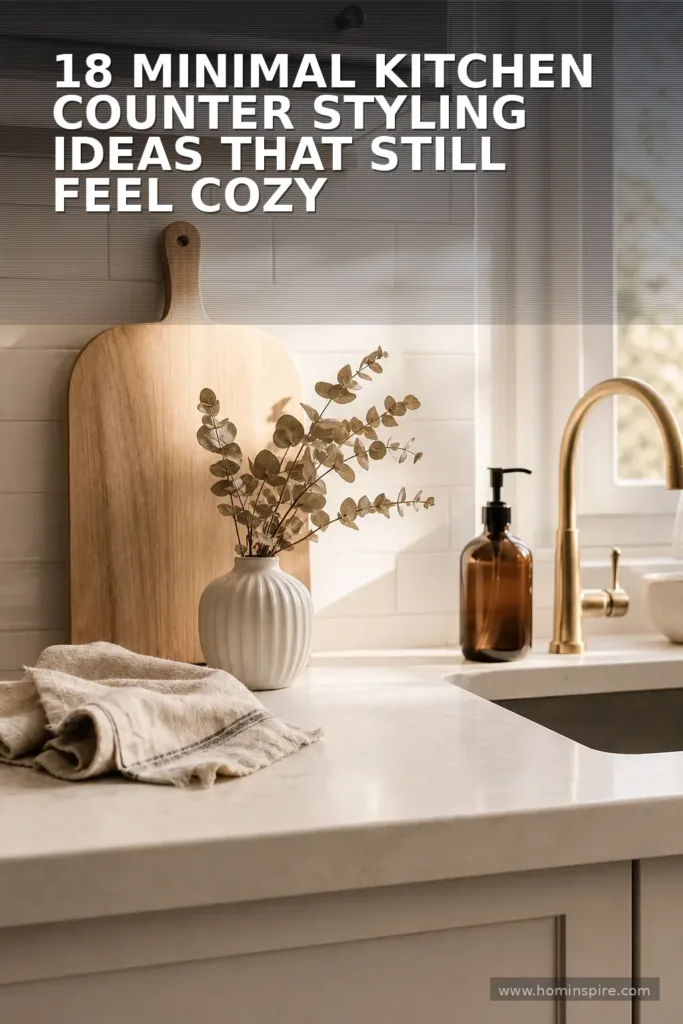
3. Lean One or Two Cutting Boards Against the Backsplash
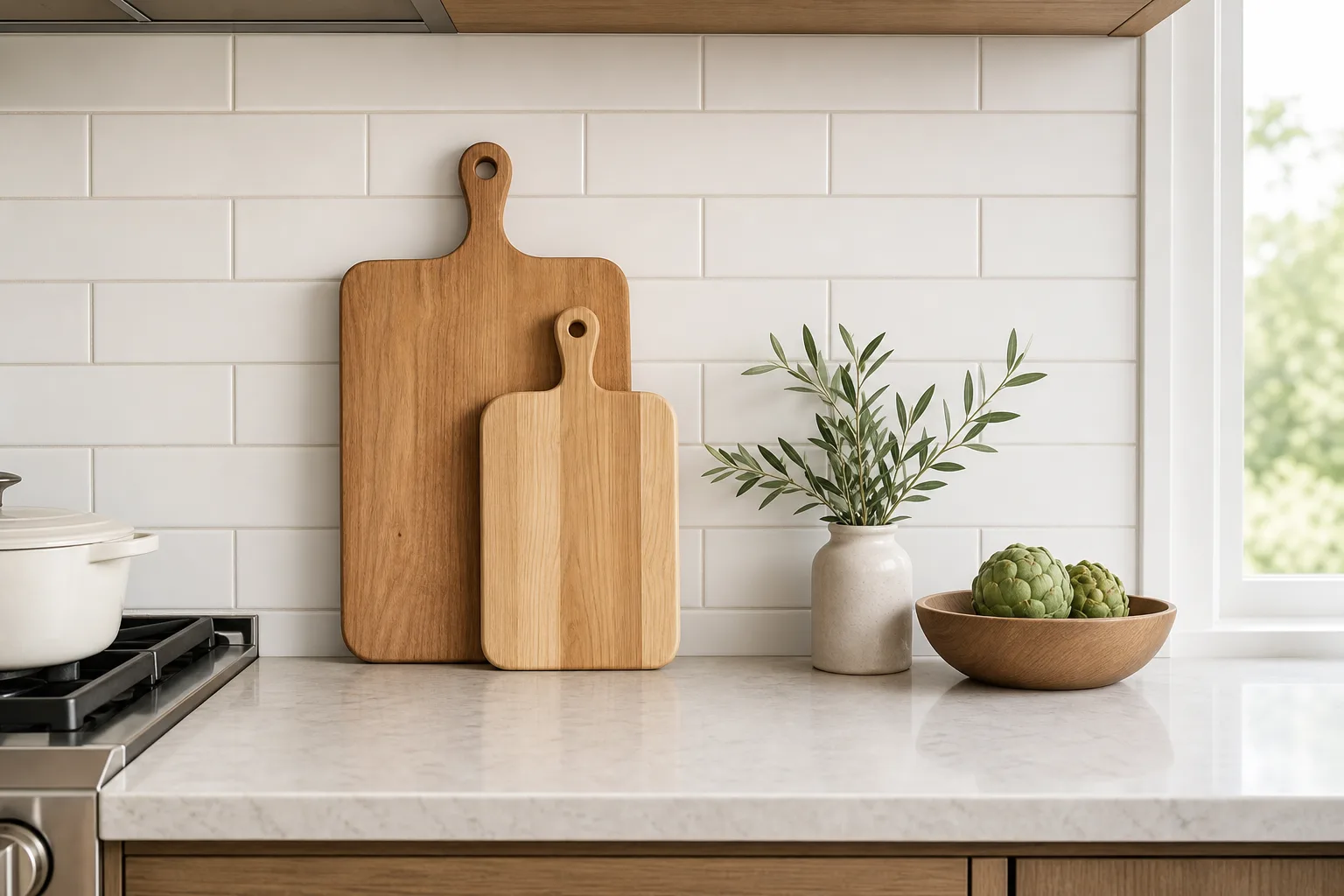
Wooden cutting boards introduce natural texture and make a kitchen feel lived-in without requiring extra surface space. Lean a medium board and a smaller paddle board against the backsplash, preferably near the prep zone or stove.
Use boards you actually cook with, and avoid stacking too many. Two boards with different shapes or tones are enough for most kitchens. If the counter is shallow, display just one board vertically to preserve workspace.
4. Add a Small Plant or a Vase of Fresh Greens
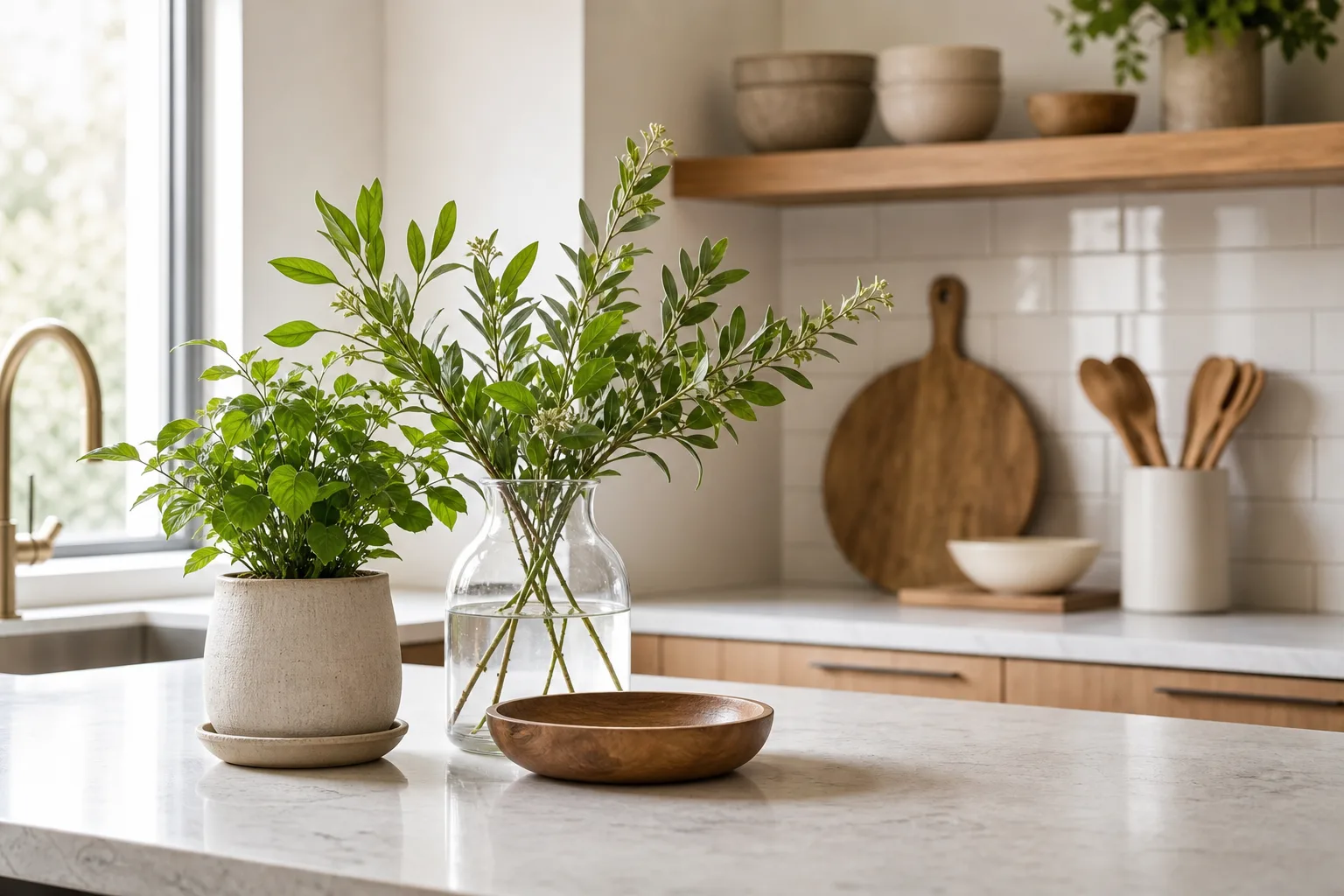
A touch of greenery can soften hard kitchen finishes such as stone, tile, stainless steel, and painted cabinets. A compact potted herb, a pothos in a simple ceramic pot, or a small vase with eucalyptus adds life without creating visual noise.
Keep the scale modest. One plant per major counter area is usually plenty. If natural light is limited, use a realistic faux stem arrangement or choose low-light plants. Fresh herbs are especially practical because they can be used in cooking, although they need regular care to stay tidy.
5. Create a Contained Coffee or Tea Station
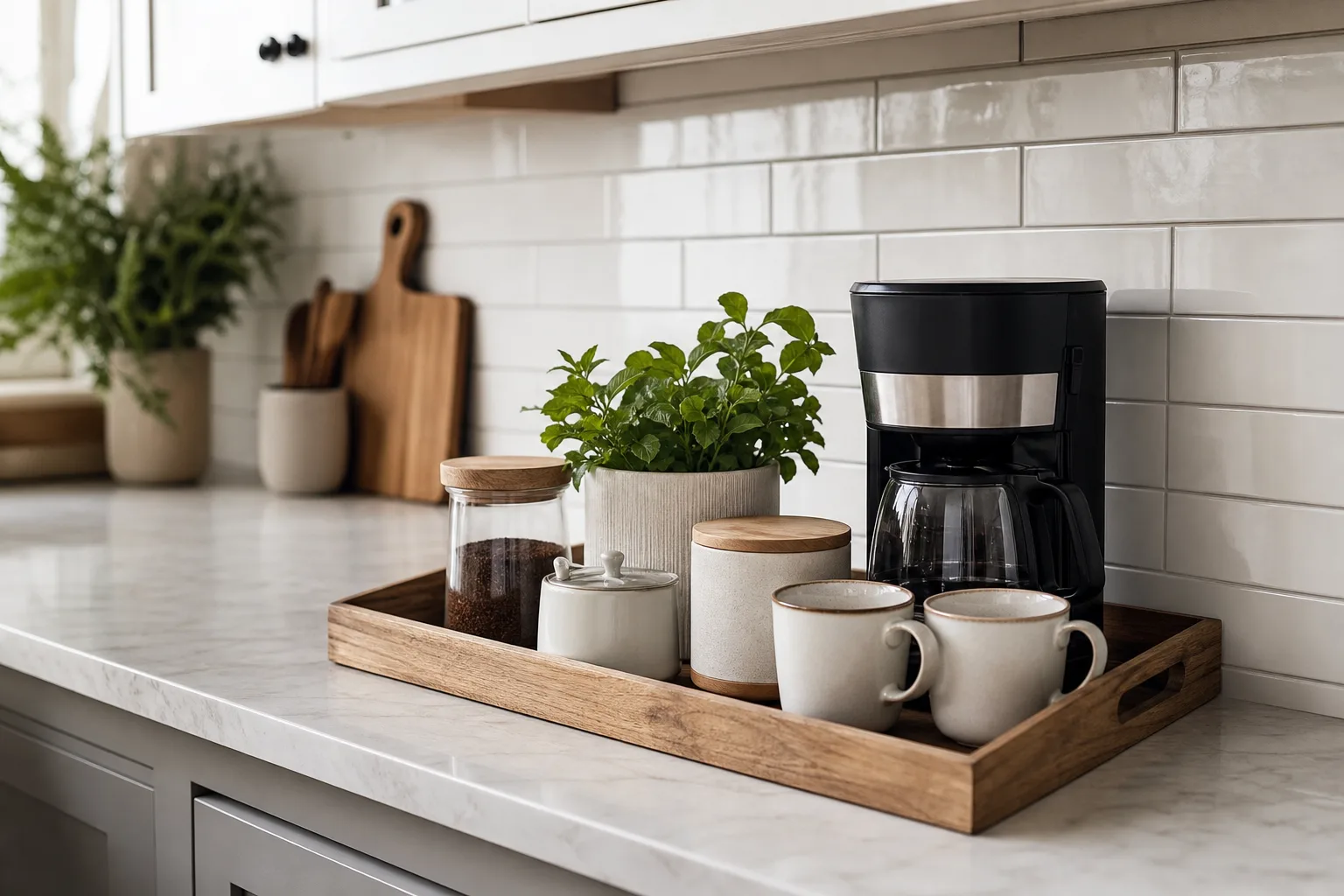
A coffee maker often has to stay out, but the area around it does not need to look messy. Give it a defined home with a small tray, a canister for coffee or tea, and only the mugs or tools you use most often. Keep pods, filters, extra mugs, and syrups inside a nearby cabinet or drawer.
This approach turns an appliance into a purposeful zone rather than allowing it to spread across the counter. It is particularly useful in open kitchens, where the coffee station is visible from the living or dining area.
6. Choose One Statement Bowl for an Island
A kitchen island benefits from one central decorative element, not several. A shallow fruit bowl, a handmade ceramic bowl, or a low vase can anchor the space while keeping sightlines open. Fruit is a smart choice because it adds color and encourages easy snacking.
Avoid tall arrangements if the island is used for serving, homework, or casual meals. Low, wide pieces look balanced and are easy to move when the counter needs to work harder.
7. Keep Appliances to a Useful Minimum
Countertop appliances are one of the biggest sources of kitchen clutter. Instead of displaying every device, identify the ones used at least several times a week. A coffee maker, toaster, or stand mixer may deserve a permanent spot; a blender, slow cooker, waffle maker, or air fryer may be better stored away between uses.
If cabinet space is tight, review your storage layout before giving up valuable counter space. These kitchen cabinet storage ideas can help you make room for small appliances and everyday supplies.
8. Use Matching Canisters Sparingly
Canisters can look polished, but too many jars in a row can quickly feel busy. Limit them to ingredients you reach for daily, such as coffee, tea, sugar, or cooking utensils. Choose matching or coordinated containers to reduce visual clutter.
Opaque ceramic canisters create a clean, classic appearance, while clear glass jars work well if your pantry staples are neatly stocked. Skip labels that are overly large or decorative if your kitchen already has patterned tile, bold counters, or detailed cabinetry.
9. Style an Awkward Corner With One Vertical Element
Counter corners are easy to overlook, yet they are ideal for a single tall item that does not interfere with prep space. Try a narrow vase, a small lamp, a utensil crock, or a vertical cutting board. The height draws the eye upward and makes the corner feel finished.
Do not fill the corner with multiple small items. A single vertical accent is more calming and leaves the rest of the counter open.
10. Add Warmth With a Small Kitchen Lamp
A petite table lamp can make a kitchen feel unexpectedly cozy, especially in a large kitchen with lots of hard surfaces. Place it on a dry counter away from the sink and cooktop, ideally in a corner or on a buffet-style section of cabinetry.
Select a compact, wipeable lamp with a stable base. A soft bulb can provide gentle evening light and make the kitchen feel more connected to adjacent living spaces. This is a decorative choice, so it works best when you have enough counter depth to maintain a comfortable work area.
11. Make the Backsplash Do Some of the Decorating
If you want a more styled kitchen without adding objects, focus on vertical surfaces. A beautiful backsplash, framed wall art, a rail system, or under-cabinet lighting can add personality without sacrificing countertop space.
This is especially valuable in a small kitchen. For additional space-conscious solutions, explore modern small kitchen decor ideas and small kitchen ideas for apartments.
12. Use Color With Restraint
A restrained color palette is a powerful way to make kitchen counters look less cluttered. Choose two or three recurring tones, such as warm white, natural wood, and muted green. Repeat those colors in your utensil holder, tray, dish towels, and small plant pot.
When every item is a different color, finish, and style, even useful objects can look chaotic. Coordinated materials create a quieter, more intentional effect without requiring a major renovation.
13. Keep the Sink Area Almost Empty
The sink is one of the most frequently used areas in the kitchen, so it should stay simple. Use a streamlined soap dispenser, a small dish brush holder, and perhaps a compact tray to contain them. Store extra sponges, gloves, and cleaning products under the sink.
A cluttered sink area can make the entire kitchen appear messy, even when the rest of the room is clean. Choose dispensers that are easy to refill and wipe down, and replace worn sponges promptly.
14. Let Seasonal Decor Follow the One-In, One-Out Rule
Seasonal accents are enjoyable, but they can take over a kitchen quickly. Rather than covering counters with themed signs, figurines, and containers, use one seasonal touch at a time. A bowl of citrus in summer, a small branch arrangement in fall, or a simple winter candle can be enough.
When adding a seasonal item, remove another decorative item temporarily. This one-in, one-out approach keeps the counter from becoming overloaded throughout the year.
15. Prioritize Easy-to-Clean Decor
Kitchen decor is exposed to grease, crumbs, water, and frequent handling. Choose materials that are durable and simple to maintain, including glazed ceramic, sealed wood, glass, washable fabric, and metal. Avoid delicate objects with many tiny details that collect dust and make cleaning more difficult.
Practical decor is more likely to stay attractive over time. If an item needs special care or constantly gets moved out of the way, it may not be the right choice for a working counter.
16. Store the Visual Extras Behind Closed Doors
Not every attractive item needs to be visible all the time. Rotate decorative bowls, vases, and linens from a cabinet or pantry shelf. This gives your kitchen a refreshed look without adding more things to the counter.
Hidden storage is especially helpful for maintaining a calm look in compact homes. Consider these hidden pantry ideas if you need more discreet places for supplies, small appliances, and occasional serving pieces.
17. Use a 70/30 Balance of Function and Decoration
For most kitchens, a useful guideline is to make about 70 percent of visible counter items functional and 30 percent decorative. For example, a tray might hold a useful olive oil bottle and salt cellar, along with one small candle. A board leaned against the backsplash can serve as decor while remaining ready for meal prep.
This balance prevents the kitchen from looking like a showroom while ensuring the space still feels personal. In very small kitchens, the ratio may need to be closer to 90 percent function and 10 percent decor.
18. Reset the Counter Every Evening
The simplest clutter-free decorating strategy is a quick daily reset. Put away mail, wash dishes, return appliances to their designated homes, and wipe down the counter before bed. A five-minute routine prevents temporary mess from becoming a permanent countertop collection.
Make storage easy to access so the reset does not feel like a chore. Renters can find practical, damage-free organization options in these renter-friendly kitchen storage ideas without drilling.
A Simple Formula for Clutter-Free Kitchen Counter Decor
If you are unsure where to begin, use this formula for each countertop zone:
- One functional anchor: a coffee maker, utensil crock, cutting board, or soap dispenser.
- One natural or decorative accent: a small plant, low bowl, candle, or vase.
- One organizer if needed: a tray, canister, or small basket.
- Open space: leave room around the arrangement so it can breathe.
For example, near the stove, use a utensil crock, one olive oil bottle, and a cutting board. At the sink, use a soap dispenser and small brush holder. On an island, use one fruit bowl or low vase. This creates visual continuity while preserving the counter for daily life.
Common Mistakes That Make Kitchen Counters Look Cluttered
Even stylish items can create clutter when they are not edited. Avoid displaying every matching accessory from a set, lining the backsplash with too many jars, or using several competing decor styles at once. Also avoid placing decor in the middle of your most useful prep area.
Another common mistake is treating storage as decor. Open shelves, clear containers, and countertop racks can be useful, but they require regular upkeep. If you do not enjoy decanting, labeling, and maintaining a uniform look, closed storage is usually the more peaceful option. A budget-friendly layout update may also make a major difference; these budget kitchen makeover ideas offer approachable ways to improve both function and appearance.
FAQ: Kitchen Counter Decor Ideas Without Clutter
How do I decorate my kitchen counters without making them look busy?
Use a few larger, purposeful items instead of many small accessories. Group items on a tray, keep a consistent color palette, and leave at least one main prep section completely clear.
What should be left out on kitchen counters?
Keep out items you use frequently, such as a coffee maker, a small utensil crock, a soap dispenser, or a cutting board. Choose attractive, useful versions and store backups, duplicates, and occasional appliances elsewhere.
How many decor items should be on a kitchen counter?
There is no fixed number, but most counter zones need only one to three items. A small kitchen may need even less. The goal is to preserve clear work space and make cleaning easy.
Are trays good for kitchen counter decor?
Yes. A tray creates a visual boundary, groups small items, and makes the counter easier to wipe down. Use one small tray with two or three items rather than filling it with many accessories.
How can I make a small kitchen counter look nice?
Focus on vertical interest, coordinated functional pieces, and one small natural accent. Keep appliances to a minimum and use cabinets, wall space, and concealed storage to protect limited prep space.
What decor is safe to keep near a stove?
Keep only heat-safe, practical items near the stove, such as a utensil crock, cooking oil, salt cellar, or cutting board. Avoid candles, paper decor, trailing plants, and anything flammable or difficult to clean.
