
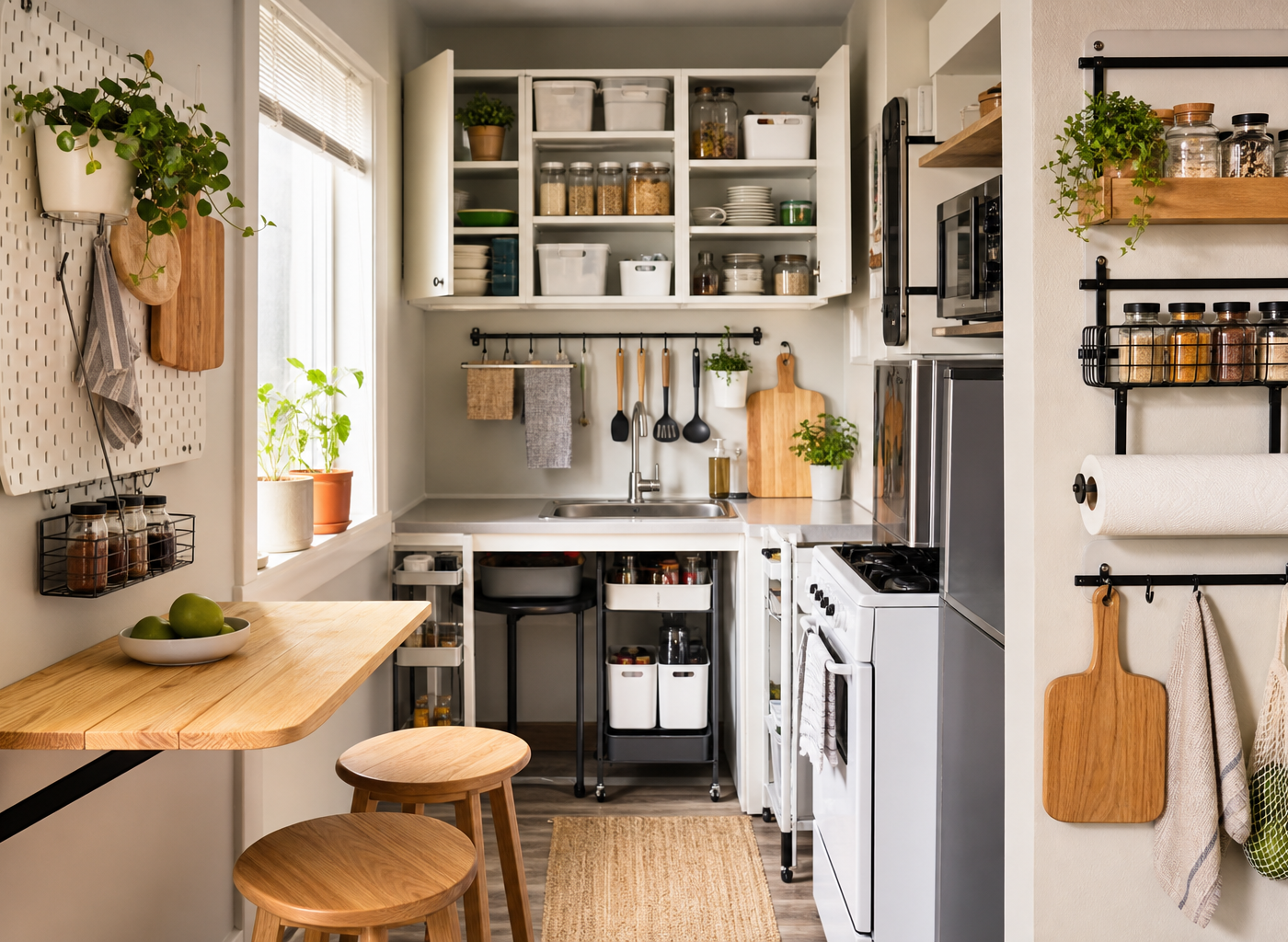
Rental kitchens can be frustratingly short on storage. You may have one narrow drawer, a few awkward cabinets, limited counter space, and rules that prevent you from drilling into walls or replacing fixtures. Fortunately, a small kitchen does not need a permanent renovation to become organized and functional.
These small kitchen storage ideas for renters focus on flexible, removable, and affordable solutions. From adhesive hooks to rolling carts and cabinet organizers, each idea can help you create more room while protecting your lease and security deposit.
Start With a Renter-Friendly Storage Plan
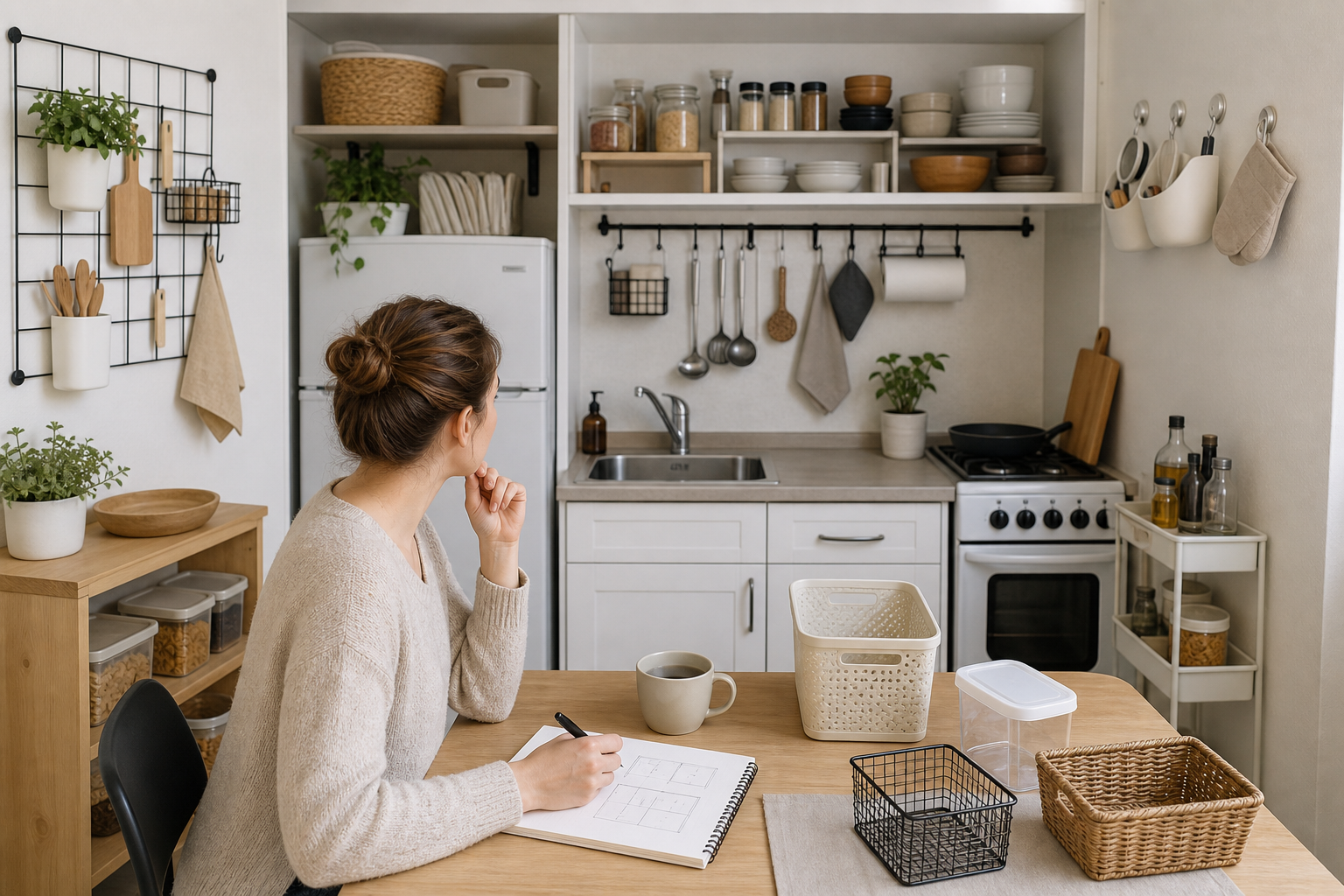
Before buying bins or shelves, take a quick inventory of your kitchen. Measure cabinet interiors, the gap beside the refrigerator, open wall sections, and the space under the sink. Also note which items you use every day versus those reserved for occasional cooking or entertaining.
In a small rental kitchen, the goal is not to store more things in every possible spot. The goal is to make frequently used items easy to reach, keep counters clear, and use overlooked vertical space. Choose solutions that are removable, portable, or freestanding whenever possible.
Follow the no-damage rule
Read your lease before installing anything. Many renters can use removable adhesive strips, tension rods, over-the-door organizers, and freestanding furniture without issue. If you plan to use screws, nails, or heavy wall-mounted shelving, ask your landlord first. Even products labeled removable can damage weak paint or unfinished surfaces, so test them in an inconspicuous area.
1. Add a Slim Rolling Cart Beside the Refrigerator
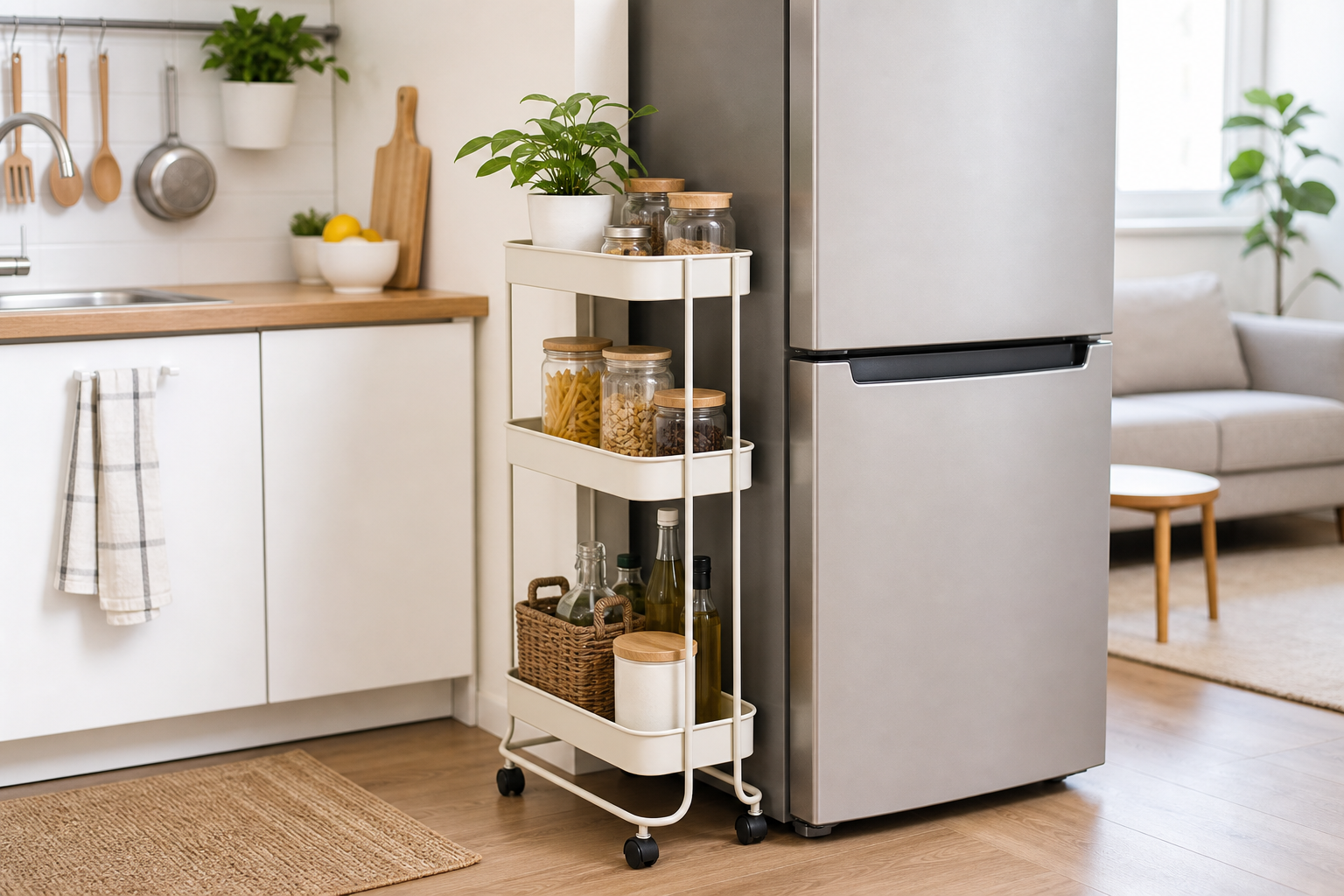
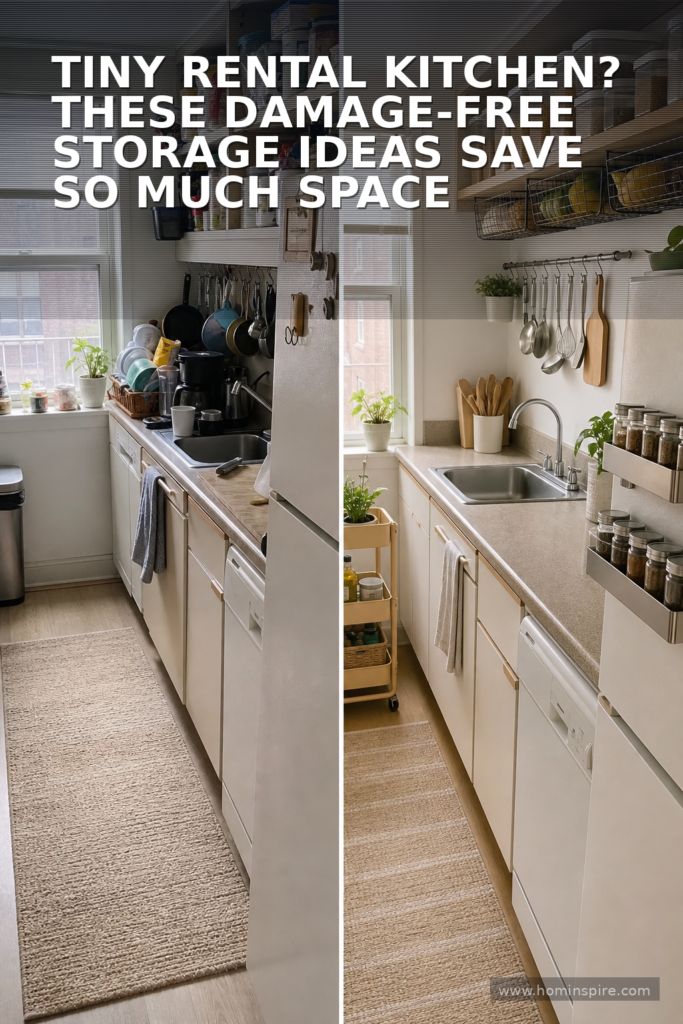
A narrow rolling cart is one of the best storage upgrades for a tiny rental kitchen. Many models are only 5 to 8 inches wide, making them ideal for the unused gap between the refrigerator and wall. Use it for cooking oils, spices, canned goods, snacks, or cleaning supplies.
Because it is freestanding, a rolling cart requires no installation. Choose one with locking wheels if it will sit near a busy cooking area, and use baskets or labels so items do not get lost in the back.
2. Use an Over-the-Door Pantry Organizer
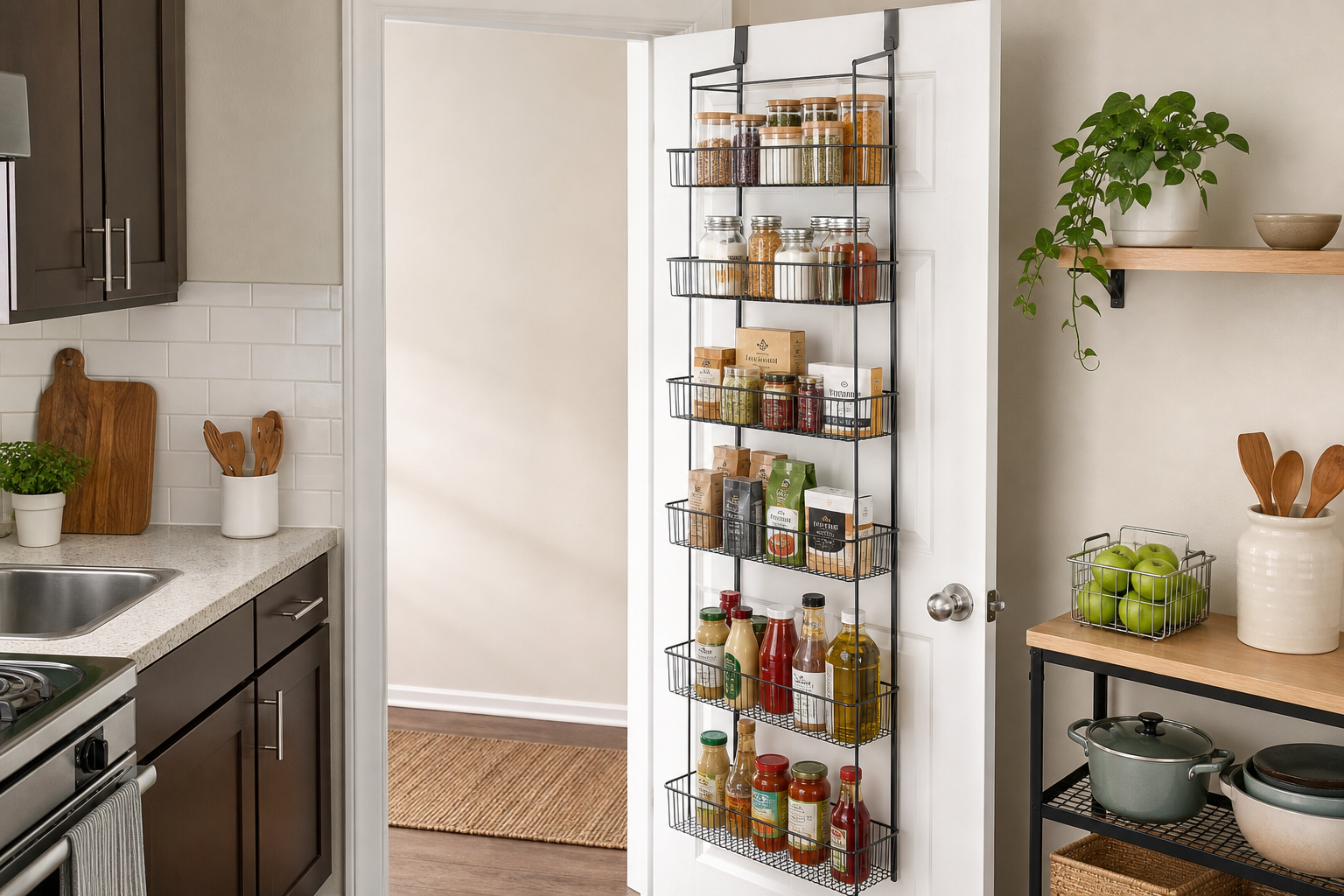
If your kitchen lacks a pantry, turn a nearby closet door, utility door, or even the kitchen door into vertical storage. Over-the-door racks can hold dry goods, foil, plastic wrap, cleaning products, and reusable bags.
Look for an adjustable design with hooks rather than one that requires screws. Be sure to check door clearance before buying; some rentals have tight door frames that do not accommodate thick hooks. For more ideas, see small kitchen storage ideas without a pantry.
3. Install Removable Adhesive Hooks
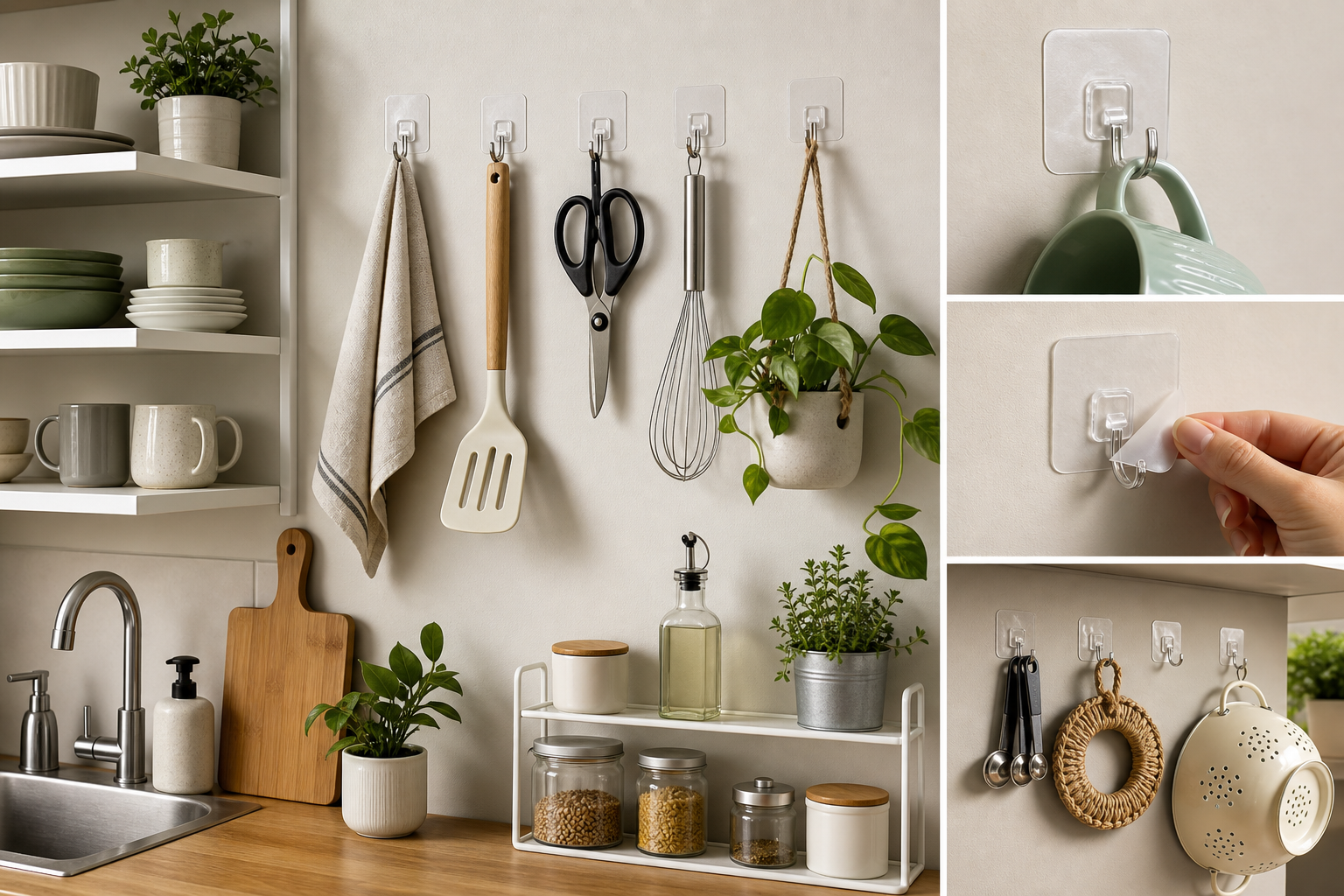
Adhesive hooks offer a simple way to reclaim cabinet sides, backsplashes, and empty wall space. Hang oven mitts, measuring cups, lightweight utensils, dish towels, or small baskets. A few strategically placed hooks can free up an entire drawer.
Use hooks rated for the weight of the item, and avoid hanging cast-iron pans or other heavy cookware. Follow the manufacturer’s directions carefully, especially the recommended waiting time before adding weight.
4. Turn Cabinet Doors Into Storage Zones
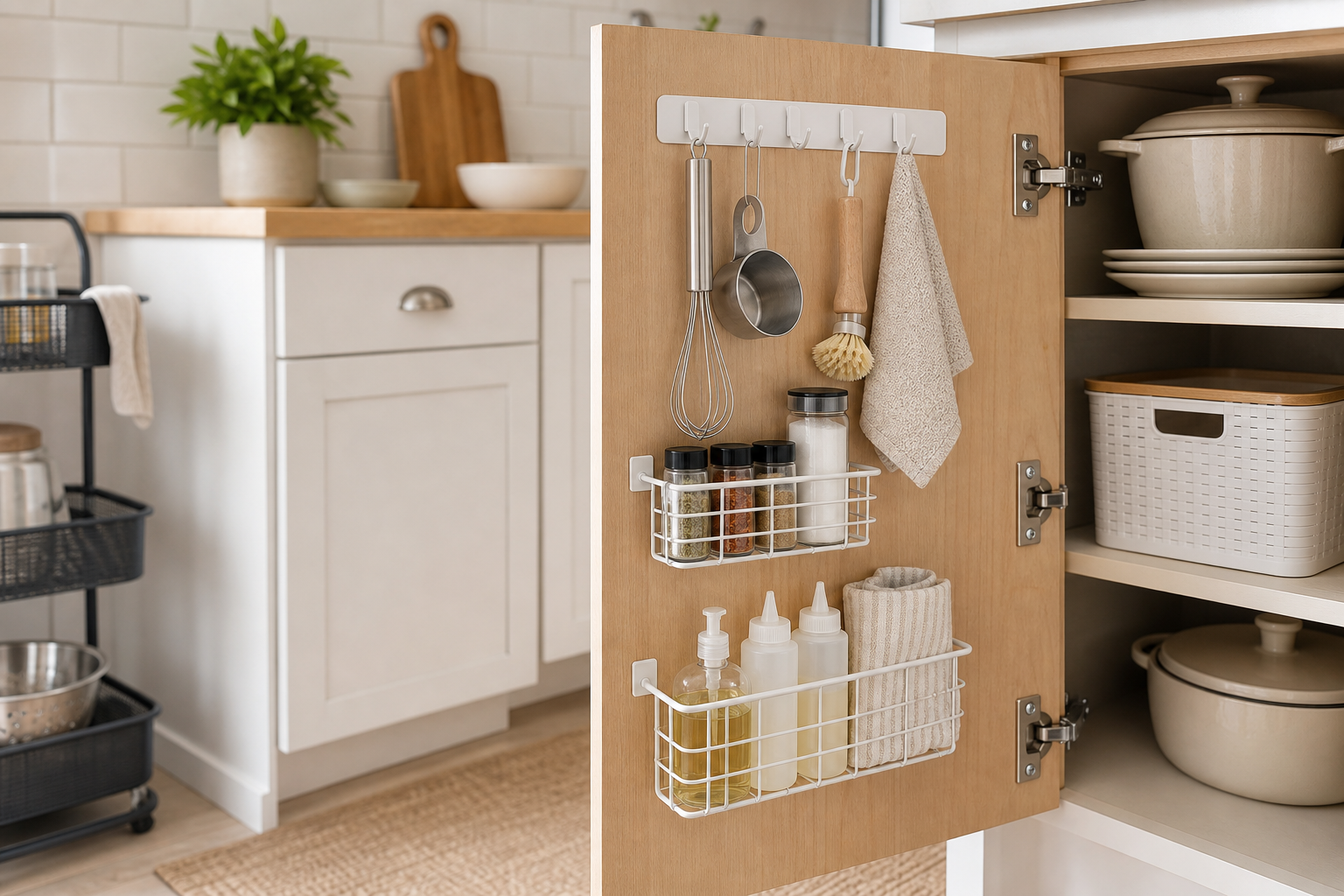
The inside of a cabinet door is valuable real estate. Add adhesive-mounted racks for pot lids, cutting boards, food wraps, or cleaning cloths. You can also use a narrow basket to hold sponges and dishwasher tablets inside the sink cabinet.
Measure the cabinet depth first. Door organizers must not interfere with shelves or prevent the door from closing. This small detail makes the difference between a useful system and a daily annoyance.
5. Double Cabinet Space With Shelf Risers
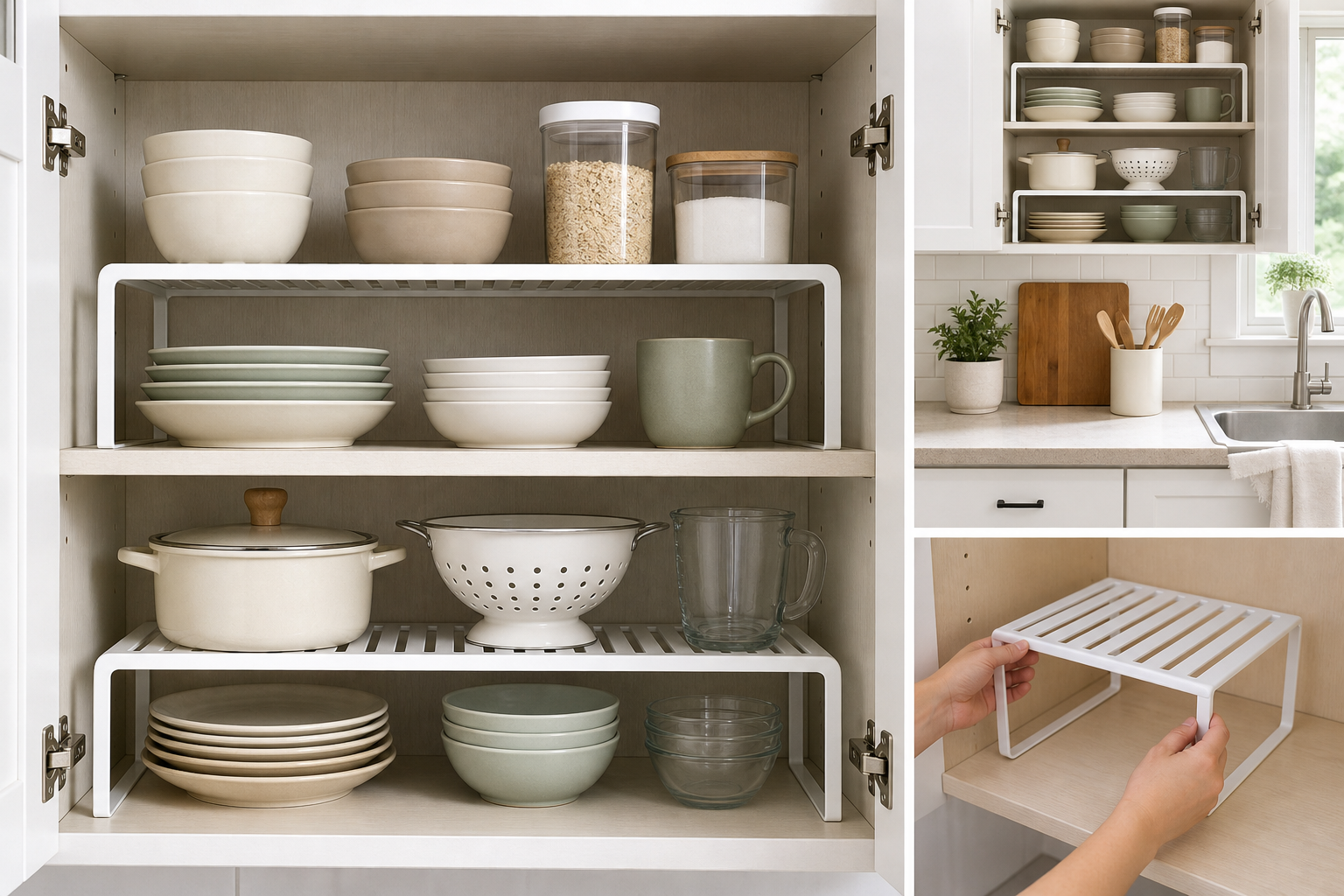
Fixed cabinet shelves often waste vertical room. Wire shelf risers create a second level for mugs, plates, bowls, canned goods, or food containers. They are inexpensive, portable, and require no tools.
Use risers in cabinets where stacked dishes become unstable or difficult to access. In food cabinets, group similar items on each tier so you can quickly see what you have. Explore more practical layouts in these kitchen cabinet storage ideas.
6. Add Pull-Out Bins to Deep Cabinets
Deep lower cabinets tend to become cluttered because items disappear behind the front row. Instead of permanently installing pull-out drawers, place handled bins or open-top baskets inside. Pull the entire bin forward to reach oils, baking supplies, snacks, or small appliances.
Clear bins make it easy to identify contents, while opaque matching bins create a cleaner look. Label the front of every container to prevent category drift over time.
7. Use Tension Rods Under the Sink
The area under the sink is often underused because plumbing interrupts the available space. A tension rod installed across the cabinet can hold spray bottles by their triggers, keeping them off the cabinet floor. This opens room below for bins, dish soap refills, and extra sponges.
Tension rods are ideal for renters because they do not require drilling. Select a rust-resistant rod and avoid overloading it. You can also use a second tension rod to hang cleaning gloves or microfiber cloths.
8. Create a Portable Coffee Station
Counter space disappears quickly when a coffee maker, grinder, mugs, pods, and syrups are spread across the kitchen. Consolidate everything on a tray, rolling cart, or small countertop riser. A portable coffee station looks intentional and can be moved when you need prep space.
Store rarely used mugs in a cabinet and keep only everyday favorites at the station. If possible, choose a tray with handles for easy cleaning and relocation.
9. Make Use of the Space Above Cabinets
If your rental has a gap between upper cabinets and the ceiling, use it for lightweight, infrequently used items. Decorative baskets can conceal paper towels, serving pieces, holiday cookie cutters, or backup pantry staples.
Avoid storing anything that is difficult to lift safely or likely to gather grease. Keep the look tidy by using a limited number of matching containers rather than placing loose items overhead.
10. Add a Freestanding Microwave Cart
A microwave cart can give you a dedicated appliance surface plus shelves for dishes, pantry goods, or cookware. This is especially useful when your rental kitchen has little usable counter space or no room for a dining table.
Choose a cart that fits the microwave manufacturer’s ventilation requirements. A design with wheels provides flexibility, while a solid wood or metal model can also serve as a compact prep station.
11. Use Magnetic Storage Where It Makes Sense
Magnetic racks can attach to the side of a refrigerator for spices, paper towels, wraps, or small kitchen tools. This is an excellent option when wall mounting is not allowed. A magnetic knife strip may also work on the refrigerator side, but only if it is secure and safely out of children’s reach.
Check the strength of the magnet and the finish of your appliance. Do not place magnetic organizers on non-magnetic stainless steel or surfaces that could scratch easily.
12. Hang a Pegboard Without Permanent Holes
A small pegboard can organize utensils, measuring tools, and lightweight pans vertically. For renters, consider a freestanding pegboard, a countertop version, or a lightweight panel mounted with heavy-duty removable strips designed for the load.
Keep the arrangement simple. A crowded pegboard can look messy, especially in a small kitchen. Use it for the items you reach for most often and store duplicates elsewhere.
13. Store Pots and Pans Vertically
Instead of stacking pots and pans in a chaotic pile, use a freestanding pan organizer inside a lower cabinet. Vertical dividers keep skillets, baking sheets, cutting boards, and pot lids separated so you can grab one item without moving everything else.
This solution is particularly helpful for renters with narrow cabinets and no built-in pull-out storage. It is also easy to pack and take to your next home.
14. Add a Drawer Organizer for Every Small Category
Kitchen drawers fill up fast with utensils, gadgets, batteries, takeout menus, and miscellaneous items. Adjustable drawer dividers or modular trays create zones that prevent clutter from returning. Use one section for cooking tools, one for measuring tools, and one for small accessories.
Do not buy organizers until you measure the drawer interior. A custom-looking setup is often possible with affordable expandable dividers and small bins.
15. Use Stackable Food Storage Containers
Mismatched food containers can consume an entire cabinet. Replace damaged or rarely used pieces with a set that nests or stacks neatly. Store lids vertically in a lid organizer instead of tossing them in a drawer.
Square and rectangular containers generally use cabinet space more efficiently than round ones. Choose a modest set size based on how often you cook rather than buying more containers than your kitchen can reasonably hold.
16. Put a Lazy Susan in Corner Cabinets
Corner cabinets and deep shelves are hard to access, but a removable turntable solves the problem. Use a lazy Susan for oils, sauces, spices, vitamins, or baking extracts. A raised edge helps keep bottles stable when the tray spins.
For under-sink storage, choose a smaller lazy Susan that can fit around plumbing. It makes cleaning supplies much easier to reach without requiring a built-in corner cabinet system.
17. Add a Sink Caddy to Clear the Counter
Sponges, brushes, and dish soap can create visual clutter around the sink. A hanging sink caddy or suction-mounted holder keeps these essentials contained and allows them to dry between uses. This also creates a cleaner, more spacious-looking counter.
Choose a caddy with drainage holes, and clean it regularly to avoid soap buildup. If suction cups do not hold well on your sink, use a small tray or narrow bin instead.
18. Use a Folding Wall-Mounted Table Only With Permission
A fold-down wall table can add prep space or a dining surface, but it usually requires drilling. If your landlord approves it, this can be a high-impact upgrade for an extremely small kitchen. Get written permission, use proper anchors, and save installation information for move-out.
If drilling is not allowed, try a folding tray table, gateleg table, or rolling island. These options offer similar flexibility without altering the rental.
19. Create a Baking Bin
Keep flour, sugar, sprinkles, measuring tools, and baking decorations together in one handled bin. When it is time to bake, pull out the whole category rather than searching through several cabinets. This method also prevents specialty ingredients from taking over everyday storage zones.
The same approach works for smoothie supplies, lunch-packing items, taco night ingredients, or pet food accessories. Category bins are especially useful in shared apartments where multiple people use the kitchen.
20. Use the Oven for Occasional Storage Carefully
If you rarely bake, the oven can temporarily hold baking sheets, muffin tins, or cooling racks. However, this should only be used for heat-safe cookware, never for plastic, paper, food, or cleaning products. Place a visible reminder on the oven controls so you do not accidentally preheat it with items inside.
For many renters, a vertical baking sheet organizer in a cabinet is safer and more convenient. Treat oven storage as a last resort, not a primary system.
21. Add a Countertop Shelf or Hutch
A compact countertop shelf creates vertical space above appliances or in an unused corner. It can hold mugs, tea, spices, or bowls while leaving the counter beneath available for prep. Unlike permanent shelving, a countertop unit moves with you.
Keep the shelf from becoming a catch-all. Limit it to a single function, such as a breakfast station or tea station, for a more organized result.
22. Store Produce in Stackable Baskets
Freestanding wire or woven baskets can hold onions, potatoes, bananas, and other produce that does not need refrigeration. Stackable baskets make use of vertical space on the floor, a cart, or a sturdy counter corner.
Keep potatoes and onions separate when possible, since storing them together can shorten their shelf life. Avoid overbuying produce if your kitchen is small; less inventory means less clutter and less waste.
23. Use a Dish-Drying Rack That Does More
A traditional dish rack can consume much of a small counter. Try an over-the-sink roll-up rack, a compact two-tier rack, or a collapsible drying mat. These options give you drying space when needed and can be rolled up, folded, or stored away afterward.
Make sure any over-the-sink model fits securely and does not block faucet access. This simple switch can noticeably improve your daily workspace.
24. Declutter Before You Organize
No organizer can fully solve a kitchen that contains too many duplicates. Review your cookware, utensils, mugs, food containers, and pantry items. Donate unused gadgets, recycle broken containers, and keep only the number of plates and glasses you realistically need.
Renters benefit from a lighter kitchen because every item will eventually need to be packed and moved. A streamlined collection makes your current home easier to use and your next move easier to manage.
25. Choose Budget-Friendly Storage That Can Move With You
The best renter upgrades are not only damage-free; they are worth taking to your next apartment. Prioritize carts, bins, risers, drawer dividers, tension rods, and shelf organizers that can adapt to a different layout. Avoid buying highly specific solutions before measuring and testing your current space.
If you are working with a limited budget, start with the biggest pain point: crowded cabinets, no pantry, lack of prep space, or under-sink clutter. You can find more low-cost options in these small kitchen storage ideas on a budget.
How to Keep a Small Rental Kitchen Organized
Once you create more storage, maintain it with a simple routine. Put groceries away by category, return tools to their assigned zones, and do a five-minute reset after cooking. Keep a small donation bag nearby for items you stop using, and reassess your setup every few months.
Most importantly, do not try to copy a large-house kitchen. A small rental kitchen works best when it is designed around your habits. Keep daily essentials within reach, store occasional items higher or farther away, and choose storage tools that make your routines easier.
FAQ: Small Kitchen Storage Ideas for Renters
What storage can renters add without damaging walls?
Renters can usually add freestanding carts, shelf risers, drawer dividers, tension rods, over-the-door racks, suction caddies, and removable adhesive hooks. Always check product instructions and your lease before installation.
How can I add pantry storage to a rental kitchen?
Use an over-the-door organizer, a rolling pantry cart, stackable bins, a freestanding shelving unit, or labeled baskets in a nearby closet. These options create pantry-like storage without permanent construction.
What is the best way to organize deep kitchen cabinets?
Handled bins, pull-out baskets, lazy Susans, and shelf risers work well in deep cabinets. Group items by category and place frequently used products near the front for easy access.
How do I get more counter space in a tiny kitchen?
Move appliances onto a microwave cart or rolling island, use vertical countertop shelves, choose an over-the-sink drying rack, and create portable stations for coffee or cooking tools. Clear counters of items used only occasionally.
Are adhesive hooks safe for rental kitchen walls?
They can be safe when used according to the manufacturer’s directions and removed slowly. However, they may still pull off weak paint or old finishes, so test one in a discreet location and do not exceed the weight limit.
