
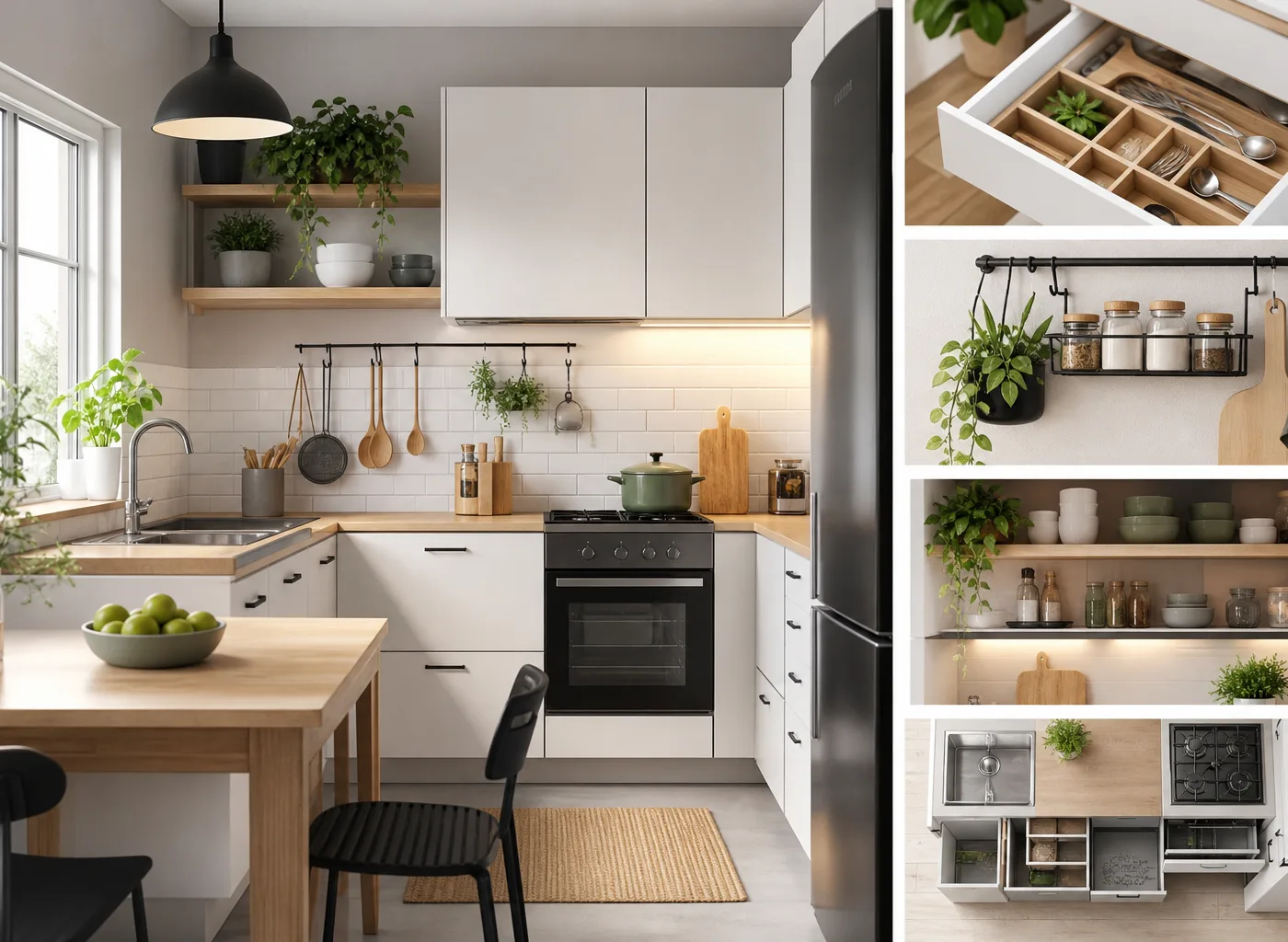
A small kitchen does not need a major renovation to feel more useful, brighter, or more polished. In fact, the best small kitchen design ideas on a budget often focus on practical changes: clearing visual clutter, improving storage, refreshing worn finishes, and making the layout easier to use.
Whether you own a starter home, rent an apartment, or are updating an older galley kitchen, start with what you already have. A few carefully chosen upgrades can make a compact kitchen feel intentionally designed instead of cramped. The goal is not to fill every empty surface. It is to create a space where every item earns its place.
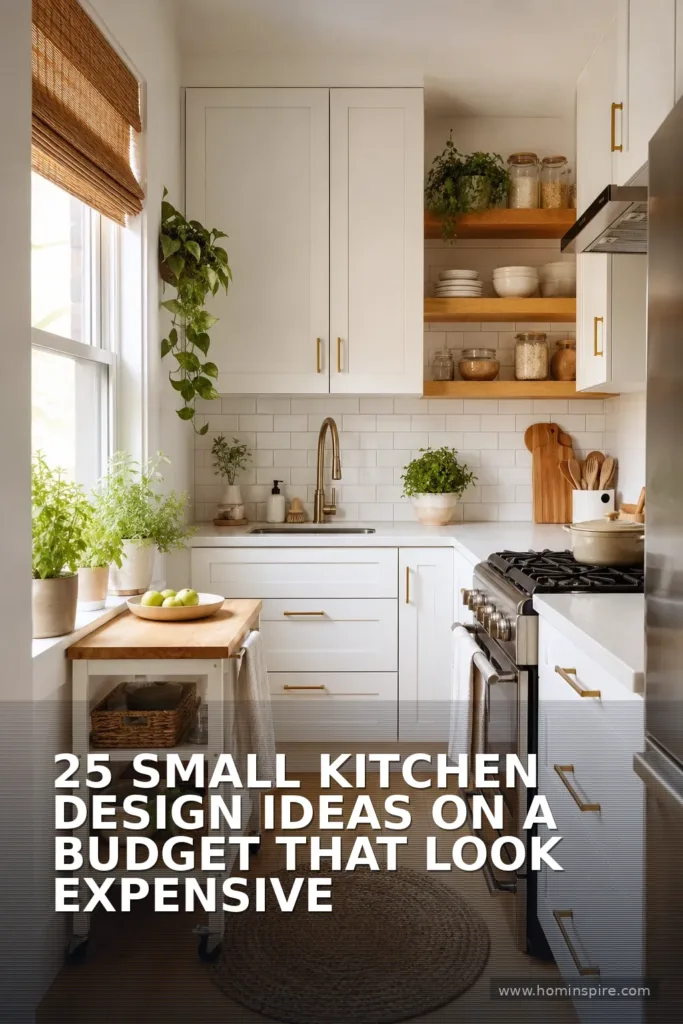
Start With a Budget-Friendly Small Kitchen Plan
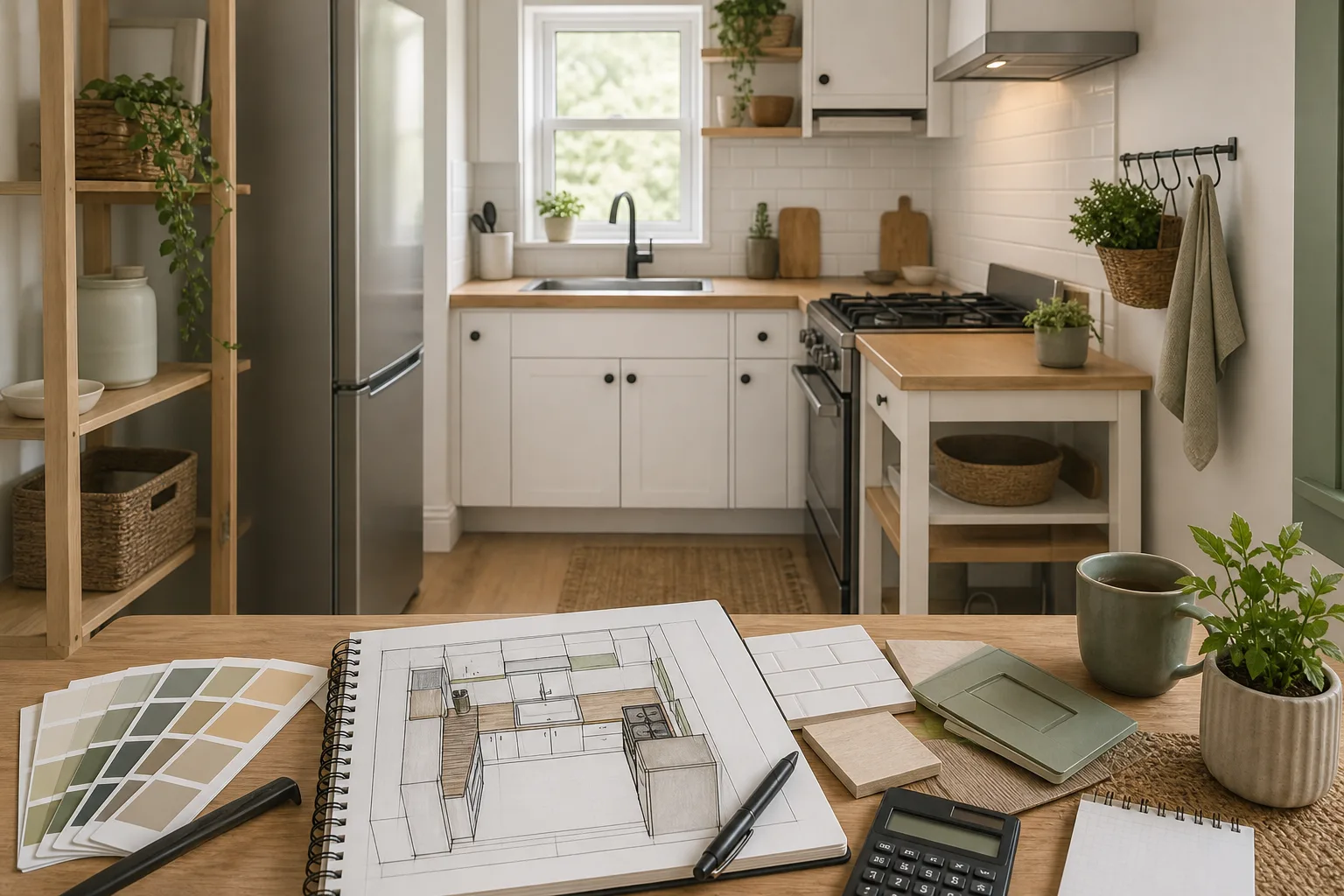
Before shopping, take stock of the room. Measure your countertops, cabinet interiors, wall space, and the clearance around doors and appliances. Note the daily frustrations: Is prep space limited? Do pantry items spill onto the counter? Is the lighting dim? Do you lack a spot for trash, recycling, or small appliances?
Then divide your project into three categories:
- Function: storage, work surfaces, organization, and traffic flow.
- Finish: paint, hardware, backsplash, lighting, and window treatments.
- Flexibility: portable carts, freestanding shelves, and renter-friendly upgrades.
Address function before decor. A beautiful kitchen still feels frustrating if you cannot find a spatula, open a drawer fully, or make coffee without moving three appliances. Once the room works better, small design details have a much bigger impact.
1. Paint Cabinets Instead of Replacing Them
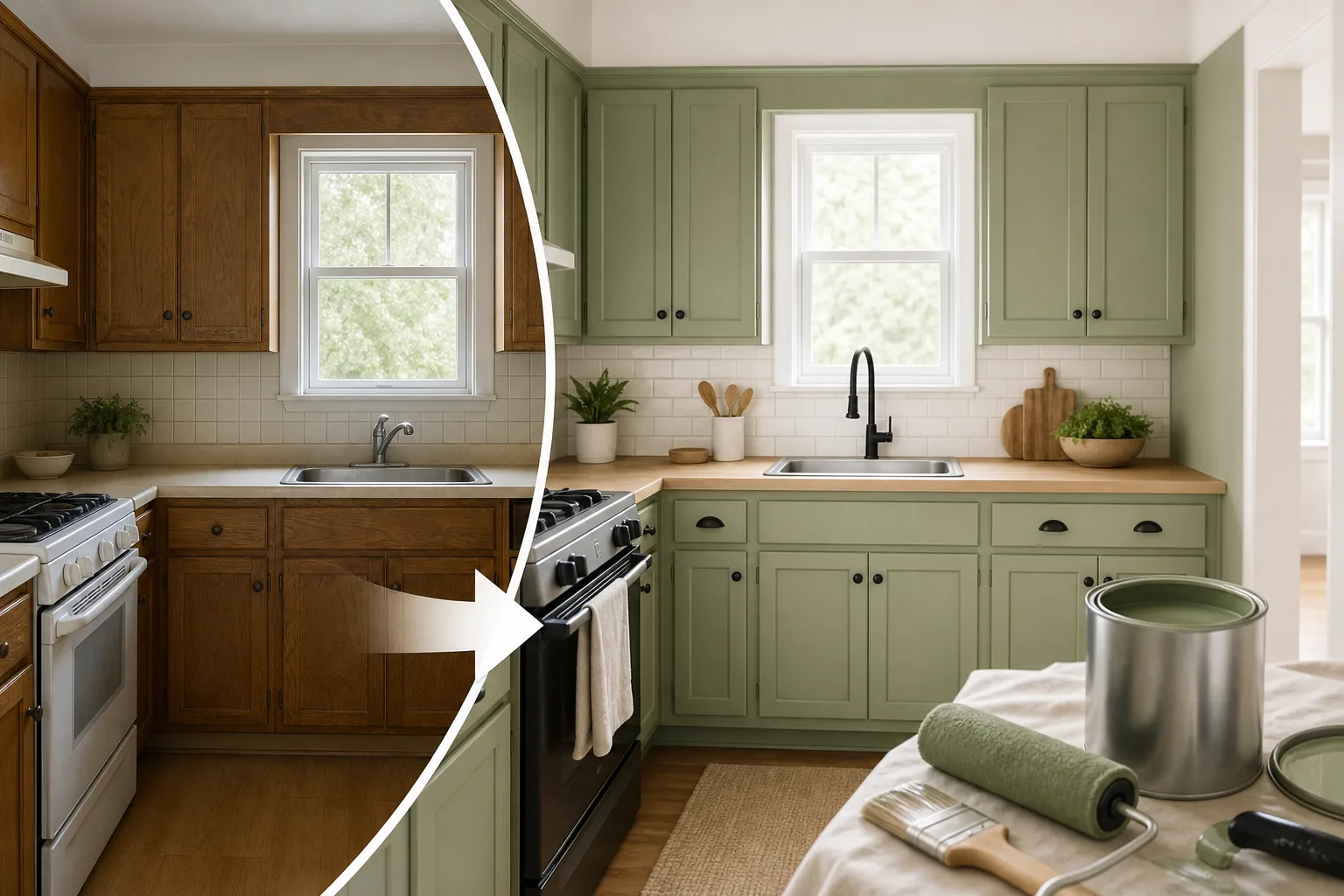
Cabinet replacement can consume most of a kitchen renovation budget. If cabinet boxes are sturdy and doors are in decent condition, paint is usually the more economical option. White, warm off-white, soft greige, muted sage, and dusty blue can make a tight kitchen feel more open while still adding personality.
For a lasting finish, clean doors thoroughly, remove hardware, sand lightly, use a bonding primer, and choose cabinet-grade paint. If painting every cabinet feels overwhelming, paint only the upper cabinets in a light color or refresh the island, pantry door, or lower cabinets for contrast.
For more ways to update what you have, explore these kitchen makeover ideas without replacing the cabinets.
2. Use One Light Color to Expand the Room
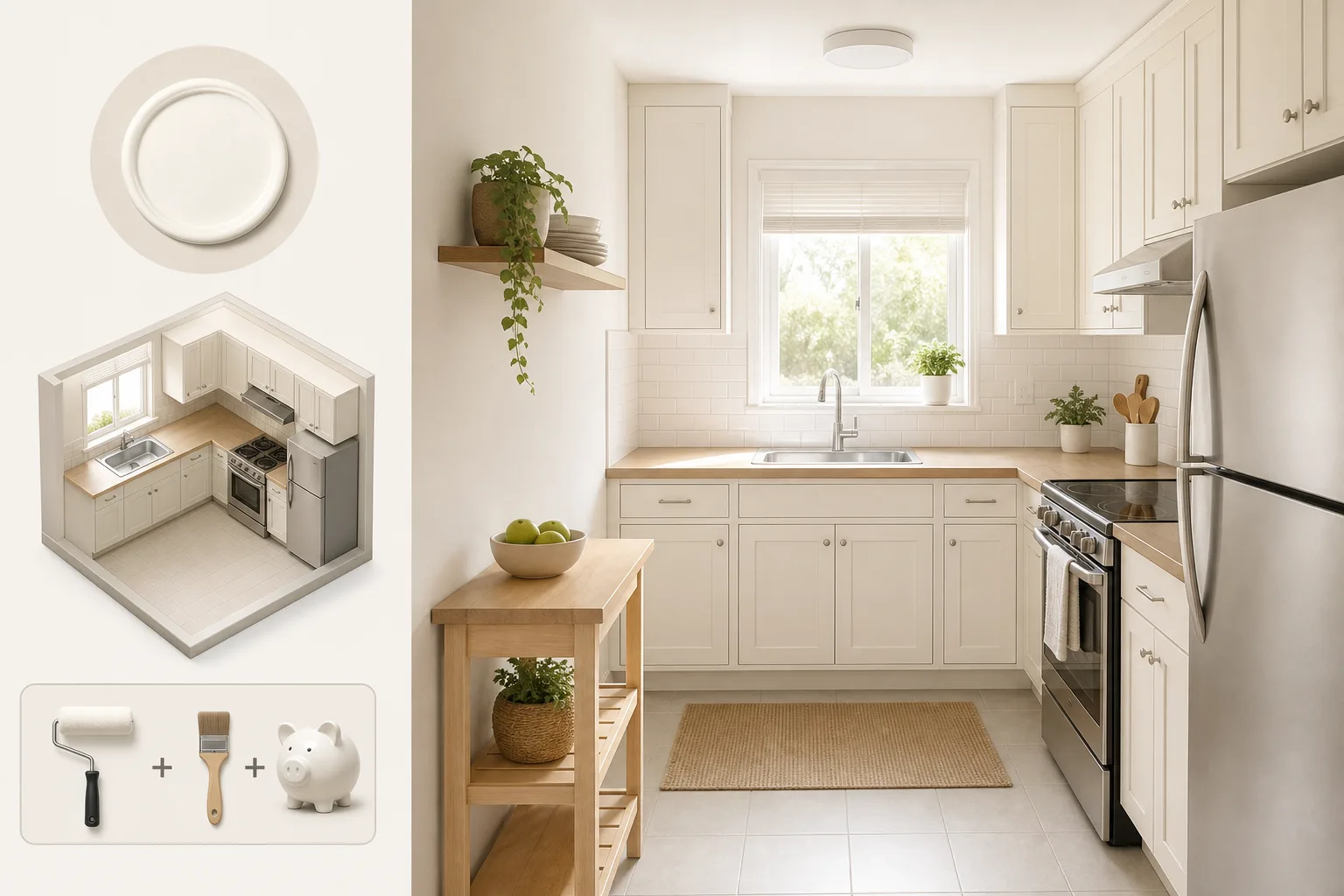
Light colors reflect more light, which can help a compact kitchen feel less enclosed. You do not have to choose stark white. Cream, pale taupe, light mushroom, soft gray, and barely-there blue-green can all create an airy result.
Use a similar light tone on walls, trim, and large cabinet surfaces to reduce visual breaks. This approach is especially helpful when a kitchen has limited natural light. Add contrast through wood cutting boards, dark cabinet pulls, woven shades, or a runner instead of introducing several competing wall colors.
3. Upgrade Cabinet Hardware for Instant Polish
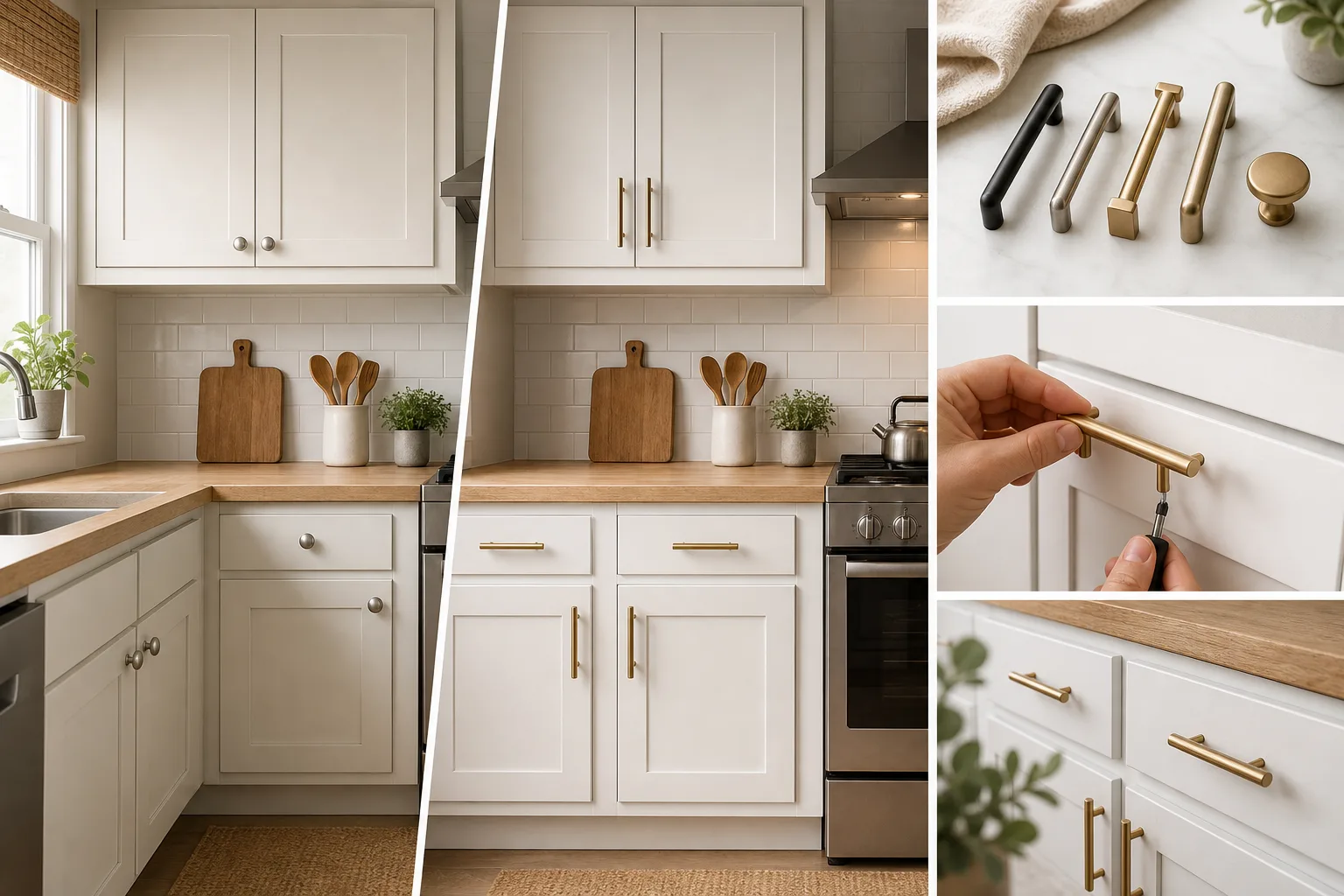
New knobs and pulls are among the fastest small kitchen upgrades. They are inexpensive compared with cabinetry, easy to install, and surprisingly effective at changing the room’s style. Brushed nickel works well in transitional spaces, matte black adds definition, and warm brass can make simple cabinets feel more tailored.
Keep sizing consistent. Small knobs work well on doors, while longer pulls are often more practical on drawers. Before drilling new holes, check the existing spacing and order one sample if possible. A hardware template helps prevent costly placement mistakes.
4. Add Peel-and-Stick Backsplash
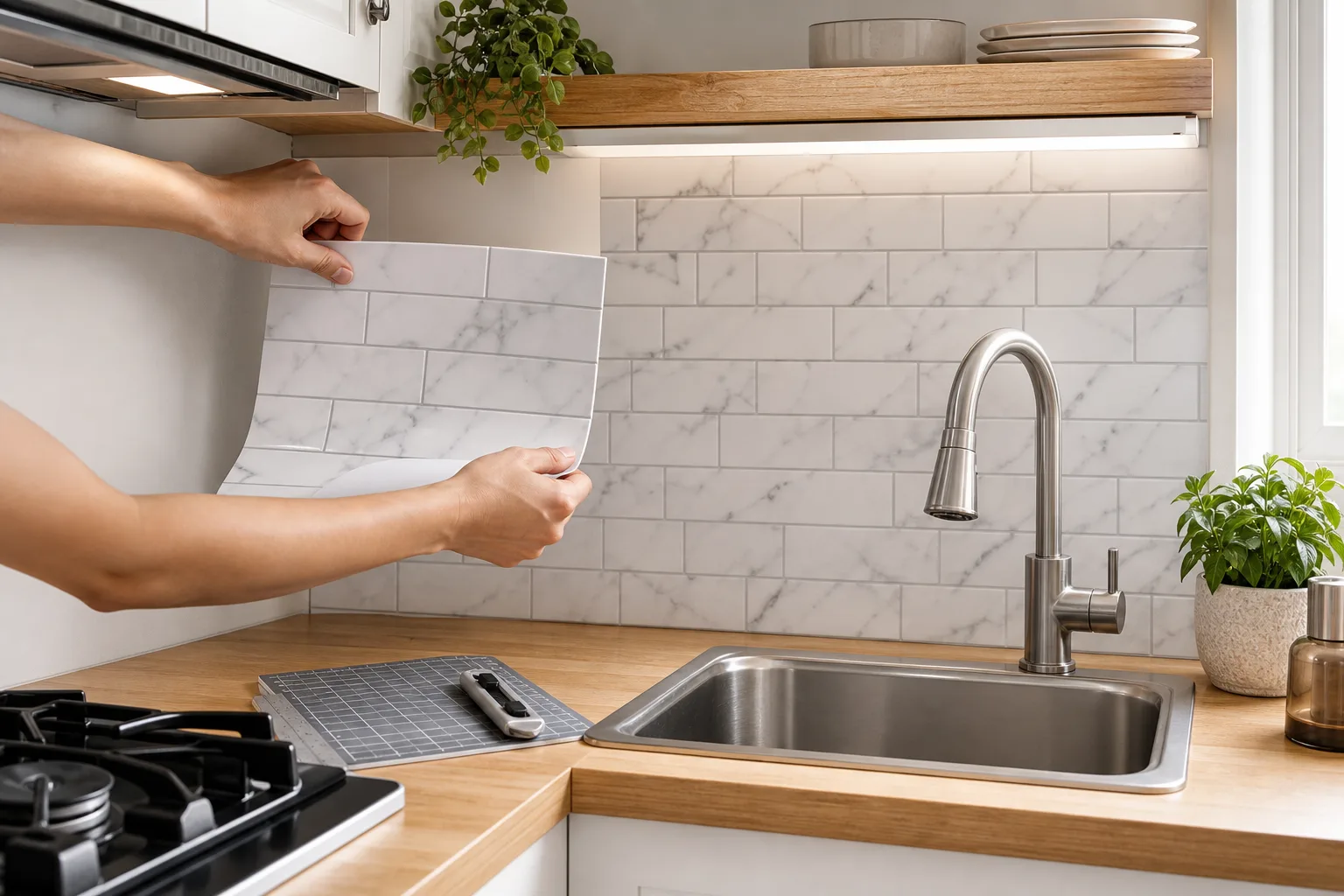
A backsplash visually ties together the cabinets and counters, but traditional tile installation can be expensive. Quality peel-and-stick tile, vinyl panels, or removable backsplash sheets offer a practical alternative for a low-cost refresh.
Choose a simple pattern in a pale color for the broadest appeal. Subway tile, small square tile, and subtle stone-look designs usually age better than very bold prints. Clean and degrease the wall carefully before installation, and avoid products too close to high heat unless they are specifically rated for that use.
5. Improve Lighting in Layers
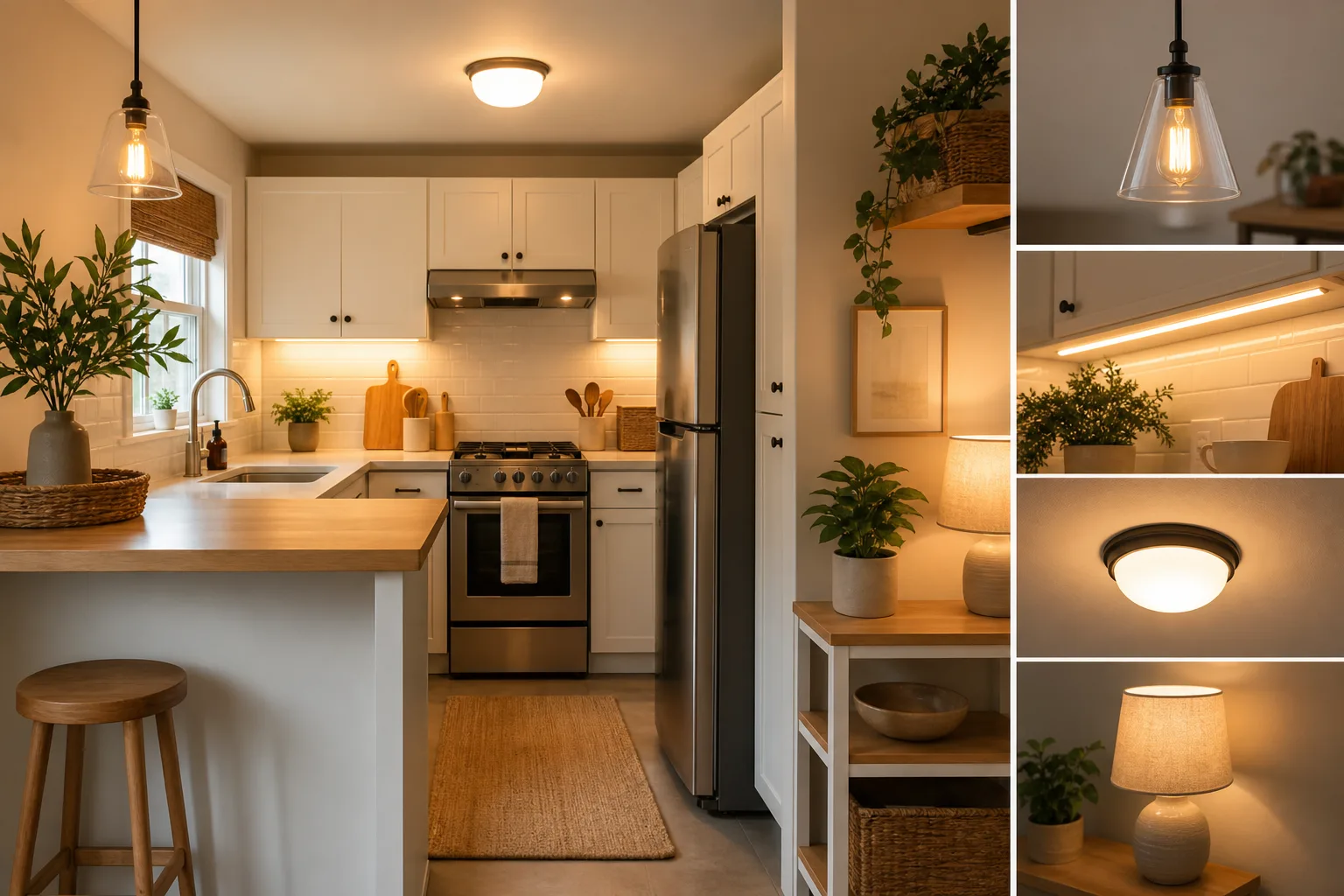
Many small kitchens rely on a single ceiling fixture, creating shadows on counters and making the room feel smaller. Layered lighting is a high-value improvement because it makes the space more functional and more inviting.
- Replace an outdated ceiling light with a flush-mount fixture that spreads light evenly.
- Add plug-in or battery-powered under-cabinet lights for prep areas.
- Use daylight-balanced bulbs if the kitchen feels dark or yellow.
- Install puck lights inside deep cabinets or pantries to make items easier to find.
In a low-ceiling kitchen, choose slim fixtures that do not interrupt sightlines. A clean, simple light fixture often makes a bigger visual difference than an expensive decorative one.
6. Clear the Counters Strategically
Open counter space is one of the strongest visual signals of a larger kitchen. That does not mean every item must disappear. Keep out the tools you use daily, such as a coffee maker, toaster, or utensil crock, but give each one a deliberate location.
Place smaller items on a tray to make the counter look organized rather than scattered. A tray can group oils, salt and pepper, coffee supplies, or dish soap near the sink. See these kitchen counter tray decor ideas for practical ways to create a neater look.
7. Create More Prep Space With a Rolling Cart
A narrow rolling cart can provide extra prep space, produce storage, or a coffee station without permanent construction. Look for a cart that fits beside the refrigerator, at the end of a cabinet run, or in a nearby dining area. Locking wheels are important for safety and stability.
Choose an open cart if you want easy access to frequently used items, or select one with drawers or doors if visual clutter is a concern. A wood-top cart can double as a compact island, especially in kitchens with limited countertop space.
8. Make Cabinets Work Harder
Most small kitchens have more cabinet capacity than they seem to have; the issue is often that the interior space is poorly organized. Simple organizers can prevent stacks, wasted vertical room, and hard-to-reach items.
- Add shelf risers for mugs, plates, or canned goods.
- Use pullout bins for snacks, baking supplies, or cleaning products.
- Install a lid organizer inside a cabinet door or drawer.
- Store cutting boards and sheet pans vertically with dividers.
- Use a tension rod under the sink for spray bottles.
- Add a lazy Susan in deep corner cabinets.
For a detailed room-by-room approach, check out these kitchen cabinet storage ideas.
9. Use Vertical Wall Space
When floor space is limited, walls become valuable storage real estate. A rail system with hooks can hold utensils, potholders, and small pans. A magnetic strip can keep knives safely off the counter. Narrow picture ledges can hold spices, tea tins, or small jars when placed away from heat and moisture.
Open shelving can work in a small kitchen, but use it selectively. One or two shelves for matching dishes, glassware, or attractive pantry jars can make the room feel open. Too many shelves, however, may make a compact room feel busy. Keep the display edited and avoid storing every mismatched item in view.
10. Add a Compact Pantry Zone
No built-in pantry? You can still create a functional food-storage zone. Use a narrow freestanding cabinet, a bookcase with baskets, a rolling cart, or an over-the-door organizer. Label bins by category so family members can put groceries away quickly.
Store the items you use least often on upper shelves and keep daily staples at eye level. Clear containers can be helpful for dry goods, but they are not essential. Reusing matching jars or using affordable handled bins can look just as organized.
Need more hidden options? These hidden pantry ideas can help you add discreet storage in an unexpected spot.
11. Choose a Slim Dining Solution
In a kitchen that must also serve as an eating area, bulky furniture can block movement. Consider a wall-mounted drop-leaf table, a narrow console-height table, a small round pedestal table, or backless stools that tuck fully underneath a counter.
A round table is often easier to walk around in a tight room because it eliminates sharp corners. If you need occasional seating rather than daily dining space, folding chairs can be stored in a closet or hung on wall hooks.
12. Refresh Old Countertops Without Replacing Them
Countertop replacement is expensive, but there are lower-cost ways to improve a worn surface. Depending on the material and condition, consider a countertop refinishing kit, a professionally applied overlay, or simply a more intentional styling approach that draws attention elsewhere.
If you use a DIY coating, follow prep and cure-time instructions closely. Countertops need durable finishes because they face water, heat, and frequent cleaning. Never use a temporary surface treatment where it could peel into food-prep areas. When in doubt, focus your budget on paint, lighting, and organization first.
13. Add Warmth With Wood and Texture
Small kitchens can look sterile when every surface is hard and pale. Add warmth with a wood cutting board, a small washable runner, woven baskets, linen dish towels, or a wood-toned cart. These details are inexpensive but soften the room and make it feel lived-in.
Use texture sparingly. In a compact space, two or three warm accents are usually enough. A crowded display can quickly undo the clean, spacious effect you are trying to create.
14. Use a Runner to Define the Space
A washable runner can bring color and comfort to a galley kitchen without taking up any storage room. Choose a low-pile, non-slip option that fits the walkway without curling at the edges. Patterns are useful for hiding small spills, while a lighter design can brighten dark floors.
Leave enough visible flooring around the edges so the runner looks proportionate. A rug that is too wide can make a narrow kitchen feel even tighter.
15. Rethink the Refrigerator Surround
The area around the refrigerator is often wasted or visually cluttered. Add a narrow shelf unit beside it for canned goods, create a command center on the side panel, or use magnetic bins for notes and lightweight supplies. If there is open space above the refrigerator, use matching baskets to store occasional-use items.
Keep this zone tidy. A refrigerator surrounded by random bags, paper piles, and small appliances can make an otherwise organized kitchen feel chaotic.
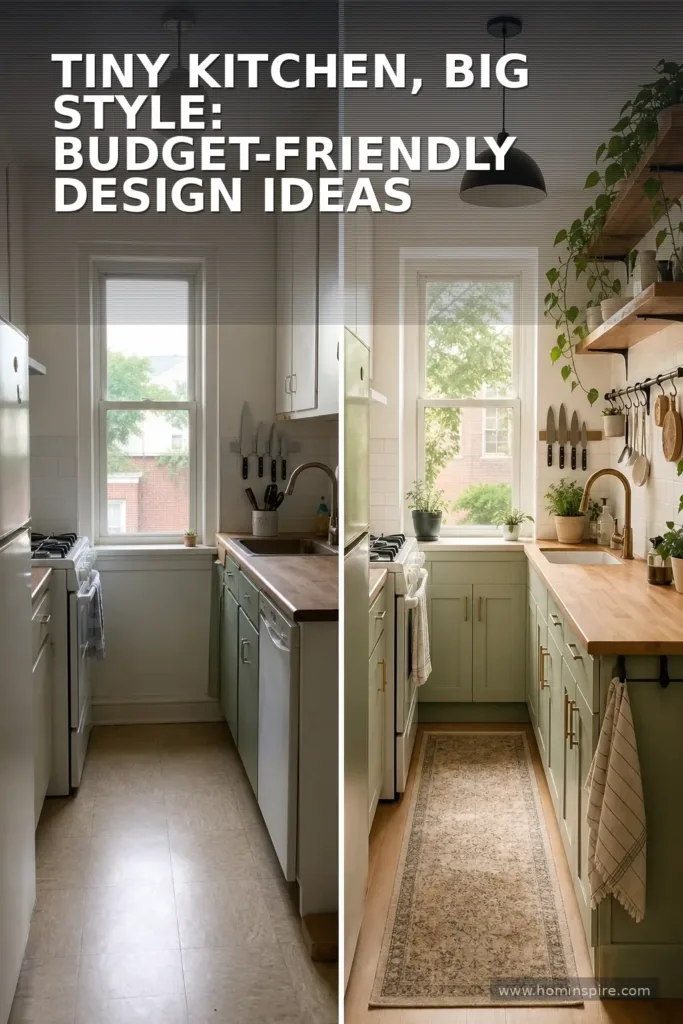
16. Design a Better Galley Kitchen Flow
Galley kitchens can be highly efficient because the main work zones are close together. The key is keeping the center path clear and placing items near where they are used. Store everyday dishes near the dishwasher, cooking tools near the range, and food-prep tools close to the main counter.
Use one side of the galley for cooking and the other for prep or cleanup when possible. Avoid putting a rolling cart in the center walkway unless it can be moved easily. For more space-specific inspiration, see this small galley kitchen makeover before and after guide.
17. Try Renter-Friendly Improvements
Renters can make a major difference without changing permanent finishes. Removable wallpaper, peel-and-stick backsplash, temporary cabinet hardware, plug-in lights, freestanding storage, and adhesive hooks can all improve a kitchen while protecting the security deposit.
Always check your lease before making changes, and test adhesive products in a hidden area first. If cabinet hardware cannot be changed, focus on removable details such as window treatments, counter organization, a runner, and attractive storage containers. Find more practical options in these small kitchen storage ideas for renters.
18. Hide Small Appliances When Possible
Small appliances are convenient, but too many can dominate limited counter space. Store appliances that are used weekly rather than daily in lower cabinets, on a rolling cart, or on a sturdy shelf in a nearby closet. Group frequently used appliances into one dedicated zone instead of spreading them across every surface.
Consider whether multipurpose equipment can replace single-use gadgets. A blender with food-processor attachments or a toaster oven that also air fries may reduce the number of items you need to store.
19. Use Clear Zones Instead of More Containers
Organizing does not always mean buying dozens of bins. First, create zones: breakfast, coffee, baking, lunch supplies, cooking oils, cleaning products, and food storage. Once items are grouped, add containers only where they solve a real problem, such as loose packets, deep shelves, or awkward corners.
This approach keeps costs low and makes it easier to maintain the system. If every category requires a special organizer, the kitchen can become overcomplicated and expensive.
20. Add One Statement Detail
Budget kitchens benefit from one focal point that looks intentional. It might be a painted pantry door, a stylish ceiling fixture, a bold runner, a framed food print, or a simple tile-look backsplash. One memorable feature can make basic cabinets and standard finishes feel more custom.
Keep the rest of the room quiet. A statement works best when it has room to stand out.
A Simple Budget Breakdown for a Small Kitchen Refresh
You can tailor your spending to your priorities, but this sample budget shows how several modest changes can work together:
- $50–$100: decluttering supplies, shelf risers, bins, hooks, and a drawer organizer.
- $75–$200: new hardware, a runner, paint supplies, and better light bulbs.
- $150–$400: cabinet paint, a new light fixture, peel-and-stick backsplash, and under-cabinet lighting.
- $300–$700: a more complete refresh with a cart, upgraded storage, paint, lighting, hardware, and backsplash.
Buy in phases if necessary. Start with organization and decluttering, then add paint and lighting, followed by decorative details. This makes the project manageable and helps you avoid buying pieces that do not fit the final plan.
Small Kitchen Design Mistakes to Avoid
- Overfilling open shelves: Open storage needs editing to look calm rather than crowded.
- Choosing oversized furniture: Measure walkways and door swings before buying carts, tables, or stools.
- Ignoring task lighting: A pretty ceiling light does not replace light directly over prep surfaces.
- Using too many colors: A limited palette makes a small room feel more cohesive.
- Buying organizers before decluttering: Remove duplicates and expired food first, then organize what remains.
- Blocking the work triangle: Keep paths between the sink, refrigerator, and range as clear as possible.
Final Thoughts
The most successful small kitchen design ideas on a budget are rarely about expensive materials. They are about making thoughtful decisions with the space available. Improve lighting, open up the counters, organize cabinets by task, use vertical storage, and choose a few finishes that make the room feel fresh.
Even a weekend project can create a noticeable change. If storage is your biggest challenge, start with these small kitchen storage ideas on a budget or explore small kitchen storage ideas without a pantry. With a clear plan, a modest budget can produce a kitchen that feels larger, calmer, and far easier to enjoy.
Frequently Asked Questions
How can I make a small kitchen look expensive on a budget?
Focus on details that look intentional: fresh cabinet paint, matching hardware, warm lighting, clear counters, and a simple backsplash. Use a limited color palette and avoid overcrowding shelves or counters. A clean, organized kitchen usually looks more high-end than one filled with expensive but mismatched decor.
What is the cheapest way to update a small kitchen?
The cheapest updates are decluttering, deep cleaning, reorganizing cabinets, changing light bulbs, adding adhesive hooks, and styling the counter with a tray. After that, paint and cabinet hardware generally offer the greatest visual impact for the cost.
What colors make a small kitchen look bigger?
Light, reflective colors such as warm white, cream, pale gray, soft beige, and light blue-green can make a small kitchen feel larger. Using a similar color on walls and cabinets reduces visual interruptions and creates a more open appearance.
How do I add storage to a small kitchen without remodeling?
Add shelf risers, drawer dividers, pullout bins, wall rails, magnetic knife strips, over-the-door organizers, and a narrow rolling cart. Use vertical dividers for baking sheets and cutting boards, and create zones so cabinets are easier to use.
Are peel-and-stick backsplashes worth it?
Peel-and-stick backsplashes can be worthwhile for a budget update, especially in rentals or temporary homes. Choose a quality product, prep the wall well, and verify that it is appropriate for areas near heat and moisture. It is best used as a cosmetic refresh rather than a substitute for permanent tile in demanding conditions.
