
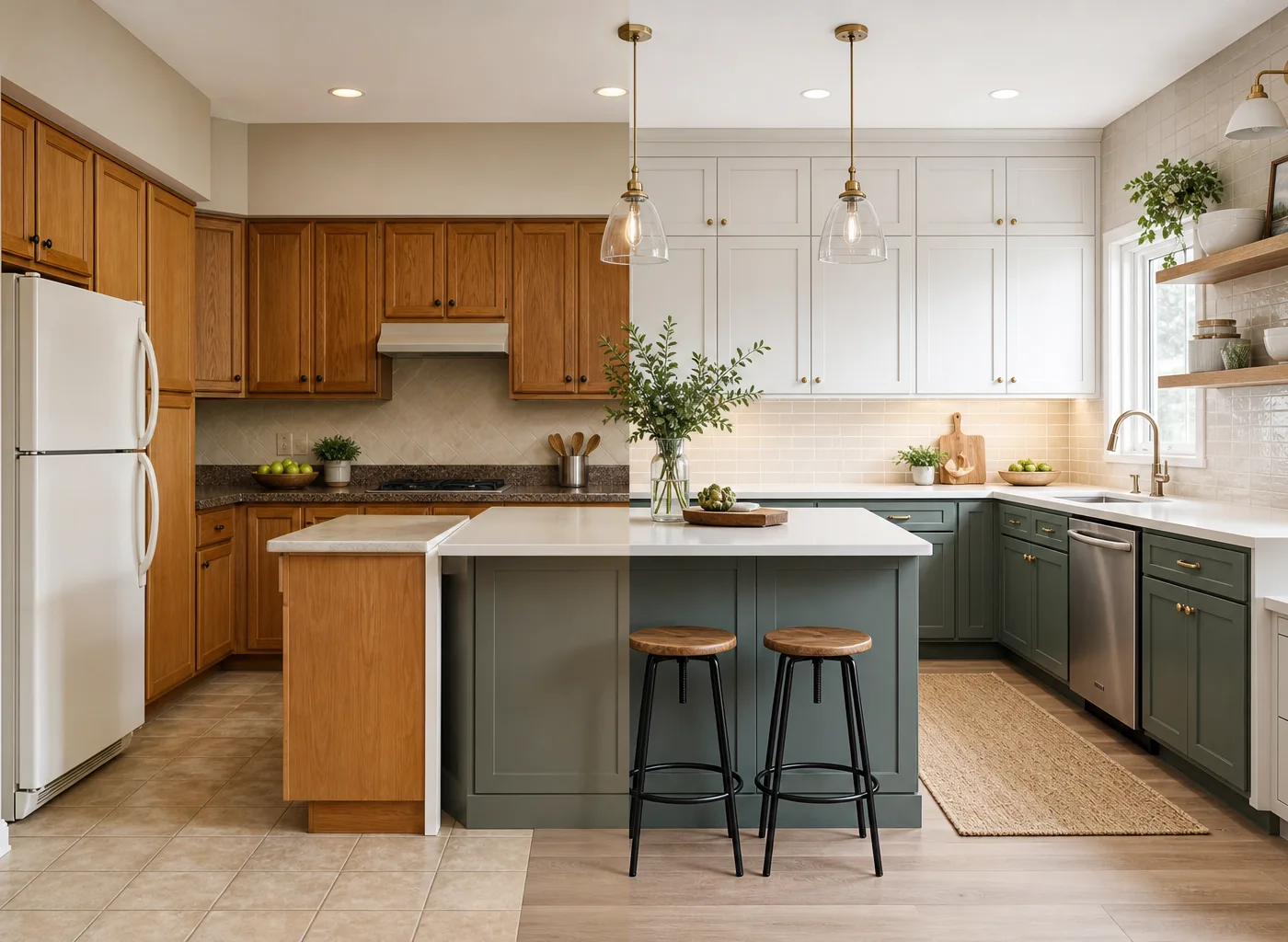
Replacing kitchen cabinets is one of the biggest expenses in a renovation—and often one of the messiest. Fortunately, it is not the only route to a kitchen that looks current, clean, and intentional. If your cabinet boxes are sturdy, the doors function properly, and the layout works for your household, you can make dramatic changes without tearing them out.
Learning how to update a kitchen without replacing cabinets is mostly about improving the elements people notice first: cabinet finishes, hardware, lighting, countertops, walls, and visual clutter. A few thoughtful upgrades can make dated cabinetry blend into a fresh, cohesive design rather than stand out as a problem.
Use this guide to decide what is worth updating, create a practical order of operations, and choose projects that fit your budget, skill level, and kitchen style.
Start by Assessing What You Can Keep
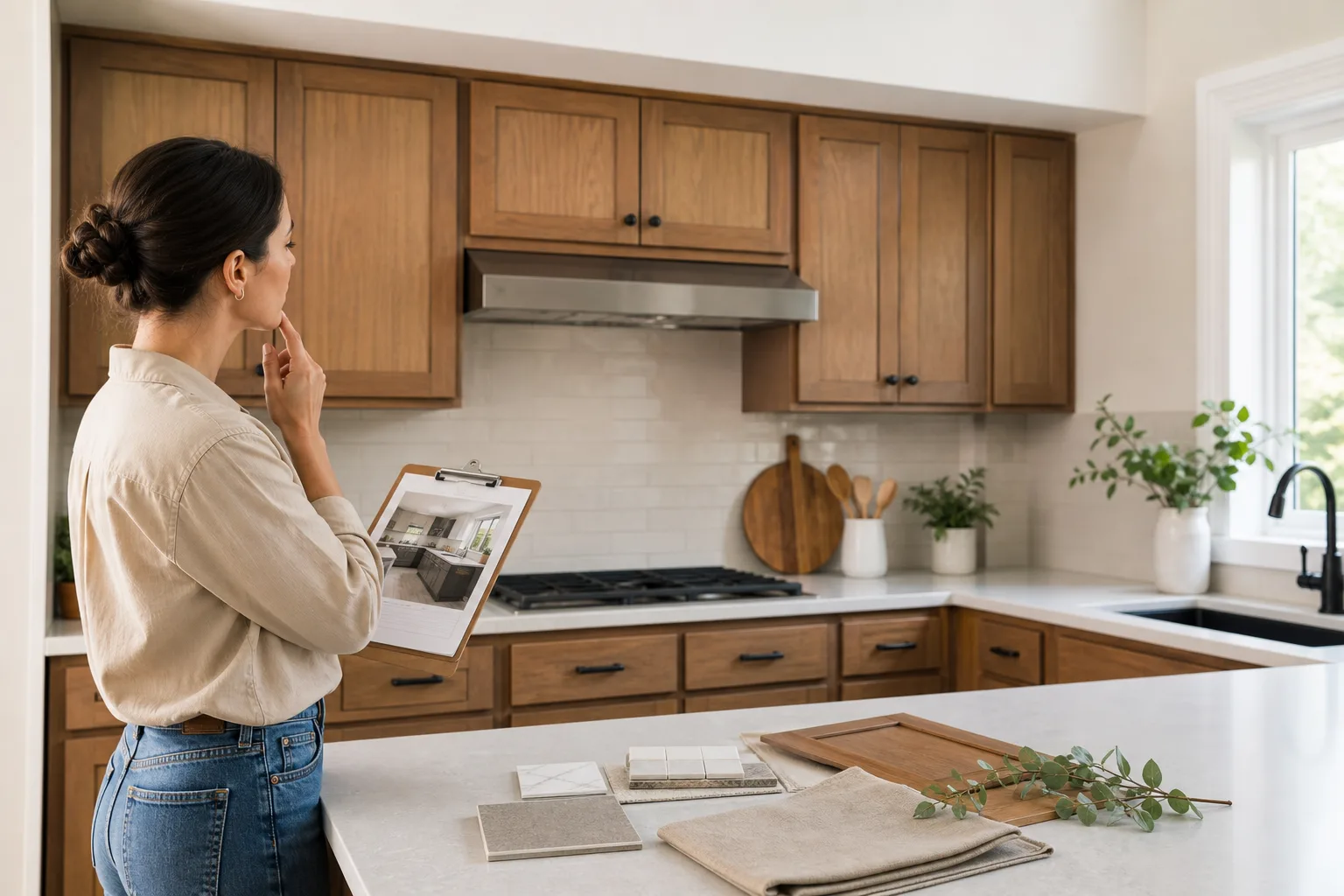
Before buying paint or fixtures, take an honest look at the cabinets themselves. Cosmetic updates work best when the cabinet boxes are structurally sound. Open and close every door and drawer, inspect the sink-base cabinet for water damage, and look for loose hinges, peeling veneer, warped doors, or swollen particleboard.
Minor problems are usually repairable. Tightening hinges, filling small dents, replacing a damaged drawer slide, and adding new door bumpers can make cabinets feel much better. However, severe water damage, widespread delamination, mold, or cabinets that cannot safely hold countertop weight may justify professional repair or replacement.
If the cabinets are usable but visually dated, set a clear goal. Do you want a brighter kitchen, a warmer look, more storage, a cleaner modern style, or a low-cost refresh before selling? That goal will help you avoid making several unrelated updates that compete with each other.
1. Paint or Refinish the Cabinet Doors
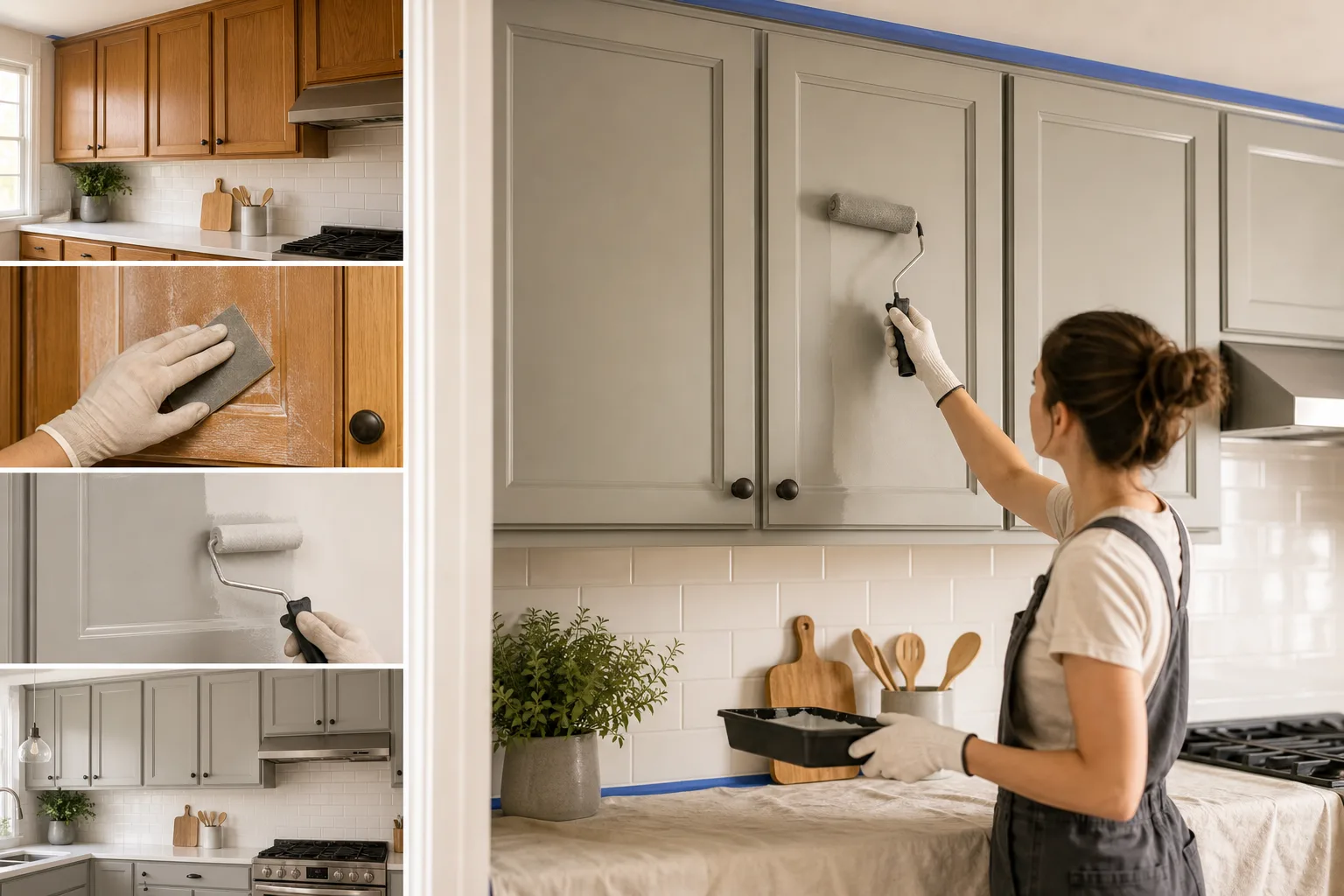
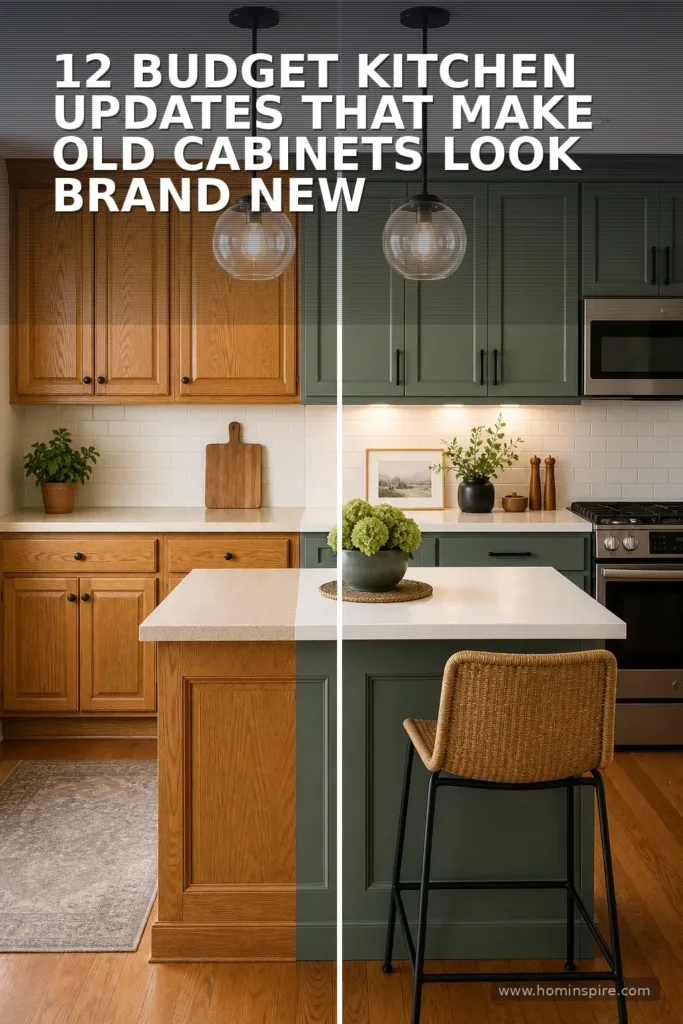
Painting is usually the most transformative way to update cabinets without replacing them. It can turn orange-toned oak, yellowed white laminate, dark cherry, or tired builder-grade cabinets into a finish that supports the rest of your kitchen.
For a lasting result, prep matters more than the paint color. Remove doors and drawer fronts when possible, label every piece, clean away grease with a degreaser, lightly sand or degloss the surface, repair dents, and use a bonding primer suited to the cabinet material. Follow with a durable cabinet enamel or a high-quality waterborne alkyd paint. Allow adequate curing time before reinstalling doors and using the kitchen heavily.
Soft white, warm greige, muted sage, deep navy, charcoal, and natural mushroom tones all work well in American homes, but the best choice depends on your light levels and fixed finishes. In a small or dark kitchen, a light cabinet color can help reflect available light. If you have plenty of daylight and light counters, a deep lower-cabinet color can add welcome contrast.
Not ready to paint every cabinet? Try a two-tone approach. Paint only the base cabinets, the island, or a bank of upper cabinets. This reduces labor while giving the room a more custom appearance.
2. Replace Old Hardware for an Instant Upgrade
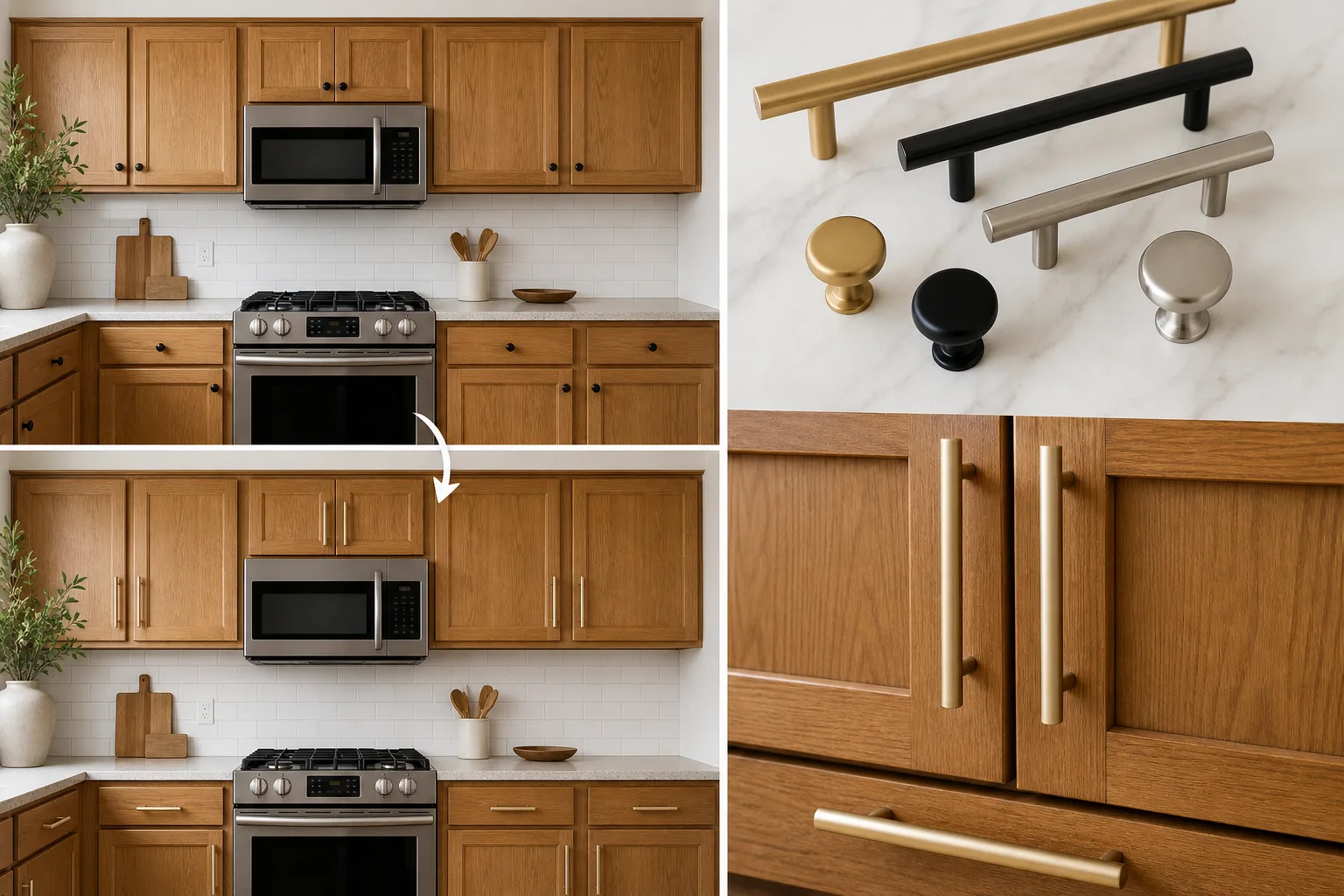
Cabinet hardware is small, but it acts like jewelry for the kitchen. Replacing dated knobs, undersized pulls, or mismatched finishes can make existing cabinets look deliberate rather than old.
First, measure the center-to-center distance between screw holes on your current pulls. Choosing replacement hardware with the same measurement prevents extra drilling and patching. If you are switching from knobs to pulls or changing sizes, make a template so every handle is placed consistently.
Popular options include brushed nickel for a classic neutral look, matte black for contrast, warm brass for a softer traditional or transitional kitchen, and polished chrome for a crisp finish. Keep the hardware finish coordinated with the faucet, lighting, or appliances, but it does not need to match every metal exactly. Two complementary metal finishes often look more layered than one perfectly matched set.
Choose pulls that are comfortable to grasp and large enough for wide drawers. Long drawer pulls can also make standard cabinet fronts look more upscale.
3. Update the Countertops or Refresh Their Surface
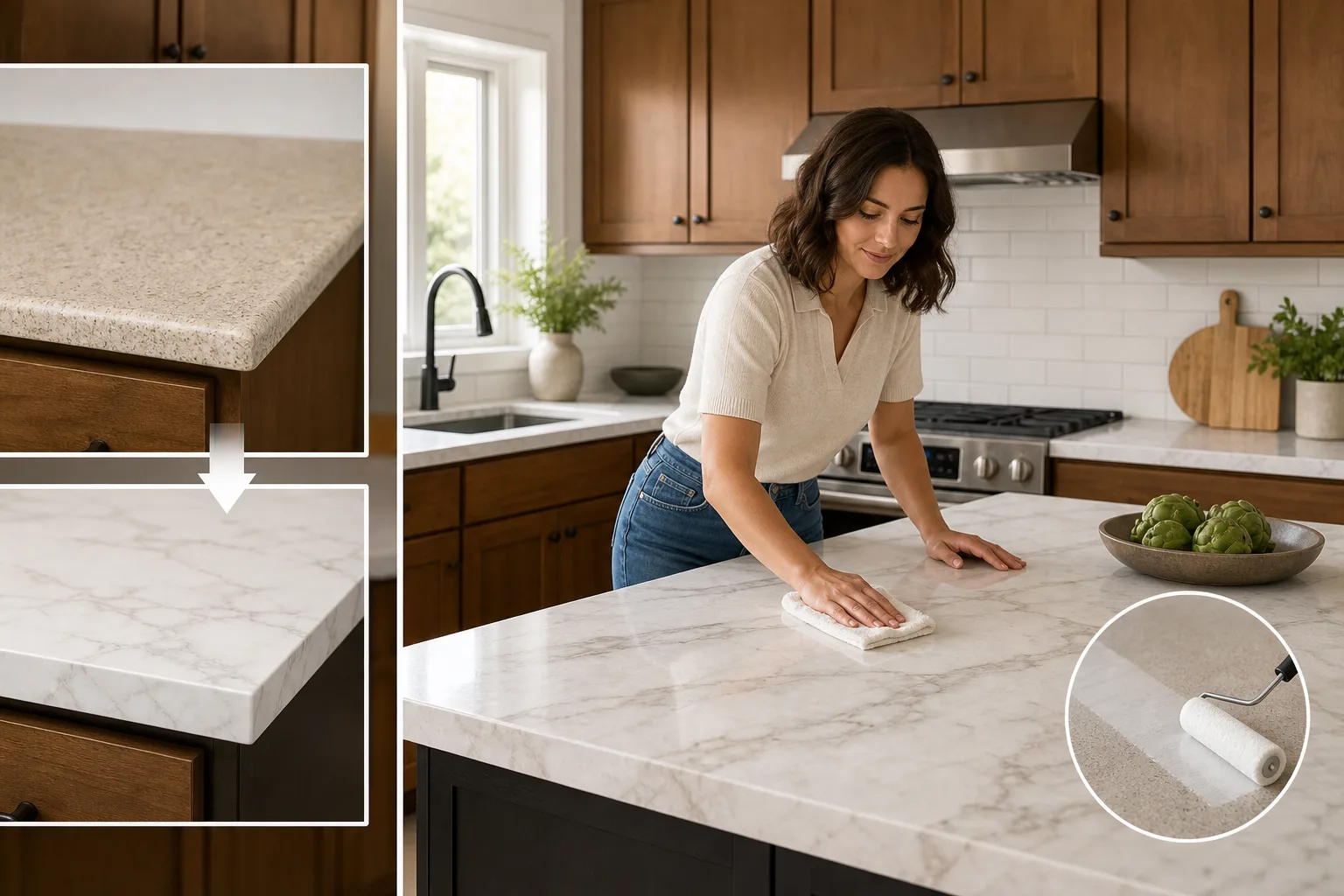
Countertops occupy a large visual area, so changing them can shift the entire kitchen even when the cabinets stay in place. If your budget allows, consider affordable quartz, butcher block, laminate, solid surface, or remnant stone. A local fabricator may have discounted remnants for small kitchens, islands, or coffee bars.
For laminate counters in decent shape, a countertop refinishing kit may be a temporary budget option. Results vary, so carefully follow the manufacturer’s preparation and cure-time directions. Refinishing is generally best for light-use kitchens or short-term updates, while a new countertop is more durable for busy family kitchens.
Butcher block brings warmth to painted cabinets, though it needs sealing and periodic maintenance. Modern laminate offers convincing stone and wood looks at a lower cost. Quartz is low-maintenance and durable, while natural stone may require sealing. Consider how you cook before choosing a material—not just how it looks in a showroom.
When planning a counter update, remember that it may affect the backsplash, sink, faucet, and cooktop. Combining related work can reduce repeated labor and help the final design feel unified.
4. Install a Fresh Backsplash
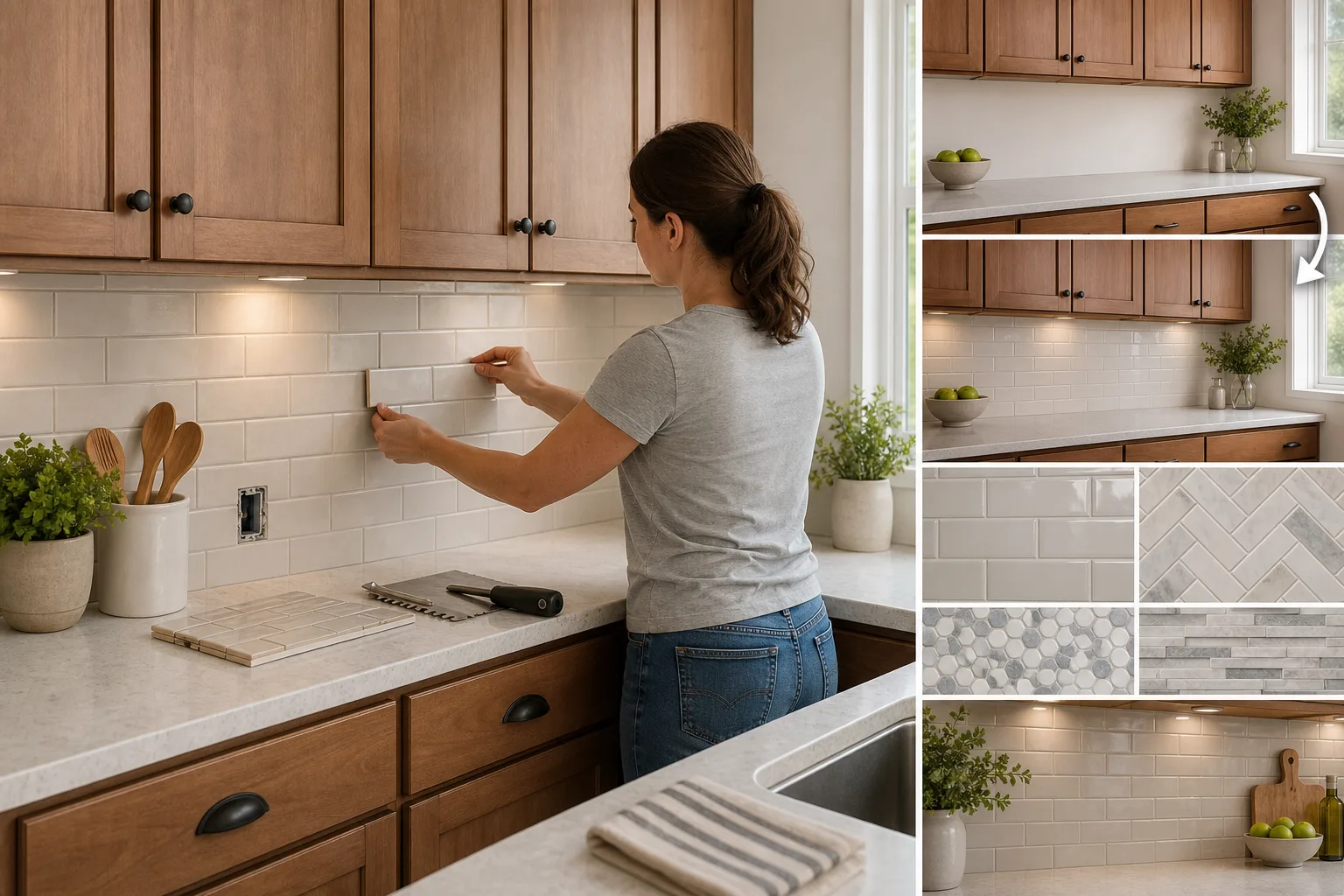
A backsplash is one of the best ways to add pattern, texture, and personality without touching the cabinet boxes. Classic white subway tile is timeless, but it is far from the only option. Zellige-inspired tile, elongated subway tile, small square tile, simple marble-look porcelain, and vertical stacked layouts can all make a kitchen feel more current.
For a more seamless look, run the backsplash to the underside of upper cabinets. If you have open wall space, taking tile higher behind the range or sink can create a focal point. Grout color matters, too: matching grout looks subtle and calm, while contrasting grout makes the tile pattern more visible.
Peel-and-stick backsplash can be useful for renters, temporary updates, or low-heat areas, but check whether it is rated for use behind a stove and whether it can be removed without damaging the wall. For more renter-conscious projects, see these renter-friendly kitchen storage ideas without drilling.
5. Upgrade the Faucet and Sink Area
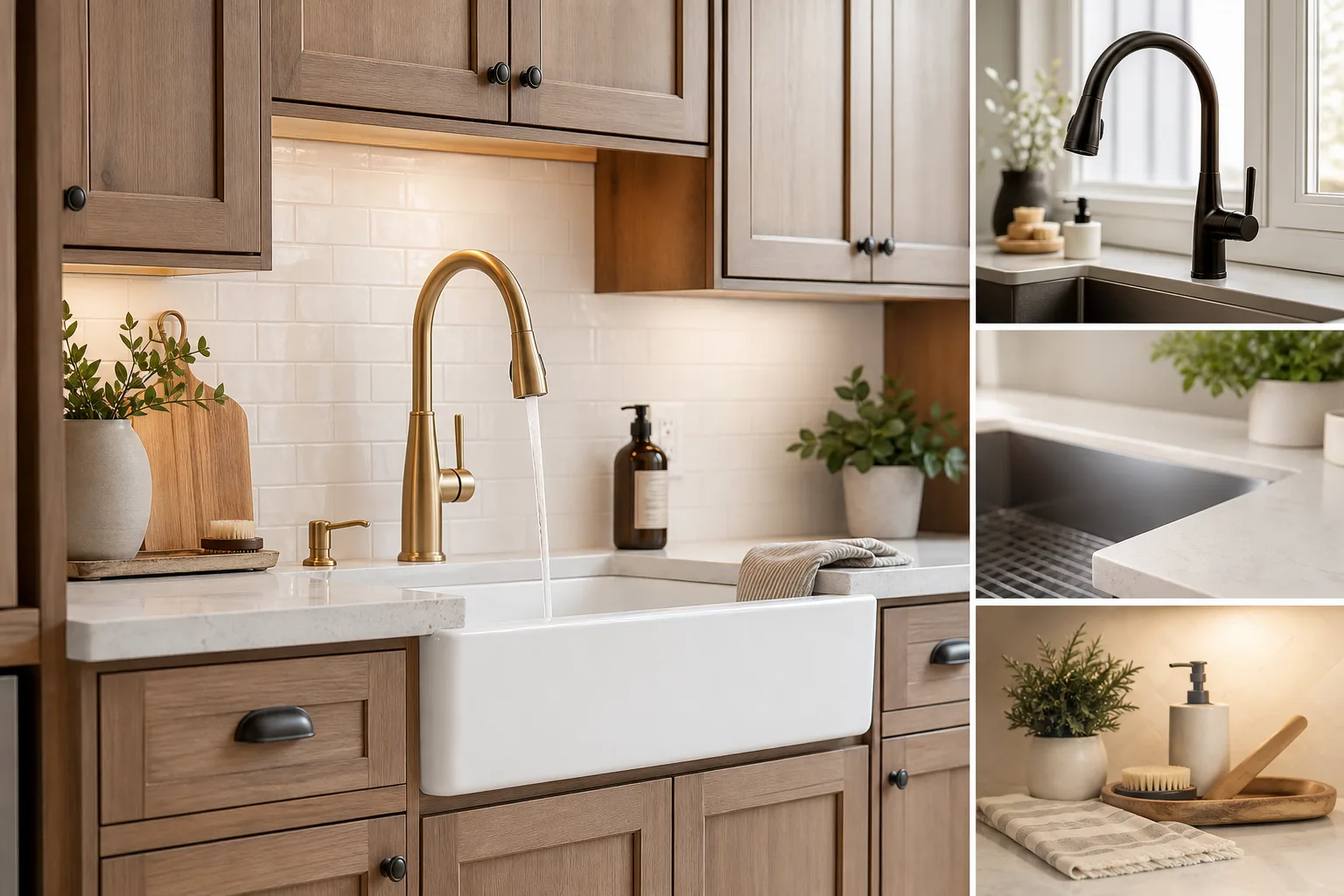
The sink is a hardworking zone, and a dated faucet can make the whole kitchen feel older than it is. A new faucet is a relatively compact project with a noticeable payoff. Look for a model with a pull-down or pull-out sprayer, a comfortable handle, and a finish that complements your cabinet hardware.
If the sink is stained, chipped, or too shallow, replacing it alongside the countertop can be especially efficient. A single-bowl undermount sink offers a clean, modern look when paired with compatible solid-surface counters. A drop-in sink can be easier to install with existing laminate counters.
Do not overlook the practical details: measure the number of existing faucet holes, confirm cabinet clearance, and check whether your water shutoff valves are working before beginning. A plumber can handle a straightforward faucet swap if you prefer not to work with water connections.
6. Improve the Lighting in Layers
Good lighting can make existing cabinets look better immediately. Many older kitchens rely on one ceiling fixture that leaves counters and cabinet faces in shadow. Add light in layers: ambient lighting for the room, task lighting for work areas, and accent lighting for visual warmth.
Under-cabinet lighting is especially effective because it brightens the backsplash and countertops while making food prep easier. Plug-in LED strips are a simple option, while hardwired fixtures look more integrated. Choose a warm-neutral temperature around 2700K to 3000K for a welcoming residential feel unless the rest of your home uses a cooler light.
Replace an outdated flush mount, pendant, or dining-area fixture with a design that suits the kitchen’s scale. In a small kitchen, avoid oversized pendants that block sightlines. For more compact-space strategies, explore these modern small kitchen decor ideas.
7. Paint the Walls, Ceiling, and Trim
A wall color that once worked with the cabinets may not support your updated finishes. Painting walls is an affordable way to make the entire room look cleaner and more intentional. Warm white, soft beige, pale gray-green, and muted blue are flexible choices, but sample colors next to the cabinet finish, countertop, backsplash, and floor before committing.
Fresh white trim can sharpen the room, especially around windows and doorways. If your ceiling is dingy or yellowed, repainting it in a flat ceiling white makes the kitchen feel brighter. This simple step is easy to overlook because it does not sound glamorous, yet it greatly improves the perception of cleanliness.
8. Add Cabinet Molding or Simple Architectural Details
Basic cabinets can look more built-in with carefully added trim. Crown molding above upper cabinets can close an awkward gap near the ceiling, while light rail molding beneath upper cabinets can hide under-cabinet lights and create a more finished profile.
You can also add thin trim to flat cabinet doors to create a shaker-style appearance, provided the door surface is stable and you have enough clearance around hinges and drawers. This project requires precise measuring and a smooth paint finish, but the material cost can be modest compared with new doors.
If you have open space over cabinets, avoid filling it with random decor. Either keep it clean, add molding to visually finish the cabinets, or use a few intentional pieces with room to breathe.
9. Make Storage Work Harder
A kitchen feels updated when it functions better. You may not be changing the cabinet boxes, but interior organizers can eliminate daily frustration. Add pull-out trash bins, drawer dividers, roll-out shelves, spice organizers, tray dividers, and under-sink bins based on how you actually use the room.
Start with the zones that create the most mess: the utensil drawer, food-storage container cabinet, corner base cabinet, and area beneath the sink. Clear containers and simple labels can improve pantry visibility, while door-mounted racks can hold wraps, cutting boards, or cleaning supplies where appropriate.
If storage is limited, look beyond traditional cabinet interiors. These hidden pantry ideas can inspire discreet ways to add capacity, while these small kitchen storage ideas for renters focus on flexible, damage-conscious solutions.
10. Refresh Appliances Strategically
You do not have to replace every appliance at once. Start with the item that is failing, visually distracting, or most important to your routine. A new range hood, microwave, dishwasher, or refrigerator can lift the kitchen’s appearance, particularly if old appliances have mismatched finishes.
If replacement is not in the budget, clean appliances deeply and replace worn handles, filters, or drip pans where applicable. Appliance paint may be an option for certain surfaces, but read product instructions carefully and understand that it is not suitable for all appliance parts or high-heat areas.
For a cohesive look, choose a finish that works with the faucet and hardware. Stainless steel remains versatile, while black stainless, matte white, and panel-ready appliances can support more specific design directions.
11. Reduce Visual Clutter on the Counters
Even a newly painted kitchen can feel dated if every counter is crowded with appliances, mail, bottles, and mismatched containers. Edit what stays out. Keep only daily-use tools within reach, such as a coffee maker, utensil crock, or cutting board, and give the rest a cabinet, drawer, or pantry home.
Use one tray to contain a small collection of items near the coffee station or sink. A tray makes the arrangement look purposeful and simplifies wiping the counter. For more styling guidance, browse these kitchen counter tray decor ideas and kitchen counter decor ideas without clutter.
Simple decor works best: a small plant, a bowl of fruit, a wood board leaning against the backsplash, or a framed recipe print. Leave enough empty space for the kitchen to feel useful, not staged.
12. Finish with Flooring, Window Treatments, and Textiles
Cabinets do not exist in isolation. If the floor is badly worn, replacing it with durable luxury vinyl plank, tile, or another practical surface can change the kitchen dramatically. If new flooring is not possible, use washable runners to soften the space and distract from minor imperfections.
Update window treatments with easy-to-clean woven shades, simple Roman shades, or minimal curtains that do not block light. Add a coordinated runner, dish towels, and a few useful wood or ceramic accents to tie the cabinet color, hardware, and backsplash together.
Avoid purchasing every item from one matching collection. A more natural kitchen combines a few compatible finishes, textures, and materials rather than relying on a single theme.
A Smart Order for Updating a Kitchen on a Budget
Doing projects in the right sequence protects finished surfaces and prevents unnecessary rework. A practical order is:
- Set a budget, choose a style direction, and measure the room.
- Repair cabinet boxes, doors, drawers, and hinges.
- Complete messy work such as wall repair, cabinet painting, flooring, or trim installation.
- Replace countertops, sink, and backsplash if those projects are planned.
- Install lighting, faucet, hardware, and organizers.
- Paint touch-ups, deep clean, and add decor last.
If your budget is tight, focus on paint, hardware, lighting, and decluttering first. Those changes often make enough difference that you can delay more expensive projects. For additional affordable inspiration, see these budget kitchen makeover ideas and small kitchen makeover ideas on a low budget.
Common Mistakes to Avoid
Skipping cabinet prep: Grease, gloss, and poor priming are major reasons cabinet paint chips early. Clean and prep thoroughly.
Choosing finishes separately: Bring samples together before ordering. A white backsplash, white counter, and white cabinet can have noticeably different undertones.
Buying hardware without measuring: Confirm hole spacing, projection, and drawer width before purchasing multiples.
Ignoring function: A beautiful kitchen still disappoints if drawers stick, lighting is dim, or frequently used items have no home.
Overdecorating: Decorative items should not consume valuable prep space. In small kitchens especially, restraint makes the room look larger and more polished.
FAQ: How to Update a Kitchen Without Replacing Cabinets
Can you make old kitchen cabinets look modern without replacing them?
Yes. Paint or refinish the doors, install updated hardware, add trim if appropriate, improve lighting, and pair the cabinets with a current backsplash or countertop. Clean lines and uncluttered counters also make a major difference.
What is the cheapest way to update kitchen cabinets?
The lowest-cost high-impact option is usually a deep clean followed by new knobs or pulls. Painting cabinets costs more in supplies and time but generally creates the biggest visual transformation without buying new cabinetry.
Is it better to paint or reface kitchen cabinets?
Painting is typically less expensive and works well for solid, paintable doors in good condition. Refacing replaces doors and drawer fronts while retaining the cabinet boxes, making it a useful middle-ground option when you want a different door style but do not need a new layout.
How long do painted kitchen cabinets last?
Well-prepared and properly cured painted cabinets can look good for many years. Durability depends on the cabinet material, prep work, paint quality, moisture exposure, cleaning habits, and how heavily the kitchen is used. High-touch areas may need occasional touch-ups.
What should I update first in an outdated kitchen?
Start with repairs, cleaning, and a design plan. Next, prioritize cabinet paint or hardware, lighting, and wall color. These improvements are relatively cost-effective and help you decide whether larger upgrades such as counters or flooring are still necessary.
