
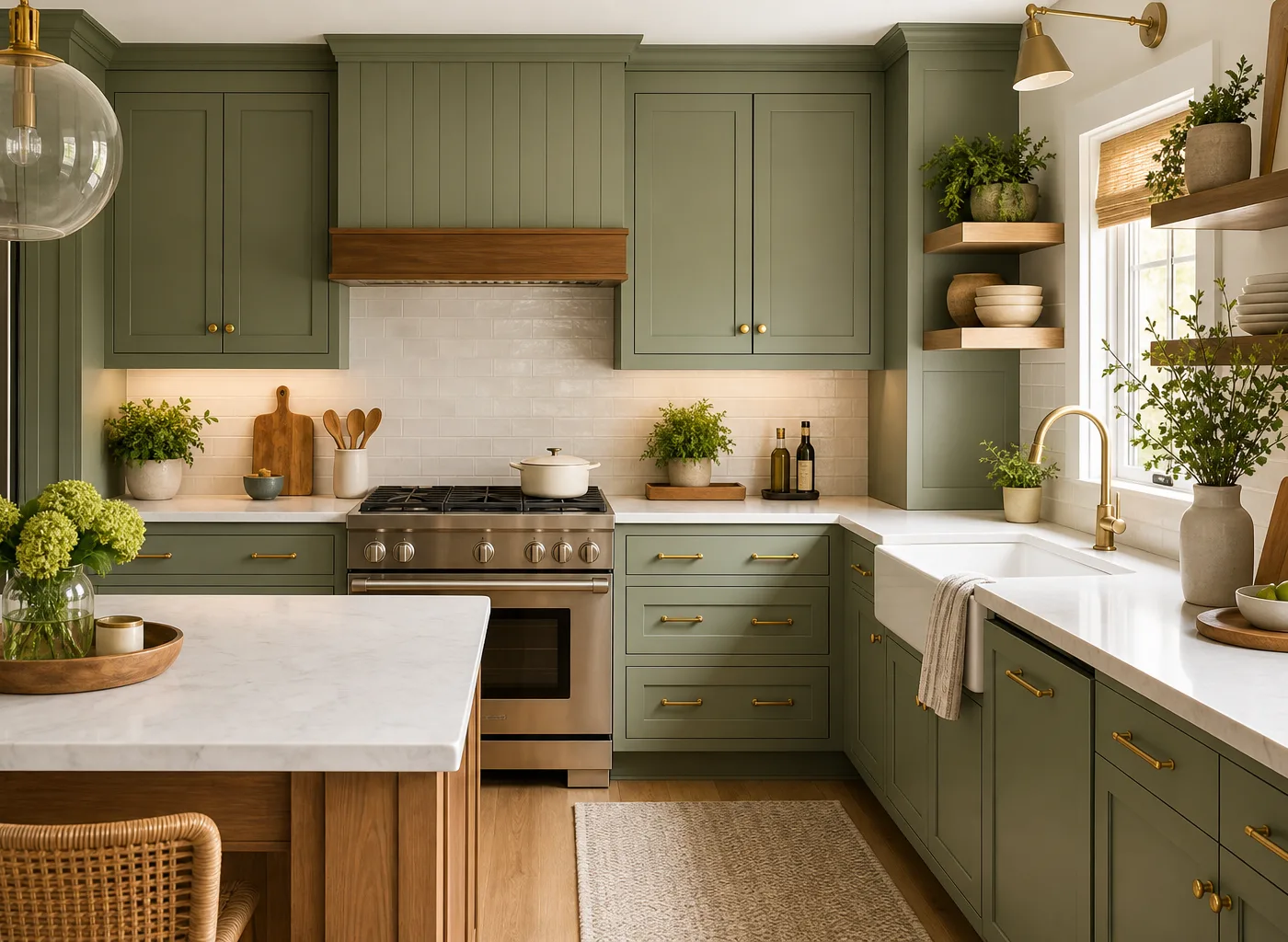
A kitchen renovation does not have to begin with tearing out perfectly usable cabinets. Cabinet replacement is often the largest single expense in a remodel, and it can turn a simple cosmetic update into weeks of demolition, dust, and disruption. If your cabinet boxes are structurally sound and the layout works for your household, keeping them can free up your budget for changes that make a much bigger visual difference than you may expect.
These kitchen makeover ideas without replacing the cabinets focus on the details people notice first: color, contrast, lighting, surfaces, organization, and styling. Whether you want a low-cost weekend refresh or a more polished semi-custom result, you can create a kitchen that feels current without starting from scratch.
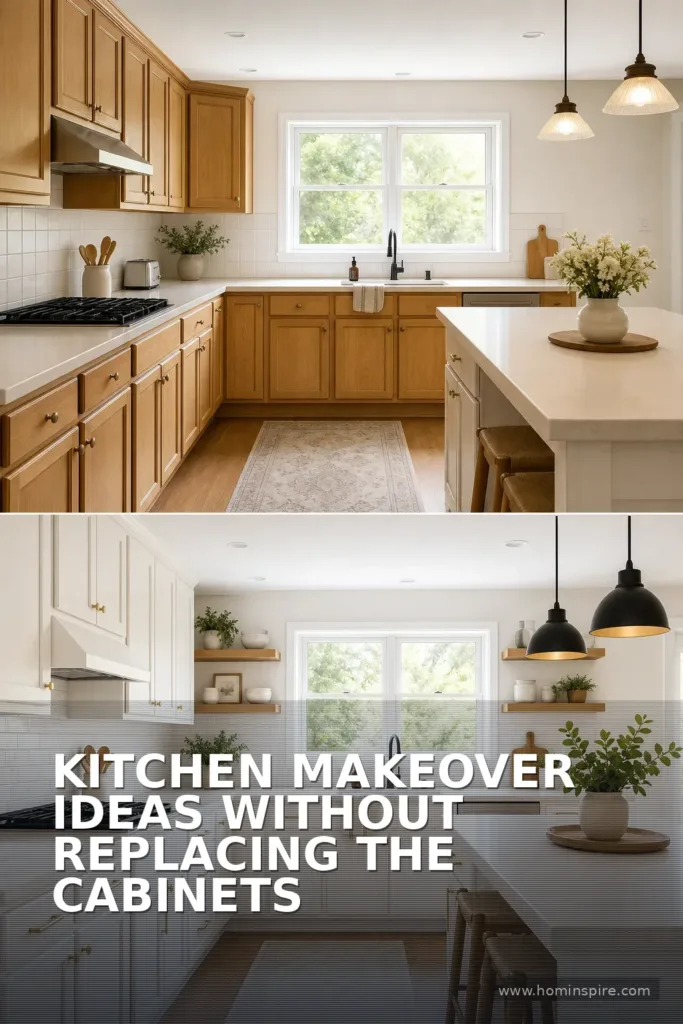
Start With an Honest Cabinet Assessment
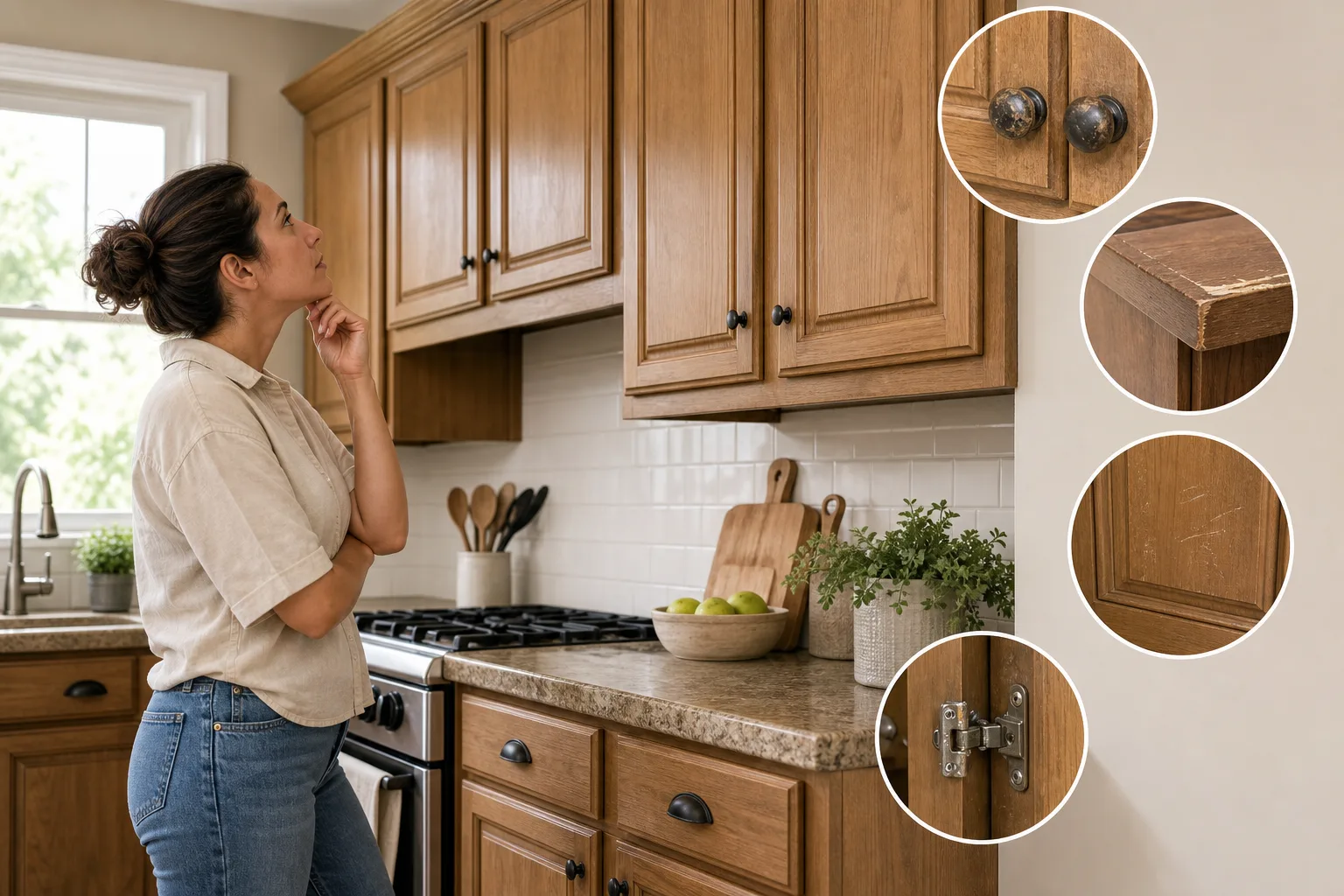
Before choosing paint colors or hardware, inspect what you have. Open and close every door and drawer. Look for water damage under the sink, peeling veneer, warped panels, loose hinges, and cabinet boxes that have pulled away from the wall. Cosmetic wear is usually fixable; major moisture damage or unstable construction may require repair before any makeover work begins.
Also consider the layout. If you can comfortably prep food, unload the dishwasher, and access everyday items, your existing cabinet footprint is likely worth preserving. Small improvements such as pull-out organizers, better lighting, and a clearer countertop can make an older layout work much harder.
1. Paint or Refinish the Cabinet Doors
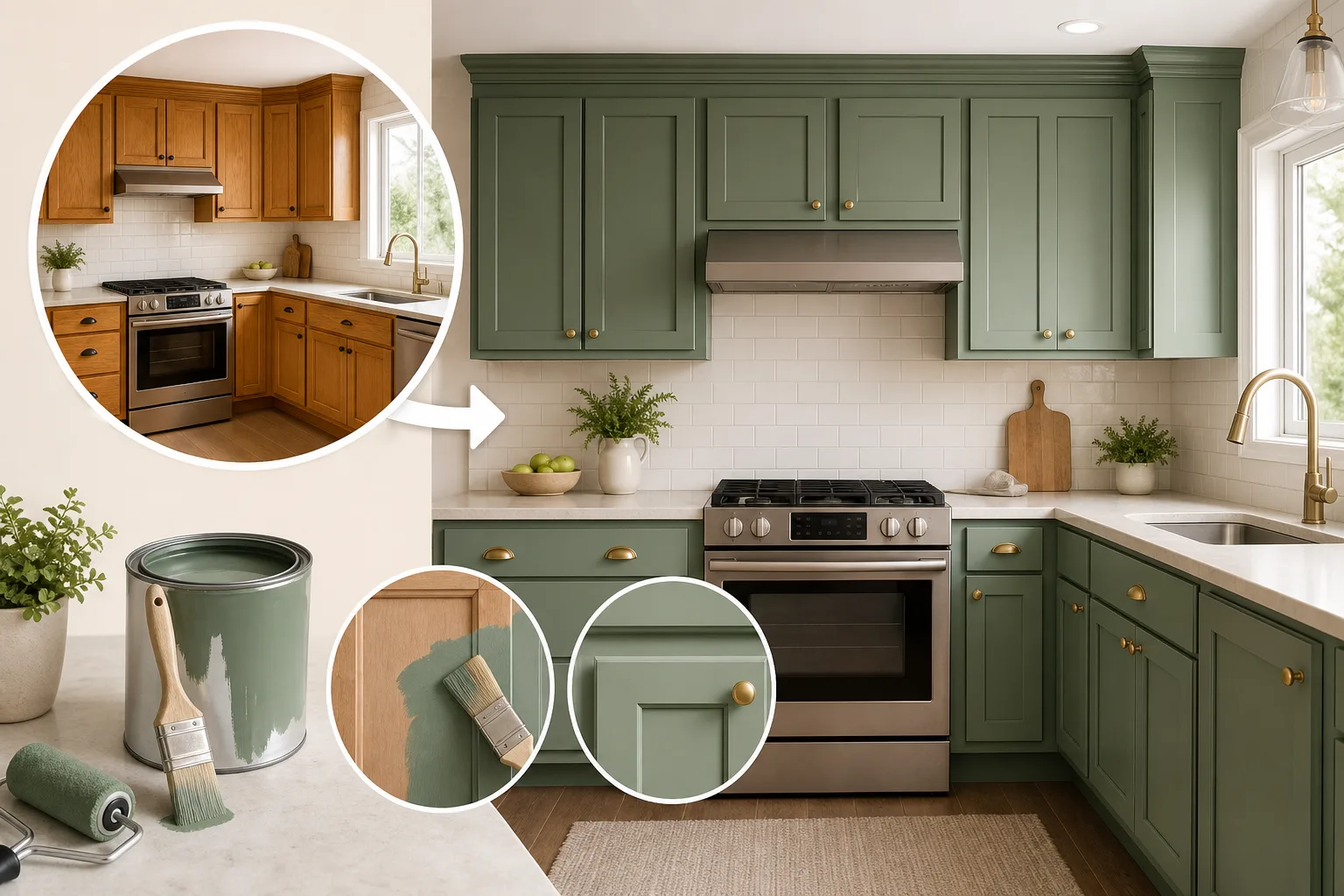
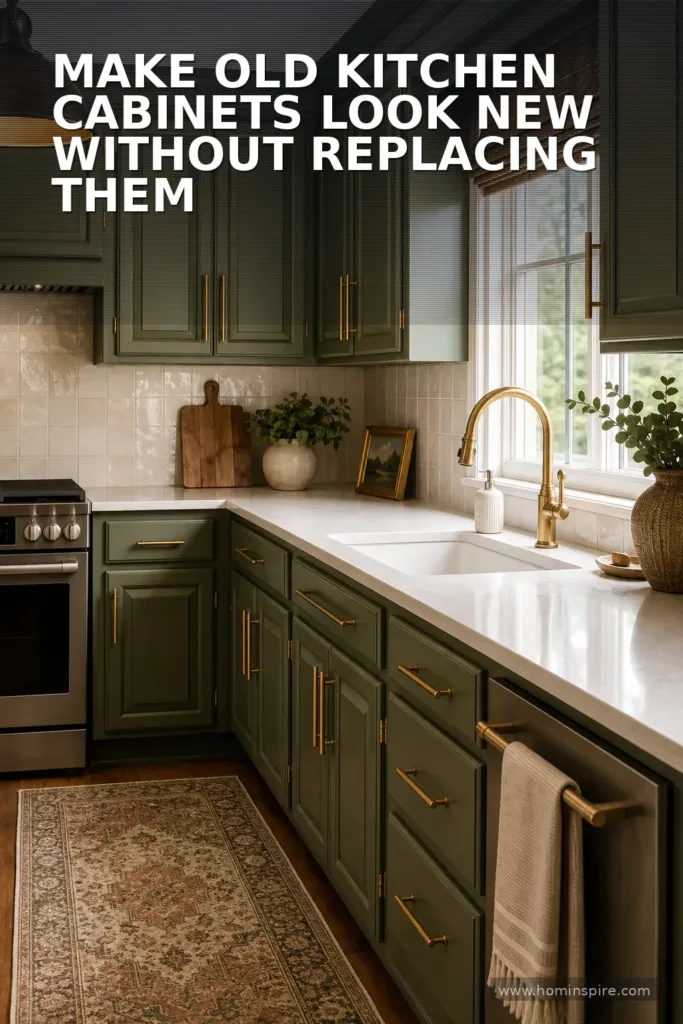
Painting cabinet doors is the most dramatic way to change a kitchen while keeping the cabinets. White remains a bright, flexible choice, but warm off-whites, muted sage, soft blue-gray, charcoal, and deep navy can give a room more personality. For a two-tone look, paint lower cabinets a darker shade and keep uppers light to maintain an open feel.
Preparation determines whether painted cabinets look polished or quickly wear out. Remove doors, drawers, hinges, and hardware; clean every surface with a degreaser; fill dents; sand or degloss; and use a bonding primer suited to the cabinet material. Follow with a durable cabinet enamel or urethane-acrylic paint. Label each door and its hardware as you remove it so reinstallation is simple.
If the wood grain is attractive, refinishing may be a better option than paint. A lighter stain, clear matte topcoat, or professional spray finish can update orange-toned wood while retaining its warmth. Laminate and thermofoil cabinets need especially careful prep and the right bonding products, so test your system on the back of a door first.
2. Replace Hardware for an Instant Upgrade
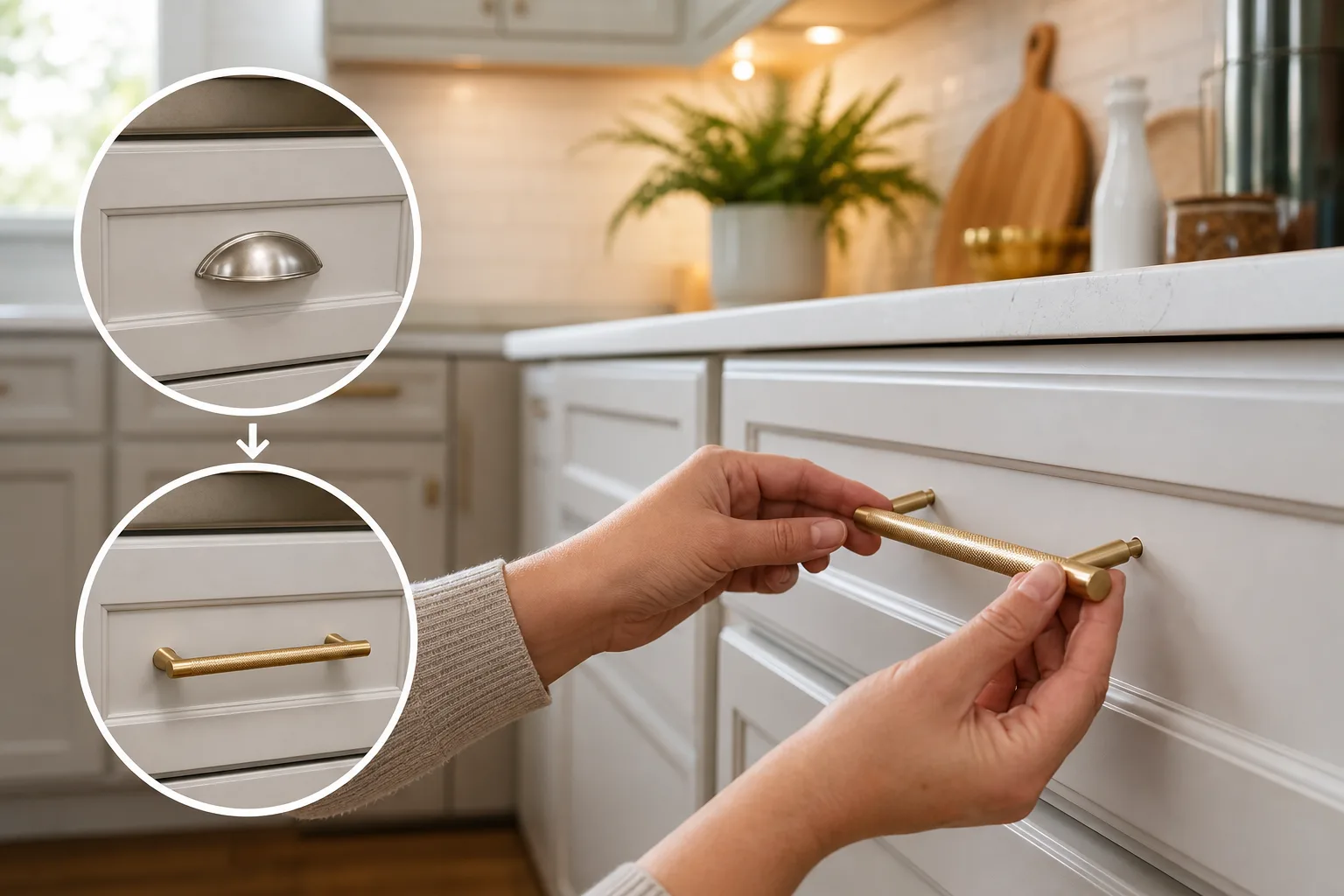
New knobs, pulls, and hinges are small changes with outsized impact. Hardware can make basic cabinets look more intentional, especially when the old pieces are dated, mismatched, or worn. Brushed nickel is versatile and familiar, while matte black adds graphic contrast. Unlacquered brass and warm bronze work well in traditional, transitional, and modern-organic kitchens.
Measure existing hole spacing before ordering pulls. Choosing the same center-to-center measurement lets you avoid filling and drilling holes. If you are changing sizes or styles, use a hardware template to keep placement consistent. Soft-close hinges are another worthwhile update when compatible with your doors; they make everyday use feel quieter and more refined.
3. Add a New Backsplash
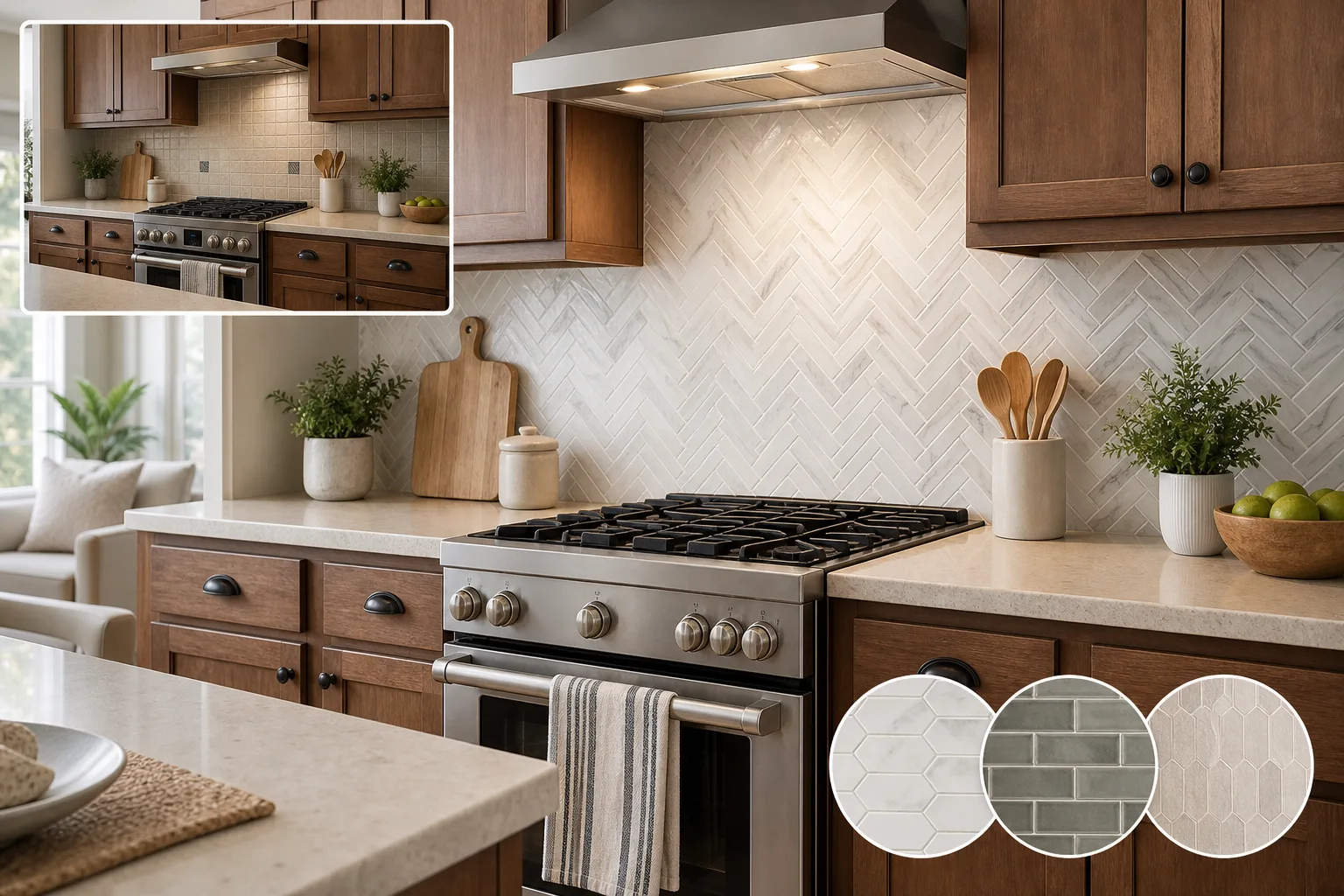
A backsplash creates a visual bridge between cabinets and countertops, so updating it can transform the entire kitchen. Classic white subway tile is affordable and timeless, but it is far from the only option. Consider handmade-look ceramic tile, elongated subway tile, small-scale mosaic, beadboard, slab-style panels, or a bold patterned tile used in a limited area.
For a rental-friendly or lower-commitment project, quality peel-and-stick backsplash panels can provide a temporary refresh. Apply them only to clean, dry, smooth walls, and do not expect them to perform like permanent tile directly behind high-heat cooking zones unless the manufacturer says they are rated for that use. A new grout color or fresh caulk line can also improve existing tile for very little money.
4. Upgrade the Countertops—or Make the Existing Ones Look Better
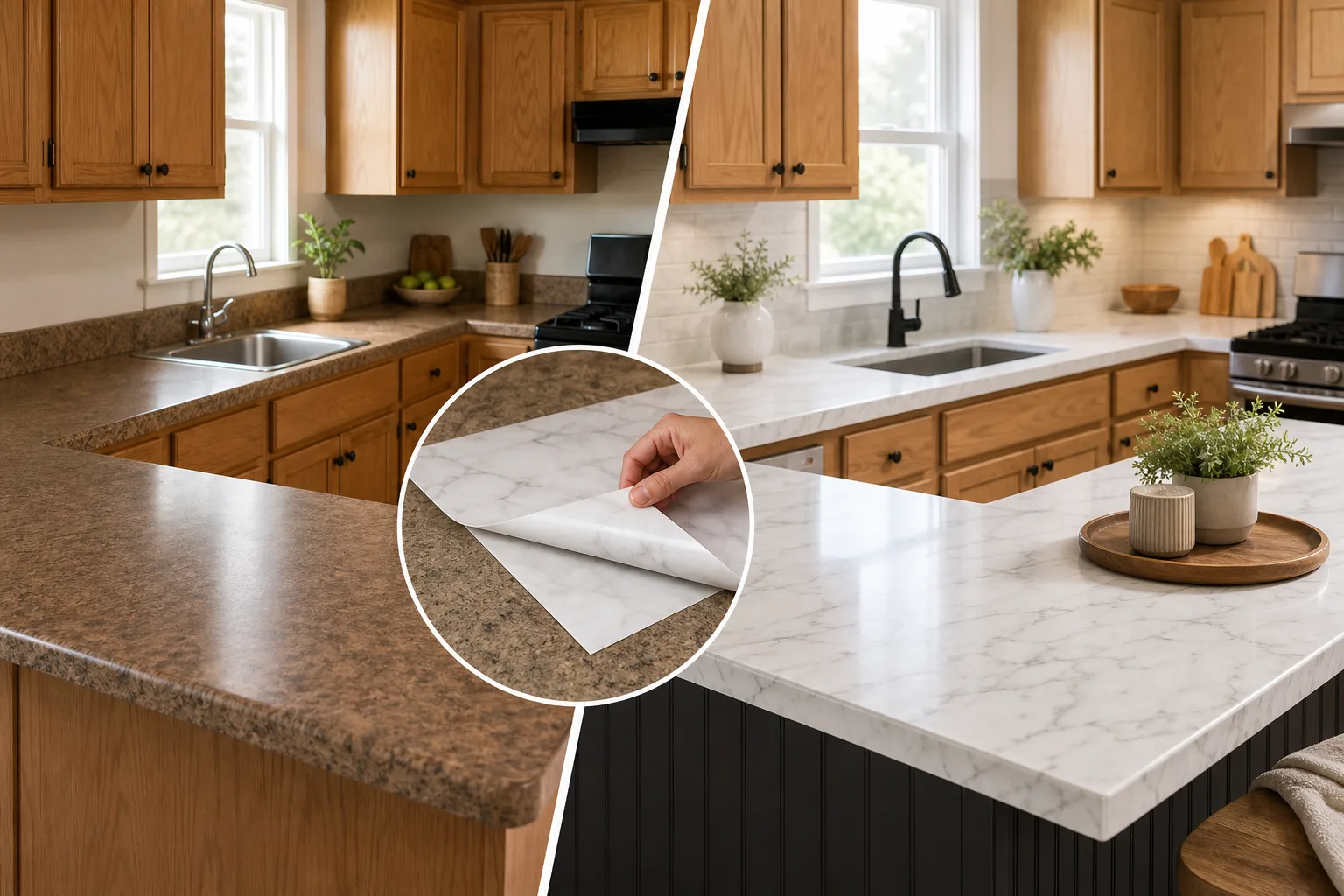
Countertops heavily influence how old or new a kitchen feels. If your budget allows, replacing laminate, damaged tile, or worn solid surface counters can be a high-value investment while avoiding cabinet replacement. Durable options include quartz, granite, butcher block, solid surface, and modern laminate with realistic stone or wood patterns.
When replacement is not practical, focus on maintenance and visual cleanup. Re-caulk the seam where the countertop meets the backsplash, repair chips where possible, remove stains according to the material manufacturer’s recommendations, and clear unnecessary appliances. Countertop refinishing kits exist, but they require meticulous prep and may not hold up as well as a new surface in heavy-use kitchens. Treat them as a budget bridge rather than a permanent solution.
5. Improve Lighting at Every Level
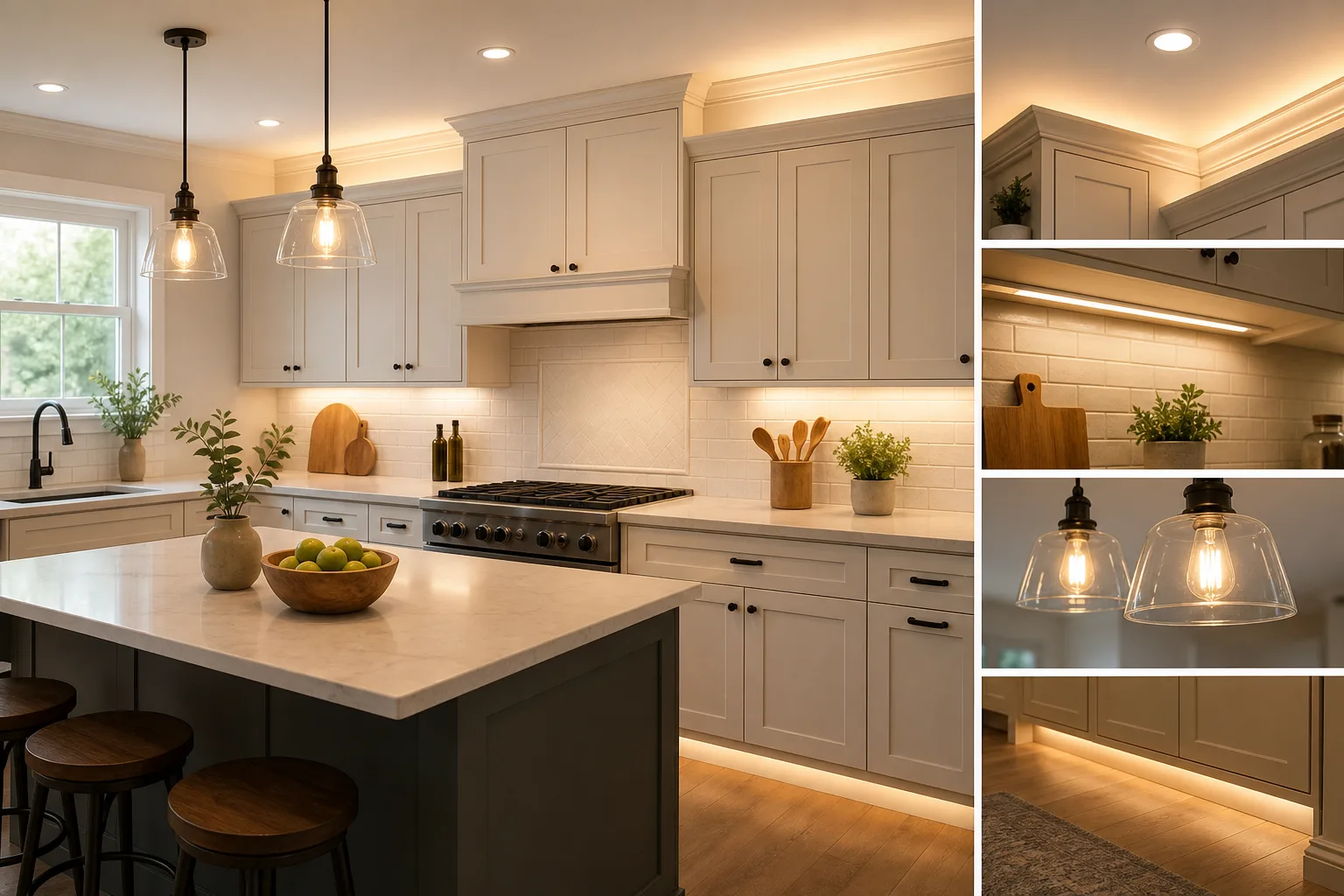
Lighting can make a dated kitchen seem dark and cramped even when the finishes are in good condition. Aim for three layers: ambient light for the room, task light for work surfaces, and accent light for visual warmth. Replace an outdated flush mount or pendant with a fixture that fits the scale of the room. In a small kitchen, one streamlined ceiling fixture may work better than several oversized statement lights.
Under-cabinet lighting is one of the most practical additions you can make. Hardwired LED strips offer the cleanest result, but plug-in and rechargeable options are useful for quick upgrades. Place light close to the front of the upper cabinet underside so it shines across the counter instead of creating a shadow at the backsplash. Use warm white bulbs around 2700K to 3000K for a welcoming residential look.
6. Refresh the Walls, Ceiling, and Trim
Fresh paint makes every other improvement look more deliberate. Warm white, pale greige, soft taupe, or a muted earth tone can modernize an older kitchen without competing with cabinets and countertops. Paint the ceiling and trim too; yellowed white paint can make a room look older than it is.
For a little more architecture, add simple crown molding above upper cabinets, a narrow trim detail around a window, or a painted accent wall in an adjacent breakfast area. These changes are most effective when they support the kitchen’s existing proportions rather than adding visual clutter. If there is a gap above your cabinets, painting that area the same color as the walls often looks calmer than trying to fill it with random decor.
7. Make Open Shelving a Strategic Accent
You do not need to remove all upper cabinets to enjoy the lighter look of open shelving. Replacing one small upper cabinet—perhaps near a window or at the end of a cabinet run—with two sturdy shelves can create a focal point and a place for everyday dishes, glassware, or cookbooks. Keep shelves styled simply so they look useful rather than crowded.
This idea works best when you have enough closed storage elsewhere. If your kitchen lacks a pantry, prioritize concealed organization first. These small kitchen storage ideas without a pantry can help create room for staples before you give up any cabinet space.
8. Add Cabinet Storage Upgrades Inside
A kitchen feels more luxurious when it functions smoothly. Interior organizers may not be visible in a photo, but they change the everyday experience of cooking and cleaning. Add roll-out shelves in lower cabinets, a tray divider for baking sheets, a pull-out trash bin, tiered shelf risers, drawer dividers, and door-mounted racks where they will not interfere with shelves.
Start with the cabinets that cause the most frustration: the deep base cabinet, the under-sink area, and the drawer where utensils collect. For more targeted solutions, explore these kitchen cabinet storage ideas. Better organization also reduces countertop overflow, which makes even an unchanged kitchen look cleaner and more spacious.
9. Create a More Intentional Pantry Zone
Pantry storage is another opportunity to improve function without replacing cabinets. Transfer dry goods into labeled containers, use bins to group snacks and baking supplies, and add risers so canned goods are easier to see. If you have a narrow wall, an unused closet, or space beside the refrigerator, a discreet pantry solution may be possible.
Ideas such as a shallow pull-out, a concealed cabinet wall, or storage behind a door can add capacity without changing your main cabinetry. See these hidden pantry ideas for practical ways to keep food storage accessible but visually quiet.
10. Update the Sink and Faucet
A new faucet can modernize a kitchen faster than many larger projects. Look for a finish that relates to your cabinet hardware, but it does not have to match exactly. A pull-down faucet with a high arc is useful for washing large pots, while a bridge faucet can bring character to a traditional kitchen. Confirm the number and spacing of existing sink holes before buying.
If the sink is chipped, stained, or too shallow for how you cook, consider replacing it at the same time. Stainless steel is durable and easy to coordinate, while composite granite offers a softer matte appearance. Keep proportions in mind: an oversized apron-front sink may require cabinet modification, while a drop-in or undermount replacement is often simpler.
11. Use Flooring to Tie the Room Together
New flooring can make retained cabinets look intentional rather than inherited. Luxury vinyl plank, porcelain tile, engineered wood, and sheet vinyl are common choices because they stand up well to kitchen traffic. Choose a floor with enough contrast from the cabinet finish to define both surfaces. For example, medium wood cabinets often benefit from a lighter oak-look floor or a subtle stone-look tile instead of another similar brown tone.
Do not overlook transition strips, baseboards, and toe-kick areas. Cleaning, repainting, or replacing these finishing details can make a flooring update feel complete. If full replacement is out of budget, a washable runner can add softness and color while protecting a worn floor in front of the sink.
12. Style the Counters With Less, Not More
Countertop styling should support how you use the kitchen. Keep daily essentials within reach, then edit everything else. A tray can corral soap, a small plant, oil bottles, or a salt cellar so the counter looks organized instead of scattered. Find ideas that balance function and decoration in these kitchen counter tray decor ideas.
Use one or two materials repeatedly—such as wood, glass, black metal, or ceramic—to make the room feel cohesive. Avoid filling the tops of cabinets and every open surface with decor. Empty space is one of the easiest ways to make a kitchen feel larger and more current.
13. Add Character With Window Treatments and Textiles
Window treatments, rugs, towels, and seat cushions are easy ways to introduce softness and color. A tailored Roman shade, woven shade, café curtain, or simple linen panel can make a bare kitchen window feel finished. Select washable fabrics and keep treatments clear of the stove and sink splash zone.
A runner can add warmth to a galley kitchen, while coordinated dish towels offer an inexpensive seasonal update. These are especially useful changes for renters or anyone who wants a refresh without permanent construction. For more removable, low-cost options, review these small kitchen storage ideas for renters.
14. Give Appliances a Cleaner, More Unified Look
You do not have to replace every appliance at once. Start by deep-cleaning visible surfaces, replacing yellowed outlet covers, removing magnets and paper clutter from the refrigerator, and hiding small appliances that are rarely used. If one appliance must be replaced, choose a finish that works with the others rather than trying to match an entire suite immediately.
Consider a counter-depth refrigerator only if it improves circulation and storage; it is not automatically the best choice for every household. Appliance garages, lift-up cabinets, or a designated shelf in a nearby pantry can also reduce visual clutter without altering the cabinet layout.
How to Prioritize Your Kitchen Makeover Budget
For the strongest result, divide your budget by visual impact and daily usefulness. Paint, hardware, lighting, and organization usually deliver the best return for a modest budget. A backsplash, faucet, and flooring can follow when funds allow. Save cabinet replacement for situations where boxes are failing, storage cannot be improved, or the layout truly prevents the kitchen from functioning.
Plan your sequence before beginning. Complete messy work such as painting, flooring, and backsplash installation before installing new hardware, lighting, or countertop decor. Order samples for paint, tile, hardware, and flooring, then view them together in your kitchen at different times of day. This small step prevents expensive color mistakes.
FAQ: Kitchen Makeover Ideas Without Replacing the Cabinets
Can I make old kitchen cabinets look modern without replacing them?
Yes. Paint or refinish the doors, install updated hardware, improve lighting, add a backsplash, and reduce countertop clutter. These changes update the most visible surfaces while preserving sound cabinet boxes.
Is painting kitchen cabinets cheaper than replacing them?
Yes. DIY painting costs far less than new cabinetry, while professional cabinet painting is generally still significantly less expensive than replacement. The final cost depends on cabinet condition, preparation needs, and the number of doors and drawers.
What is the best upgrade for a kitchen with dated cabinets?
For the biggest visual change, paint or refinish the cabinets and replace the hardware. Pairing those updates with under-cabinet lighting and a new backsplash creates a more complete transformation.
Do I need to remove cabinet doors before painting?
Removing doors and drawer fronts is strongly recommended. It gives you better access to edges, reduces drips, and produces a more even finish. Label every piece so it returns to its original location.
How can I improve kitchen storage without installing new cabinets?
Add pull-out shelves, drawer dividers, shelf risers, vertical tray storage, under-sink organizers, and door-mounted racks. Grouping pantry items in bins and containers also makes existing storage more efficient.
Which kitchen upgrades add value without a full remodel?
Well-executed cabinet paint or refinishing, quality hardware, a functional faucet, improved lighting, durable countertops, and a clean backsplash can improve both daily enjoyment and buyer appeal without a full remodel.
