
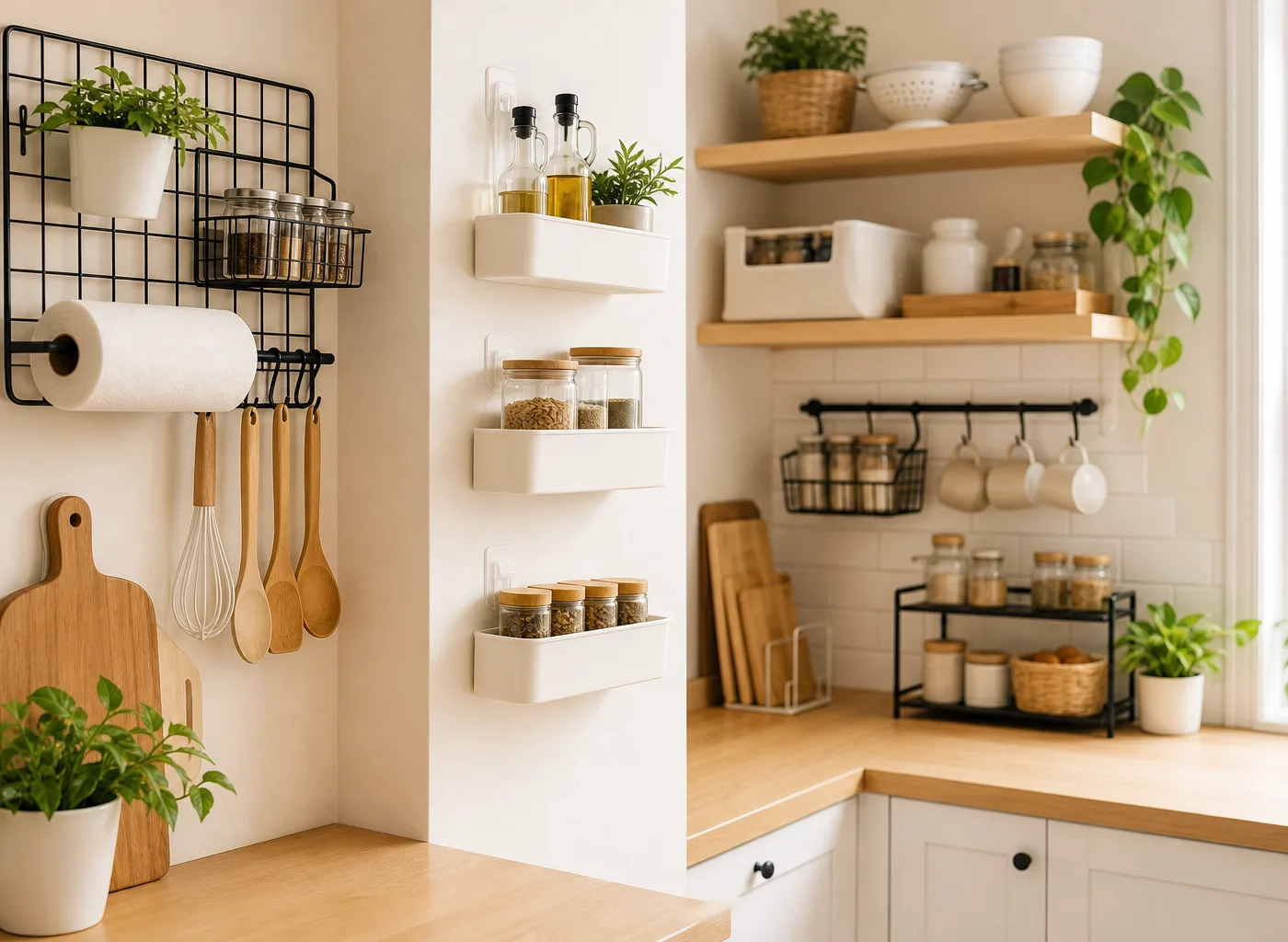
Rental kitchens often come with limited cabinets, crowded counters, and a strict no-drilling policy. Fortunately, you do not need to put holes in walls or doors to create a kitchen that feels organized and easy to use. The best renter friendly kitchen storage ideas without drilling use portable furniture, removable adhesive products, cabinet inserts, and a smarter layout for the items you already own.
Whether you are dealing with a tiny apartment galley kitchen, a pantry-free rental, or simply not enough drawer space, small changes can create a major difference. The goal is not to fill every surface with organizers. Instead, focus on making frequently used items accessible, using vertical space safely, and keeping your kitchen easy to restore when it is time to move.
Start With a Damage-Free Storage Plan
Before buying baskets and organizers, take a quick inventory of what you need to store. Separate everyday essentials from occasional items. Cooking oils, utensils, mugs, lunch containers, and cleaning supplies deserve the most convenient spots. Holiday serving ware, specialty appliances, and bulk pantry goods can go in less accessible storage.
Measure your cabinet interiors, countertop gaps, refrigerator sides, and open floor space. Even a narrow 6-inch gap beside the fridge or a small patch of wall above the counter can become useful storage. Check your lease as well. Some landlords allow small picture hooks but prohibit anchors, while others require a completely damage-free setup.
For a broader approach to organizing a compact rental, see these small kitchen storage ideas for renters. The most successful setups combine a few high-impact solutions rather than relying on one oversized organizer.
1. Use Removable Adhesive Hooks for Lightweight Tools
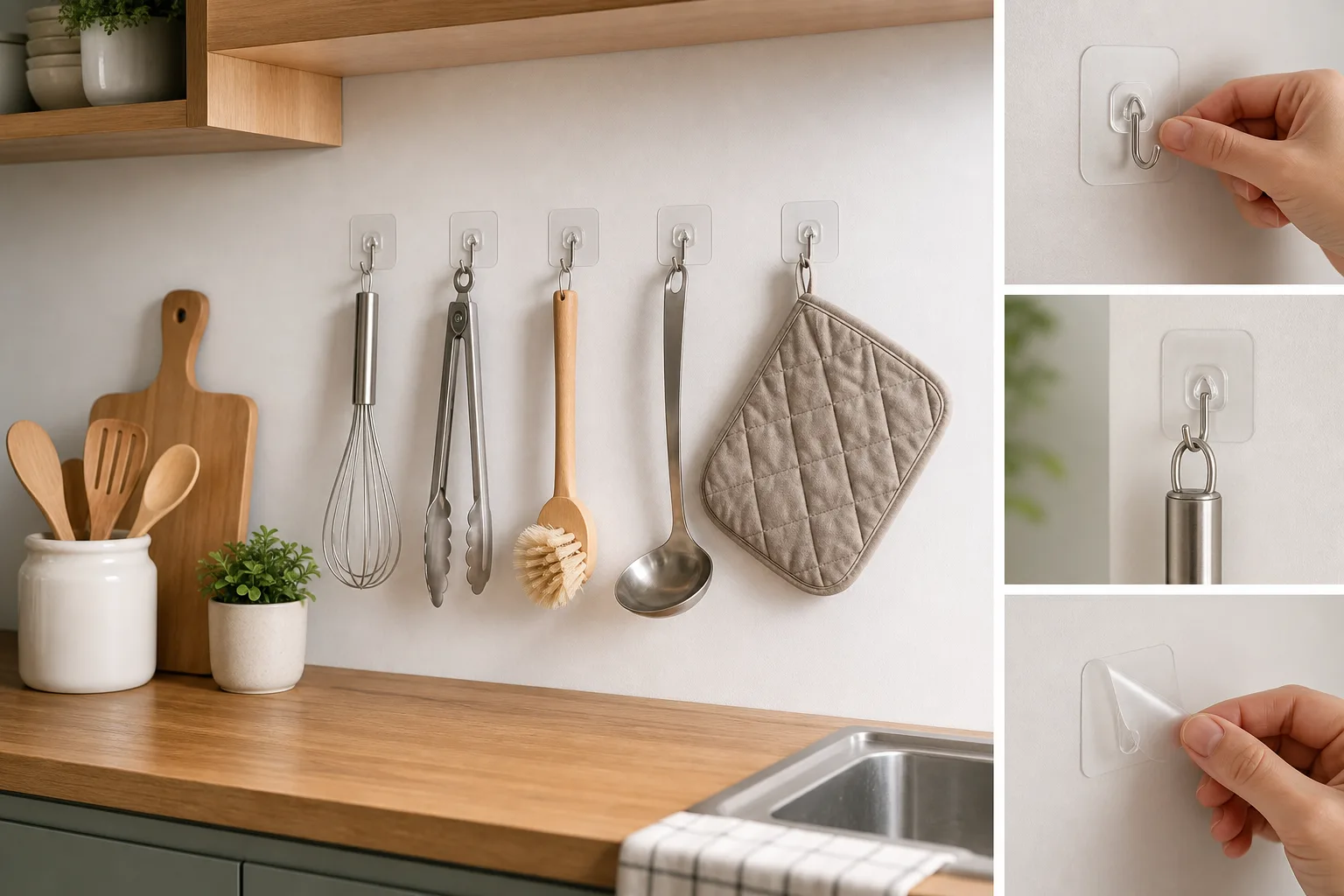
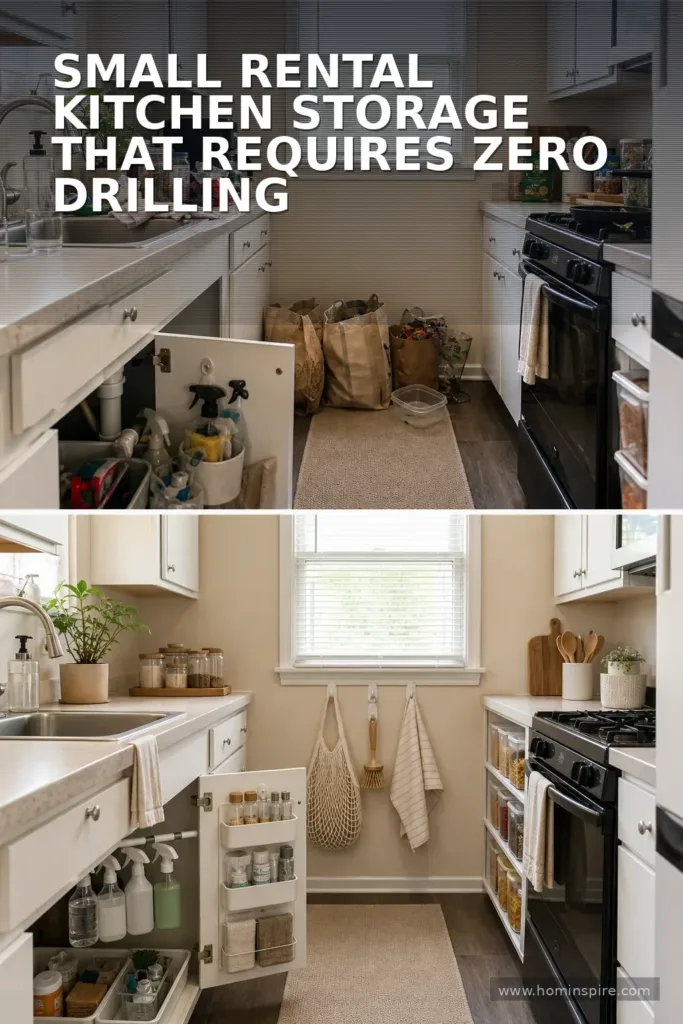
Removable adhesive hooks are among the easiest ways to use unused wall or cabinet-door space. Place them inside a cabinet for measuring cups, oven mitts, small strainers, or lightweight cooking utensils. On a backsplash or side wall, they can hold dish towels, pot holders, or reusable grocery bags.
Choose hooks rated for the item’s actual weight, and clean the mounting surface with rubbing alcohol before applying them. Let adhesive strips cure for the recommended time before adding weight. Avoid hanging cast-iron pans, full cookware sets, or heavy cutting boards from adhesive hooks; the risk of falling and surface damage is not worth it.
2. Add an Over-the-Cabinet-Door Organizer
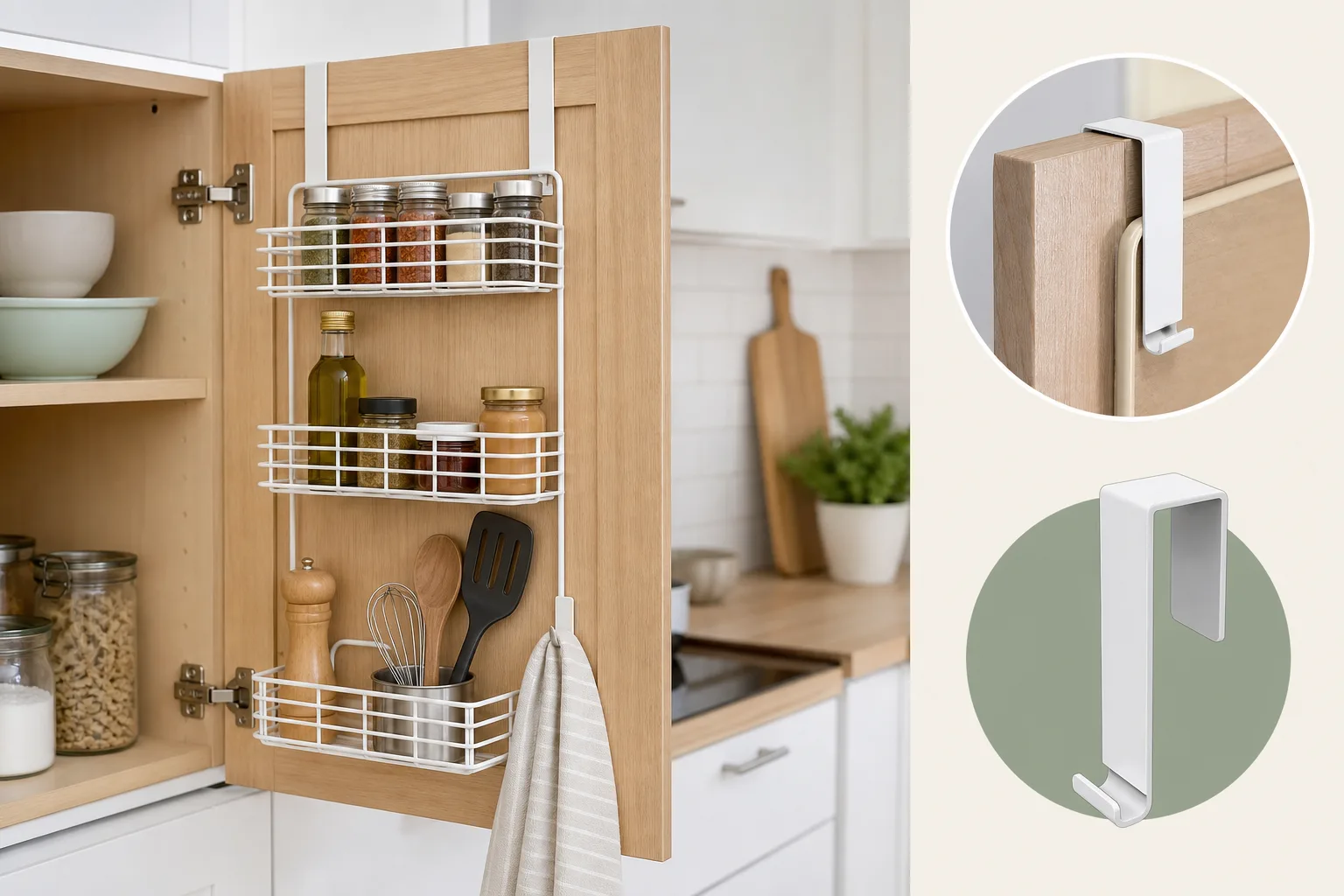
Cabinet doors offer valuable vertical space without requiring permanent hardware. Over-the-door baskets, racks, and caddies can hold foil, plastic wrap, cleaning sprays, dish towels, pot lids, or pantry snacks. They are especially helpful beneath the sink, where cleaning supplies can otherwise become a hard-to-reach pile.
Look for organizers with padded hooks or add felt strips where the rack touches the door. This prevents scratches and reduces rattling. Measure the door thickness and the clearance inside the cabinet first, since some racks can interfere with shelves or prevent the door from closing properly.
3. Make Cabinets More Efficient With Shelf Risers
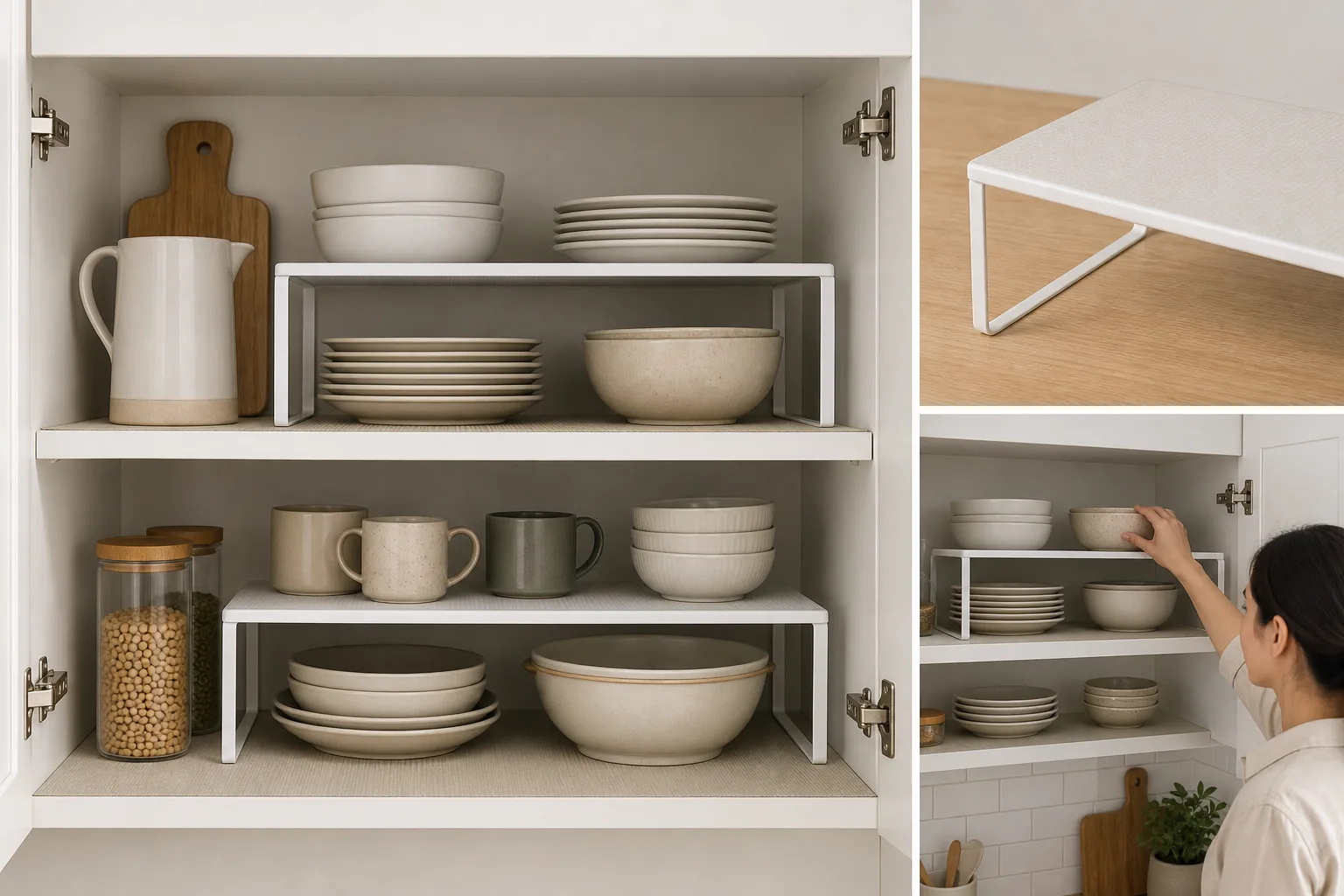
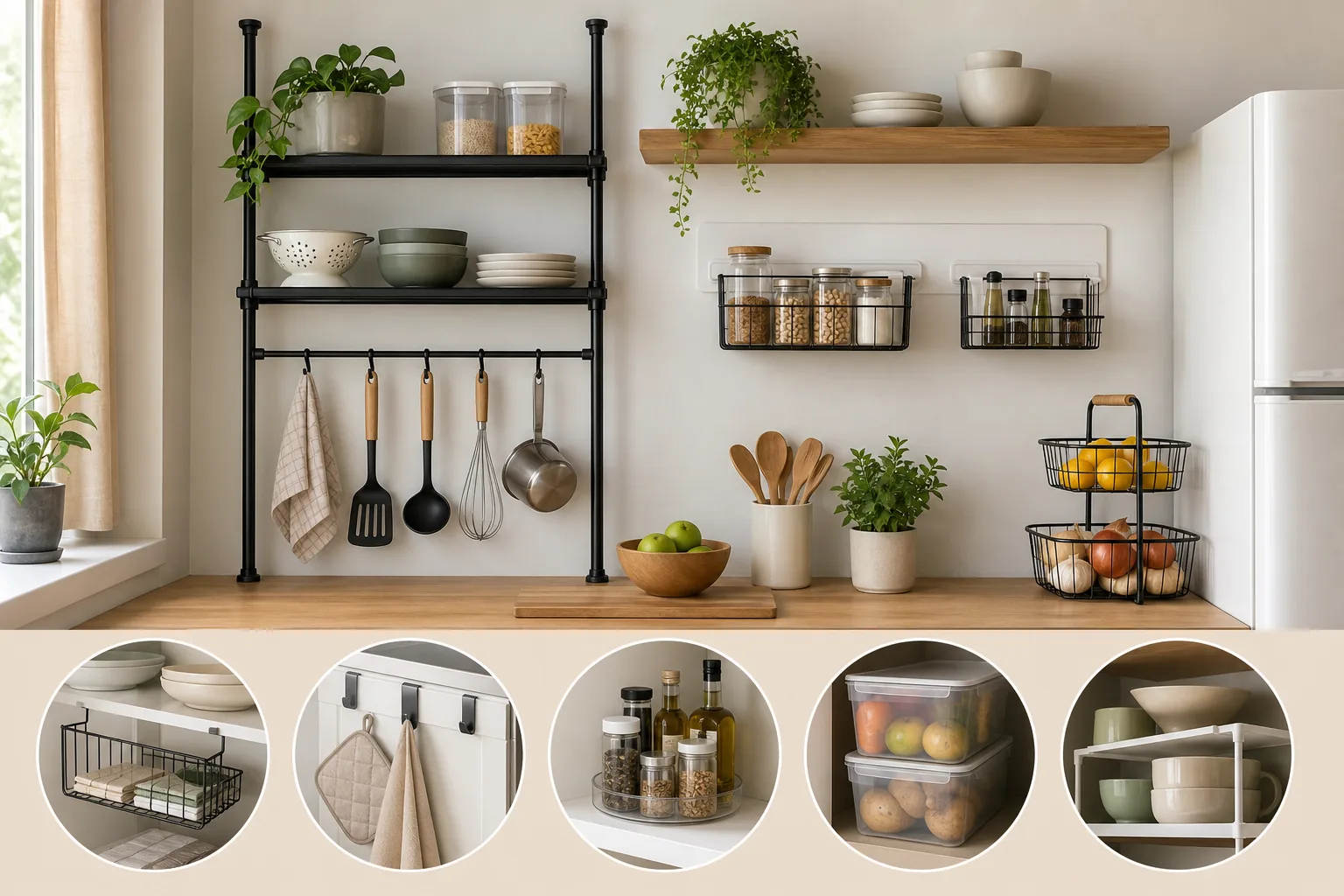
Freestanding shelf risers instantly create a second level inside tall cabinets. Use them for plates, bowls, mugs, canned goods, or food-storage containers. This simple addition makes it easier to see what you own and prevents stacks of dishes from becoming unstable.
Expandable risers work well in rentals because they can adjust to different cabinet widths and move with you. For deep cabinets, pair a riser with a shallow bin so small items do not disappear behind larger ones. If your cabinets are cluttered from top to bottom, these kitchen cabinet storage ideas can help you build a more functional system.
4. Install Tension Rods Inside Cabinets
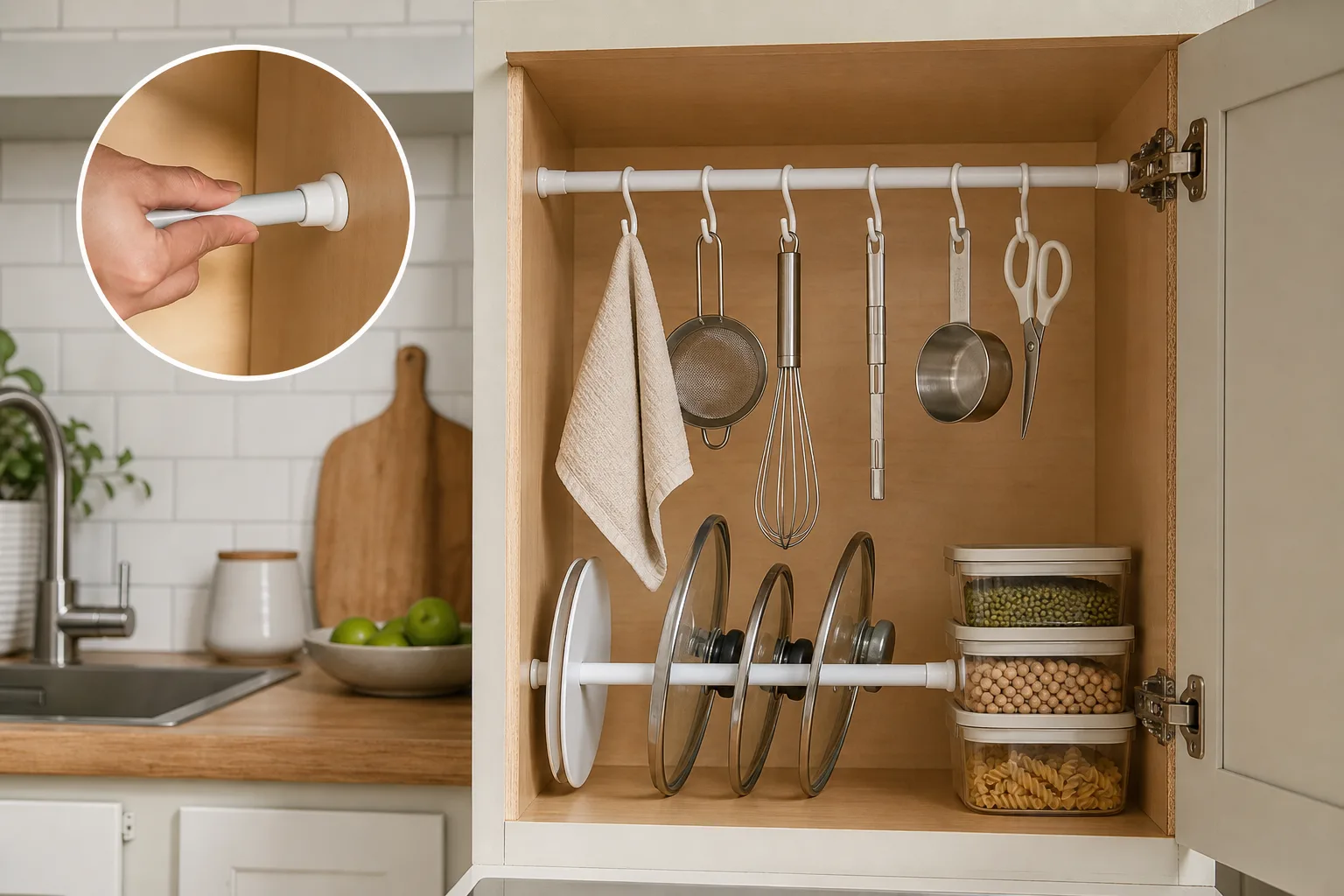
Tension rods are a classic no-drill solution because they are adjustable, inexpensive, and removable. Install a short tension rod under the kitchen sink to hang spray bottles by their triggers. This clears the cabinet floor for sponges, dishwasher tablets, and trash bags.
You can also use tension rods vertically to organize baking sheets, trays, cutting boards, and pot lids. Place several rods side by side in a lower cabinet to create narrow upright slots. Choose sturdy rods with rubber ends, and avoid overtightening them against delicate cabinet walls.
5. Create a Portable Pantry With a Rolling Cart
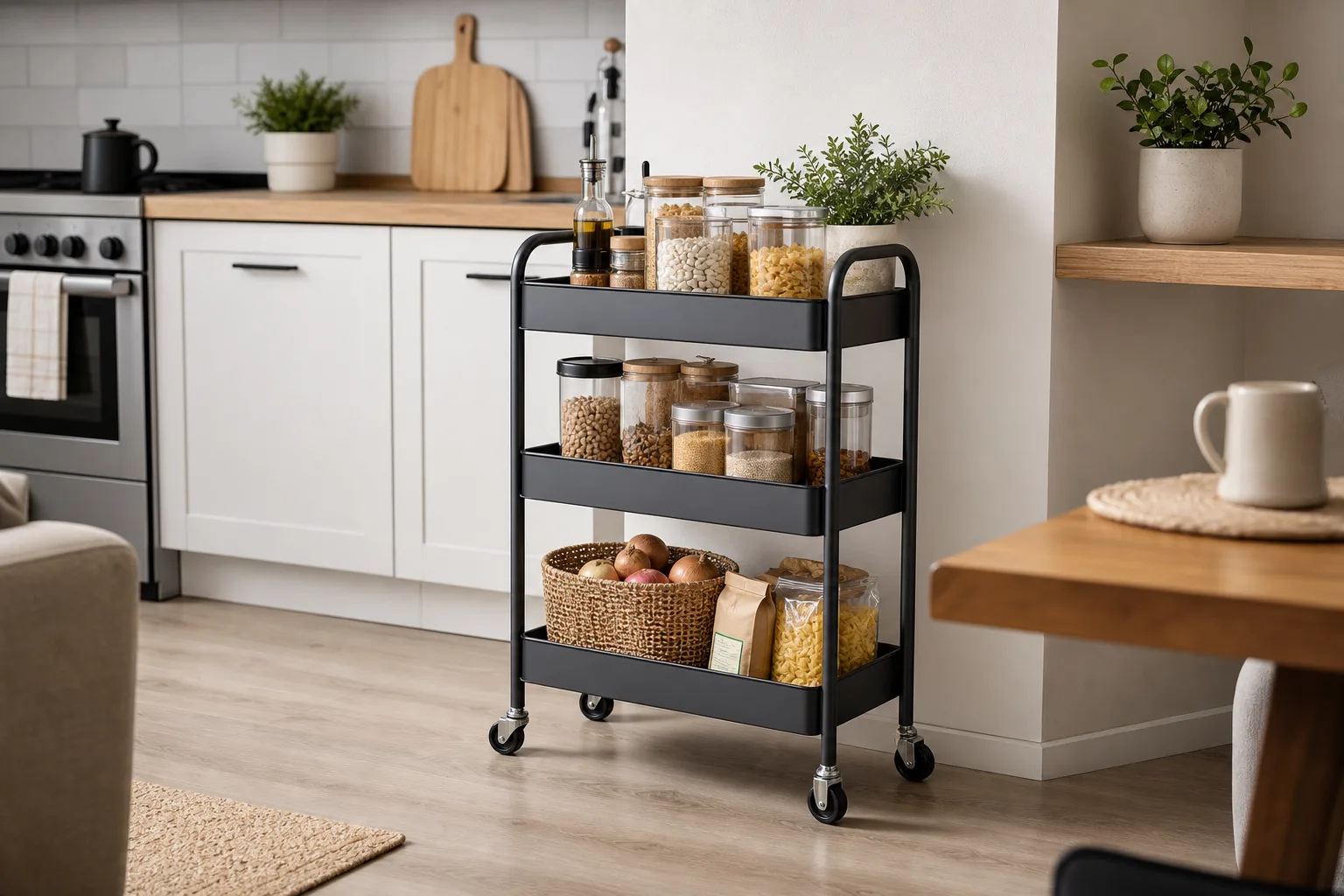
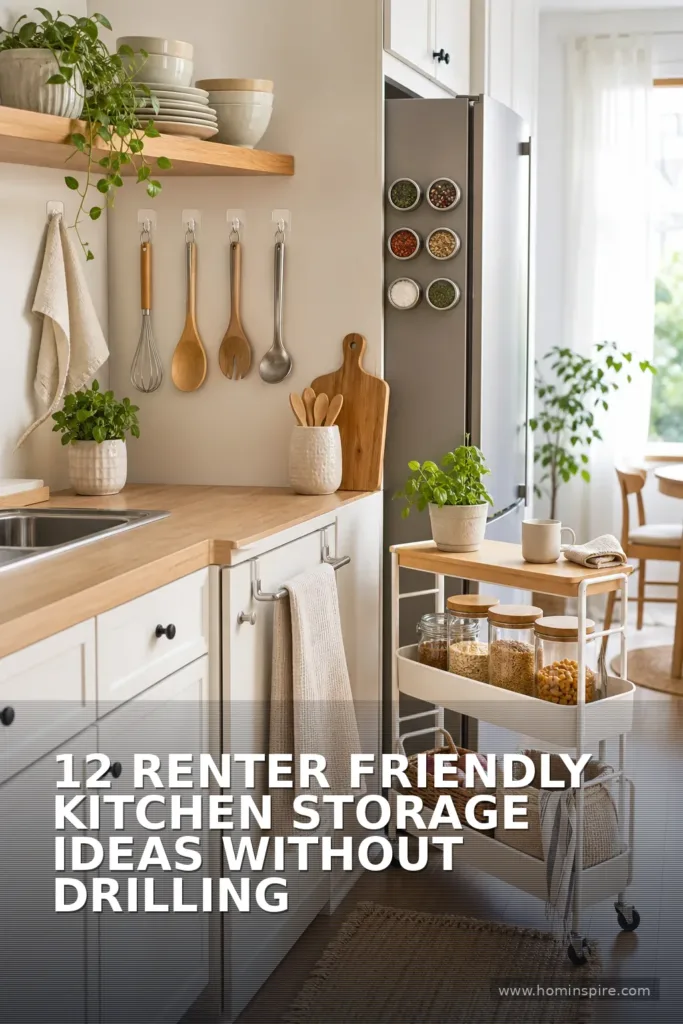
A slim rolling cart is one of the most flexible storage pieces for a rental kitchen. It can function as a mini pantry, coffee station, produce cart, baking supply center, or extra prep surface. When you need room to cook, simply roll it out of the way.
Three-tier carts fit well beside refrigerators, at the end of a cabinet run, or in a dining nook. Use bins or labels to keep each tier purposeful. For example, store breakfast foods on top, snacks in the middle, and backstock pantry items on the bottom. Select a cart with locking wheels if it will live near a busy workspace.
6. Use a Freestanding Microwave or Appliance Shelf
Countertop appliances take up more room than most renters expect. A freestanding microwave shelf or baker’s rack can reclaim counter space while adding vertical storage for mugs, cookbooks, dry goods, or small appliances. Unlike wall-mounted shelves, these units require no drilling and can be repurposed in another room after a move.
Choose an open design for a lighter look in a small kitchen. Ensure the shelf is rated for the appliance’s weight and leaves enough ventilation space around the microwave, toaster oven, or air fryer. Do not place heat-producing appliances in enclosed cubbies unless the manufacturer specifically allows it.
7. Organize Drawers With Adjustable Dividers
Drawer dividers are a renter’s best friend because they improve storage without altering the drawer itself. Adjustable bamboo, plastic, or spring-loaded dividers can separate utensils, gadgets, wraps, and kitchen linens. Small modular bins are equally useful for tea bags, measuring spoons, clips, and batteries.
Start by removing duplicate tools and rarely used gadgets. Then assign categories based on how you cook. Keep prep tools near the main workspace and dining utensils near the dishwasher if that makes unloading easier. A well-organized drawer reduces visual clutter and can eliminate the need for another countertop caddy.
8. Add Pull-Out Bins and Turntables to Deep Cabinets
Deep cabinets are useful only when you can reach the back. Instead of drilling in permanent pull-out hardware, use removable bins with handles. Pull the whole bin forward to access pasta, canned goods, spices, snacks, or baking ingredients. Clear bins make inventory easier, while opaque baskets create a calmer, more uniform look.
Lazy Susans are another simple answer for corner cabinets and refrigerator shelves. Use one for oils, vinegar, sauces, vitamins, or cleaning products. Raised-edge turntables are particularly helpful because they keep bottles from tipping as the tray spins.
9. Try Magnetic Storage Where It Makes Sense
If your refrigerator has exposed metal sides, magnetic shelves, hooks, and spice racks can turn that overlooked area into useful storage. A magnetic paper towel holder, grocery-list board, or narrow spice shelf can free up cabinet and counter space without permanent installation.
Only use magnetic products on surfaces that are truly magnetic, and keep heavy glass containers off them. Refrigerator-side storage is best for light, frequently used items. It can also become a helpful breakfast station for coffee filters, tea, or grab-and-go snacks.
10. Use the Space Above Cabinets Carefully
If your upper cabinets do not reach the ceiling, the space above them can hold lightweight, infrequently used items. Matching baskets are ideal for extra paper goods, party supplies, seasonal linens, or serving pieces. Use containers with handles so they are easier to retrieve safely.
Keep this area intentional rather than overloaded. Avoid storing heavy appliances or loose items that could fall. A consistent basket color or material makes the setup look decorative instead of accidental, which is useful when you want storage to support your overall kitchen style. For more visual upgrades, explore these modern small kitchen decor ideas.
11. Store Pots, Lids, and Boards Vertically
Stacking cookware can create a noisy, frustrating cabinet. Use freestanding pan organizers to store skillets and lids vertically. A file-sorter-style rack can also hold cutting boards, baking sheets, cooling racks, and muffin tins. These organizers sit inside a cabinet or pantry shelf, so there is no need to attach anything to the wall.
Vertical storage makes each item easier to grab and helps protect nonstick cookware from scratches. Reserve a lower cabinet near the stove for the pans you use most, and place specialty bakeware in a less convenient location.
12. Turn a Counter Tray Into a Controlled Storage Zone
Not every countertop item needs to be hidden. A tray can make everyday essentials look orderly while keeping them easy to move when you need prep space. Use one to group cooking oils, salt and pepper, a spoon rest, and a small utensil crock near the stove. A second tray can organize coffee supplies or dishwashing essentials.
The key is limiting the tray to a specific function. When a tray becomes a catchall for mail, receipts, and random gadgets, it adds clutter rather than solving it. Find practical styling inspiration in these kitchen counter tray decor ideas.
13. Add Stackable Pantry Containers, Not Permanent Shelving
For renters without a built-in pantry, stackable containers make ordinary cabinets, open shelving, and carts work more efficiently. Square or rectangular containers use space better than round packages and make dry goods easier to identify. Decant staples such as flour, rice, cereal, pasta, and snacks only if the process will help you maintain the system.
Use labels with removable adhesive or erasable markers, especially if you expect to reuse containers for different foods. Store the original package or note cooking instructions when necessary. If pantry space is your biggest challenge, these small kitchen storage ideas without a pantry offer more ways to create capacity from ordinary spaces.
14. Choose a Fold-Down or Nesting Prep Solution
Storage is not only about where items live; it is also about creating usable work space. A rolling butcher-block cart, folding kitchen island, or nesting table can add a prep area and a place for bowls, towels, and pantry staples. Because these pieces are freestanding, they are ideal for lease-friendly upgrades.
For very small kitchens, choose furniture that performs at least two jobs. A narrow cart with a top surface and lower shelves is usually more valuable than a decorative table that only occupies floor space. Look for a size that still leaves a comfortable walkway when drawers and appliance doors are open.
15. Maximize the Refrigerator and Freezer
Clear fridge bins, can dispensers, egg holders, and freezer baskets can make a compact kitchen feel more organized without changing any fixed feature. Group food by routine: breakfast items, lunch supplies, produce, sauces, leftovers, and freezer meals. This helps prevent forgotten food and makes grocery shopping easier.
Use refrigerator bins that fit your shelves rather than forcing a one-size-fits-all system. Label broad categories, not every individual item, so the setup stays practical. A simple freezer inventory on a magnetic board can also reduce waste when storage is limited.
How to Remove Adhesive Organizers Safely
Damage-free products work best when they are installed and removed correctly. Follow the manufacturer’s weight limits and removal instructions. Most removable strips should be stretched slowly downward, parallel to the wall, rather than pulled straight outward. Pulling outward can tear paint or leave adhesive behind.
Before adding any adhesive storage to a painted wall, backsplash, or cabinet finish, test it in an inconspicuous spot if possible. Avoid using adhesive on peeling paint, textured surfaces, unfinished wood, wallpaper, or areas exposed to constant steam and heat. Keep the original packaging or instructions so you know how to remove each product before moving day.
Common Mistakes to Avoid in a Rental Kitchen
- Overloading adhesive products: Use them for light items only and respect weight limits.
- Buying organizers before measuring: Cabinet depth, door clearance, and walkway width matter.
- Using every open surface: Leave room for food prep, dish drying, and daily cooking.
- Ignoring visual clutter: Matching bins and a few concealed storage zones can make a small kitchen feel calmer.
- Creating a hard-to-move setup: Choose portable, multipurpose pieces that can transition to your next home.
Final Thoughts
The most effective renter friendly kitchen storage ideas without drilling are simple, flexible, and tailored to your routine. Start inside cabinets with risers, bins, dividers, and tension rods. Then add mobile solutions such as a slim cart or freestanding shelf if you need more capacity. Finish with a few removable hooks or magnetic organizers for lightweight essentials.
You do not need a renovation to make a rental kitchen feel efficient. With thoughtful damage-free storage, even a small, outdated kitchen can become easier to cook in, easier to clean, and much more enjoyable to come home to. If you are also refreshing the room on a limited budget, browse these budget kitchen makeover ideas for affordable improvements that complement your new organization system.
Frequently Asked Questions
What kitchen storage can renters use without drilling?
Renters can use adhesive hooks, over-the-door racks, tension rods, shelf risers, rolling carts, freestanding shelves, drawer dividers, cabinet bins, magnetic organizers, and stackable containers. These options add storage without creating permanent holes in walls or cabinets.
Do adhesive hooks damage kitchen walls?
Quality removable hooks can be removed cleanly when they are applied to a suitable surface, allowed to cure, kept within their weight limit, and removed according to the instructions. They may damage weak paint, wallpaper, unfinished wood, or surfaces with existing peeling paint.
How can I add storage to a kitchen with no pantry?
Use a rolling cart, baker’s rack, slim freestanding cabinet, shelf risers, stackable food containers, and labeled bins. Prioritize vertical storage and keep bulk items in less accessible areas so everyday foods remain easy to reach.
What is the best way to organize a small rental kitchen?
Store items by frequency of use, create zones for cooking and cleaning, use cabinet inserts to make vertical space, and keep counters mostly clear. Add only a few portable organizers that solve specific problems, such as limited pantry space or crowded drawers.
Can I use tension rods in kitchen cabinets?
Yes. Tension rods can hold spray bottles under the sink or create vertical dividers for trays, cutting boards, and pot lids. Select rods with rubber ends and install them gently so they do not mark or strain cabinet surfaces.
