
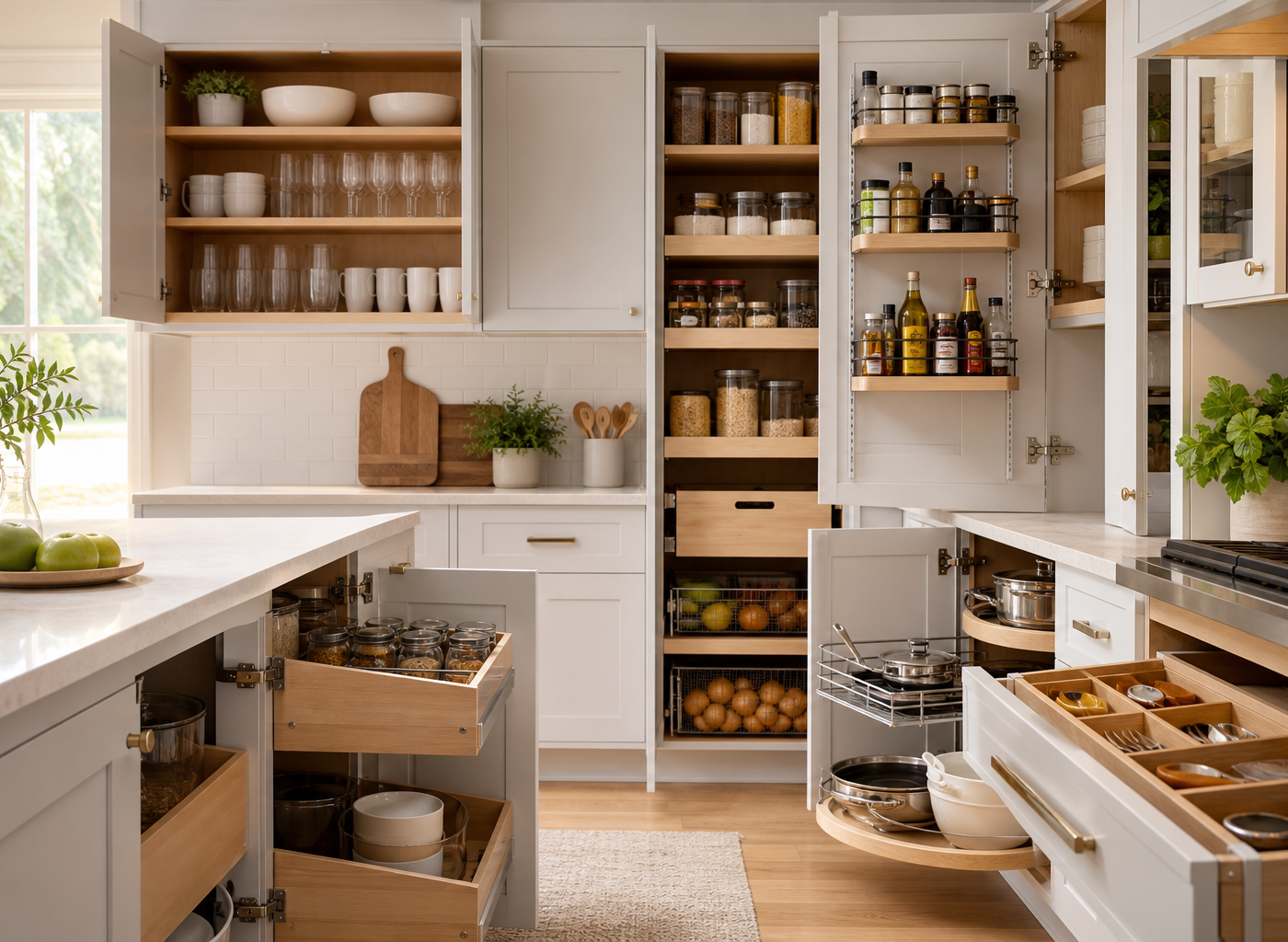
Great kitchen cabinet storage ideas do more than make a kitchen look tidy. They reduce daily frustration, protect cookware, prevent food waste, and make it easier to find what you need while cooking. Whether you have a compact apartment kitchen or a large family kitchen, the goal is the same: give every item an easy-to-reach home.
The best approach is not to buy organizers at random. Start by identifying what you store, how often you use it, and where it makes the most sense to keep it. Then add simple tools such as drawer dividers, pull-out bins, shelf risers, and door-mounted racks only where they solve a specific problem.
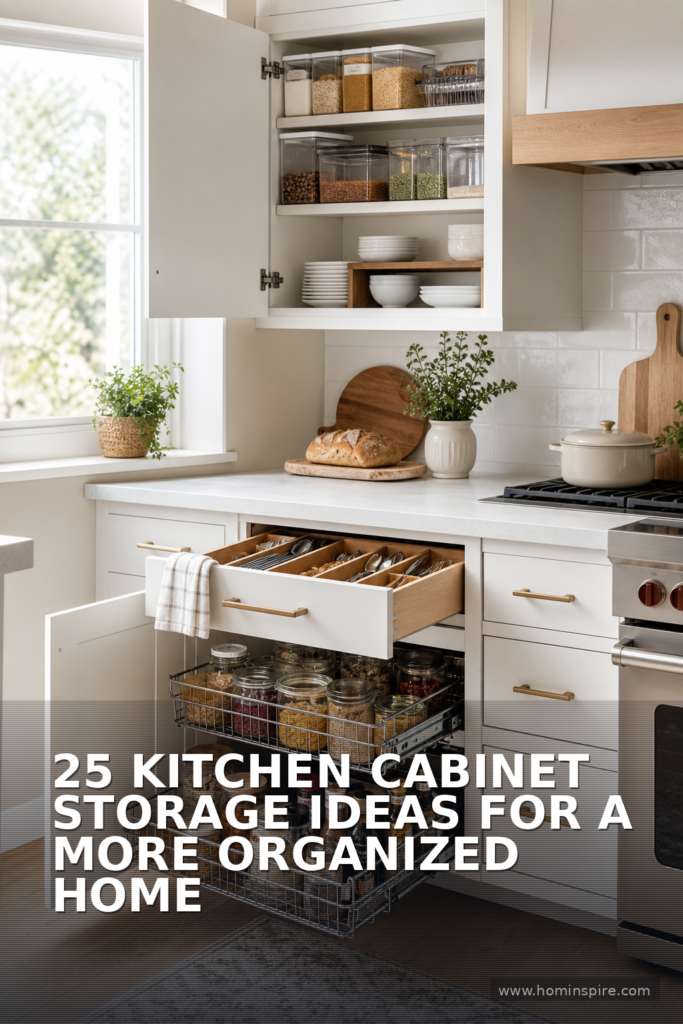
Use these kitchen cabinet storage ideas to create a setup that is practical, flexible, and easy to maintain.
Start With a Cabinet Storage Plan
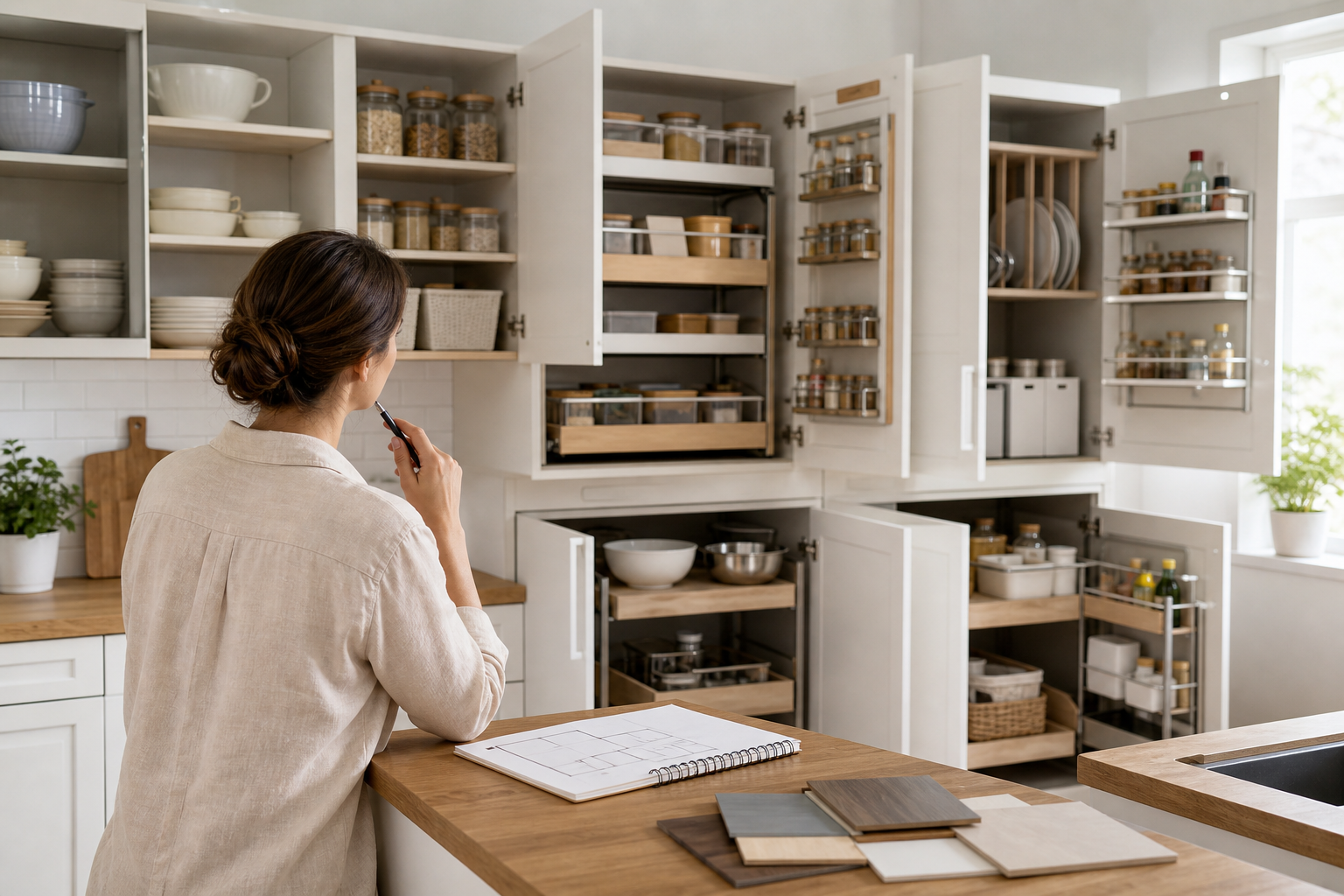
Before reorganizing, empty one cabinet at a time. Toss expired food, donate duplicate gadgets you never use, and move items that belong elsewhere. This quick edit is often the most effective way to gain usable space.
Next, divide your kitchen items into simple zones:
- Prep zone: knives, cutting boards, mixing bowls, measuring tools, and spices.
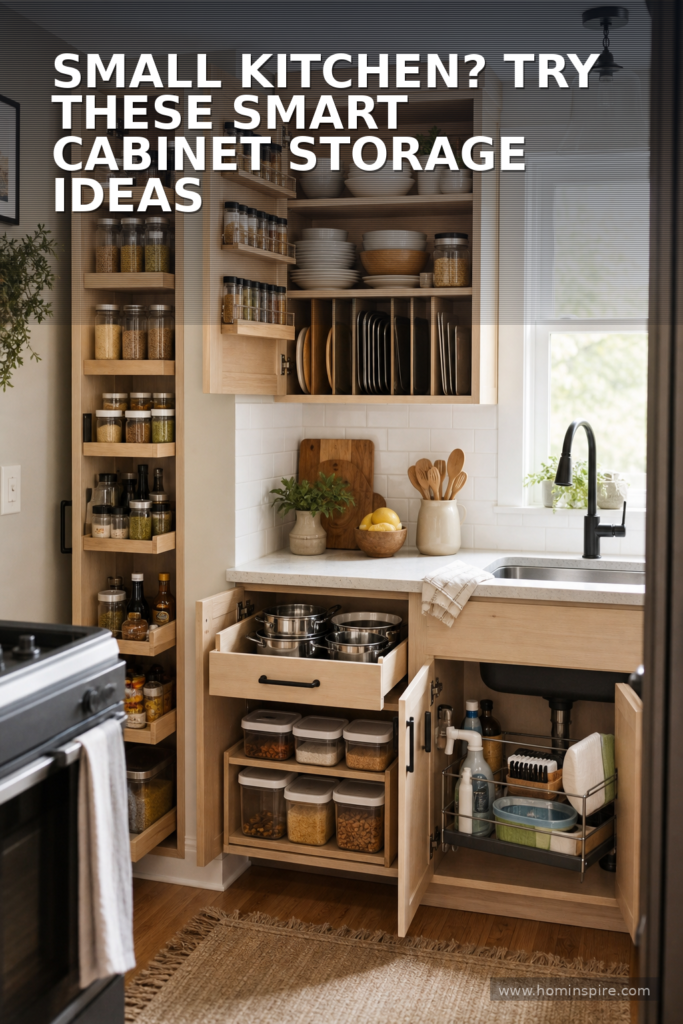
- Cooking zone: pots, pans, utensils, oils, and baking sheets near the range.
- Cleaning zone: dish soap, dishwasher tablets, towels, and trash bags near the sink.
- Serving zone: plates, glasses, napkins, and serving pieces near the dishwasher or dining area.
- Pantry zone: dry goods, snacks, canned items, and food containers.
Store the items you use most often between waist and eye level. Reserve top shelves and the back of deep cabinets for seasonal dishes, specialty appliances, and bulk supplies. This setup keeps your everyday kitchen routine efficient rather than forcing you to rearrange stacks every time you cook.
1. Add Pull-Out Shelves to Deep Base Cabinets
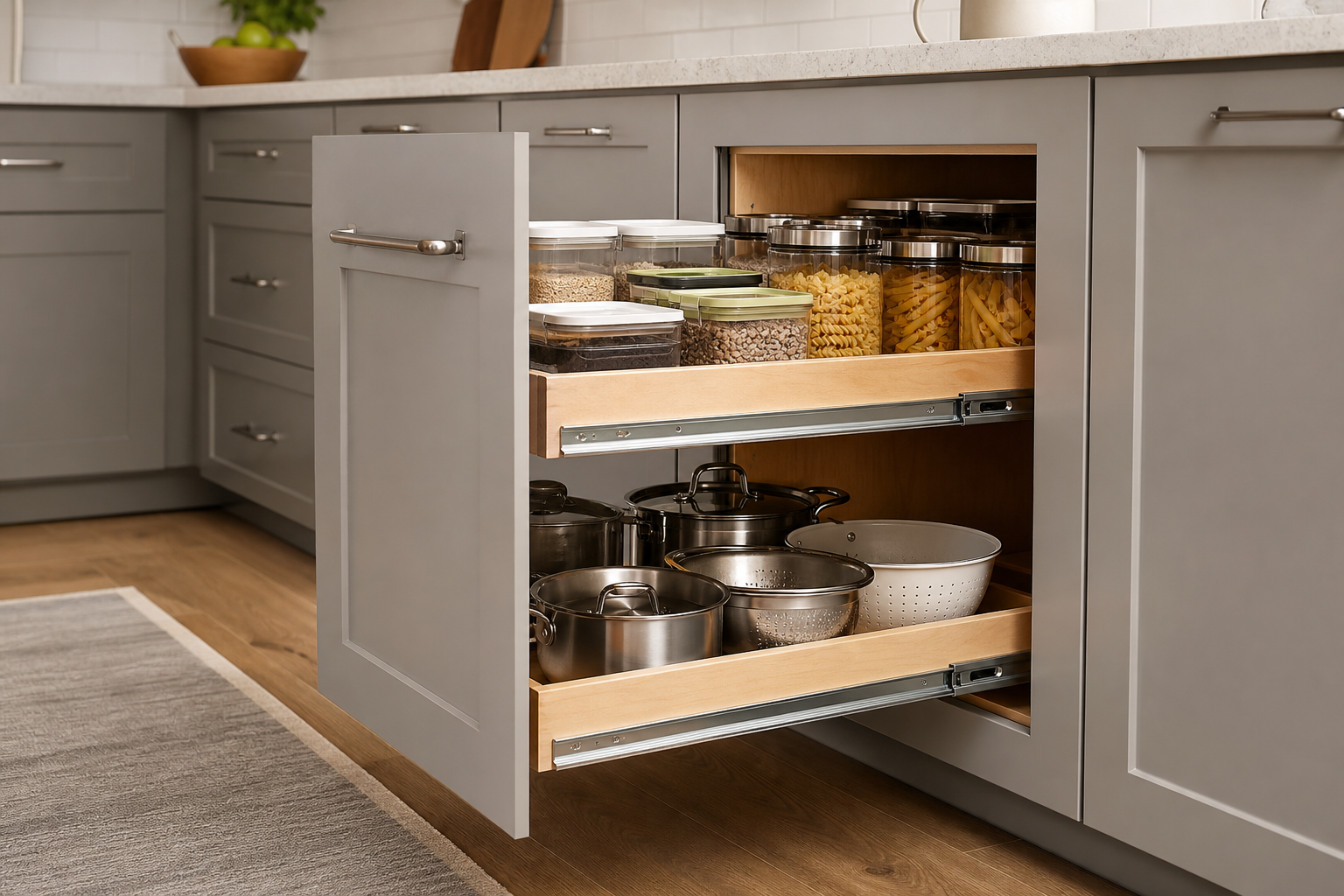
Deep lower cabinets can become black holes for pots, small appliances, and food storage containers. Pull-out shelves bring the entire cabinet contents forward, so you can see and reach items without kneeling or unloading the front row.
Full-extension pull-outs are especially useful for heavy cookware. Choose a sturdy model rated for the weight you plan to store, and measure the cabinet’s interior width, depth, and opening before ordering.
2. Use Clear Bins for Grouped Categories
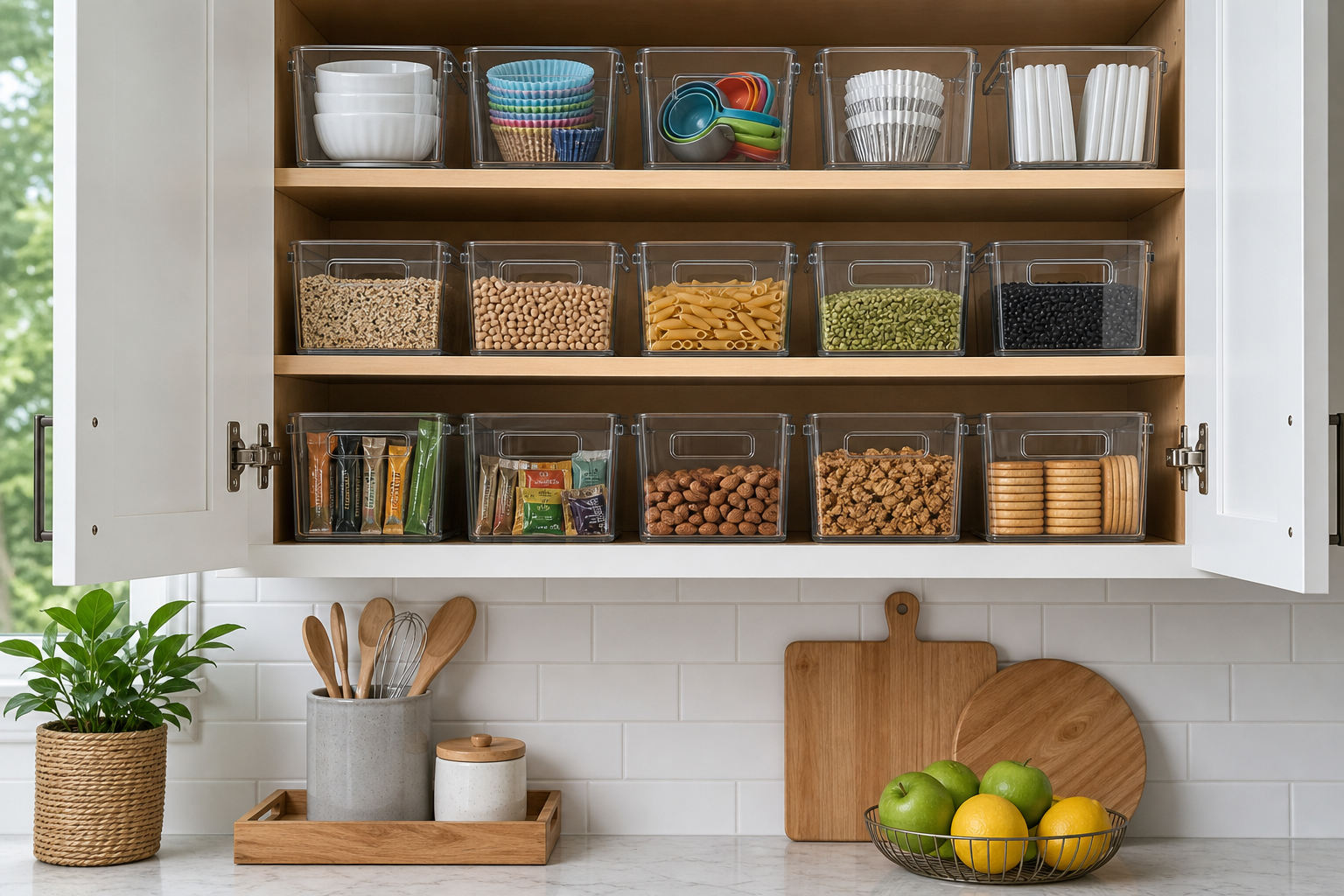
Clear bins turn loose supplies into defined categories. Use them for snack packets, baking decorations, tea, gravy mixes, lunch items, or food wraps. Seeing through the container makes it easier to spot low stock before you buy duplicates.
Bins work best when they are not overfilled. Leave enough room to lift one out easily, and label the front with a broad category rather than a long list of individual products.
3. Install Drawer Dividers for Cooking Tools
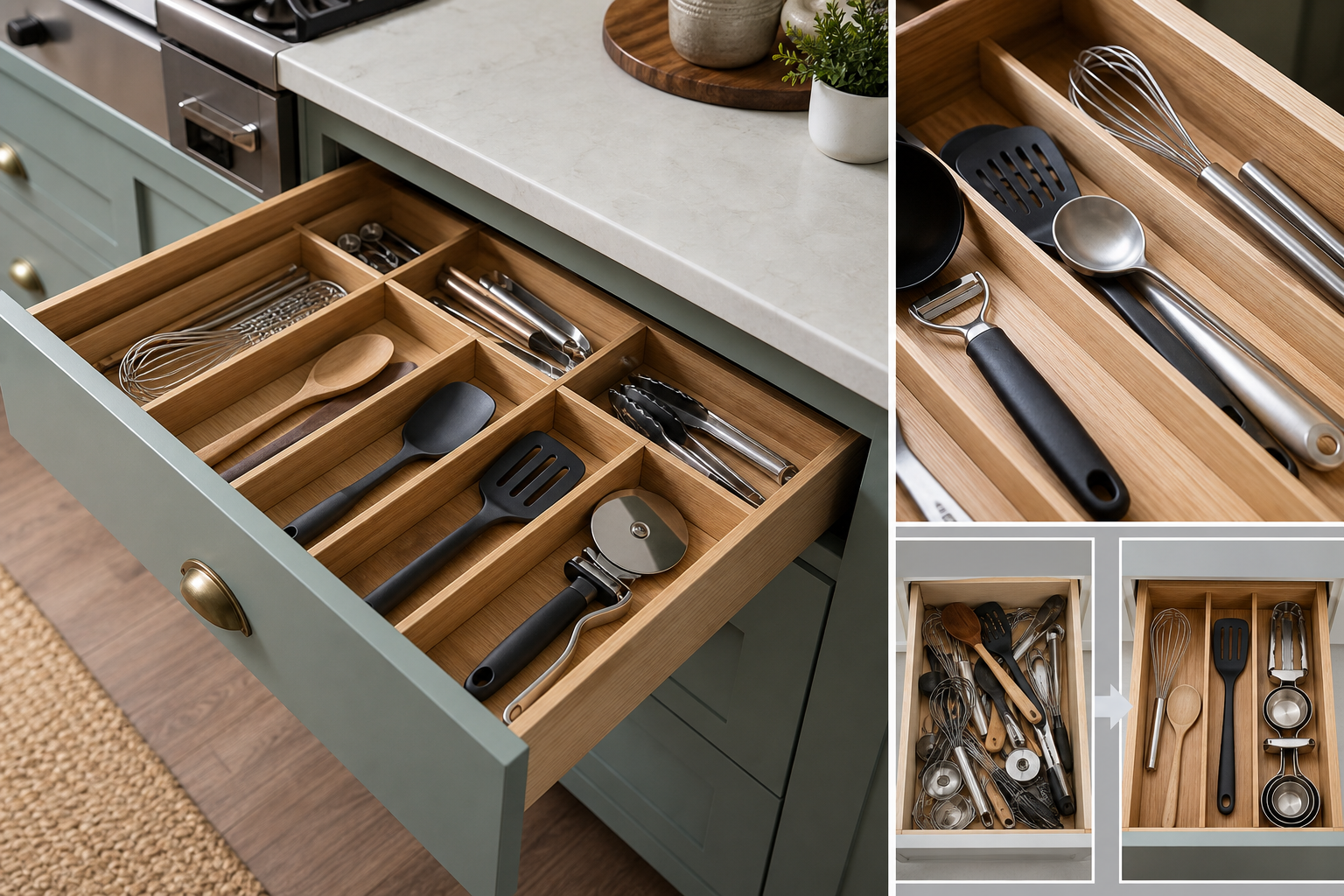
Utensil drawers quickly become cluttered when spatulas, whisks, peelers, and measuring spoons slide together. Adjustable drawer dividers create individual sections and can be resized as your tool collection changes.
Place frequently used tools closest to the drawer opening. If you have a deep drawer, use long organizers for ladles and tongs, then add small trays for clips, corkscrews, and thermometers.
4. Store Pots and Pans Vertically
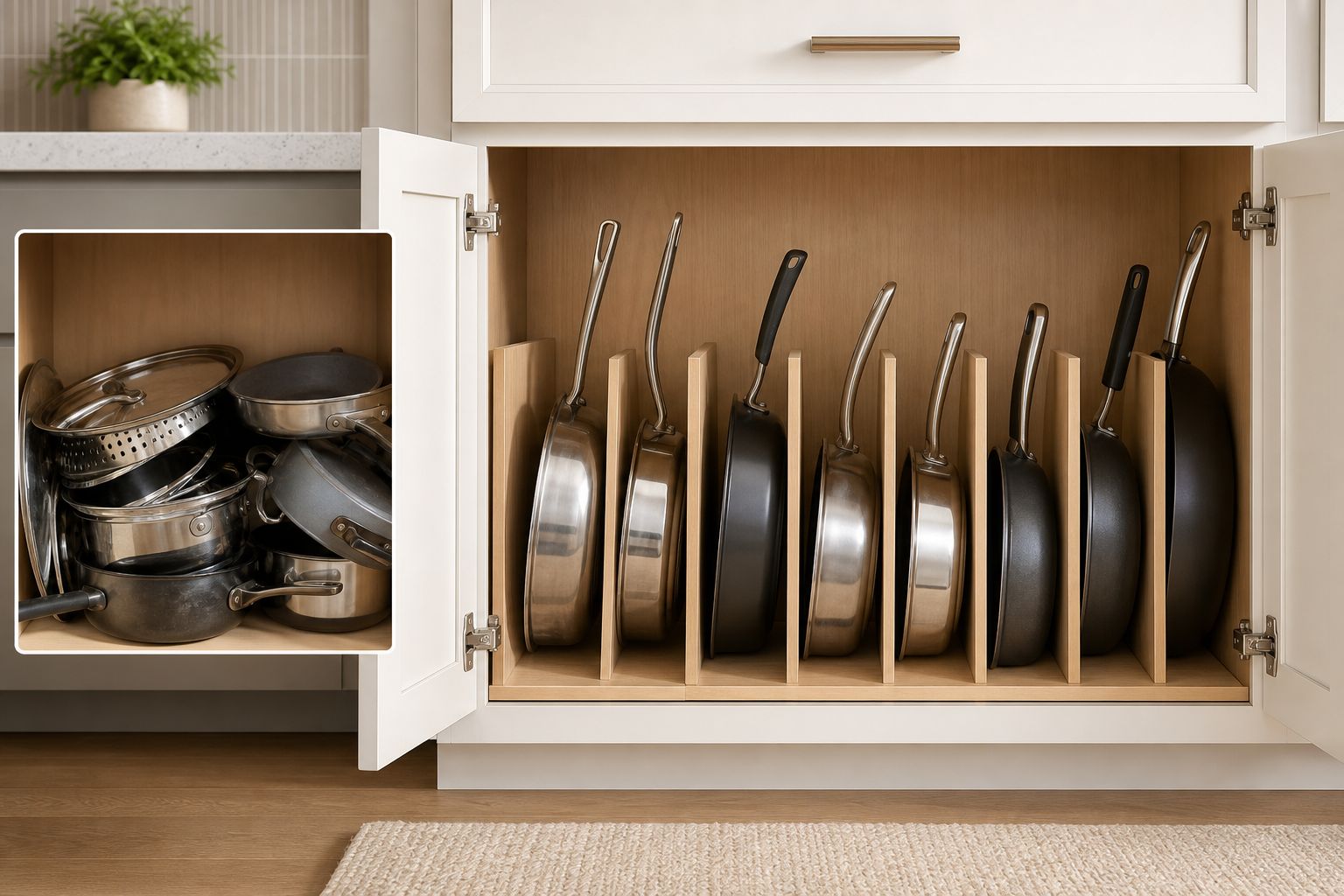
Stacking cookware may seem efficient, but it often means lifting several pans to reach the one at the bottom. A vertical pan organizer lets you slide out the pan or lid you need. It also helps reduce scratches on nonstick surfaces.
Use a heavy-duty rack in a lower cabinet near the stove. If vertical storage is not possible, nest pots by size and place a soft pan protector or clean dish towel between delicate pieces.
5. Create a Dedicated Lid Storage System
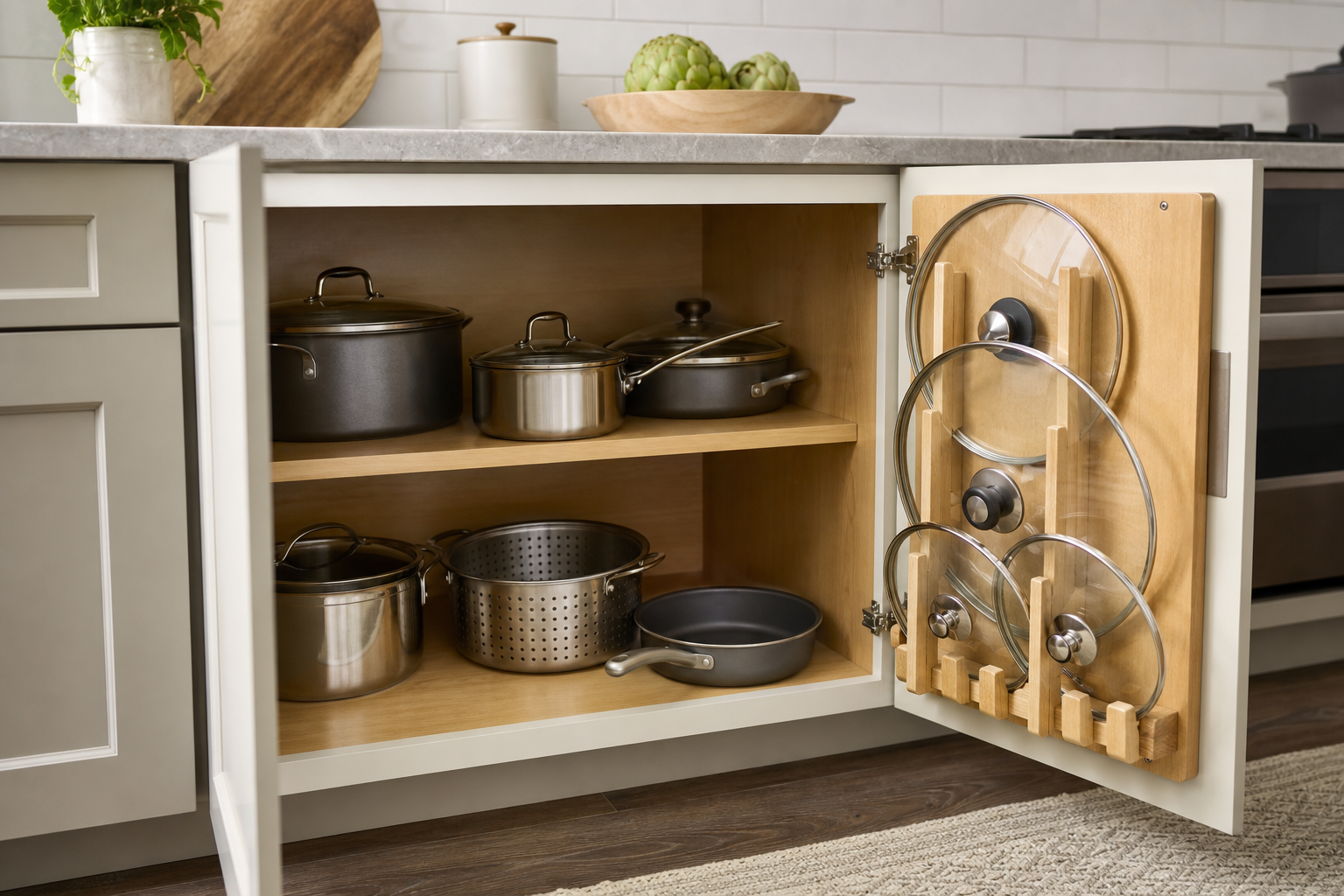
Lids are awkward because they do not stack neatly with pots or food containers. Use a cabinet-door rack, a narrow wire divider, or a pull-out lid organizer to keep them upright and separated.
For food-storage lids, sort by shape and size. Keep only the lids that match containers you actually use. A shallow bin or file-style organizer makes them much easier to scan.
6. Make Use of Cabinet Doors
The inside of a cabinet door is valuable storage space, particularly in a small kitchen. Slim door-mounted racks can hold wraps, foil, cutting boards, cleaning cloths, spices, or reusable bags.
Check clearance before installing anything. Close the door slowly while the cabinet is empty to confirm that a rack will not hit shelves, drawers, or items inside. Adhesive options are helpful for renters, while screw-mounted organizers usually support more weight.
7. Turn the Under-Sink Cabinet Into a Cleaning Station
The space under the sink is often difficult because plumbing pipes interrupt the cabinet. Instead of trying to fit large containers around the pipes, use narrow bins, stackable drawers, and a tension rod.
- Hang spray bottles from the tension rod by their trigger handles.
- Use a small caddy for daily cleaning supplies.
- Store dishwasher pods in a closed, clearly labeled container.
- Keep extra sponges and cloths in a ventilated bin.
A waterproof liner protects the cabinet base from small leaks and makes cleanup easier. Avoid storing paper products directly under the sink, where moisture can damage them.
8. Add Shelf Risers in Upper Cabinets
Upper cabinets often have wasted vertical space above mugs, bowls, and short pantry items. Shelf risers create a second level so you can use that open area without building unstable stacks.
They are ideal for dishes, canned goods, cups, and small bowls. Choose risers that fit comfortably within the cabinet and leave room to remove items without scraping the shelf above.
9. Use a Lazy Susan for Hard-to-Reach Corners
A turntable is one of the simplest kitchen cabinet storage ideas for corner cabinets and deep shelves. It brings oils, vinegars, sauces, spices, and condiments to the front with a quick spin.
Select a raised-edge model to prevent bottles from sliding off. For a cabinet that stores several categories, use more than one turntable so breakfast items, cooking oils, and sauces do not get mixed together.
10. Organize Spices by How You Cook
Rather than organizing every spice alphabetically, consider arranging them by use. Keep everyday spices near the stove, baking spices near flour and sugar, and specialty seasonings together in a separate bin.
Tiered shelf inserts improve visibility in upper cabinets. Drawer inserts are another smart option when you have a shallow drawer near your prep area. Label jar tops if spices will be stored flat in a drawer.
11. Store Cutting Boards and Baking Sheets Upright
Vertical dividers prevent baking sheets, cooling racks, cutting boards, and serving trays from forming a noisy pile. Install dividers in a narrow base cabinet or use a freestanding rack inside a deeper cabinet.
Place these items close to the oven or prep counter. This one change can make baking and weeknight meal prep noticeably faster.
12. Choose a Pull-Out Trash and Recycling System
A pull-out trash cabinet keeps waste bins out of sight and makes the kitchen feel more streamlined. Dual-bin systems are useful for separating trash and recycling, while a smaller countertop compost container can be emptied into a larger bin as needed.
Measure carefully, including the cabinet door opening and plumbing clearance if the cabinet is near the sink. Keep trash bags in a narrow holder on the cabinet door or beside the bins for easy replacement.
13. Corral Food Storage Containers in a Deep Drawer
Food containers are easier to manage in a deep drawer than in a high cabinet. Nest bases by shape and store matching lids upright in a divider. This makes packing leftovers quicker and prevents containers from tumbling out when you open the cabinet.
If you have limited drawer space, use a pull-out lower-cabinet shelf instead. Avoid keeping stained, warped, or lidless containers; they occupy valuable space without serving a purpose.
14. Use Bins to Create a Kid-Friendly Snack Cabinet
A low cabinet with labeled bins can help children choose approved snacks independently. Add bins for fruit cups, crackers, granola bars, and lunchbox items. Keep glass containers, sharp tools, and choking hazards in higher cabinets.
For a more organized system, reserve one bin for “open first” items. This encourages your household to use partially opened packages before starting new ones.
15. Add a Slim Rolling Cart Beside Cabinets
If there is a narrow gap beside your refrigerator or cabinet run, a slim rolling cart can hold canned goods, bottles, towels, or baking supplies. It is not technically inside a cabinet, but it extends your cabinet storage without a renovation.
Choose a cart with wheels that roll smoothly and shelves with raised sides. Keep it organized by category so it does not become a catch-all for random items.
16. Use Vertical Space for Mugs and Glasses
Cabinet shelves for mugs and glasses can waste room when items are stacked too sparsely. Under-shelf mug hooks, shelf risers, or hanging stemware racks can create extra space while keeping fragile pieces protected.
Only hang items that are used regularly and are easy to reach. For everyday glasses, grouping by type in a cabinet near the dishwasher makes unloading much simpler.
17. Keep Small Appliances in Zones
Small appliances take up significant cabinet space, especially when each one has a separate box, attachment bag, and cord. Remove bulky packaging, wrap cords neatly, and group appliances by frequency of use.
Keep your coffee maker, toaster, or blender accessible if used daily. Store occasional items such as waffle makers, slow cookers, and holiday platters on higher shelves or in a less convenient cabinet. A heavy appliance should never be stored where it is difficult to lift safely.
18. Create a Baking Cabinet
A dedicated baking cabinet prevents flour, sprinkles, measuring cups, and cake pans from spreading across the kitchen. Store dry baking goods in airtight containers, group decorating tools in a bin, and keep pans upright with dividers.
Place heavier bags of flour and sugar on a lower shelf. Label containers with the item name and, if useful, the expiration or refill date. This reduces confusion between similar-looking ingredients.
19. Organize Canned Goods With a Simple System
Cans are sturdy but can become difficult to see when arranged in long rows. Use shelf risers for a stadium-style display, or place similar cans in shallow bins that can be pulled forward.
Group them by type, such as beans, tomatoes, soup, vegetables, and broth. Put newer items behind older ones to encourage first-in, first-out rotation and reduce expired food.
20. Use Labels That Support Your Routine
Labels are most useful when they make it easy for everyone in the household to put things back. Use short, clear words such as “Snacks,” “Baking,” “Lunch,” or “Tea.” Labels are especially helpful on opaque bins, high shelves, and pull-out baskets.
Do not over-label every individual item unless that level of detail genuinely helps you. A flexible category system is easier to maintain over time.
21. Upgrade Blind Corner Cabinets
Blind corner cabinets are notoriously difficult to use because much of the interior is hidden behind the cabinet frame. A pull-out corner system, swing-out shelf, or kidney-shaped turntable can reclaim the inaccessible area.
If installing specialty hardware is not in your budget, store infrequently used items in the farthest corner and keep a labeled bin near the front. This is less convenient than a pull-out system, but it makes the space more manageable.
22. Add a Paper and Wrap Station
Foil, plastic wrap, parchment paper, reusable bags, and sandwich bags are often scattered across several drawers. Create one wrap station in a drawer or cabinet near your prep area. A door rack, dispenser, or divided bin keeps boxes from sliding around.
Store the most-used rolls in front and backups behind them. If using a mounted dispenser with a cutter, position it where it can be reached safely without interfering with cabinet doors.
23. Make Tall Cabinets Easier to Access
Tall pantry-style cabinets benefit from pull-out baskets, clear bins, and shelf zoning. Keep breakfast foods together, place dinner staples at eye level, and reserve the top shelf for entertaining supplies or bulk backups.
If your kitchen does not have a pantry, cabinets need to work even harder. Explore these small kitchen storage ideas without a pantry for additional ways to create room beyond standard cabinet shelves.
24. Use Budget-Friendly Organizers First
You do not need custom cabinetry to improve storage. Inexpensive drawer trays, plastic bins, tension rods, adhesive hooks, and wire shelf risers can solve many common problems. Start with the cabinet that causes the most frustration, then add organizers gradually.
For more low-cost solutions, see these small kitchen storage ideas on a budget. A few targeted changes usually work better than filling every cabinet with products you may not need.
25. Maintain the System With a Quick Reset
Even the best kitchen cabinet organization needs occasional maintenance. Once a week, spend five minutes returning misplaced items, wiping crumbs from bins, and checking whether containers are still in the right zone. Every few months, review expiration dates and remove duplicates.
Keep the system realistic. If your family naturally puts mugs near the dishwasher, organize that cabinet around mugs instead of forcing them into a distant display cabinet. Storage should support the way you live, not create another household chore.
How to Choose the Right Kitchen Cabinet Organizers
When choosing organizers, measure first. Record the interior width, depth, height, and the width of the cabinet opening. Hinges, face frames, plumbing, and door clearance can affect whether an organizer will fit.
Then match the product to the item:
- Pull-out shelves: best for deep lower cabinets and heavy cookware.
- Drawer dividers: best for utensils, wraps, and small tools.
- Clear bins: best for food categories and cleaning supplies.
- Shelf risers: best for dishes, cans, and mugs.
- Vertical dividers: best for pans, lids, boards, and trays.
- Turntables: best for corners, oils, sauces, and spices.
Prioritize easy access over maximum capacity. A cabinet packed to the limit may technically hold more, but it is harder to use and less likely to stay organized.
FAQ About Kitchen Cabinet Storage Ideas
How do I organize kitchen cabinets efficiently?
Organize kitchen cabinets by activity zones. Keep cooking tools near the stove, dishes near the dishwasher, cleaning supplies near the sink, and food near the prep area. Store daily-use items at easy-to-reach heights, then use bins, dividers, and risers to prevent categories from mixing.
What should be stored in lower kitchen cabinets?
Lower cabinets are best for heavy, bulky, or frequently used items, including pots, pans, small appliances, food storage containers, mixing bowls, trash bins, and cleaning supplies. Pull-out shelves and vertical dividers make these deep spaces much easier to use.
How can I maximize space in deep kitchen cabinets?
Add pull-out shelves, slide-out baskets, turntables, or large labeled bins. These tools bring items from the back forward, so you do not have to remove everything in front to reach what you need. Grouping items by category also keeps deep cabinets from becoming cluttered.
What is the best way to organize pots and pans in a cabinet?
Store pots and pans vertically when possible using a sturdy rack or divider. Keep lids upright in a separate organizer. If you need to stack pans, nest them by size and use protectors between nonstick or delicate surfaces.
How do I organize kitchen cabinets on a budget?
Begin by decluttering and relocating items before buying anything. Then use affordable solutions such as plastic bins, drawer trays, shelf risers, adhesive hooks, tension rods, and repurposed containers. Focus on one problem cabinet at a time for the best value.
How often should I reorganize kitchen cabinets?
Do a quick reset weekly to return misplaced items and wipe down shelves. Review food expiration dates and unused tools every three to six months. A more complete reorganization is helpful when your cooking habits, household size, or storage needs change.
