
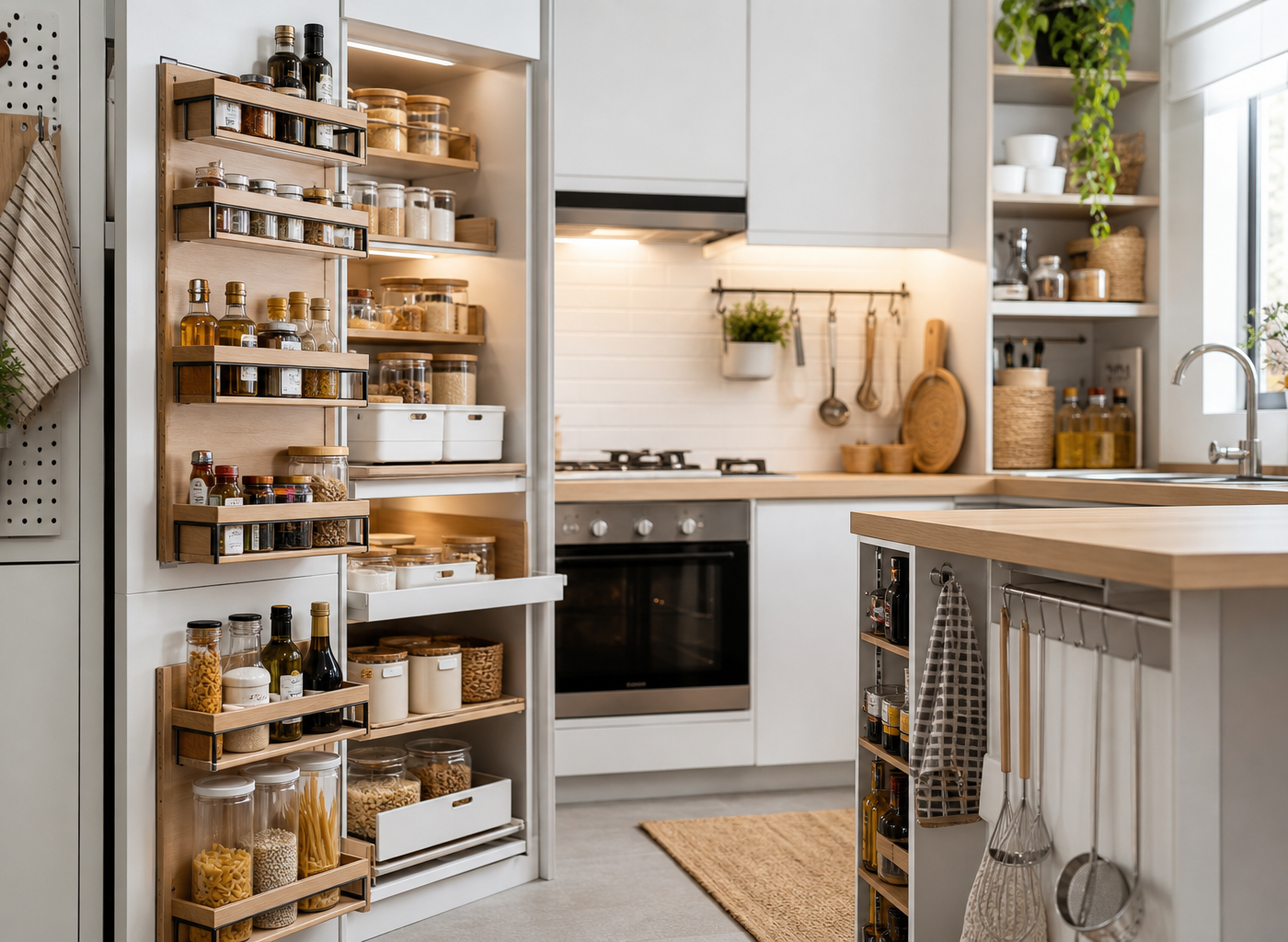
A kitchen without a pantry can feel limiting, especially when cabinets are shallow, counter space is tight, and groceries seem to multiply overnight. The good news is that you do not need a walk-in pantry to create a kitchen that stores everything you use. With a few strategic changes, even a small apartment kitchen can hold dry goods, cookware, cleaning supplies, and serving pieces without looking overcrowded.
The best small kitchen storage ideas without a pantry make use of overlooked vertical space, hard-to-reach cabinet areas, furniture with built-in storage, and simple organizing tools. The goal is not to cram more into every corner. It is to give each item a practical home and keep the things you use most within easy reach.
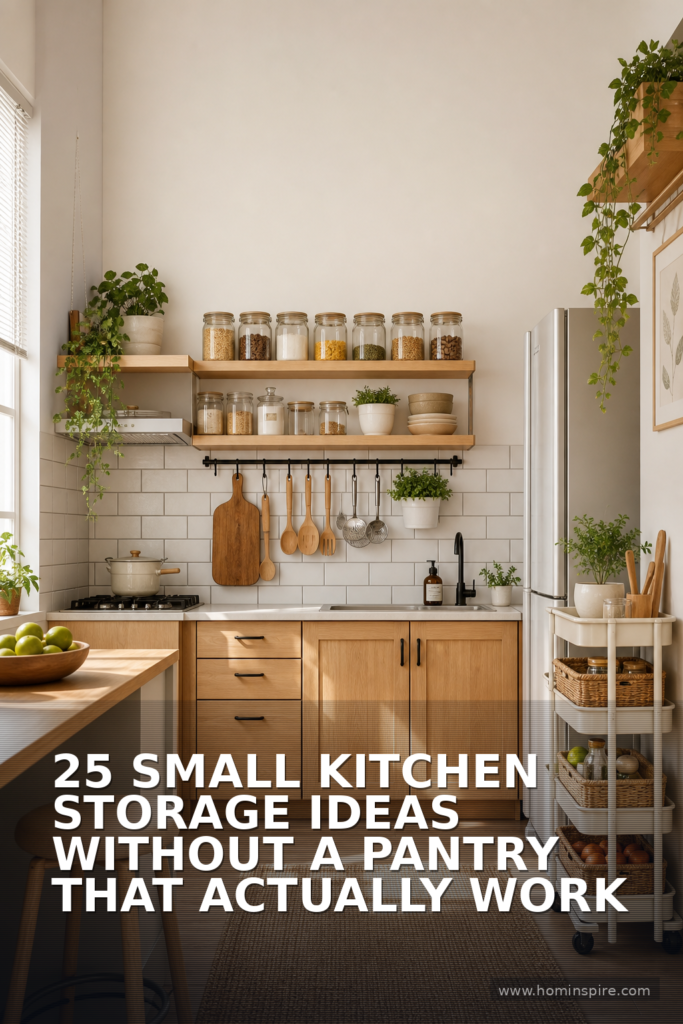
1. Start by Creating Pantry Zones, Not One Pantry Area
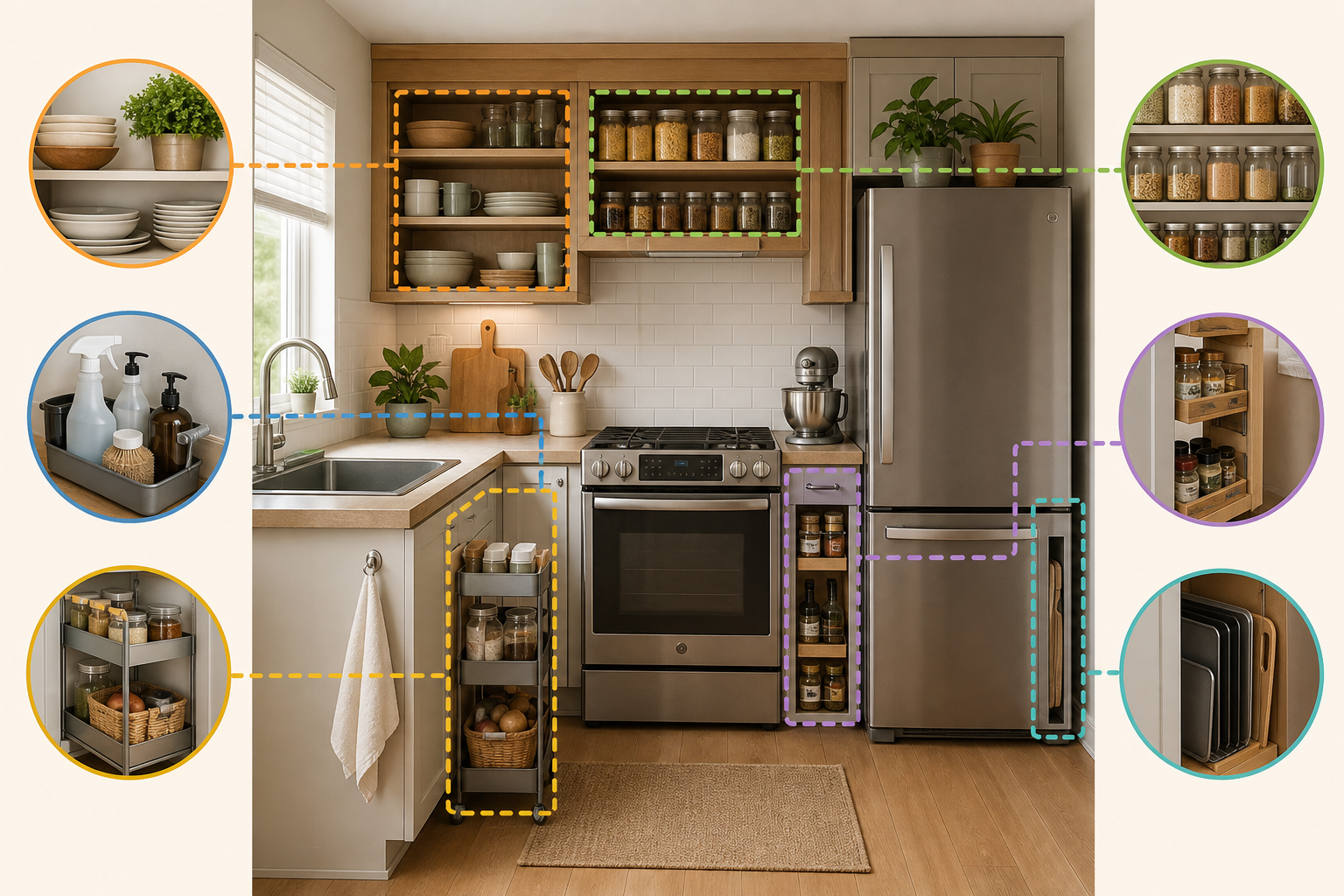
When there is no dedicated pantry, trying to store all food in a single cabinet often creates chaos. Instead, divide food storage into a few logical zones throughout the kitchen. For example, keep breakfast foods near the coffee maker, cooking oils and spices near the range, and snacks near the refrigerator or dining area.
This approach reduces unnecessary movement while cooking and helps cabinets stay organized. A tall cabinet may hold canned goods, while a drawer near the stove stores pasta, rice, and cooking staples. The location matters less than making the category clear and consistent.
Use small bins, drawer dividers, or labeled baskets to define each zone. Labels are especially helpful in shared homes because everyone can quickly see where ingredients belong.
2. Use Clear Containers for Dry Goods
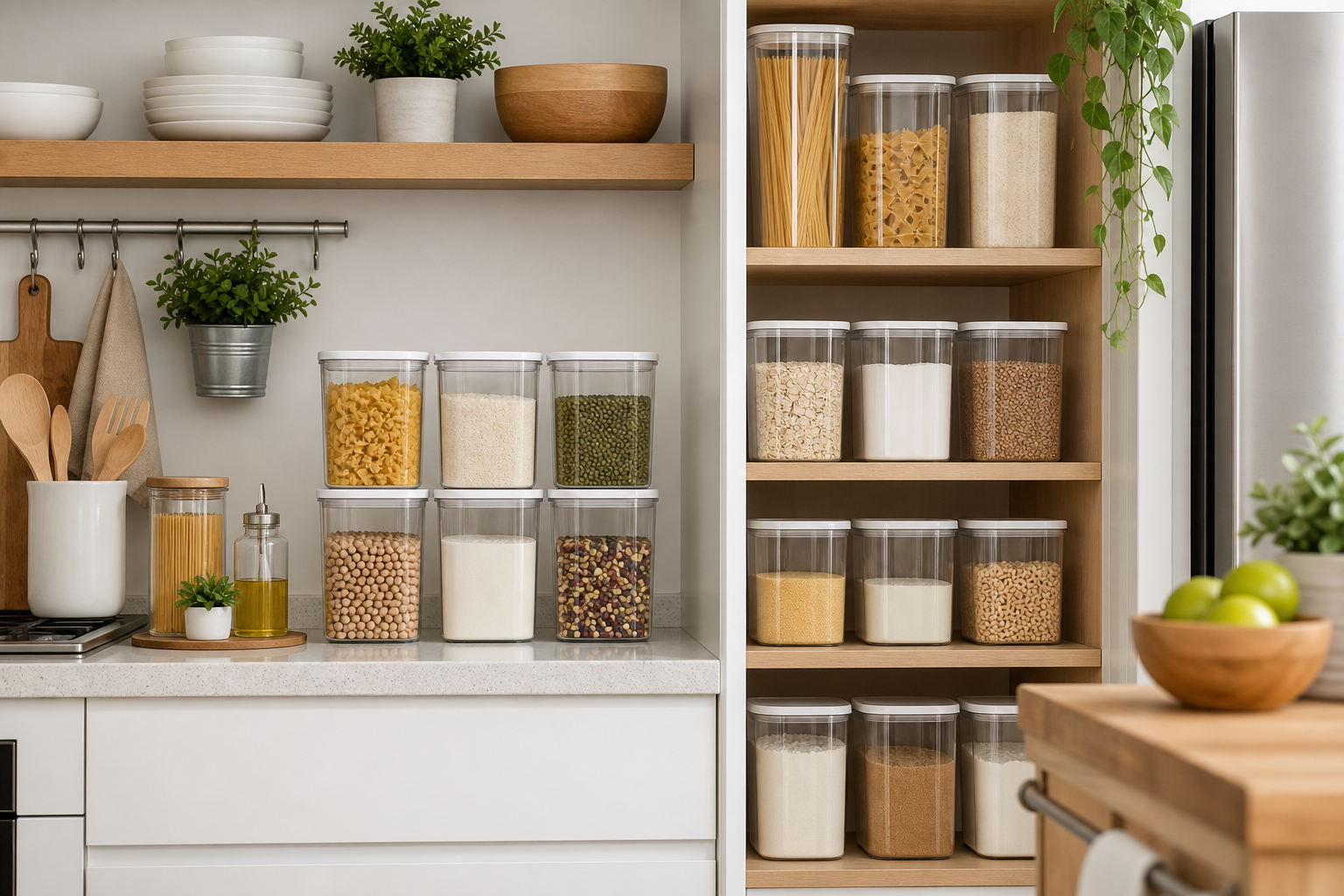
Original packaging takes up more room than most people realize. Boxes, bags, and oddly shaped packages create empty gaps in cabinets and make it difficult to see what you have. Transferring frequently used dry goods into clear, stackable containers can free up a surprising amount of space.
Choose airtight containers for flour, sugar, cereal, pasta, rice, oats, and snacks. Square or rectangular containers generally use shelf space more efficiently than round jars. If you have deep cabinets, place containers on a pull-out tray or in a handled bin so you can access items in the back.
Add a simple label with the item name and, if useful, the expiration date. This prevents duplicate purchases and makes meal planning easier.
3. Add Shelf Risers Inside Cabinets
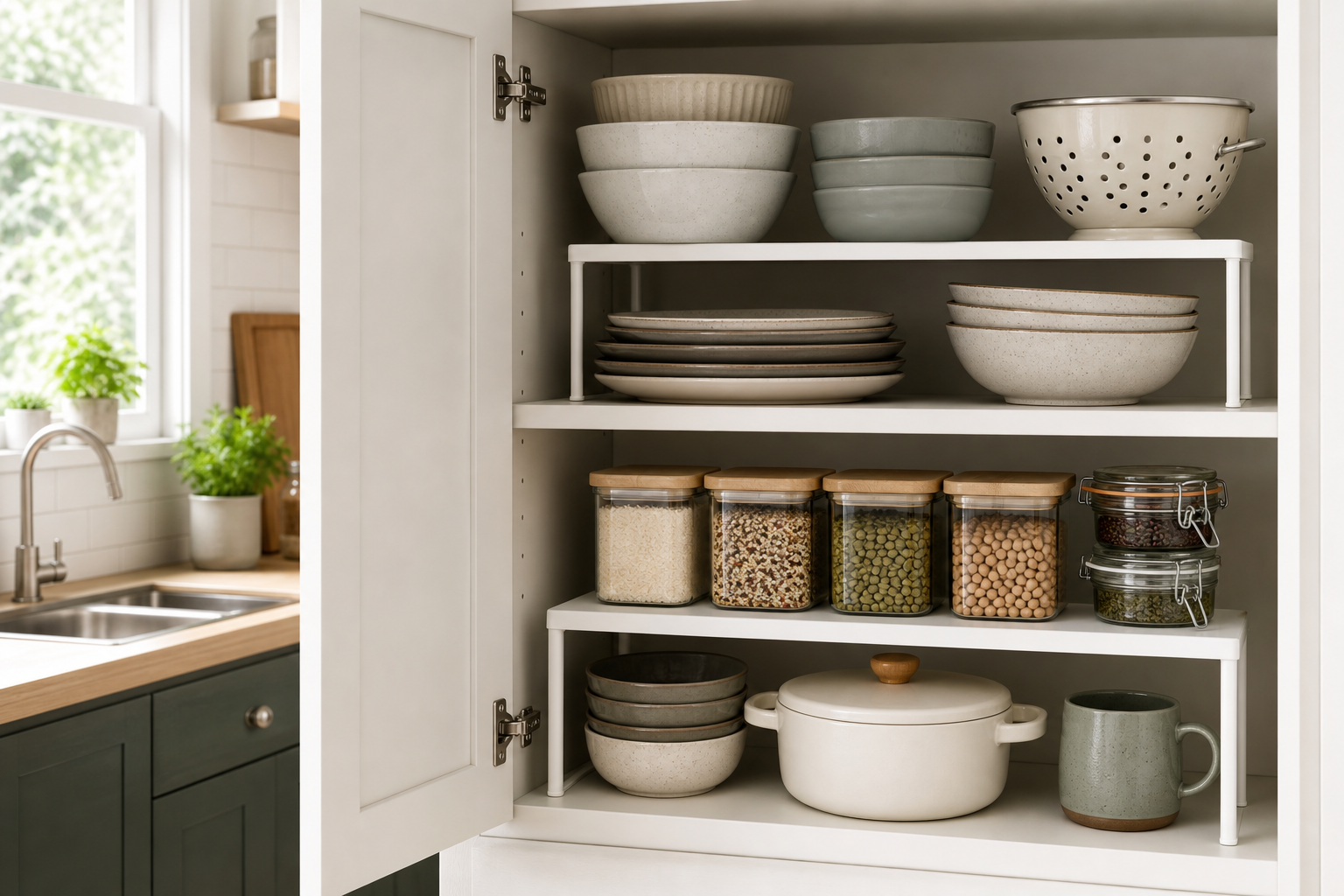
Many kitchen cabinets have one tall, underused vertical compartment. Shelf risers instantly turn that space into two levels, making them ideal for plates, mugs, canned food, and small bowls. They are inexpensive, renter-friendly, and require no installation.
Use a riser in a food cabinet to separate canned vegetables from soup, or place one in a dish cabinet to stack everyday plates below and lighter serving dishes above. For the most stable setup, choose risers with non-slip feet and avoid overloading them with heavy cookware.
4. Turn Cabinet Doors Into Storage Space
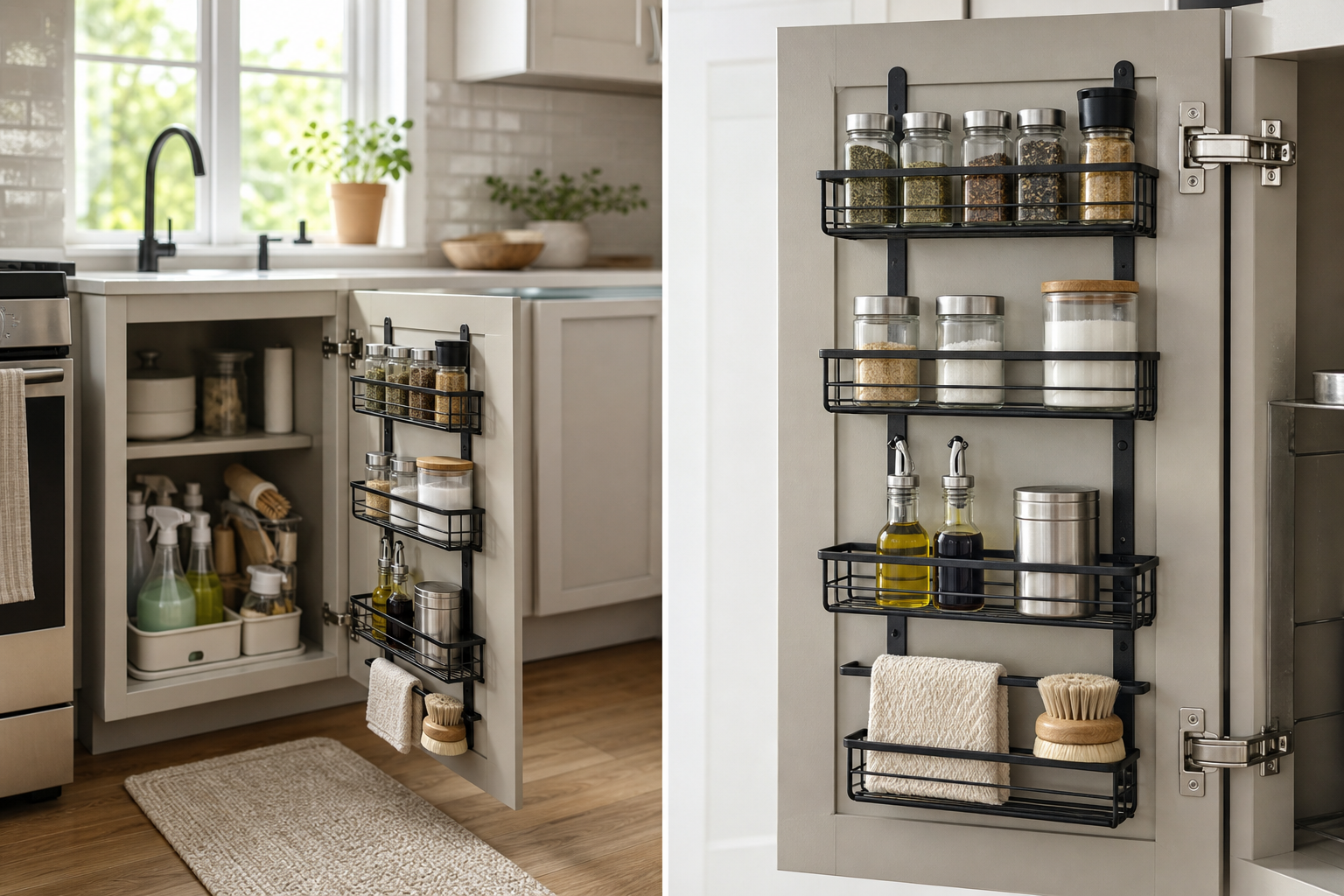
The inside of a cabinet door is one of the most overlooked storage surfaces in a small kitchen. Slim door-mounted racks can hold spices, foil, plastic wrap, food storage bag boxes, cutting boards, or cleaning supplies.
Before installing anything, measure the clearance between the door and the shelf. A shallow rack works best so it does not block cabinet contents when the door closes. Adhesive organizers are useful for renters, while screw-mounted racks tend to be sturdier for heavier items.
A door-mounted spice rack can be particularly valuable in a pantry-free kitchen because it clears an entire shelf for larger groceries.
5. Install a Narrow Rolling Cart
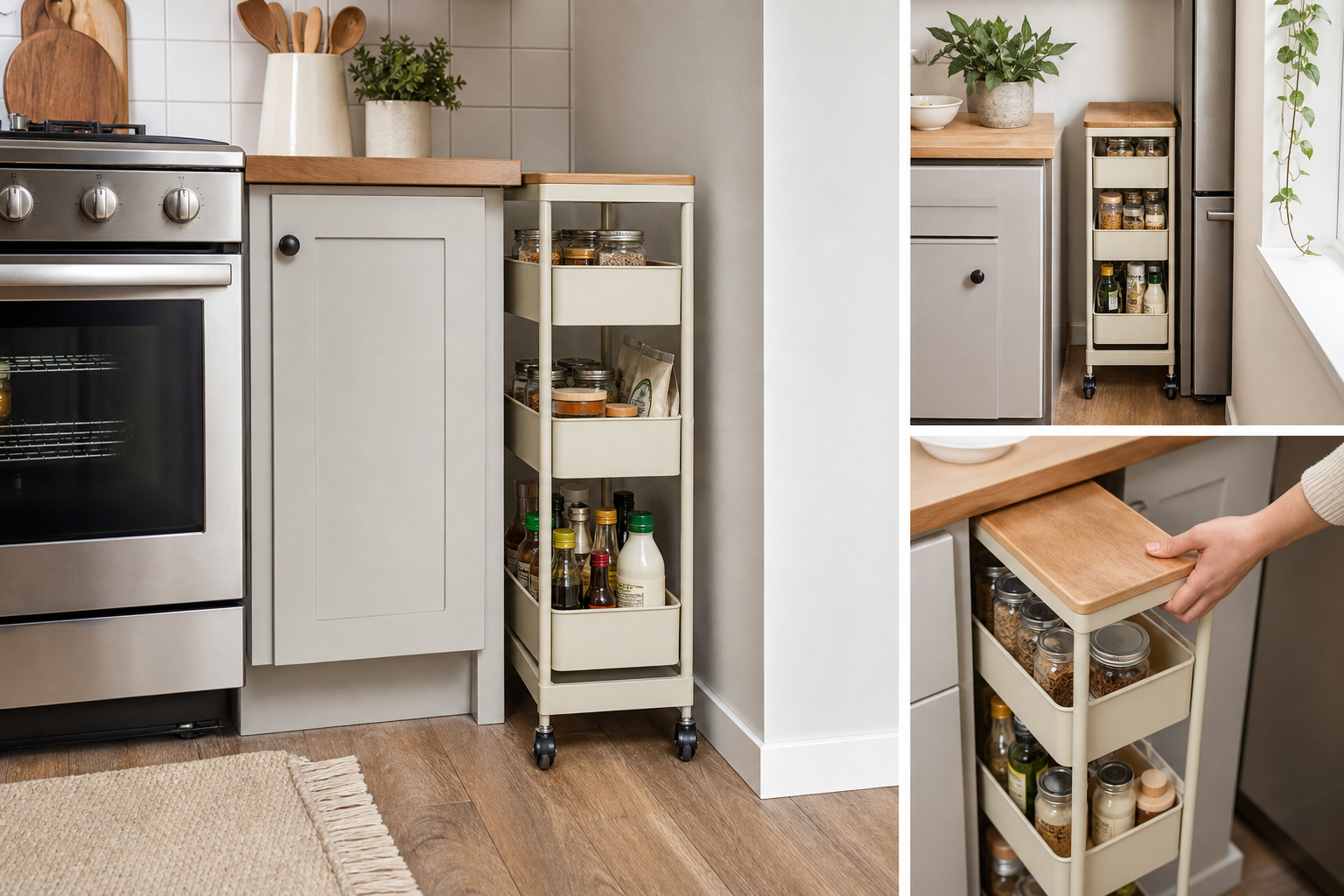
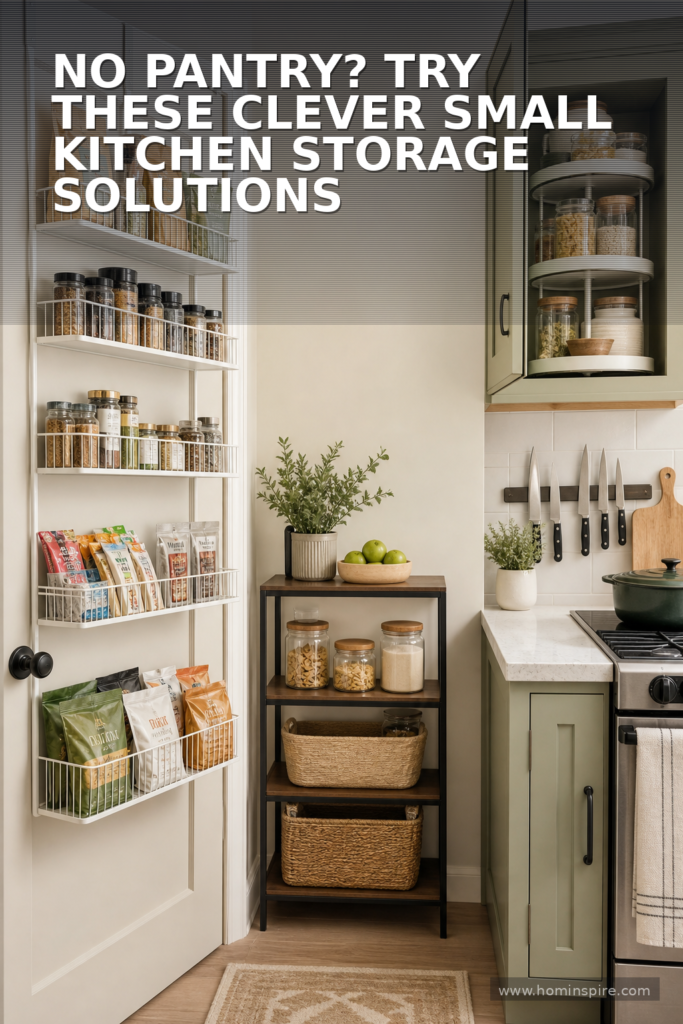
A slim rolling cart can act as a portable mini pantry. Look for one that fits the gap between the refrigerator and wall, beside a cabinet run, or near the dining table. Even a cart that is only 5 to 8 inches wide can store cans, jars, spices, bottles, and snack packs.
Keep the heaviest items on the bottom shelf and group similar products together. Because the cart rolls out, you can see and reach every item without digging through a deep cabinet. It is also easy to move when you need extra floor space for entertaining or cleaning.
6. Make Use of the Space Above Cabinets
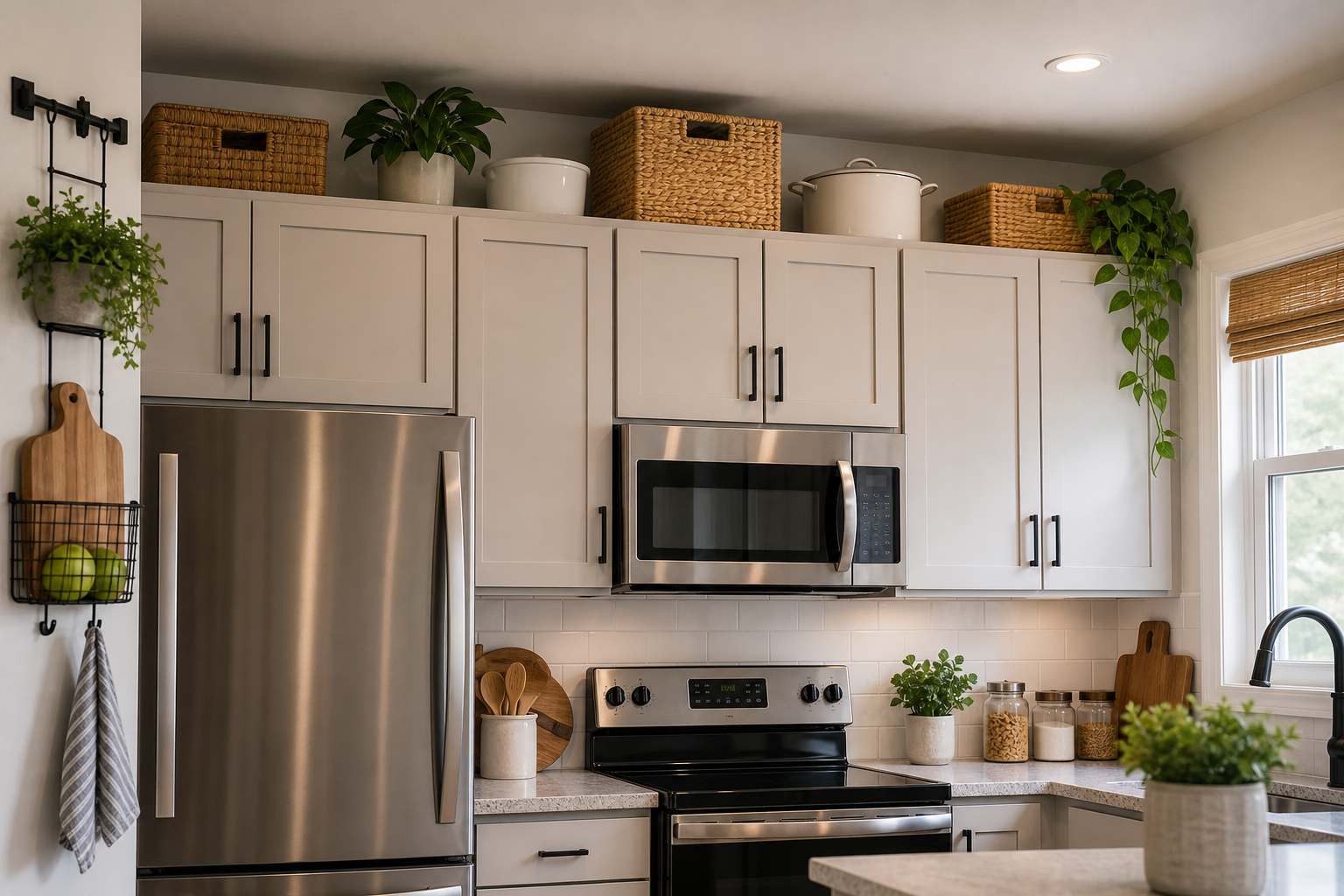
If your upper cabinets do not reach the ceiling, the open area above them can become useful storage. This is best for lightweight, less frequently used items such as extra paper towels, large serving bowls, seasonal linens, or small appliances you only use occasionally.
Use matching lidded baskets or bins to keep this space visually calm. Avoid storing everyday food up high unless you can access it safely with a stable step stool. If you do keep bulk pantry items there, choose sealed containers to protect them from dust and kitchen grease.
7. Hang Pots and Pans Vertically
Cookware can consume an entire lower cabinet, particularly when pans are stacked inside one another. Hanging pots and pans from a wall rail, ceiling rack, or side-mounted cabinet rail frees cabinet space for food storage and makes daily cooking tools more accessible.
A wall-mounted rail with sturdy hooks is often the best option for small kitchens because it uses vertical space without adding a bulky piece of furniture. Hang only the pans you use regularly, and keep the arrangement tidy. A curated set of cookware looks intentional; too many pieces can make a small kitchen feel crowded.
8. Store Lids in a Vertical Organizer
Pot lids, baking sheets, cutting boards, and food container lids are difficult to stack neatly. A vertical rack solves the problem by keeping these flat items upright and easy to grab. Place one inside a lower cabinet, deep drawer, or on a shelf near the stove.
This simple change prevents the familiar avalanche of lids and trays when you open a cabinet. It also makes it easier to identify what you need before you start cooking.
9. Add Pull-Out Baskets to Deep Cabinets
Deep lower cabinets often become black holes for groceries and small appliances. Pull-out wire baskets, sliding shelves, and handled bins make the back half of the cabinet usable. You can pull the entire category forward rather than kneeling down and searching one item at a time.
Reserve pull-out storage for items that tend to get lost, such as potatoes, onions, snack bags, baking ingredients, and reusable food containers. If permanent pull-out shelves are not an option, inexpensive bins with handles provide a similar benefit.
10. Use Drawer Dividers for Food Storage
A deep drawer can be more functional than a cabinet for pantry-style storage. With adjustable dividers, it can hold packets, granola bars, canned goods, tea, spices, or baking supplies. Drawers give you a top-down view, so food is less likely to expire unseen in the back.
For a practical setup, store items vertically when possible. Snack bars, seasoning packets, and zip-top bags are easier to sort when they stand upright in divided sections. Consider dedicating one drawer to lunch-making supplies if your household packs lunches often.
11. Create a Coffee or Breakfast Station
Grouping related items outside your main food cabinets prevents clutter from spreading. A coffee station can include mugs, coffee, tea, filters, sweeteners, and a kettle or coffee machine. A breakfast station might hold cereal, bowls, oatmeal, and toaster supplies.
Use a small tray, cart, or one cabinet shelf to contain the zone. This creates a streamlined morning routine and leaves more central cabinet space available for cooking ingredients.
12. Put a Pegboard on an Empty Wall
A pegboard is flexible storage that can adapt as your needs change. Mount one on a narrow wall, the side of a cabinet, or a small section of backsplash away from heat. Add hooks, shelves, baskets, and clips for utensils, measuring cups, strainers, mugs, and lightweight pans.
In a compact kitchen, a pegboard can replace a utensil drawer and clear valuable cabinet space. Keep the colors and accessories coordinated so the wall looks like an organized display rather than visual clutter.
13. Choose a Kitchen Island With Storage
If your floor plan allows it, a compact rolling island can provide much-needed storage and prep space. Look for a model with shelves, drawers, towel bars, or enclosed cabinets. Some have drop-leaf tops that expand when you are cooking and fold down afterward.
Use the island for bulk groceries, mixing bowls, baking tools, or less-used cookware. A rolling island is especially useful in rental kitchens because it adds function without requiring remodeling. Be sure to leave enough walkway clearance around it; a cramped path will make the kitchen harder to use.
14. Use the Side of the Refrigerator
The side of a refrigerator can work as a storage wall if it is exposed and magnetic. Add magnetic shelves for spices, paper towels, wraps, or small jars. Magnetic hooks can hold oven mitts, measuring spoons, or lightweight kitchen towels.
Do not overload the refrigerator exterior or place heat-sensitive items too close to an appliance vent. Still, a few carefully chosen magnetic organizers can remove frequently used items from crowded drawers and countertops.
15. Store Produce Outside the Refrigerator
Many fruits and vegetables do not need refrigeration, and moving them out of the fridge can create more room for perishables. Use stackable wire baskets, a tiered produce stand, or ventilated bins for potatoes, onions, garlic, bananas, and whole squash.
Keep potatoes and onions separate, since storing them together can cause faster spoilage. Place produce away from direct sunlight and heat. A small rolling produce cart is another smart choice when counter space is limited.
16. Use a Back-of-Door Organizer Nearby
If your kitchen has a nearby utility closet, coat closet, or laundry closet, its door can become extra pantry storage. An over-the-door organizer with deep pockets or shelves is excellent for snacks, sauces, spices, baking decorations, and small paper goods.
This is one of the most effective solutions for apartment kitchens with limited cabinetry. Just avoid storing temperature-sensitive foods in areas that get hot, humid, or difficult to access during everyday cooking.
17. Decant Only What You Actually Use
Decanting can look beautiful, but it is not necessary to transfer every grocery item into matching containers. Focus on products that are bulky, frequently used, or difficult to organize in their original packaging. Flour, rice, pasta, cereal, coffee, and snacks are usually worth decanting.
Leave rarely used ingredients in their original packaging and store them together in a labeled bin. This saves money, reduces cleanup, and prevents your storage system from becoming more complicated than it needs to be.
18. Use Baskets to Group Categories
Baskets make open shelves, high cabinets, and deep storage areas much easier to manage. Assign each basket a category, such as baking, chips, sauces, breakfast, kids’ snacks, or meal-prep supplies. When you need an item, pull out one basket instead of rearranging an entire shelf.
Choose open-front bins for everyday categories and lidded baskets for items stored above cabinets. Labels make the system easier to maintain and help prevent random items from collecting in the wrong place.
19. Maximize Under-the-Sink Storage
The cabinet under the sink is not suitable for food, but organizing it well can free up other kitchen cabinets. Use a tension rod to hang spray bottles, add stackable drawers around plumbing, and keep sponges, dishwasher tablets, trash bags, and cleaning cloths in bins.
By moving all cleaning supplies into one efficient area, you avoid wasting valuable food-storage shelves on non-food items. Check periodically for leaks and choose wipeable organizers that can handle moisture.
20. Store Appliances Based on Frequency of Use
Countertops are often crowded because every appliance is treated as essential. Keep only the appliances you use daily on the counter, such as a coffee maker or toaster. Move weekly-use items to a lower cabinet, rolling cart, or high shelf, and consider whether rarely used gadgets are worth keeping.
Reducing appliance clutter instantly creates more prep space. It can also open up a cabinet that can serve as your new pantry zone.
21. Add Hooks Wherever They Make Sense
Adhesive hooks, rail hooks, and under-cabinet hooks can hold mugs, utensils, dish towels, oven mitts, and small baskets. The underside of an upper cabinet is particularly useful for hanging mugs or measuring spoons.
Use hooks thoughtfully. They work best for a small number of lightweight items that are used often. Too many hanging objects can make a compact kitchen appear busy.
22. Try a Tension Rod for Cleaning or Wrap Storage
A tension rod is an inexpensive organizing tool with several uses. Under the sink, it holds spray bottles by their triggers. In a cabinet, it can create a divider for baking sheets or help contain rolls of foil and parchment paper.
Because it requires no drilling, a tension rod is ideal for renters and for anyone who wants to test a new storage layout before making permanent changes.
23. Think Beyond the Kitchen Itself
In a small home, the best pantry alternative may be just outside the kitchen. A dining room sideboard, console table, bar cart, or nearby bookcase can store dry goods and serving supplies. Choose furniture with doors if you prefer a cleaner look, or use attractive baskets on open shelving.
Store less frequently used pantry items in these secondary zones, while keeping everyday staples near the kitchen work area. This creates breathing room without sacrificing convenience.
24. Keep a Simple Inventory of Staples
Without a pantry, overbuying can quickly overwhelm your available storage. Keep a short inventory list on your phone or inside a cabinet door. Track core items such as rice, pasta, canned tomatoes, broth, flour, coffee, and snacks.
Before grocery shopping, check what is already on hand. Buying smaller quantities more often may be more practical than purchasing bulk packages when storage is limited. Bulk buying only saves money if you have a clean, accessible place to keep the products.
25. Edit Your Kitchen Storage Regularly
Even the best organization system needs occasional maintenance. Once a month, check food expiration dates, wipe shelves, consolidate open packages, and donate unopened items your household will not use. Reassess duplicate utensils, rarely used appliances, and oversized serving pieces as well.
For more affordable ways to improve a compact cooking space, explore these small kitchen storage ideas on a budget that actually work. Small, low-cost changes often make the biggest difference when every cabinet and countertop has to work harder.
How to Make a Pantry-Free Kitchen Feel Less Cluttered
Storage is not only about capacity. Visual simplicity matters in a small kitchen. Keep open storage limited to attractive, useful items. Use a consistent color palette for bins and containers, avoid filling every wall, and leave a little empty counter space whenever possible.
Most importantly, organize according to your real habits. If you bake every weekend, give baking supplies an accessible drawer or bin. If you rely on quick weeknight meals, prioritize easy access to spices, canned goods, and cooking tools. A pantry-free kitchen works best when its layout supports the way you actually cook and shop.
FAQ: Small Kitchen Storage Ideas Without a Pantry
Where can I store food if I do not have a pantry?
Store food in organized zones across cabinets, drawers, rolling carts, and nearby furniture such as a sideboard or utility closet organizer. Use bins and labels to keep categories together.
How do I organize a small kitchen with very few cabinets?
Use walls, cabinet doors, refrigerator sides, rolling carts, and vertical shelving. Prioritize everyday items, use stackable containers, and move infrequently used appliances or serving pieces to storage outside the kitchen.
What is the best alternative to a pantry in an apartment?
A narrow rolling cart, over-the-door organizer, freestanding cabinet, or nearby bookcase with baskets can work well in an apartment. Choose an option that fits your available space and does not require permanent installation.
Should I store dry goods in containers?
Clear airtight containers are helpful for frequently used dry goods because they save space, keep food fresh, and make inventory easier. You do not need to decant every item; focus on bulky packages and everyday staples.
How can I store bulk groceries in a small kitchen?
Buy bulk items selectively, then divide them into smaller airtight containers or store backup packages in a nearby closet, sideboard, or high cabinet. Avoid buying more than you can access and use before it expires.
