
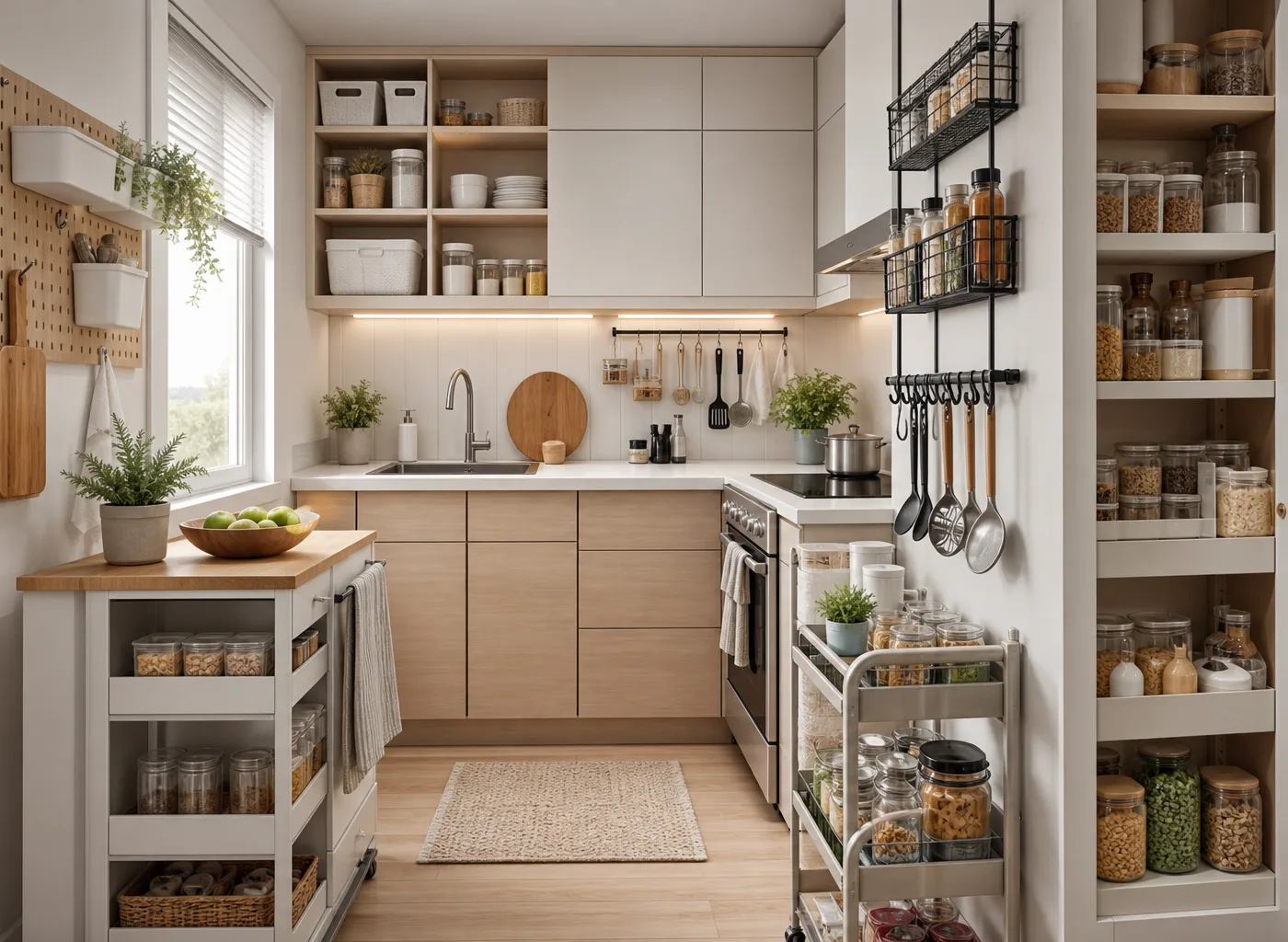
A kitchen without a pantry can feel challenging, especially when every cabinet is already working hard. In a small home, apartment, condo, or older house, groceries often compete with cookware, dishes, cleaning supplies, and countertop appliances. The good news is that a traditional walk-in pantry is not the only way to create useful food storage.
The best small kitchen ideas with no pantry focus on using overlooked space, assigning clear storage zones, and choosing solutions that fit your daily habits. Whether you own your home or rent, a few thoughtful changes can make your kitchen easier to cook in, easier to clean, and far less cluttered.
Start With a Pantry-Free Kitchen Plan
Before buying baskets, shelves, or carts, take stock of what you actually need to store. Empty one cabinet at a time and group items into categories: dry goods, snacks, baking supplies, canned food, breakfast items, spices, cooking oils, and backstock. Toss expired products and donate foods your household will not use.
Then decide which items need the most accessible locations. Everyday staples such as rice, pasta, cereal, coffee, and lunch snacks should be close to where you use them. Seasonal baking ingredients, bulk purchases, and occasional serving pieces can live in less convenient spots.
This simple edit prevents a common mistake: creating attractive storage that is still too small for the amount of food you buy. A pantry-free kitchen works best when storage capacity and shopping habits support each other.
1. Turn One Upper Cabinet Into a Dedicated Food Cabinet
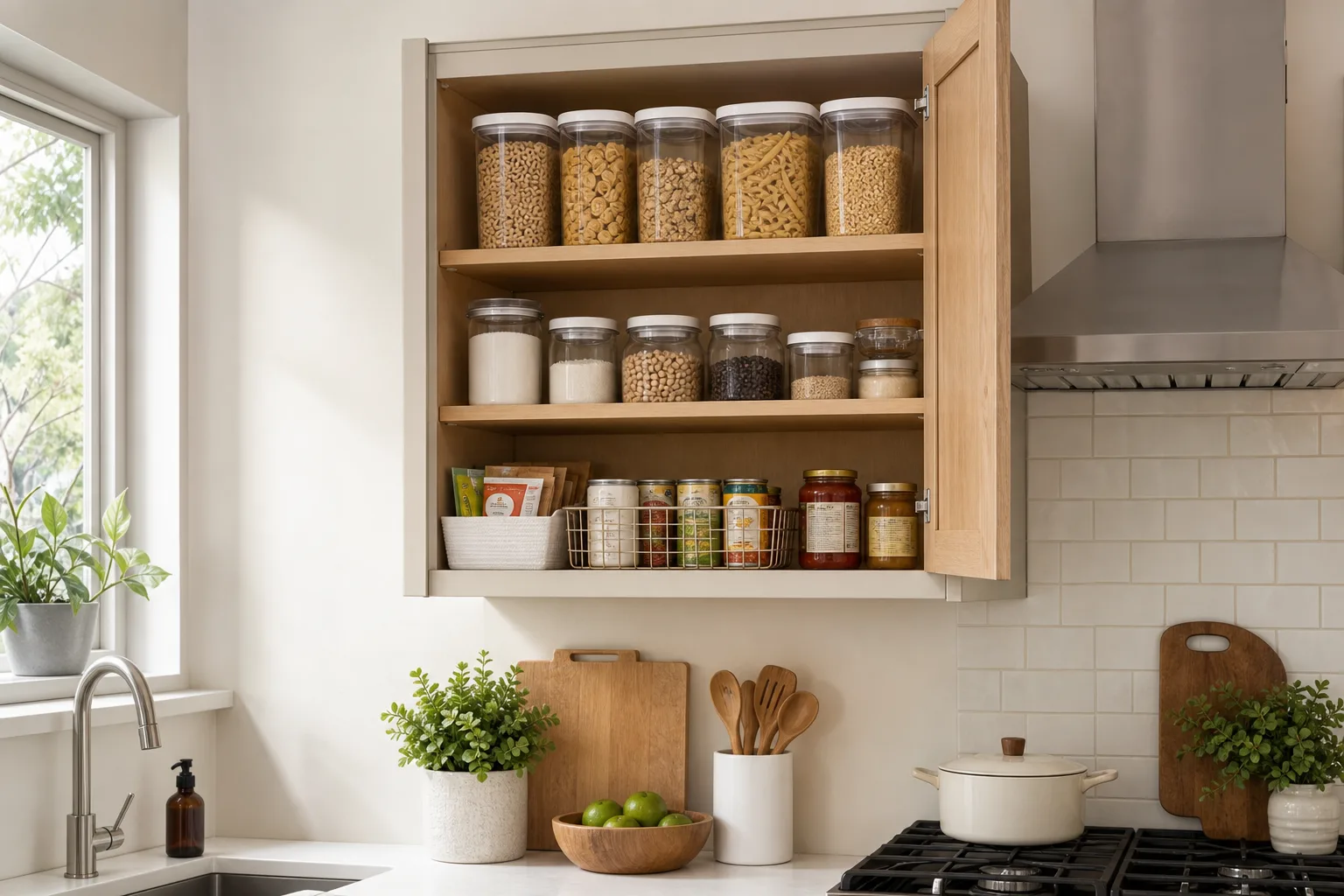
If you do not have a pantry, designate at least one upper cabinet exclusively for food. Even a narrow cabinet can hold an impressive amount when it is organized by category. Place daily items at eye level, use the top shelf for backstock, and keep heavier jars or cans on the lowest shelf.
Clear bins make small packets, granola bars, tea bags, and sauce mixes easier to contain. Add simple labels so everyone can return items to the right place. This creates the function of a compact pantry without changing your kitchen layout.
2. Use Cabinet Shelf Risers to Double Vertical Space
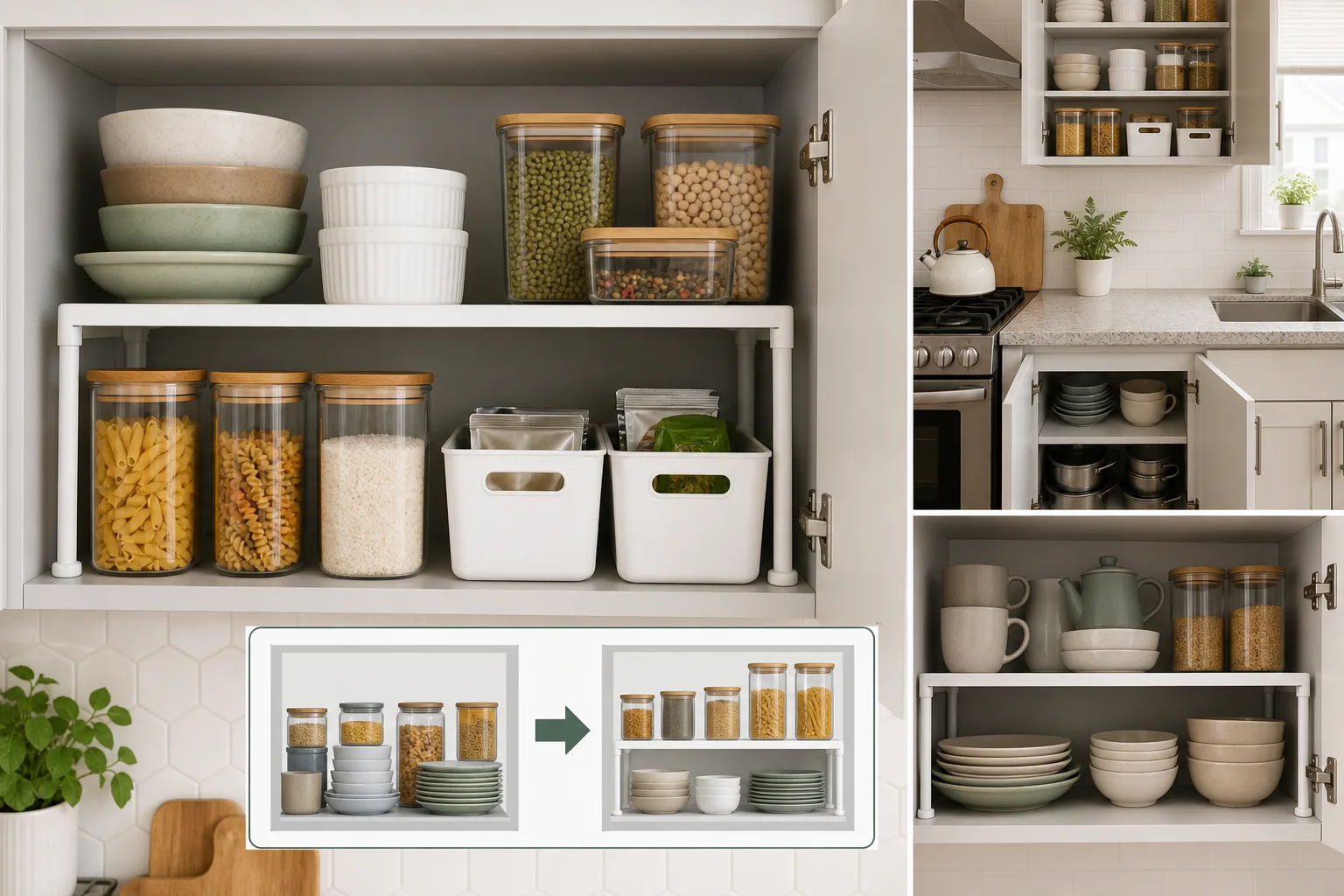
Many kitchen cabinets have unused vertical space above short items. Shelf risers create a second level for mugs, canned goods, plates, or dry food containers. They are particularly useful in upper cabinets where stacks of cans and boxes otherwise disappear behind one another.
Choose sturdy risers with a flat, stable surface. Use one level for shorter products and the other for taller packages. Avoid overfilling; seeing what you own is more valuable than squeezing in a few extra items.
3. Add Pull-Out Baskets Inside Deep Lower Cabinets
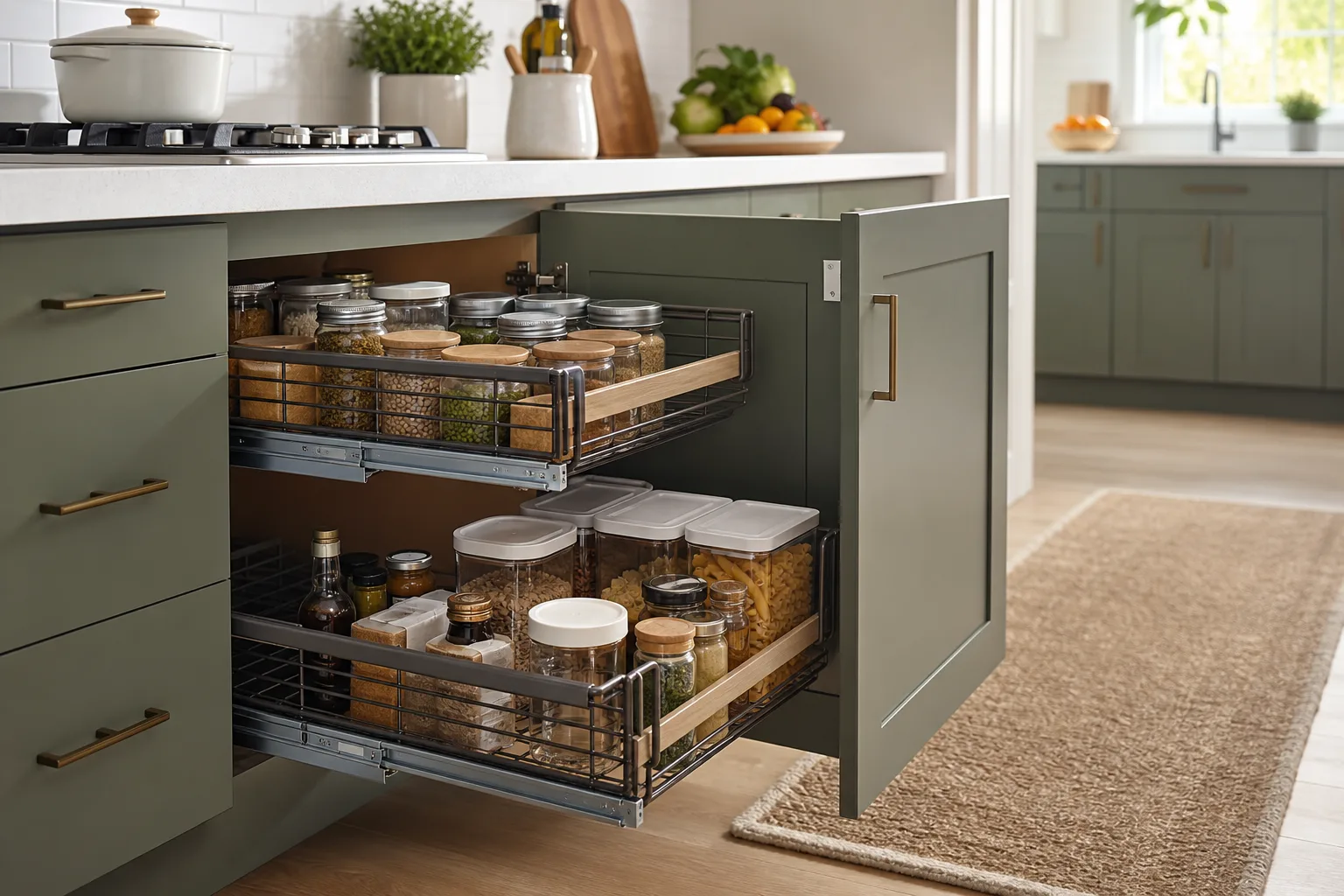
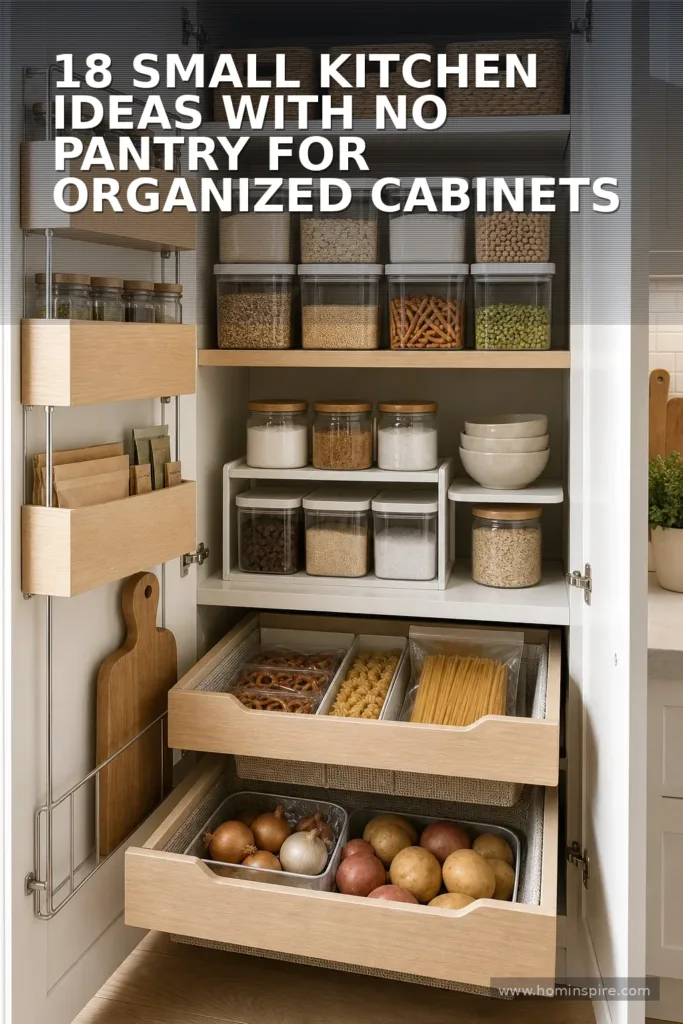
Deep base cabinets can become black holes for food storage. Pull-out wire baskets, slide-out bins, or simple handled baskets bring items forward instead of forcing you to reach into the back. They work well for potatoes, onions, snacks, canned goods, and packaged staples.
For renters, removable bins are usually the easiest option. Homeowners may prefer installed pull-out shelves for a more permanent upgrade. If drilling is not an option, see these renter-friendly kitchen storage ideas without drilling for flexible alternatives.
4. Make a Rolling Cart Your Mobile Pantry
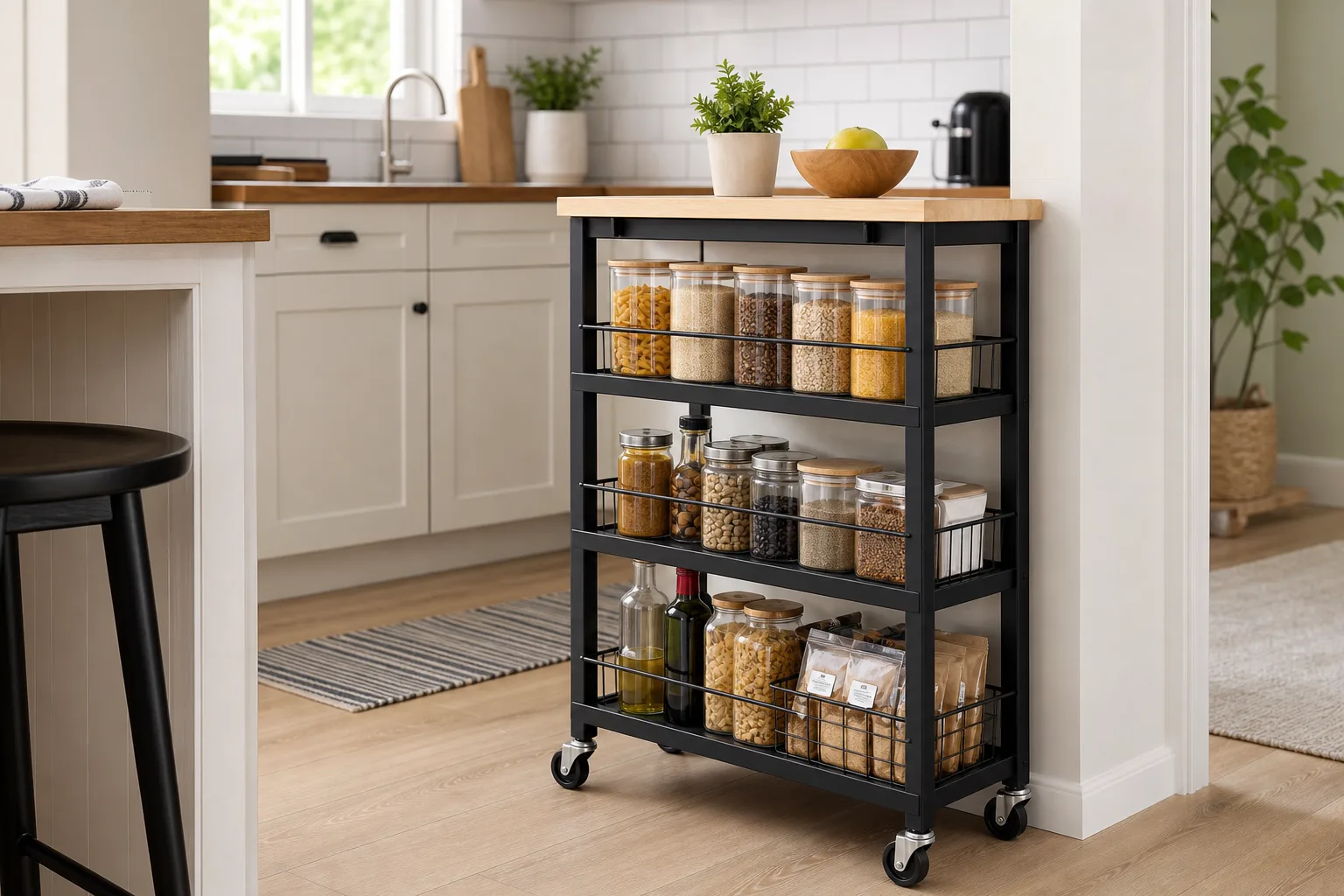
A slim rolling cart is one of the most practical small kitchen ideas with no pantry. It can hold dry goods, produce, coffee supplies, or baking ingredients, then roll out of the way when you need more floor space. Look for a cart that fits beside the refrigerator, at the end of a cabinet run, or in a nearby dining nook.
Use the top tier for the items you reach for most often. Lower shelves can hold heavier cans, storage containers, or extra paper goods. A cart with a raised edge or baskets helps prevent items from shifting as it moves.
5. Use the Space Above Your Refrigerator
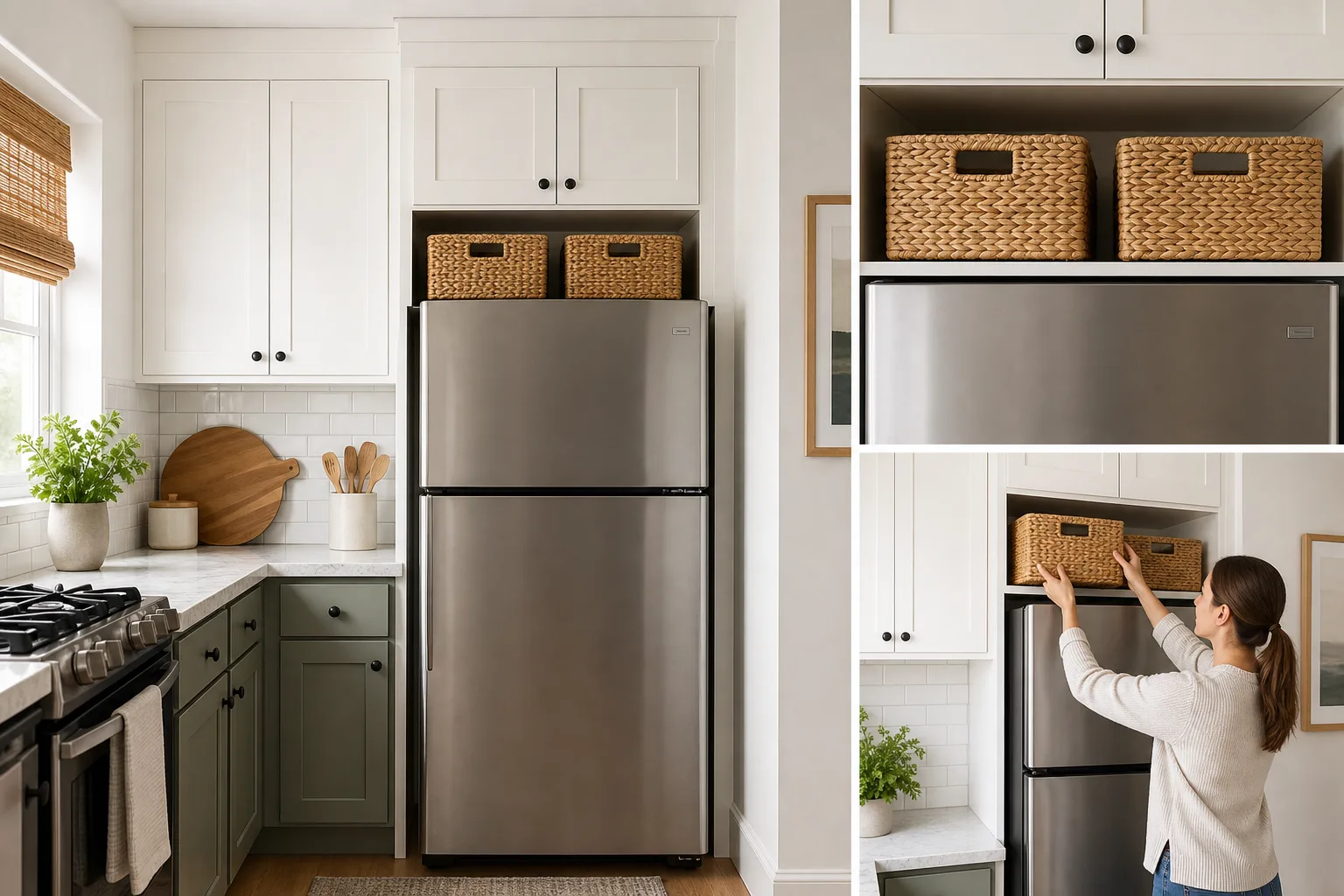
The area above the refrigerator is often overlooked, but it can store less frequently used pantry items. Add a pair of matching baskets for extra coffee, paper towels, specialty snacks, or seasonal baking supplies. If there is room for a cabinet above the fridge, use shelf bins to keep it organized.
Because this area is high and less accessible, avoid storing heavy glass jars or everyday essentials there. It is best for lightweight backstock that you only need occasionally.
6. Create a Slim Storage Zone Beside the Refrigerator
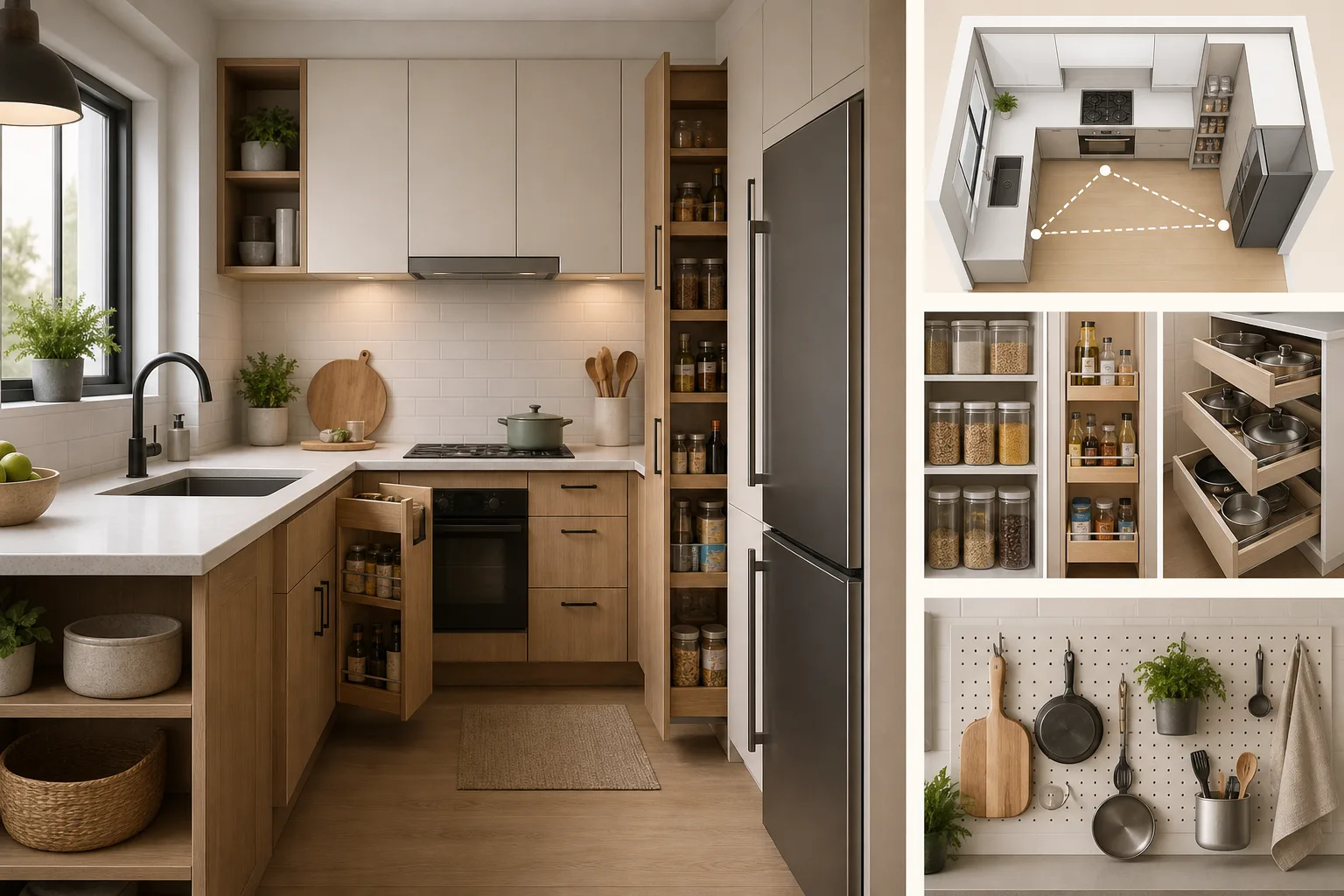
A narrow gap next to the refrigerator may be enough for a pull-out pantry rack. These slim units are designed for cans, spices, jars, and bottles, making them ideal when a full pantry is not possible. Measure the width carefully, including clearance for the refrigerator door and any baseboard trim.
Even a 4- to 8-inch gap can become valuable storage. Keep similar items together and avoid using it as a catchall. A narrow rack is most useful when it has a specific purpose, such as sauces, canned vegetables, or breakfast supplies.
7. Put Wall Space to Work With Open Shelves
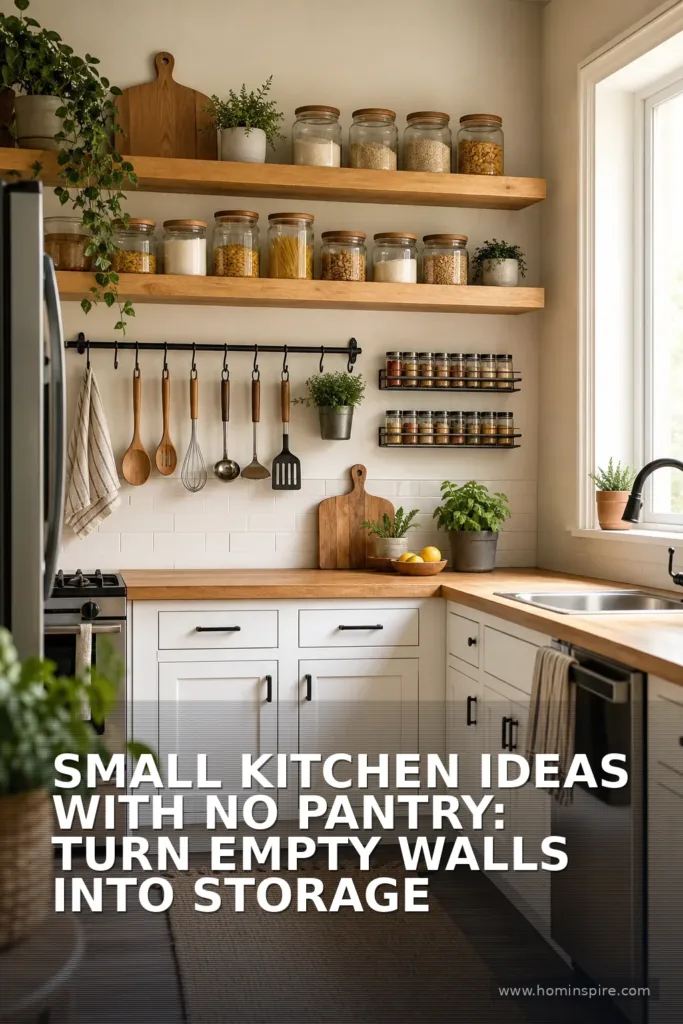
An empty wall can become a compact pantry zone with a few well-placed shelves. Open shelving is especially helpful for dry goods stored in matching containers, cookbooks, mugs, and attractive baskets. Install shelves above a coffee station, near a dining table, or on a short unused wall.
Keep the display intentional rather than crowded. Use clear canisters for staples and opaque bins for visual clutter such as snack bags. If you want food storage to blend into the room, use baskets in one color and label them consistently.
8. Add a Pegboard for Flexible Vertical Storage
A pegboard is not only for tools. In a compact kitchen, it can hold lightweight baskets, measuring cups, small shelves, utensils, and even a few pantry containers. Its flexibility is the biggest advantage: you can move hooks and accessories when your needs change.
Place it near your prep zone and reserve it for items you use regularly. Do not overload it with heavy cookware or large glass containers unless it is professionally mounted and rated for the weight.
9. Use Door-Mounted Organizers Wisely
Cabinet and pantry-door organizers are useful even when there is no actual pantry door. Mount a shallow rack inside a cabinet door for spices, wraps, food storage bags, or small condiments. Over-the-door organizers can also work on a nearby closet, laundry room, or utility door.
Measure door depth and cabinet clearance before purchasing. A rack that blocks shelves from closing will create more frustration than storage. Shallow shelves are usually the safest choice for kitchen cabinet doors.
10. Store Dry Goods in Stackable Containers
Boxes and bags waste space because they come in inconsistent shapes and sizes. Transferring frequently used staples into stackable containers can make a cabinet far more efficient. Square or rectangular containers use shelf space better than round jars and make it easier to see when you are running low.
Good candidates include flour, sugar, rice, pasta, cereal, oats, nuts, and pet treats. Label every container with the item name and, if helpful, an expiration date. Keep original cooking instructions for specialty products by clipping them inside a labeled bin or taking a photo for reference.
11. Make a Small Appliance Cabinet Do Double Duty
Countertop appliances can consume cabinet space, but they can also share it. If you have a cabinet for a toaster, blender, or air fryer, use a shallow bin behind or above the appliance for related pantry items. For example, store bread and bagels near the toaster, smoothie add-ins near the blender, or coffee supplies near the coffee maker.
Only use this approach when airflow and heat are not concerns. Never store food directly against an appliance that gets hot, and always allow appliances to cool before putting them away.
12. Build a Coffee or Breakfast Station
Consolidating one routine can free up space throughout the kitchen. A coffee station might include mugs, coffee, tea, filters, sweeteners, and a small tray for spoons. A breakfast station can hold cereal, oats, bowls, and lunchbox snacks.
Use a cabinet, cart, or short shelf section for this purpose. By keeping related items together, you reduce traffic through the rest of the kitchen and avoid scattering pantry products across multiple cabinets. For a styled but practical setup, explore these kitchen counter tray decor ideas.
13. Use Attractive Baskets in Nearby Rooms
Your food storage does not have to stay entirely inside the kitchen. A nearby dining room, entry closet, laundry area, or utility cabinet may be a better place for unopened bulk goods and overflow supplies. Lidded baskets, fabric bins, or closed cabinets keep these items visually calm.
Store only shelf-stable, sealed food in dry, temperature-stable areas. Avoid garages, humid basements, or locations exposed to direct sun, since heat and moisture can reduce food quality and attract pests.
14. Add a Bench or Sideboard With Closed Storage
If your kitchen opens into a dining area, furniture can help fill the pantry gap. A sideboard, buffet cabinet, storage bench, or freestanding hutch provides space for table linens, serving dishes, and pantry overflow. Moving non-food items out of kitchen cabinets also creates more room for groceries.
Choose closed storage if you prefer a quieter look. Glass doors can work beautifully too, but they require more consistent organization. This is a useful option in older homes where modifying kitchen cabinetry is not realistic.
15. Store Produce Outside the Refrigerator
Potatoes, onions, garlic, bananas, and some whole fruits do not need refrigerator space. A ventilated basket, wire bin, or tiered produce stand can keep them accessible while opening up cabinets for dry goods. Store potatoes and onions separately, as they can cause each other to spoil faster when kept together.
Keep produce away from direct sunlight and heat sources. Rotate it regularly and use a small quantity at a time if your kitchen is warm.
16. Keep Counters Clear With Purposeful Storage
When pantry items spill onto every surface, a small kitchen feels even smaller. Limit countertop storage to daily-use items, such as a fruit bowl, coffee supplies, or one attractive canister set. Everything else should have a cabinet, cart, shelf, or nearby storage home.
A clear work surface makes cooking easier and visually expands the room. For more ways to maintain a polished look, read kitchen counter decor ideas without clutter.
17. Shop for Your Actual Storage Capacity
One of the most effective no-pantry solutions costs nothing: buy less at one time. Warehouse-size packages are not always a bargain if they crowd your kitchen, expire before use, or force food onto the counter. Purchase bulk items only when you have a designated place for them.
Maintain a simple inventory on your phone or use a dry-erase list inside a cabinet door. Check it before grocery shopping so you do not buy duplicates. A smaller, more intentional supply of food is easier to manage than an overstuffed pseudo-pantry.
18. Use Hidden Storage When You Want a Cleaner Look
If open shelves and carts do not suit your style, consider discreet storage solutions. Toe-kick drawers, a cabinet-depth freestanding unit, appliance garages, and concealed shelving can create capacity without making the kitchen look busy. These options are particularly helpful in modern or minimalist spaces.
For more inspiration, browse these hidden pantry ideas that help storage blend seamlessly into the kitchen.
How to Organize a No-Pantry Kitchen by Zone
A strong zone system makes every storage solution work harder. Instead of putting food wherever it fits, place it near the task it supports:
- Prep zone: Oils, spices, salt, cooking utensils, and frequently used sauces near the stove or main prep area.
- Baking zone: Flour, sugar, extracts, measuring tools, and mixing supplies in one cabinet or bin.
- Breakfast zone: Cereal, coffee, tea, mugs, and quick snacks together.
- Lunch zone: Lunch containers, wraps, snack bags, and grab-and-go foods near each other.
- Backstock zone: Extra canned goods, unopened dry goods, and paper products in high shelves or nearby non-kitchen storage.
This approach saves time because you are not searching through several cabinets to complete one task. It also makes it easier for other household members to put groceries away correctly.
Small Kitchen Storage Mistakes to Avoid
A pantry-free kitchen can become cluttered quickly when storage is not designed around access. Avoid buying organizers before measuring your cabinets. Avoid decanting every single product if the process makes grocery day too time-consuming. And avoid using every open surface for storage, which can make the room feel cramped.
Instead, choose a few high-impact changes: one dedicated food cabinet, vertical shelf risers, a rolling cart or narrow rack, and labeled bins. If you are updating the whole room on a tight budget, these small kitchen design ideas on a budget can help you make the most of every inch.
FAQ: Small Kitchen Ideas With No Pantry
Where should I store food if I do not have a pantry?
Use a dedicated cabinet first, then add storage in overlooked areas such as above the refrigerator, inside deep lower cabinets, on a rolling cart, or in a nearby dining-room sideboard. Group food by category so it remains easy to find.
How can I create pantry storage in a rental kitchen?
Choose removable options such as rolling carts, freestanding shelves, shelf risers, handled bins, over-the-door organizers, and tension-rod systems. These add capacity without permanent cabinet modifications.
What is the best way to organize a small kitchen without a pantry?
Create zones for cooking, baking, breakfast, snacks, and backstock. Use containers and bins to group similar items, place daily staples at eye level, and store rarely used products in higher or less accessible areas.
Can I store pantry food outside the kitchen?
Yes. Shelf-stable, sealed food can be stored in a dry, cool, clean nearby space such as a dining-room cabinet, hall closet, or utility cabinet. Avoid areas with excess heat, humidity, or direct sunlight.
How do I keep a no-pantry kitchen from looking cluttered?
Keep counters mostly clear, use matching bins or baskets, limit open shelving to attractive and frequently used items, and avoid buying more food than your available storage can handle.
A small kitchen with no pantry can still be highly functional. By treating cabinets, walls, furniture, and nearby space as part of one storage system, you can create a kitchen that supports everyday cooking without sacrificing style or precious work surfaces.
