
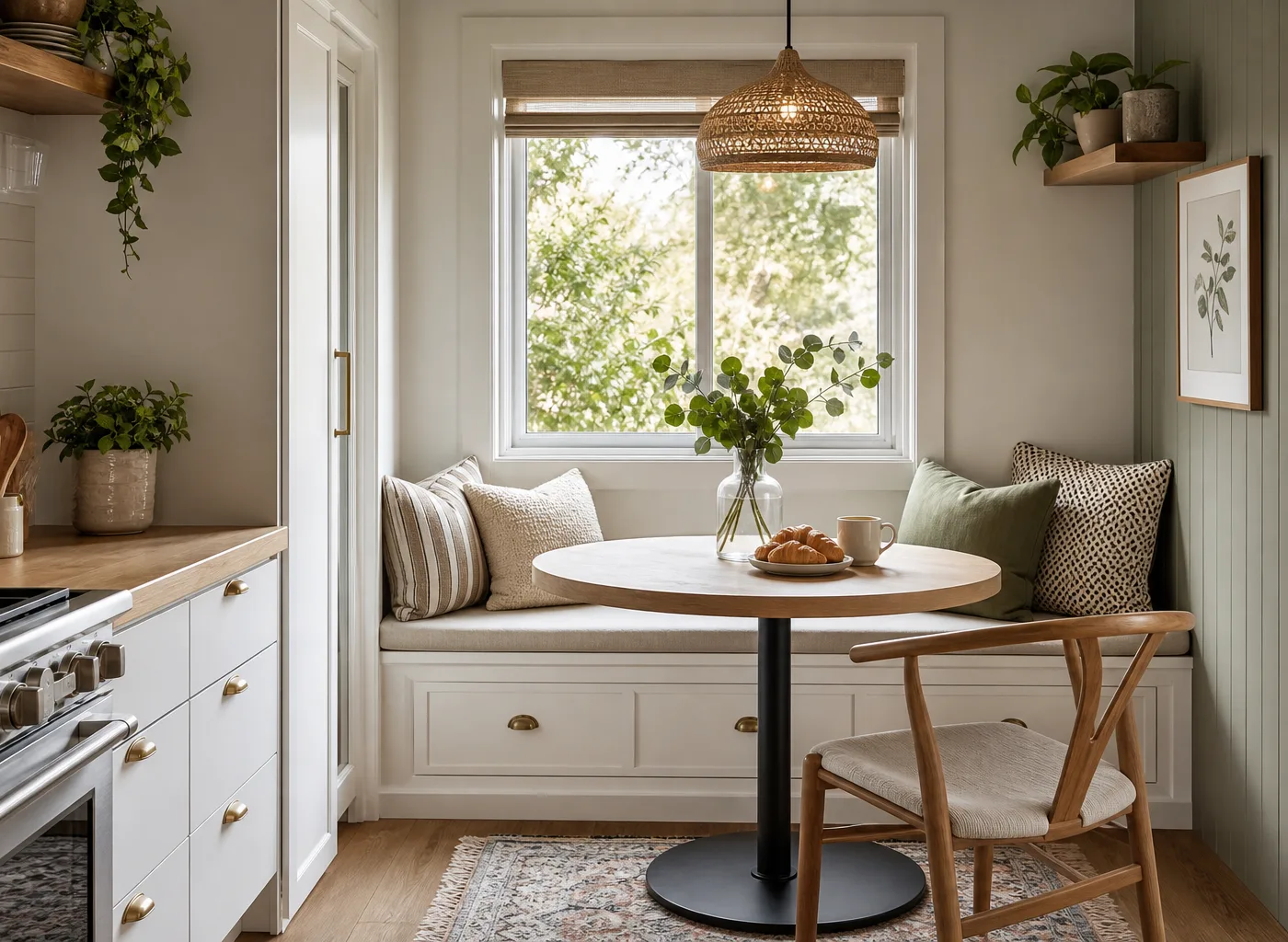
A breakfast nook can make a small kitchen feel more useful, personal, and welcoming. It creates a defined place for coffee, quick weekday meals, homework, or a relaxed weekend breakfast—without requiring a formal dining room. The key is choosing seating, a table, and storage that fit the room’s actual dimensions rather than forcing in oversized furniture.
The best small kitchen breakfast nook ideas use corners, windows, walls, and compact furniture to make every square foot work harder. Whether you own a compact home, rent an apartment, or simply have an awkward empty area near the kitchen, these ideas can help you build a comfortable dining spot with a polished look.
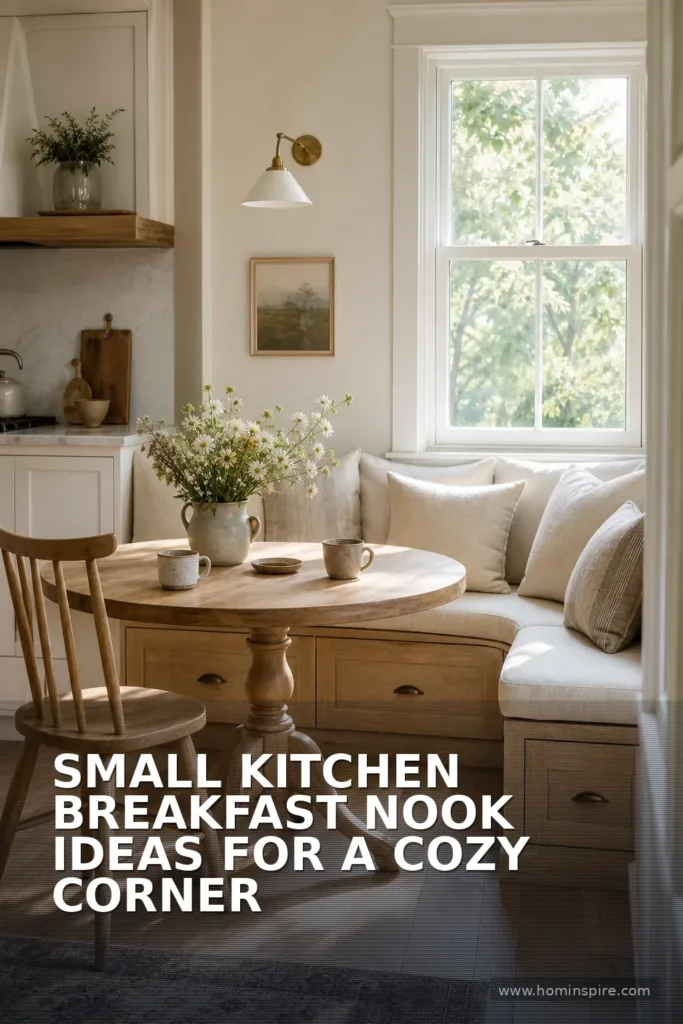
How Much Space Does a Small Kitchen Breakfast Nook Need?
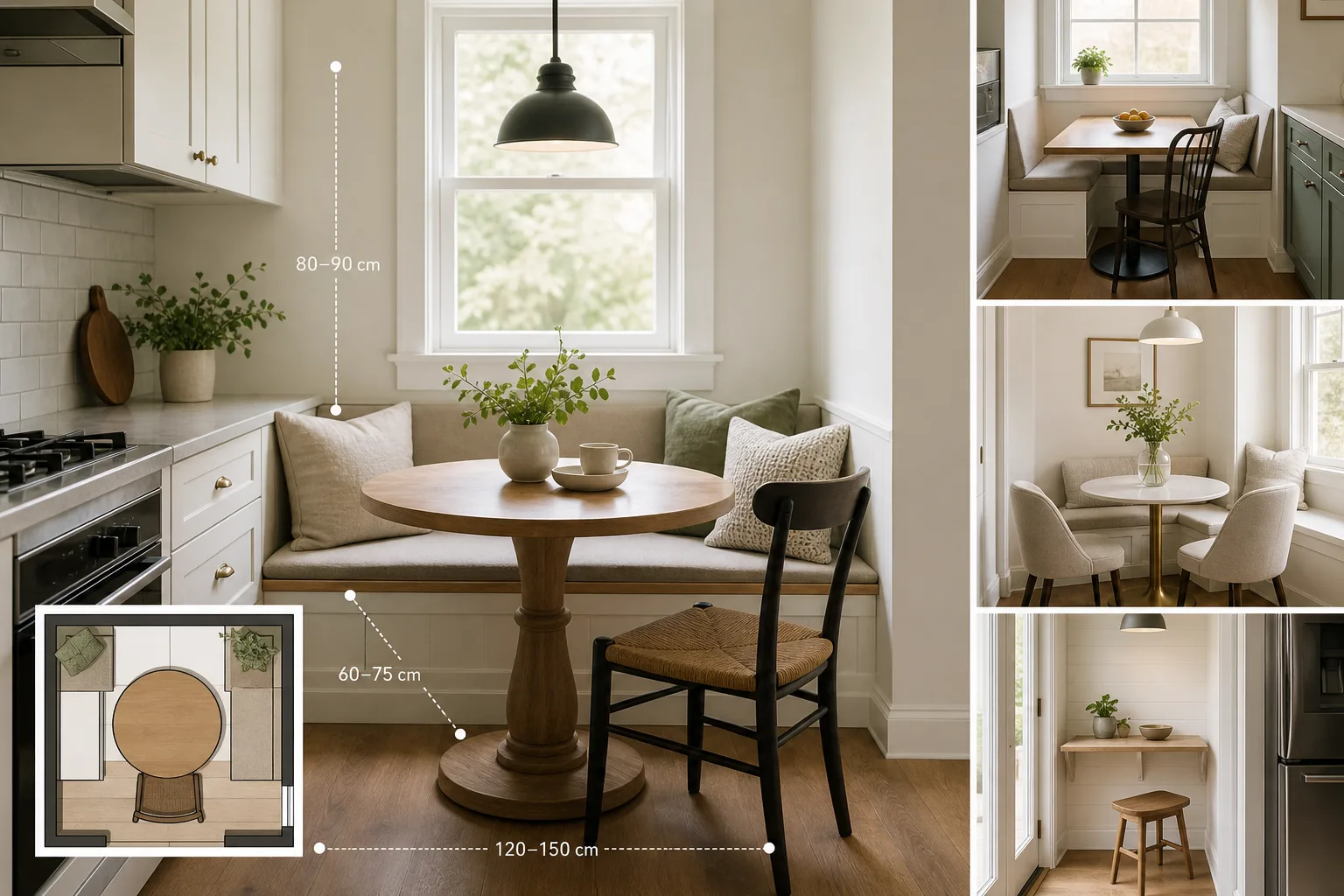
You do not need a large footprint for a practical nook. A two-person setup can often fit in an area about 4 to 5 feet wide, especially when one side uses a bench against the wall. For a more comfortable four-person nook, plan for roughly 6 by 6 feet when possible.
Keep circulation in mind before buying anything. Aim for about 36 inches of clear walking space around the dining area, particularly near refrigerator doors, cabinets, and main cooking zones. If that is not possible, choose a bench that tucks fully under the table, a pedestal table, or folding chairs that can be stored elsewhere.
1. Turn a Kitchen Corner Into a Built-In Banquette
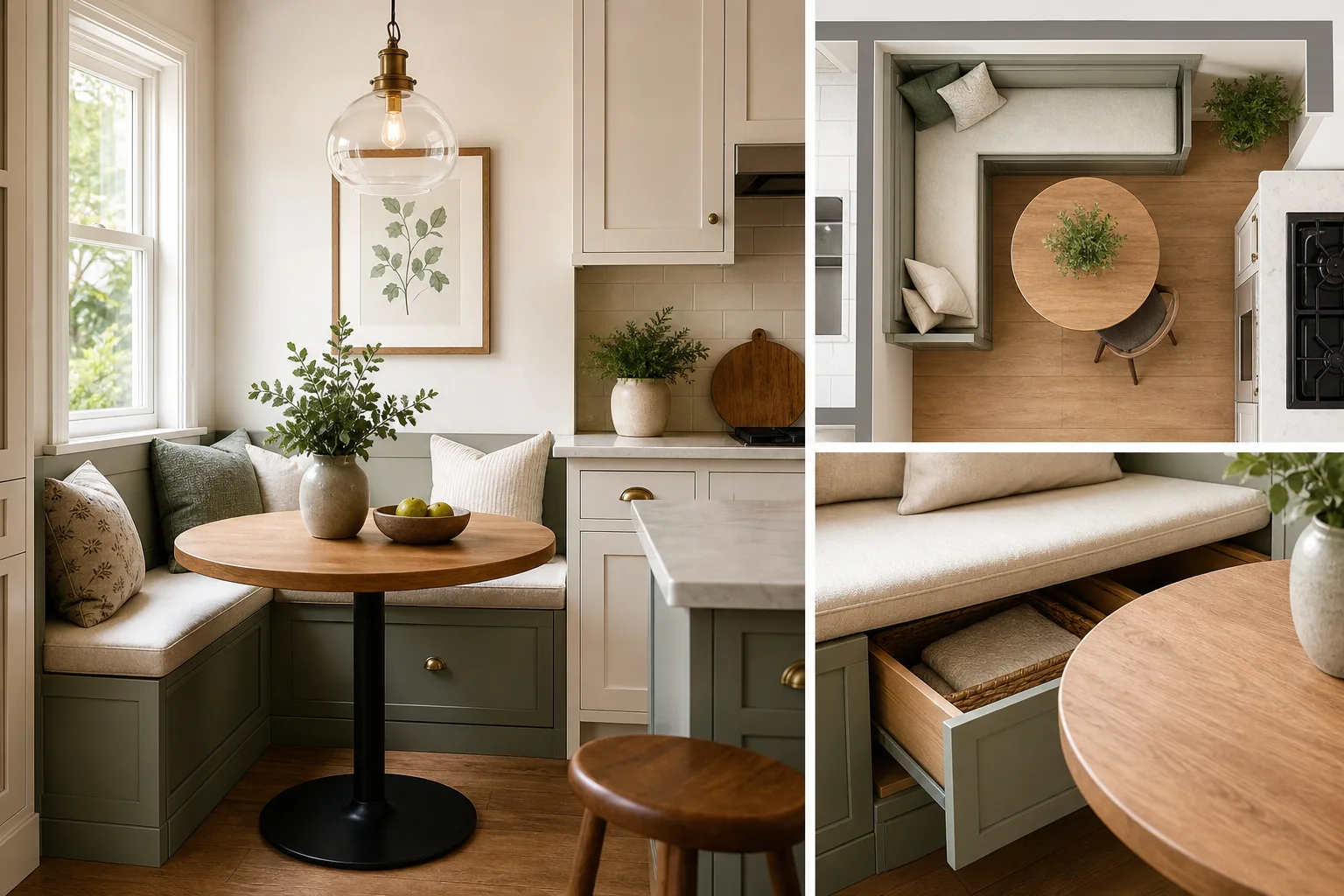
A corner banquette is one of the most efficient small kitchen breakfast nook ideas because it replaces several separate chairs with continuous wall-hugging seating. An L-shaped bench can turn an underused corner into a comfortable place for three to five people.
Use a simple wood bench, painted MDF build-out, or ready-made storage benches. Pair it with a round or oval pedestal table so there are no table legs blocking knees or creating awkward entry points. Add washable seat cushions for comfort and easy upkeep.
2. Use a Round Pedestal Table
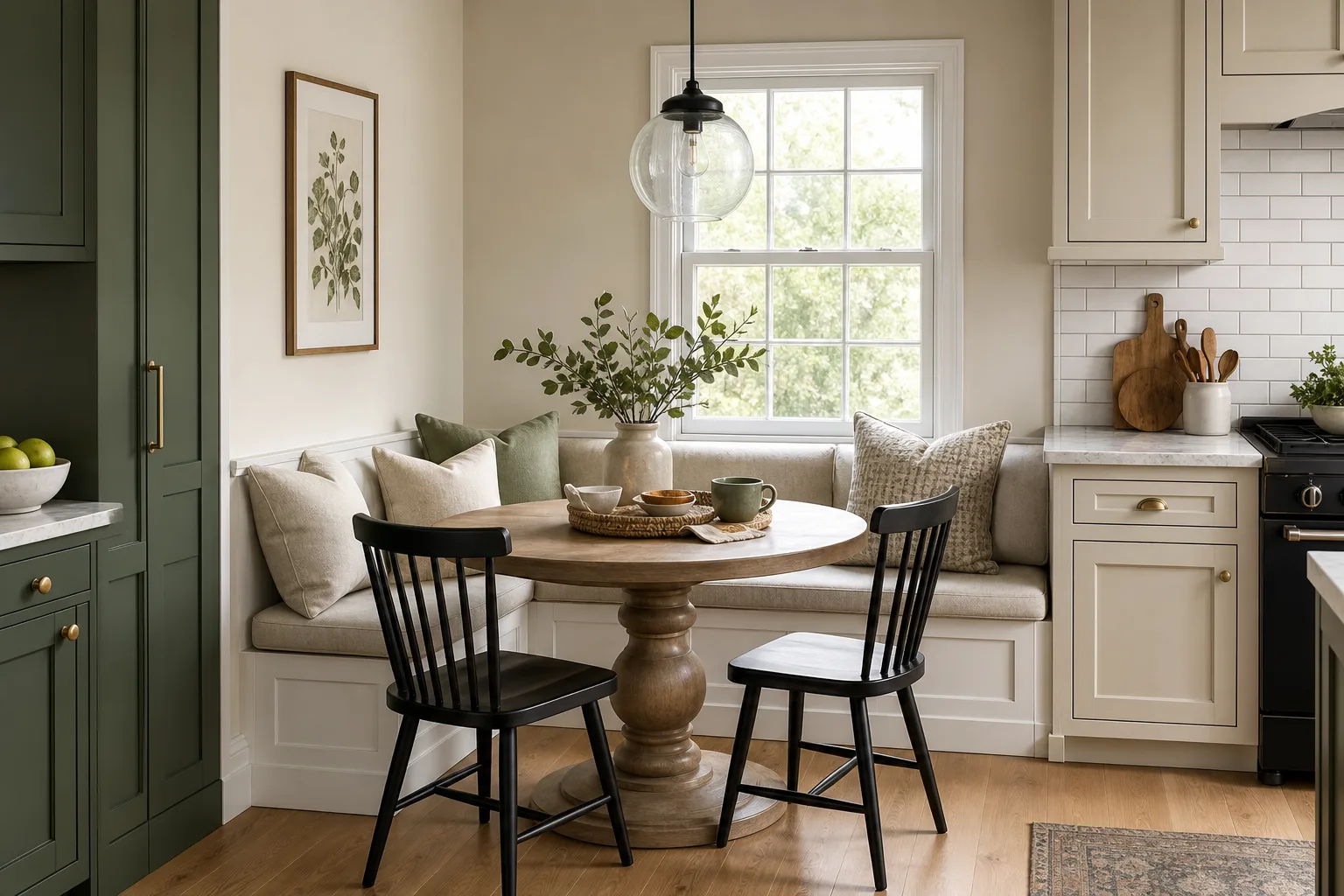
Round tables are especially helpful in tight kitchens because they eliminate sharp corners and allow easier movement around the perimeter. A 30- to 36-inch round table usually seats two to four people, depending on the chairs and layout.
A pedestal base is more flexible than a four-leg table. It lets diners slide in from any side, and it works well with a fixed bench on one side and movable chairs on the other.
3. Make the Most of a Window Wall
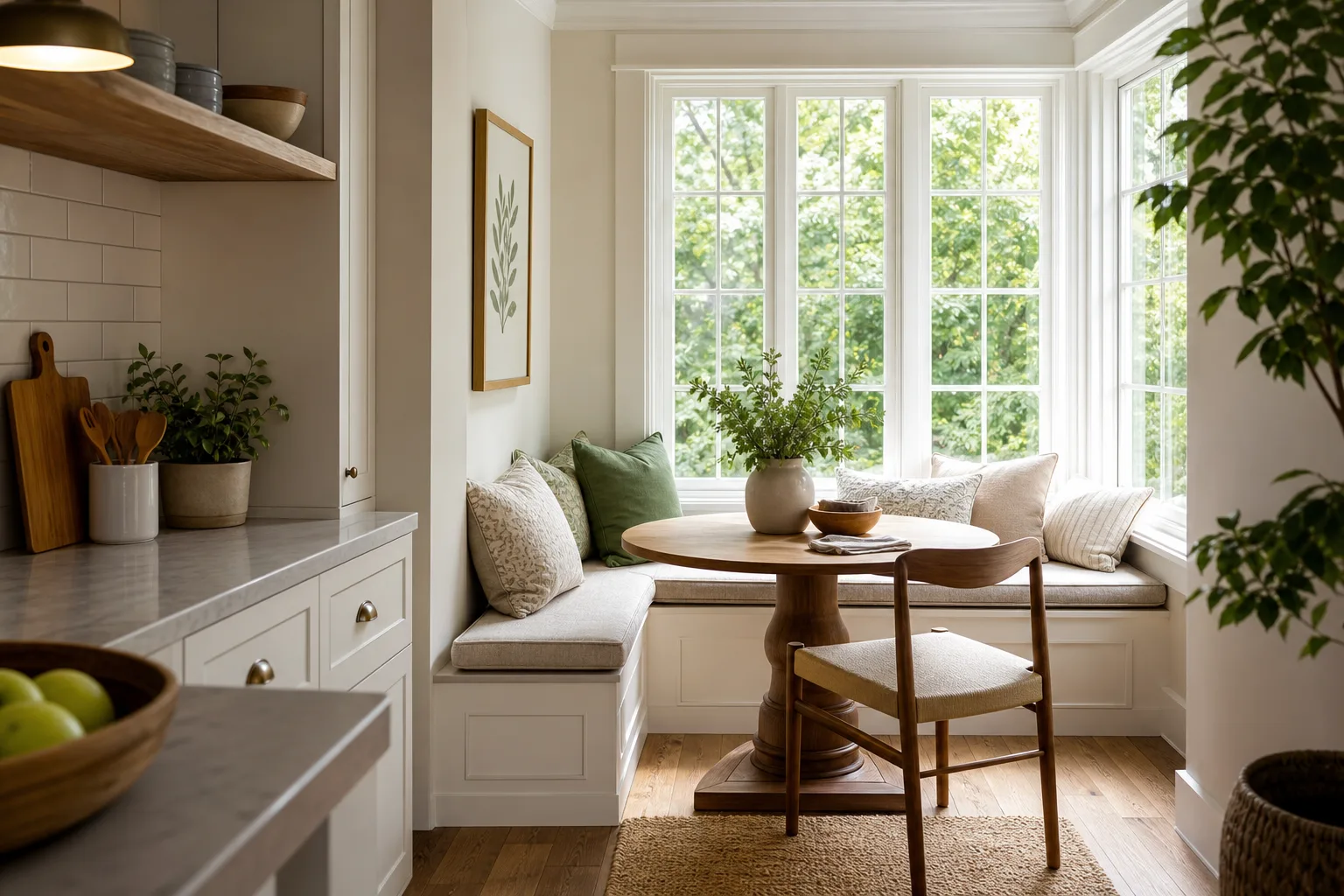
A window is a natural focal point for a breakfast nook. Positioning a bench below it takes advantage of daylight and can make even a narrow eating area feel open. If the sill is high enough, build or place a low bench beneath it; otherwise, set a compact table near the window with two slim chairs.
Keep window treatments simple. Roman shades, café curtains, or moisture-resistant woven shades provide privacy without overwhelming the view. A small pendant or picture light can make the nook useful after dark.
4. Add Storage Under the Bench
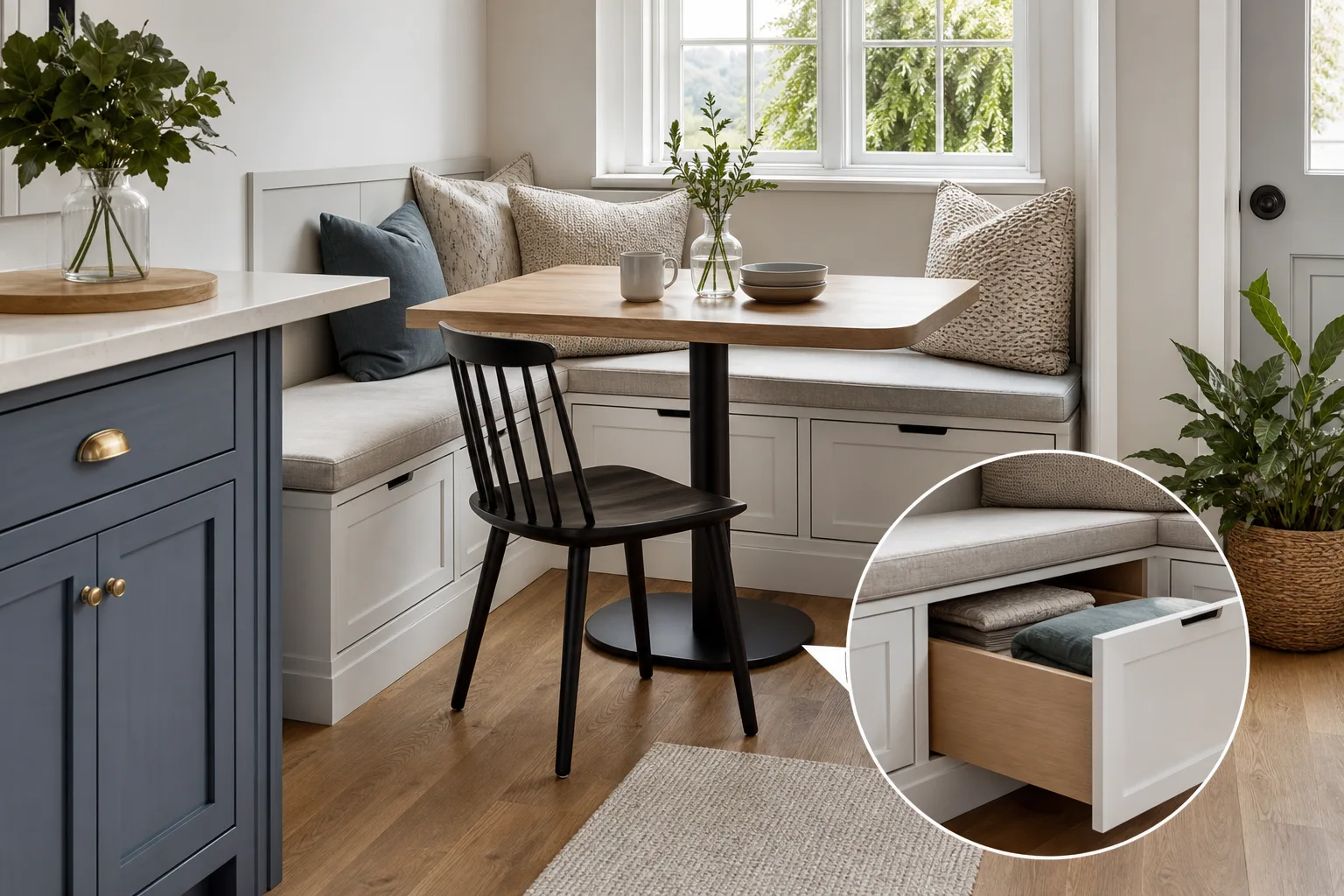
In a small kitchen, seating should do more than provide a place to sit. A storage bench can hold table linens, reusable bags, pet supplies, small appliances, or seasonal serving pieces. Lift-top benches are straightforward, while drawers are easier to access in everyday use.
For a custom look, use matching cabinet doors or paint the bench in the same color as the lower cabinets. If your existing cabinetry needs an affordable refresh, explore these kitchen cabinet makeover ideas without painting to help the entire space feel more cohesive.
5. Choose a Slim Wall Bench for Narrow Kitchens
A breakfast nook does not always need an L-shaped corner. In a galley kitchen or narrow open-plan space, a slim bench placed against one wall can create a compact dining zone. Look for a bench about 15 to 18 inches deep, then use a narrow rectangular table and stools or chairs on the open side.
This layout keeps the room visually calm because the bench reads almost like built-in architecture. Choose legs with a light profile or a floating bench design to maintain an airy feeling.
6. Install a Wall-Mounted Drop-Leaf Table
A wall-mounted drop-leaf table is ideal when a dining surface is needed only occasionally. Fold it down for breakfast or laptop work, then close it flat against the wall to restore valuable floor space. Add two folding chairs on wall hooks, or use stackable stools that slide under a nearby counter.
This is a smart option for renters and tiny homes, but always use hardware rated for the wall type and intended load. A sturdy model can serve as both a breakfast nook table and an extra prep surface.
7. Create a Booth With Two Benches
For families, a small booth layout can offer more seating than individual chairs. Place two narrow benches facing each other with a rectangular table in the middle. This arrangement works well along a wall or in a recessed area just outside the primary kitchen work triangle.
Keep the table narrow—often 28 to 32 inches wide is sufficient—and use a pedestal or trestle base to improve legroom. Choose one bench with storage if you need the nook to earn its footprint.
8. Use a Tiny Bistro Table in an Empty Spot
Sometimes the simplest solution is best. A 24- to 30-inch bistro table and two chairs can turn an overlooked corner into a charming breakfast nook. This is particularly effective for singles, couples, and apartment kitchens where a full banquette would feel too permanent.
Choose chairs that tuck completely under the table. Clear acrylic, open-back, or slim metal chairs reduce visual bulk, while upholstered chairs make the nook feel more like a dedicated room.
9. Pair a Banquette With a Small Kitchen Island
If your kitchen includes an island, a nook can balance its casual seating and provide a more comfortable place for meals. Position the breakfast nook beyond the island’s traffic path, ideally near a window or wall, so the island remains clear for prep.
In very compact rooms, consider whether an island is truly helping circulation. These small kitchen ideas with an island can help you evaluate compact layouts, movable options, and proportions that work.
10. Define the Area With a Rug
A small rug visually separates the breakfast nook from cooking and prep zones, especially in an open kitchen. Use a low-pile, washable, or indoor-outdoor rug for easy cleaning. It should be large enough that chairs remain on the rug when pulled out, although a bench-and-pedestal-table layout can also work with a smaller round rug.
Choose a subtle pattern to hide crumbs and everyday wear. Avoid thick, plush rugs that make chairs difficult to move or create a tripping hazard in a busy kitchen.
11. Add a Pendant Light Above the Table
Lighting instantly signals that a small dining spot is intentional. A single pendant centered above the table creates warmth and definition without needing a major renovation. For a low ceiling, choose a semi-flush fixture or a compact pendant with an adjustable cord.
Make sure the fixture does not obstruct sightlines. In most cases, the bottom of a pendant should hang about 30 to 36 inches above the tabletop. A dimmable bulb gives you bright task lighting for mornings and softer light for dinner.
12. Go Vertical With Wall Storage and Decor
When floor space is limited, use the wall behind the nook. A narrow picture ledge can hold art and a few cookbooks, while floating shelves can display mugs, small plants, or serving pieces. Keep the arrangement intentional rather than crowded, since too many objects can make a small kitchen feel busy.
For more ways to style a compact wall without wasting useful space, see these small kitchen wall decor ideas. A framed print, vintage-style menu board, or one oversized piece of art can give the nook its own identity.
13. Use a Corner Bench With a Coffee Station Nearby
A breakfast nook feels even more convenient when it is close to a dedicated beverage zone. A compact coffee station beside the nook keeps mugs, coffee, tea, and morning essentials together, reducing traffic around the main prep counter.
A shallow cabinet, bar cart, or section of counter can work. Get layout inspiration from these small kitchen coffee station ideas, then keep the styling restrained so the nook remains relaxing rather than cluttered.
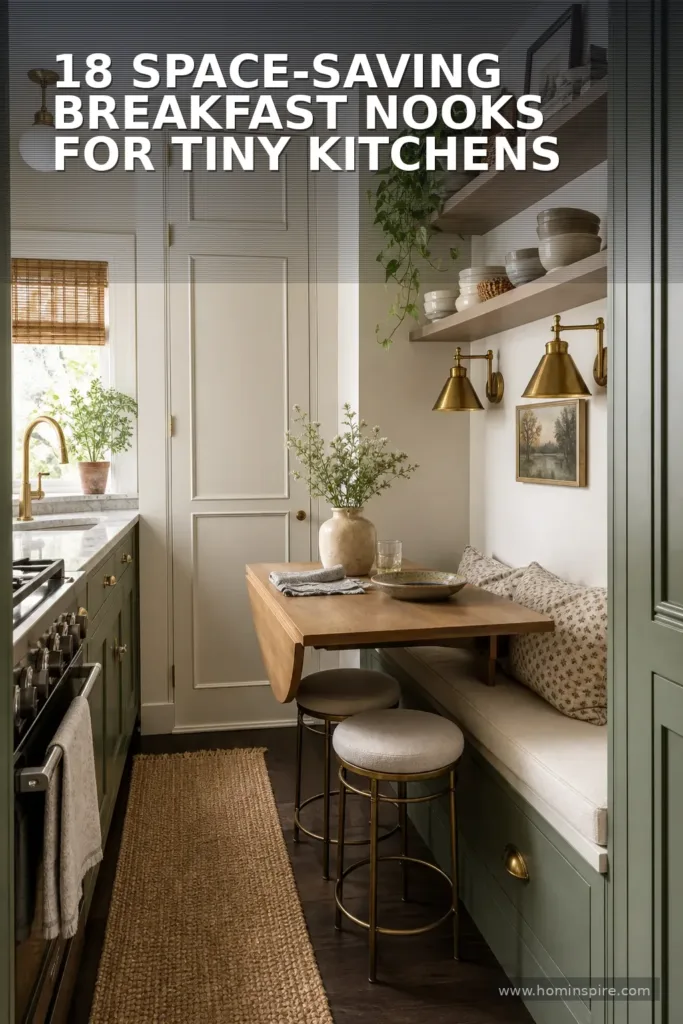
14. Choose Light Colors for an Open Feel
Light, warm finishes can make a small nook feel brighter and less enclosed. Soft white, pale oak, warm beige, light gray, and muted sage are all adaptable choices. You do not need an all-white scheme; combining a light bench with natural wood and a textured neutral cushion often feels more inviting.
If your kitchen already has darker cabinets, use lighter upholstery, a pale tabletop, and reflective lighting to balance the area. For a cohesive palette, these warm neutral kitchen decor ideas offer approachable ways to add softness and depth.
15. Bring in a Bench With a Curved Back
Curved banquettes and rounded benches are increasingly popular for good reason: they soften a boxy kitchen and work beautifully with round tables. A curved profile can also improve flow in a tight corner because there are no hard edges projecting into the walkway.
This approach can be custom built, but freestanding curved benches are also available. Keep the upholstery durable, stain-resistant, and easy to wipe clean, especially if children use the nook daily.
16. Make a Rental-Friendly Breakfast Nook
Renters can create a finished-looking nook without permanent changes. Start with a freestanding storage bench, a compact table, removable wall hooks, and peel-and-stick wallpaper or decals in a small accent area. A coordinated cushion, rug, and pendant-style plug-in light can make the setup feel deliberate.
For a very tight apartment layout, prioritize furniture that folds, nests, stacks, or provides hidden storage. These tiny apartment kitchen ideas are useful for finding flexible solutions that do not overwhelm limited square footage.
17. Turn an Awkward Corner Into a Destination
An awkward corner near a pantry, back door, or cabinet run may seem too small for furniture, but it can be perfect for a compact nook. Measure carefully and consider a custom-cut tabletop, triangular bench, or wall-mounted table to use the unusual shape.
Do not overlook corners simply because they are small. More practical ways to make these areas useful are available in these kitchen corner decor ideas for small spaces.
18. Personalize It Without Adding Clutter
The most successful breakfast nooks feel lived-in but organized. Add personality through a washable seat cushion, one or two patterned pillows, framed family photos, a small vase, or a favorite piece of pottery. A single tray on the table can corral salt, pepper, napkins, and a small bud vase.
Limit countertop-style decor in the nook. Since the space is small, every item is highly visible. Leave enough open surface for real meals, schoolwork, and coffee cups.
Small Kitchen Breakfast Nook Design Mistakes to Avoid
First, avoid choosing a table that is too large. A smaller table with easy movement is more enjoyable than a large one that blocks cabinet doors and pathways. Second, do not ignore chair clearance. Test how far chairs need to pull out, or use benches and stools that tuck in fully.
Third, avoid excessive visual weight. Bulky dark chairs, oversized light fixtures, and too many throw pillows can make a nook feel compressed. Finally, choose durable materials. Kitchens involve spills, heat, moisture, and frequent cleaning, so performance fabric, sealed wood, wipeable paint, and washable rugs are worth prioritizing.
FAQ: Small Kitchen Breakfast Nook Ideas
What is the smallest size for a breakfast nook?
A two-person breakfast nook can work in roughly a 4-by-5-foot area. A wall bench, 24- to 30-inch round table, and compact stools or chairs are usually the most space-efficient combination.
Can you put a breakfast nook in a galley kitchen?
Yes, if it does not interfere with the work aisle. A narrow wall bench with a slim table, a fold-down wall table, or a small bistro set at one end of the galley can work well. Maintain clear access to appliances and cabinet doors.
Are built-in breakfast nooks worth it?
Built-in nooks can be worthwhile when you need maximum seating and storage in a small footprint. They use corners efficiently and can add a custom look, but freestanding benches are a better choice for renters or anyone who wants flexibility.
What table shape is best for a small breakfast nook?
Round and oval pedestal tables are often best because they improve circulation and eliminate corner hazards. A narrow rectangular table is a strong choice for a booth or wall-bench layout.
How do I make a small breakfast nook look bigger?
Use light colors, slim furniture, a pedestal table, good lighting, and limited decor. A mirror, window placement, or open-back chairs can also help the nook feel less enclosed while keeping it functional.
Final Thoughts
The best small kitchen breakfast nook is not necessarily the largest or most elaborate one. It is the one that fits your daily routine, preserves clear movement through the kitchen, and gives you a comfortable reason to sit down. From a built-in corner banquette to a simple window-side bistro table, thoughtful proportions and multifunctional pieces can transform even the smallest kitchen into a more welcoming home.
