
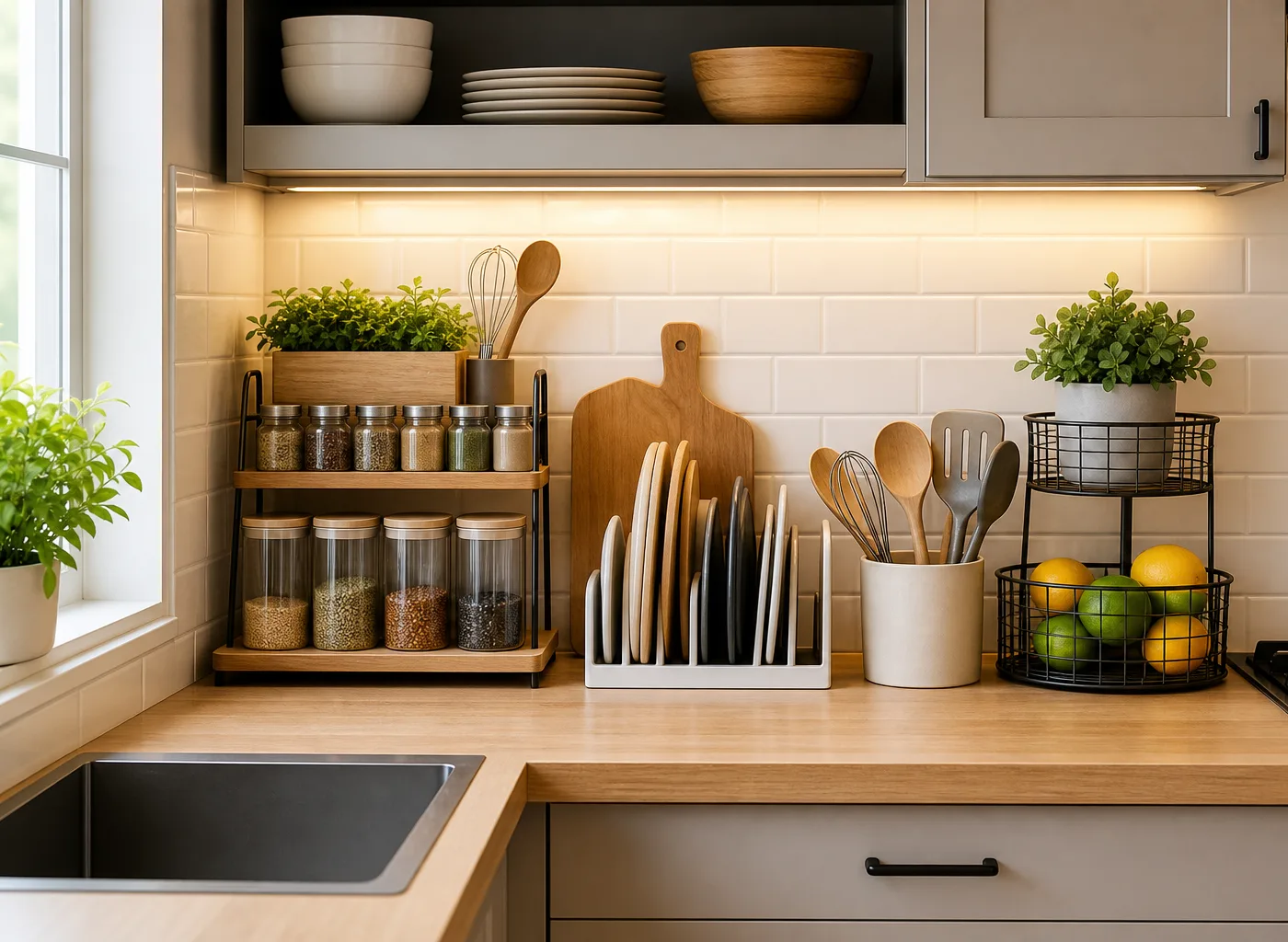
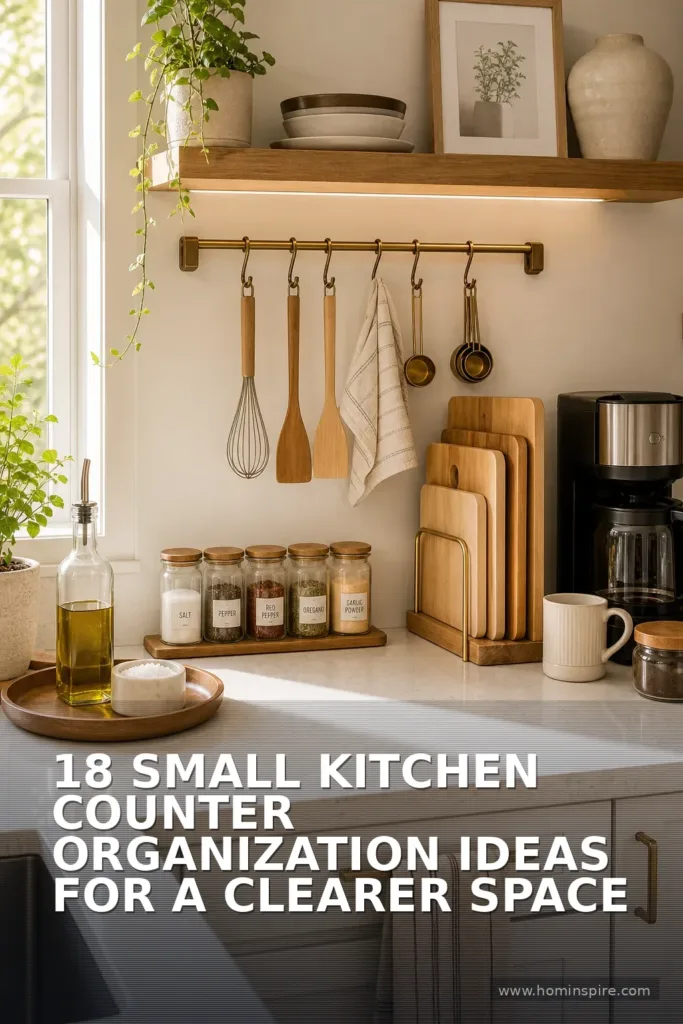
A small kitchen counter can become crowded surprisingly fast. A coffee maker, cutting board, cooking utensils, mail, spices, and a few everyday groceries may take over the only usable prep area before you know it. The goal is not to create an empty, impractical kitchen. It is to make every item on the counter earn its place.
These small kitchen counter organization ideas focus on function first: keeping daily tools close by, moving occasional-use items elsewhere, and using vertical space so your counters can stay open for cooking. Whether you own your home, rent an apartment, or are working with a narrow galley layout, a few targeted changes can make your kitchen feel calmer and noticeably larger.
Start With the One-Minute Counter Rule
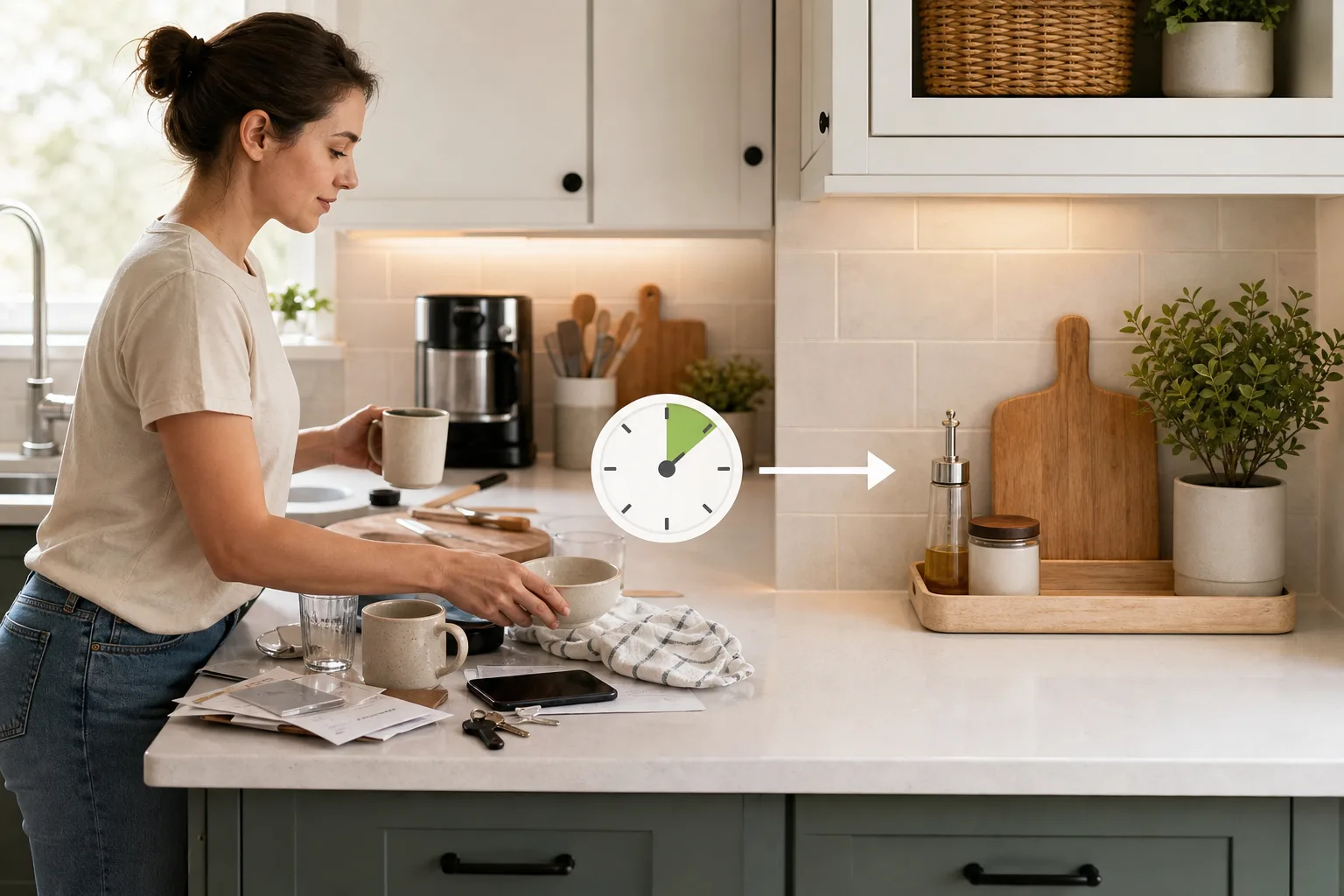
Before buying organizers, remove everything from the counter and sort it into three groups: use daily, use weekly, and rarely use. Items you use daily can stay accessible. Weekly-use items usually belong in a cabinet, drawer, or pantry. Rarely used appliances and serving pieces should be stored away completely.
A useful guideline is the one-minute rule: if retrieving an item takes less than a minute, it does not need permanent counter space. This simple filter often clears out bulky mixers, specialty appliances, duplicate utensils, and decorative objects that do not serve a real purpose.
Leave at least one uninterrupted work zone near the sink or stove. Even a 20-inch-wide clear section makes meal prep, unloading groceries, and cleaning up much easier.
1. Create Dedicated Counter Zones
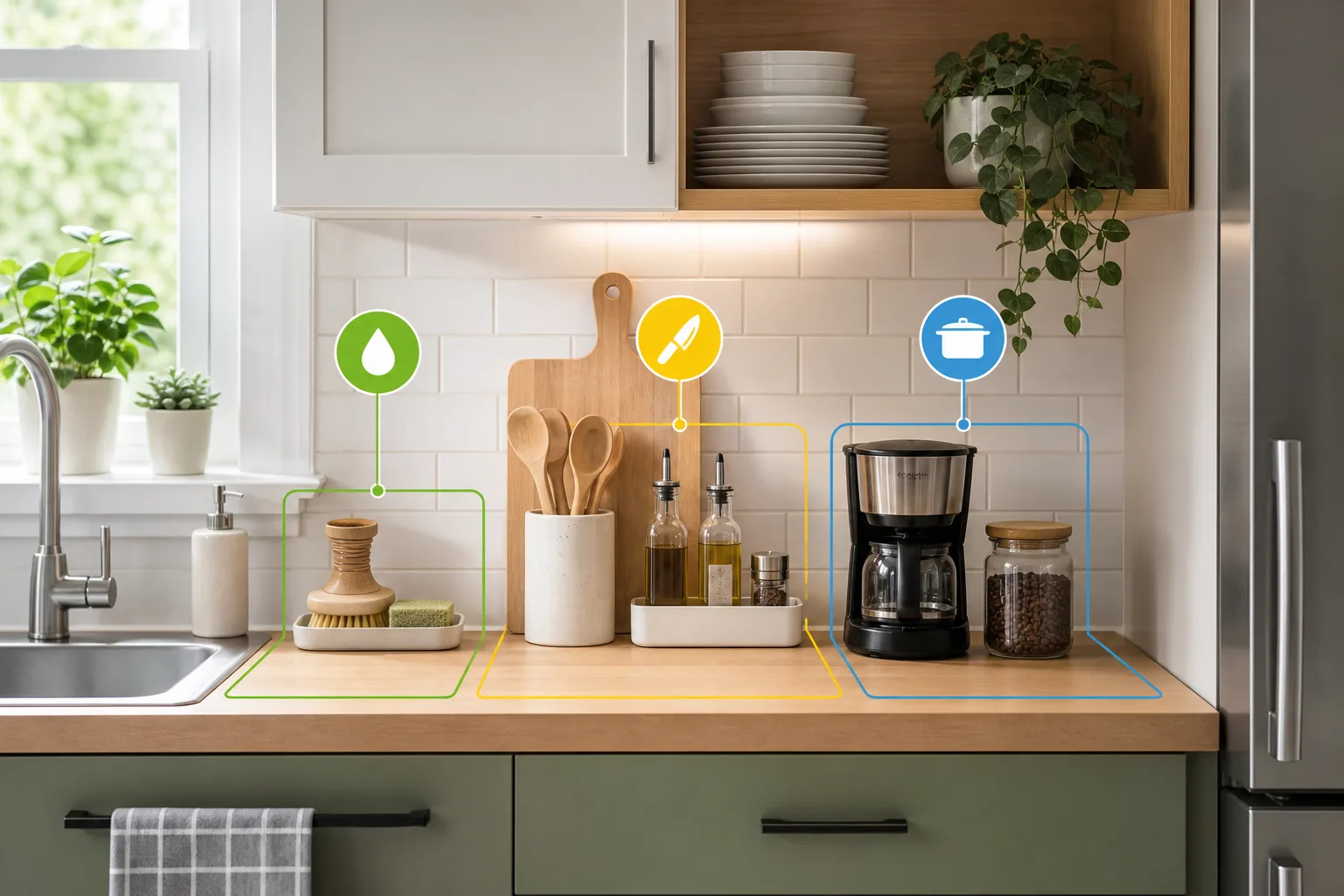
Organization works best when the counter is divided by activity instead of being treated as one general dumping ground. In a compact kitchen, the most useful zones are usually a prep zone, coffee or beverage zone, cooking zone, and cleanup zone.
- Prep zone: Keep one cutting board, a knife block alternative, and a small bowl for food scraps nearby.
- Cooking zone: Store only the utensils, oils, and seasonings you use most often beside the range.
- Coffee zone: Group the machine, mugs, coffee, tea, and sweeteners on one tray or in one compact area.
- Cleanup zone: Limit the sink edge to hand soap, dish soap, and one drying solution.
Zones prevent items from spreading across every available surface. They also make it easier for everyone in the household to put things back where they belong.
2. Use a Tray to Contain Daily Essentials
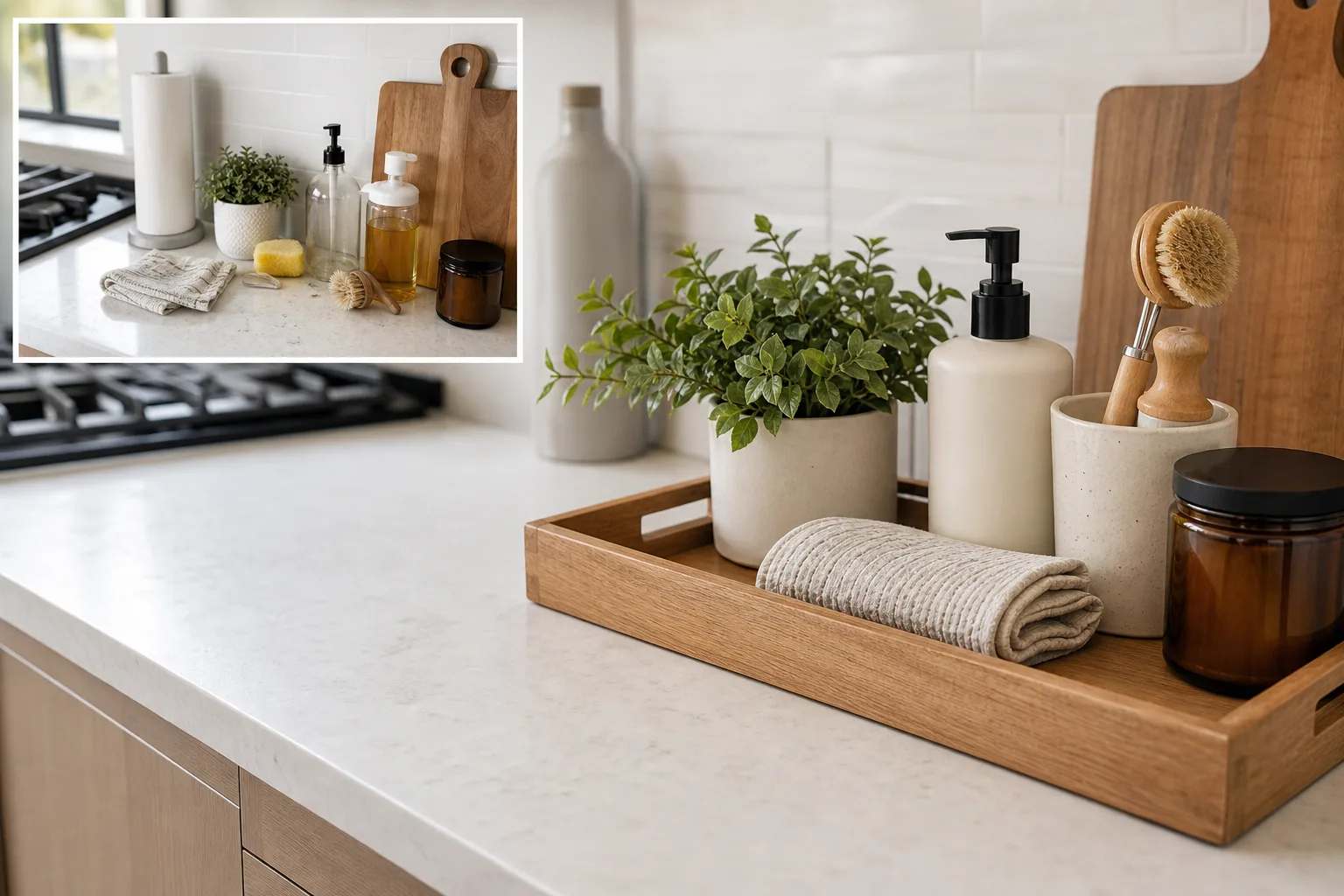
A tray is one of the easiest small kitchen counter organization ideas because it turns several loose items into one intentional group. Use a washable tray to hold olive oil, salt, pepper, and a small utensil crock near the stove. A separate tray can corral coffee supplies or breakfast essentials.
Choose a tray with a raised edge, but do not make it too large. The purpose is containment, not creating another flat surface to fill. A tray also makes cleaning easier: lift it, wipe the counter, and set it back down.
For more ways to combine function and style, see these kitchen counter tray decor ideas.
3. Move Utensils Off the Counter When Possible
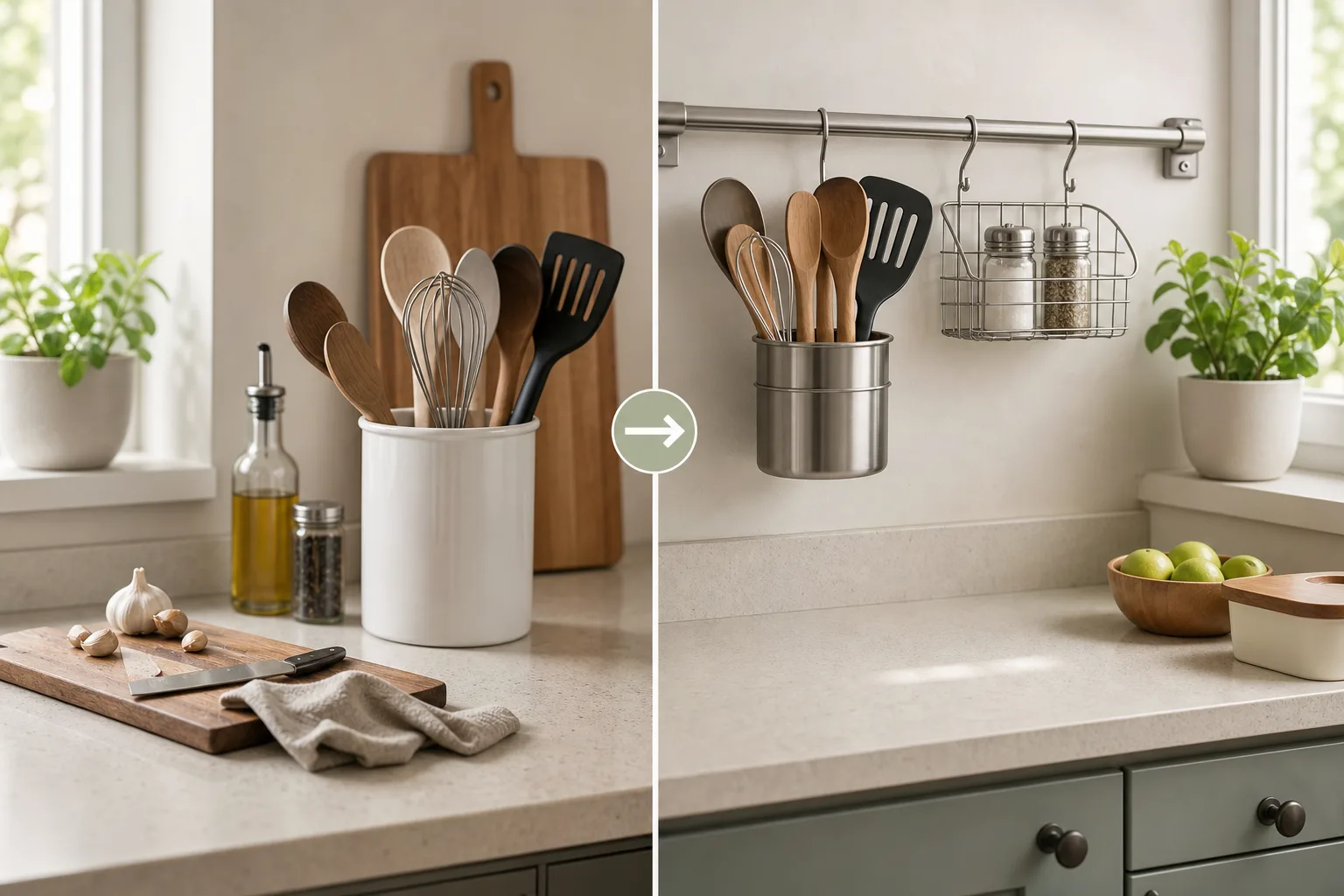
A large utensil crock can occupy valuable prep space, especially in a small kitchen. If you have a drawer near the stove, use adjustable dividers to store spatulas, tongs, whisks, and measuring tools flat. This immediately creates a cleaner counter line.
If drawer space is limited, keep only your five to eight most-used utensils in a slim crock. Select a narrow, tall container rather than a wide one, and avoid storing duplicate tools. Another option is a wall-mounted rail or adhesive hook system, which can be especially useful for renters when installed according to the product instructions.
4. Take Advantage of Vertical Space
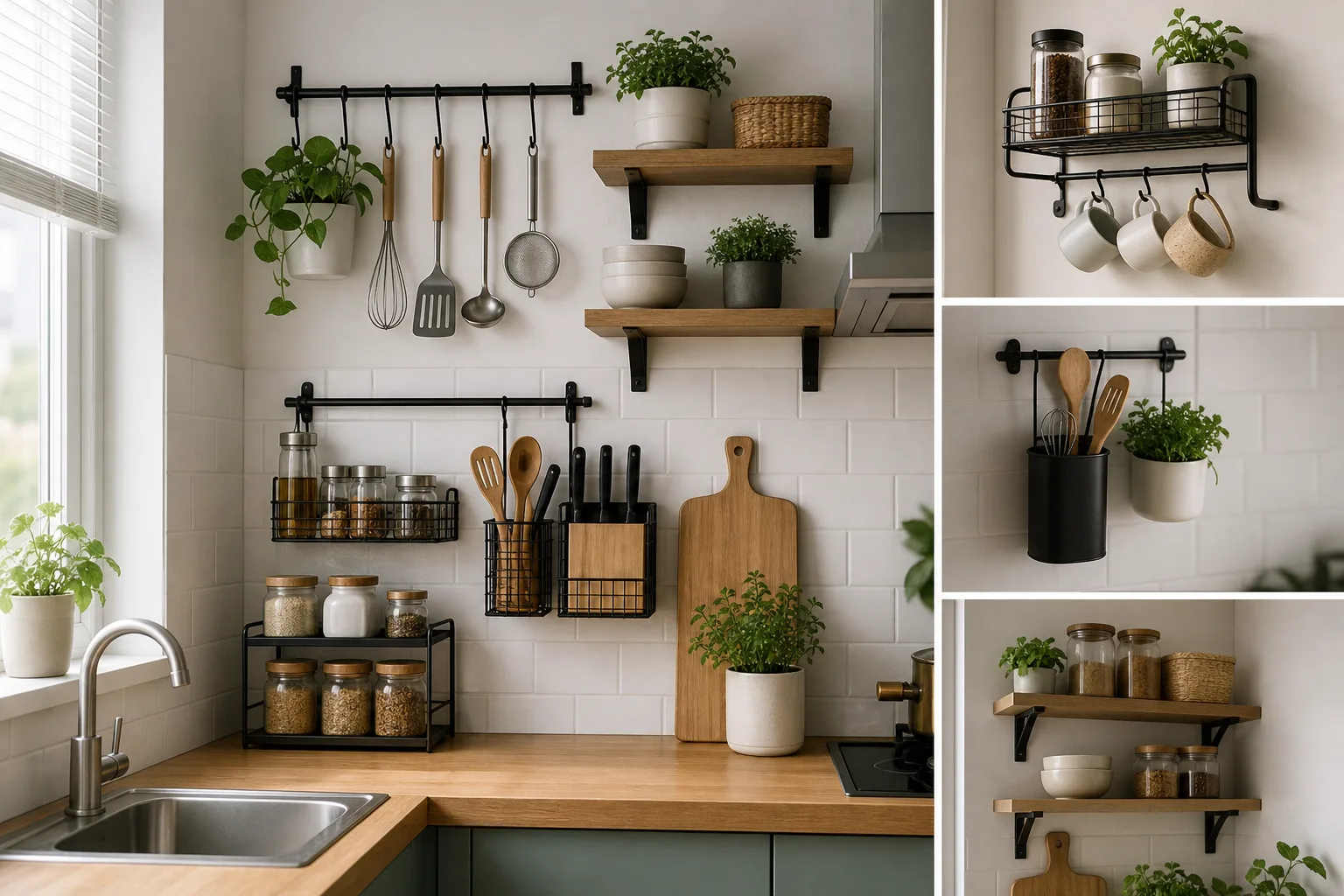
When horizontal space is scarce, look up. Vertical organizers can add storage without making the counter feel crowded. Consider a two-tier shelf over a coffee station, a slim riser for spices, or a countertop hutch that fits beneath upper cabinets.
The key is choosing open, lightweight-looking pieces. A bulky shelf packed with random containers can make a small kitchen feel more cramped. Use vertical storage for a limited category, such as mugs, tea, spices, or breakfast items, and keep the colors and containers visually consistent.
If you need damage-free options, explore renter-friendly kitchen storage ideas without drilling for practical solutions that do not require permanent changes.
5. Store Appliances by Frequency of Use
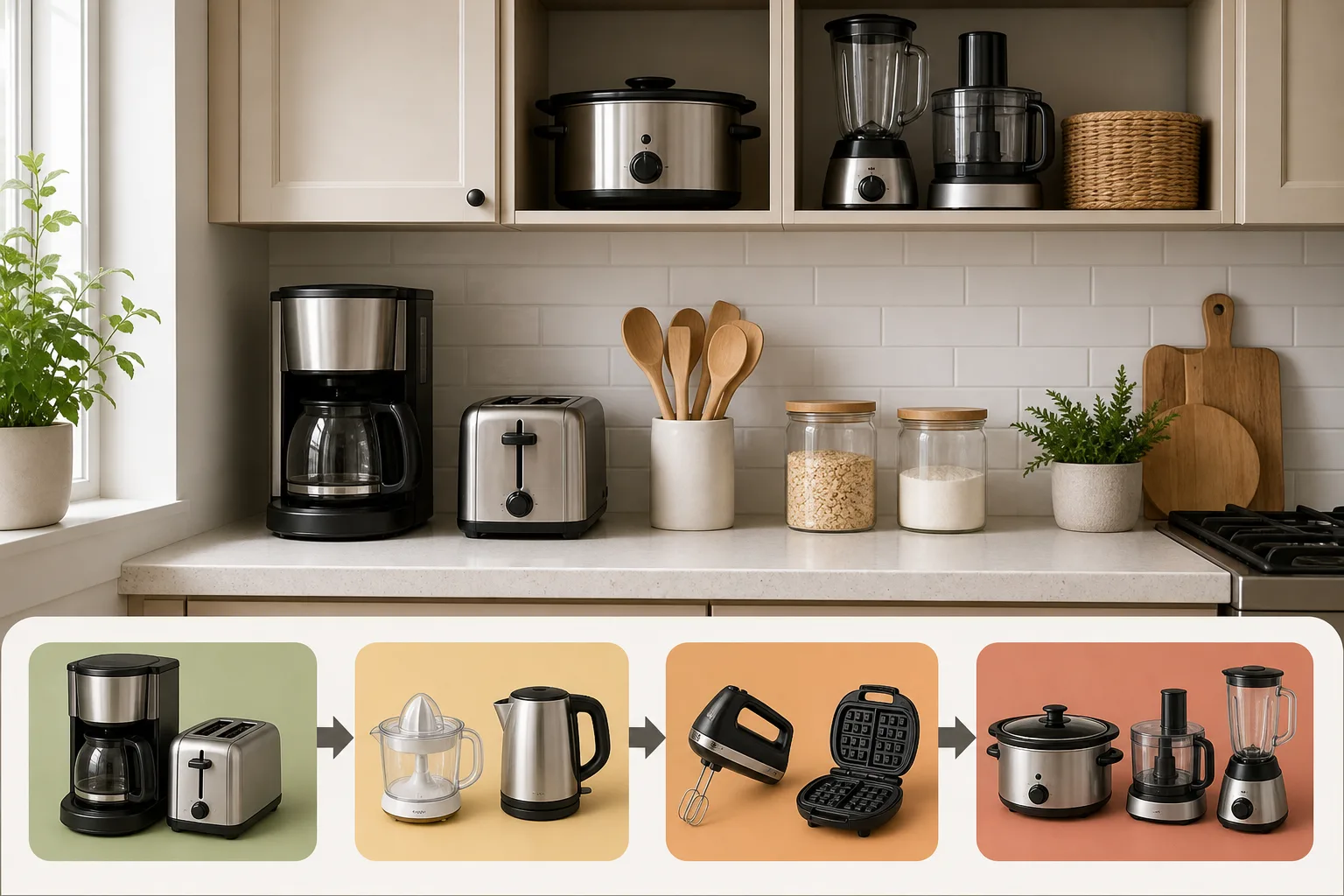
Countertop appliances are often the biggest source of visual clutter. Keep out appliances you use almost every day, such as a coffee maker, toaster, or blender if it is part of your regular routine. Store the rest in a lower cabinet, pantry shelf, or utility closet.
Try to avoid lining every appliance along the backsplash. Instead, give the most-used machine a defined home and place it where it will not interrupt prep space. For example, a coffee maker can live in a corner near an outlet, while a toaster can be stored in a cabinet and brought out at breakfast.
If lifting appliances is difficult, use a sliding appliance mat or tray inside a cabinet. It allows you to pull a heavy mixer or air fryer forward without committing counter space to it every day.
6. Replace a Traditional Knife Block
Traditional knife blocks are useful, but they take up a surprising amount of counter real estate. A magnetic knife strip mounted on the wall, an in-drawer knife organizer, or a slim vertical knife holder can free up room while keeping knives safe and accessible.
For a rental kitchen, an in-drawer organizer is the simplest choice. If you use a wall strip, install it away from high-traffic areas and out of reach of children. Keeping knives off the counter also makes it easier to wipe down the workspace after cooking.
7. Use a Slim Rolling Cart as an Overflow Station
A narrow rolling cart can function like a flexible extension of your counters. Use it for produce, baking supplies, beverage ingredients, or small appliances that do not need to remain on display. When you need extra prep space, roll the cart aside.
Look for a cart that is narrow enough to fit beside the refrigerator, at the end of a cabinet run, or in a nearby dining nook. Give each tier a clear purpose. For example, use the top shelf for a microwave or fruit bowl, the middle shelf for pantry staples, and the bottom shelf for reusable containers.
This is especially helpful in apartment kitchens. Find more compact-layout strategies in small kitchen ideas for apartments.
8. Keep Paper Clutter Out of the Kitchen
Mail, receipts, school papers, and grocery lists have a habit of landing on the counter. Create a landing spot outside the kitchen whenever possible. A wall pocket near the entry, a desk drawer, or a small command center can keep paperwork away from food-prep surfaces.
If the kitchen is your household hub, use one vertical file holder or labeled bin rather than allowing papers to spread. Sort it once a week. A clear counter is much easier to maintain when it is not being asked to serve as an office, dining table, and charging station all at once.
9. Choose One Produce Storage Method
Produce can add color to a kitchen, but multiple bags and bowls quickly look messy. Use one designated fruit bowl, wire basket, or two-tier produce stand. Only keep produce that stores well at room temperature on the counter, such as bananas, citrus, onions, garlic, and some avocados.
Keep potatoes in a cool, dark cabinet or pantry rather than beside onions, and refrigerate items that spoil quickly. Avoid oversized decorative bowls that encourage you to pile in unrelated items such as keys, wrappers, and unopened mail.
10. Corral Sink-Side Supplies
The sink area can make an otherwise organized kitchen look cluttered. Reduce the visual noise by choosing matching soap dispensers or keeping dish soap in its original bottle only if it fits neatly in a small caddy. Add a compact sponge holder that allows water to drain, and limit the area to the supplies you truly use.
Store extra sponges, dishwasher pods, and cleaning sprays under the sink. A small tray beneath soap dispensers protects the counter from moisture and makes cleaning faster. If you use a dish rack daily, consider a roll-up drying rack over the sink or a slim mat that can be stored after dishes are dry.
11. Use Cabinet Doors and Interior Space Better
Better counter organization often starts inside cabinets. Add door-mounted racks for wraps, cutting boards, or cleaning products. Install shelf risers for mugs and dishes, and use pull-out bins so pantry items do not get lost in the back.
When cabinets are organized by category, there is less pressure to leave things out. Even a small amount of under-shelf storage can create a home for everyday items that would otherwise crowd the counter.
For more no-damage storage options, see small kitchen storage ideas for renters.
12. Add a Foldable or Over-the-Sink Prep Surface
If your kitchen lacks a usable prep zone, create one temporarily. An over-the-sink cutting board can provide a stable work surface without taking up permanent room. A foldable counter extension, wall-mounted drop-leaf table, or portable butcher block can also help in the right layout.
Measure carefully before buying. The best solution should be easy to remove or fold away and should not block cabinet doors, drawers, or pathways. In a very narrow kitchen, keeping traffic flow open matters just as much as gaining extra surface area.
13. Decant Only the Items That Cause Visual Clutter
Decanting every pantry item can be expensive and time-consuming. Instead, focus on foods that create the most counter mess, such as coffee pods, tea bags, protein powder, frequently used grains, or snack packets. Clear or labeled containers can make a coffee station or open shelf look more orderly.
Make sure containers are airtight and easy to refill. If decanting adds extra steps or makes it harder to see expiration dates, it may not be worth it. Functional organization should simplify your routine, not create another chore.
14. Keep Decor Minimal and Useful
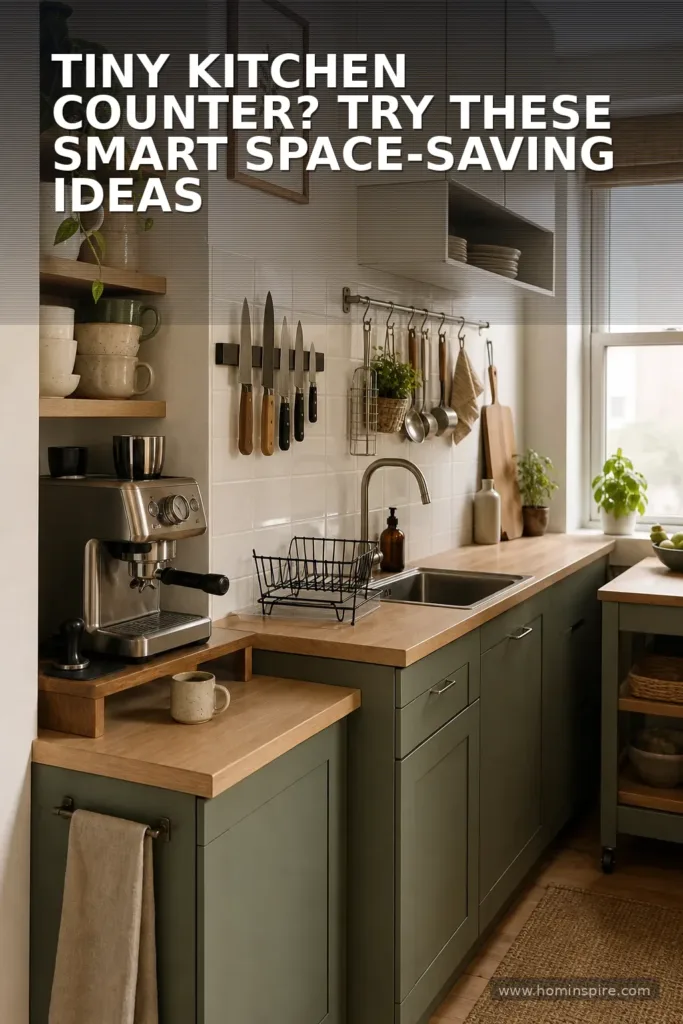
Small kitchens do not need bare counters, but decor should be intentional. A small plant, framed recipe, candle, or attractive fruit bowl can add warmth without overwhelming the room. Limit decorative pieces to one or two areas, and keep them away from your main prep zone.
Items that combine beauty and function work particularly well: a ceramic utensil holder, wood tray, attractive salt cellar, or linen towel on a hook. For ideas that maintain an open look, visit kitchen counter decor ideas without clutter.
15. Make a Home for Reusable Containers and Water Bottles
Food storage containers, lids, travel mugs, and water bottles can easily spill onto counters when cabinets are disorganized. Use a bin for lids, a vertical rack for containers, and a dedicated shelf for bottles. Store containers with lids off or loosely placed on top to prevent musty odors and make matching easier.
Once this category has a reliable home, you will be less likely to leave clean containers drying on the counter for days. This is a small change with a big impact on daily visual clutter.
16. Create a Small Charging Station Away From Food
Phones, tablets, cords, and smart speakers are common counter residents, but they do not belong near splashes, heat, or food prep. Move charging to a nearby console, desk, or wall-mounted charging shelf. If the kitchen is the only convenient location, use one contained charging dock placed far from the sink and stove.
Managing cords alone can make a kitchen look more organized. Use short cables, cord clips, and a power strip hidden inside a cabinet only when safe and appropriate for the appliances involved.
17. Build a Weekly Reset Into Your Routine
Even the best small kitchen counter organization system needs maintenance. Choose one day each week to clear papers, wipe trays, check produce, return misplaced items, and clean appliance surfaces. This reset takes about 10 minutes once your zones are established.
During the reset, ask whether anything on the counter has stopped being useful. If an appliance has not been used in several weeks, consider storing it. Small kitchens stay organized when the counter is treated as active workspace, not long-term storage.
18. Match Your Organization Plan to Your Kitchen Layout
There is no single perfect setup. A galley kitchen may benefit most from keeping both counter runs clear and using wall or cabinet-door storage. An L-shaped kitchen may have a useful corner for a coffee station. A one-wall apartment kitchen may need a rolling cart or fold-down prep surface.
If your kitchen feels dated as well as cramped, organization can be the first step in a larger refresh. These small kitchen design ideas on a budget can help you improve the room without a major renovation.
Small Kitchen Counter Organization Checklist
- Clear one dedicated prep area before organizing anything else.
- Keep only daily-use appliances on the counter.
- Use trays to contain coffee, cooking oils, or sink supplies.
- Move knives and extra utensils into drawers or vertical storage.
- Use risers, narrow shelves, and rolling carts to gain vertical storage.
- Give paper, charging cords, and reusable containers a home away from the counter.
- Do a quick weekly reset to prevent clutter from returning.
The most effective small kitchen counter organization ideas are not about buying dozens of containers. They are about reducing what stays out, grouping what remains, and protecting enough open surface for the way you actually cook. Start with one zone, make it easy to maintain, and your whole kitchen will feel more spacious and functional.
Frequently Asked Questions
How do I organize a small kitchen counter with very little cabinet space?
Use vertical solutions such as slim risers, wall rails, cabinet-door organizers, and a narrow rolling cart. Keep only daily-use items on the counter, then assign every other item to a specific bin, shelf, or cart tier. A tray can contain essential items without letting them spread across the workspace.
What should stay on a small kitchen counter?
Keep only items you use every day, such as a coffee maker, a small utensil holder, dish soap, and perhaps a fruit bowl. Leave at least one clear prep zone. Store occasional-use appliances, extra spices, papers, and duplicate tools in cabinets or pantry storage.
How can I make my kitchen counters look less cluttered?
Group loose items on trays, reduce the number of appliances on display, use matching or simple containers, and keep papers and cords out of the kitchen. Open counter space is the biggest factor in making a compact kitchen look cleaner and larger.
Are countertop shelves a good idea for small kitchens?
Yes, if they are narrow, fit beneath upper cabinets, and hold one defined category such as coffee supplies or spices. Avoid oversized shelves or filling them with unrelated items, as this can make a small kitchen feel more crowded.
How often should I declutter kitchen counters?
A quick daily reset helps prevent buildup, while a more thorough weekly reset is usually enough to maintain an organized system. Return stray items, wipe down trays, check produce, and reassess appliances that are taking up valuable space.
