
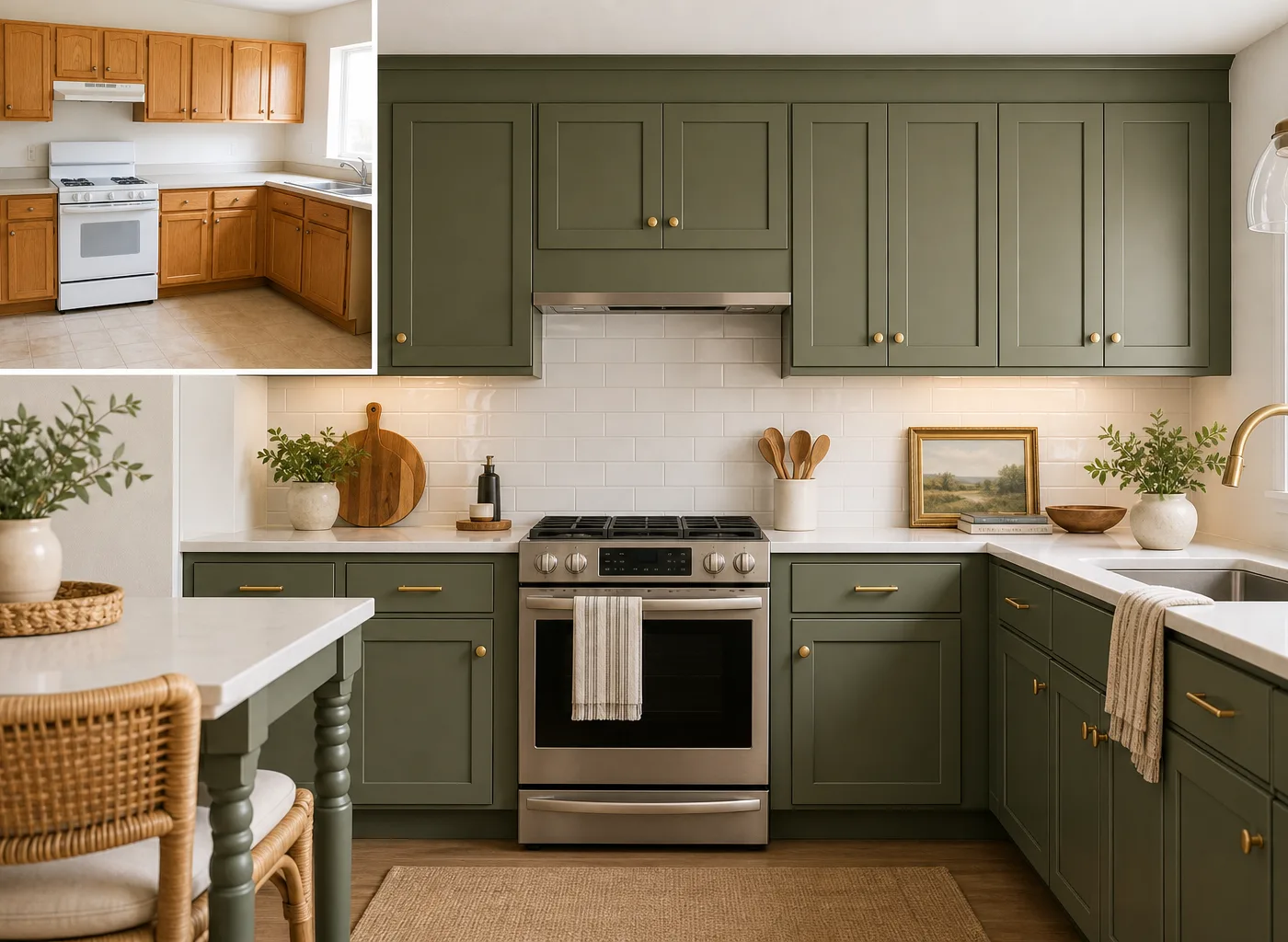
Rental kitchen cabinets can make an entire apartment feel dated, even when the room is clean and functional. Honey-oak doors, dark laminate, worn knobs, and bland interiors are common frustrations—but replacing cabinets or applying permanent paint is rarely an option for renters. The good news is that a dramatic improvement does not have to mean a permanent alteration.
The best renter friendly kitchen cabinet makeover ideas use removable materials, reversible hardware updates, smart styling, and a careful installation process. Whether your cabinets need a brighter finish, better storage, or simply a more intentional look, these upgrades can help you personalize the space while protecting your security deposit.
Start With Your Lease and Cabinet Surface
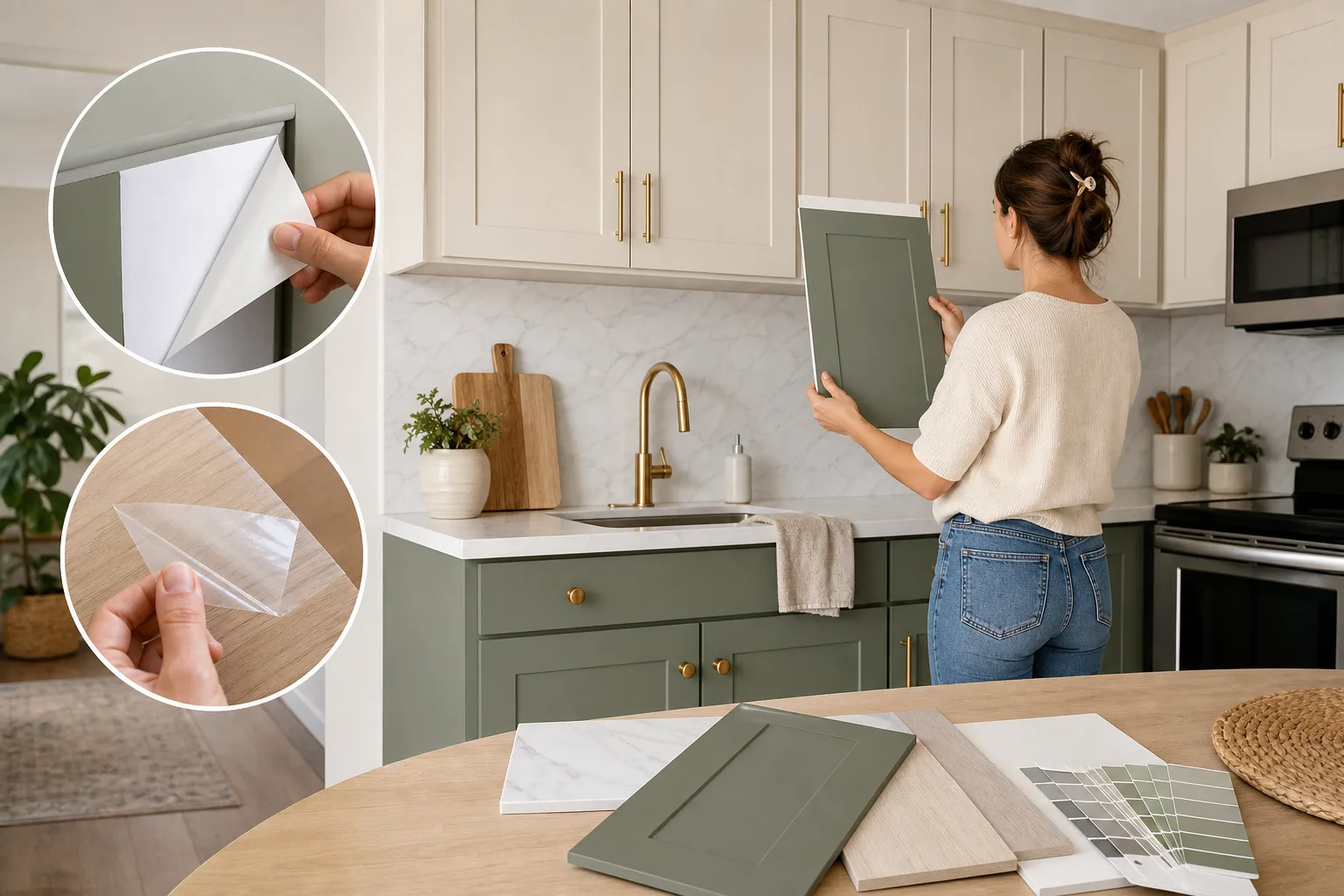
Before ordering materials, read your lease and inspect the cabinets closely. Some landlords allow small changes with written approval, while others prohibit any alteration beyond existing screw holes. Take clear before photos of every cabinet door, drawer front, hinge, and surrounding wall. Save the photos with the date in case you need a move-out reference.
Next, identify the cabinet material. Vinyl wrap, laminate, thermofoil, painted wood, and real wood react differently to adhesives and cleaners. A removable vinyl film may be suitable for a smooth laminate door, for example, but it can fail on deeply grained wood or peel away aging thermofoil. Always test a small, hidden patch first and leave it in place for several days before covering an entire door.
Clean surfaces thoroughly with a grease-cutting kitchen cleaner, then let them dry completely. Adhesive products stick poorly to cooking residue, dust, and moisture. Avoid putting removable films over peeling veneer, loose laminate, or damaged paint; removing the film later could pull away an already unstable finish.
1. Swap Cabinet Knobs and Pulls
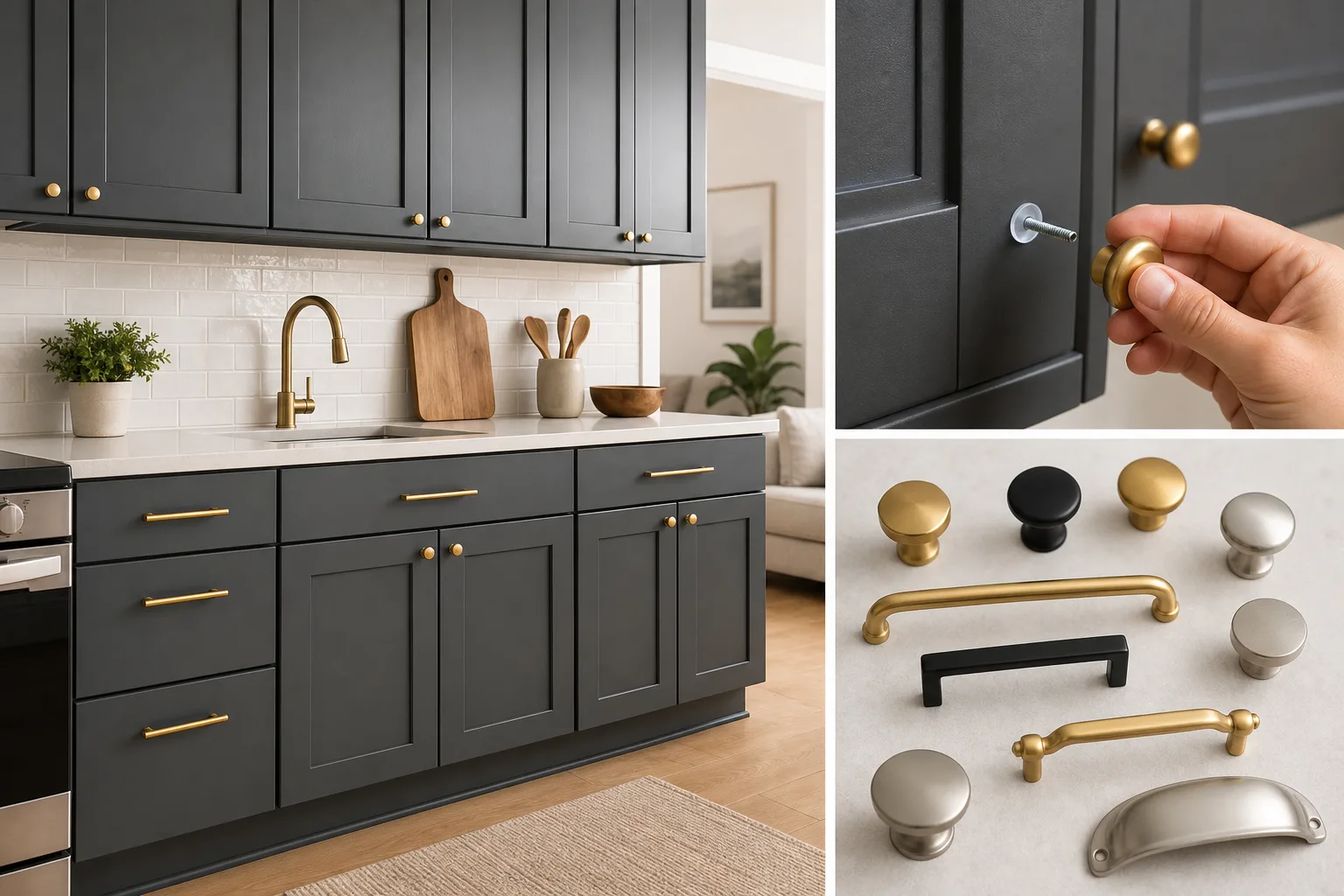
Changing hardware is one of the quickest ways to make basic cabinets look more deliberate. Existing knob or pull holes usually make this update renter-friendly because you are not drilling new ones. Choose a finish that works with the faucet, lighting, and appliances: brushed brass adds warmth, matte black feels crisp and modern, and polished nickel suits many classic kitchens.
Measure the center-to-center distance between screw holes before buying pulls. If your cabinet doors currently have knobs, replacing them with new knobs is the safest no-drill choice. Keep every original knob, pull, and screw in a labeled bag so reinstalling them at move-out takes minutes.
For a polished result, use the same hardware throughout unless you have a clear reason to mix styles. For example, knobs on upper cabinets and matching pulls on lower drawers can look balanced. Avoid oversized hardware that overwhelms narrow doors or blocks adjacent drawers.
2. Cover Flat Door Panels With Removable Vinyl
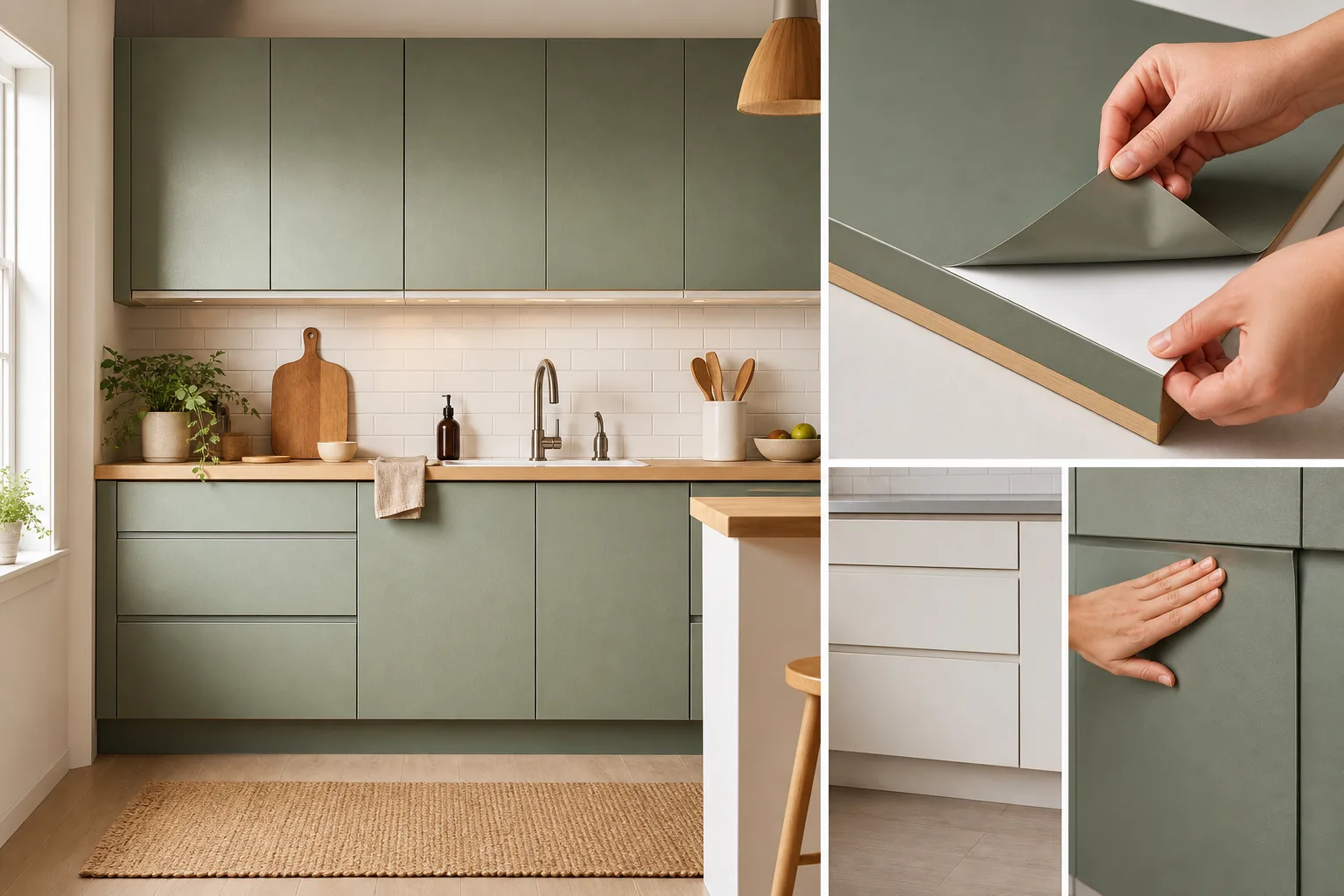
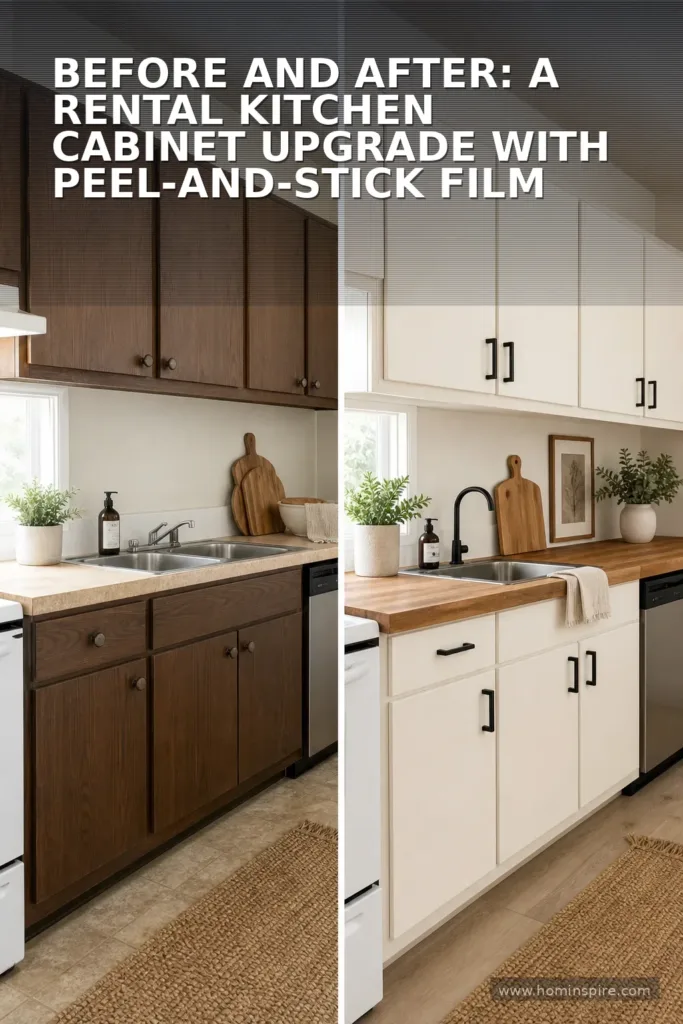
Removable vinyl wrap can give flat cabinet doors the appearance of a fresh painted finish, pale oak, walnut, marble, or even subtle linen texture. It is especially useful when a rental kitchen has dark brown laminate that makes the room feel heavy. Light warm white, soft greige, pale wood grain, and muted sage are versatile choices for a US rental market.
For the most convincing look, use a matte or low-sheen vinyl rather than a highly glossy contact paper. Remove doors when possible, label each hinge location, and work on a clean flat surface. Measure each panel individually; cabinet doors are often not perfectly identical.
Cut the film slightly larger than the surface, apply it gradually with a felt-edged squeegee, and smooth air bubbles from the center outward. Trim edges carefully with a sharp utility knife. Wrapping the visible front and edges usually looks better than covering only the center panel. Do not wrap over hinges, moving joints, or areas exposed to constant steam and heat.
Because adhesive strength varies, check the manufacturer’s removal instructions and test first. If the vinyl leaves residue, use the recommended adhesive remover sparingly and follow with a mild cleaner. Never scrape aggressively at a rental cabinet finish.
3. Use Peel-and-Stick Wallpaper on Recessed Panels
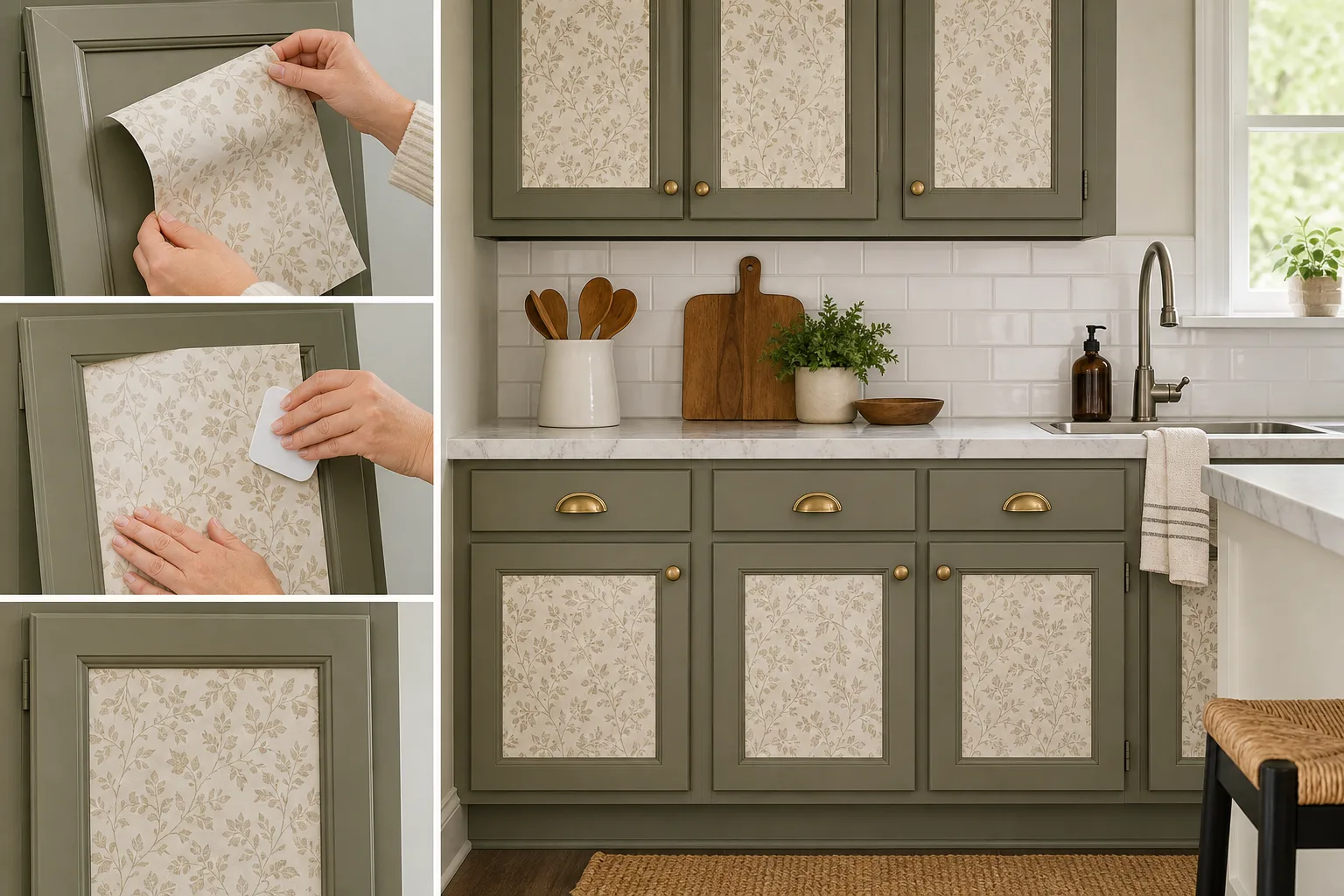
If your cabinets have recessed center panels, peel-and-stick wallpaper offers a lower-commitment way to add pattern or color without covering every surface. A small-scale botanical print, soft stripe, block print, or neutral geometric pattern can turn plain cabinet doors into a focal point. This approach is often more forgiving than wrapping full doors because the surrounding frame creates a neat visual border.
Use wallpaper only on smooth, clean, dry panels, and choose a removable product made for temporary interiors. Keep the rest of the kitchen simple so the pattern does not compete with counters, flooring, and backsplash. Wallpapered upper cabinet panels paired with simple hardware can create a custom hutch-like effect.
Another subtle option is to apply wallpaper to the exposed sides of a cabinet run or an enclosed end panel. It gives the room a finished, styled look while using less material and reducing the amount of adhesive contact with the cabinets.
4. Add a Temporary Open-Shelf Look Inside Glass Doors
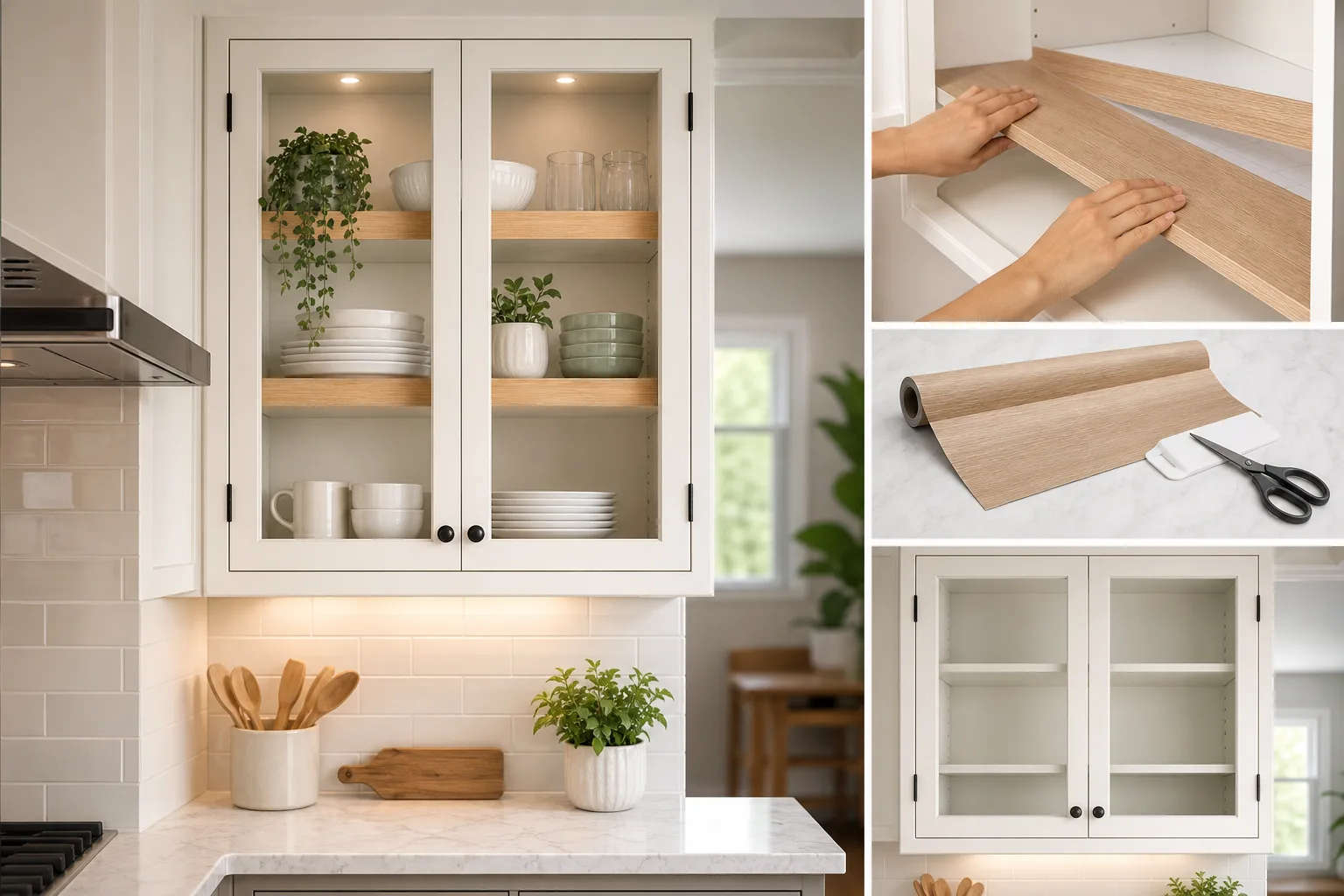
Glass-front cabinets can look sparse or mismatched when dishes and pantry items are visible. Rather than removing doors or making a permanent change, style the interiors with a coordinated shelf backdrop. Removable wallpaper, lightweight poster board, or a cut-to-fit fabric panel can be placed against the back wall of the cabinet, provided it does not interfere with shelves or create a fire hazard near heat sources.
Limit displayed items to practical, attractive essentials: matching white dishes, drinking glasses, mugs, a few wood bowls, or clear pantry jars. Arrange stacks by type and leave some open space. The goal is a collected cabinet display, not a crowded storage zone.
For more restrained surface styling after updating your cabinets, see Kitchen Counter Decor Ideas Without Clutter. A clearer counter makes the cabinet makeover stand out even more.
5. Refresh Cabinet Interiors With Removable Shelf Liners
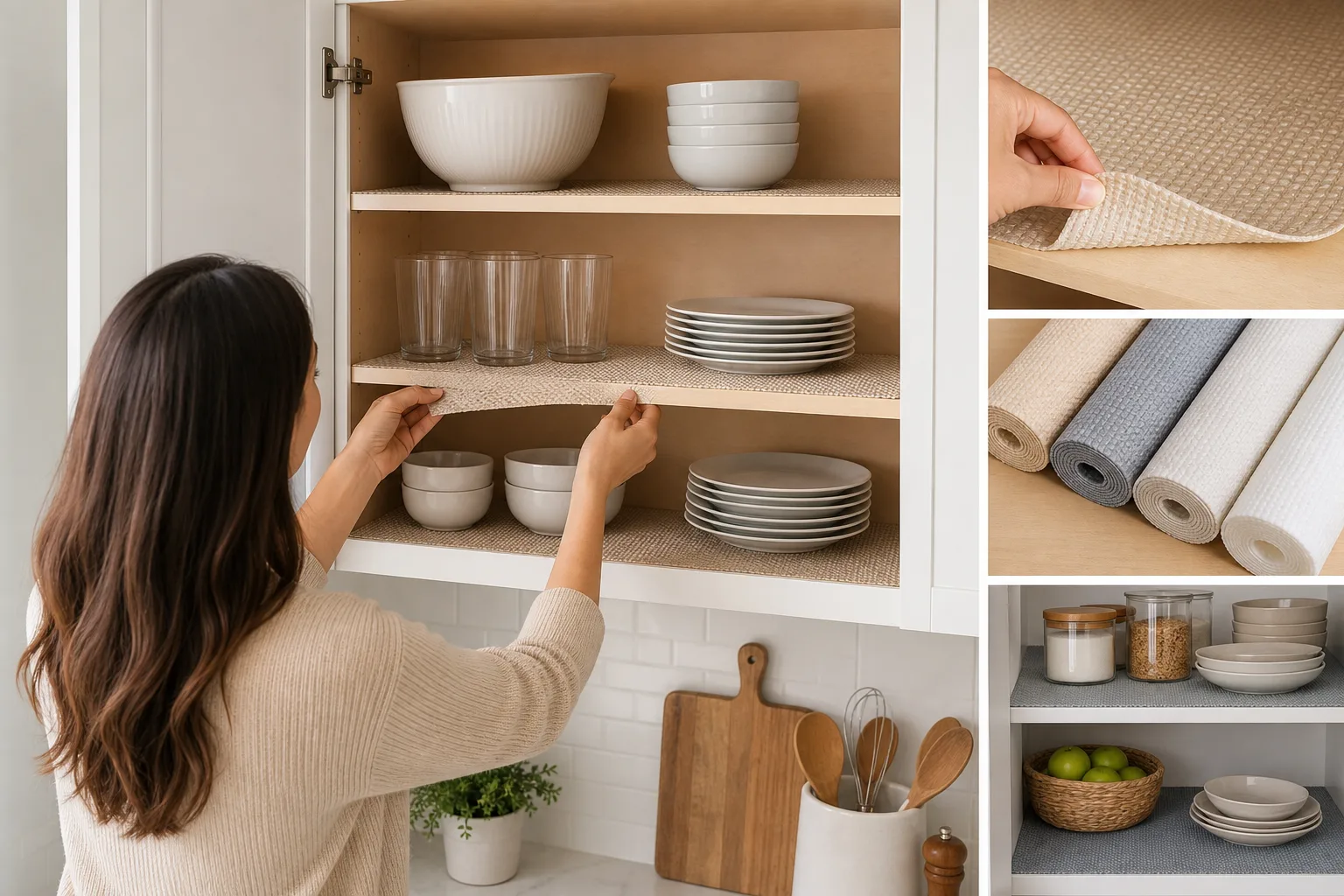
A cabinet makeover should improve the experience of using the kitchen, not just its appearance. Removable, non-adhesive shelf liners protect shelves from scratches, hide minor stains, and make dated interiors feel clean. Look for washable liners with a grippy texture for dishes and glasses, or use a smooth wipeable liner in pantry cabinets.
Measure each shelf separately, especially in older apartments where cabinet boxes may be uneven. Neutral liners are timeless, while a small pattern can add a cheerful surprise inside a plain cabinet. Avoid thick liners that make shelves wobble or prevent drawers from closing smoothly.
This is also a good time to edit what you store. Group baking supplies, everyday dishes, food containers, and cleaning products by zone. Simple bins and turntables can improve access without attaching anything to the cabinet walls.
6. Upgrade the Space Above Cabinets
When there is a visible gap above upper cabinets, treat it as a styling opportunity rather than trying to change the cabinets themselves. A few large-scale pieces—such as woven baskets, ceramic vessels, or cookbooks—can draw the eye upward and make the cabinetry feel more intentional. Choose items that are easy to wipe down, since this area collects grease and dust.
Do not overfill the space with tiny decor. In a small rental kitchen, visual clutter above the cabinets can make the ceiling feel lower. If you need the area for storage, use matching baskets with labels and reserve them for lightweight, infrequently used items.
7. Create a Faux Built-In Effect With Lighting
Battery-operated, rechargeable, or plug-in under-cabinet lights can make old cabinets look far more upscale. Warm white light brightens prep areas, improves nighttime visibility, and creates a layered glow that distracts from a dated finish. Choose lights with adhesive strips or magnetic mounts designed for easy removal.
Install lighting on the underside of upper cabinets, keeping cords away from the sink, range, and cooking heat. Rechargeable puck lights are convenient for short runs, while plug-in LED strips may be better for a longer kitchen wall. Use cable clips only if they are removable and approved for the wall surface.
Look for a warm color temperature around 2700K to 3000K. Cool blue lighting can make warm wood cabinets look dull and may feel harsh in the evening. Place the lights near the front edge of the cabinet underside to reduce shadows across the counter.
8. Make Cabinet Doors Look Cleaner With Small Repairs
Minor repairs can be renter-friendly when they restore the cabinet to a better condition rather than alter its design. Tighten loose hinges, replace worn bumper pads, and clean sticky drawer tracks. Clear adhesive bumpers are inexpensive and prevent doors from slamming. If a hinge is visibly loose, use the existing screws and avoid enlarging holes without landlord permission.
For grease buildup around handles, use a gentle degreaser and a microfiber cloth. Test any cleaner in an inconspicuous spot first, particularly on painted or laminate surfaces. Many cabinets look significantly newer after a deep clean, especially around edges, grooves, and hinge areas that are easy to overlook.
If there is existing damage such as peeling laminate or swollen particleboard, document it and tell the landlord. Covering serious damage with peel-and-stick material may hide a problem temporarily, but it can complicate removal and responsibility later.
9. Add Door-Mounted Storage Without Drilling
Cabinet storage upgrades can change how the kitchen functions without changing the cabinet finish. Over-the-door organizers, adhesive hooks rated for kitchen use, and tension-mounted racks can create a home for cutting boards, foil boxes, cleaning cloths, and small pantry items. Be mindful of door clearance: a bulky organizer may prevent the door from closing or bang into shelves.
Use lightweight organizers and do not overload adhesive-mounted pieces. Choose an area away from heat and frequent steam, since humidity reduces adhesive performance. For more practical solutions, explore Renter Friendly Kitchen Storage Ideas Without Drilling and Small Kitchen Storage Ideas for Renters.
10. Use a Removable Backsplash to Frame the Cabinets
Sometimes cabinets look dated because the surrounding backsplash is bland or stained. A removable peel-and-stick backsplash can frame them with a cleaner, more current background. White subway tile, soft zellige-inspired tile, and understated stone-look designs work with many cabinet colors. This upgrade is especially effective when you have already changed hardware or added under-cabinet lighting.
Apply removable backsplash products only to a smooth, clean wall that is suitable for the manufacturer’s adhesive. Avoid placing basic vinyl tiles too close to high heat unless they are specifically rated for that area. Check your lease and test a small section first, as adhesive can lift weak paint or leave residue.
Keep the overall palette connected. For example, creamy cabinets may pair well with warm white tile and aged brass pulls, while charcoal laminate can look sharper with bright white tile and matte black hardware.
11. Style Cabinets Through Color Coordination
You do not need to cover cabinet fronts to make them feel updated. A coordinated kitchen palette can make existing cabinets recede into a more attractive whole. Repeat two or three colors across dish towels, a runner, countertop canisters, art, and small appliances. For warm wood cabinets, try cream, black, muted green, or terracotta. For white laminate, add warmth with natural wood, linen, and brass-toned accents.
A washable runner can also soften cold rental flooring and visually connect cabinetry to the rest of the room. Keep it narrow enough that it does not create a tripping hazard or block frequently used drawers.
If your kitchen is compact, these ideas pair well with Small Kitchen Ideas for Apartments. The most effective small-space makeovers balance personality with visual breathing room.
12. Know Which Cabinet Changes to Avoid
Not every popular makeover is rental-safe. Permanent paint, sanding, replacing hinges, drilling new hardware holes, removing doors, and applying strong construction adhesive can create expensive move-out problems. The same caution applies to contact paper that has no clear removability claim or products applied directly over damaged finishes.
Do not assume a product is safe because it is marketed as peel-and-stick. Read reviews for your cabinet surface, test it in a hidden location, and retain packaging and care instructions. If you want to make a larger change, ask your landlord for written permission. Some landlords may even welcome a professional-quality upgrade, but verbal approval is not enough.
A Simple Renter-Friendly Cabinet Makeover Plan
For a cohesive result without overspending, begin with the lowest-risk changes. Deep-clean the cabinets, replace knobs or pulls using existing holes, add shelf liners, and introduce under-cabinet lighting. Live with those changes for a week before deciding whether you need vinyl or wallpaper. Often, improved hardware, organization, and lighting are enough to transform the mood of the kitchen.
If the cabinet color is still the biggest issue, choose one removable finish and use it selectively. Covering lower cabinets, flat panel inserts, or just one accent cabinet can look purposeful while reducing cost and removal time. For broader affordable updates, browse Budget Kitchen Makeover Ideas and Kitchen Makeover Ideas Without Replacing the Cabinets.
The key is reversibility. Store original hardware, photograph your work, follow product instructions, and plan for removal before you install anything. With those safeguards in place, renter friendly kitchen cabinet makeover ideas can make an ordinary apartment kitchen feel more personal, functional, and genuinely enjoyable to use.
Frequently Asked Questions
Can renters put peel-and-stick paper on kitchen cabinets?
Yes, renters can often use removable peel-and-stick vinyl or wallpaper on smooth, stable cabinet surfaces, but they should check the lease first. Test a hidden area before full installation, especially on old laminate, peeling thermofoil, or weak paint. Follow the product’s removal directions and avoid high-heat or high-moisture areas unless the material is rated for them.
What is the easiest renter-friendly kitchen cabinet upgrade?
Replacing existing cabinet knobs or pulls is usually the easiest upgrade because it uses current screw holes and is simple to reverse. A deep clean, clear bumper pads, shelf liners, and rechargeable under-cabinet lighting are also low-risk improvements with a noticeable visual payoff.
Will removable contact paper damage rental cabinets?
It can, depending on the cabinet finish, adhesive quality, heat exposure, and how long it remains installed. Contact paper may pull loose paint, leave residue, or worsen existing peeling laminate. Choose a truly removable product, test it first, avoid damaged surfaces, and remove it slowly according to the manufacturer’s instructions.
How can I make dark rental cabinets look lighter without painting?
Use light removable vinyl on selected door fronts, install warm under-cabinet lighting, add a pale removable backsplash, and choose light-colored textiles and countertop accessories. Swapping dark hardware for brushed nickel or brass can also make dark cabinets feel less heavy without altering the cabinet finish permanently.
Do I need landlord permission to change cabinet hardware?
It depends on the lease. If you use the existing holes and reinstall the original hardware before moving out, many landlords allow it, but you should still review your rental agreement. Ask for written permission if you plan to drill new holes, replace hinges, paint, or make any change that cannot be fully reversed.
