
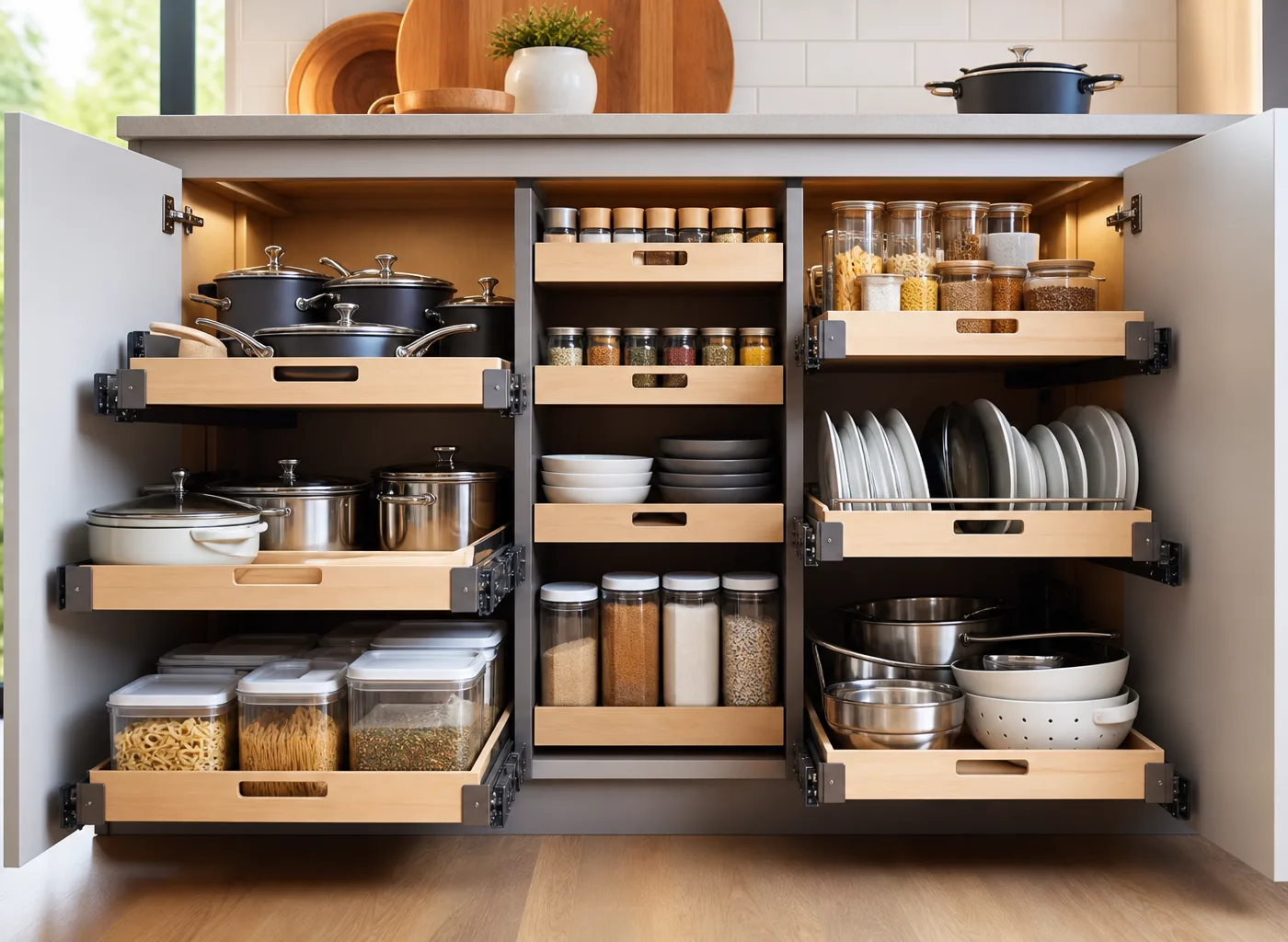
Deep kitchen cabinets can be a blessing and a daily frustration. They offer generous storage, but that extra depth often becomes a dark, cluttered zone where canned goods expire, baking pans disappear, and small appliances get buried behind items you rarely use.
The best deep kitchen cabinet organization ideas solve one central problem: access. Instead of simply filling the cabinet from front to back, create systems that let you see, reach, and return everything with minimal effort. Whether you have a large family kitchen, a compact apartment kitchen, or builder-grade lower cabinets, a few strategic changes can make deep storage feel far more functional.
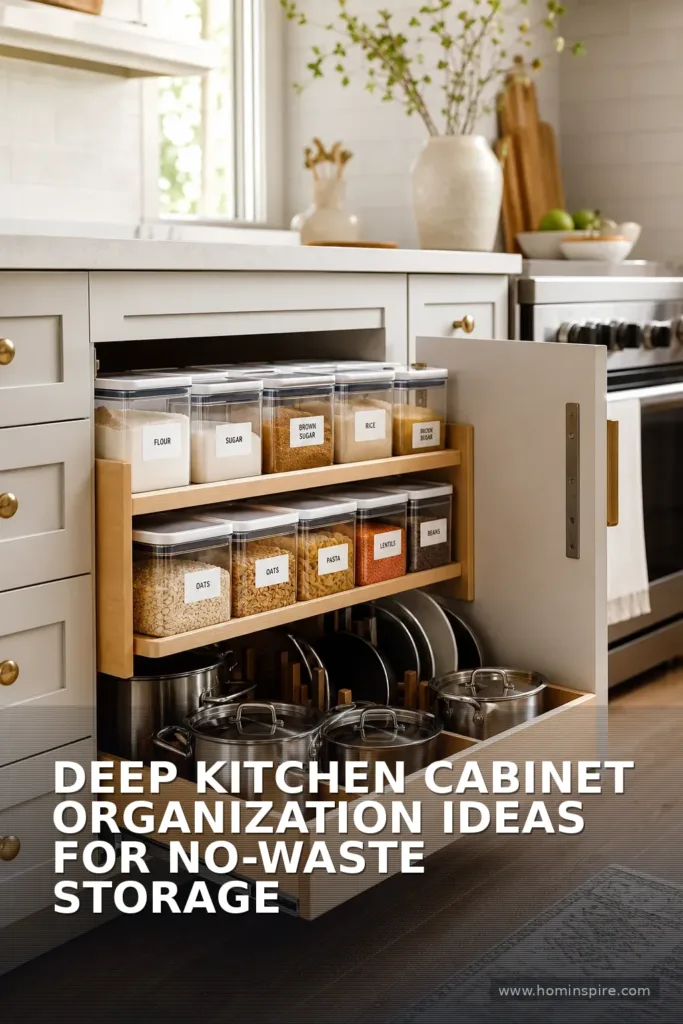
Use the ideas below to turn awkward cabinet depth into practical, organized storage.
Start by Understanding What Makes Deep Cabinets Hard to Use
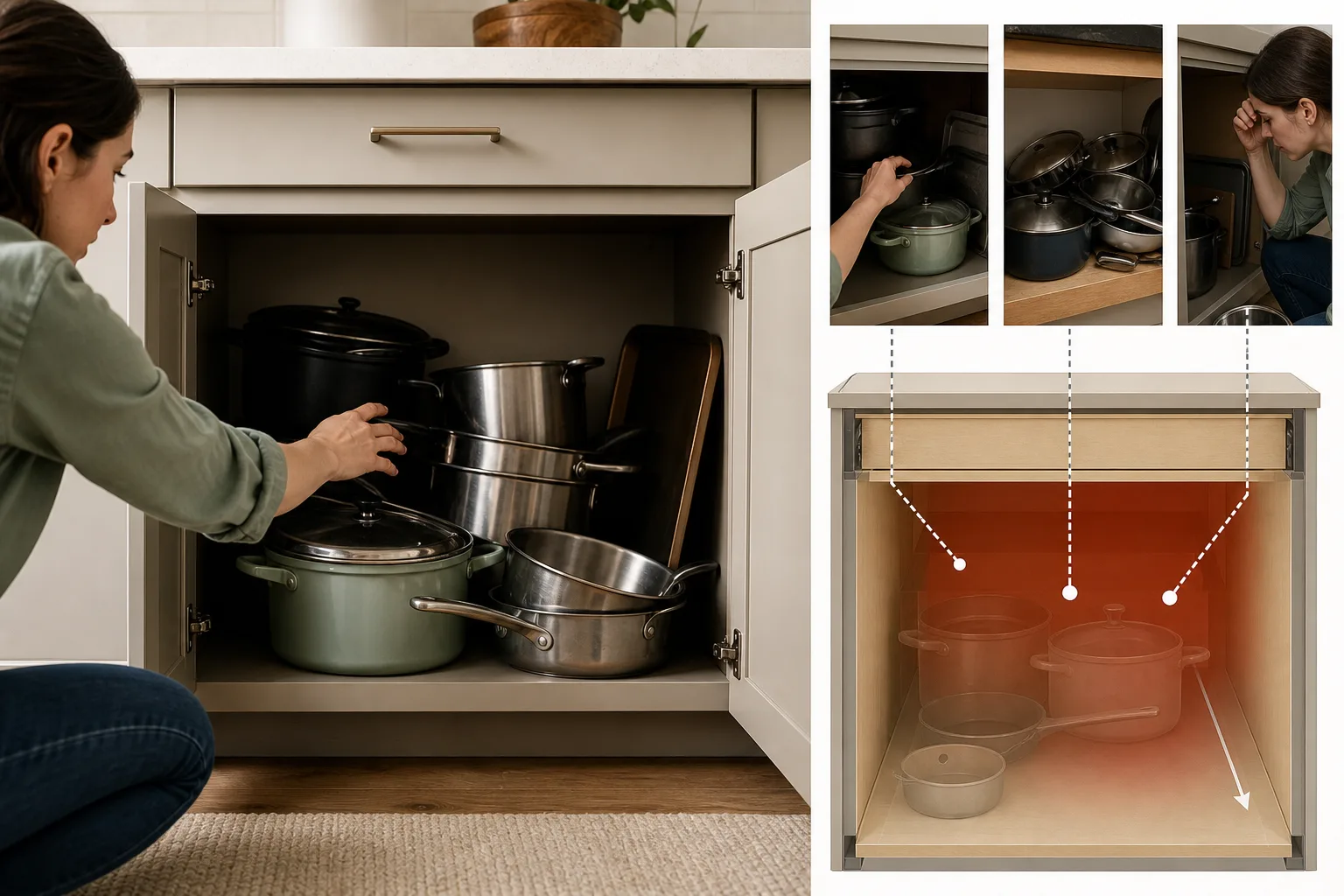
Most standard base cabinets are about 24 inches deep, while some pantry-style cabinets and corner cabinets are even deeper. The problem is not the space itself. The problem is that shelves do not move. When items sit in the back, you have to remove everything in front to reach them.
A well-organized deep cabinet should give every item a defined home and allow you to access that home without digging. In most cases, the right solution is one of three things: a pull-out system, a container you can lift or slide forward, or a layout that separates front stock from back stock.
Before buying organizers, empty the cabinet and sort what you own. Group items by use, discard duplicates you do not need, and measure the interior width, depth, and height. Measure around hinges, plumbing, and door frames too. A storage product that looks perfect online may not fit once those details are considered.
1. Install Pull-Out Shelves for Heavy Everyday Items
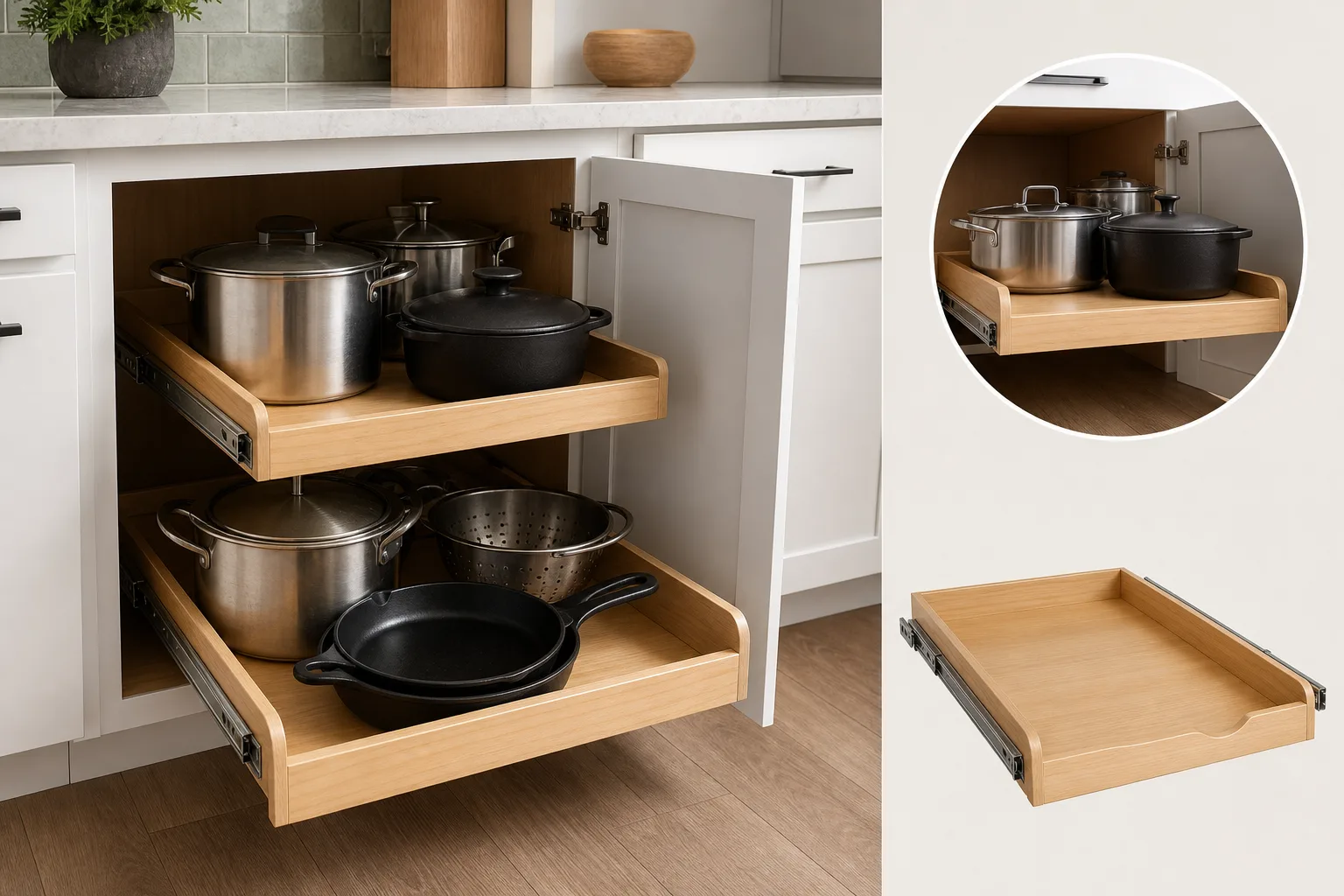
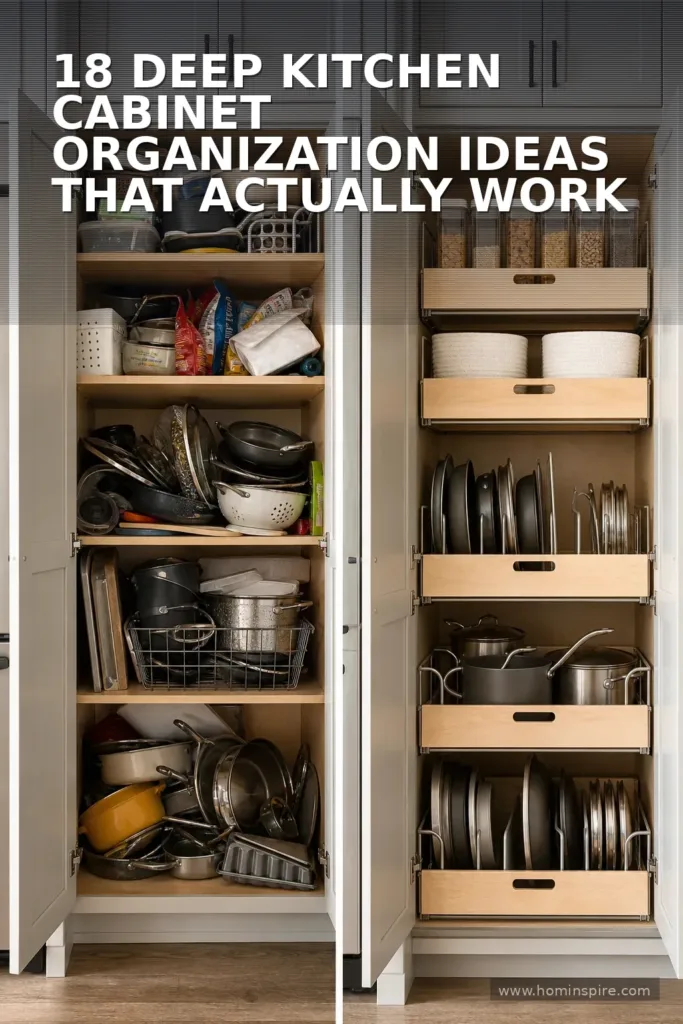
Pull-out shelves are one of the most effective upgrades for deep lower cabinets. They bring the contents forward, so you can see every pot, pan, appliance, or food item without kneeling and reaching into the back.
Use sturdy pull-outs for heavy cookware, stand mixers, Dutch ovens, small appliances, or bulk pantry goods. Full-extension slides are especially useful because the shelf comes almost completely out of the cabinet. Choose a weight rating that matches what you plan to store.
If you are renting or do not want to modify cabinetry, look for freestanding pull-out baskets that sit on the shelf. For more no-drill solutions, see these renter-friendly kitchen storage ideas without drilling.
2. Use Deep Bins as Removable Drawers
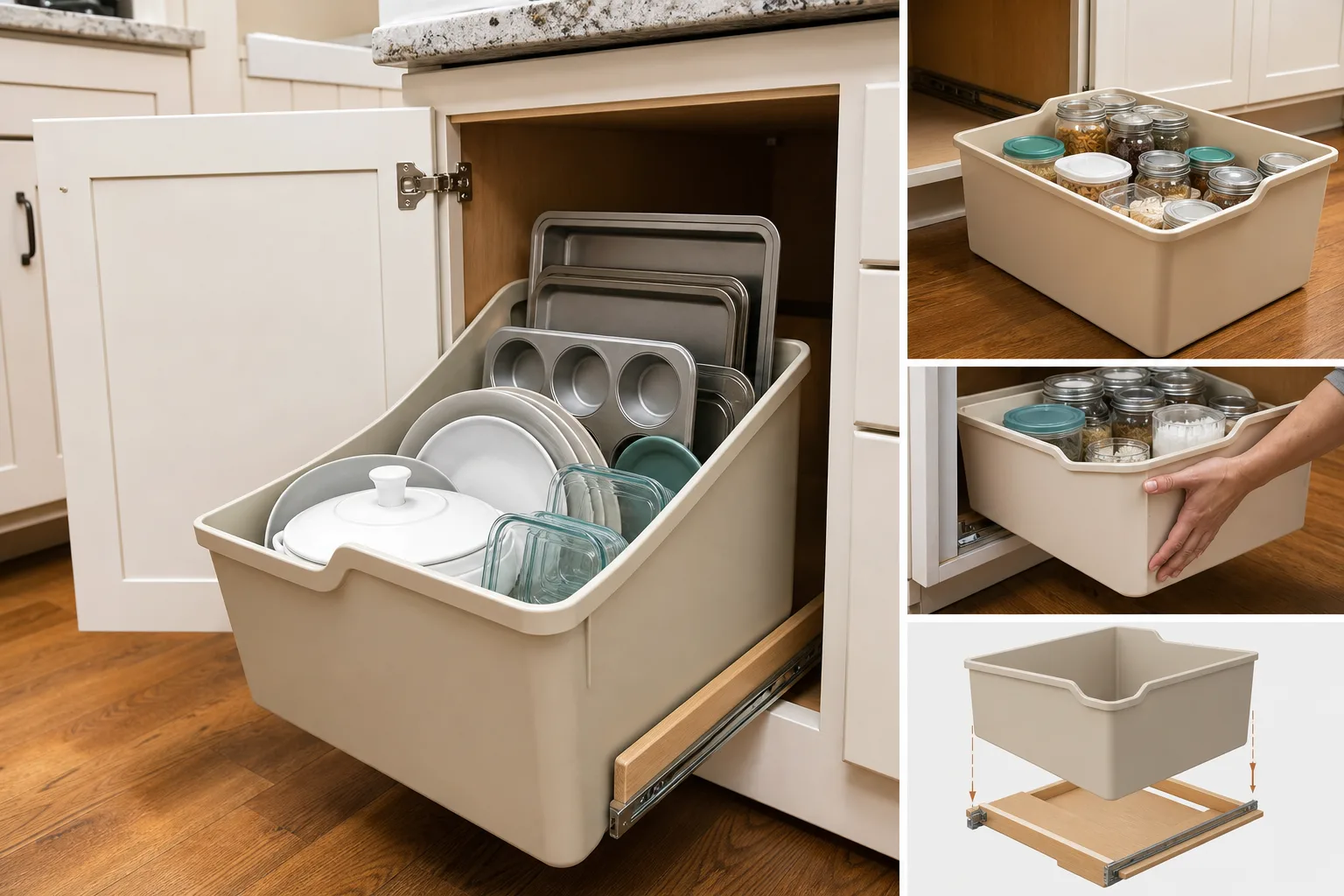
Clear or open-top bins are a simple alternative to built-in drawers. Treat each bin like a drawer: pull it forward, take what you need, and slide it back. This works particularly well in deep upper cabinets, pantry cabinets, and low shelves where loose items tend to migrate backward.
Choose bins with handles and straight sides to maximize capacity. Clear bins are helpful for snacks, packaged foods, and baking supplies because you can identify the contents immediately. Opaque bins can look cleaner for less attractive items, such as foil boxes, reusable bags, or backstock.
Create broad but useful categories, including:
- Breakfast and lunch supplies
- Pasta, grains, and dry goods
- Baking ingredients
- Kid-friendly snacks
- Food storage containers
- Dish towels and cleaning cloths
A label on the front edge makes the category easy to maintain for everyone in the household.
3. Create Front and Back Zones
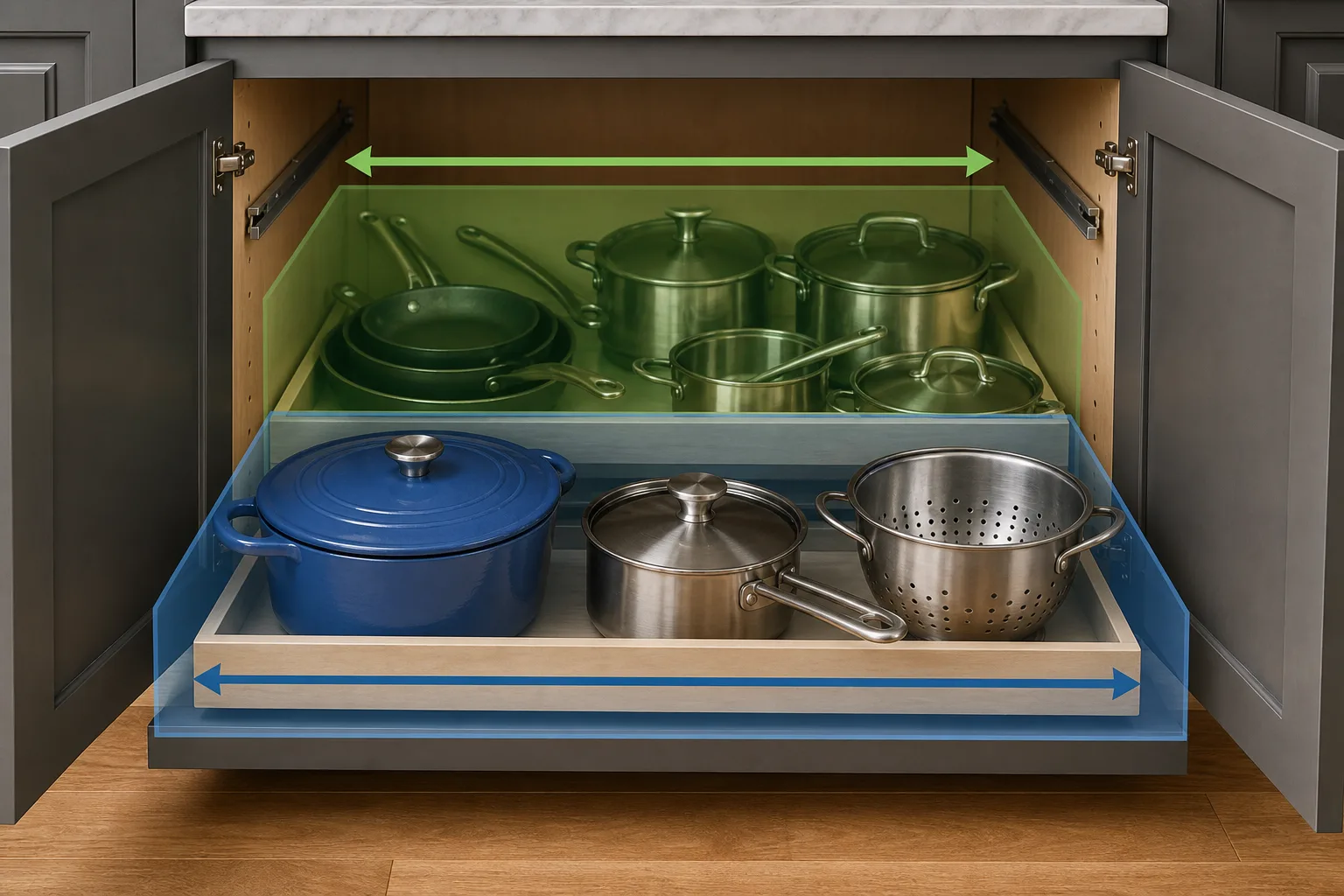
When a cabinet is too deep for a single row of items, use a front-and-back zoning strategy. Place the items you reach for most often in front and reserve the back for extras, occasional tools, or seasonal pieces.
For example, store your everyday skillet and saucepan at the front of a cookware cabinet. Keep specialty roasting pans, extra baking dishes, and holiday serving pieces behind them. In a food cabinet, put open packages and weekly staples in front, while unopened backup items live in the rear.
This approach works best when the back zone is not a mystery. Use a shallow bin, label, or inventory note to identify what is stored there. The goal is not to pack the cabinet as tightly as possible; it is to make the back section intentional.
4. Add Shelf Risers for Plates, Bowls, and Mugs
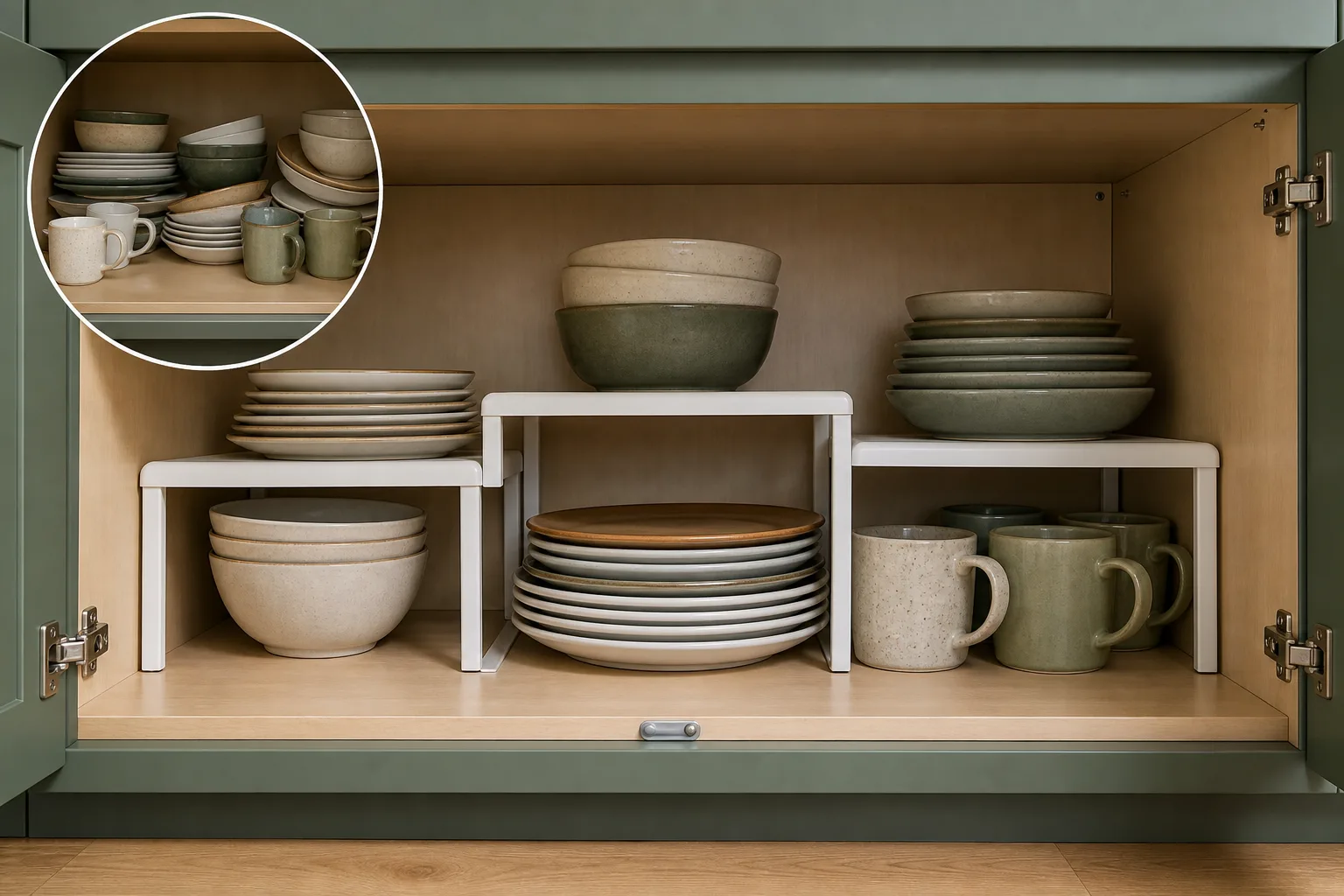
Deep cabinets often have a lot of unused vertical space. Shelf risers divide that empty area into usable levels, making stacks of dishes easier to access. They are especially useful in upper cabinets that hold dinner plates, bowls, serving dishes, and mugs.
Use one riser for everyday bowls and another for smaller plates or salad bowls. Avoid stacking dishes so high that you have to lift several pieces just to reach one item. If your cabinet is tall, a riser can also create a separate top shelf for items used less frequently.
Wire risers are affordable and easy to move, while solid shelf inserts create a more built-in look. Either option can make a basic cabinet more efficient without a renovation.
5. Store Pots and Pans Vertically
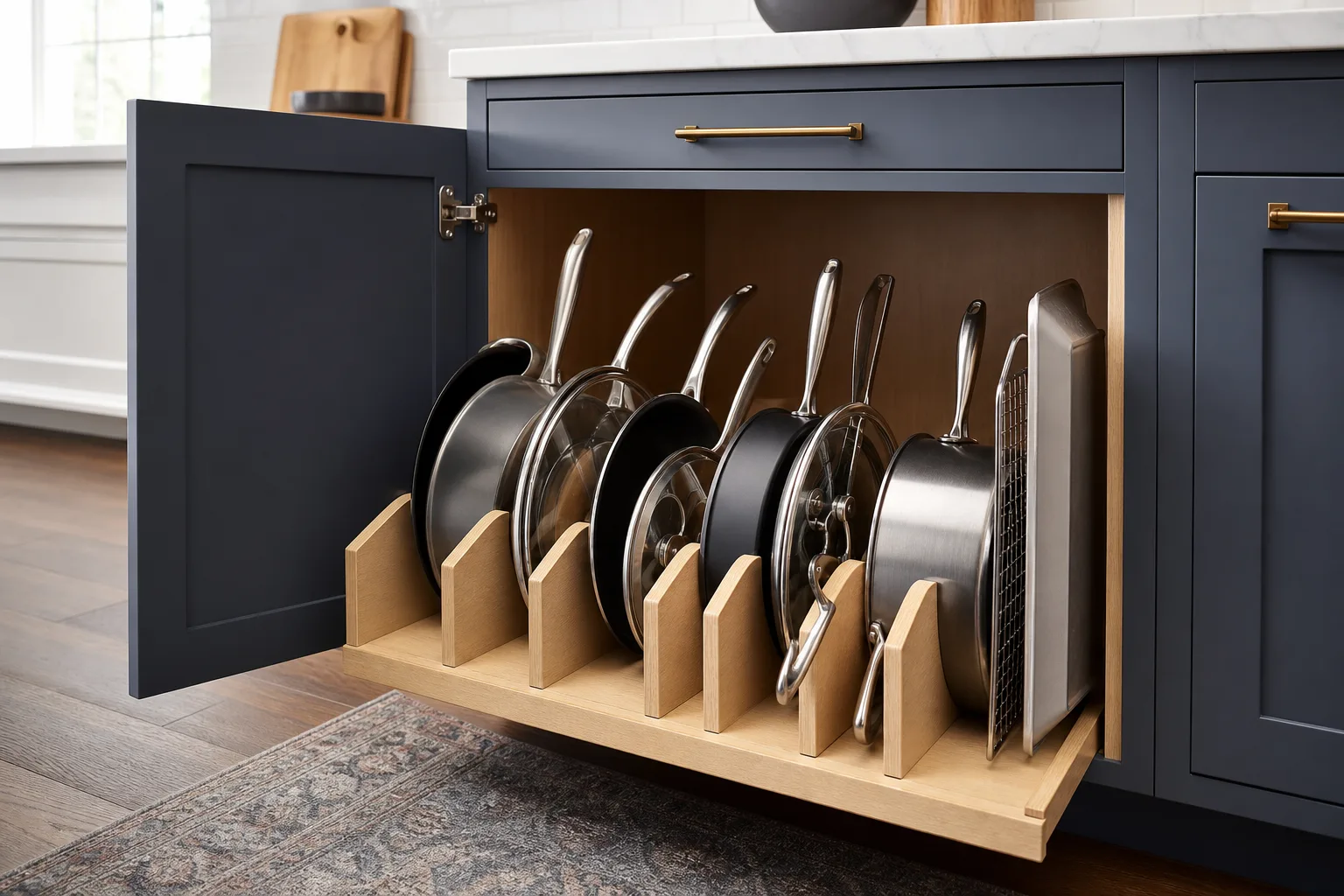
Nested pots may save space on paper, but they are inconvenient in daily use. Vertical storage lets you pull out one pan without unstacking a tower of cookware. Use a cabinet organizer designed for pans, a tension rack, or adjustable dividers mounted on a pull-out shelf.
Arrange pans by size and frequency of use. Keep your most-used skillet, sauté pan, and saucepan closest to the cabinet opening. Larger stockpots and specialty pans can go toward the back or on a lower shelf.
This system also protects cookware. It reduces the scraping that happens when pans are stacked directly on top of one another, particularly if you use nonstick or enamel-coated pieces.
6. Separate Lids With a Dedicated Rack
Pot lids are among the hardest items to organize in a deep cabinet. They slide around, take up awkward horizontal space, and can create a noisy pile. A vertical lid rack immediately makes the cabinet easier to use.
Place the rack on the inside of a deep pull-out shelf, along one side of the cabinet, or at the front of a cookware zone. Store lids vertically by diameter, with the handles facing upward or outward for easy grabbing. If you keep cookware in a deep drawer, adjustable peg dividers can also hold lids in place.
7. Turn One Deep Cabinet Into an Appliance Garage
Small appliances can overwhelm countertops and become difficult to retrieve from a crowded cabinet. Give them a dedicated cabinet instead. A deep lower cabinet is ideal for appliances that are bulky but used regularly, such as an air fryer, slow cooker, blender, rice cooker, or food processor.
Place the heaviest appliances on the lowest level. A pull-out shelf or appliance lift can reduce lifting and make the cabinet safer to use. Store cords in labeled pouches or use reusable cable ties so they do not tangle around other equipment.
Keeping appliances inside the cabinet can also support a cleaner-looking kitchen. Pair this storage strategy with these kitchen counter decor ideas without clutter to maintain open, useful counter space.
8. Use Lazy Susans in Deep Corner Cabinets
Deep corner cabinets are notorious for wasted space. A lazy Susan transforms a difficult corner into rotating storage, allowing you to bring items from the back to the front with one turn.
Choose a full-circle or kidney-shaped turntable based on your cabinet layout. Use it for oils, vinegars, sauces, baking supplies, canned goods, or cleaning products. Raised edges are helpful because they prevent bottles and jars from tipping as the tray rotates.
Do not overload a lazy Susan. Leave enough breathing room for it to spin smoothly, and group items by type so you can quickly spot what you need.
9. Try a Two-Tier Sliding Organizer Under the Sink
The cabinet under the sink is deep, but plumbing makes it challenging. A two-tier sliding organizer can make use of the available depth while working around pipes. Choose an adjustable unit or one with a narrow upper basket.
Keep cleaning products in a removable caddy so you can take them out when cleaning. Put frequently used products at the front, and place refills, dishwasher tablets, or extra sponges in the back. Add a small tray beneath bottles to catch leaks and protect the cabinet base.
For households with children or pets, use childproof cabinet locks and store hazardous cleaning products securely.
10. Organize Food Storage Containers by Shape and Size
A deep cabinet can easily become a jumble of plastic containers and mismatched lids. The easiest fix is to declutter first. Keep only containers with matching lids and choose a limited range of shapes when replacing old sets.
Store containers nested by size, but avoid making stacks too tall. Keep lids upright in a file-style organizer, magazine holder, or expandable rack. Square and rectangular containers generally use cabinet space more efficiently than round ones.
For a deep cabinet, place the everyday container set in front and store specialty containers, large serving containers, and extras in a labeled bin toward the back.
11. Add Vertical Dividers for Baking Sheets and Cutting Boards
Deep cabinets are excellent for baking sheets, cooling racks, cutting boards, muffin tins, and large platters when those items are stored vertically. Vertical dividers prevent a heavy, frustrating stack and make every piece easy to remove.
Install dividers in a narrow cabinet, on a pull-out shelf, or inside a larger cabinet using a freestanding rack. This is also a smart place for pizza pans and shallow casserole dishes. Keep the dividers close to your oven or prep area to create an efficient cooking workflow.
12. Use a Backstock System for Pantry Staples
Buying in bulk can save money, but only when you can find and use what you buy. Assign the back half of a deep pantry cabinet to backstock. This might include unopened cereal, canned tomatoes, broth, coffee, paper goods, or snacks.
Use the “one open, one backup” rule for the categories you buy most often. When the open item runs out, pull the backup forward and add it to your shopping list. This simple rotation prevents duplicates and reduces food waste.
If your kitchen lacks a traditional pantry, a well-planned deep cabinet can function as one. You may also find helpful inspiration in these hidden pantry ideas for discreet ways to increase food storage.
13. Reserve High Shelves for Low-Frequency Items
In deep upper cabinets, the highest shelf should not hold your everyday dishes. Use it for items you need only occasionally: holiday platters, specialty serving bowls, extra glassware, cake stands, or large party supplies.
Put these items in clearly labeled bins so they can be removed as a group. A sturdy step stool is safer than standing on a chair, and keeping rarely used items contained prevents them from spreading across the shelf.
14. Make Deep Drawers Work With Adjustable Dividers
Deep drawers can be just as tricky as deep cabinets if they are left open and unstructured. Adjustable dividers create sections for cookware, dishes, linens, wraps, or pantry staples. They stop items from sliding when the drawer opens and closes.
Use pegboard-style drawer organizers for stacks of plates and bowls. Use long dividers for utensils, cooking tools, and food wraps. For a large drawer, combine a few containers with dividers rather than trying to organize every item individually.
15. Group Supplies by Kitchen Task
Organizing by task is often more useful than organizing by product type. Think about where and how you use each item. Store coffee supplies together, baking tools together, and lunch-packing items together. This reduces trips around the kitchen and makes deep cabinets easier to maintain.
Examples include:
- Baking zone: flour, sugar, measuring tools, mixing bowls, and decorating supplies.
- Breakfast zone: cereal, oatmeal, mugs, tea, and coffee accessories.
- Lunch zone: containers, sandwich bags, snack packs, and water bottles.
- Cooking zone: oils, spices, pans, utensils, and cooking lids.
This strategy is especially helpful in compact layouts. Explore more practical space planning in these small kitchen design ideas on a budget.
16. Label for Visibility, Not Perfection
Labels are most helpful when they answer a quick question: where does this go? Use simple labels on the front of bins, shelf edges, and storage zones. Avoid overly specific labels that make the system hard to adapt when your shopping habits change.
For instance, “Snacks,” “Baking,” “Backstock,” and “Lunch Supplies” are easier to maintain than labels listing every individual item. A label maker creates a polished look, but handwritten labels work just as well.
17. Keep a Little Empty Space
It is tempting to fill every inch of a deep cabinet, but crowded storage quickly becomes cluttered storage. Leave a small amount of open space in each category so bins can slide out and items can be put away without rearranging the entire shelf.
Empty space is especially important in cabinets used by multiple people. A system that is easy to reset will last much longer than one that looks perfect only on the day you organize it.
18. Do a Quick Monthly Reset
Deep kitchen cabinets need occasional maintenance because items naturally shift toward the back. Once a month, spend 10 to 15 minutes checking one or two cabinets. Pull forward backstock, remove expired food, wipe crumbs, and return misplaced items to their zones.
A seasonal reset is also useful for cookware and entertaining supplies. If you have not used an item in a year, consider whether it deserves valuable cabinet space. Organization works best when the amount of stuff matches the storage you actually have.
Best Deep Kitchen Cabinet Organization Ideas by Cabinet Type
- Deep lower cabinet: Pull-out shelves, cookware organizers, appliance storage, and food container systems.
- Deep upper cabinet: Shelf risers, handled bins, dish zones, and high-shelf seasonal storage.
- Corner cabinet: Lazy Susans, blind-corner pull-outs, or large bins for occasional items.
- Under-sink cabinet: Two-tier sliding organizers, caddies, leak trays, and refill storage.
- Deep pantry cabinet: Clear bins, front-and-back zones, turntables, and a backstock rotation system.
Final Thoughts
The most effective deep kitchen cabinet organization ideas are not necessarily expensive. A few bins, risers, dividers, and clearly defined zones can make a major difference. Start with the cabinet that causes the most frustration, then choose a solution that brings items forward or makes the back space easy to access.
When every category has a home and frequently used items stay within reach, deep cabinets stop feeling like black holes. They become some of the hardest-working storage areas in your kitchen.
Frequently Asked Questions
How do you organize very deep kitchen cabinets?
Use pull-out shelves, handled bins, turntables, and front-and-back zones. Keep daily-use items near the front and place backstock or occasional items in the rear. The key is to use containers or mechanisms that let you bring items forward instead of reaching into a dark cabinet.
What should go in the back of deep kitchen cabinets?
Store low-frequency items in the back, such as backup pantry goods, seasonal serving pieces, specialty cookware, and extra appliances. Keep a label or simple inventory so these items do not get forgotten.
Are pull-out shelves worth it for deep cabinets?
Yes, especially for lower cabinets that hold heavy cookware, appliances, or pantry goods. Pull-out shelves improve visibility and reduce bending, reaching, and unloading. Freestanding pull-out baskets are a lower-cost alternative when built-in installation is not practical.
How can I organize deep cabinets on a budget?
Start with affordable handled bins, shelf risers, tension racks, lid organizers, and labels. Reuse sturdy boxes or baskets for backstock, and organize items by frequency of use. You do not need custom cabinetry to make a deep cabinet more functional.
How do I stop items from getting lost in the back of cabinets?
Do not store loose items in deep cabinets. Group them in labeled bins, use a lazy Susan or pull-out organizer, and assign the rear section to a specific purpose. A monthly reset will also keep items from drifting out of sight.
