
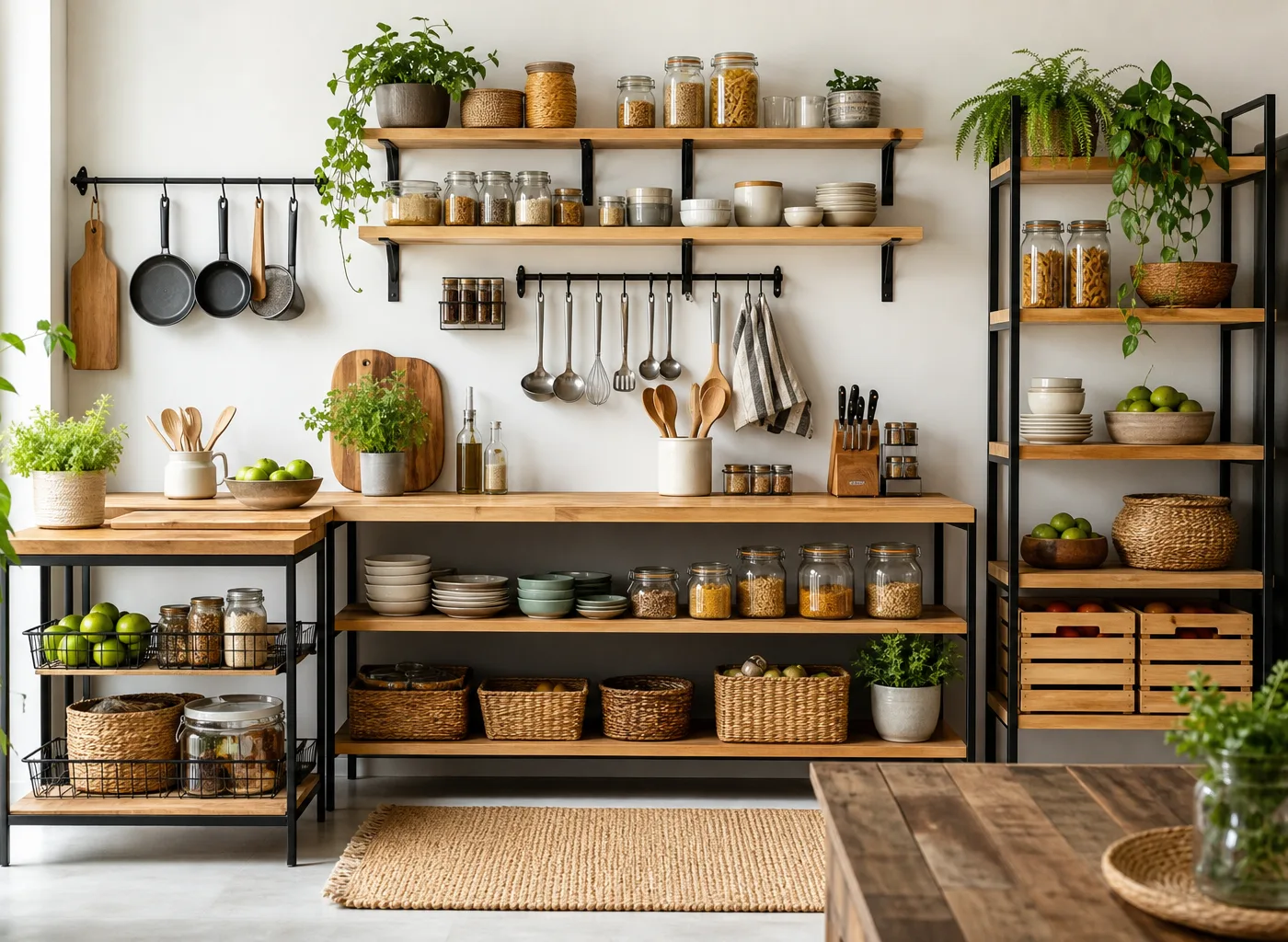
A kitchen without cabinets can feel limiting at first, whether you are working with an older apartment, a tiny home, a rental, or a deliberately open-concept design. But cabinets are only one way to store everyday essentials. With a thoughtful mix of open shelving, freestanding furniture, vertical organizers, and portable pieces, you can create a kitchen that is both highly functional and welcoming.
The key is to give every category a home without turning the room into a crowded display. Keep frequently used items within easy reach, reserve enclosed storage for visual clutter, and use wall and floor space strategically. These kitchen storage ideas without cabinets can help you build a setup that works for your routine, budget, and available square footage.
Start With a Simple Storage Plan
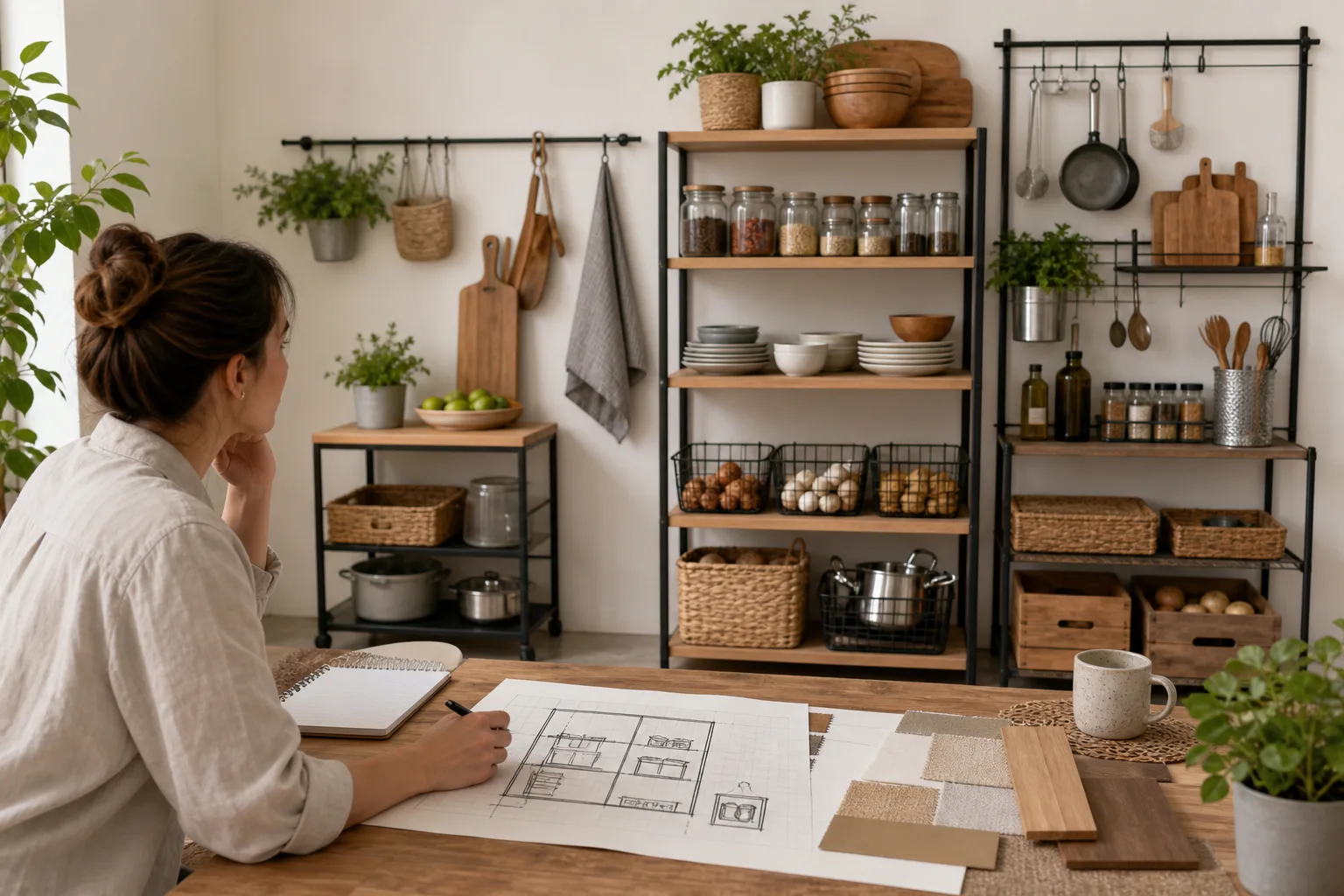
Before buying bins or shelves, take stock of what you actually need to store. Group items into daily-use cookware, dishes, dry goods, small appliances, linens, cleaning supplies, and occasional entertaining pieces. This makes it easier to decide which items deserve open access and which should be tucked away.
Measure your empty walls, the space below a table or island, and any narrow gaps beside the refrigerator or stove. In a small kitchen, a slim 6-inch gap can become a pull-out pantry, while one sturdy wall can hold shelves, rails, and hooks. Focus on clear pathways first; storage should make cooking easier, not make the kitchen harder to move through.
1. Install Open Shelves for Everyday Essentials
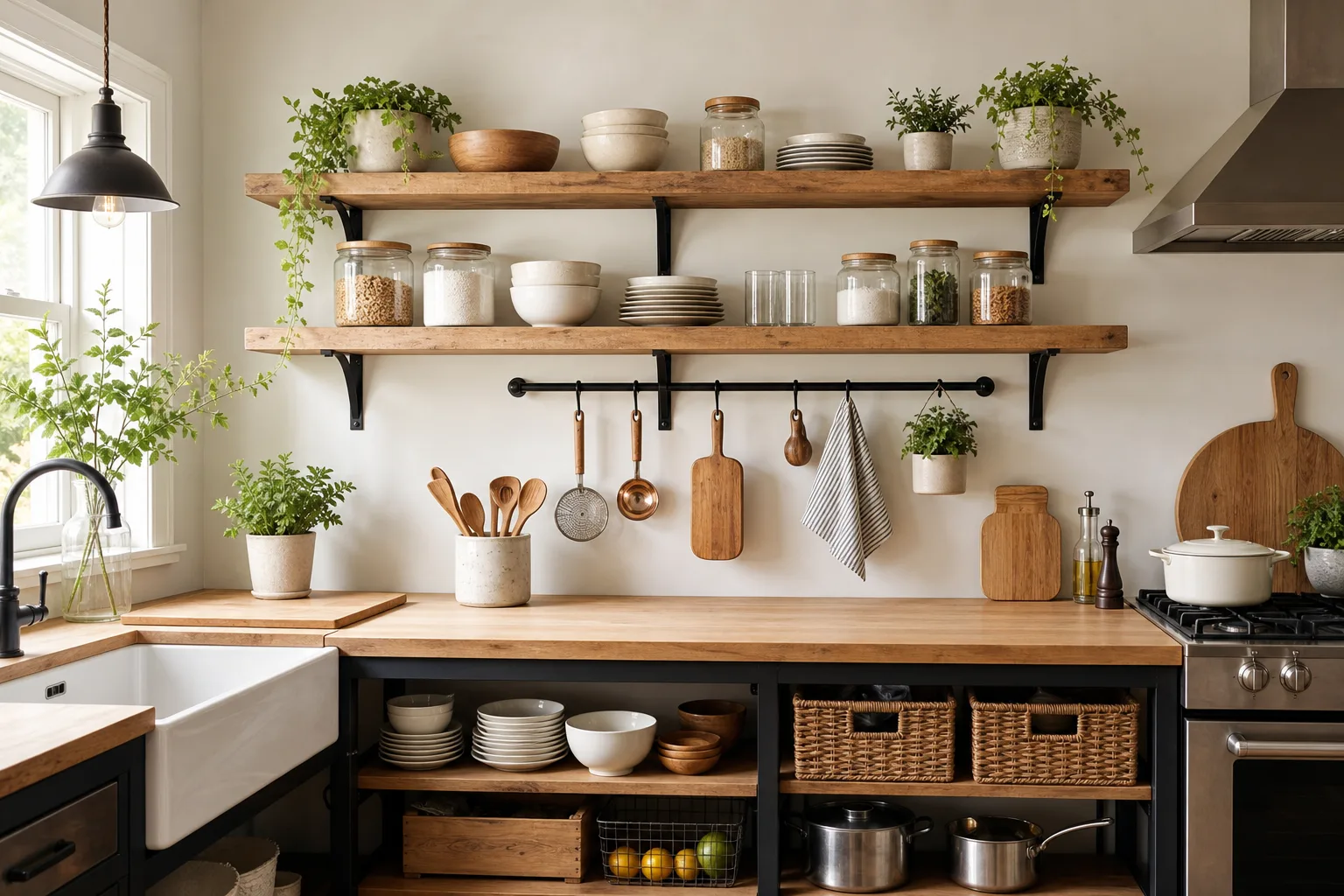
Open shelves are one of the most versatile alternatives to upper cabinets. Mount two or three solid shelves on an open wall and use them for plates, bowls, glasses, mugs, and a few pantry staples. Keeping daily dishes visible can even simplify unloading the dishwasher and setting the table.
For a calmer look, use matching dishware and limit each shelf to a few categories. Place heavier items on lower shelves and lighter objects up high. If drilling is not an option, see these renter-friendly kitchen storage ideas without drilling for removable alternatives.
2. Use a Freestanding Pantry Cabinet or Cupboard
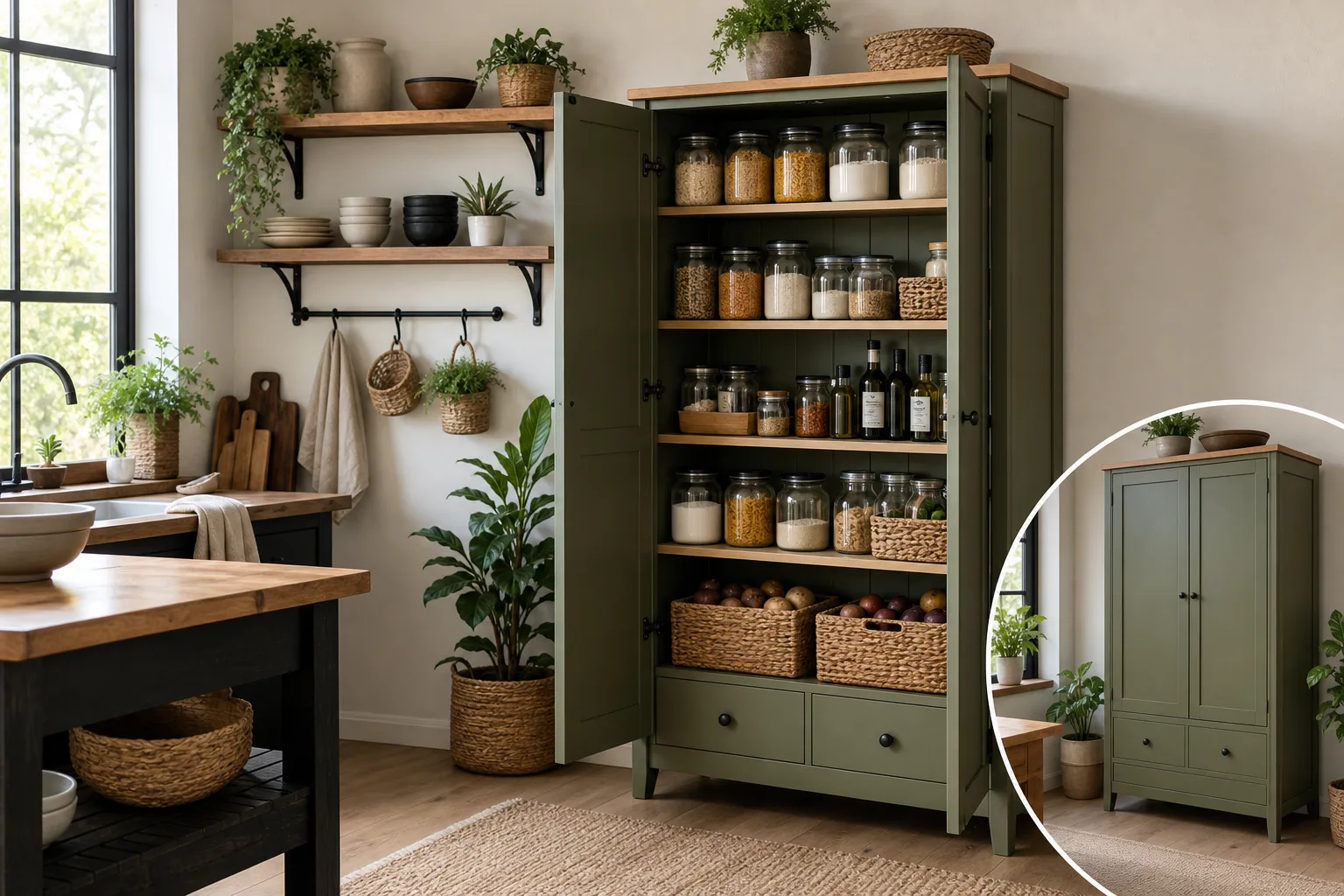
A freestanding pantry gives you the enclosed storage of traditional cabinetry without a built-in renovation. Choose a tall, shallow unit for dry goods, snacks, paper products, and less attractive packaging. A cabinet with adjustable shelves will adapt as your needs change.
For a small room, select a piece that is tall rather than wide, ideally 12 to 18 inches deep. Secure tall furniture to the wall according to the manufacturer’s instructions, especially in homes with children or pets. Doors are particularly helpful when you want visual quiet in an open kitchen.
3. Add a Rolling Kitchen Cart
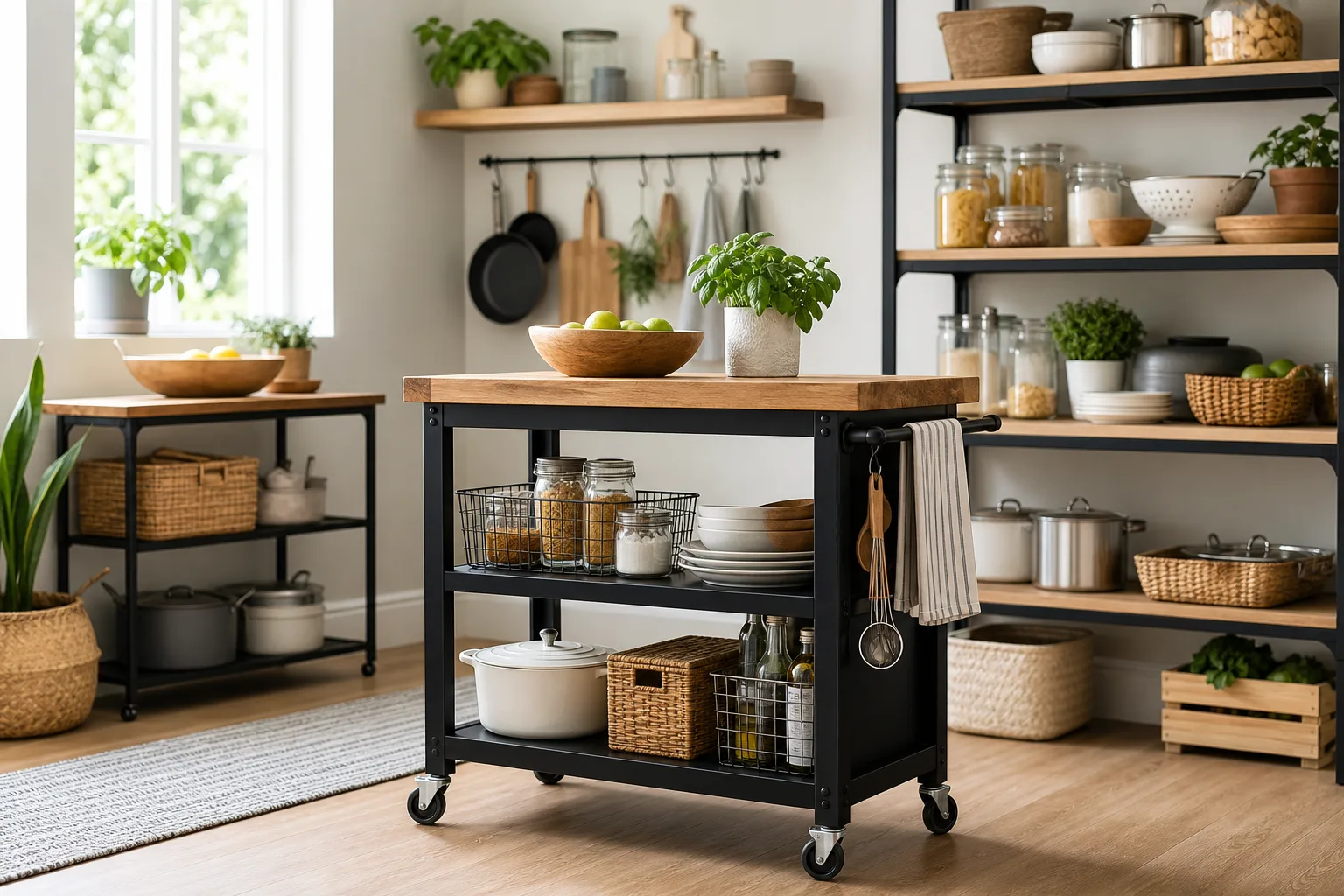
A rolling cart is a hardworking storage solution because it can move wherever you need it. Use one as a coffee station, produce stand, baking center, or prep surface. Models with drawers, shelves, and towel bars provide several functions in a compact footprint.
Keep the top relatively clear so it remains usable as a work surface. If the cart lives near the stove, stock it with oils, spices, utensils, and pans. When guests arrive, roll it aside or use it as a serving station.
4. Turn a Bookcase Into Open Pantry Storage
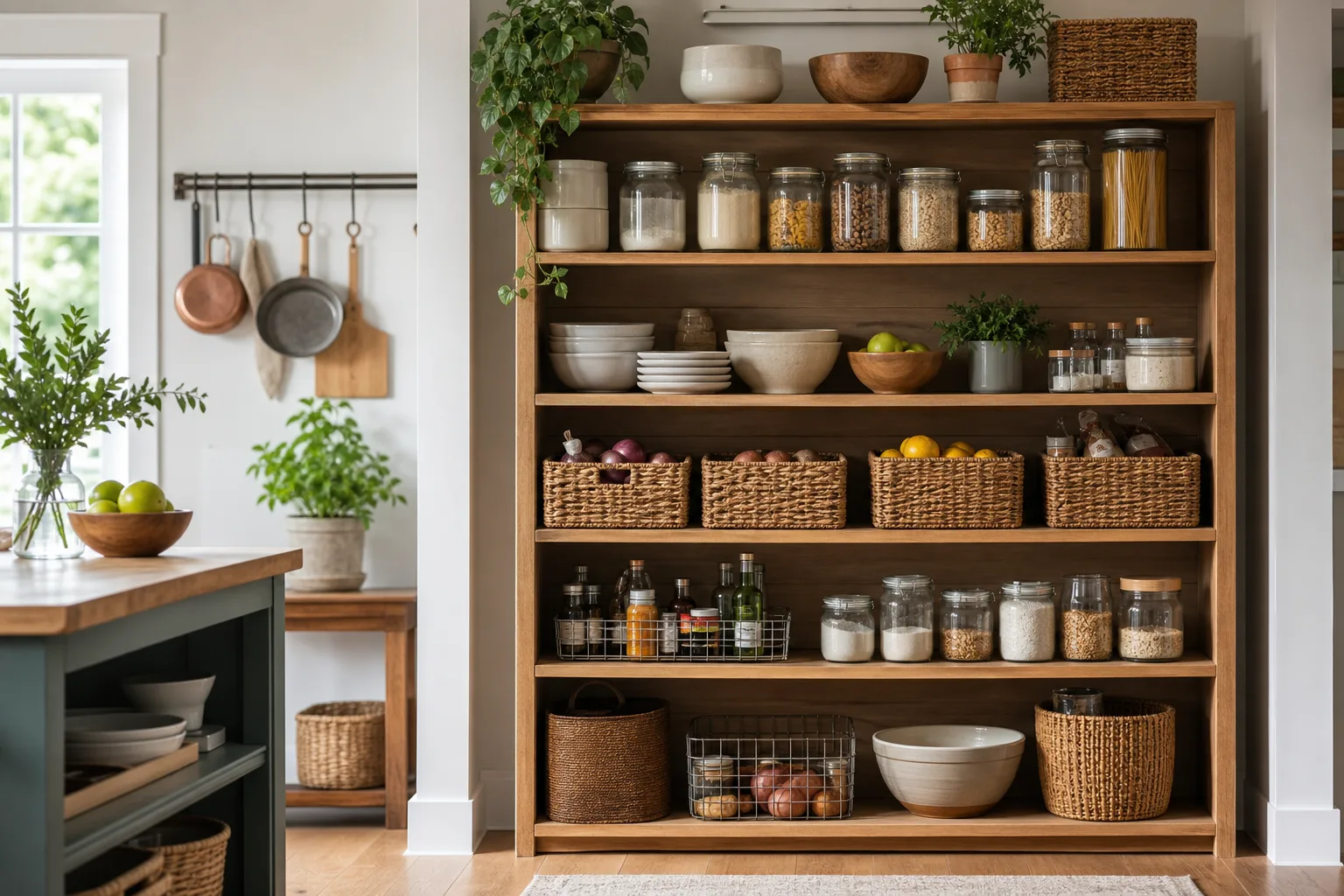
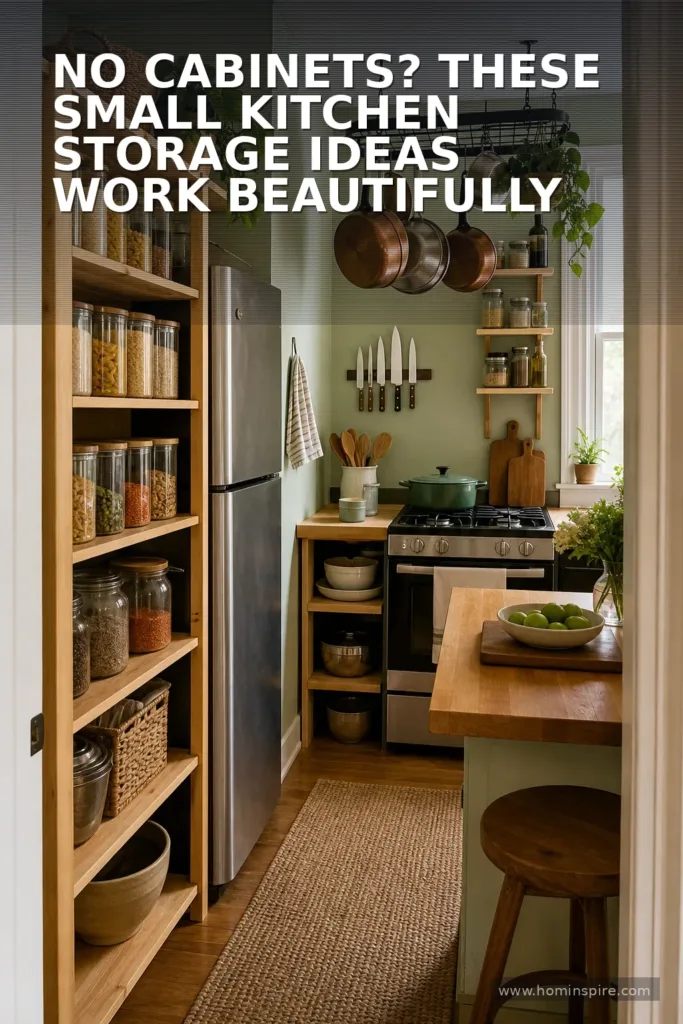
A simple bookcase can become a surprisingly polished pantry. Choose a sturdy unit with adjustable shelves, then add matching baskets, clear containers, and labels. Store heavier jars and small appliances on lower shelves, while lighter snacks and backup goods can sit higher up.
This approach works especially well in a dining nook or on a blank wall near the kitchen. Use baskets to hide packets, foil boxes, and other irregular items. For more ways to make compact rooms work harder, explore small kitchen ideas for apartments.
5. Make Use of a Pegboard Wall
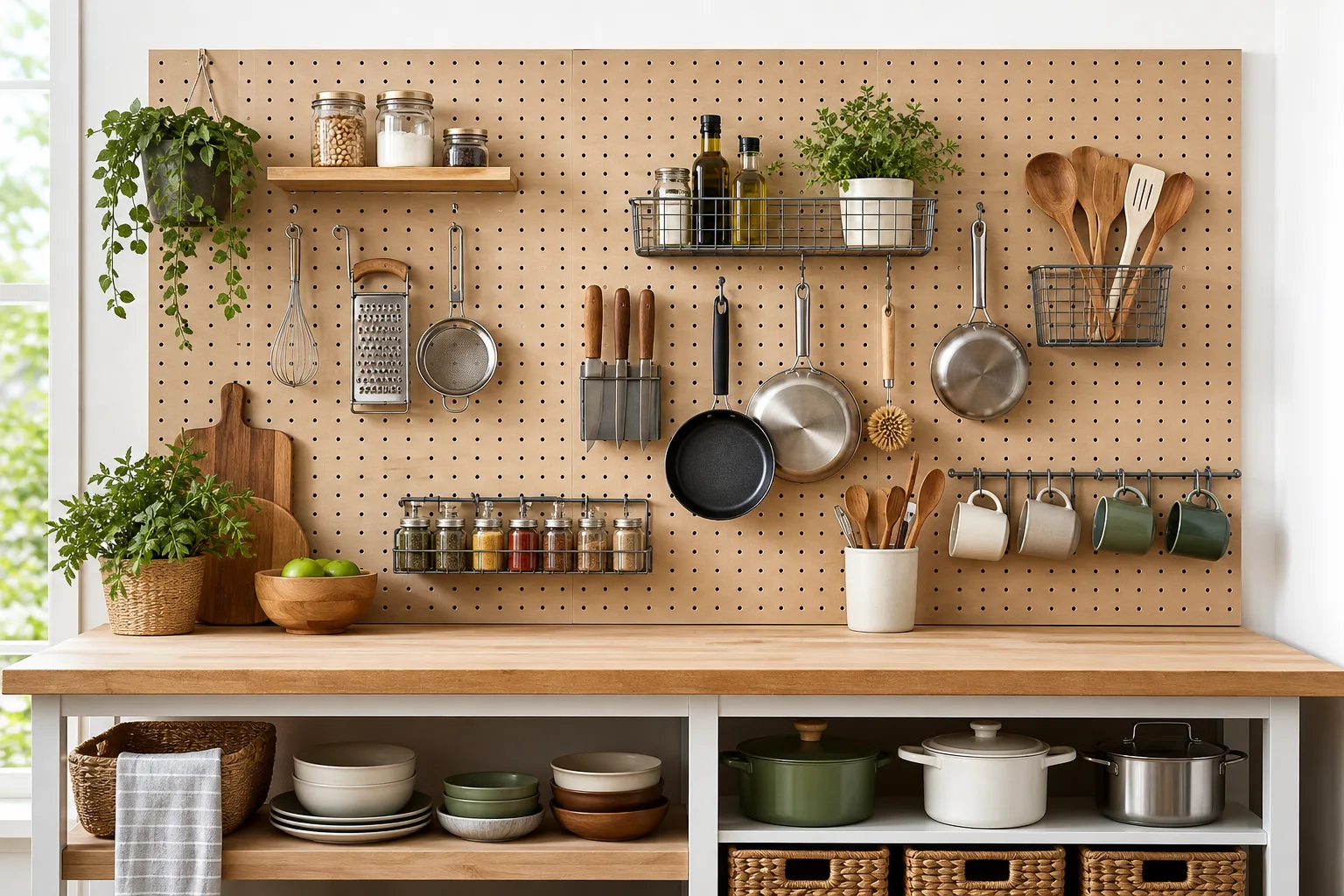
A pegboard transforms unused wall space into flexible storage. Add hooks for frying pans, cutting boards, measuring cups, whisks, and oven mitts. Small pegboard shelves can hold spices, canisters, or a compact plant.
Unlike fixed shelving, a pegboard can be rearranged as your cooking habits change. Keep it curated rather than overcrowded: display your most-used tools and store duplicates elsewhere. Paint the board in a wall color for a subtle effect, or choose a contrasting shade to create a practical focal point.
6. Hang Pots and Pans From a Wall Rail
A wall-mounted rail with S-hooks keeps cookware accessible and frees up valuable floor storage. Install it where pans will not interfere with a walkway, usually along a backsplash wall or side wall. Use sturdy hooks rated for the weight of cast iron or heavier cookware.
Hang only your best and most frequently used pieces. A coordinated set of pans can look intentional, while an overloaded rail quickly appears messy. Add a second rail for cooking utensils, towels, and small colanders.
7. Create a Magnetic Knife and Spice Zone
Magnetic strips are ideal for knives, metal utensils, and small spice tins. A knife strip clears counter space and keeps sharp blades safer than a loose drawer arrangement. Place it out of the reach of children and away from busy traffic zones.
Magnetic spice tins can also fit neatly on the side of a refrigerator or another metal surface. Label the tops clearly and keep the collection limited to spices you use often. This is a smart way to reclaim a tiny amount of wall space without adding another shelf.
8. Use the Side of the Refrigerator
The side of a refrigerator is often overlooked, especially when it faces a wall or sits at the end of a cabinet run. Magnetic organizers can hold spices, paper towels, notes, or lightweight kitchen tools. A narrow rolling unit beside the refrigerator can also serve as a pull-out pantry for canned goods and bottles.
Measure carefully before purchasing a slim organizer. You need enough clearance for airflow and appliance access. Avoid blocking vents or placing heat-sensitive items too close to the back of the refrigerator.
9. Add a Slim Rolling Pantry
When your kitchen has a narrow unused gap, a slim rolling pantry can hold a surprising amount. Look for a model with raised sides to contain bottles, jars, and cans. Group items by use, such as breakfast supplies, baking ingredients, or cooking oils.
This option is best for lightweight to medium-weight items. Pull it out fully when cooking, then slide it back into place. It is one of the simplest ways to add capacity without permanently changing the room.
10. Use Baskets to Corral Visual Clutter
Baskets make open storage feel orderly. They can hold snack packets, tea bags, reusable containers, dish towels, and cleaning supplies while softening the look of metal shelving or bookcases. Choose bins that fit your shelves closely so no space is wasted.
Use labels on the front, particularly if several people share the kitchen. Woven baskets create warmth, while wire baskets offer visibility and airflow for produce. Reserve opaque bins for packaging and miscellaneous items that would otherwise look busy.
11. Store Produce in Stackable Crates or Bins
Countertop fruit bowls are useful, but they can consume prep space quickly. Instead, stack ventilated crates or wire bins on a cart, shelf, or floor stand. Keep onions, potatoes, and garlic in a cool, dark, well-ventilated spot, separate from apples and other ethylene-producing fruit when possible.
Choose bins that make it easy to see what you have. This reduces forgotten produce and food waste. Wash produce only when you are ready to use it unless the packaging instructions say otherwise.
12. Put a Storage Bench in the Dining Area
If your kitchen includes a breakfast nook or small dining area, a storage bench can quietly hold linens, serving pieces, seasonal decor, or bulk pantry items. A lift-top bench offers concealed space, while cubby-style benches work well with labeled baskets.
This strategy moves low-frequency items out of your cooking zone without sending them far away. It is especially useful in apartments where every piece of furniture needs to earn its place.
13. Choose a Worktable With Shelves or Drawers
A kitchen worktable provides prep space and storage at the same time. Look for a stainless steel table with lower shelves for a restaurant-inspired setup, or choose a wood island with drawers for a warmer, furniture-like appearance. Use the bottom shelf for mixing bowls, large pots, or appliance storage.
Leave enough clearance around the table for doors, drawers, and people to pass. In a narrow kitchen, a folding drop-leaf table can offer work space only when you need it.
14. Build Storage Under a Portable Island
A portable island can take the place of base cabinets in a kitchen with an open layout. Use open cubbies for bowls and cookbooks, drawers for utensils, and baskets for pantry goods. Adding locking casters gives you the flexibility to move it for cleaning or entertaining.
For the most useful setup, place the island close to the main prep area but not directly in the cooking path. A butcher-block top can double as a cutting surface, while a stone or laminate top may be easier to maintain for general prep.
15. Use Over-the-Door Organizers
Pantry, utility, and nearby closet doors can provide extra storage without consuming wall or floor space. Over-the-door racks are useful for spices, wraps, cleaning products, snacks, and water bottles. Choose a model that fits the door depth and allows it to close properly.
Keep heavier bottles on lower levels and lighter items higher up. If your kitchen has no pantry door, consider a nearby laundry or hall closet for overflow supplies that do not need to be in the immediate cooking zone.
16. Hang a Ceiling Pot Rack Carefully
A ceiling-mounted pot rack can be beautiful and practical in a kitchen with adequate ceiling height. It keeps bulky cookware out of the way while adding a classic, collected look. However, it must be installed into structural support and should not hang too low over a walkway or work surface.
Use it only if you have the right location and a manageable number of pots. In many small kitchens, a wall rail is simpler, less visually heavy, and easier to install safely.
17. Add Shelf Risers and Under-Shelf Baskets
Open shelves can waste vertical space when dishes or mugs are stacked too high. Shelf risers create an extra level for plates, bowls, and cups. Under-shelf baskets slide onto an existing shelf and are useful for napkins, wraps, tea towels, or lightweight pantry goods.
These small additions are inexpensive but effective. Measure shelf thickness and depth before buying to ensure the organizers fit securely and do not crowd items below them.
18. Create a Coffee or Breakfast Station
Consolidating one routine into a dedicated station prevents supplies from spreading across the kitchen. Place your coffee maker, mugs, beans, filters, tea, and sweeteners on a cart, bookcase shelf, or small table. For breakfast, use bins for cereal, oatmeal, lunch boxes, and grab-and-go snacks.
A station reduces traffic around the main prep area, which is helpful in shared households. Use a tray to visually group the items and make cleaning easier. You can find more practical styling guidance in these kitchen counter decor ideas without clutter.
19. Use Attractive Canisters for Dry Goods
Clear, airtight canisters make open pantry storage look more deliberate while protecting staples such as flour, rice, pasta, oats, and beans. Square containers typically use shelf space more efficiently than round ones. Label each canister with its contents and, if helpful, a purchase or refill date.
Do not decant everything simply for looks. Keep products in original packaging when cooking instructions, expiration dates, or allergen information are important. Decant the staples you buy regularly and can identify easily.
20. Store Cleaning Supplies on a Mobile Caddy
Without a sink cabinet, cleaning supplies need a portable home. A handled caddy can hold dish soap, sponges, brushes, gloves, and all-purpose cleaner. Store it on a low shelf, a utility cart, or in a nearby closet, and bring it out when needed.
Keep cleaning chemicals away from food and food-prep surfaces. If children or pets are present, choose a secured location and follow all product safety instructions.
21. Use a Tension Rod for Towels and Spray Bottles
A tension rod can create instant storage inside a freestanding cabinet, beneath a worktable, or between two secure surfaces. Hang spray bottles by their triggers, or use S-hooks for dish towels and scrub brushes. It is an inexpensive solution for keeping wet items off counters.
Make sure the rod is rated for the load and placed where drips will not damage flooring or stored food. This idea is particularly useful in rentals because it can often be removed without marks.
22. Add a Ladder Shelf for Vertical Storage
A ladder shelf leans against the wall and provides gradual, open storage with a smaller visual footprint than a bulky bookcase. Use lower shelves for baskets and appliances, middle levels for dishes or pantry jars, and top shelves for rarely used pieces.
Anchor the unit if recommended by the manufacturer. To avoid a cluttered appearance, leave some breathing room on each level and repeat a few materials, such as wood bins, white ceramics, or clear glass jars.
23. Hide Overflow Storage Nearby
Not every kitchen item needs to live in the kitchen. Move entertaining platters, holiday baking supplies, bulk paper goods, and duplicate appliances to a dining room credenza, hall closet, or nearby utility area. This protects your prime kitchen storage for items used every week.
If you want concealed storage that blends into your home, these hidden pantry ideas offer inspiration for discreet solutions. The goal is not to keep everything within arm’s reach; it is to keep the everyday kitchen easy to use.
24. Edit Regularly to Keep Open Storage Functional
The best cabinet-free storage system is one you can maintain. Once a month, check for expired food, duplicate gadgets, chipped dishware, and items that have migrated to the wrong place. Open storage makes excess visible, which can be an advantage when you use it as a prompt to simplify.
Try the one-in, one-out rule for mugs, small appliances, and storage containers. Keep counters primarily for prep, not permanent storage. For more compact-space planning, read these small kitchen design ideas on a budget.
How to Make Cabinet-Free Storage Look Intentional
Open storage works best when it combines function with restraint. Repeat two or three materials across the room, such as natural wood, black metal, and clear glass. Use matching hangers, bins, or labels where possible. Put visually appealing and frequently used items on display, while using doors, baskets, or opaque containers for the rest.
Also protect your counter space. Even a well-organized kitchen can feel cramped if every appliance and pantry item is left out. A tray can define a small coffee setup, but keep the central work area free for chopping, mixing, and serving. If your kitchen needs a broader refresh, consider these budget kitchen makeover ideas for high-impact changes that do not require a full remodel.
FAQ: Kitchen Storage Ideas Without Cabinets
How can I organize a kitchen with no cabinets?
Combine open shelves for everyday dishes, a freestanding pantry for enclosed storage, a rolling cart for flexible prep and supplies, and wall-mounted rails or pegboards for tools. Keep frequently used items close to the work zone and move overflow items to a nearby closet or dining-area storage piece.
What can I use instead of kitchen cabinets?
Useful alternatives include open wall shelves, bookcases, freestanding pantry cupboards, kitchen islands, worktables, rolling carts, ladder shelves, storage benches, pegboards, and over-the-door organizers. The best combination depends on your floor plan and whether you need concealed storage.
How do I store dishes without upper cabinets?
Store daily dishes on sturdy open shelves, in a freestanding hutch or cupboard, or on a lower shelf of a kitchen island. Keep heavy plates and bowls between waist and shoulder height when possible, and use shelf risers to maximize vertical space.
Are open shelves practical in a kitchen?
Yes, open shelves are practical for items you use frequently, such as plates, glasses, bowls, and mugs. They require regular wiping because they collect dust and grease more easily than enclosed cabinets. Limit what you display and use baskets or a pantry cabinet for less attractive items.
How can renters add kitchen storage without drilling?
Renters can use rolling carts, freestanding shelves, over-the-door racks, tension rods, countertop organizers, magnetic refrigerator storage, and removable adhesive hooks designed for appropriate lightweight items. Always check lease rules and product weight limits before installing anything.
How do I keep a kitchen without cabinets from looking cluttered?
Use a limited color palette, matching containers, labeled baskets, and intentional spacing on open shelves. Display only useful, attractive items, contain packaging in bins, and keep counters clear except for a few daily-use essentials. Regular editing is essential in a cabinet-free kitchen.
