
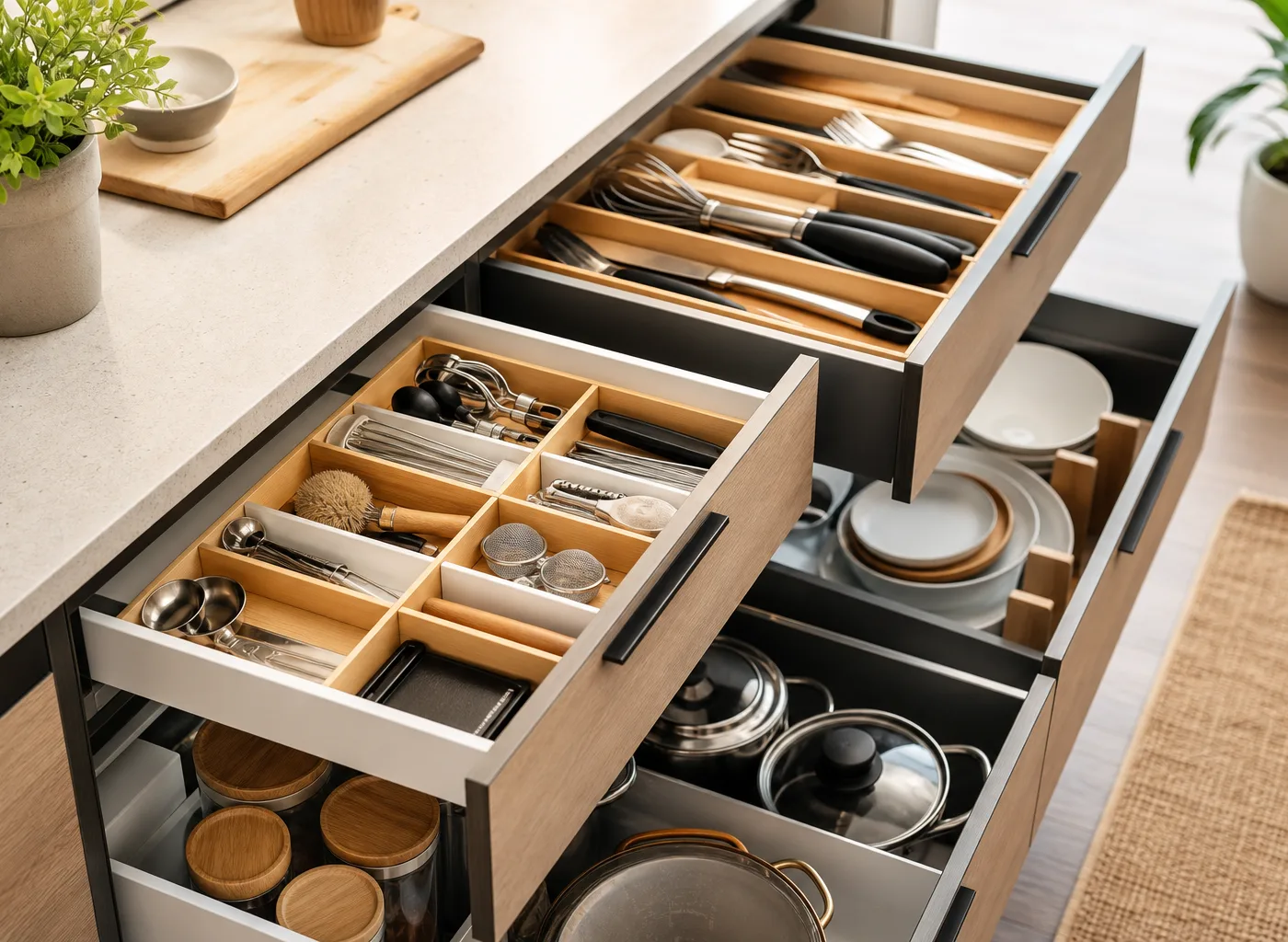
Kitchen drawers can become cluttered surprisingly fast. A few loose utensils, extra gadgets, takeout menus, and mismatched storage lids are often all it takes to turn useful storage into a daily frustration. The good news is that effective drawer organization does not require a complete kitchen remodel or expensive custom cabinetry. A few thoughtful systems can make every drawer easier to use, clean, and maintain.
These kitchen drawer organization ideas are designed for real homes, whether you have a compact apartment kitchen, a busy family kitchen, or a large space with deep drawers. The goal is simple: give every item a logical home, keep frequently used tools within reach, and avoid storing more than your drawers can realistically handle.
1. Empty Each Drawer Before You Organize It
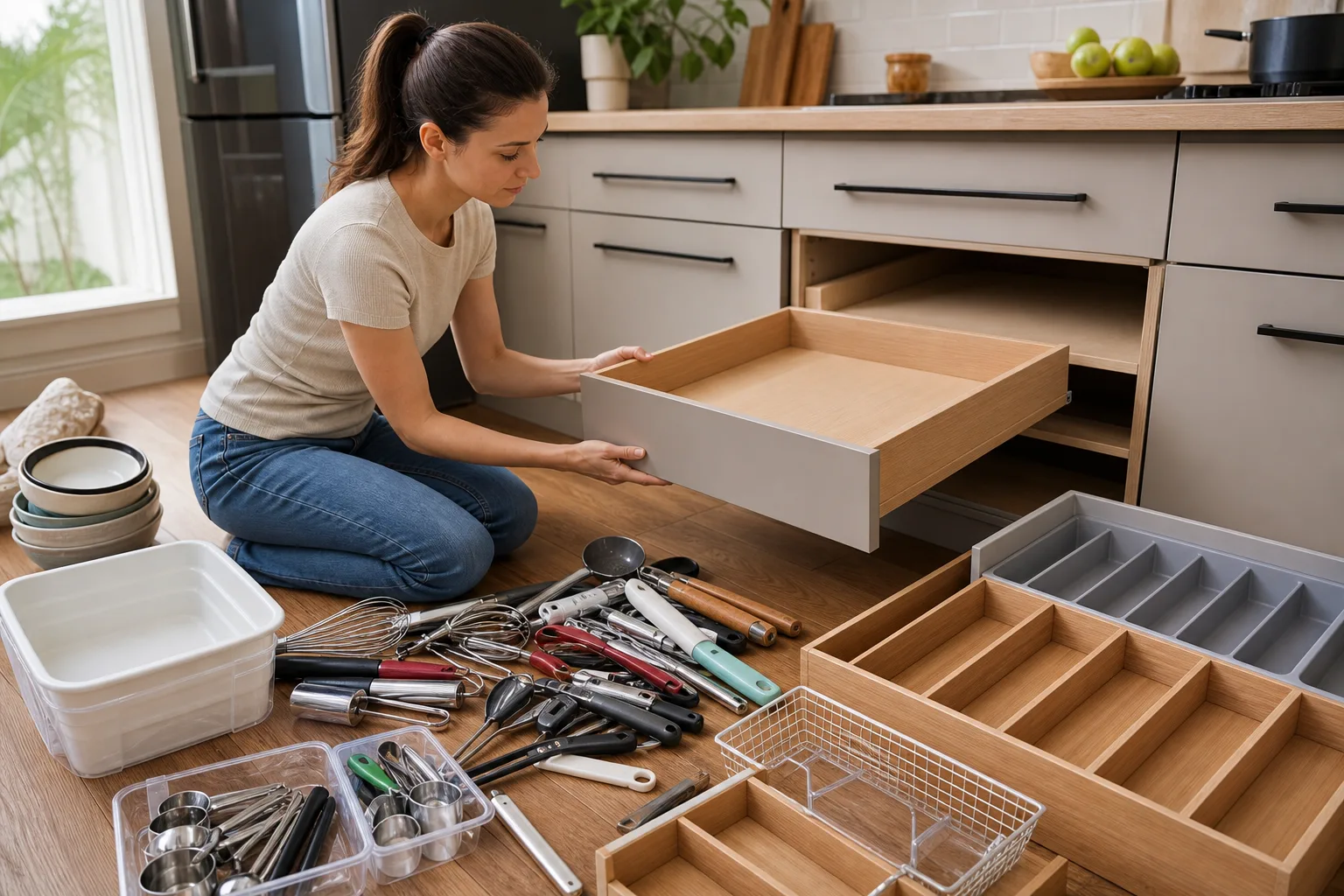
The most effective way to organize a kitchen drawer is to start with a completely blank space. Remove everything, wipe down the interior, and sort items into groups. You may find duplicate peelers, expired coupons, broken tools, or utensils you have not used in years.
As you sort, make quick decisions: keep, donate, relocate, recycle, or discard. Avoid trying to organize items that do not belong in the kitchen. Pens, batteries, random screws, and unopened mail can easily migrate to drawers, but they create visual clutter and make useful items harder to find.
Measure the inside width, depth, and height of the empty drawer before buying organizers. Drawer dimensions vary, and a tray that looks perfect online may waste valuable space if it does not fit properly.
2. Create Zones Based on How You Cook
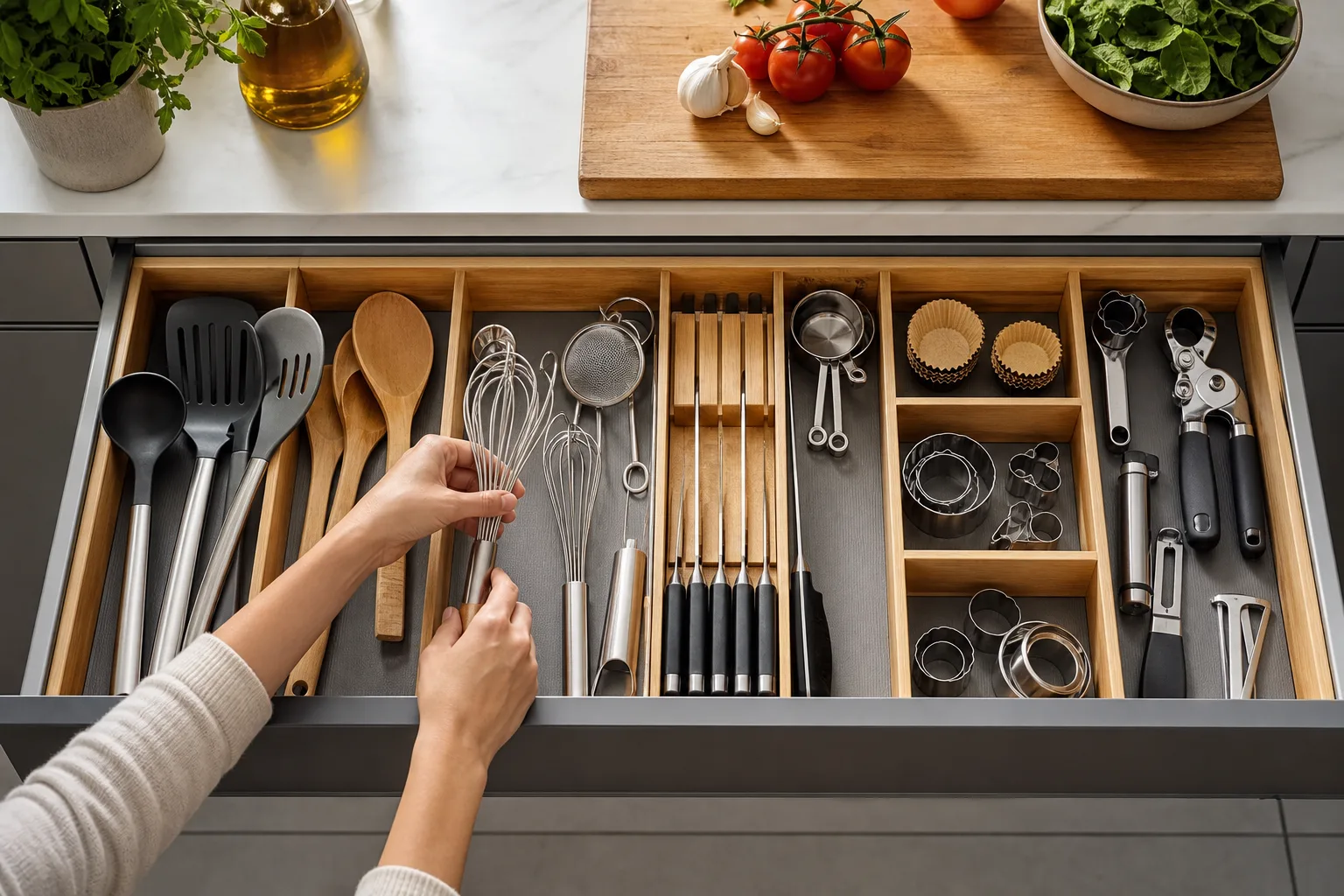
Organize drawers according to the tasks you perform, not simply according to what fits. A cooking zone near the stove might hold spatulas, tongs, whisks, oven mitts, and instant-read thermometers. A prep zone near your main counter can hold knives, measuring tools, peelers, and cutting accessories.
Place eating utensils close to the dishwasher or dining area to make unloading and setting the table faster. Store food wraps, snack bags, and container lids near the refrigerator or food-storage area. This approach reduces unnecessary walking and helps the kitchen feel more intuitive.
If your kitchen is tight on storage, pair drawer zones with other space-saving strategies from these tiny apartment kitchen ideas. Small adjustments in placement can make even a limited layout work harder.
3. Use Adjustable Drawer Dividers for Flexible Storage
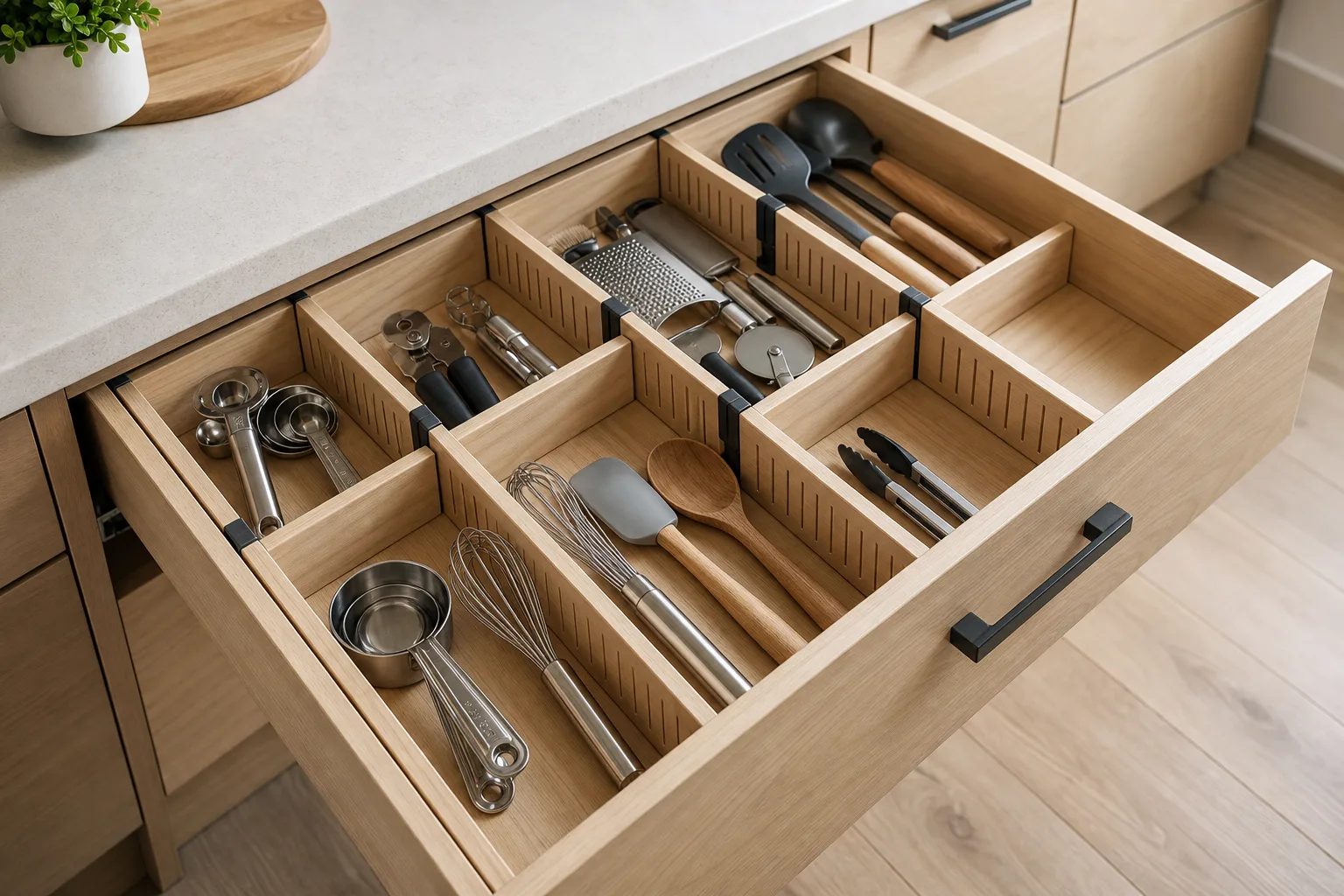
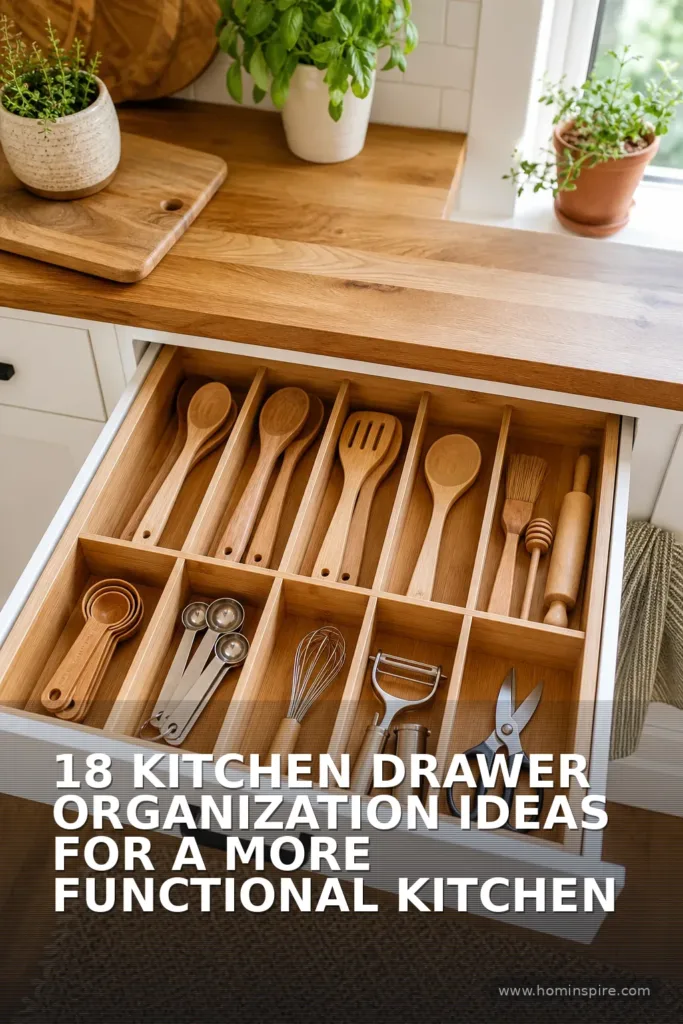
Adjustable dividers are one of the most versatile kitchen drawer organization ideas because they can change as your needs change. Use spring-loaded bamboo dividers, expandable plastic organizers, or DIY wood strips to create custom sections for utensils, tools, and odd-shaped items.
Dividers are especially helpful in wide drawers where items tend to slide into a pile. They create boundaries without forcing you into a fixed compartment size. For a polished look, choose dividers in a finish that complements your cabinets, such as natural bamboo, white plastic, or clear acrylic.
For best results, use non-slip drawer liner underneath. It keeps dividers in place and prevents the organizer from shifting every time the drawer opens.
4. Upgrade the Everyday Utensil Drawer
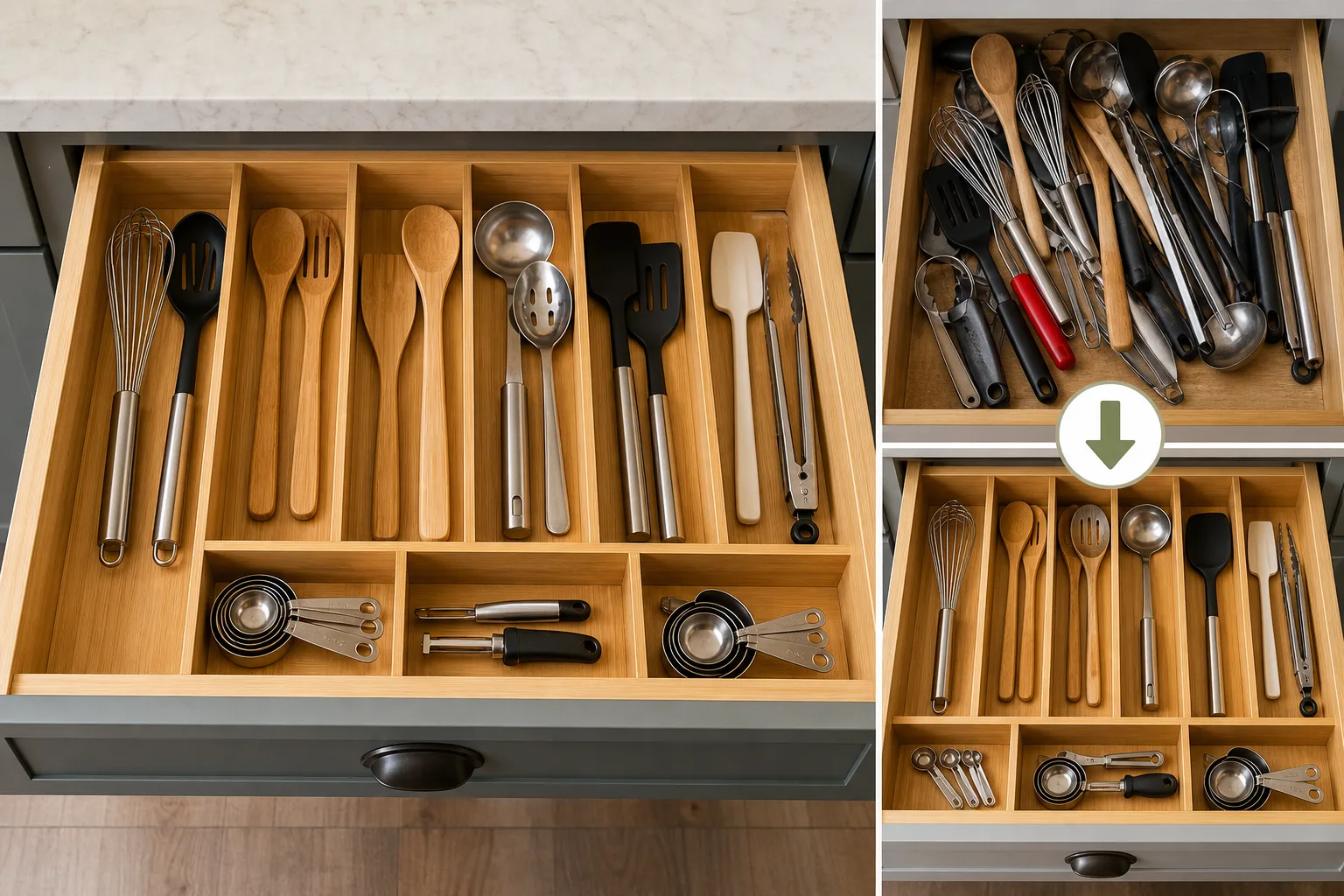
Your utensil drawer should hold only the flatware and serving pieces you use regularly. Start with a compartmentalized tray sized for forks, knives, spoons, teaspoons, and serving utensils. If the drawer is wide, add a narrow section for chopsticks, reusable straws, small spreaders, or kids’ utensils.
Keep daily flatware toward the front or in the most accessible area. Move specialty serving forks, steak knives, and holiday pieces to a separate drawer or a dining-room storage spot. A crowded utensil tray slows down daily routines and makes it harder to see when the dishwasher needs unloading.
Consider using a diagonal drawer organizer if standard straight compartments do not fit your utensils. Diagonal layouts often accommodate longer pieces while using drawer depth more efficiently.
5. Organize Cooking Tools by Length and Function
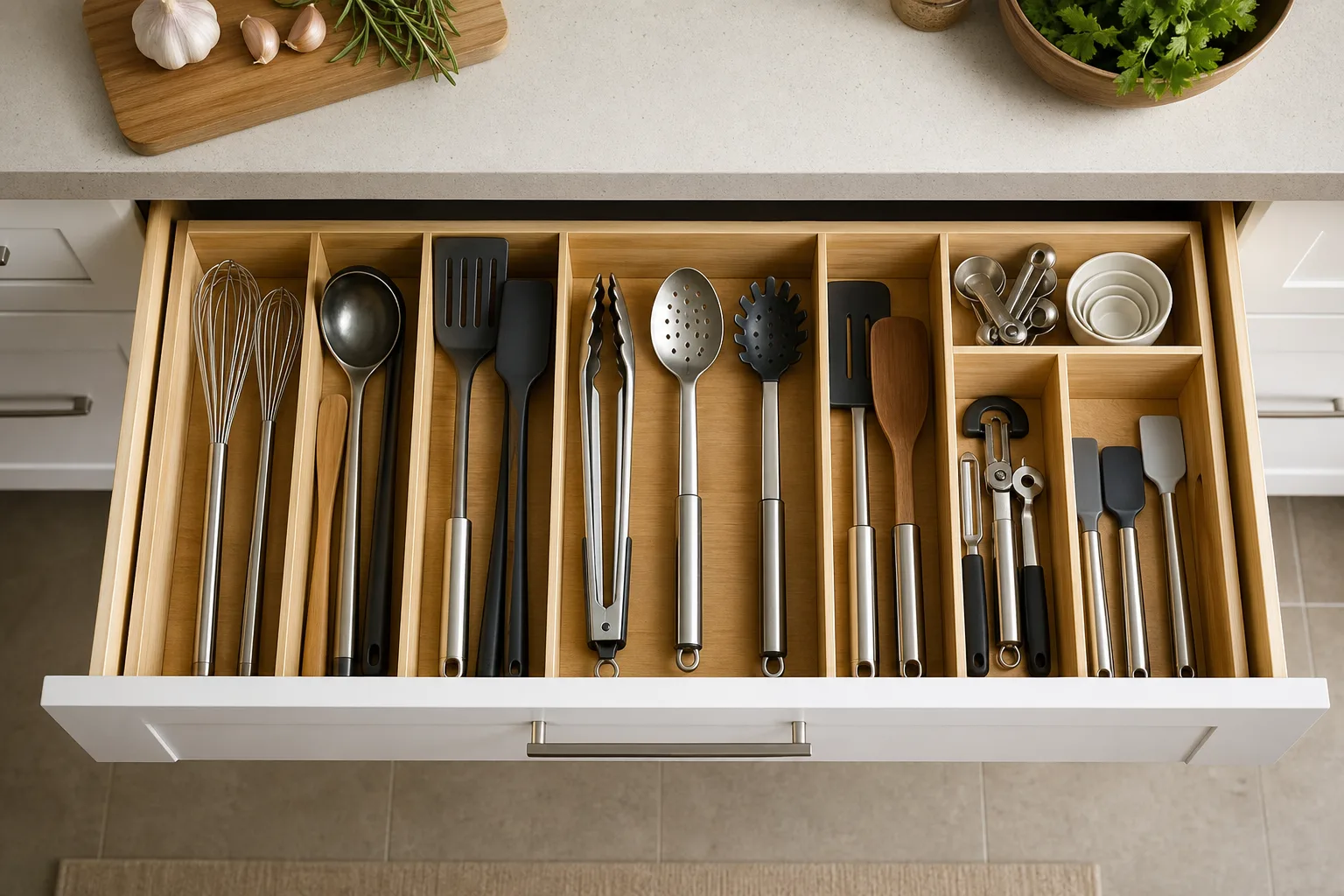
Cooking utensils are easier to grab when grouped by purpose. Keep spatulas, turners, and wooden spoons together. Group tongs, whisks, ladles, and slotted spoons in adjacent sections. Store delicate silicone tools separately from sharp metal tools that can damage them.
A deep drawer near the range is ideal for this category. Use long organizers or adjustable dividers to stop tools from overlapping. If you have a narrow drawer, consider storing only your core tools there and placing rarely used items, such as fondue forks or specialty baking tools, elsewhere.
Do not forget heat protection. A shallow compartment for pot holders, trivets, and oven mitts near the stove can be more convenient than hanging them on the wall or cramming them into a cabinet.
6. Give Knives a Safer Drawer System
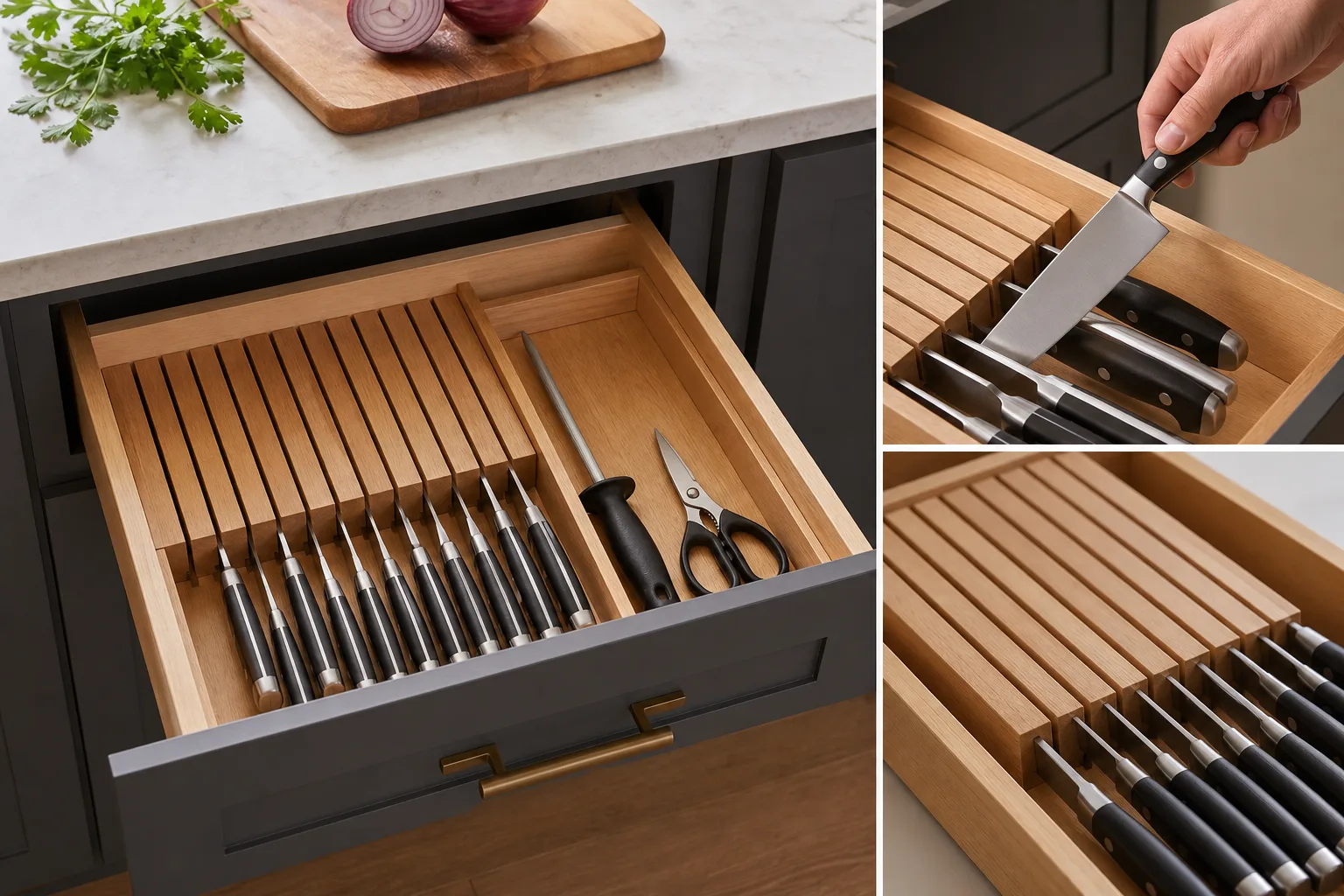
Loose knives are unsafe and can dull quickly when they slide against other utensils. A dedicated in-drawer knife block is a practical solution, especially if you prefer clear countertops. Choose a model that fits the number and style of knives you actually own, including a space for a sharpening steel if needed.
For a more flexible option, use a cork-lined drawer with knife guards. This works well for households with a mix of chef’s knives, paring knives, bread knives, and specialty blades. Always keep the blade edges protected and positioned away from the drawer opening.
If you are trying to reduce visible counter clutter, an organized knife drawer complements solutions such as these small kitchen appliance garage ideas. Together, they create a cleaner work surface without sacrificing convenience.
7. Turn a Deep Drawer Into a Pot and Pan Station
Deep drawers are often better for pots, pans, lids, and bakeware than lower cabinets. They pull out fully, so you can see what you own without kneeling and digging through stacked cookware. Store pans upright with a vertical rack, or nest them carefully with protective liners between surfaces.
Use a separate divider for lids whenever possible. Lids are awkward to stack and often create the biggest source of cookware clutter. A vertical lid holder keeps them upright, visible, and easy to grab. Place heavier Dutch ovens and stockpots near the bottom of the drawer, and make sure your drawer hardware is rated to support the weight.
Keep this drawer close to the stove. The shorter the path between cookware and the cooktop, the more smoothly meal prep tends to go.
8. Store Food Container Lids Vertically
Food-storage containers are useful, but their lids can take over an entire drawer. Instead of stacking lids in a messy pile, store them vertically in a rack, file organizer, or adjustable divider system. Sort them by shape or size so matching a lid to a container takes seconds.
Use another section of the drawer for containers nested by size. Keep only containers with matching lids, and let go of warped, stained, or incomplete pieces. This small edit can free up a surprising amount of room.
For families, it can help to create a separate section for lunch containers, reusable snack bags, and water bottle parts. That keeps morning packing routines from disrupting the rest of the kitchen.
9. Make a Dedicated Wrap and Bag Drawer
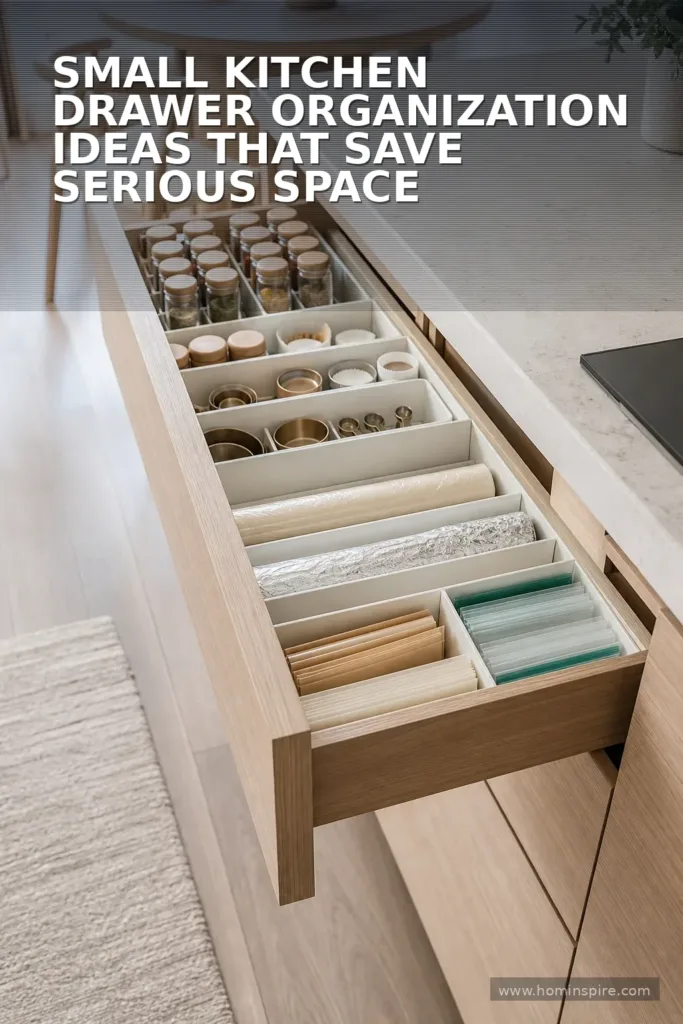
Plastic wrap, foil, parchment paper, freezer bags, and trash bags are much easier to manage when they have a dedicated drawer. A deep drawer near the prep area works well. Arrange boxed wraps side by side, with the labels facing up, and use dividers to keep them from shifting.
For bags, use labeled bins or a bag dispenser. You can sort by sandwich, quart, gallon, and freezer sizes. If you buy bulk packages, refill a smaller dispenser and store the extra boxes in a pantry or utility area.
Add a small pair of kitchen scissors or a safety cutter to the drawer if it is used mainly for packaging. Just make sure it is stored in a defined compartment rather than loose among the wraps.
10. Use Shallow Drawers for Measuring and Baking Tools
Baking tools often disappear into overcrowded drawers because they come in many small pieces. Dedicate a shallow drawer to measuring cups, measuring spoons, cookie cutters, piping tips, bench scrapers, pastry brushes, and small decorating supplies.
Keep measuring sets nested together, but separate different types with small bins. For example, place dry measuring cups in one bin and liquid measuring cups in another. Use a small lidded container for tiny items like decorating tips, food-coloring bottles, and replacement mixer attachments.
If baking is a frequent activity in your home, create a full baking zone near the mixer, flour, and mixing bowls. A well-defined zone reduces setup time and makes cleanup easier after weekend projects.
11. Add a Spice Drawer Near the Cooking Area
A spice drawer can be more convenient than a high cabinet shelf, particularly when it is located near the stove. Use angled drawer inserts so labels face upward and every jar is visible. Arrange spices alphabetically, by cuisine, or by frequency of use.
Keep your everyday seasonings, such as salt, pepper, garlic powder, paprika, and Italian seasoning, closest to the front. Place less frequently used spices farther back. Check dates once or twice a year, and replace spices that have lost their aroma or flavor.
If you do not have an available drawer, a slim pullout or cabinet organizer can create a similar system. The key is visibility: you are less likely to buy duplicates when you can see what you already have.
12. Create a Coffee and Tea Supply Drawer
A coffee drawer can make mornings feel much more organized. Store coffee pods, filters, tea bags, sweeteners, stir sticks, and reusable filters in divided compartments near your coffee maker. A shallow drawer works well for packets and accessories, while a deeper drawer can hold mugs or extra bags of coffee.
This setup is especially useful in a small kitchen because it keeps the counter from becoming a catchall for drink supplies. For more ways to build a practical beverage zone, explore these small kitchen coffee station ideas.
13. Use Clear Bins for Small, Loose Items
Clear bins are ideal for categories that tend to scatter: bag clips, batteries for kitchen scales, lighters, thermometers, candles, reusable straws, and small cleaning tools. Because the bins are transparent, you can identify contents at a glance without creating overly detailed labels.
Select bins with straight sides to maximize usable drawer space. Avoid buying too many tiny containers, which can make a drawer feel overly segmented. Instead, use one bin per practical category and leave enough room to remove items easily.
Small bins are also helpful in a household command drawer for notepads, pens, stamps, labels, and takeout menus. Keep this drawer away from your primary cooking zones so paperwork does not spread into food-prep storage.
14. Label Drawers and Compartments When It Helps
Labels are not necessary for every kitchen, but they are useful in shared households, rental homes, and busy family spaces. Labeling helps everyone return items to the same location, which is the real secret to keeping an organization system intact.
Use simple labels such as “Baking,” “Wraps,” “Lunch Supplies,” “Coffee,” or “Serving Tools.” For a subtle look, place labels inside the drawer on the front edge rather than on the exterior. Removable labels are a smart choice if you expect your storage needs to change.
15. Keep One Small Utility Drawer, Not Several
Most kitchens benefit from one controlled utility drawer. It can hold a notepad, pens, scissors, tape, a flashlight, batteries, a small screwdriver, and other household essentials. The important word is controlled: avoid turning multiple kitchen drawers into junk drawers.
Use a tray with defined sections and set a limit on how much can live there. Review it monthly or whenever it becomes difficult to close. If an item has not been used in a year, it probably belongs in a different storage area.
16. Make Lower Drawers Easier for Kids to Use
If children help set the table or pack lunches, store kid-friendly items in lower drawers. Place lightweight plates, cups, reusable utensils, napkins, and snack containers where they can reach them safely. This encourages independence while keeping fragile glassware and sharp tools out of reach.
Use simple picture labels for younger children if needed. A low drawer can also hold school-lunch supplies, which keeps weekday routines moving and prevents kids from searching through adult cooking drawers.
17. Use Drawer Liners to Protect and Simplify Cleaning
Drawer liners protect interiors from crumbs, spills, scratches, and sticky residue. Choose washable, non-adhesive liners with a non-slip surface for most kitchen drawers. They are especially useful under utensils, spice jars, and cookware organizers.
A neutral liner also gives mismatched organizers a more cohesive appearance. Remove and wipe down the liner during seasonal cleaning, then return only the items that still belong in that drawer.
18. Build a Maintenance Routine That Is Easy to Follow
The best kitchen drawer organization ideas fail if they are too complicated to maintain. Keep your system realistic. Spend a few minutes each week returning misplaced tools, wiping crumbs, and removing empty packaging. Do a deeper reset every three to six months.
When you buy a new kitchen gadget, decide where it will live before bringing it into regular rotation. If there is no space, consider whether an older, less useful item should leave. This one-in, one-out habit prevents drawers from slowly returning to clutter.
Drawer organization can be part of a larger refresh, too. If you want to improve your space without construction, these kitchen makeover without renovation ideas offer practical updates that can make the room feel more functional and inviting.
How to Choose the Best Kitchen Drawer Organizers
Before purchasing organizers, consider the drawer’s purpose, dimensions, and daily use. Shallow drawers usually need flat trays, narrow dividers, or compact bins. Deep drawers can handle upright racks, expandable dividers, and larger containers.
Bamboo organizers offer a warm, built-in look and work beautifully in traditional, transitional, and modern farmhouse kitchens. Plastic organizers are lightweight, washable, and budget-friendly. Clear acrylic is sleek and makes contents easy to see, while metal racks are often best for lids, pans, and spices.
Prioritize function over a perfectly matching look. An organizer that fits your actual tools and supports your habits will be more valuable than one that only looks good in a photo.
FAQ: Kitchen Drawer Organization Ideas
What is the best way to organize kitchen drawers?
The best approach is to empty each drawer, discard duplicates and unused items, then assign one purpose to every drawer. Use dividers, trays, or bins to keep categories separated and place frequently used items closest to where you use them.
How do I organize deep kitchen drawers?
Deep kitchen drawers work well for pots, pans, lids, dishes, food containers, and small appliances. Use vertical dividers, pan organizers, or bins so items do not stack into an inaccessible pile. Store heavier items in lower drawers for safety.
What should go in drawers near the stove?
Store cooking tools near the stove, including spatulas, tongs, wooden spoons, ladles, thermometers, oven mitts, trivets, spices, pots, and pans. Keep sharp knives protected in a separate dedicated drawer or knife block.
How can I organize kitchen drawers on a budget?
Start by decluttering and repurposing what you already own. Shoe-box lids, small food-storage containers, inexpensive plastic bins, and non-slip shelf liner can create useful compartments. Focus on simple zones before investing in custom organizers.
How often should I reorganize kitchen drawers?
Do a quick reset weekly and a more thorough edit every three to six months. Reorganize sooner if a drawer becomes hard to close, items no longer fit, or your cooking habits change.
Final Thoughts
Well-organized kitchen drawers make daily cooking, cleanup, and meal prep noticeably easier. Start with the drawer that frustrates you most, whether it is the utensil drawer, food-container drawer, or cookware drawer. Create a simple system that fits your routines, then build from there.
You do not need a huge kitchen to enjoy efficient storage. With clear categories, correctly sized organizers, and a little ongoing maintenance, every drawer can become a useful part of a calmer, more functional kitchen.
