
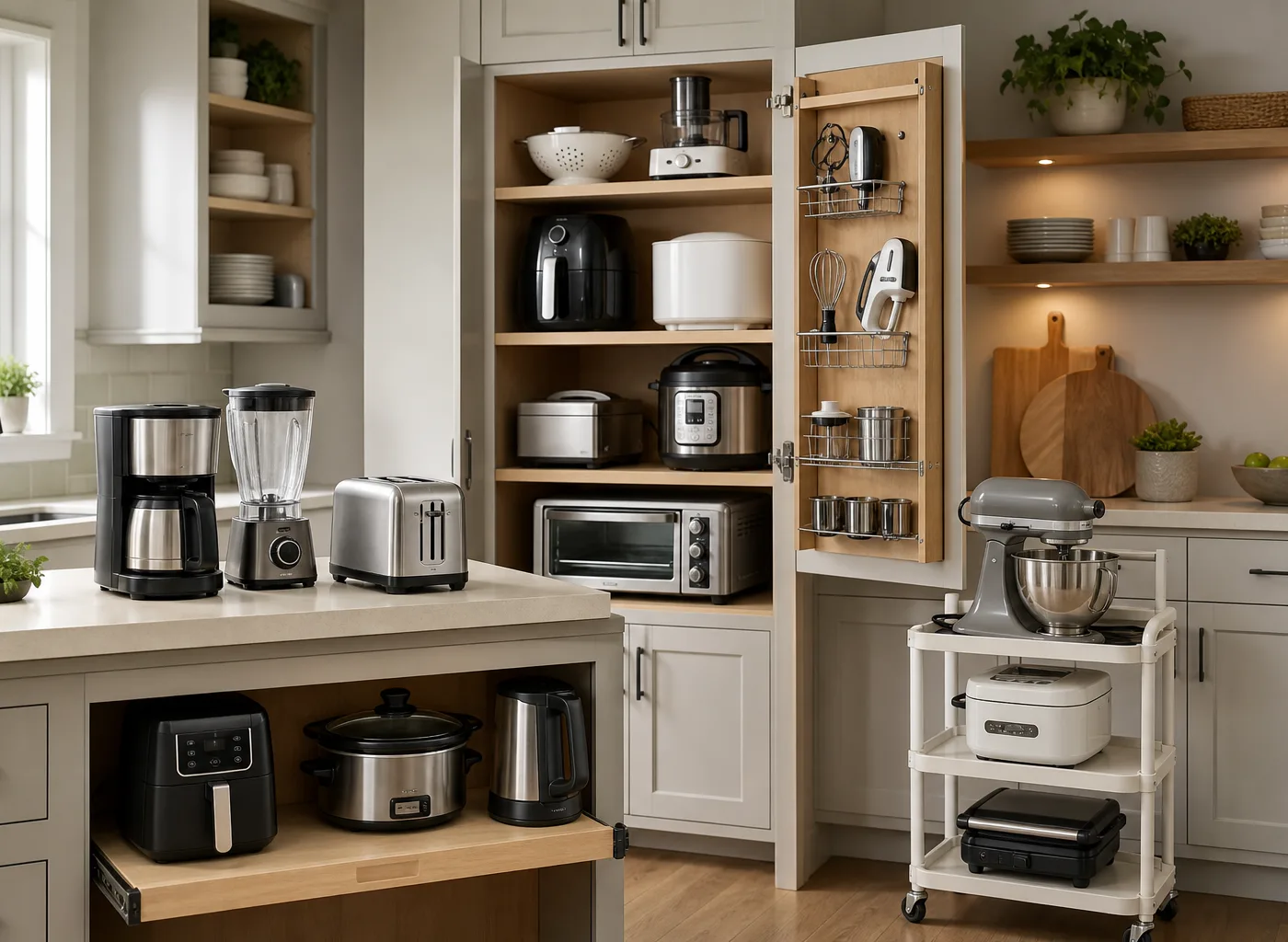
Small kitchen appliance storage is one of the fastest ways to make a compact cooking space feel larger. Blenders, air fryers, coffee makers, stand mixers, toaster ovens, and slow cookers are useful, but they can consume nearly every inch of counter space when left out all the time. The goal is not to hide every appliance. It is to give each one a practical home based on how often you use it.
With a few smart zones, pull-out solutions, and space-saving habits, you can keep your favorite tools accessible without turning your kitchen into an appliance parking lot. These small kitchen appliance storage ideas work in apartments, galley kitchens, older homes, and rental spaces alike.
Start by Sorting Appliances by How Often You Use Them
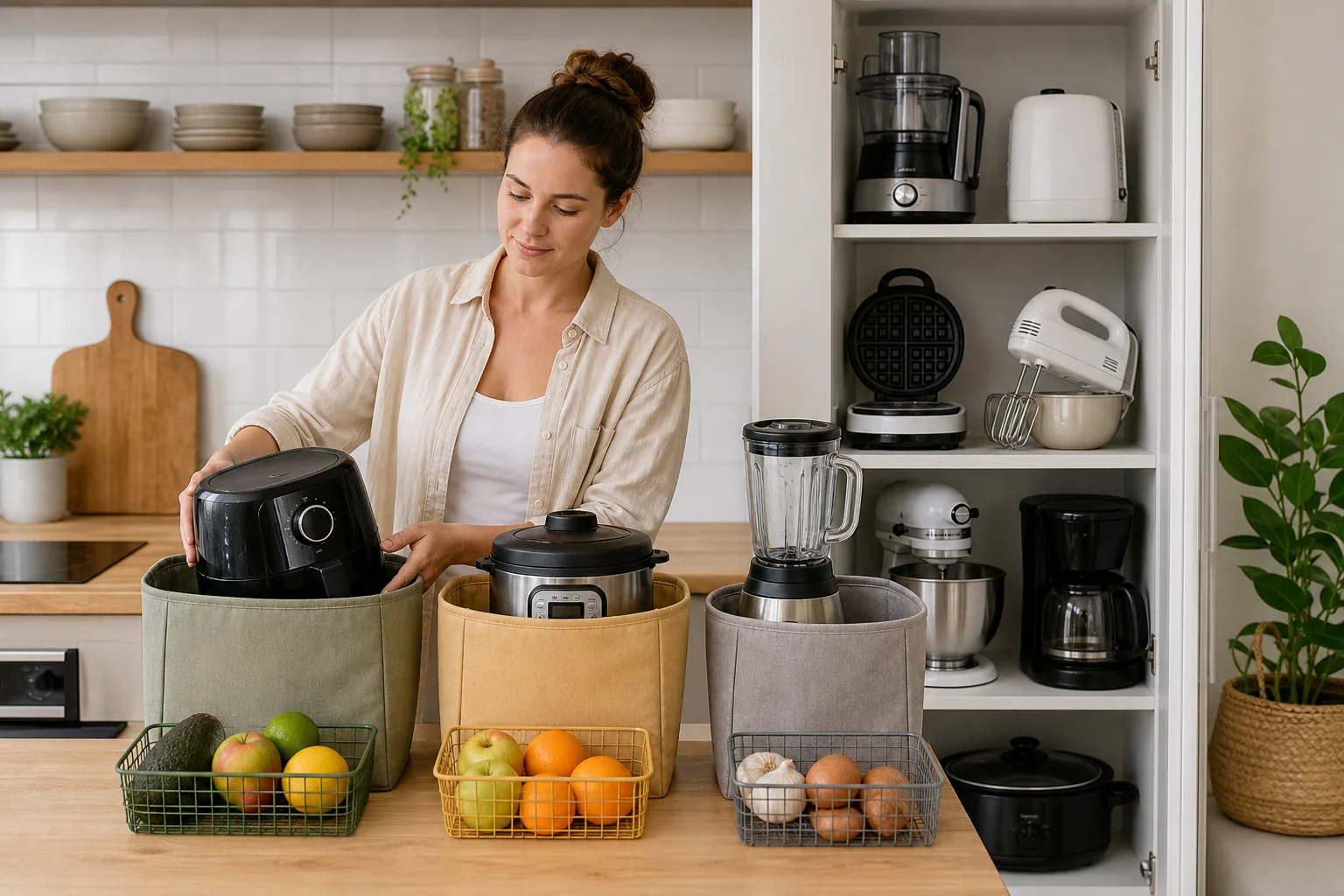
Before buying bins, shelves, or organizers, take inventory of every small appliance you own. This simple step prevents you from creating storage for items that rarely earn their space.
- Daily-use appliances: Coffee maker, toaster, electric kettle, or blender used most mornings.
- Weekly-use appliances: Air fryer, food processor, rice cooker, slow cooker, or hand mixer.
- Occasional appliances: Waffle maker, ice cream maker, juicer, bread maker, fondue pot, or holiday serving tools.
Keep daily-use items within easy reach, ideally on the counter or in a cabinet directly above or below their usual work area. Store weekly items in lower cabinets or a nearby pantry shelf. Put occasional appliances on high shelves, in deep cabinets, or in another storage area outside the kitchen if necessary.
This approach keeps the kitchen functional instead of forcing you to move several items every time you make breakfast. It also helps create the uncluttered look featured in these kitchen counter decor ideas without clutter.
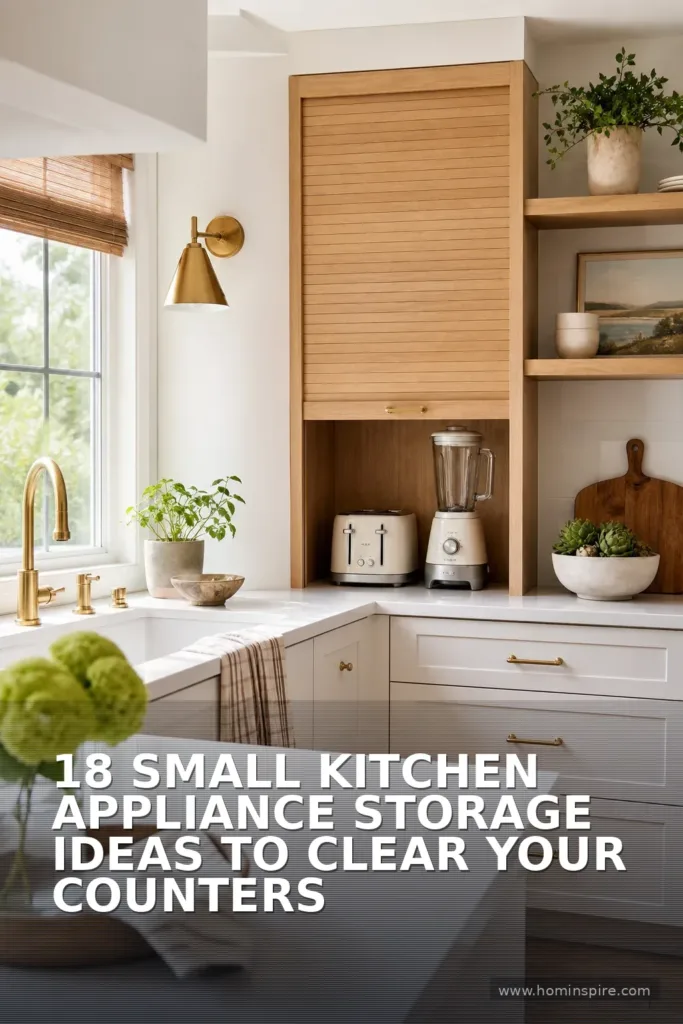
1. Create an Appliance Garage for Everyday Tools
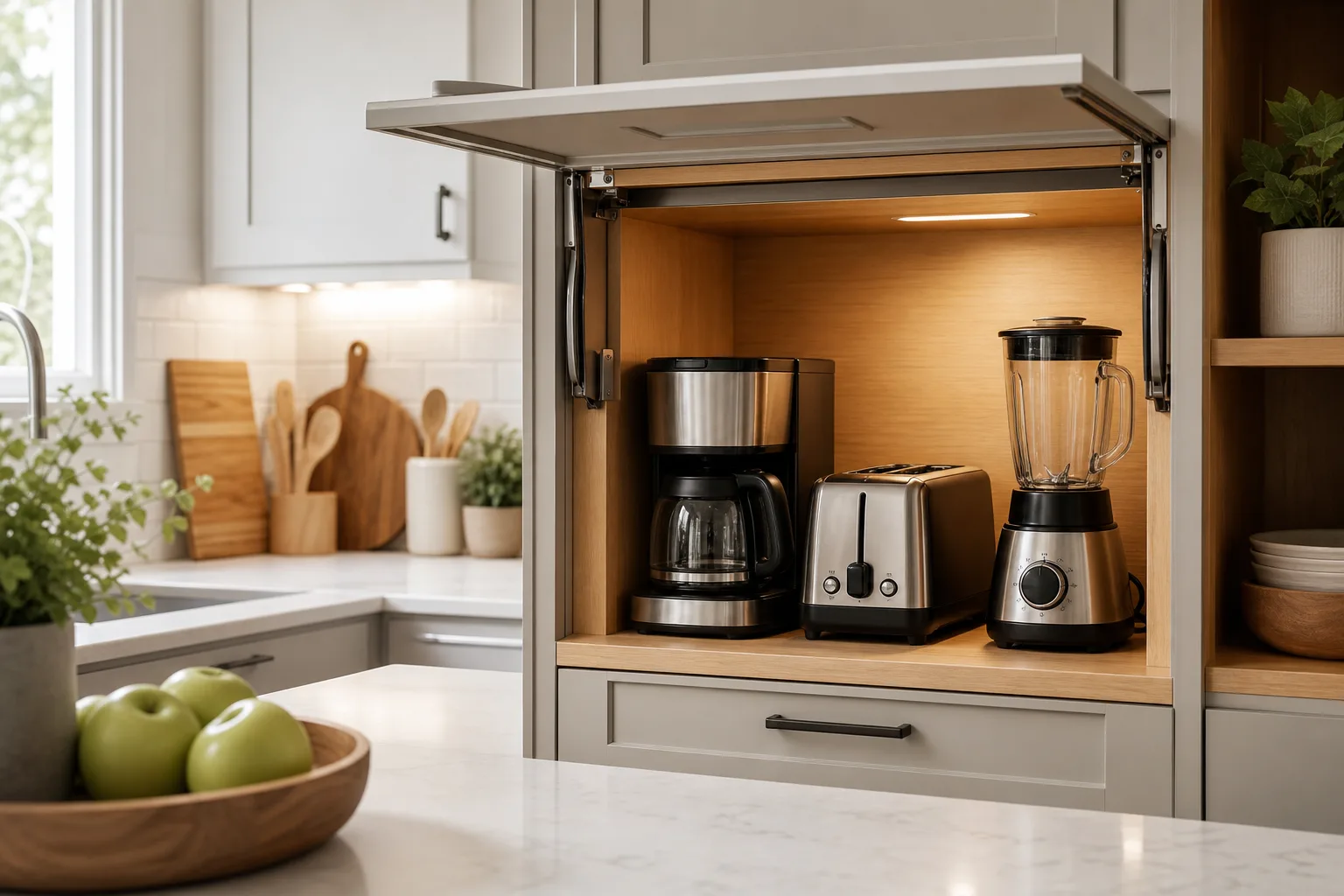
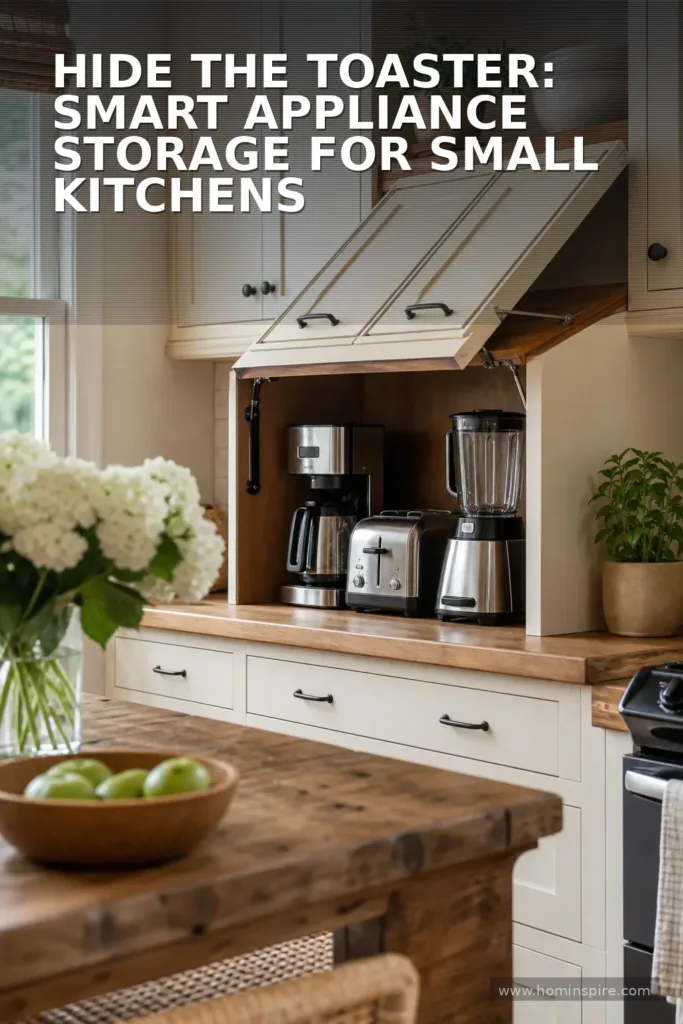
An appliance garage is a dedicated counter-level cabinet with a door that conceals small appliances when they are not in use. It is especially useful for coffee stations, toasters, and blenders that you use every day but do not want visible all the time.
If your kitchen already has a corner cabinet or a shallow section of counter near an outlet, it may be possible to adapt it into an appliance garage. Tambour doors, lift-up doors, pocket doors, or even a simple cabinet door can hide the contents while preserving quick access.
For safety, follow the appliance manufacturer’s instructions and allow heat-producing appliances to cool fully before closing them away. Never operate a toaster, air fryer, or toaster oven inside a closed cabinet unless the cabinet is specifically designed and ventilated for that purpose.
2. Use a Pull-Out Shelf in a Base Cabinet
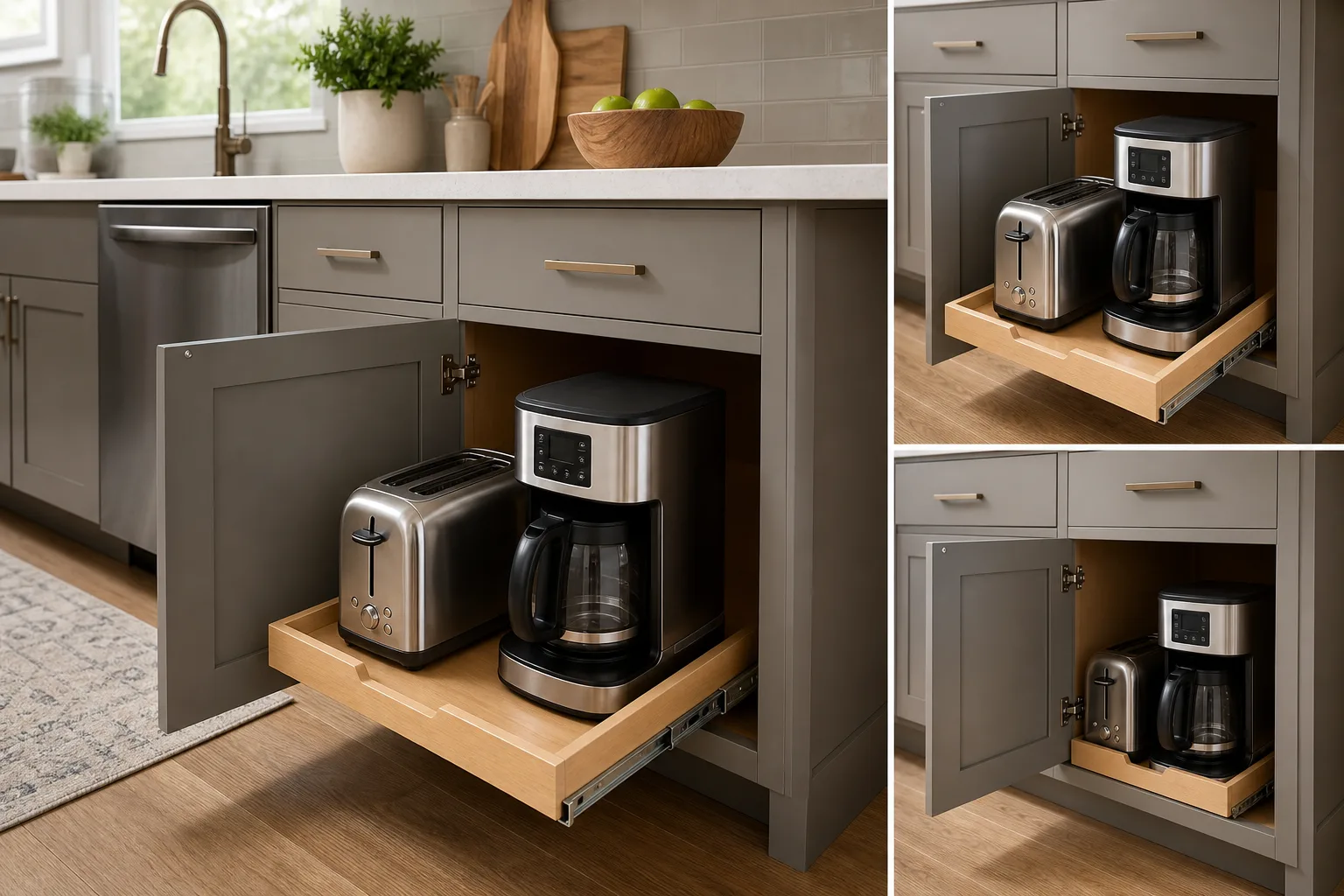
Deep lower cabinets are ideal for bulky appliances, but they become frustrating when you have to crouch and reach behind multiple items. A pull-out shelf or roll-out tray brings the contents forward so you can find and lift what you need.
Choose a sturdy pull-out with a weight rating appropriate for heavier appliances, especially stand mixers and air fryers. Place the heaviest items on the lowest shelf to make lifting safer and to keep the cabinet stable. A non-slip liner can prevent appliances from shifting as the shelf moves.
Pull-outs are a valuable upgrade in a small kitchen because they turn awkward depth into usable storage. If a permanent installation is not possible, a freestanding rolling organizer inside a wide base cabinet can provide a similar effect.
3. Install a Mixer Lift for Heavy Countertop Appliances
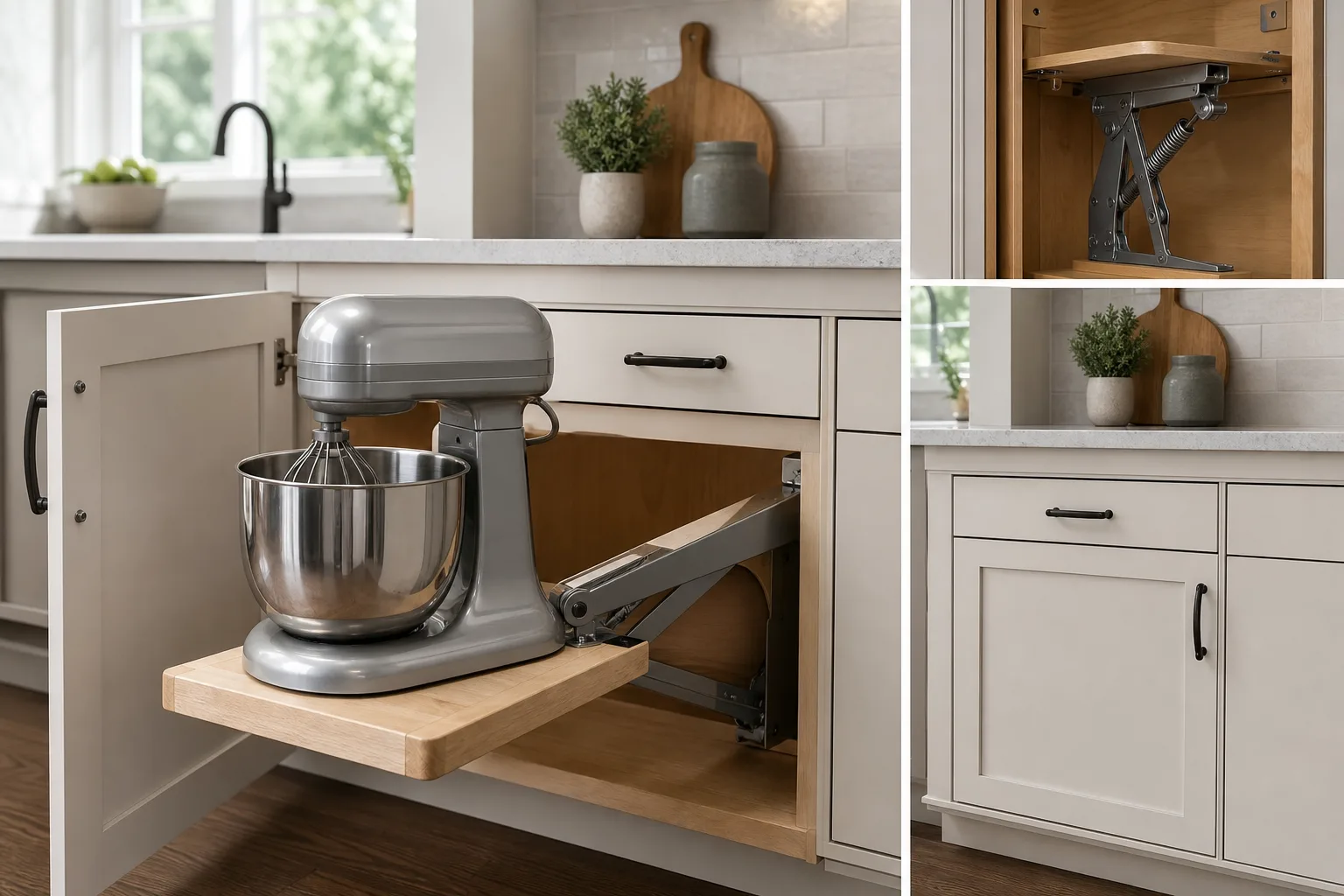
A stand mixer is one of the most difficult appliances to store because it is heavy, tall, and awkward to lift. A spring-assisted mixer lift installed inside a base cabinet solves that issue. The platform pulls outward and upward, bringing the mixer to counter height without requiring you to carry it.
This solution is worth considering if you bake frequently and have a suitable lower cabinet near an electrical outlet. Measure the mixer’s height, width, and clearance carefully before choosing hardware. Also confirm that the cabinet doors can open fully when the lift is in use.
If a mixer lift is not in your budget, store the mixer on a low, easy-to-reach shelf rather than a high cabinet. Heavy appliances should never be stored where they could be difficult or unsafe to retrieve.
4. Turn One Cabinet into an Appliance Zone
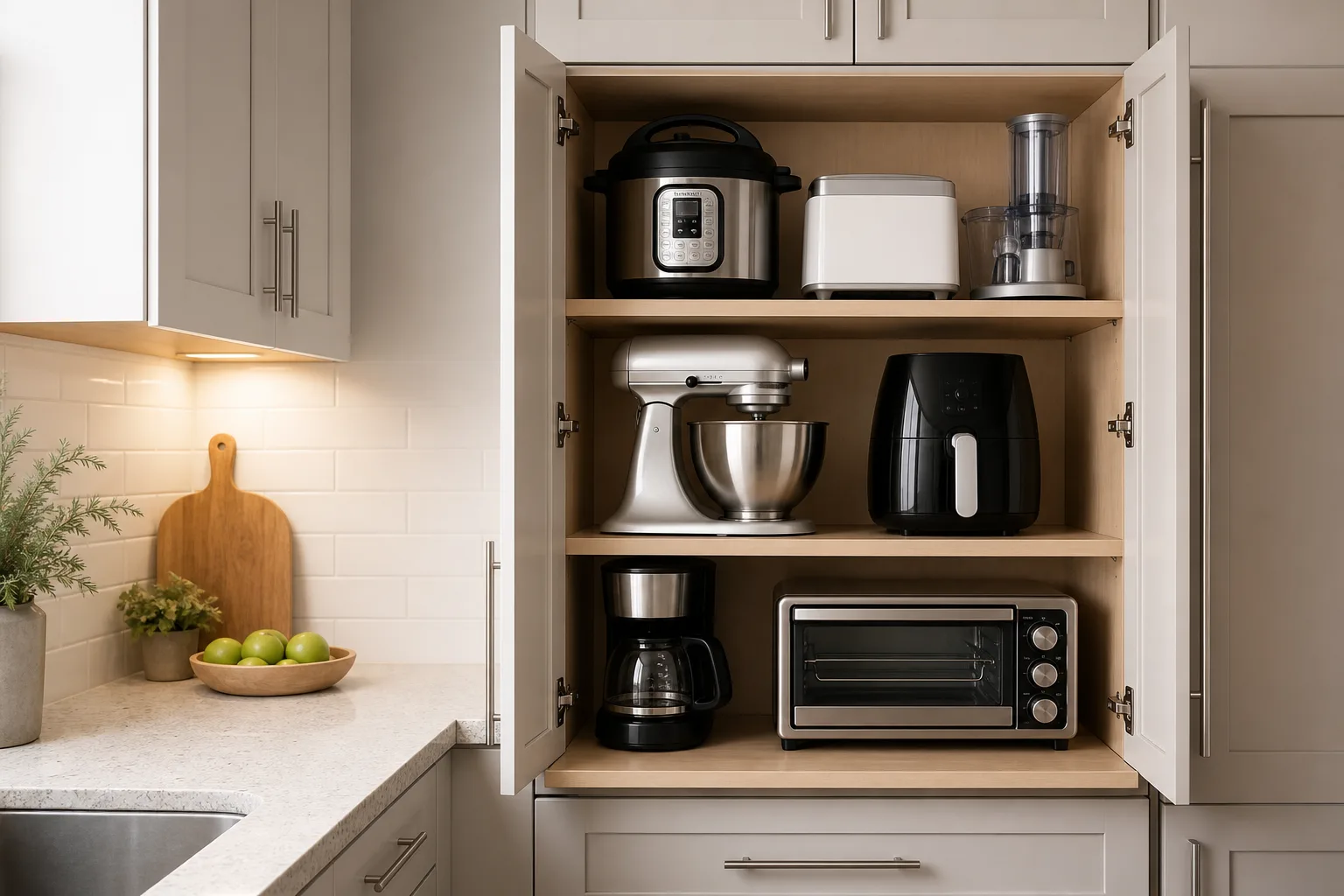
Rather than scattering appliances throughout several cabinets, dedicate one cabinet or cabinet run to them. An appliance zone makes the kitchen easier to maintain because everyone knows where each item belongs.
A tall pantry cabinet, a wide lower cabinet, or a large upper cabinet can work well. Group appliances with their accessories: keep blender cups near the blender, food processor blades in a labeled container beside the machine, and mixer attachments in a small bin.
Use shelf risers to separate shorter items from taller ones, and reserve the most accessible shelf for your most-used appliance. This single-zone method reduces visual clutter and cuts down on the time spent searching for parts.
5. Use Cabinet Shelf Risers to Capture Vertical Space
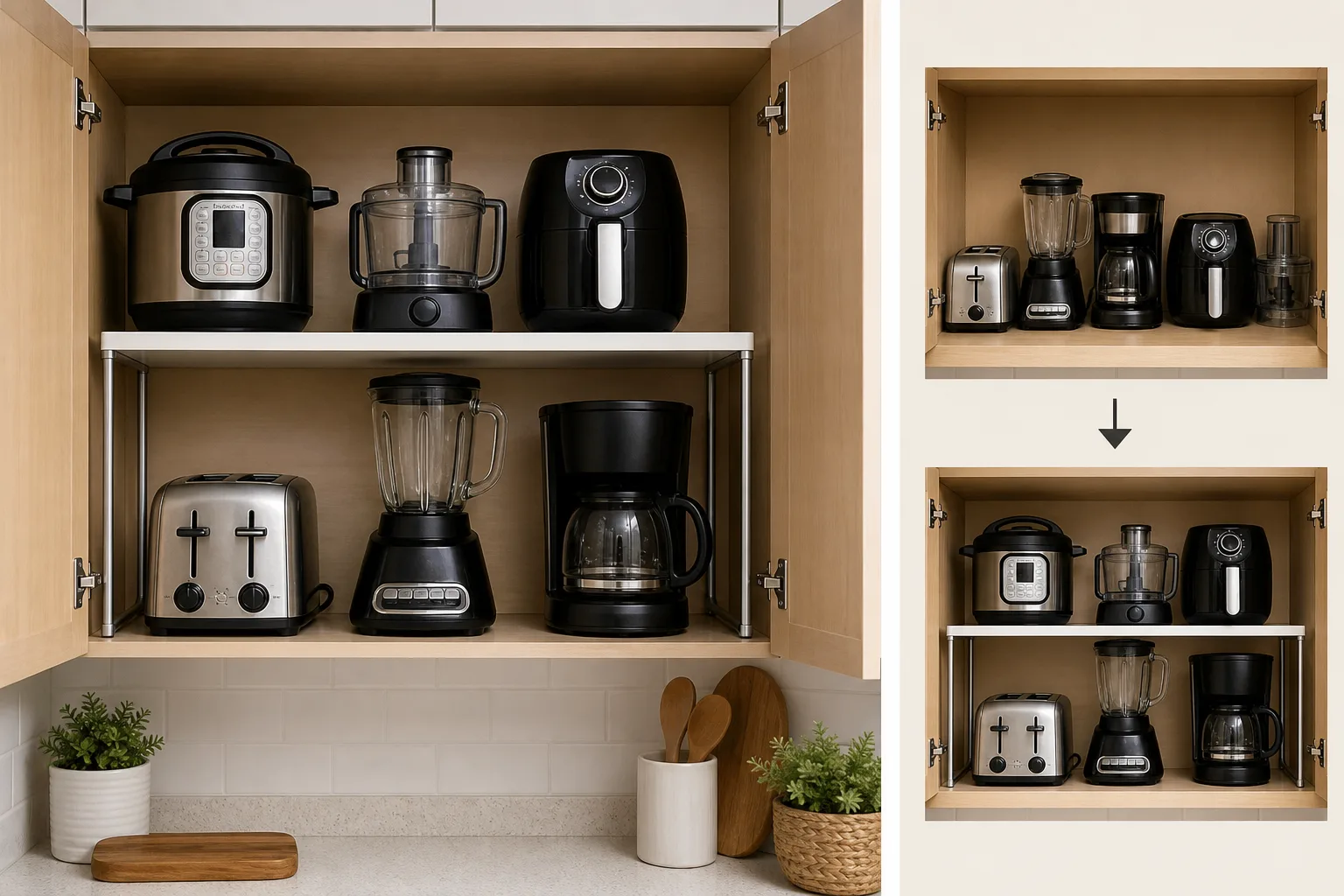
Many cabinets waste vertical room above short appliances. A shelf riser creates a second level so you can store a compact toaster or hand mixer underneath while keeping lighter accessories above it.
Look for metal or heavy-duty risers with a stable base, especially if you plan to store anything more substantial than lightweight attachments. In upper cabinets, reserve the top level for cords, manuals, replacement filters, and less frequently used accessories.
Measure the interior cabinet height before buying organizers. The best shelf riser should add usable storage without making it impossible to remove the appliance below.
6. Store Appliances on a Rolling Kitchen Cart
A slim rolling cart can serve as a flexible appliance station when cabinet space is limited. Use one for a coffee maker and supplies, a baking setup, a smoothie station, or a microwave if the cart is rated for its weight and designed for that use.
A cart works best when it has locking wheels, a stable top, and shelves tall enough for the appliances you plan to store. Keep cords contained with reusable cable ties or a cord box, and avoid overloading the top shelf.
Roll the cart out when cooking and tuck it beside a refrigerator, in a pantry nook, or against an unused wall afterward. It is a practical choice for renters because it adds storage without drilling into cabinets or walls. For more removable solutions, explore these renter-friendly kitchen storage ideas without drilling.
7. Build a Coffee Station in a Small Dedicated Zone
Coffee equipment can quickly take over a small kitchen counter. Instead of allowing mugs, pods, filters, syrups, and the coffee maker to spread across the room, contain them in one small station.
A narrow stretch of counter, a rolling cart, a section of pantry shelving, or a cabinet with a pull-out tray can all become a coffee zone. Add a tray to visually group the machine, sugar bowl, and canister. Store filters, pods, and tea bags in drawers or lidded bins nearby.
If you keep the coffee maker on the counter, limit the surrounding decor. A well-organized station looks intentional and leaves the rest of the work surface available for food prep.
8. Use a Pantry Shelf for Appliances You Use Weekly
A pantry is often the best home for medium-frequency appliances. Air fryers, slow cookers, rice cookers, and food processors are easy to access from a pantry shelf while staying off the counter.
Place heavier appliances between waist and chest height whenever possible. Store lightweight, occasional-use tools higher up. Deep pantry shelves benefit from clear bins, turntables, or pull-out baskets so smaller accessories do not get lost behind larger machines.
Consider using a label such as “Breakfast Appliances,” “Baking,” or “Meal Prep” instead of labeling each individual item. Category labels are easier to maintain if you replace or rearrange appliances later. A concealed storage approach can also complement these hidden pantry ideas when you want the kitchen to look streamlined.
9. Store Attachments Separately but Nearby
Small appliance accessories are often harder to organize than the appliances themselves. Loose beaters, blender blades, processor discs, measuring cups, and charging cords can create a messy cabinet even when the main appliance is neatly stored.
Use a handled bin, clear lidded container, or shallow drawer organizer for each appliance’s accessories. Label the container clearly, particularly for appliances with sharp blades or several interchangeable parts. Keep manuals and warranty information in a separate household file rather than taking up cabinet space.
Never store loose blades in an unprotected drawer. Use the original case when available, a blade guard, or a dedicated container that keeps sharp pieces safely contained.
10. Add a Door-Mounted Organizer for Lightweight Parts
The inside of a cabinet door can hold lightweight accessories that would otherwise take up a shelf. Adhesive or screw-mounted racks can store hand mixer beaters, immersion blender attachments, measuring spoons, coffee filters, or narrow cutting boards.
Check the door clearance before installation. A rack that is too deep may hit shelves or prevent the door from closing. Avoid mounting heavy appliances or glass containers on cabinet doors, as the extra weight can strain hinges over time.
For renters, use removable organizers only if the surface and adhesive are compatible. Test a small hidden area first and follow removal instructions carefully to reduce the risk of finish damage.
11. Use a Microwave Cart or Appliance Hutch
When counters and cabinets are both limited, a microwave cart or compact appliance hutch can add valuable storage. These pieces often include a microwave shelf, closed cabinets, drawers, and open cubbies for frequently used tools.
Choose furniture that fits the kitchen’s traffic flow. Leave adequate walking space and avoid blocking doors, drawers, or appliance handles. For microwaves and heat-producing appliances, follow clearance and ventilation requirements from the manufacturer.
A hutch can also help create a more finished kitchen without a full renovation. Pairing practical storage furniture with strategic cosmetic updates is a smart option if you are considering budget kitchen makeover ideas.
12. Make Use of the Space Above the Refrigerator
The area above the refrigerator is often overlooked, yet it can be useful for occasional appliances. A sturdy cabinet, open shelf, or large basket can hold a waffle maker, roasting pan, bread maker, or serving appliance you only use a few times a year.
Because this area is high and may collect dust, do not use it for appliances you reach for often. Store each item in a handled bin or protective cover, and make sure you can retrieve it safely with a stable step stool. Avoid stacking heavy appliances where they could be difficult to lift down.
13. Add a Slim Pantry Rack Beside the Refrigerator
A narrow pull-out pantry rack can fit into small gaps beside the refrigerator or between cabinets. While it is not suitable for large appliances, it can hold immersion blenders, electric griddles stored vertically, hand mixers, coffee supplies, and appliance accessories.
Look for a rack with guard rails and a stable frame. Use bins to keep smaller items contained, and position heavier objects on the bottom level. This is a particularly effective way to use an otherwise wasted few inches in a compact apartment kitchen.
14. Store Flat Appliances Vertically
Flat appliances such as electric griddles, panini presses, waffle makers, and slim baking appliances can be stored vertically like cutting boards. A vertical divider in a lower cabinet or pantry keeps them upright, visible, and easier to grab.
Make sure each appliance is completely cool and clean before storing it. Wrap the cord neatly with a hook-and-loop tie, but avoid wrapping it tightly around the appliance if the manufacturer advises against it. Vertical storage prevents bulky stacks and reduces the chance of having to lift several items to reach one at the bottom.
15. Use Open Shelving Selectively
Open shelves can hold attractive appliances, but they should be used strategically in a small kitchen. A beautiful espresso machine, retro toaster, or matching blender may deserve a visible spot if it is used often and fits your style.
Limit open storage to a few intentional pieces. Too many appliances on display can make a small room feel busy and collect grease and dust. Keep rarely used appliances behind doors, and use shelves for items that are easy to clean and genuinely worth seeing.
If you like an airy but functional look, these modern small kitchen decor ideas offer additional ways to balance style with everyday practicality.
16. Use a Counter Tray to Contain One Essential Appliance
If an appliance needs to stay on the counter, place it on a tray with its essential supplies. A tray gives the setup boundaries, making a coffee maker, toaster, or blender look like a deliberate station rather than random clutter.
Choose a tray large enough to catch crumbs or drips but small enough to preserve prep space. Keep it simple: one appliance, one or two related containers, and perhaps a small washable mat. Learn more about this approach in these kitchen counter tray decor ideas.
17. Consider an Appliance Cabinet With Built-In Outlets
If you are planning a kitchen update, an appliance cabinet with built-in outlets can be a high-impact feature. It allows you to store a coffee maker, blender, or mixer in a cabinet while plugging it in nearby, reducing cord clutter and daily setup time.
Electrical work should be completed by a qualified professional and comply with local building codes. The cabinet should also provide the proper clearance, heat protection, and ventilation for the appliance. This is most appropriate for low-heat appliances or for storage and temporary use with doors open; always follow product safety instructions.
18. Declutter Appliances You Do Not Actually Use
The most effective small kitchen appliance storage idea is owning fewer appliances. If an item has not been used in a year, is duplicated by another tool, or takes too much room for its value, consider donating, selling, or giving it away.
A quality blender may replace a smoothie maker. A hand mixer may be enough if you rarely bake large batches. A toaster oven may replace both a toaster and a small countertop oven. Focus on the appliances that support the way you really cook, not the version of your kitchen you imagine using someday.
How to Keep Appliance Storage Organized Long-Term
Once you have created a better system, protect it with a few simple maintenance habits:
- Return appliances to the same zone after cleaning them.
- Clean crumbs, grease, and spills before putting appliances away.
- Label accessory bins and use cord ties to prevent tangles.
- Review your appliance collection every six months.
- Avoid buying single-purpose gadgets unless you know where they will live.
- Keep one stretch of counter clear for meal preparation.
Small kitchens benefit from systems that are easy to reset. If storing an appliance requires moving three other items, the system is too complicated. Adjust shelf heights, zones, or containers until putting things away feels nearly effortless.
Small Kitchen Appliance Storage FAQ
Where should I store appliances in a small kitchen?
Store appliances according to frequency of use. Keep daily appliances on the counter or in an easy-access cabinet, weekly appliances in lower cabinets or the pantry, and occasional appliances on higher shelves or in off-kitchen storage.
How do I keep appliances off the counter in a small kitchen?
Use pull-out cabinet shelves, a pantry appliance zone, a rolling cart, an appliance garage, or a dedicated hutch. Prioritize storing bulky and occasional-use appliances first, then keep only one or two daily essentials on the counter.
Can I store an air fryer in a cabinet?
Yes, once it is fully cool and unplugged, an air fryer can be stored in a cabinet. Do not operate it in a closed cabinet unless the area is specifically designed for appliance use and meets the manufacturer’s ventilation and clearance requirements.
What is the best way to store a heavy stand mixer?
A mixer lift in a base cabinet is the most convenient option. If that is not possible, store the mixer on a low, sturdy shelf where it can be lifted safely. Avoid high cabinets, which can make retrieval difficult and unsafe.
How can renters add appliance storage without drilling?
Renters can use rolling carts, freestanding shelving, cabinet shelf risers, removable door organizers, countertop trays, and portable pantry cabinets. These options add storage without permanent changes to walls or cabinetry.
