
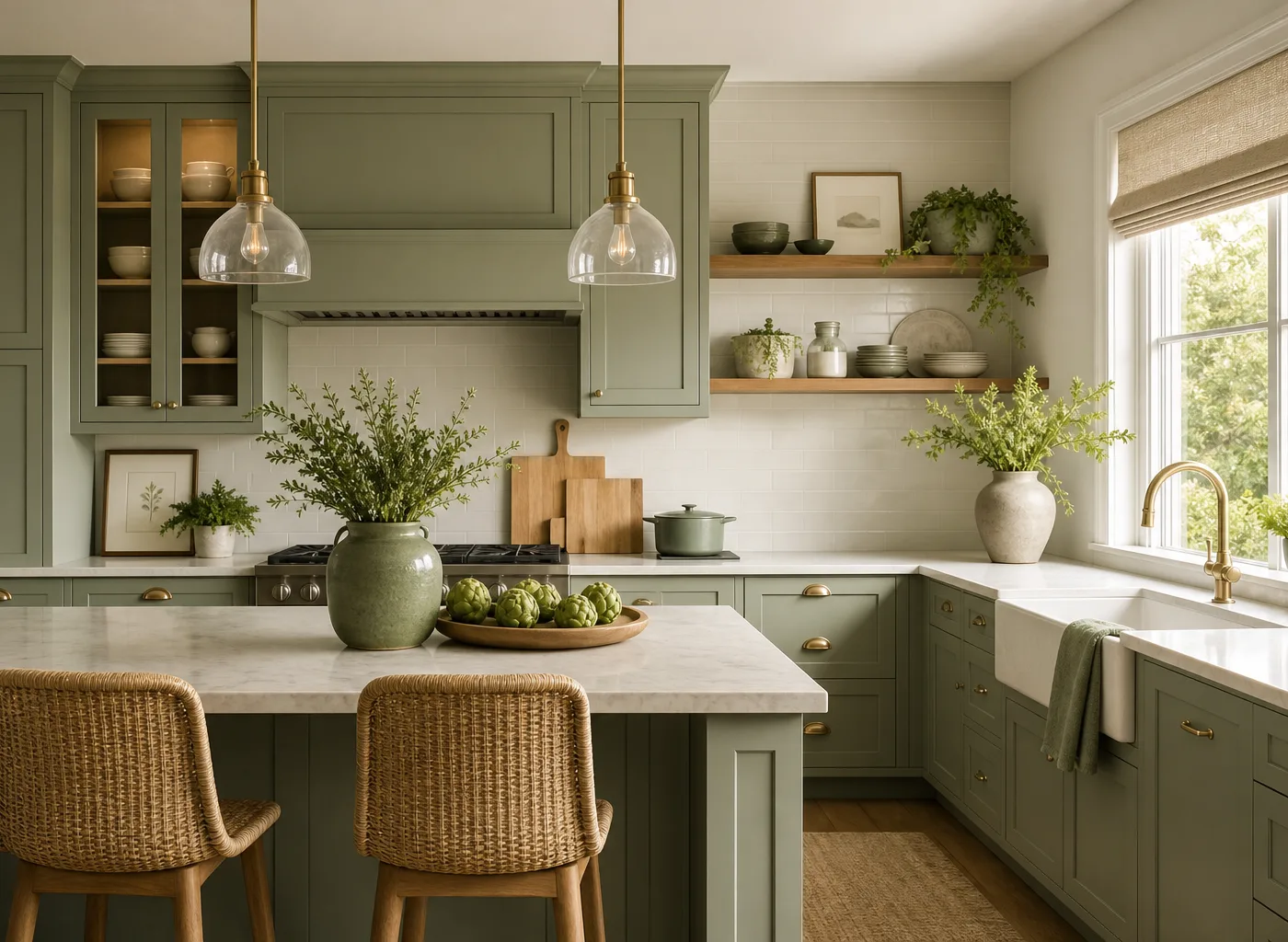
Sage green kitchen decor ideas are popular for a reason: this muted, gray-green shade feels fresh without being loud, classic without looking dated, and calming without becoming cold. It works beautifully in a bright farmhouse kitchen, a streamlined modern space, a compact apartment, or a traditional home that needs a softer update.
Unlike a bold emerald or a yellow-heavy olive, sage green has a quiet, earthy quality. It can act as a neutral while still adding personality. The key is choosing the right undertones, pairing it with complementary materials, and repeating the color in a few intentional places rather than using it everywhere.
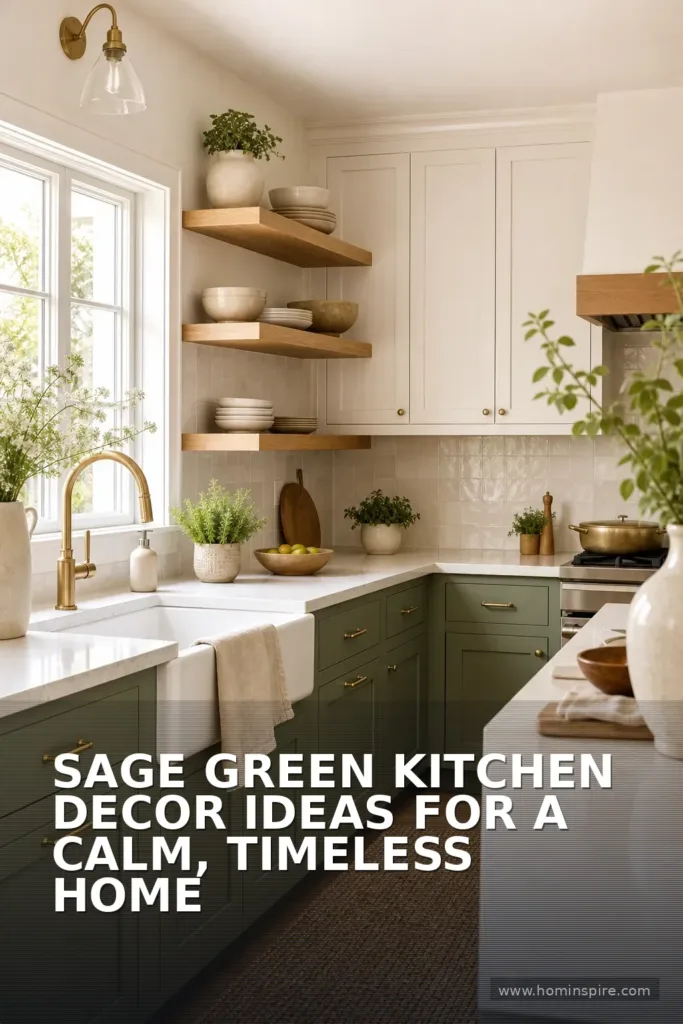
Whether you are planning a renovation or simply want an easy weekend refresh, these sage green kitchen decor ideas will help you create a layered, inviting space that feels personal and practical.
Why Sage Green Works So Well in a Kitchen
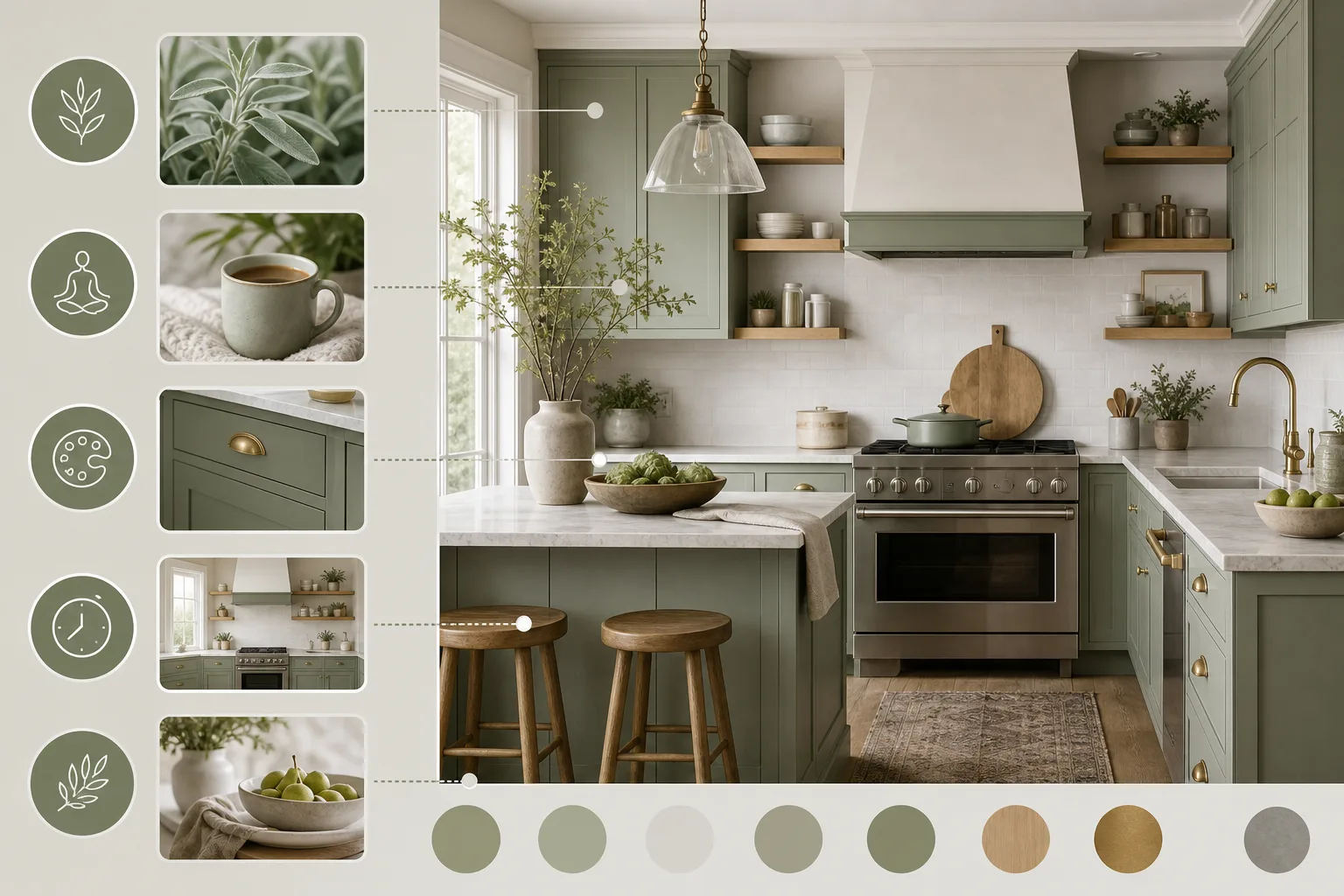
Kitchens contain many hard surfaces, including cabinetry, countertops, appliances, tile, and metal fixtures. Sage green softens those elements. Its subtle gray undertone gives it a grounded look, while its green base connects naturally with wood, stone, woven materials, and plants.
It is also exceptionally flexible. Pair cool sage with crisp white, marble, and polished nickel for a clean, tailored look. Choose a warmer sage with oak, brass, and creamy walls for a relaxed organic or modern farmhouse feel. Since paint colors can look dramatically different under warm or cool bulbs, review your finish samples in daylight and at night before committing.
1. Paint Lower Cabinets Sage Green
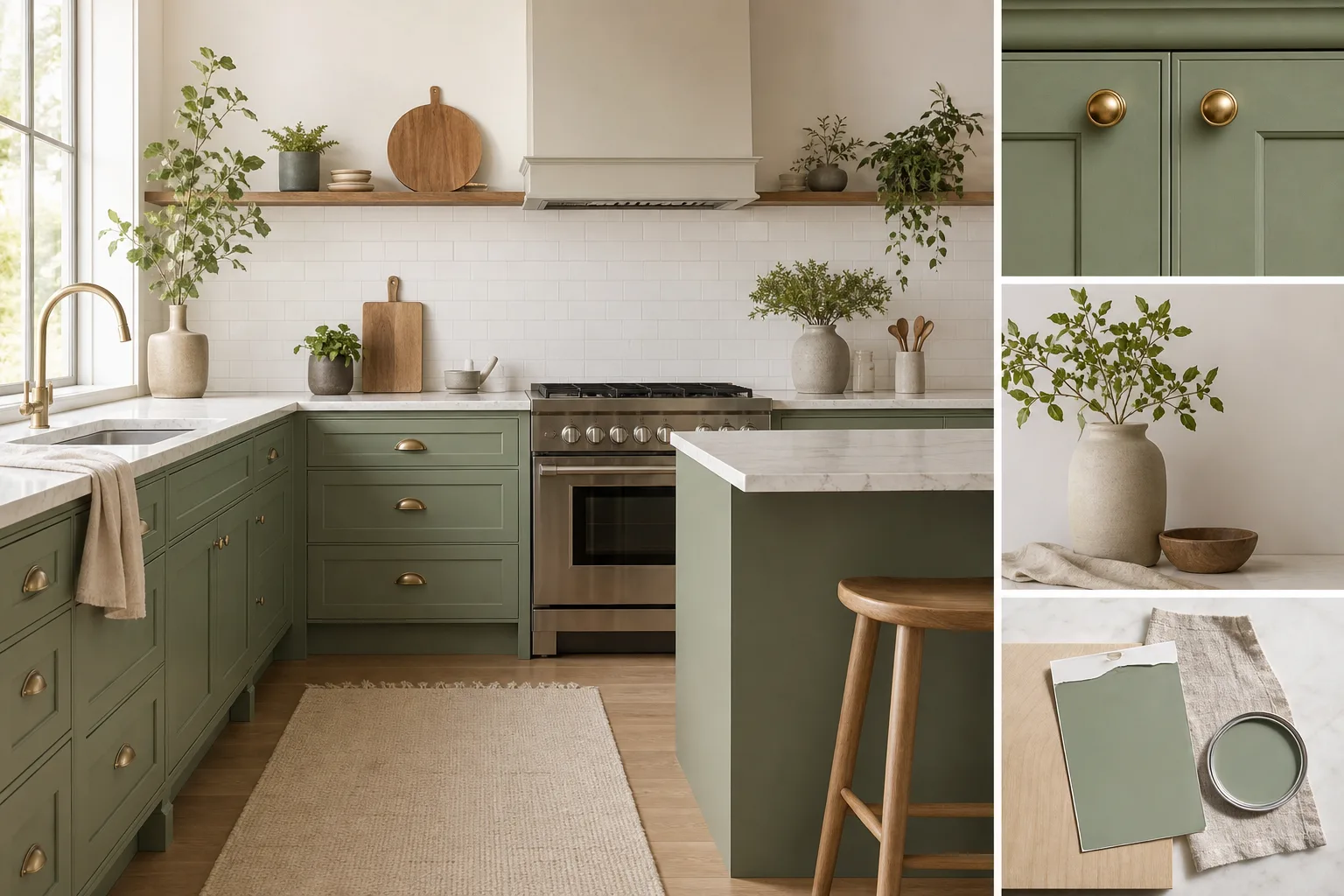
Two-tone cabinetry is one of the easiest ways to use sage green without making the room feel heavy. Paint the lower cabinets sage and keep upper cabinets white, warm ivory, or natural wood. This anchors the room visually while preserving brightness at eye level.
Use a durable cabinet enamel in a satin or semi-gloss finish so doors are easy to wipe down. A pale sage is especially useful in a small kitchen because it provides contrast without the visual weight of navy or charcoal.
2. Create a Sage Green Kitchen Island Focal Point
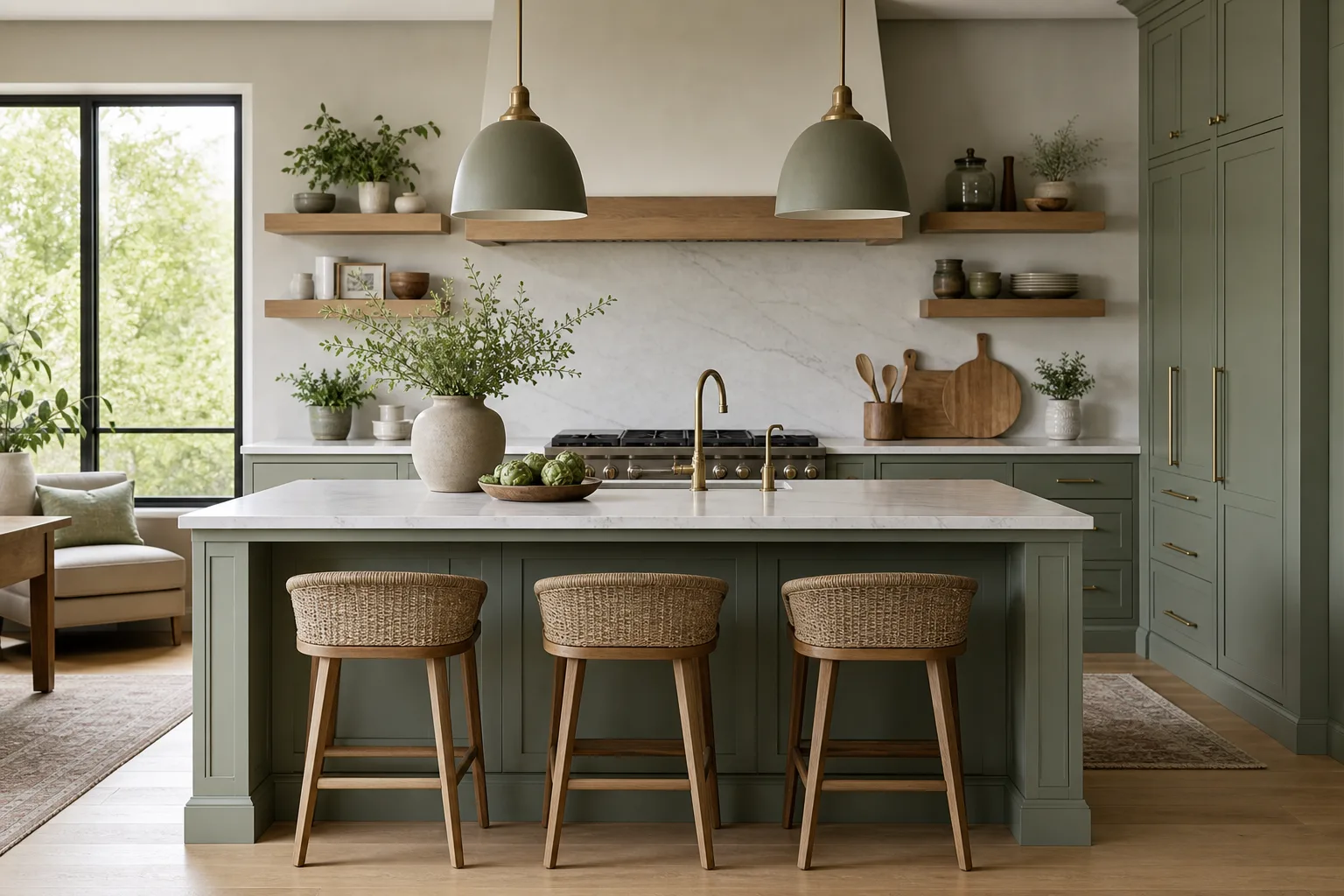
If you prefer neutral perimeter cabinets, make the island the color moment. A sage green island defines the center of the room and looks especially polished beneath a white quartz, butcher-block, soapstone, or lightly veined marble countertop.
Repeat the color once or twice nearby, perhaps with green barstool cushions, a runner, or pottery on open shelving. For more layout inspiration, explore these small kitchen ideas with an island, which can help you use a central feature without overcrowding the room.
3. Add a Handcrafted-Look Sage Tile Backsplash
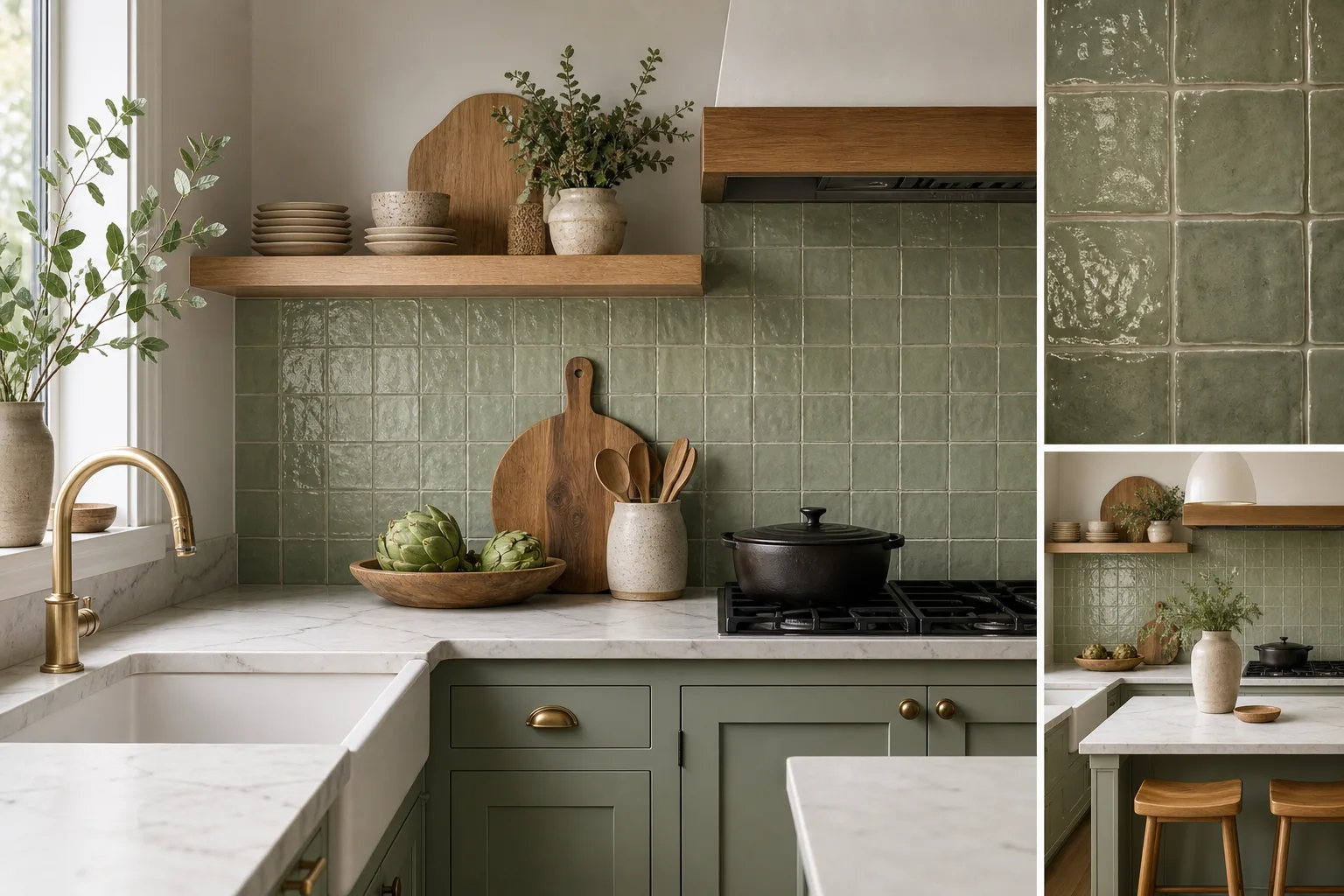
A backsplash is an ideal place to introduce sage green because it brings texture, reflection, and color to a hardworking wall. Zellige-style tile, glossy subway tile, square ceramic tile, and elongated vertical tile can all work in this shade.
For a subtle finish, choose a pale sage tile with white grout. For more definition, use a soft gray grout that outlines each tile without looking harsh. Handmade-look tile has variation in tone and sheen, so it adds depth even when the color palette is restrained.
4. Use Sage Green Wallpaper in a Breakfast Nook
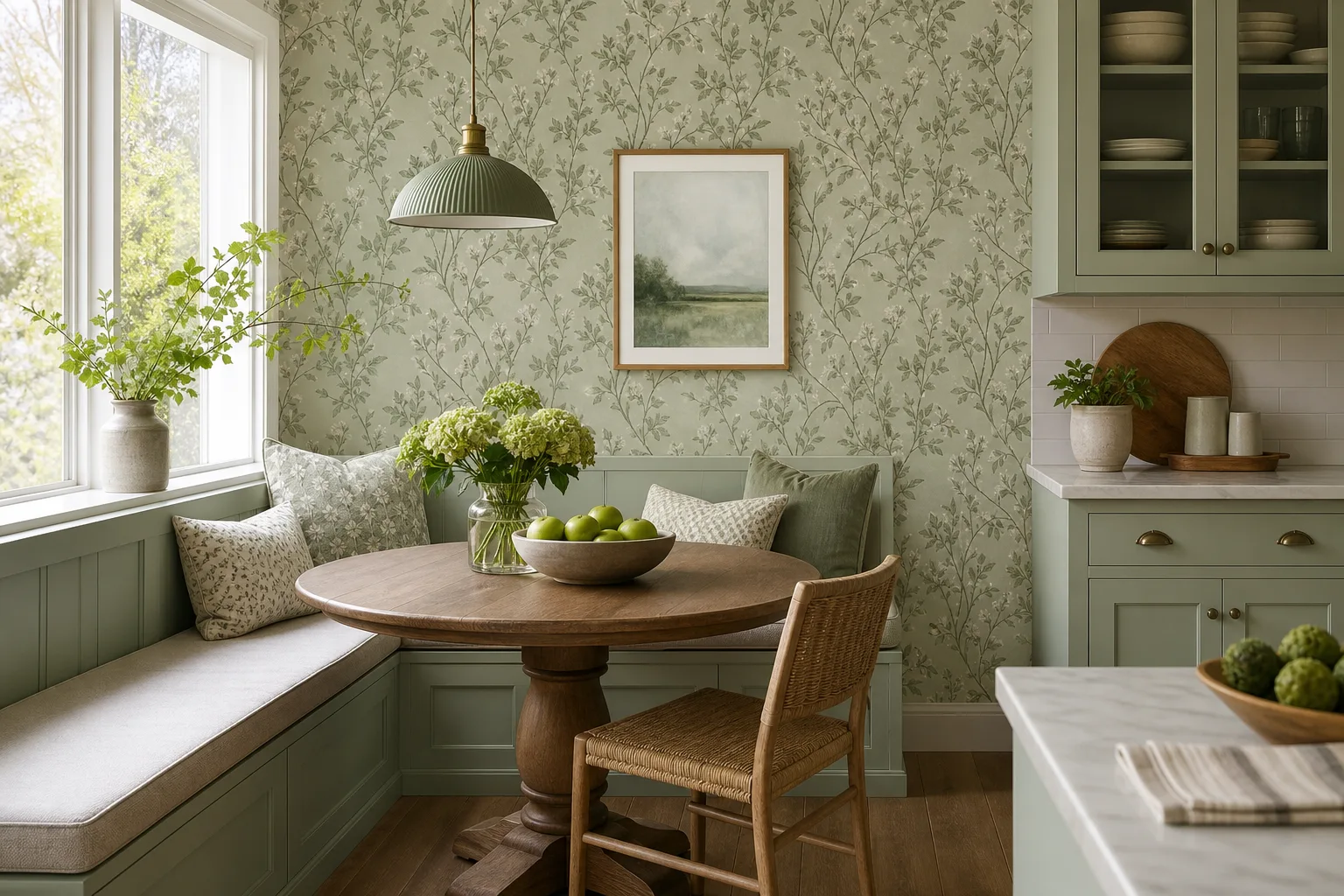
Wallpaper is a charming way to add sage green kitchen decor without altering cabinets. A botanical print, petite gingham, trailing vine, or vintage-inspired floral can make a breakfast nook feel intentional and cozy. Look for a pattern with sage, cream, and muted brown or blue to keep it versatile.
Use wallpaper on one wall, inside a banquette area, or above chair rail height. It is a particularly effective strategy when you want the eating area to feel distinct from the cooking zone. These small kitchen breakfast nook ideas offer more ways to make a compact dining spot feel warm and useful.
5. Pair Sage Green With Warm White Walls
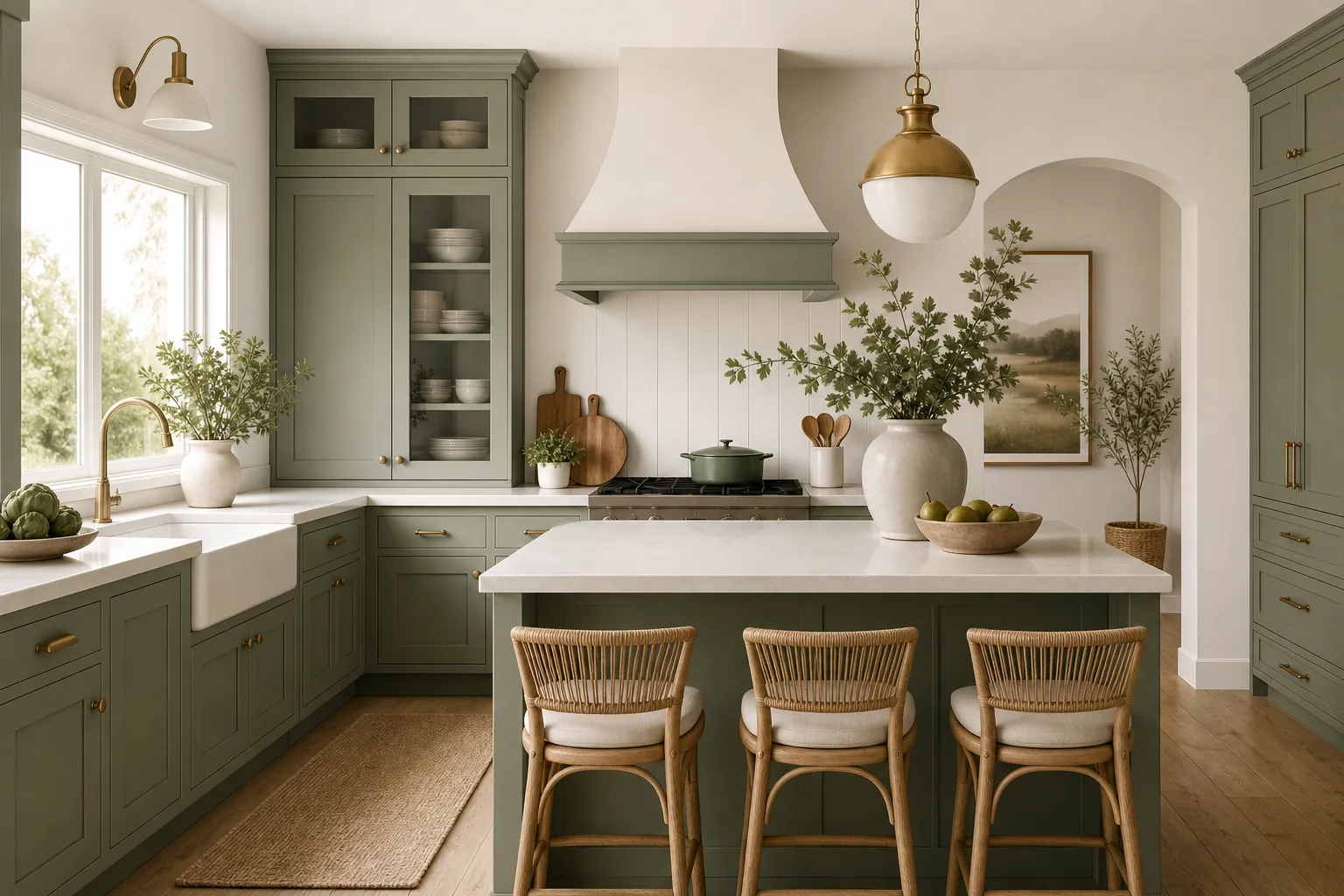
White is one of the best partners for sage green, but bright blue-white paint can make some sage shades look dull or overly gray. Instead, choose a warm white, soft cream, or gentle ivory. These tones bring out sage green’s natural warmth and make the kitchen feel more welcoming.
This combination suits nearly every style, from cottage kitchens to transitional homes. Add black accents for a little definition, or introduce brass for a more elevated, sun-warmed finish.
6. Bring in Natural Wood Accents
Natural wood prevents sage green from feeling overly formal. White oak, walnut, maple, pine, and reclaimed wood can all complement it, depending on the look you want. Lighter oak creates an airy Scandinavian or organic-modern kitchen, while medium walnut adds richness and contrast.
Try wood cutting boards, floating shelves, counter stools, a wood-framed range hood, or a butcher-block section on the island. Keep wood undertones consistent when possible. Mixing too many orange, red, and gray wood finishes can make the palette feel disconnected.
7. Update Hardware With Aged Brass or Matte Black
Cabinet hardware may be small, but it has a major effect on sage green cabinetry. Aged brass warms up cool sage paint and lends a collected, traditional feel. Matte black provides sharper contrast and works well in modern farmhouse, industrial, or contemporary spaces.
For a softer look, consider antique bronze, unlacquered brass, or brushed nickel. Match the hardware shape to the room’s style: cup pulls and knobs feel classic, while long slim pulls look more modern.
8. Style Open Shelves With Useful Green and Neutral Pieces
Open shelving gives you a low-commitment opportunity to layer sage green into the kitchen. Arrange everyday pieces such as green stoneware bowls, tinted drinking glasses, ceramic canisters, cookbooks, and small framed art. Keep the shelves practical rather than filling them with items that only collect dust.
A simple formula works well: stack plates or bowls, add one taller object, include a natural element such as a small plant, and leave some open space. Cream, wood, amber glass, and matte black details give sage green accessories a balanced backdrop.
9. Choose a Sage Green Runner or Washable Rug
A rug can introduce color, softness, and pattern while protecting floors in front of the sink or island. Look for a washable runner that includes sage green along with ivory, taupe, faded blue, terracotta, or charcoal. A vintage-style pattern hides everyday crumbs and minor spills better than a solid pale rug.
Always use a non-slip rug pad unless the runner has a secure backing. In a busy kitchen, durability and easy cleaning matter just as much as style.
10. Hang Soft Window Treatments
Kitchen windows are a natural place to bring in sage green, especially if your cabinets are neutral. A linen Roman shade, café curtain, checked valance, or tailored woven shade with a sage border can soften the room without blocking valuable daylight.
Choose moisture-friendly, washable fabrics near the sink. If privacy is a concern, layer a light-filtering shade with simple curtains. Find more practical options in these kitchen window ideas.
11. Add Plants and Herbs to Reinforce the Palette
Living greenery makes sage decor feel more intentional because it echoes the color found in nature. Place potted herbs near a sunny window, hang a trailing plant from a shelf, or style a small olive tree in a corner with enough natural light.
Use ceramic planters in cream, terracotta, charcoal, or sage for a cohesive arrangement. If you do not have reliable sunlight, high-quality faux stems in a stoneware vase can still add shape and softness.
12. Use Lighting That Makes Sage Look Its Best
Lighting can make a sage green kitchen look soothing and sophisticated—or unexpectedly gray. Warm-white bulbs around 2700K to 3000K usually flatter sage best in residential kitchens. They preserve the color’s warmth while still providing functional task lighting.
Add layered lighting: pendants over the island, under-cabinet lights for work surfaces, and a decorative ceiling fixture for ambience. Brass, aged bronze, rattan, linen, and opal glass fixtures pair beautifully with sage. See these cozy kitchen lighting ideas for approachable ways to build a warmer lighting plan.
13. Try a Painted Pantry Door or Interior Door
A sage green door is an affordable feature that adds architectural interest. Paint a pantry door, a mudroom door connected to the kitchen, or a door leading to the backyard. It works especially well in a mostly white kitchen where you want color but cannot replace cabinetry.
Use the same color on the door trim for a bolder statement, or keep the trim white for a crisp outlined effect. A brass knob or black lever completes the update.
14. Make the Range Hood a Subtle Statement
A painted wood range hood can become a beautiful sage green focal point, particularly above white or cream cabinets. Keep the surrounding backsplash simple if the hood has a strong shape. Alternatively, use sage tile behind a white plaster or wood hood for a softer layered look.
This approach looks balanced when the hood color is repeated elsewhere, such as on the island, pantry door, or lower cabinets.
15. Layer Sage Through Everyday Textiles
If you are renting or working with a tight budget, textiles are your best friends. Swap in sage green dish towels, oven mitts, chair cushions, table linens, and a simple seat pad. These accents can be changed seasonally and require no construction work.
Choose a mix of solids and small-scale patterns. For example, pair a striped sage-and-cream towel with a solid linen table runner and neutral seat cushions. The result feels relaxed instead of overly coordinated.
16. Build a Calm Sage Green Coffee Station
A coffee station is a natural styling zone because it already contains attractive, frequently used pieces. Add a sage tray, green mugs, a small lamp, a framed print, and a canister for coffee or tea. Keep the counter organized so the display feels calming rather than cluttered.
In a compact kitchen, using a dedicated tray makes the entire setup easy to move for cleaning. For more space-saving setup ideas, visit these small kitchen coffee station ideas.
17. Mix Sage Green With Stone and Marble
Sage green looks refined next to natural stone. White marble with soft gray veining feels traditional and bright, while honed soapstone creates moody contrast. Creamy travertine, limestone, and light quartz offer a warmer, more relaxed appearance.
If a full countertop replacement is not in the plan, introduce stone through a cutting board, utensil crock, fruit bowl, or small backsplash detail. Natural materials add visual variation that keeps a one-color scheme from looking flat.
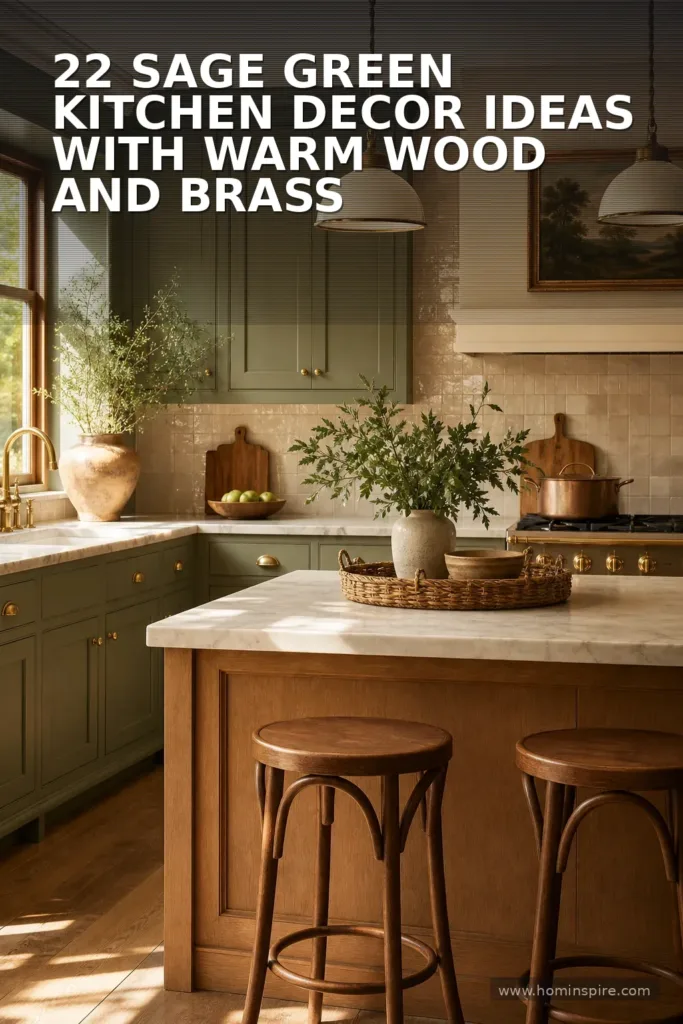
18. Add Vintage-Inspired Details
Sage green has an inherent vintage appeal, so it pairs naturally with old-world details. Consider ribbed glass, antique brass sconces, framed botanical prints, a thrifted bread box, or a plate rack. These pieces are especially attractive in cottage, English country, and farmhouse kitchens.
The goal is not to make the kitchen look like a period set. Mix one or two vintage-style elements with clean lines and modern conveniences for a collected but current result.
19. Refresh Cabinets Without Painting Them
If your existing cabinets are in good condition but do not suit a full paint project, bring sage green in through removable or limited updates. Add wallpaper or peel-and-stick liner to glass-front cabinet backs, replace opaque inserts with reeded glass, style a green backsplash, or paint only an adjacent pantry door.
New hardware, lighting, and organized counters can make the whole kitchen feel updated without changing the cabinet finish. For more options, review this guide to a kitchen cabinet makeover without painting.
20. Keep Small Sage Green Kitchens Light and Edited
Sage green can work wonderfully in a small kitchen, but color placement matters. Use a lighter sage on lower cabinets, one accent wall, or a backsplash, then balance it with pale walls, reflective tile, and clear counter space. Avoid adding several competing patterns in a very tight room.
Choose vertical storage, under-cabinet lighting, and a few well-chosen accessories instead of extensive countertop decor. Small spaces feel more stylish when every item has a purpose. If you need more compact-space strategies, these tiny apartment kitchen ideas can help maximize function without sacrificing personality.
21. Combine Sage Green With Modern Farmhouse Elements
Sage green is a natural fit for modern farmhouse kitchens because it softens white shiplap, black metal, warm wood, and vintage-inspired fixtures. Avoid going too literal with themed signs or too many distressed finishes. Instead, use clean cabinet lines, natural wood stools, a simple apron-front sink, and one or two black accents.
The result should feel warm and timeless, not overly rustic. For additional styling direction, browse these modern farmhouse kitchen decor ideas.
22. Use a Cohesive Color Palette
The most successful sage green kitchen decor follows a limited palette. Start with sage, then choose two or three supporting colors and materials. A reliable formula is sage green, warm white, natural oak, and aged brass. Another is sage, charcoal, marble, and matte black.
Small doses of terracotta, faded denim blue, ochre, or muted blush can also work, especially in textiles and artwork. Keep bright primary colors to a minimum if you want sage to remain the calm visual anchor.
How to Choose the Right Sage Green Shade
Not all sage paint colors are alike. Some lean cool and silvery, some contain more yellow or olive, and others appear almost beige in low light. The right choice depends on your fixed finishes and the direction of your natural light.
- North-facing kitchens: Choose a slightly warmer sage to offset cool, bluish daylight.
- South-facing kitchens: Both warm and cool sages can work; test samples because strong sunlight may intensify green undertones.
- East-facing kitchens: Expect warmer morning light and cooler light later in the day.
- West-facing kitchens: Check samples in the late afternoon, when warm light can make sage appear more golden.
Paint large sample boards rather than relying on tiny chips. Move them around the kitchen next to the countertop, backsplash, flooring, and cabinet hardware. Observe them at several times of day before choosing a final color.
Common Mistakes to Avoid
First, do not assume every green accessory will coordinate. Some greens are blue, bright, or yellow enough to clash with a muted sage. Bring home samples whenever possible.
Second, avoid relying on a single overhead fixture. Good lighting is essential for cooking and for accurately seeing the color’s undertones. Third, do not overfill open shelves and counters just because you have attractive green decor. Negative space is what makes a kitchen feel calm.
Finally, think about longevity. Choose durable, easy-clean finishes for major surfaces, then use inexpensive accents for trend-driven changes. That balance gives your kitchen personality without locking you into a look that is difficult to update.
Final Thoughts
Sage green kitchen decor creates a homey, polished atmosphere that can adapt to many styles and budgets. Start with one high-impact feature, such as an island, backsplash, pantry door, or window treatment. Then build dimension through wood, warm metal, stone, textiles, and natural greenery.
Because sage behaves almost like a neutral, you do not need to use it in every corner. A few thoughtful repeats are enough to make the room feel cohesive, restful, and distinctly your own.
Frequently Asked Questions
Is sage green a good color for a kitchen?
Yes. Sage green is a versatile, muted color that feels calm and welcoming in kitchens. It pairs well with white, cream, wood, brass, black, marble, and many natural materials, making it suitable for both classic and modern homes.
What colors go best with sage green kitchen cabinets?
Warm white, ivory, light oak, walnut, brass, matte black, soft gray, and creamy stone all pair beautifully with sage green cabinets. For a little more color, add muted terracotta, dusty blue, or faded blush through rugs, art, or textiles.
Will sage green make a small kitchen look dark?
Not necessarily. Use a light or medium sage shade on lower cabinets, an island, or a backsplash, then balance it with pale walls, good lighting, and uncluttered counters. Keeping upper cabinets light or open also helps maintain an airy feeling.
What hardware looks best with sage green cabinets?
Aged brass and unlacquered brass add warmth and a classic look, while matte black creates modern contrast. Brushed nickel and antique bronze are also excellent choices when you prefer a softer, more understated finish.
Is sage green still in style for kitchens?
Sage green remains a popular kitchen color because it is more timeless than many bold trend shades. Its connection to natural materials and neutral palettes helps it work across changing design styles, from modern farmhouse to transitional and organic modern.
