
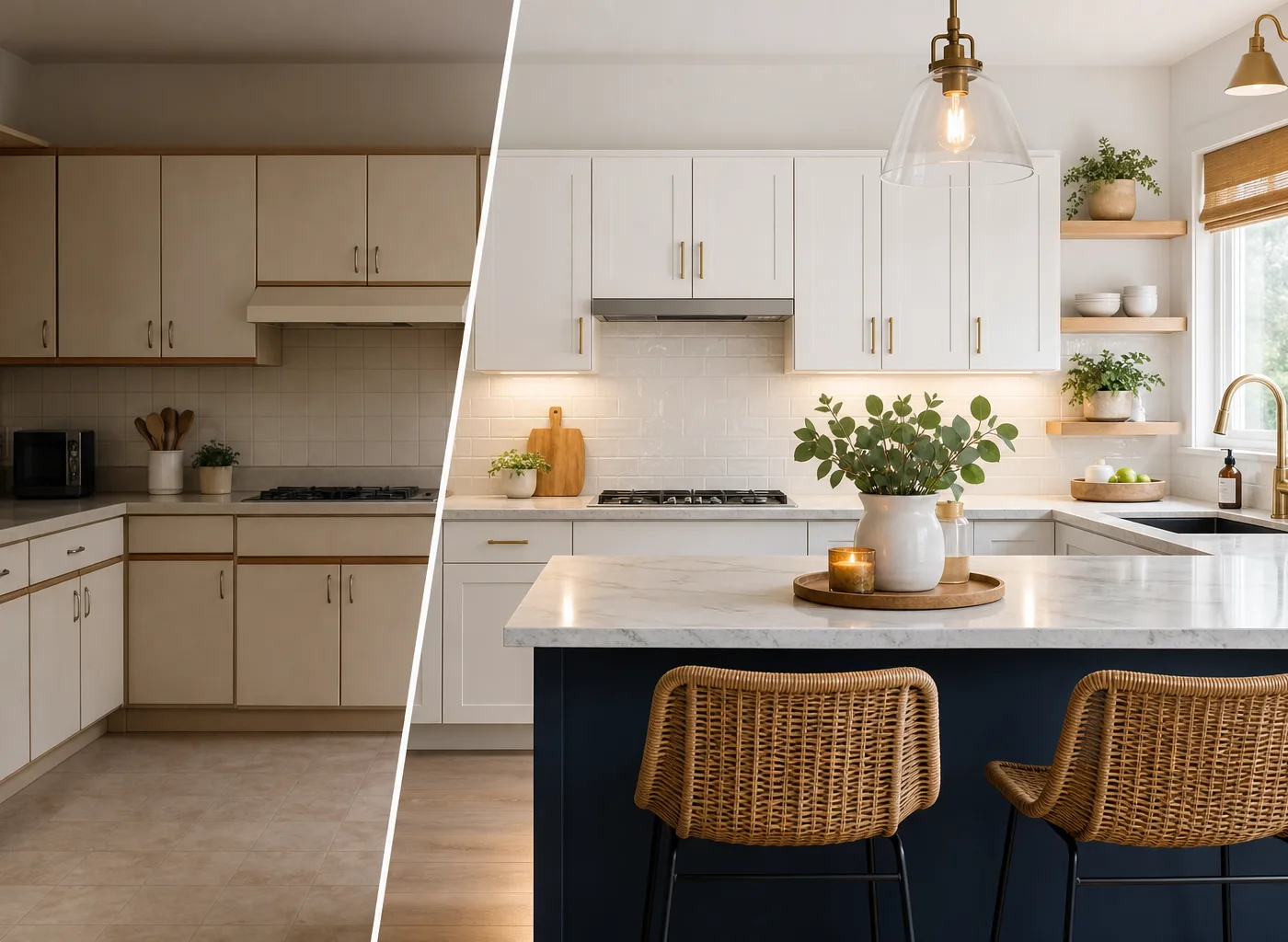
A kitchen makeover without renovation is the practical answer when your kitchen works well but no longer looks like you want it to. Maybe the cabinets are dated but sturdy, the counters are visually busy, or the room simply feels darker and more crowded than it should. You do not necessarily need demolition, new plumbing, or a full cabinet replacement to change that.
The most convincing kitchen updates focus on what people notice first: color, light, hardware, surfaces, organization, and visual clutter. With a clear plan, you can make an existing kitchen feel cleaner, brighter, and more intentional while keeping the project affordable and manageable.
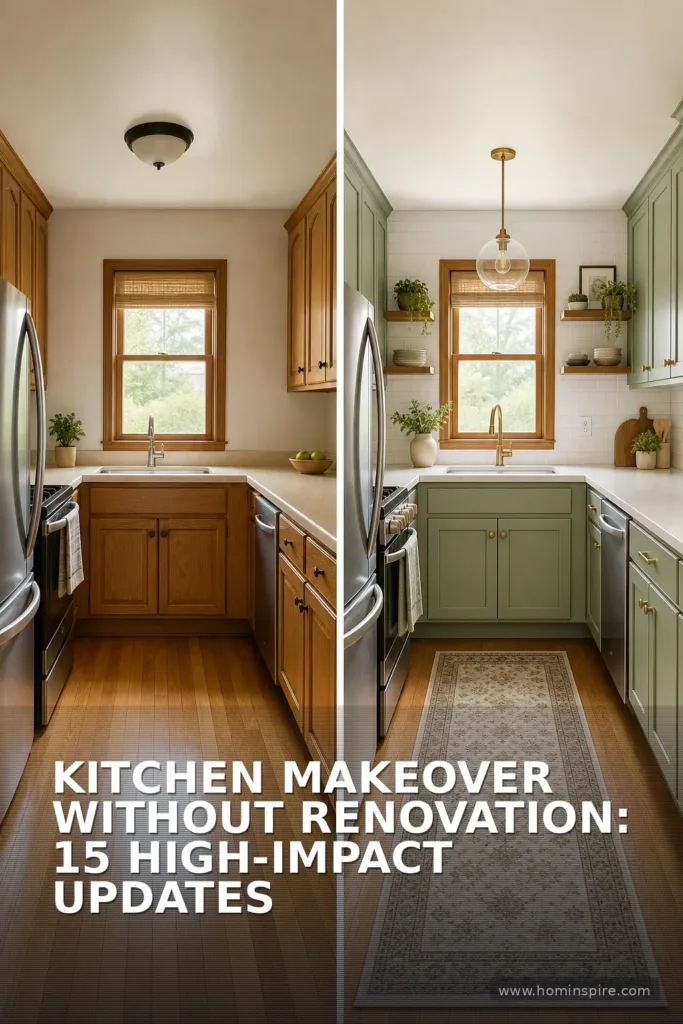
Use this guide to prioritize upgrades based on impact, budget, and whether you own or rent your home. The goal is not to disguise every original feature. It is to create a cohesive space that feels more current and functions better every day.
What Counts as a Kitchen Makeover Without Renovation?
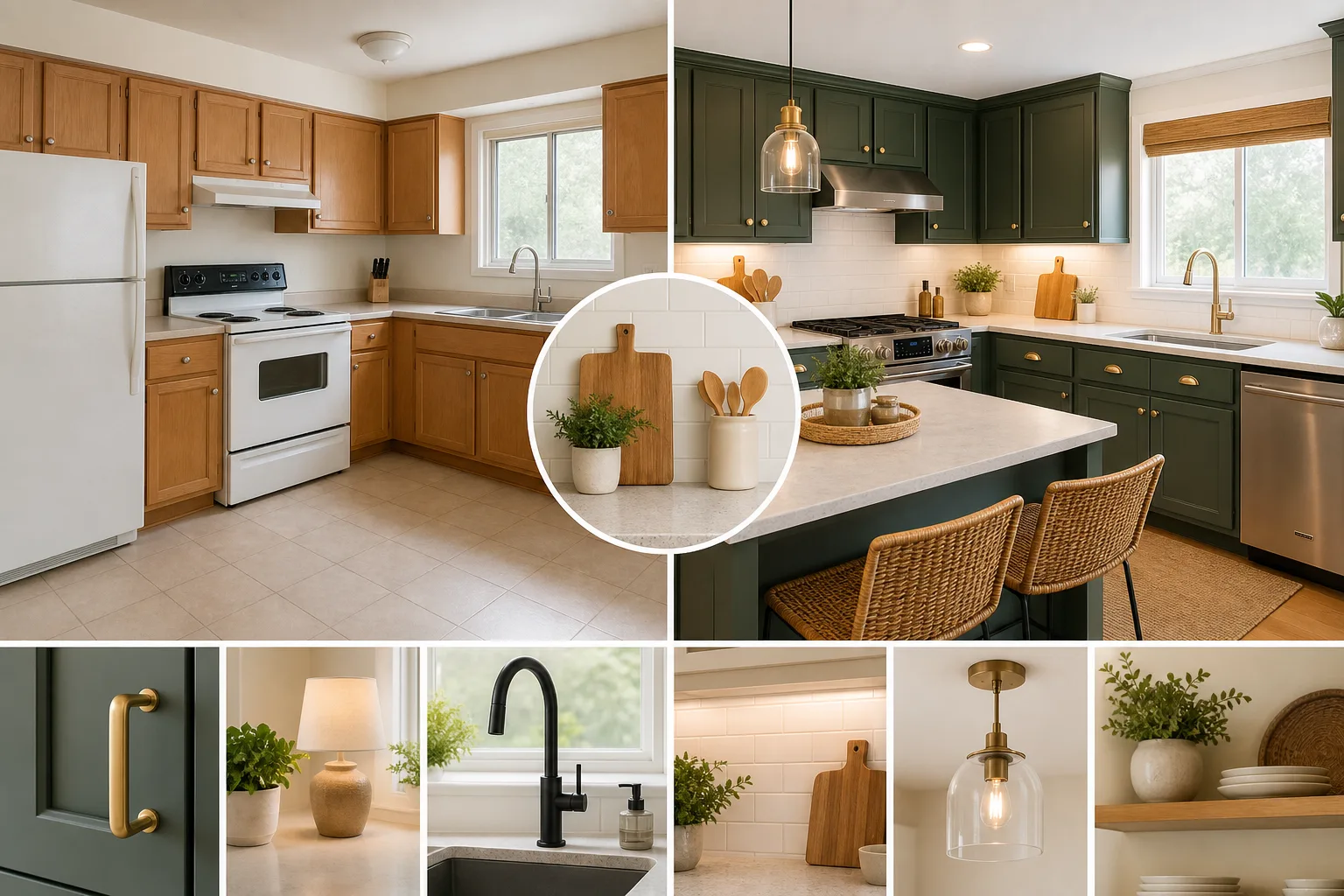
A no-renovation makeover updates the appearance and day-to-day usability of a kitchen without changing its structure. You keep the existing layout, cabinet boxes, major plumbing locations, and usually the appliances. Instead, you improve the finishes and details around them.
Typical projects include painting cabinets or walls, replacing knobs and pulls, adding a peel-and-stick backsplash, upgrading light fixtures, organizing drawers, changing window treatments, and restyling open surfaces. These are cosmetic or reversible improvements rather than construction work.
This approach is especially useful if you are saving for a future remodel, preparing a home for sale, living in a rental, or working with a kitchen that is basically functional. If cabinets have water damage, countertops are failing, electrical systems are unsafe, or the layout creates serious accessibility issues, professional repair or renovation may still be necessary.
Start With a Fast Kitchen Assessment
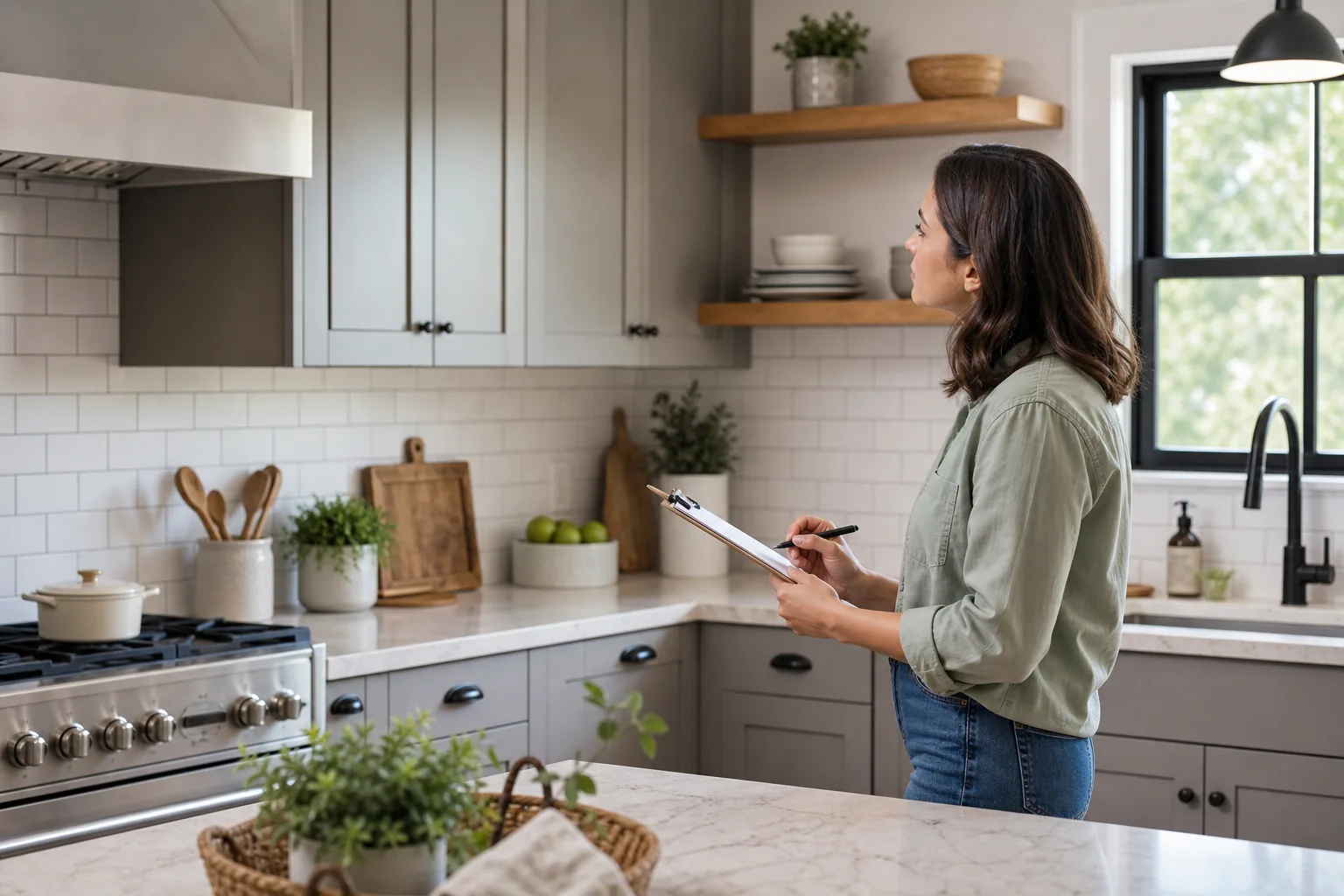
Before buying paint or decor, walk through the room and identify the issues that have the greatest visual or functional effect. Taking a few photos in daylight is helpful because it reveals visual clutter, awkward color combinations, and dark zones that are easy to overlook in person.
- Cabinets: Are they solid, cleanable, and aligned, even if the finish is outdated?
- Walls and backsplash: Do they need cleaning, patching, paint, or a new surface treatment?
- Lighting: Is the room dim, yellow-toned, or lacking task lighting?
- Countertops: Are they worn, or do they mainly look crowded?
- Storage: Which drawers, cabinets, and counters regularly become messy?
- Style: Which elements clash most: hardware, fixtures, colors, decor, or textiles?
Then choose one unifying direction. For example, a warm white, black, and natural wood palette can make a traditional kitchen feel simplified and modern. Soft sage, brushed brass, and cream can bring warmth to a plain builder-grade space. A limited palette prevents a series of small updates from looking accidental.
1. Paint Cabinets Instead of Replacing Them
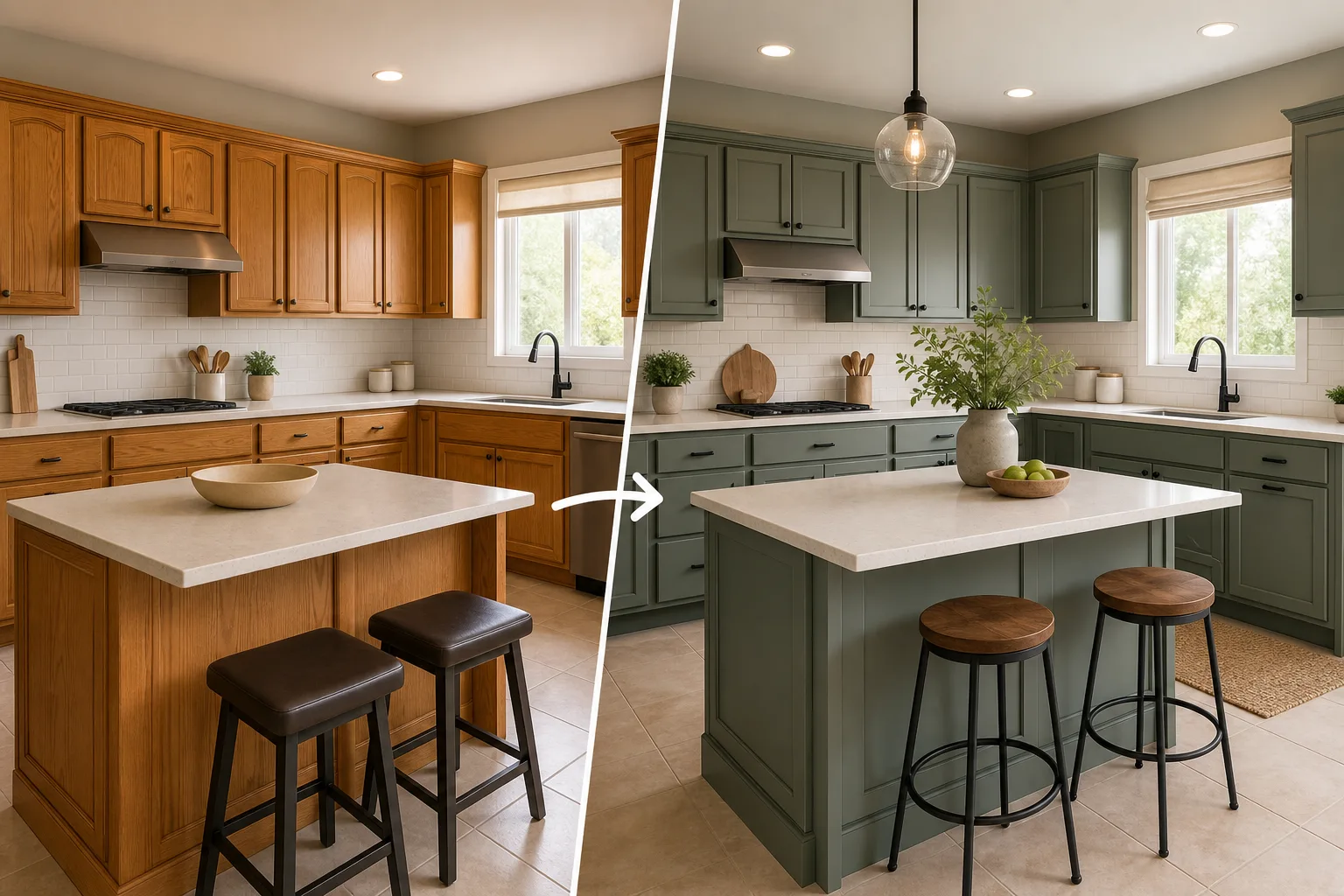
Painting is often the single highest-impact kitchen makeover without renovation because cabinetry occupies so much visual space. If your cabinet doors are structurally sound, a quality paint job can shift the entire mood of the room for a fraction of replacement costs.
Preparation determines whether the finish looks polished or starts peeling. Remove doors and hardware where possible, clean away grease thoroughly, fill noticeable dents, sand or degloss glossy surfaces, use a bonding primer, and apply a cabinet-rated paint in thin, even coats. Let the paint cure fully before reinstalling doors or placing items inside.
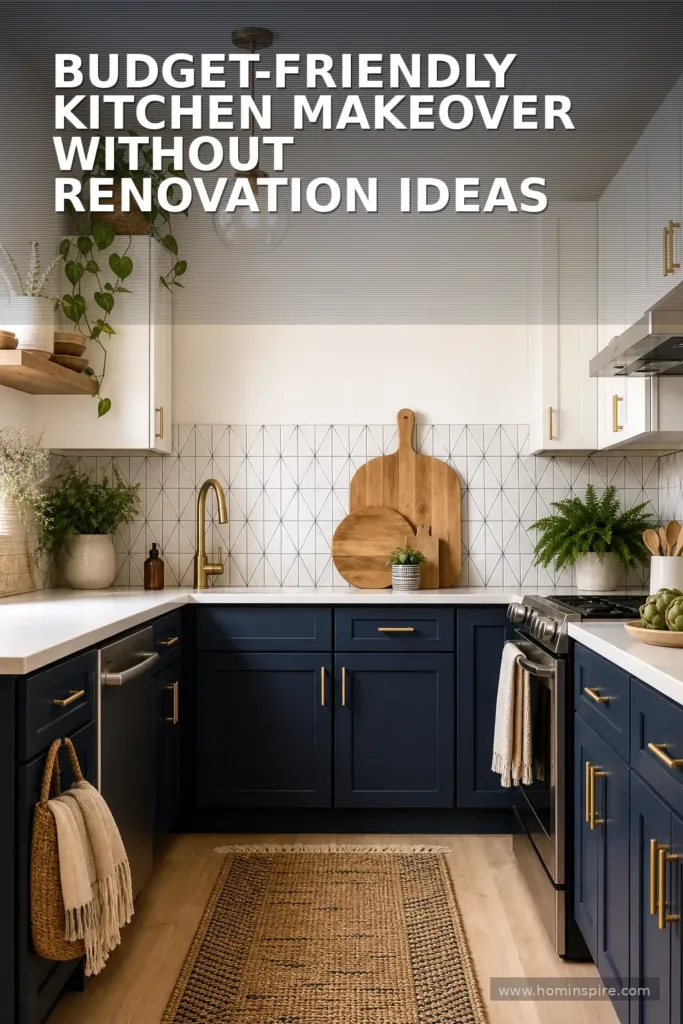
For broad appeal, consider warm white, soft greige, muted green, smoky blue, or a deep charcoal for a lower cabinet or island accent. Avoid choosing a color only from a phone screen. Test samples beside your countertop, backsplash, and flooring in both daylight and evening light.
If painting every cabinet feels overwhelming, paint only the lower cabinets, the island, or a small bank of upper cabinets. Even this selective approach can add contrast and dimension.
2. Replace Hardware for an Instant Style Shift
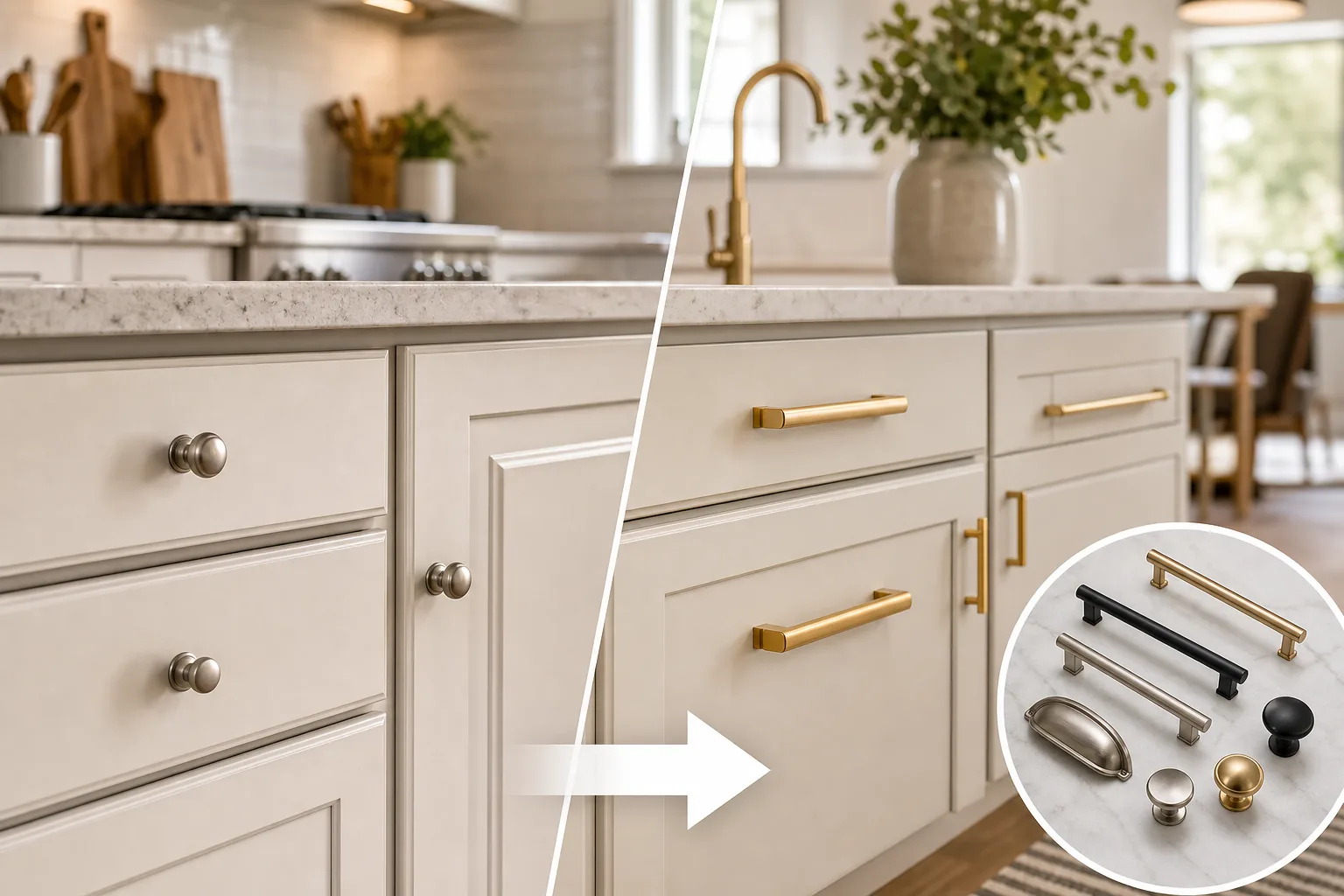
New pulls and knobs are a small upgrade with an outsized result. Hardware acts like jewelry for cabinets: it adds contrast, reinforces your style, and makes older doors look more deliberate.
Measure the center-to-center distance between existing pull holes before ordering replacements. Choosing hardware with the same measurement avoids filling and drilling holes. For knobs, verify that new pieces will cover any marks left by the old ones.
Matte black works well in modern, transitional, and farmhouse-inspired spaces. Brushed nickel is versatile and easy to coordinate with stainless appliances. Antique brass or warm champagne bronze can soften a white kitchen and add character. Keep the finish consistent with, or intentionally complementary to, the faucet and lighting.
3. Give the Backsplash a Temporary or Affordable Refresh
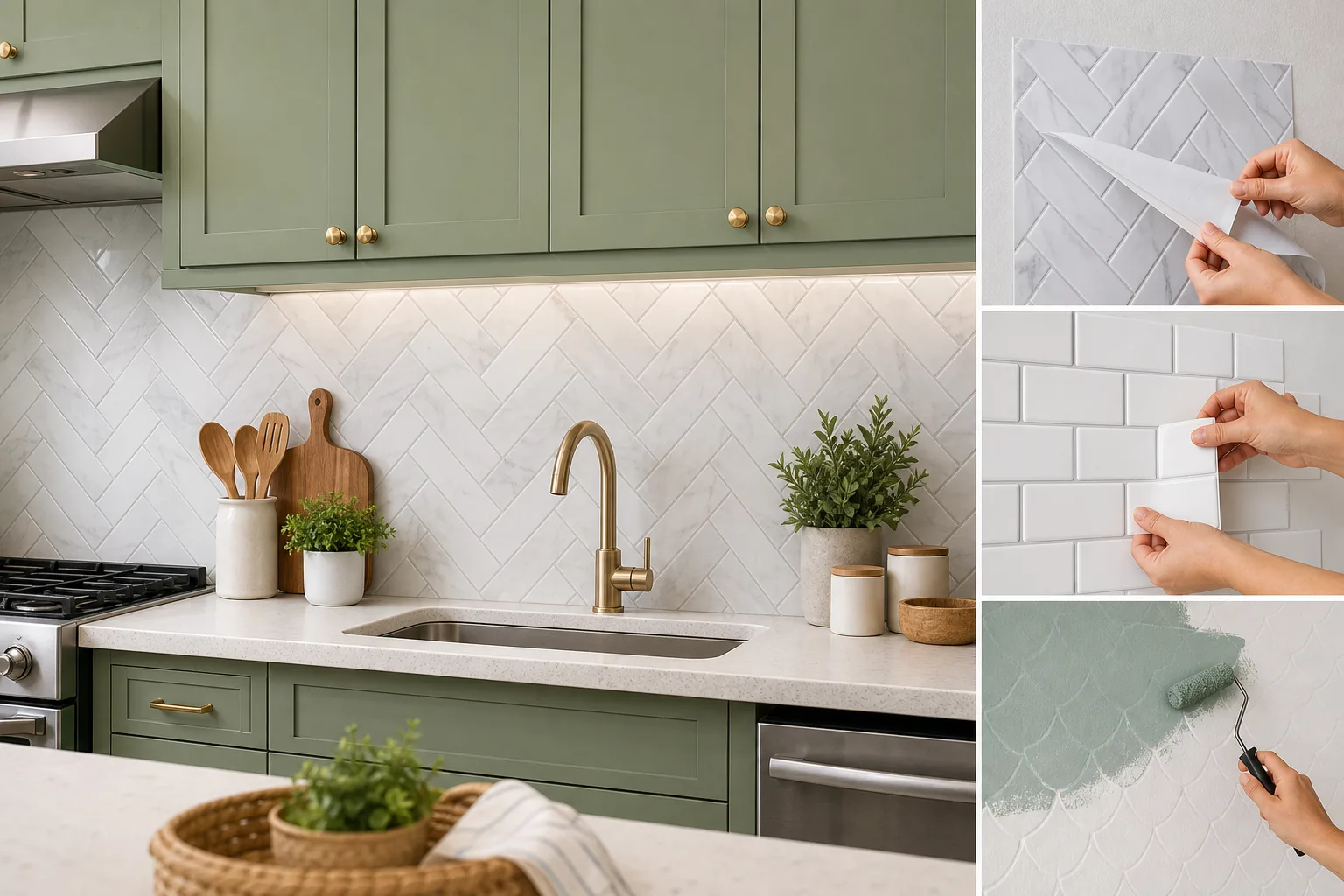
A backsplash is a focal point, so changing it can make the kitchen look newly finished. Peel-and-stick tile, vinyl panels, and high-quality removable wallpaper are options for renters and homeowners who want less mess than traditional tile installation.
Choose materials designed for kitchens, especially behind the range, and follow the manufacturer’s heat and cleaning guidance. Clean and dry the wall completely before installation. A simple white subway pattern, a subtle stone look, or a small-scale geometric design is generally easier to live with than a busy trend print.
If your existing tile is in good condition but dated, tile paint or grout cleaning may be enough. Fresh, evenly colored grout can make an older backsplash look dramatically better without replacing a single tile.
4. Upgrade Lighting in Layers
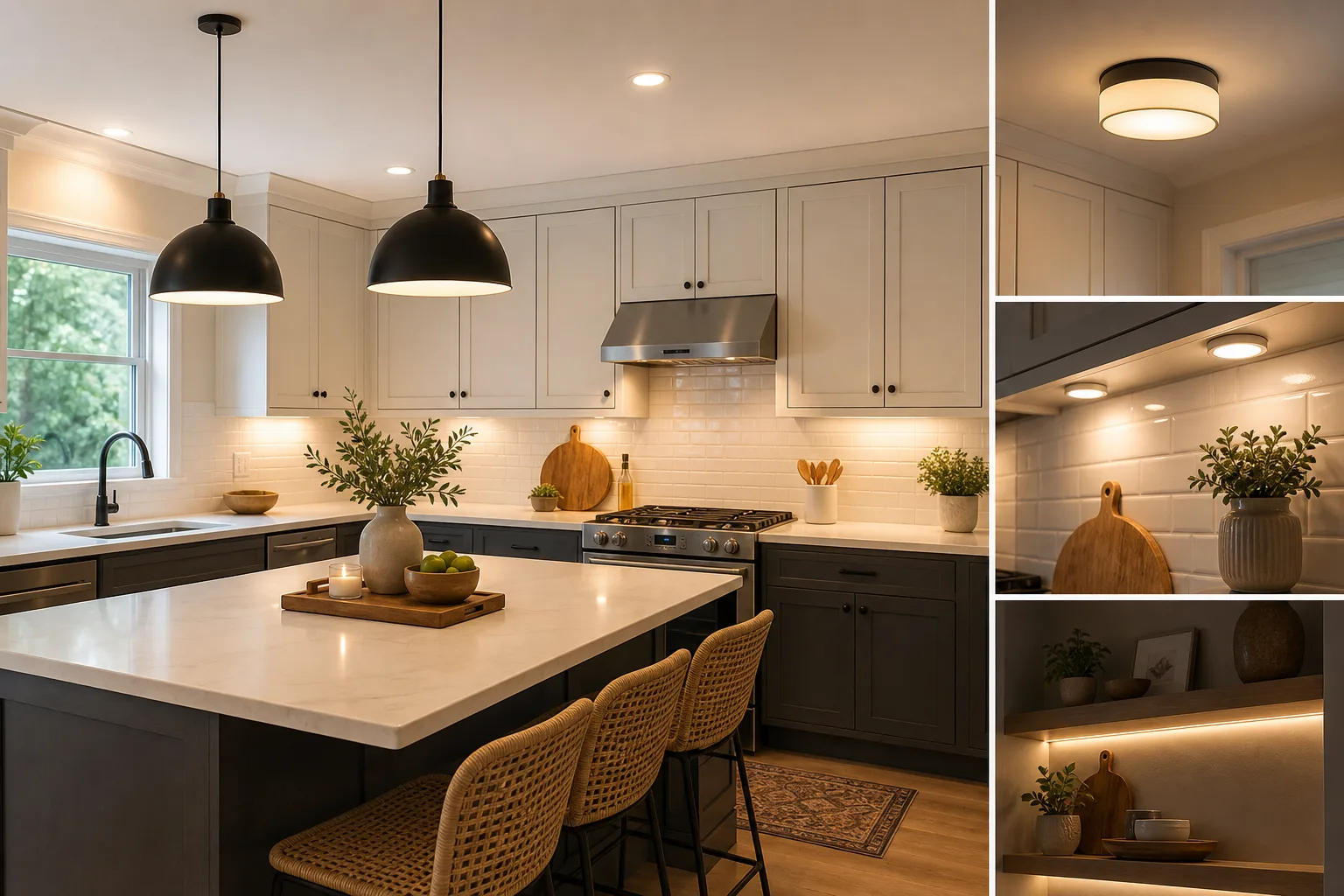
Good lighting makes paint colors look more accurate, countertops look cleaner, and food prep easier. Many kitchens rely on one ceiling fixture, which creates shadows under upper cabinets and leaves work zones underlit.
Begin by replacing outdated flush mounts or pendants with a fixture that fits the scale of the room. Then add under-cabinet lighting. Plug-in LED bars and adhesive LED strips are approachable options, while hardwired lighting may be worthwhile for a long-term homeowner update.
Select warm-to-neutral bulbs around 2700K to 3000K for a welcoming residential feel. Look for a high color rendering index when possible, as it helps finishes and food appear more natural. Put lights on separate switches or use dimmable bulbs so the kitchen can shift from bright prep mode to softer evening lighting.
5. Update the Faucet and Sink Details
A new faucet can make an older sink area feel more modern immediately. Pull-down models, clean gooseneck profiles, and single-handle designs are popular because they are useful as well as attractive. Confirm the number of existing sink holes before shopping; an escutcheon plate can sometimes cover unused holes.
If a faucet replacement is beyond your comfort level, upgrade the details around it: a coordinated soap dispenser, a streamlined dish brush holder, a new drain cover, and a tidy tray for sink-side essentials. Keep only daily-use items visible. This small zone has a major effect on whether the kitchen looks orderly.
6. Make Countertops Look Better by Clearing Them
Countertop replacement is costly, but countertops can often look more appealing simply by being cleaned, decluttered, and styled with purpose. Remove appliances that are not used daily, edit duplicate utensil holders, and relocate paper goods and snack containers into cabinets or a pantry.
Leave enough clear work surface for prep. Then use one contained arrangement, such as a wood tray with a small olive oil bottle, salt cellar, and utensil crock near the stove. For more guidance, explore kitchen counter decor ideas without clutter and these practical kitchen counter tray decor ideas.
When the counter itself is stained or dull, follow the care instructions for its material. Deep cleaning, resealing natural stone, or using a countertop-safe polish may improve the look. Avoid painting or covering counters unless you understand the durability, heat resistance, and maintenance trade-offs of the chosen product.
7. Add Storage That Improves Daily Function
A makeover feels more successful when it solves the frustrations that made the kitchen feel chaotic. Start inside cabinets and drawers. Add drawer dividers for utensils, pull-out bins for cleaning products, shelf risers for mugs and plates, and clear containers for dry goods. Group items by task so cooking, baking, and lunch packing supplies are easy to find.
Vertical storage can free up valuable space in small kitchens. Use cabinet-door racks, magnetic organizers, slim rolling carts, and over-the-door pantry storage where appropriate. If you rent, prioritize removable solutions and products that do not require drilling. See these renter-friendly kitchen storage ideas without drilling for damage-free options.
For a very compact layout, thoughtful organization can be as transformative as a new finish. These small kitchen storage ideas for renters offer more ways to maximize limited cabinets without permanent changes.
8. Create a More Intentional Pantry Zone
Visible food packages and overflowing shelves can make an otherwise attractive kitchen feel disorganized. Decant frequently used dry goods into airtight containers, label them clearly, and use bins to group snacks, breakfast items, sauces, or baking ingredients.
You do not need a walk-in pantry to create order. A tall cabinet, a utility closet, or a section of open shelving can become a controlled storage zone. Use matching bins sparingly and choose sizes that fit what you actually buy. For layouts that need discreet storage, review these hidden pantry ideas.
9. Change Window Treatments and Soft Elements
Textiles are an easy way to introduce softness and color without committing to permanent materials. Replace heavy, dated valances with woven shades, simple café curtains, or a moisture-friendly roller shade. Make sure the treatment does not interfere with windows that need to open or with a sink faucet below.
A washable runner, new dish towels, and seat cushions can tie a kitchen together. Choose two or three colors from the room rather than introducing many new shades. For example, if you add brass hardware and a wood tray, linen-colored towels and a muted patterned runner will support the look without overwhelming it.
10. Restyle Open Shelves and Glass-Front Cabinets
Open storage can either add personality or amplify clutter. Treat shelves as a place for attractive, frequently used pieces: everyday white dishes, clear drinking glasses, a small stack of cookbooks, or a few wood serving boards. Avoid filling every inch.
Use repetition to create calm. Matching mugs, similar food containers, or a coordinated set of bowls look more collected than a mixture of unrelated items. If your glass-front cabinets reveal mismatched contents, add a removable frosted film or simply reorganize them so the most cohesive pieces are visible.
11. Use Peel-and-Stick Floor Updates Carefully
Flooring is one of the biggest surfaces in a kitchen, and it can date a room quickly. Peel-and-stick vinyl tiles or floating floor systems may be an option when the existing floor is clean, level, and stable. They can work especially well in a low-traffic apartment kitchen or as a short-term update before a future remodel.
However, do not use a cosmetic floor solution to hide moisture damage, loose subflooring, or structural problems. Measure carefully, order samples first, and choose a pattern that supports the room rather than competing with the backsplash and counters. In small kitchens, quieter floor patterns usually create a more spacious effect.
12. Refresh Appliances Without Replacing Them
New appliances are not required for a more polished kitchen. Start with a detailed cleaning of appliance fronts, handles, seals, vents, and the space around them. Replace yellowed stove knobs or damaged drip pans if compatible parts are available. A clean microwave surround and a neatly organized refrigerator exterior also make a difference.
Consider whether your visible accessories coordinate with appliance finishes. A black toaster, black utensil crock, and matte black hardware can make black appliances feel intentional. With stainless steel, brushed nickel, chrome, black, and warm wood accents tend to work well.
13. Add One Personal Focal Point
Every kitchen benefits from one element that makes it feel personal rather than purely functional. This could be framed art on an open wall, a vintage-style clock, a sculptural fruit bowl, a narrow picture ledge, or a small collection of ceramic pieces.
Keep the focal point away from direct heat and grease splatter. It should support the kitchen’s palette, not create another source of visual noise. In a small kitchen, one intentional detail is usually more effective than multiple decorative objects.
14. Follow a Smart Order of Operations
Doing updates in the right sequence prevents wasted effort. First declutter and deep clean so you can see the space clearly. Next repair small issues such as loose hinges, chipped caulk, and damaged trim. Then complete painting, backsplash work, lighting, and hardware. Finish with storage organizers, textiles, and decor.
This order helps you make style decisions based on your new core finishes instead of buying accessories too early. It also keeps dust and paint away from newly organized drawers and styled surfaces.
15. Build a Budget Around Visual Impact
Set a total spending cap before you begin, then divide it into categories. A typical priority order is paint and prep supplies, lighting, hardware, storage, backsplash treatment, and styling. Spend more on items that are touched daily or need to withstand water and heat, such as paint, faucets, and cabinet hardware.
Save by shopping sales, buying sample sizes before committing, repurposing baskets and trays you already own, and completing one zone at a time. You can find more project ideas in this guide to budget kitchen makeover ideas, as well as these kitchen makeover ideas without replacing the cabinets.
Kitchen Makeover Without Renovation Checklist
- Choose a simple color palette and overall style direction.
- Deep clean cabinets, grout, appliances, and floors.
- Repair loose hinges, damaged caulk, and visible scuffs.
- Paint cabinets, walls, or a targeted accent area.
- Replace cabinet hardware and consider a faucet update.
- Add improved overhead and under-cabinet lighting.
- Refresh the backsplash with cleaning, paint, or removable materials.
- Organize drawers, pantry storage, and under-sink areas.
- Clear counters and add only purposeful decor.
- Finish with coordinated textiles, window treatments, and one personal focal point.
A kitchen makeover without renovation works best when it is guided by editing rather than adding. Clear unnecessary items, repair what is loose or worn, and select a few upgrades that repeat the same colors and finishes. The result can feel remarkably close to a remodel, while preserving your budget, timeline, and existing layout.
Frequently Asked Questions
Can I make over my kitchen without replacing cabinets?
Yes. If cabinet boxes and doors are structurally sound, paint, new hardware, hinge adjustments, lighting, and a refreshed backsplash can substantially change the kitchen without cabinet replacement.
What is the cheapest way to update a kitchen?
Deep cleaning, decluttering countertops, painting walls, replacing cabinet hardware, changing light bulbs, and adding simple organizers are usually the most affordable high-impact updates.
Are peel-and-stick backsplashes good for renters?
They can be, provided your lease allows them and the product is designed for removable use. Test one small area first, follow surface-prep directions, and avoid using products near heat sources unless approved by the manufacturer.
How can I make an old kitchen look modern?
Use a restrained palette, simplify counters, update hardware and lighting, choose streamlined faucet and storage accessories, and reduce visual clutter. Modern kitchens usually look clean, functional, and cohesive rather than overly decorated.
Which kitchen update adds the most visual value?
For many kitchens, cabinet painting paired with new hardware offers the largest visual transformation. Better lighting and a clean, updated backsplash are also high-impact improvements.
