
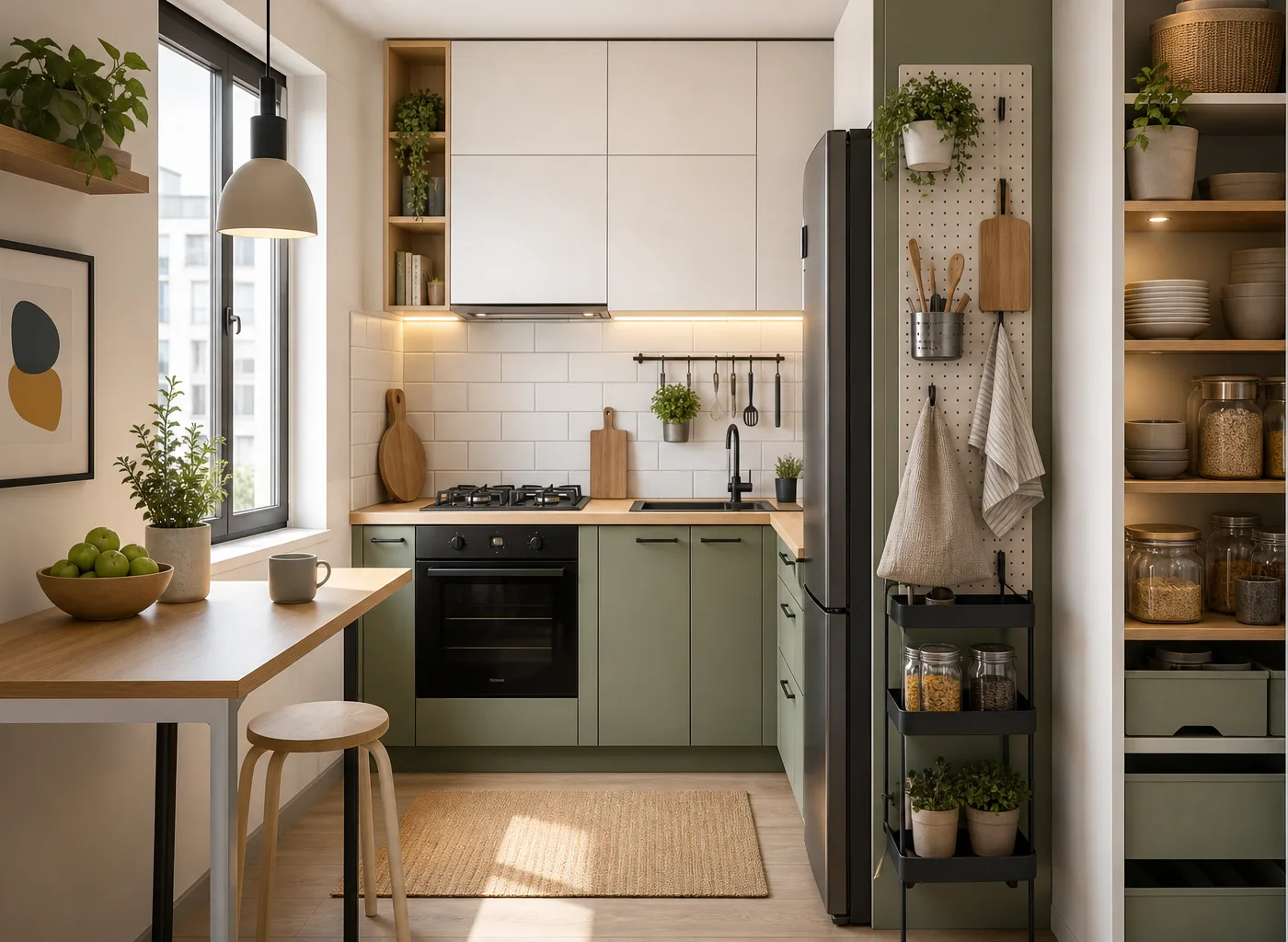
A tiny apartment kitchen can feel limiting, especially when you are trying to store groceries, prep dinner, and keep the counters clear in the same few square feet. But a small footprint does not have to mean an inefficient or uninspired kitchen. The best tiny apartment kitchen ideas focus on using vertical surfaces, choosing hardworking pieces, reducing visual clutter, and making everyday items easier to reach.
Whether you rent a studio, live in an older city apartment, or simply have a narrow galley kitchen, a few intentional changes can make the room feel noticeably larger and more useful. Start with the ideas that solve your biggest daily frustration, then layer in details that make the space feel like home.
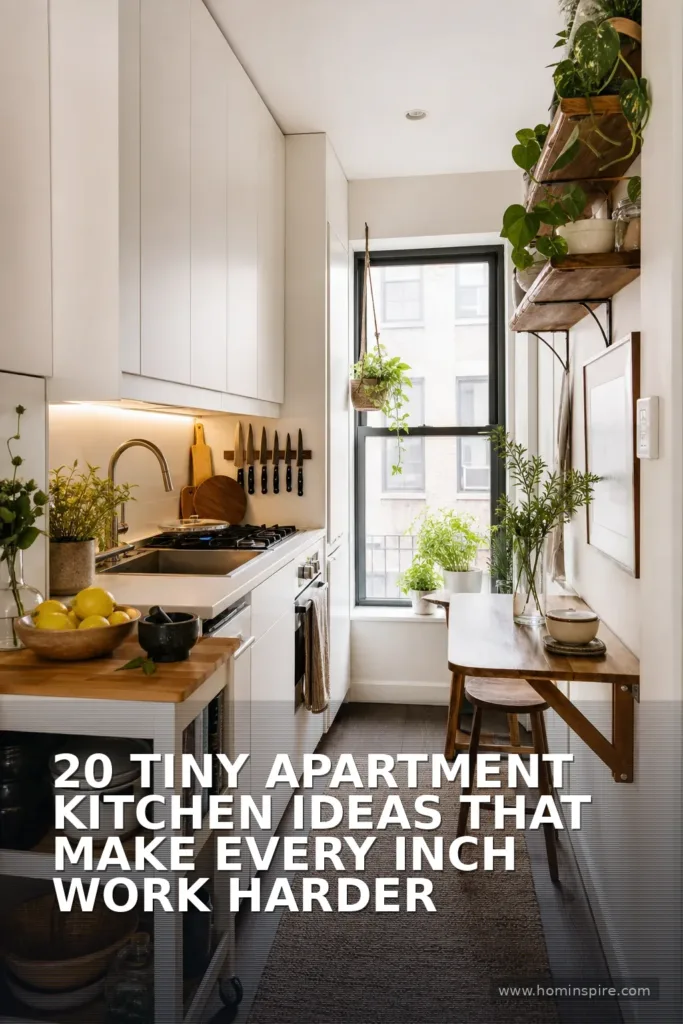
1. Clear the Counters First
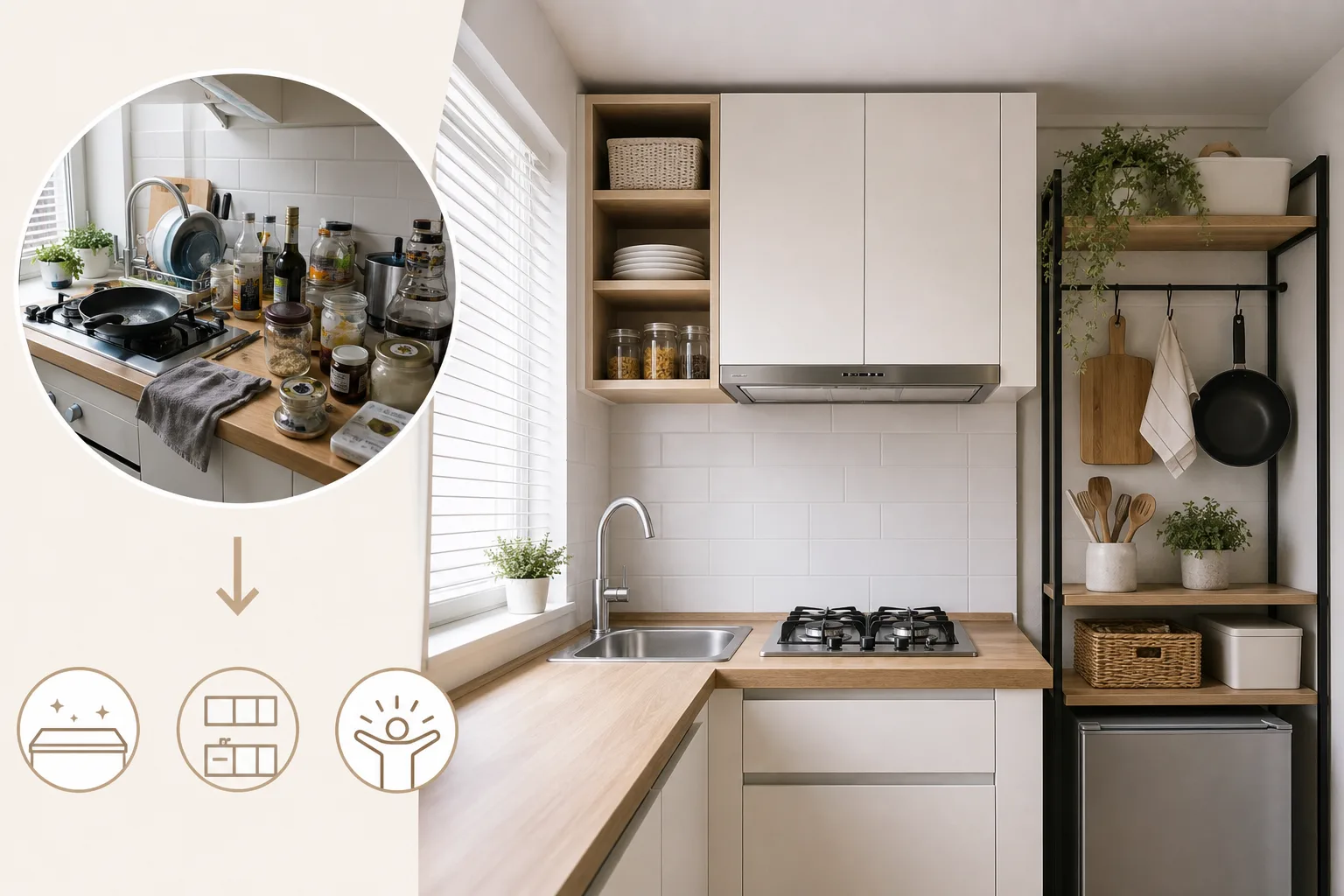
Counter space is the most valuable real estate in a tiny kitchen. Before buying organizers or adding decor, remove appliances and tools that are not used every day. Store the blender, mixer, specialty gadgets, and extra serving pieces elsewhere if possible.
Keep only a small set of essentials visible: perhaps a coffee maker, a utensil crock, and a cutting board. A calmer counter instantly makes a compact kitchen feel more spacious, cleaner, and easier to use.
2. Use Vertical Wall Space for Storage
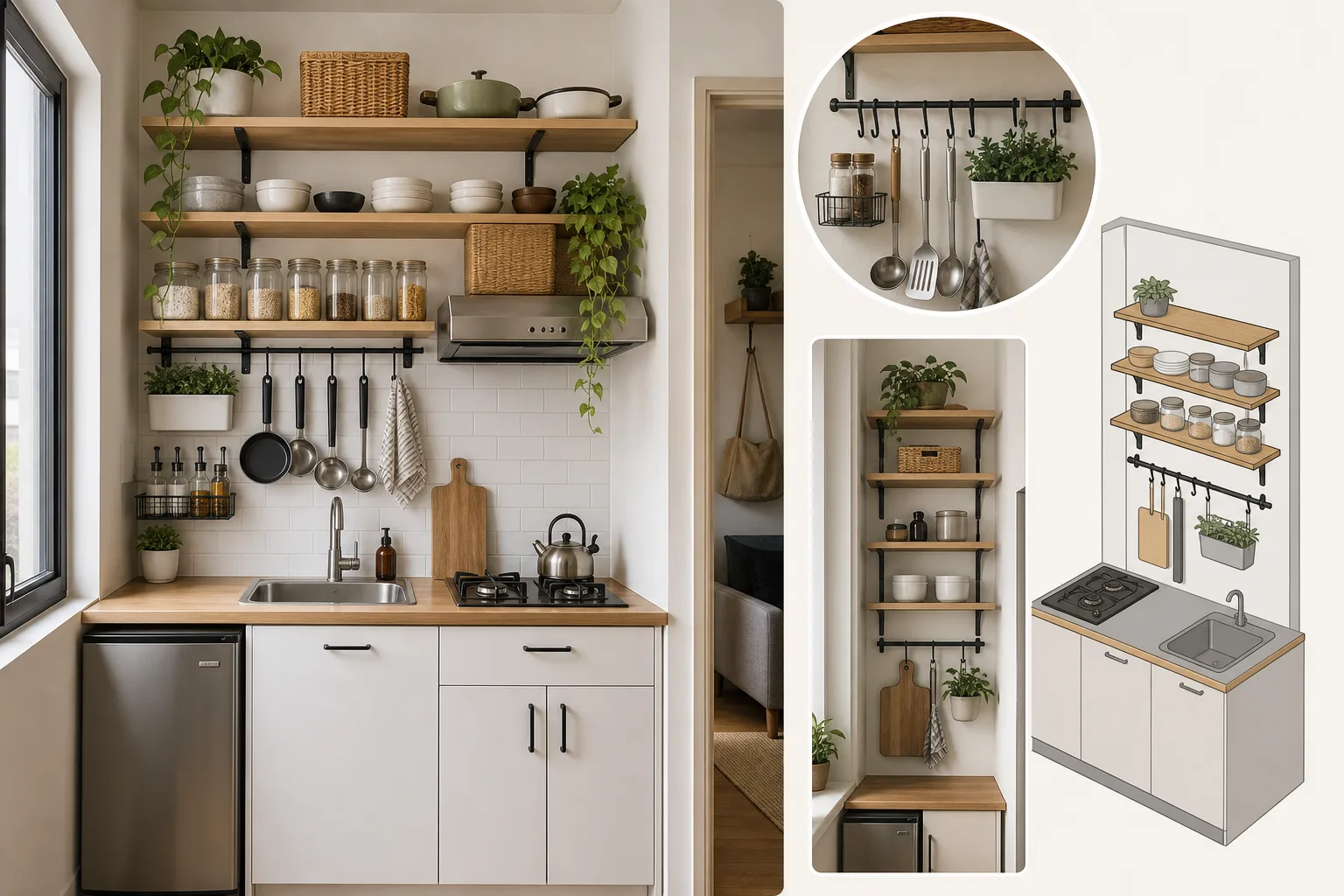
When cabinets and drawers are limited, look up. Empty wall areas can hold more than decoration. Install a slim rail with S-hooks for utensils, mugs, dish towels, and small pans. A wall-mounted magnetic knife strip can free up an entire drawer while keeping knives safely accessible.
Open shelves can also work well, but use them selectively. One or two narrow shelves for frequently used dishes, pantry jars, or cookbooks add function without making the room look overfilled. For more ways to make blank walls useful and attractive, explore these small kitchen wall decor ideas.
3. Add a Rolling Kitchen Cart
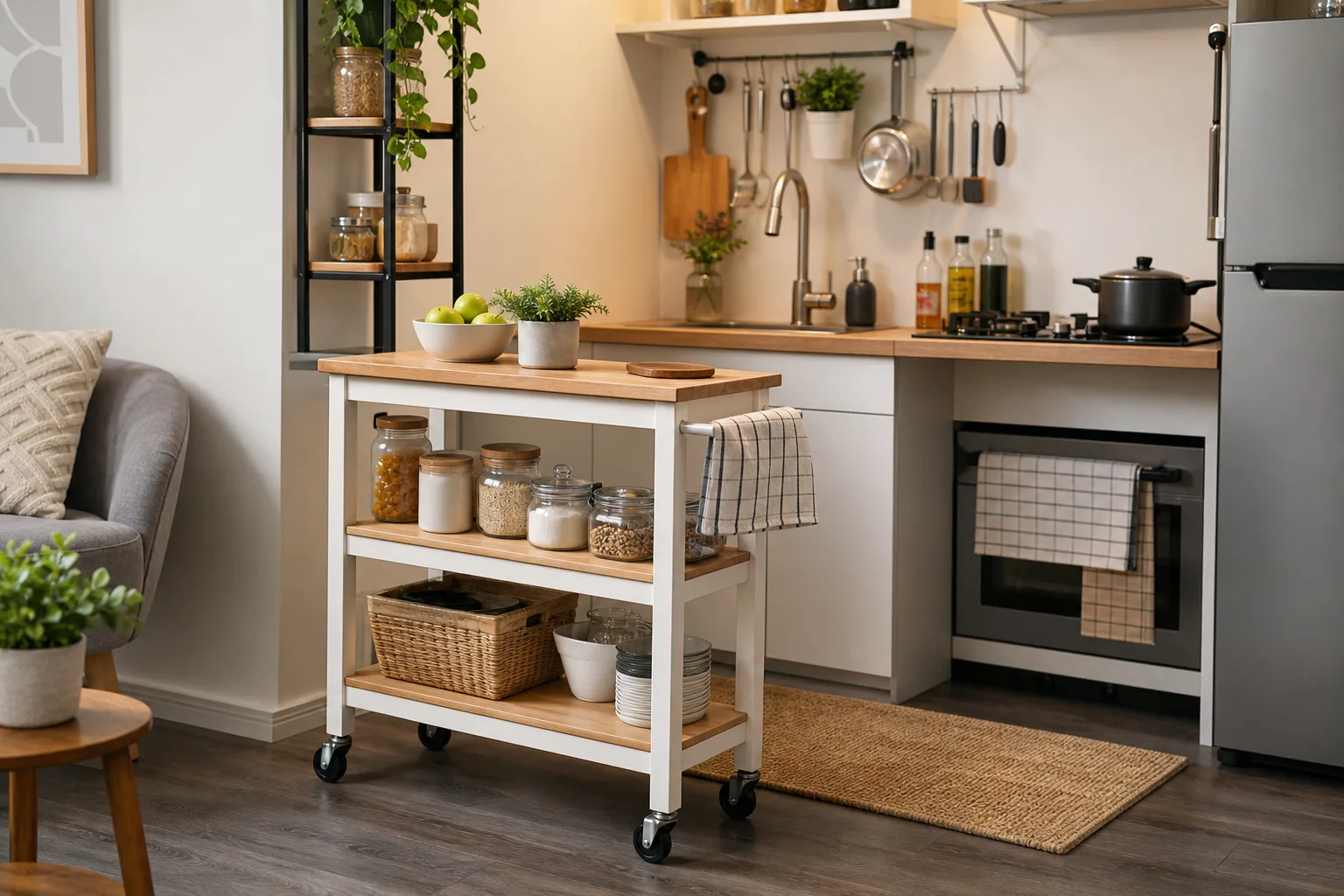
A compact rolling cart is one of the most flexible solutions for apartment living. It can act as a coffee station, pantry overflow area, produce stand, bar cart, or mobile prep surface. Choose a narrow cart with locking wheels so it stays stable when you are chopping or serving.
When guests come over, roll it beside the table for extra serving space. When you need an open walkway, move it against a wall or into another room. Look for a cart with shelves or drawers rather than a simple tray design to gain hidden storage.
4. Turn the Back of Cabinet Doors into Storage
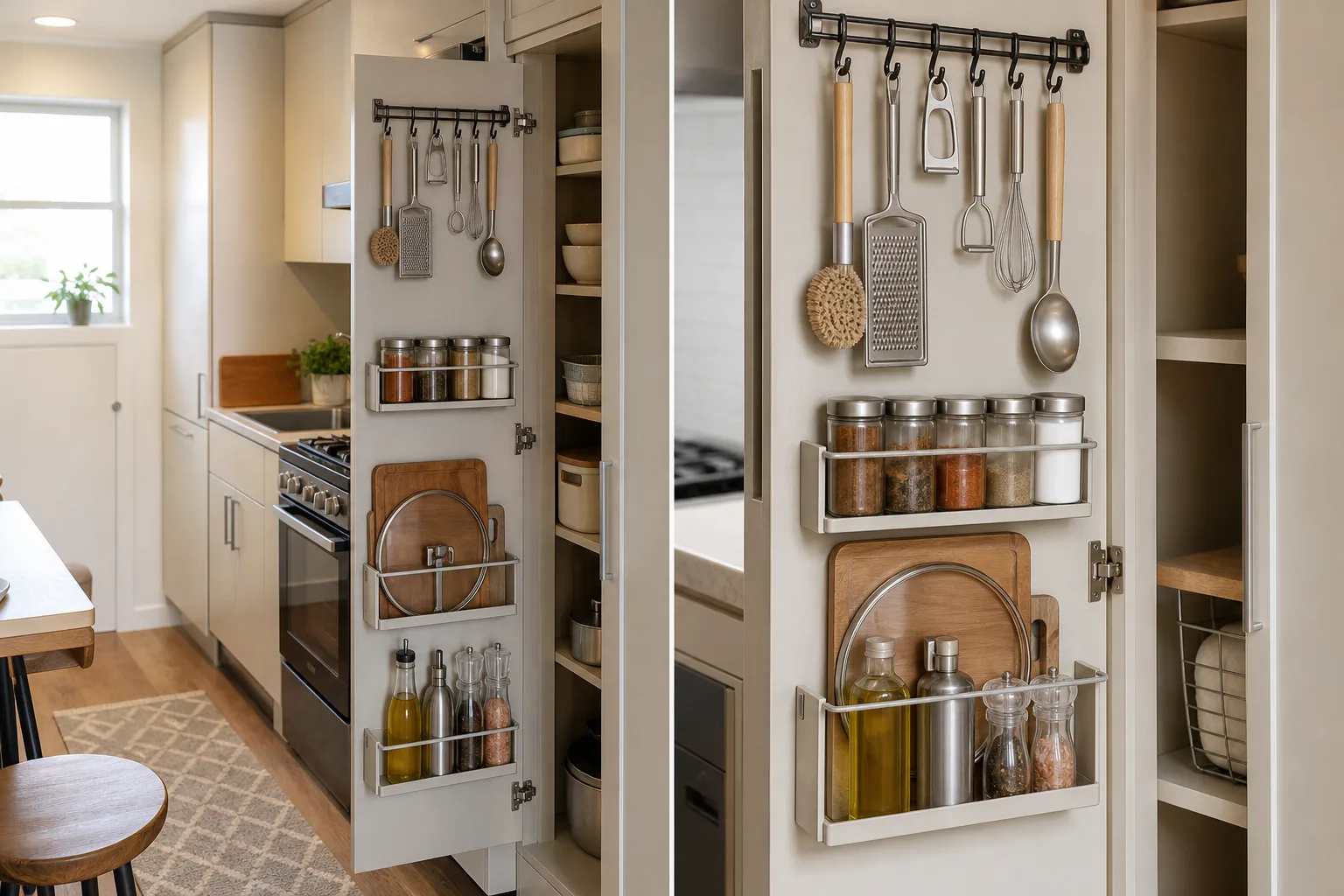
The inside of cabinet doors is often overlooked, yet it can hold many lightweight essentials. Add adhesive-mounted racks for plastic wrap, foil, cutting boards, cleaning sprays, or pot lids. A shallow organizer on the pantry door can hold spices, packets, or tea.
Measure the clearance before installing anything. In a shallow cabinet, even a slim rack may prevent the door from closing. Renter-friendly adhesive options are usually a practical choice, but follow product weight limits carefully.
5. Choose a Fold-Down or Expandable Table
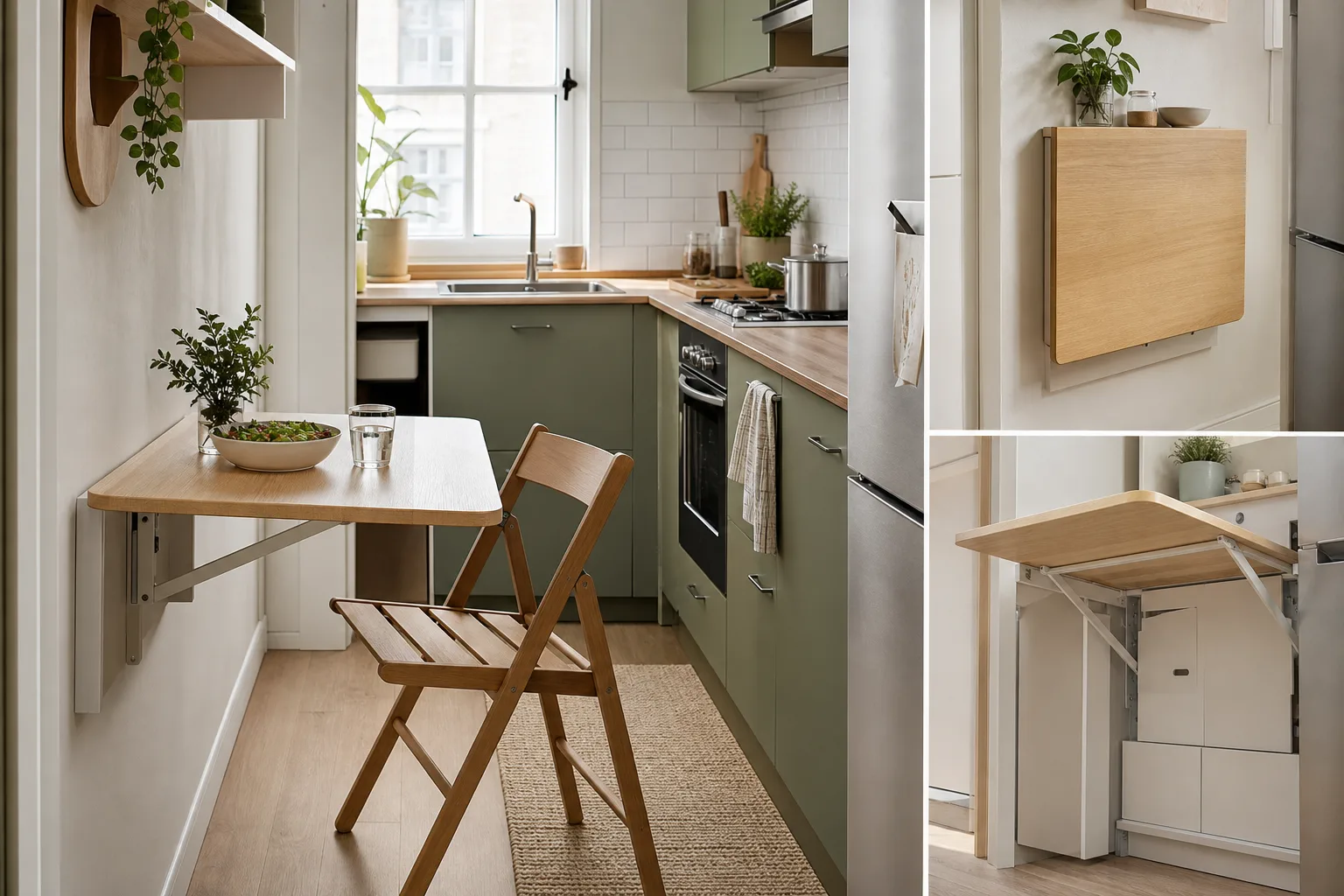
If your apartment kitchen has no room for a permanent dining table, consider a wall-mounted drop-leaf table or a narrow expandable console. A fold-down surface can serve as a breakfast spot, laptop desk, or extra prep station, then disappear when not in use.
Another easy option is a slim bar-height table behind a sofa or along an unused wall. Pair it with stools that tuck fully underneath to preserve walking space. The goal is to create a useful surface without blocking cabinets, appliances, or the main path through the room.
6. Use Drawer Dividers and Deep-Bin Organizers
Small kitchens often have less storage, so disorganized storage becomes a bigger problem. Simple drawer dividers prevent utensils from spreading across the drawer and make it easier to find what you need quickly. Use expandable dividers for cutlery, kitchen tools, and food-storage lids.
Inside lower cabinets, clear bins or pull-out baskets keep pantry goods from disappearing at the back. Group items by purpose: breakfast foods, baking supplies, snacks, canned goods, and so on. Being able to see and reach everything helps prevent duplicate purchases and wasted food.
7. Make Corners Work Harder
Awkward corners can become valuable storage zones. A slim corner shelf can hold oils, spices, or a small plant. On a counter, a tiered organizer makes use of vertical height without taking up much depth. In an empty floor corner, a narrow shelving unit can store produce baskets or small appliances.
Keep corner styling restrained in a tiny kitchen. One useful feature is better than several small decorative objects that collect dust. Find more compact solutions in these kitchen corner decor ideas for small spaces.
8. Install Under-Cabinet Lighting
Good lighting can dramatically improve a tiny apartment kitchen. Dark counters and shadowy corners make a small room feel closed in, while under-cabinet lighting creates depth and makes food prep safer.
Battery-powered LED puck lights and rechargeable light bars are especially useful for renters because they are easy to install and remove. Choose a warm white setting for a cozy look or a neutral white setting if you want brighter task lighting. Place lights evenly beneath upper cabinets to avoid harsh pools of light.
9. Create a Portable Prep Station
When counter space is scarce, think in layers. An over-the-sink cutting board, stovetop cover board, or sturdy rolling cart can provide an instant prep surface. These options are particularly helpful in one-wall kitchens where the sink and stove consume most of the counter.
Always use stovetop covers only when burners are completely cool and off. A large cutting board that bridges part of the sink can be useful for washing and chopping produce, but make sure it is stable and sized correctly for your sink.
10. Store Pots, Pans, and Lids Strategically
Bulky cookware can overwhelm a tiny kitchen quickly. If a cabinet is deep enough, use a vertical rack to store pans on their sides and a separate organizer for lids. This prevents the familiar noisy stack of cookware and makes one pan easy to grab.
If wall mounting is allowed, a small pot rail or pegboard can keep the most-used pieces close at hand. Avoid hanging every pot you own; a crowded wall can make the kitchen feel smaller. Keep just the daily favorites visible and store occasional cookware elsewhere.
11. Rethink the Refrigerator Zone
The sides and top of a refrigerator are useful areas in many apartments. A magnetic shelf can hold spices, paper towels, or cooking oils, provided it is secure and does not block ventilation. A narrow rolling organizer beside the fridge can turn a few inches of unused space into pantry storage.
Above the refrigerator, use matching baskets or bins for infrequently used items such as party supplies, extra napkins, or seasonal serving pieces. Label every container so you do not have to pull down multiple bins to find one item.
12. Use Light, Cohesive Colors
A tiny kitchen does not have to be all white, but a limited, cohesive palette makes it feel more open. Light cabinet colors, warm neutrals, pale wood tones, and soft gray-green accents can reflect light while still feeling inviting.
Repeat two or three finishes throughout the room. For example, pair cream accessories with light wood and matte black hardware, or use white, soft blue, and brushed brass. If you like an understated and welcoming look, these warm neutral kitchen decor ideas offer approachable direction.
13. Replace Visual Clutter with a Few Intentional Details
In a compact kitchen, decor should earn its place. A framed food print, a small herb plant, a beautiful dish towel, or a wooden cutting board can add personality without crowding the space. Use trays to corral countertop items so they read as one tidy arrangement rather than separate pieces.
Try to avoid filling every open shelf, wall, and counter. Negative space is part of the design. Leaving some areas open allows the kitchen to breathe and makes even modest updates look more polished.
14. Add a Peel-and-Stick Backsplash
A removable backsplash can give a dated apartment kitchen a finished look with relatively little effort. Peel-and-stick tile, vinyl panels, and wallpaper-style backsplash products come in many colors and patterns, from classic white subway tile to subtle stone-inspired finishes.
Choose a simple pattern in a small kitchen to avoid visual overload. Before applying, clean and dry the wall thoroughly, test a sample in an inconspicuous area, and check your lease terms. For practical removable options, see these renter-friendly kitchen backsplash ideas.
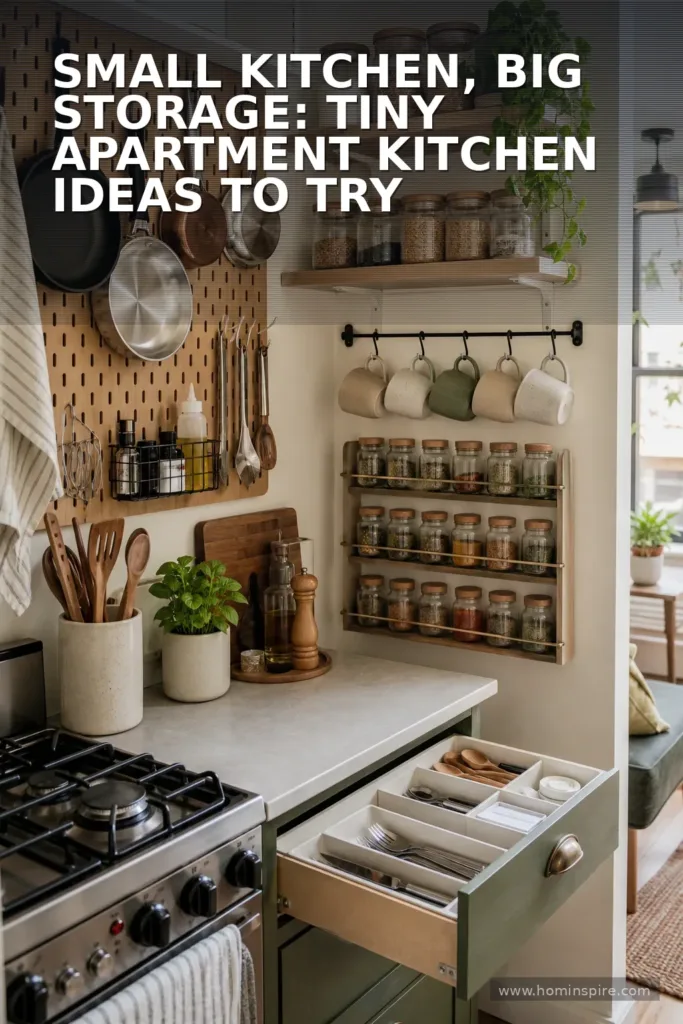
15. Upgrade Cabinet Hardware
Replacing knobs and pulls is a small change with a surprisingly strong effect. Modern hardware can make basic apartment cabinets feel more intentional, especially when paired with a clean counter and improved lighting.
Measure the distance between existing screw holes before ordering pulls. If you want an easy swap, choose hardware with the same center-to-center measurement. Keep the original pieces in a labeled bag so you can reinstall them before moving out.
16. Use Shelf Risers and Under-Shelf Baskets
Most cabinets waste vertical space because dishes and pantry items are stacked too high or too low. Shelf risers create a second level for mugs, bowls, plates, or canned goods. Under-shelf baskets are useful for wraps, napkins, and snack bags.
These simple organizers are inexpensive, portable, and ideal for renters. They also make cabinets easier to reset when you move, since nothing is permanently installed.
17. Hide Small Appliances When Possible
Appliances quickly make a tiny apartment kitchen look busy. Decide which items truly deserve counter space based on how often you use them. A daily coffee maker may stay out, but a toaster, air fryer, or slow cooker can go in a cabinet, on a cart, or on a designated shelf.
If you need to keep an appliance visible, make it look deliberate. Place it on a tray, use a coordinated cord organizer, and leave enough clear space around it. This creates a cleaner visual boundary and makes wiping down counters easier.
18. Refresh Tired Counters Without Replacing Them
Old laminate counters can make a small kitchen feel more dated and darker than it is. Renters may be able to improve the look with removable countertop covers, contact paper designed for counters, or a large wood prep board that hides a worn section while adding function.
Durability varies widely, so choose materials suited to your cooking habits and avoid placing hot pans directly on temporary surfaces. Read more ideas in this guide to a renter-friendly kitchen counter makeover.
19. Create Zones for Your Daily Routine
Even the smallest kitchen works better when items are stored near where they are used. Keep mugs, coffee, filters, and spoons together in a beverage zone. Place knives, cutting boards, and mixing bowls close to the main prep area. Store pans, utensils, and oils near the stove.
Zoning reduces back-and-forth movement and helps a one-person kitchen feel more efficient. It also makes it easier to put groceries and dishes away because every category has an obvious home.
20. Make Rental Updates Reversible
Before painting cabinets, drilling into tile, or changing fixtures, review your lease and take photos of the original space. Prioritize removable upgrades such as adhesive hooks, battery lighting, temporary backsplash materials, peel-and-stick floor mats, and replacement hardware.
A thoughtful lease-friendly update can make the kitchen feel personal without risking your security deposit. If you want a larger plan for a temporary space, browse these small rental kitchen makeover ideas on a budget.
How to Make a Tiny Apartment Kitchen Feel Bigger
The biggest difference usually comes from combining practical organization with visual simplicity. Keep counters mostly clear, use light-reflecting finishes, add layered lighting, and make every storage solution easy to access. Choose a few materials and colors that repeat throughout the room, rather than introducing many competing styles.
Most importantly, edit regularly. A small kitchen functions best when it holds what you genuinely use. Donate duplicate tools, recycle expired pantry goods, and reconsider any item that has not earned its storage space. With less clutter and a smarter layout, a tiny apartment kitchen can become one of the most efficient rooms in your home.
Frequently Asked Questions
How can I add counter space in a tiny apartment kitchen?
Use temporary surfaces such as an over-the-sink cutting board, a rolling cart, a fold-down wall table, or a stovetop cover used only when the stove is cool. Clearing rarely used appliances from existing counters also creates immediate working room.
What is the best storage solution for a tiny rental kitchen?
The best solution depends on your layout, but movable carts, cabinet-door organizers, shelf risers, clear bins, and adhesive wall hooks are especially useful because they add storage without permanent alterations.
What colors make a small kitchen look larger?
Light neutrals, soft whites, pale wood, warm beige, and muted greens or blues can make a small kitchen feel brighter and more open. Use a limited color palette to keep the room visually calm.
How do I organize a tiny kitchen with very few cabinets?
Use walls, doors, the refrigerator side, and a rolling cart for overflow storage. Group items by task, use vertical organizers for pans and baking sheets, and keep only frequently used items in the kitchen.
Are peel-and-stick kitchen updates safe for renters?
Many are renter-friendly, but always check your lease, test products in a hidden spot, and follow removal instructions. Use products made for kitchen conditions, especially near heat, moisture, and food-prep areas.
