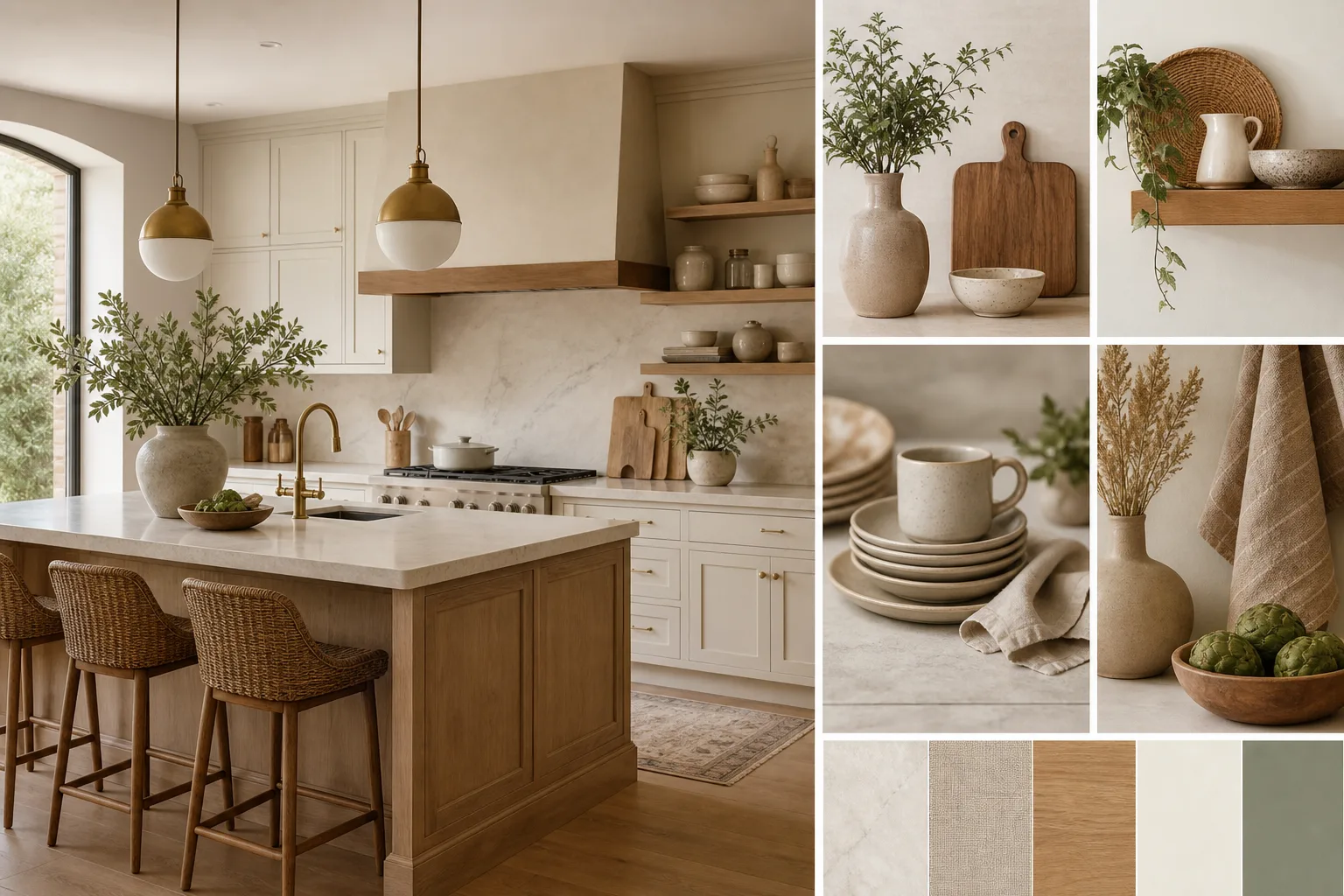
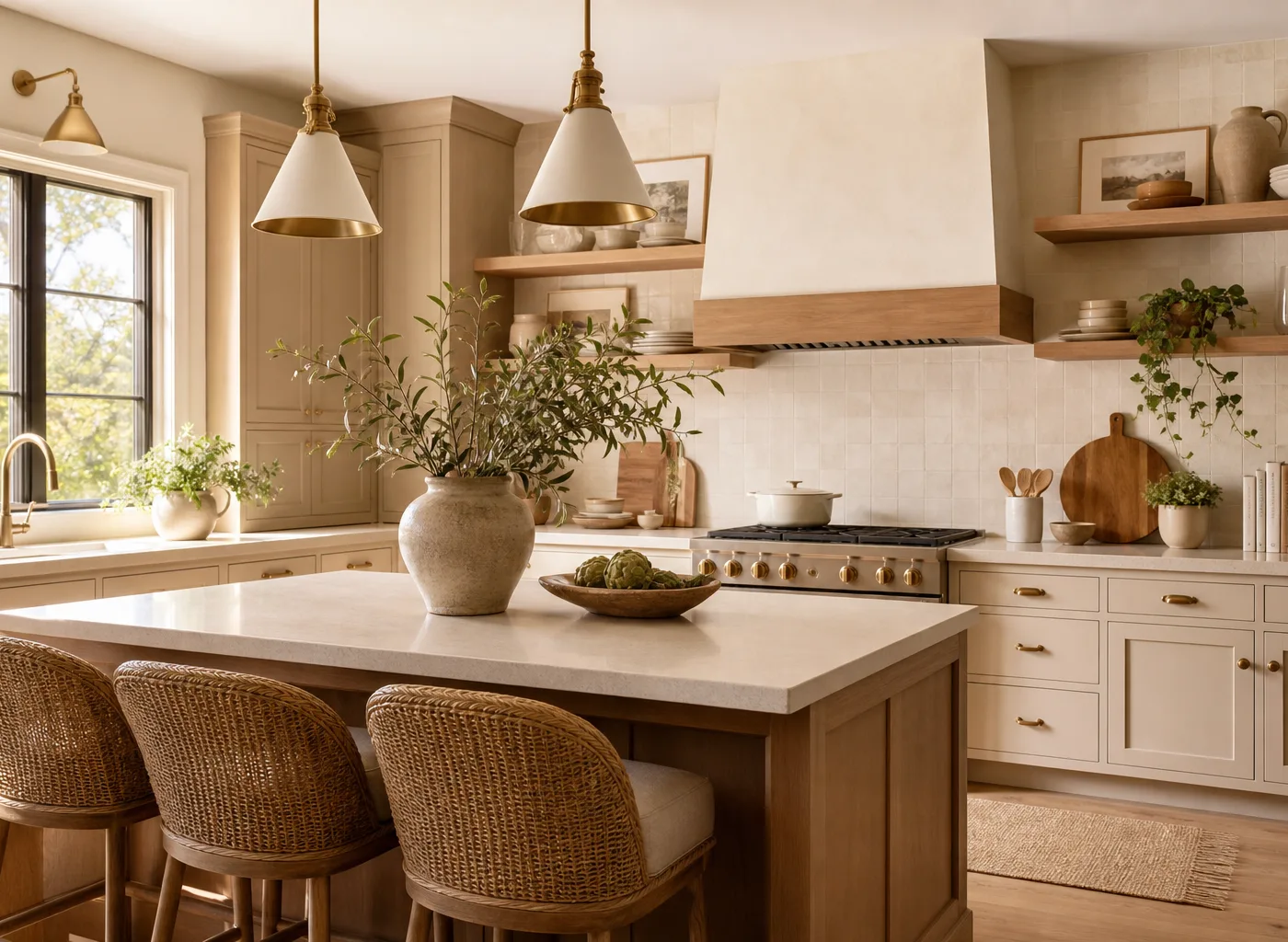
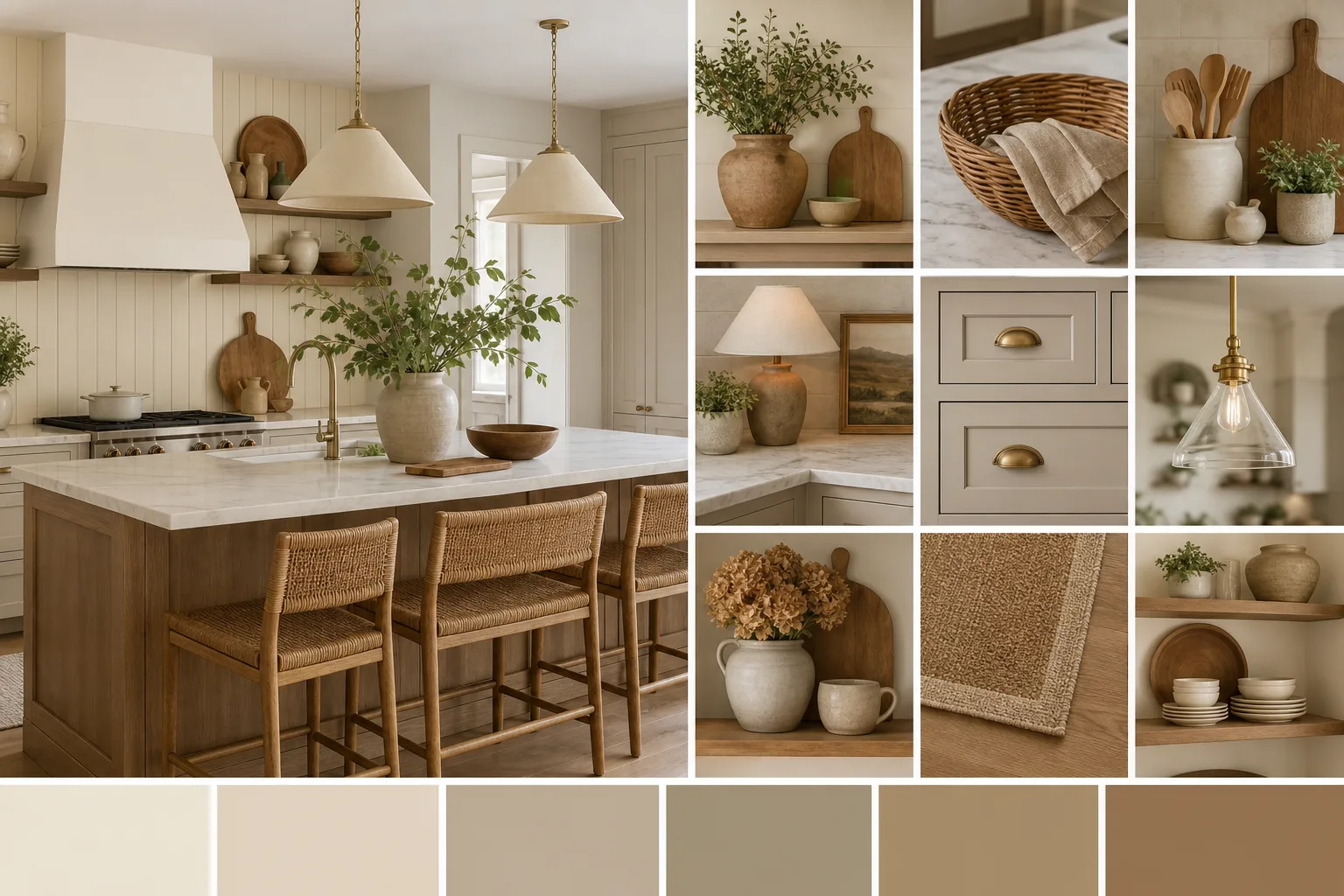
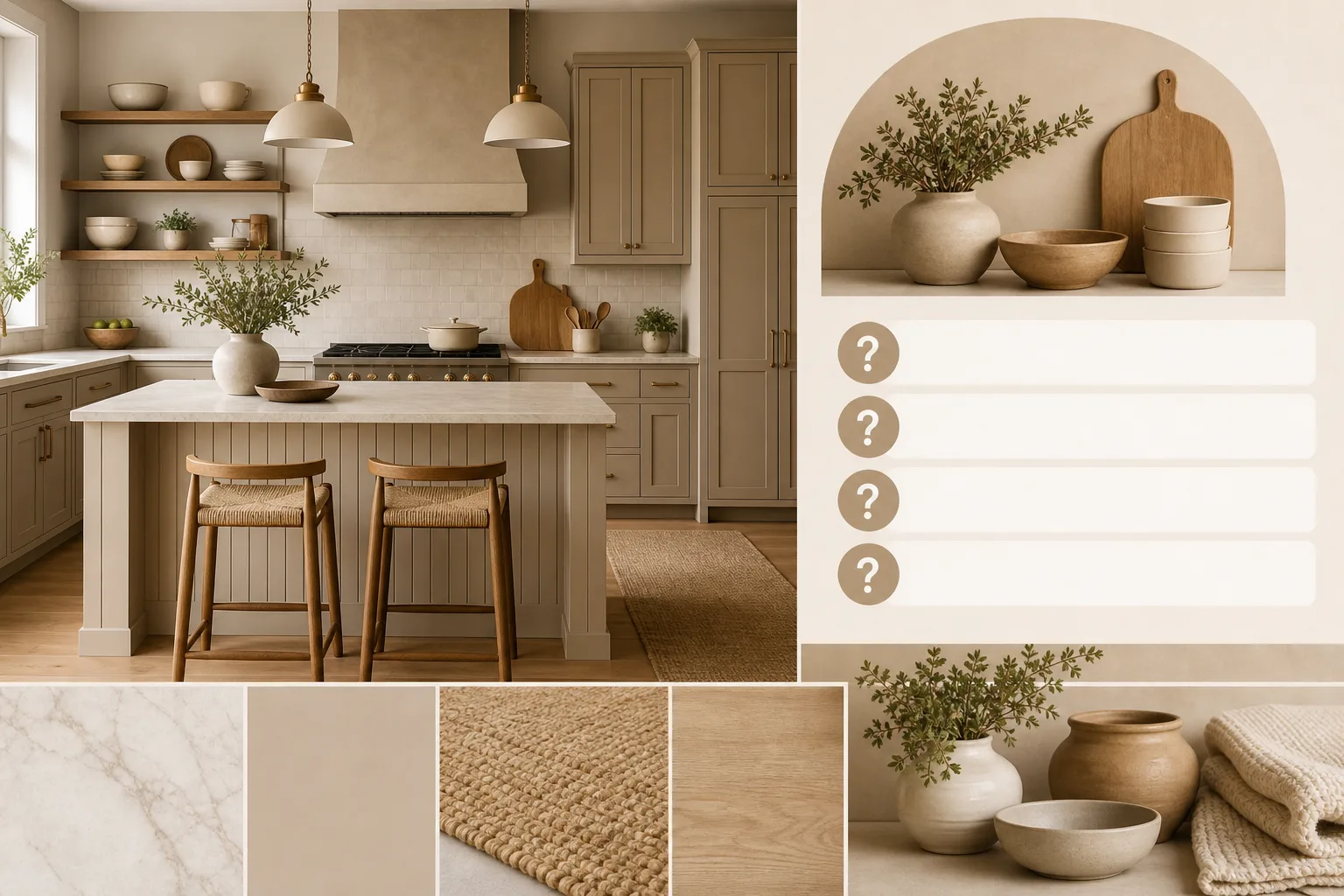
Warm neutral kitchen decor is the sweet spot between a bright, minimal kitchen and a heavily decorated one. It uses soft, nature-inspired shades—think creamy white, oatmeal, sand, mushroom, greige, camel, terracotta, and warm wood—to make the room feel relaxed, welcoming, and quietly polished.
The appeal is easy to understand. A warm neutral kitchen works with many home styles, from modern organic and farmhouse to traditional, transitional, and Scandinavian-inspired spaces. It also creates a flexible backdrop: you can refresh the look with seasonal linens, a new runner, or a few handmade ceramics without redesigning the entire room.
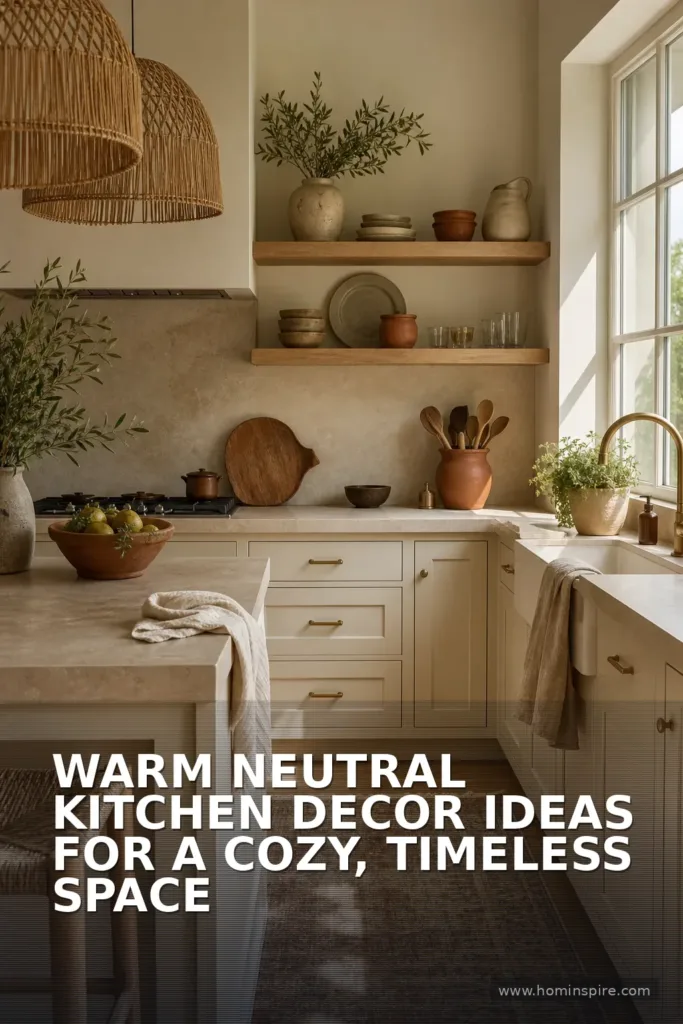
The key is not simply choosing beige. The best warm neutral kitchens balance undertones, texture, contrast, and useful everyday objects. These warm neutral kitchen decor ideas will help you build a layered space that feels collected, functional, and personal.
What Makes a Kitchen Feel Warm Neutral?
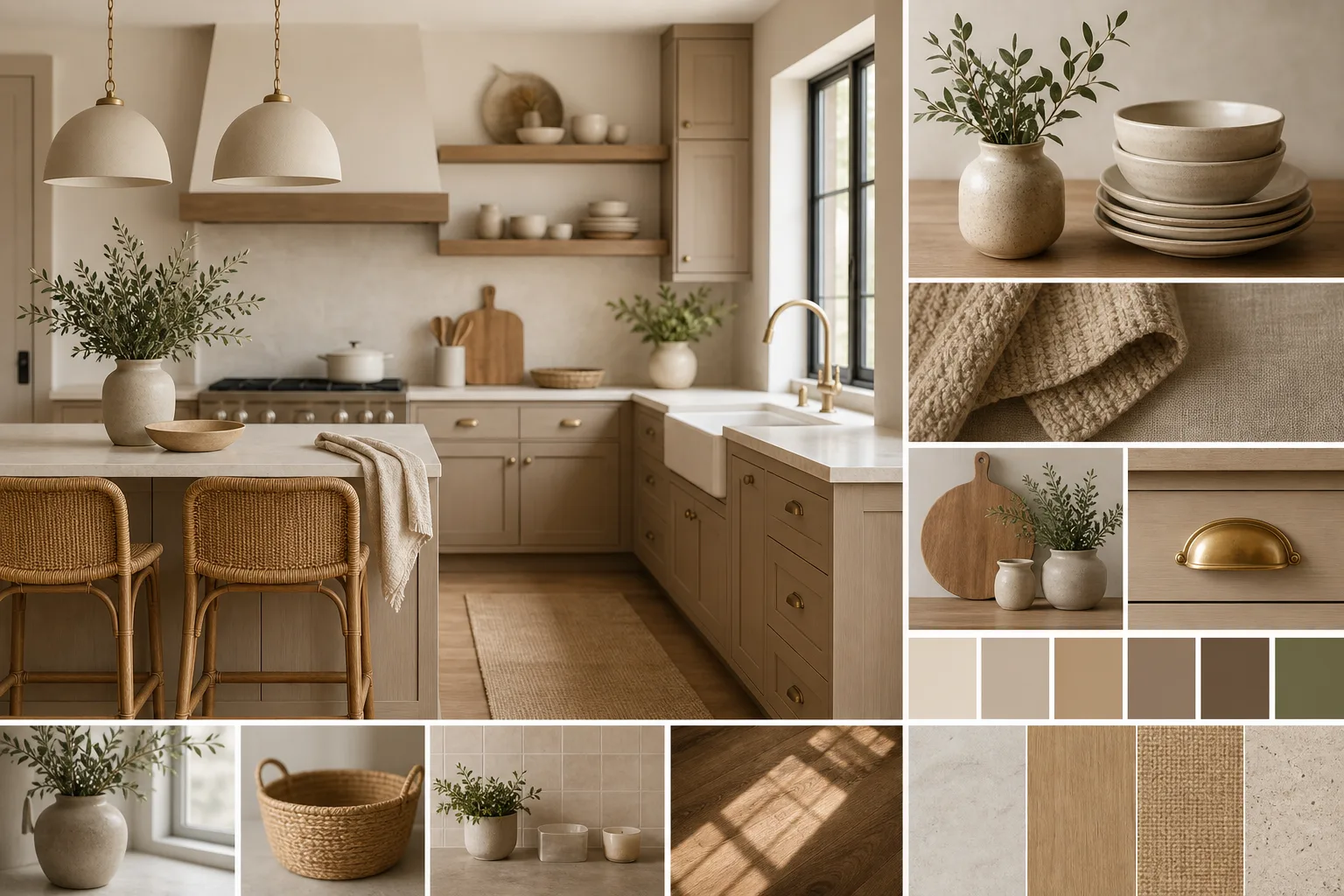
Warm neutrals have yellow, red, peach, or brown undertones rather than cool blue, green, or gray undertones. They can be light or dark, but they tend to feel sunlit and grounded. In a kitchen, they are especially effective because they soften hard surfaces such as stone counters, tile, stainless steel, and painted cabinetry.
A practical warm neutral palette often includes three layers:
- Base color: warm white, soft ivory, light greige, or pale taupe on walls and large surfaces.
- Mid-tone: oak, walnut, rattan, clay, mushroom, or linen for furniture and accessories.
- Accent: aged brass, matte black, deep brown, muted olive, rust, or charcoal for definition.
Before buying decor, look at the fixed elements in your kitchen. Cabinet paint, countertops, backsplash, flooring, and appliance finishes should guide the palette. A creamy cabinet color may look beautiful with honed brass and honey oak, while a cooler gray countertop may need richer wood and warmer textiles to prevent the room from feeling stark.
20 Warm Neutral Kitchen Decor Ideas
1. Start With Warm White Instead of Stark White
If you are painting walls or cabinets, choose a white with a soft cream, beige, or subtle yellow undertone. Stark white can make a kitchen appear clinical, especially under cool LED lighting. Warm white reflects light beautifully while making wood, brass, and handmade accessories look richer.
Test samples beside the backsplash and countertop at different times of day. The same paint can look ivory in morning light and noticeably gray at night.
2. Bring In Natural Wood Tones
Wood is one of the fastest ways to make a neutral kitchen feel warmer. Use oak cutting boards, a walnut fruit bowl, wood stools, floating shelves, or a wood tray. Mixing light and medium wood tones is usually more natural-looking than matching every piece exactly.
Choose pieces you will genuinely use. A large cutting board leaned against the backsplash, for example, can be both attractive and ready for daily meal prep.
3. Layer Handmade-Looking Ceramics
Stoneware mugs, a low bowl for fruit, a spoon rest, and a small pitcher add soft shape and gentle variation to clean-lined kitchens. Look for matte finishes, speckles, uneven rims, or earthy glazes in cream, putty, sand, clay, and brown.
Keep the display edited. A collection of two to five pieces on an open shelf or counter zone feels intentional; too many small items can quickly become visual clutter.
4. Use a Neutral Runner to Soften the Floor
A washable runner in oatmeal, faded terracotta, muted brown, or a low-contrast vintage pattern can make a kitchen feel instantly more lived-in. It is especially helpful in galley kitchens, where long hard surfaces can otherwise feel narrow and echoing.
Select a low-pile, non-slip option that is easy to clean, and make sure doors and drawers can open over it comfortably.
5. Add Aged Brass or Antique Bronze Accents
Warm metal finishes give neutral kitchens a little glow. Aged brass cabinet pulls, an antique bronze faucet, picture lights, or a small metal tray can add contrast without looking flashy. These finishes pair particularly well with cream cabinets, natural oak, and off-white tile.
You do not need to replace every metal item at once. Updating pulls and a pendant light can be enough to shift the entire mood. For more low-cost changes, explore these budget kitchen makeover ideas.
6. Display Everyday Linens
Textiles add warmth that hard kitchen finishes cannot provide. Hang a striped linen tea towel from the oven handle, place folded napkins in a basket, or use a soft cotton tablecloth on a nearby breakfast table. Choose shades like flax, cream, warm gray, tobacco, muted olive, or faded rust.
Avoid overly coordinated sets. A few related tones and subtle patterns feel more collected and less like a staged showroom.
7. Style the Counter in Small Functional Zones
Counter styling should make the kitchen easier to use, not harder to clean. Create one purposeful zone near the stove for oil, salt, a utensil crock, and a spoon rest. Near the coffee maker, use a small tray for mugs, sugar, and a canister. Keep the rest of the counter open.
For practical ways to keep this balance, see kitchen counter decor ideas without clutter. A clear workspace makes warm neutral decor feel calm rather than crowded.
8. Choose a Textured Backsplash
A backsplash is an opportunity to introduce depth without relying on a bold color. Consider handmade-look zellige tile, matte ceramic subway tile, tumbled stone, or a warm off-white tile with subtle tonal movement. Texture catches light and gives a simple palette more character.
If a full renovation is not an option, focus on decor that plays up the backsplash you already have. Warm wood, woven materials, and soft lighting can counterbalance a cool or plain surface.
9. Add Woven Storage Baskets
Woven baskets in seagrass, water hyacinth, rattan, or jute add instant warmth while concealing practical items. Use them on open shelves for linens, snacks, paper goods, or pet supplies. A large floor basket can hold extra throws near an eat-in kitchen nook.
In a small kitchen, measure carefully and avoid filling every open shelf. One or two well-sized baskets create order without making the space feel heavy.
10. Incorporate a Small Piece of Vintage Decor
One vintage or vintage-inspired item can make a neutral kitchen feel distinctive. Try a weathered wood stool, an old bread board, a brass candlestick, a framed botanical print, or a stoneware crock. These pieces bring patina, which keeps new cabinets and tile from feeling too perfect.
Use vintage decor thoughtfully around food-prep areas. Keep fragile, difficult-to-clean items away from splatter zones and reserve them for shelves, a hutch, or a dining nook.
11. Use Amber Glass for a Soft Glow
Amber glass is an easy warm neutral accent because it looks beautiful in both daylight and evening light. An amber soap dispenser, bottle vase, candle holder, or set of drinking glasses adds a golden-brown note without introducing a loud color.
Pair it with creamy ceramics and wood for an organic look, or with black metal details for a more modern contrast.
12. Let Produce Become Part of the Decor
A bowl of lemons, pears, garlic, or onions can add life to a neutral kitchen while serving a real purpose. Use a wood, stoneware, or woven bowl rather than a shiny plastic container. Change the produce regularly so the arrangement stays fresh and useful.
This is one of the simplest ways to add seasonal color. Green pears in fall, citrus in winter, and peaches in summer naturally complement a warm neutral palette.
13. Introduce Soft Contrast With Black or Deep Brown
A room made entirely of pale beige can lack definition. Add a few deeper accents through black picture frames, dark wood stools, brown leather pulls, a charcoal pendant, or a deep espresso bowl. The contrast gives the eye a place to rest and makes lighter finishes appear warmer.
Keep dark accents limited and repeat the finish two or three times for cohesion. For example, black cabinet hardware can relate to black-framed art and a dark faucet.
14. Create an Open Shelf Moment
If you have open shelving, use it to display a restrained mix of useful objects: stacks of cream plates, amber glasses, a wood bowl, and a small trailing plant. Group similar colors together and leave some breathing room around each group.
Open shelves are not necessary for this look. A glass-front cabinet, a small wall ledge, or the top of a pantry hutch can create the same styled effect with less exposure to dust.
15. Choose Lighting With Warm Bulbs
Lighting can make or break warm neutral decor. Use bulbs around 2700K to 3000K for a comfortable, inviting glow. Cooler bulbs can make cream paint look gray and wood look washed out.
Layer lighting when possible: overhead fixtures for general illumination, under-cabinet lights for task work, and a small lamp on a counter or sideboard for ambiance. A cordless lamp with a linen or pleated shade can make an eat-in corner feel especially welcoming.
16. Add Greenery in Earthy Containers
Plants prevent a neutral kitchen from feeling flat. A potted herb plant, olive branch, pothos, or dried eucalyptus brings organic shape and a quiet touch of green. Place greenery in a terracotta pot, stoneware vessel, or woven cachepot to keep the look cohesive.
If your kitchen gets little natural light, high-quality faux stems in a simple vase can still provide the same soft visual lift.
17. Upgrade Cabinet Hardware Before Replacing Cabinets
Cabinets occupy a major visual area, but replacing them is expensive and often unnecessary. New knobs and pulls in aged brass, unlacquered brass, antique bronze, or dark bronze can make existing cabinets feel more aligned with a warm neutral design.
Paint, hardware, lighting, and a backsplash update can make a remarkable difference. Find more strategies in this guide to kitchen makeover ideas without replacing the cabinets.
18. Use a Tray to Contain Small Items
A tray is one of the most useful warm neutral kitchen decor tools. Choose wood, travertine, woven rattan, antique brass, or matte ceramic. It can hold dish soap and a scrub brush by the sink, oils and spices by the range, or coffee supplies near the machine.
Containing objects makes them read as one composed vignette rather than several stray items. For additional arrangement ideas, visit kitchen counter tray decor ideas.
19. Make a Small Kitchen Feel Layered, Not Busy
Warm neutral decor works exceptionally well in compact kitchens because it keeps the visual palette calm. In a small space, prioritize vertical storage, light-reflecting finishes, and fewer but better accessories. Limit counter decor to one or two zones, then use walls and cabinet interiors for storage.
Read these modern small kitchen decor ideas for more ways to make a limited footprint feel stylish and open. Renters can also use removable, damage-free organization from these small kitchen storage ideas for renters.
20. Refresh Decor With the Seasons
A neutral foundation makes seasonal decorating simple. In spring, add fresh herbs and pale green linens. In summer, use woven textures and a bowl of citrus. For fall, bring in rust-colored napkins, branches, and darker wood. In winter, layer deeper brown textiles, amber glass, and soft candlelight.
The fixed palette stays consistent, so these small swaps feel cohesive rather than themed. This approach is also more affordable than buying entirely new kitchen decor every season.
How to Keep Warm Neutral Decor From Looking Flat
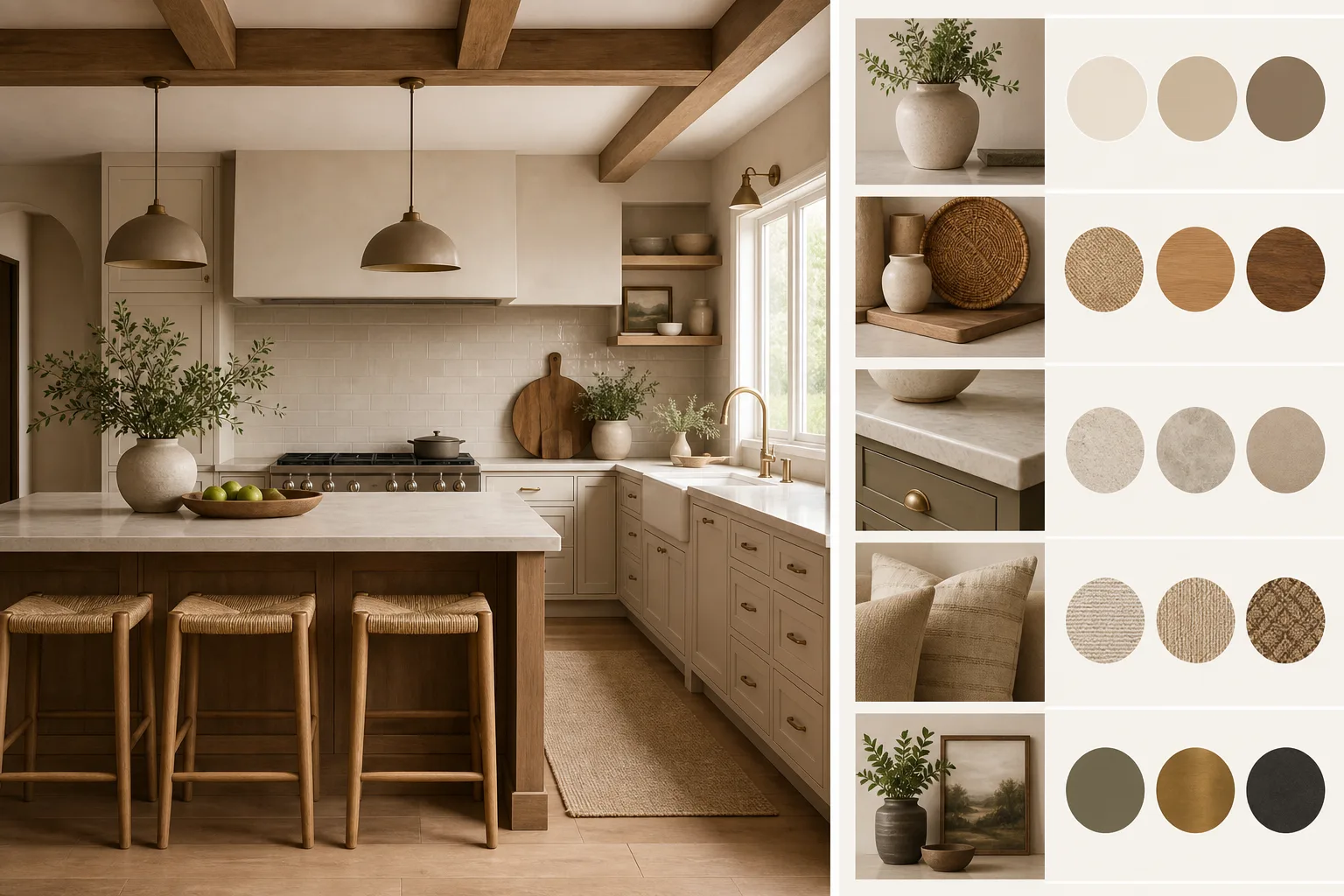
The main challenge with neutral decorating is avoiding a one-note result. The solution is contrast through material, sheen, scale, and undertone—not necessarily bright color.
- Mix textures: Combine smooth tile, grainy wood, woven fibers, linen, stoneware, and metal.
- Vary finishes: Pair matte ceramics with a subtle brass finish or glossy glass.
- Use tonal contrast: Include pale cream, mid-tone oak, and at least one dark brown or black element.
- Watch undertones: Creamy whites, yellow oak, and warm gray can work together, but icy gray and blue-white finishes may feel disconnected.
- Add living elements: Plants, branches, and fresh produce make neutral rooms feel less static.
Try to repeat each major material at least twice. If you add a brass faucet, repeat brass in hardware or a tray. If you display a walnut board, echo that tone with stools or picture frames. Repetition creates a designed look without requiring identical pieces.
A Simple Warm Neutral Kitchen Decorating Formula
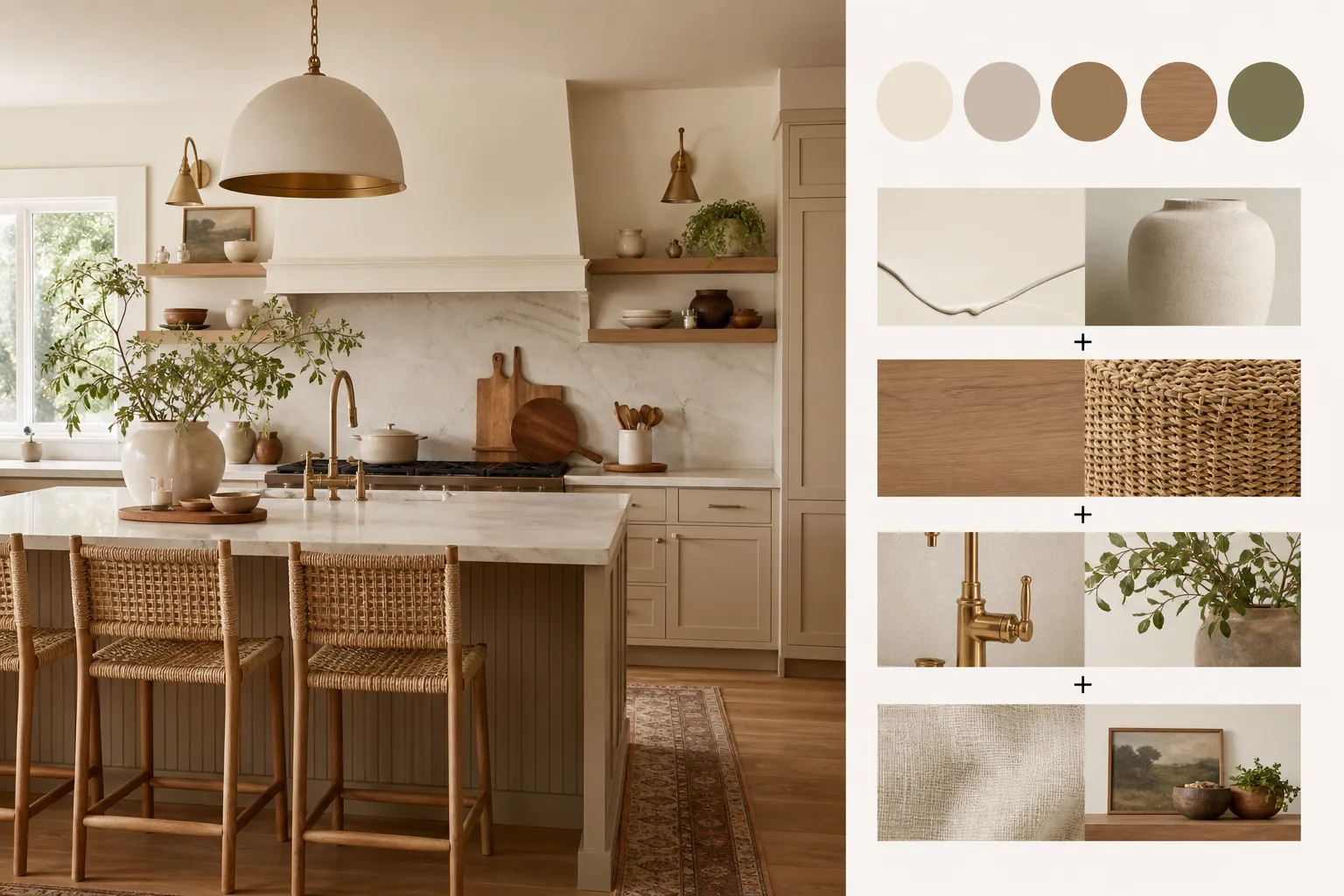
If you are starting from scratch, use this easy formula: choose one warm light base, one wood tone, one metal finish, two textiles, one grounding dark accent, and one natural element. For example, pair creamy walls with white oak, aged brass, flax towels, a muted terracotta runner, black frames, and a potted herb.
Then edit carefully. Remove duplicates, keep prep areas clear, and leave empty space around your best items. A warm neutral kitchen should feel comfortable enough for daily life, but calm enough that the room never feels overfilled.
FAQ: Warm Neutral Kitchen Decor Ideas
What colors are considered warm neutrals for a kitchen?
Warm neutral kitchen colors include ivory, cream, oatmeal, sand, beige, taupe, mushroom, warm greige, camel, caramel, and soft brown. Muted clay, terracotta, olive, and rust also work well as restrained accents.
How do I make a white kitchen look warmer?
Add natural wood cutting boards, woven baskets, linen towels, warm-toned lighting, aged brass hardware, and handmade ceramics. A washable runner and a few darker accents can also give a white kitchen more depth.
Can warm neutrals work in a modern kitchen?
Yes. Keep the forms clean and the palette limited. Flat-front cabinets, simple pendants, streamlined hardware, pale oak, and matte stoneware create a modern warm neutral look without making the room feel rustic.
What is the best metal finish for a warm neutral kitchen?
Aged brass, unlacquered brass, antique bronze, and warm brushed nickel are all strong choices. Matte black also works well as a small contrast accent, especially when paired with wood and creamy finishes.
How can I decorate kitchen counters without creating clutter?
Limit decor to functional groupings, such as a small cooking zone by the range or a coffee tray by the machine. Use trays to contain items, select attractive everyday tools, and leave most of the counter clear for prep work.