
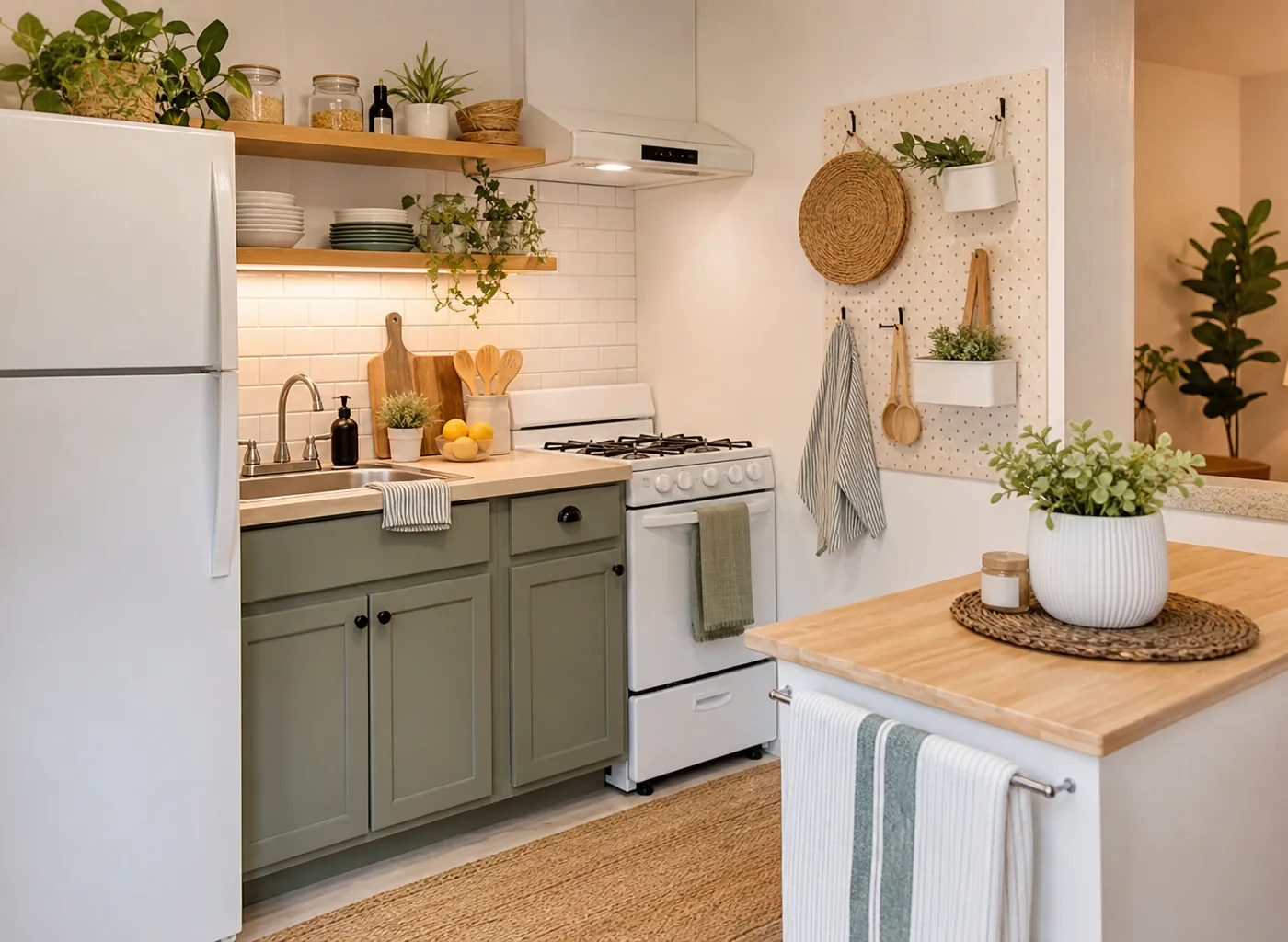
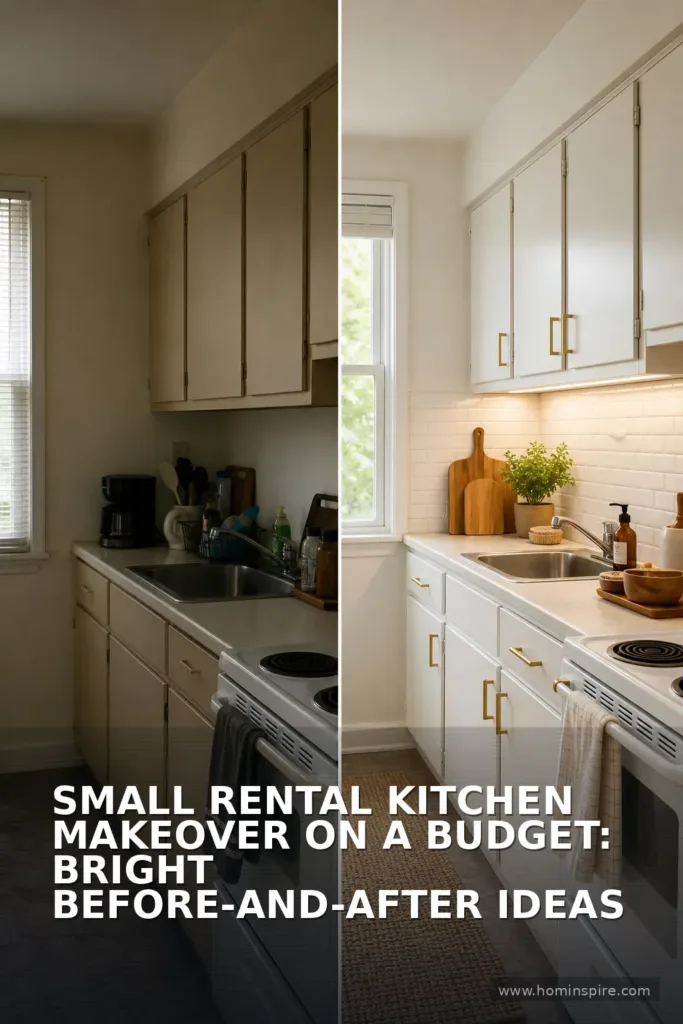
A small rental kitchen makeover on a budget is less about a dramatic renovation and more about making thoughtful, reversible changes. Renters often inherit dated cabinets, limited counter space, weak lighting, and awkward storage. The good news is that you do not need to replace cabinets, move plumbing, or spend thousands of dollars to make the room feel cleaner, brighter, and easier to use.
The best rental-friendly upgrades improve daily function first, then add visual polish. Start with a plan, prioritize removable materials, and focus on the surfaces and zones you notice every day. A few strategic changes—such as peel-and-stick backsplash, better under-cabinet lighting, cohesive hardware, and vertical storage—can make even a tiny apartment kitchen feel intentional.
Start With Lease Rules and a Realistic Budget
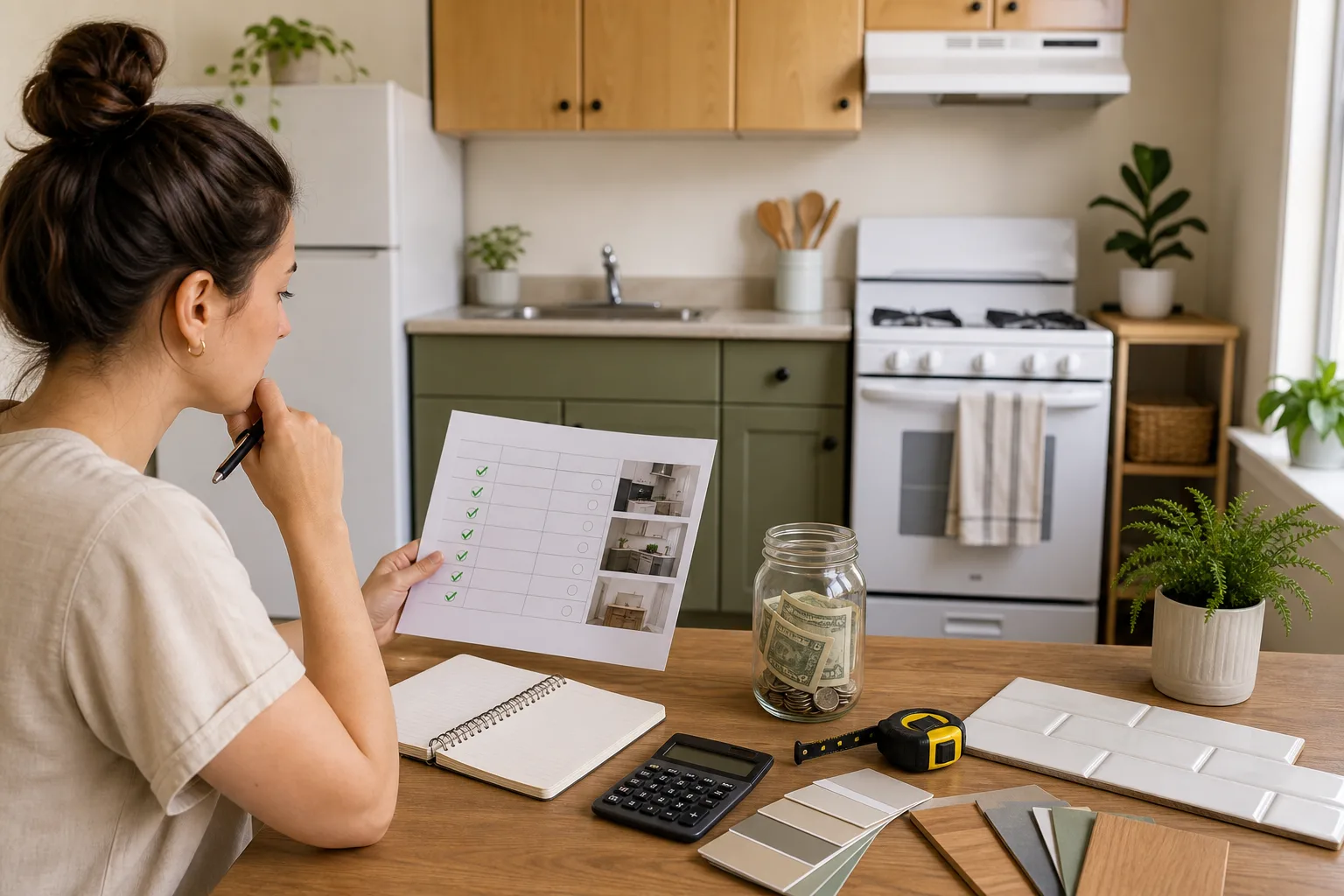
Before buying anything, read your lease and take photos of the kitchen as it is. Some landlords allow paint, hardware changes, or temporary wall treatments; others require written permission. Even when an update is technically removable, test it in a discreet spot first. Adhesives can react differently on old paint, textured walls, laminate, or poorly finished cabinets.
Set a budget by category rather than shopping without a plan. For a modest makeover, a useful starting point is:
- $25–$75: decluttering, cleaning supplies, shelf liners, organizers, and simple decor
- $75–$200: lighting, hardware, faucet accessories, contact paper, and storage upgrades
- $200–$500: peel-and-stick backsplash or flooring, larger organizers, a rolling cart, and a few coordinated finishing details
Keep 10 to 15 percent of the total for supplies you may overlook, including rubbing alcohol for prep, painter’s tape, a utility knife, extra adhesive strips, caulk-like removable mounting strips, and replacement blades. A careful plan helps you avoid buying decor that creates more clutter in an already small room.
1. Deep Clean Before You Decorate
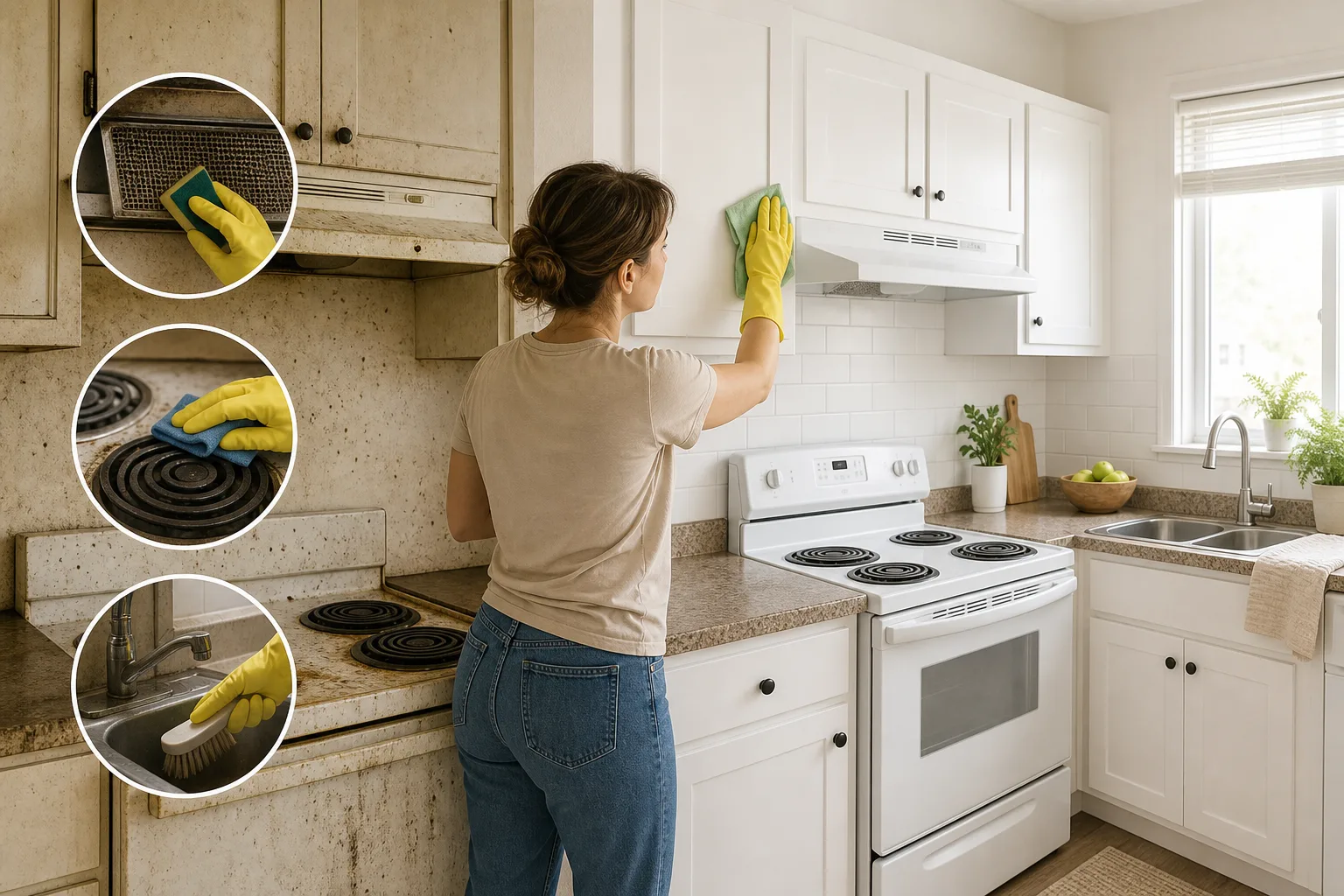
A thorough clean is the highest-return makeover step, and it costs very little. Degrease cabinet fronts, scrub grout, remove mineral buildup around the faucet, clean the refrigerator seal, and vacuum crumbs from drawers. Replace stained outlet covers if your landlord permits it, and wash any removable range hood filter.
Cleaning reveals what actually needs attention. Yellowed cabinet pulls may only need polishing, while dingy walls can make a kitchen appear darker than it is. A fresh, clean baseline also ensures that temporary adhesives stick properly and that your new organization system starts on the right foot.
2. Clear the Counters to Make the Kitchen Look Bigger
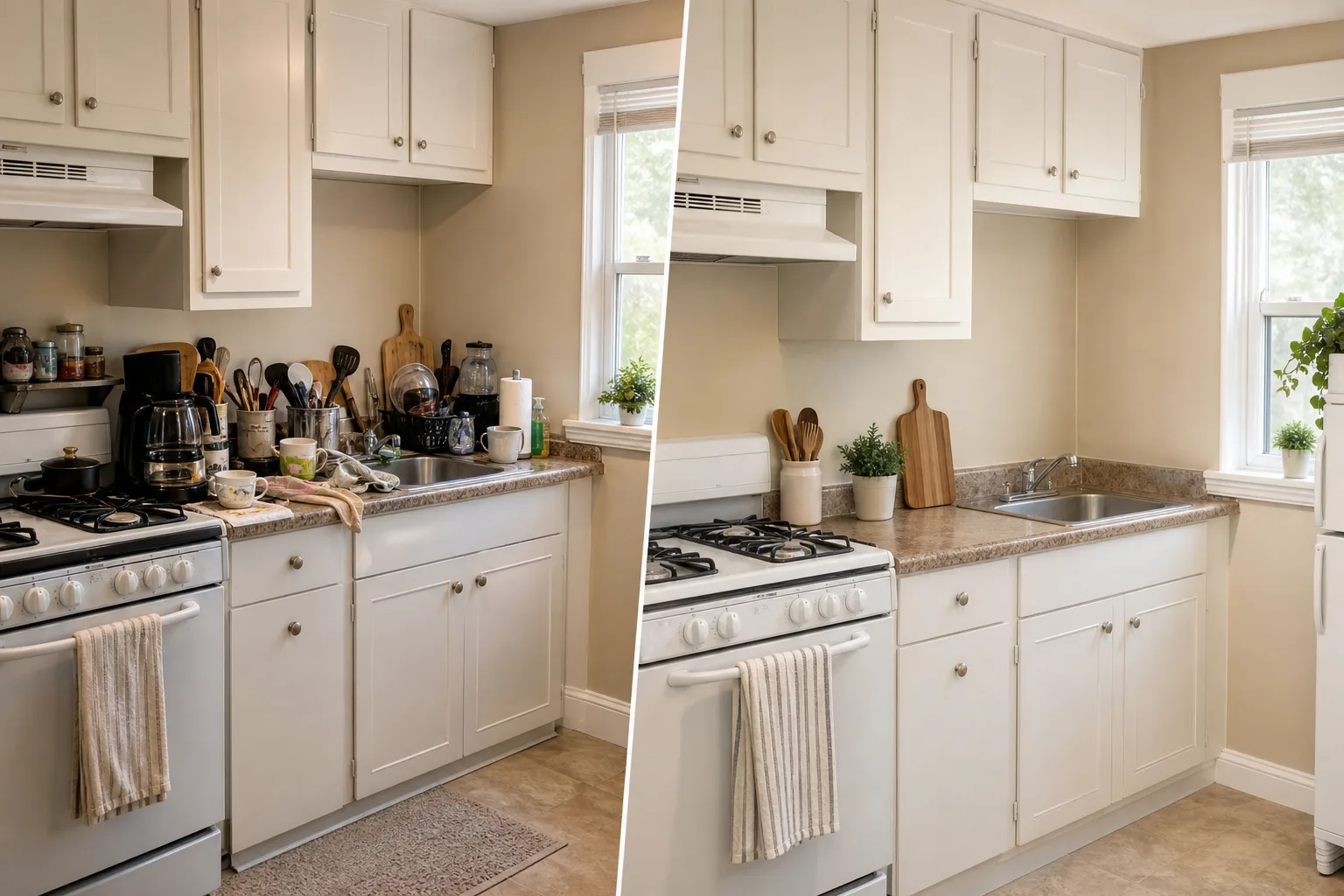
In a small kitchen, open counter space is a design feature. Limit the counter to items used daily, such as a coffee maker, utensil crock, or cutting board. Store duplicates, rarely used gadgets, and oversized packaging elsewhere. This gives the room visual breathing room and makes food prep much easier.
Use one tray to contain the essentials near the stove or coffee station. It creates a styled look while preventing bottles, sponges, and small tools from spreading across the counter. For more practical ways to keep surfaces attractive and usable, see Kitchen Counter Decor Ideas Without Clutter.
3. Upgrade Lighting Without Rewiring
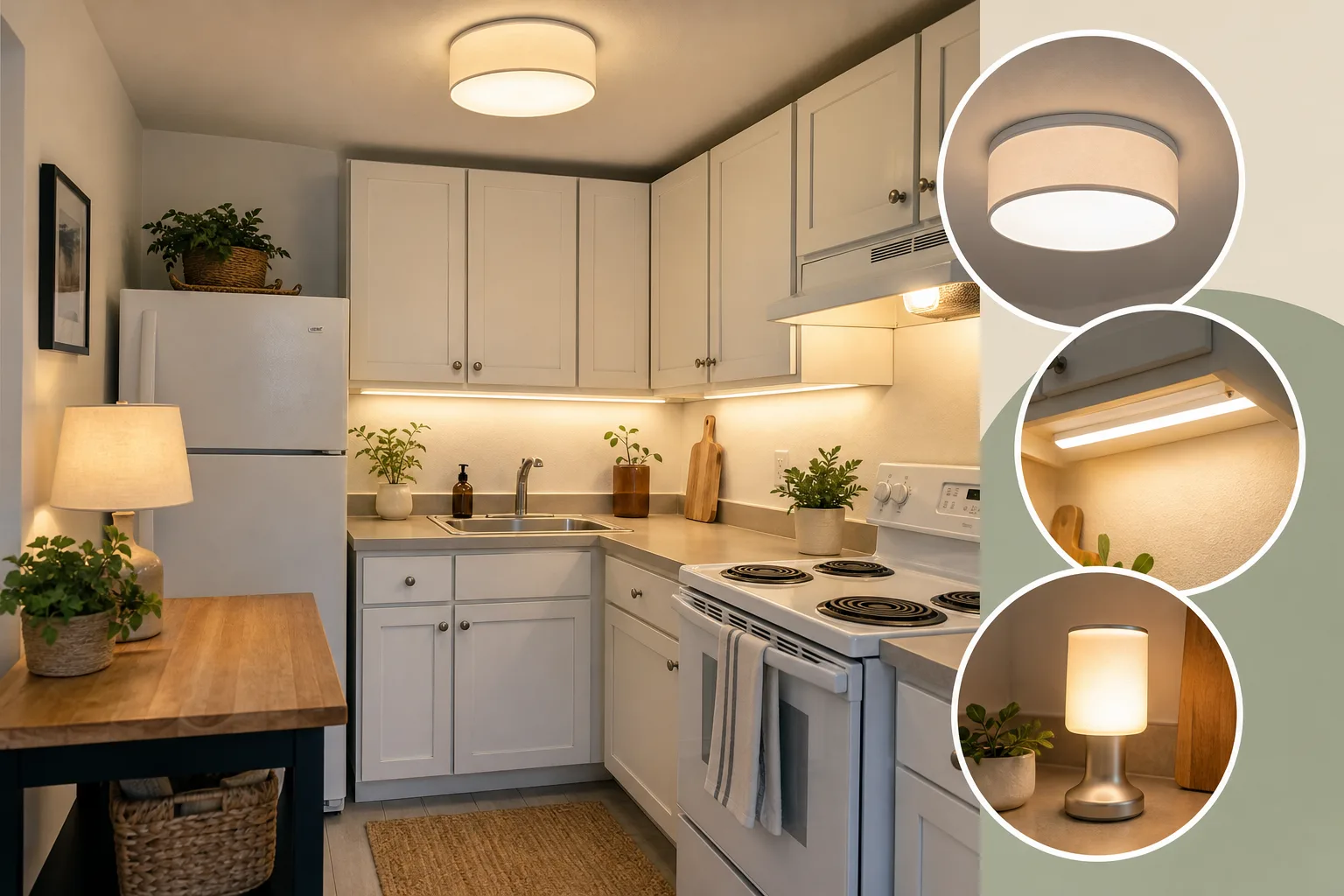
Poor lighting is one of the most common reasons rental kitchens feel dated. Battery-powered or rechargeable LED puck lights and light bars can instantly brighten work zones under upper cabinets. Look for warm white light around 2700K to 3000K for a cozy appearance, or neutral white around 3500K to 4000K if you prefer a crisp, task-oriented kitchen.
Install lights with removable adhesive strips and choose rechargeable units to avoid changing batteries constantly. A plug-in pendant or compact table lamp can also soften a dark corner when counter space allows. Better lighting makes old finishes less noticeable and helps a small room feel more open at night.
4. Add a Peel-and-Stick Backsplash
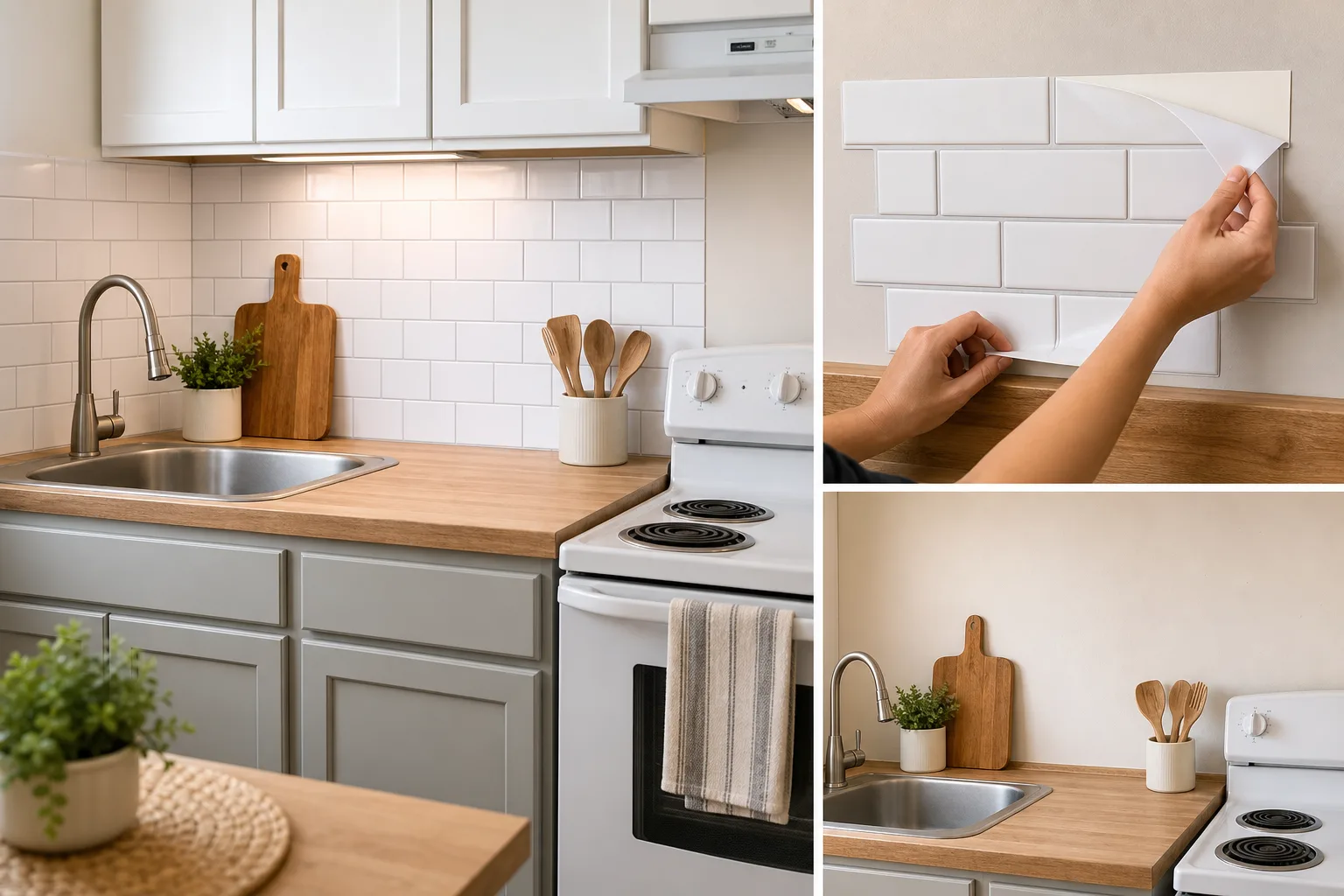
A removable backsplash can create one of the most dramatic before-and-after changes in a rental kitchen. Choose peel-and-stick vinyl tiles or panels designed for kitchens, and measure carefully around outlets and corners. Simple white subway tile, soft stone-look finishes, or small-scale geometric patterns usually work well in compact spaces.
Clean and fully dry the wall before installation. Avoid placing inexpensive adhesive tiles directly behind high-heat areas unless the product specifically says it is heat-resistant and appropriate for that location. Save a few extra tiles for future repairs, and keep the packaging so you know how to remove them at move-out.
5. Refresh Cabinets Without Replacing Them
Cabinets dominate a small kitchen, so even subtle improvements matter. If painting is not allowed, start by replacing worn knobs or pulls with affordable hardware in a single finish, such as brushed brass, matte black, or satin nickel. Keep the original hardware in a labeled bag so reinstalling it is easy when you move.
You can also line cabinet interiors with removable shelf liner, organize shelves with risers, and add battery-operated cabinet lights. If cabinet doors have a flat, dated appearance, removable wallpaper or contact paper can work on inset panels, but test adhesion first and avoid covering damaged finishes. For more non-replacement approaches, visit Kitchen Makeover Ideas Without Replacing the Cabinets.
6. Use Removable Countertop Updates Carefully
Contact paper and countertop film can change an unattractive laminate counter for a low price, but this project requires patience. Choose a thick, water-resistant product with a realistic matte finish. Glossy marble patterns can look less convincing in bright light, while subtle stone, concrete, or warm wood effects are often more forgiving.
Do not apply film over loose laminate, severe burns, or deep cracks without landlord approval. Prep is essential: clean the counter, remove grease, and let it dry completely. Apply slowly with a felt squeegee, use a sharp blade at edges, and avoid placing hot pans directly on the surface. If you are unsure about full coverage, use a large washable runner or a cutting-board station to disguise the most worn zone instead.
7. Make Every Cabinet Work Harder
Small rental kitchens usually lack enough storage, but the available space is often underused. Add tension shelves, shelf risers, clear bins, turntables, and pull-out baskets that sit inside existing cabinets. These products do not require drilling and can make deep, dark cabinets easier to navigate.
Group items by task: baking supplies together, breakfast items together, and cooking oils near the stove. Put the least-used items on high shelves and daily items at eye level. Door-mounted organizers can be useful, but choose over-the-door or adhesive options that will not interfere with cabinet closure. Find more damage-free options in Renter Friendly Kitchen Storage Ideas Without Drilling.
8. Claim Vertical Space With Damage-Free Storage
When floor and counter space are limited, look upward. Adhesive hooks can hold lightweight measuring cups, oven mitts, or dish towels. A tension rod under the sink can keep spray bottles from consuming the cabinet floor. Magnetic racks can organize spices or paper towels on the side of a refrigerator, provided the surface is magnetic and the rack is rated for the weight.
Keep vertical storage edited. Too many visible tools can make a small room feel busy, so select the items you reach for most often. For a broader list of renter-safe ways to gain capacity, explore Small Kitchen Storage Ideas for Renters.
9. Improve the Sink Area
The sink zone often becomes a clutter magnet. A slim sink caddy, a soap dispenser, and a small tray for dish tools can make it look far more orderly. Consider a removable faucet aerator if water pressure is weak, but keep the original part. A roll-up drying rack placed over the sink is another useful option because it creates temporary drying space without occupying the counter.
Swap an old sponge for a neutral scrub brush or silicone holder, and choose one coordinated hand soap bottle. These details are inexpensive, but they make the kitchen feel cared for rather than temporary.
10. Add a Rolling Cart or Narrow Freestanding Piece
If your kitchen has an unused wall, doorway edge, or open corner, a slim rolling cart can serve as a pantry, coffee station, produce storage, or prep surface. Choose a cart with locking wheels, a narrow footprint, and open shelves so it does not feel too heavy. Measure the path around it before ordering; you should still be able to open appliances and drawers comfortably.
A small freestanding cart is especially valuable in apartments because it moves with you. Style only the top surface, and use baskets or bins on lower shelves to hide packaged food and miscellaneous supplies.
11. Create a Cohesive Color Palette
Small kitchens look calmer when the visual palette is limited. Pick one main neutral, one accent color, and one metal finish. For example, white, warm wood, and brushed brass feel bright and classic; soft gray, black, and natural linen create a more modern look. Repeat those choices in towels, storage bins, hardware, and a small piece of art.
You do not need to match every item perfectly. The goal is to reduce visual noise. Neutral baskets, clear containers, and simple textiles often make mismatched rental finishes feel more deliberate.
12. Use Textiles and Art for Personality
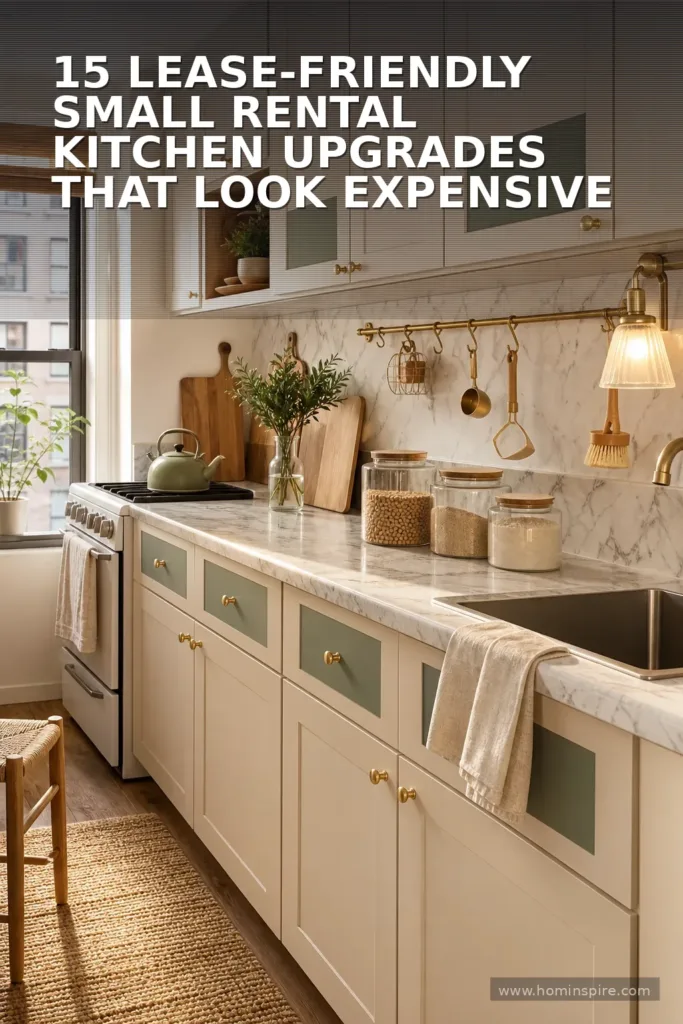
A washable runner, a pair of coordinated dish towels, and one framed print can make a rental kitchen feel personal without changing the structure. Select low-pile, washable rugs with a non-slip backing, especially near the sink. Avoid overly large or dark rugs that visually shrink a narrow galley kitchen.
Use removable picture strips for lightweight art, and keep it away from direct grease and steam. Botanical prints, vintage food labels, or abstract line art work well because they add character without competing with the functional elements of the room.
13. Choose One High-Impact Appliance Upgrade
Replacing every appliance is not realistic for most renters, but one compact, attractive appliance can improve your routine and your countertop style. Consider a toaster oven, electric kettle, coffee maker, or countertop ice maker only if you will use it regularly. In a small kitchen, every appliance must earn its footprint.
If you already own several appliances, store the least-used ones in a closet or lower cabinet. The visual improvement from fewer objects is usually greater than the benefit of keeping every gadget within arm’s reach.
14. Make a Small Kitchen Look More Expensive
The most polished budget makeovers rely on consistency and restraint, not expensive materials. Align labels on pantry containers, use matching hangers or hooks, conceal trash and recycling when possible, and avoid filling every blank wall. A single statement element—such as a backsplash, a runner, or distinctive cabinet pulls—often looks better than five competing trends.
For more inexpensive upgrades that create a polished result, read Small Kitchen Makeover Ideas on a Low Budget That Look Expensive. If your room is particularly compact, these Small Kitchen Ideas for Apartments can also help you maximize layout and storage.
15. Plan for an Easy Move-Out
A renter-friendly makeover should be as easy to reverse as it is to install. Keep original knobs, outlet covers, and faucet parts in one labeled box. Save receipts and product instructions, especially for peel-and-stick materials. When it is time to move, remove adhesives slowly with gentle heat from a hair dryer if recommended by the manufacturer, then clean residue with a surface-safe product.
Do not wait until the last week of your lease to test removal. If a product has been installed for a long time, removing it gradually gives you time to address any residue or touch-up needs. Taking before-and-after photos also helps document the condition of the space.
A Simple Weekend Small Rental Kitchen Makeover Plan
If you want visible results quickly, divide the project into manageable blocks:
- Friday evening: declutter counters, empty one problem cabinet, and deep clean surfaces.
- Saturday morning: install lighting, shelf liners, organizers, and hooks.
- Saturday afternoon: add backsplash or countertop film if you are using it.
- Sunday: arrange the sink zone, style the counters, add textiles, and photograph your finished kitchen.
This sequence keeps the functional work ahead of the decorative work. It also prevents the common mistake of buying attractive accessories before you have solved storage and workflow problems.
FAQ: Small Rental Kitchen Makeover on a Budget
How can I update a rental kitchen without losing my security deposit?
Choose reversible upgrades such as rechargeable lighting, removable hooks, peel-and-stick products tested in an inconspicuous spot, freestanding carts, and replacement hardware. Read your lease, ask for written approval when needed, and store all original parts for reinstallation.
What is the cheapest way to make a small rental kitchen look better?
Start with deep cleaning, decluttering, and organizing. Then add better lighting, a coordinated dish towel set, shelf liners, and one contained counter tray. These changes can make a noticeable difference for less than the cost of a major surface update.
Are peel-and-stick backsplashes safe for rental kitchens?
They can be, as long as you select a product intended for kitchen use, follow the installation instructions, and confirm that it is compatible with your wall surface. Avoid heat-sensitive products near high-heat areas unless the manufacturer specifically approves that use.
How do I add storage to a rental kitchen without drilling?
Use shelf risers, clear bins, tension rods, over-the-door organizers, adhesive hooks rated for the intended weight, magnetic racks, and freestanding carts. Focus on vertical space and organize cabinets by daily tasks.
What colors make a small kitchen feel larger?
Light neutrals such as warm white, pale gray, soft beige, and light wood tones generally make a small kitchen feel more open. Use one restrained accent color and avoid too many competing patterns to maintain a spacious appearance.
