
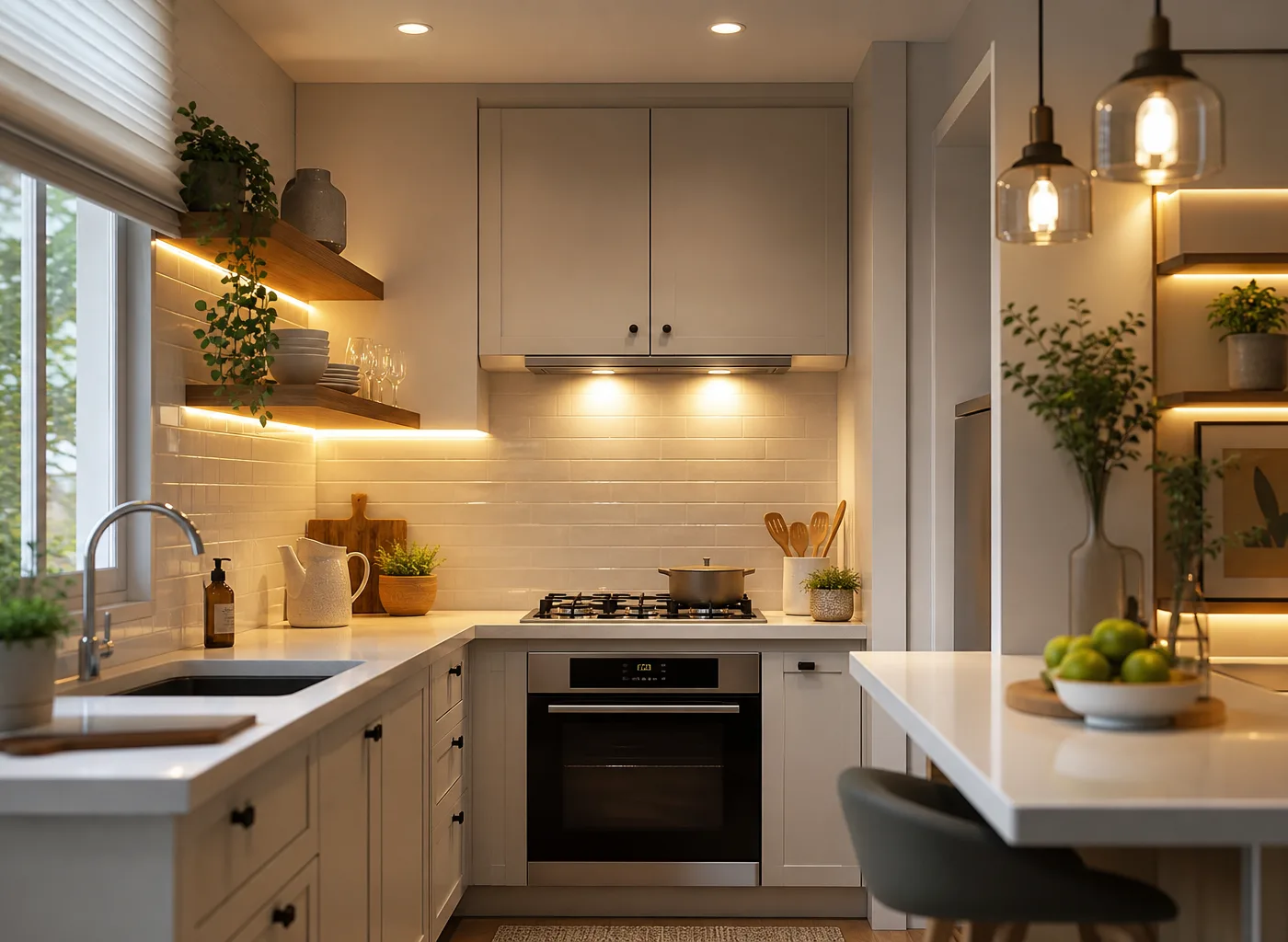
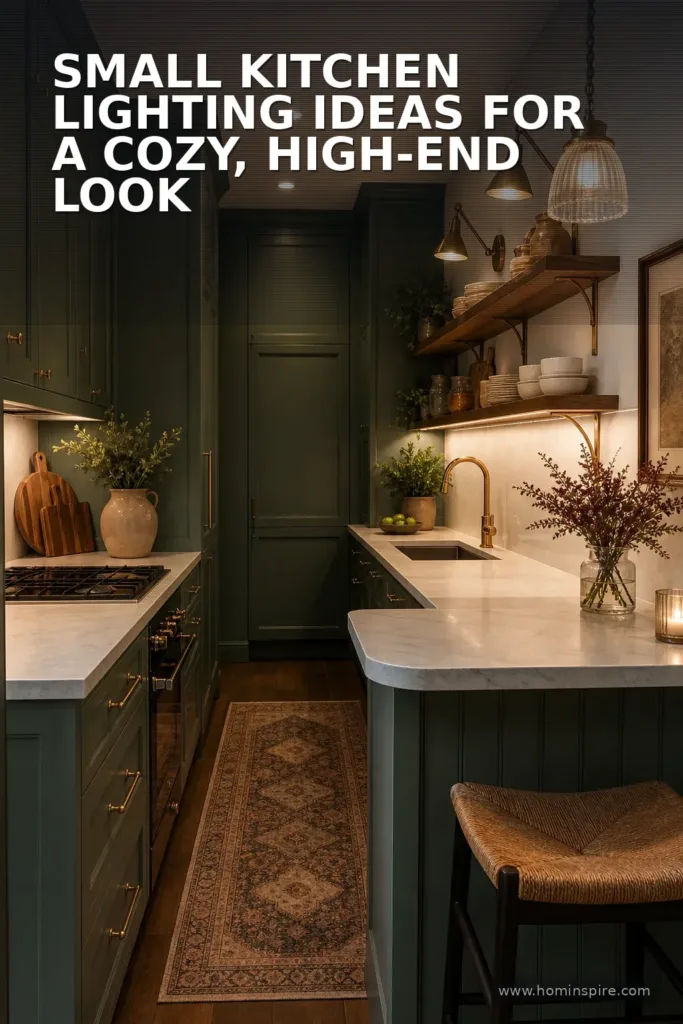
Great lighting can change the way a small kitchen looks, feels, and functions. In a compact room, one dim ceiling fixture often creates shadows on the counters, makes cabinets feel heavy, and leaves the whole space looking smaller than it is. The best small kitchen lighting ideas solve those problems by adding light where you actually need it: over prep surfaces, inside dark cabinets, around a dining spot, and near pathways.
You do not need a major renovation to get a brighter kitchen. A thoughtful mix of ambient, task, and accent lighting can make a narrow galley kitchen, apartment kitchen, or tiny eat-in kitchen feel more open and practical. Use the ideas below to build a lighting plan that fits your layout, budget, and style.
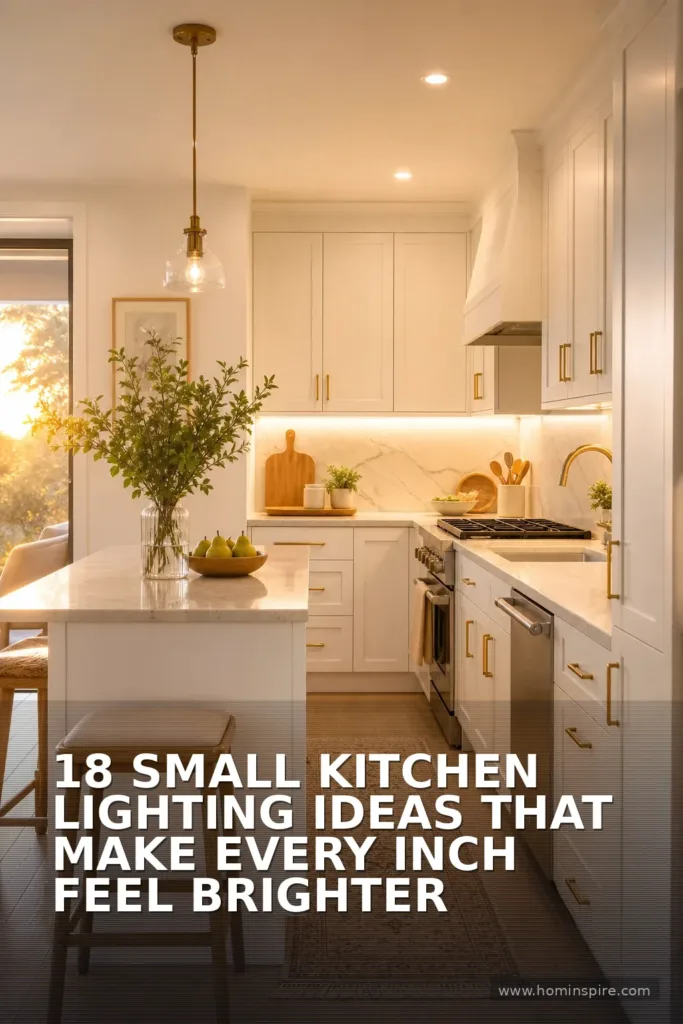
Why Lighting Matters So Much in a Small Kitchen
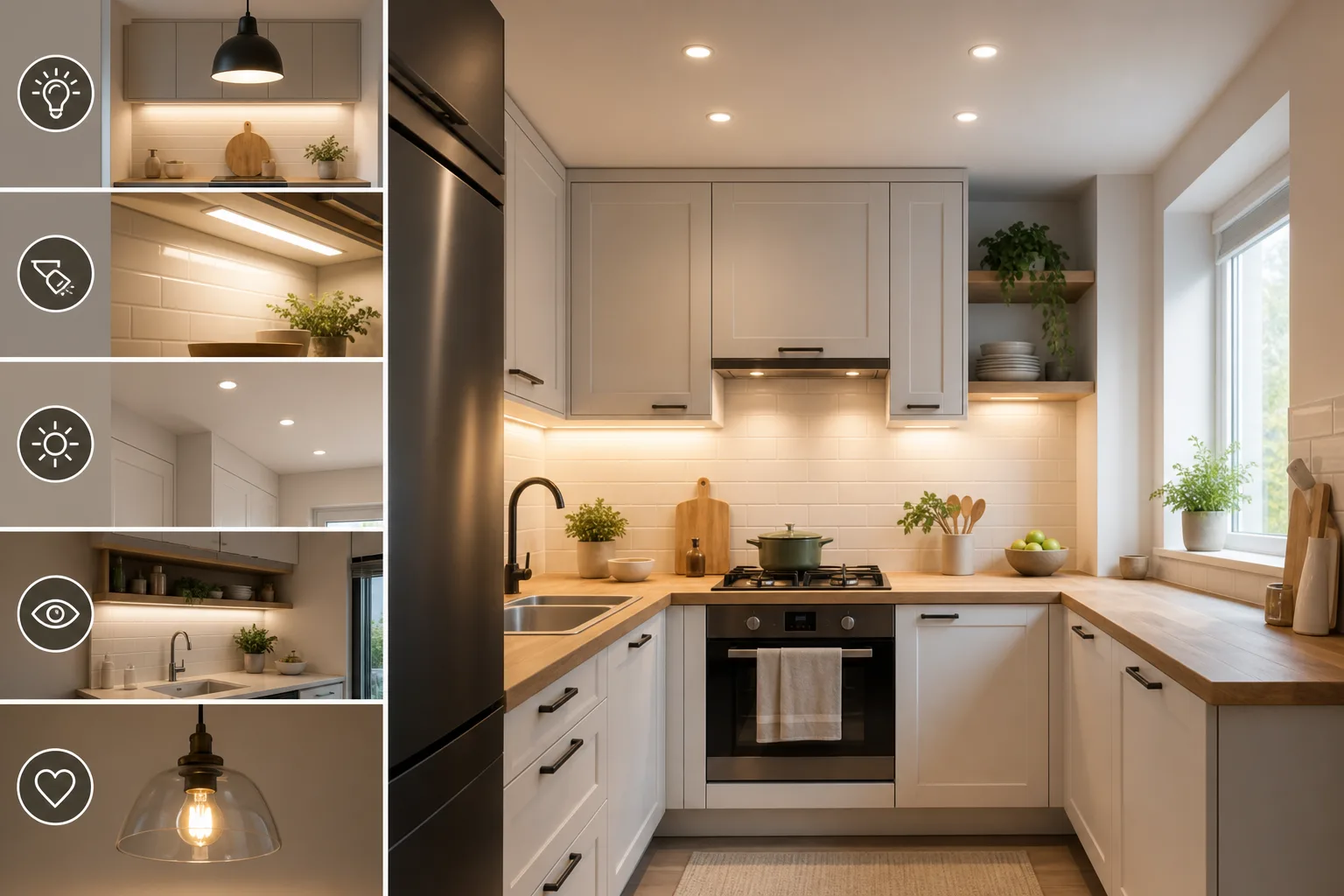
Lighting has an outsized effect in a small kitchen because every surface is close together. Dark corners, deep upper cabinets, and poorly lit countertops can quickly make the room feel cramped. Proper illumination visually expands the boundaries of the space while improving safety for chopping, cooking, and cleaning.
A successful plan layers different types of light rather than relying on a single overhead source:
- Ambient lighting provides general illumination throughout the room.
- Task lighting brightens work zones such as countertops, sinks, ranges, and islands.
- Accent lighting adds depth and highlights architectural features, shelving, or decorative details.
Combining these layers lets you use brighter light for food prep and softer light for an evening meal or a quiet coffee break.
1. Start With a Bright, Low-Profile Ceiling Fixture
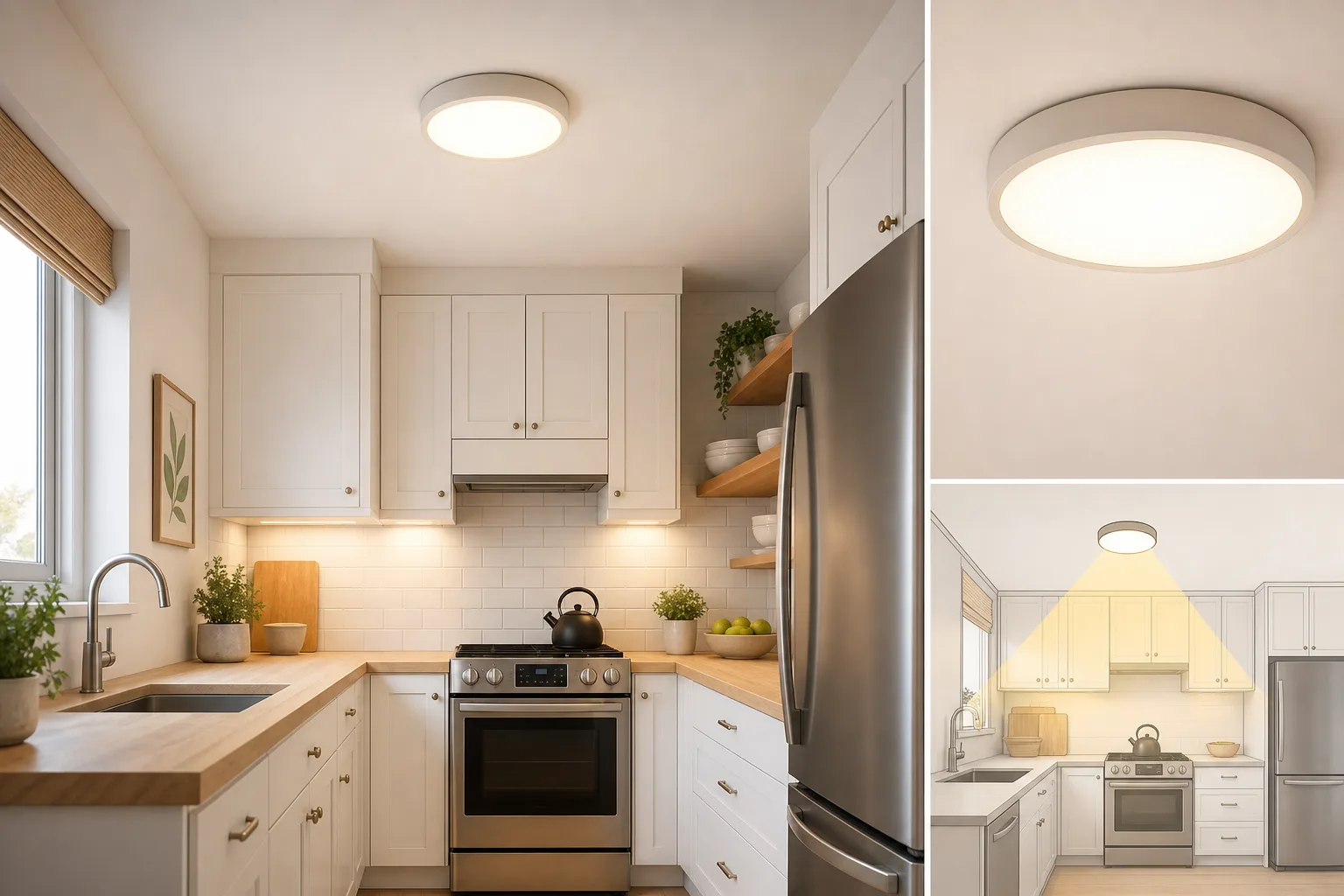
A flush-mount or semi-flush-mount ceiling light is one of the most useful small kitchen lighting ideas. It provides broad ambient light without hanging too low into valuable visual space. Look for a fixture with a white glass diffuser, integrated LED panel, or multiple bulbs aimed in different directions.
For kitchens with standard 8-foot ceilings, low-profile fixtures are usually a better choice than oversized pendants or dramatic chandeliers. They keep walkways clear and help the ceiling feel higher. Choose a finish that repeats elsewhere in the room, such as matte black hardware, brushed brass faucets, or stainless steel appliances.
2. Install Under-Cabinet Task Lighting
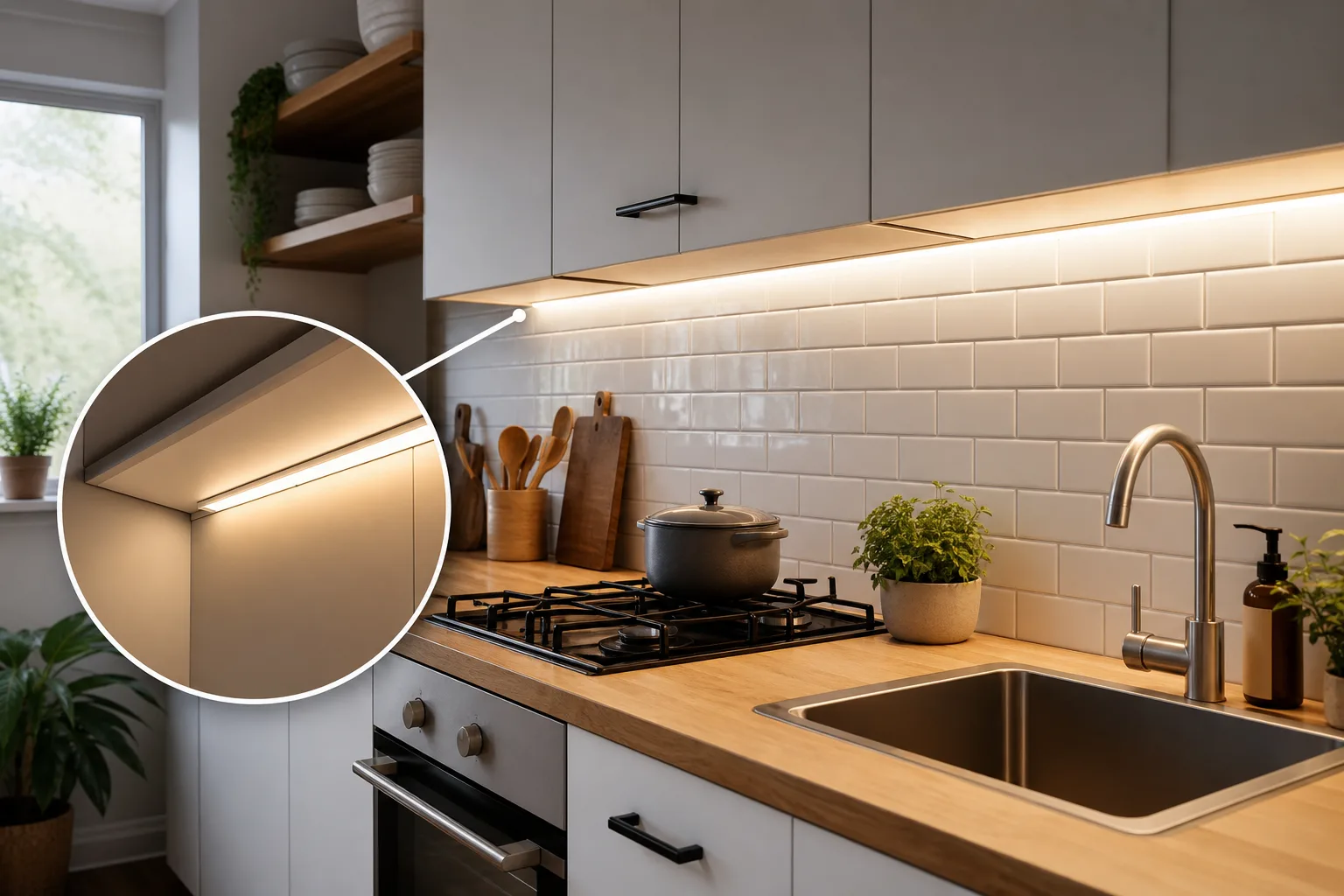
Under-cabinet lighting is one of the highest-impact upgrades for any compact kitchen. Upper cabinets naturally cast shadows over the counter, exactly where you prepare meals. LED tape lights, slim light bars, and puck lights solve this issue by directing light onto the work surface.
For the most polished appearance, install a continuous LED strip in an aluminum channel near the front edge of the cabinet bottom. This placement sends light across the entire counter instead of creating isolated bright spots. Choose a warm-neutral color temperature around 3000K for a welcoming look, or 3500K to 4000K if you prefer a crisper, more contemporary workspace.
Plug-in systems are easy for renters and budget-conscious homeowners, while hardwired fixtures offer a cleaner, permanent finish. If you are refreshing your room without major construction, pair this project with other updates from our kitchen makeover without renovation ideas.
3. Use LED Strip Lights Above Cabinets
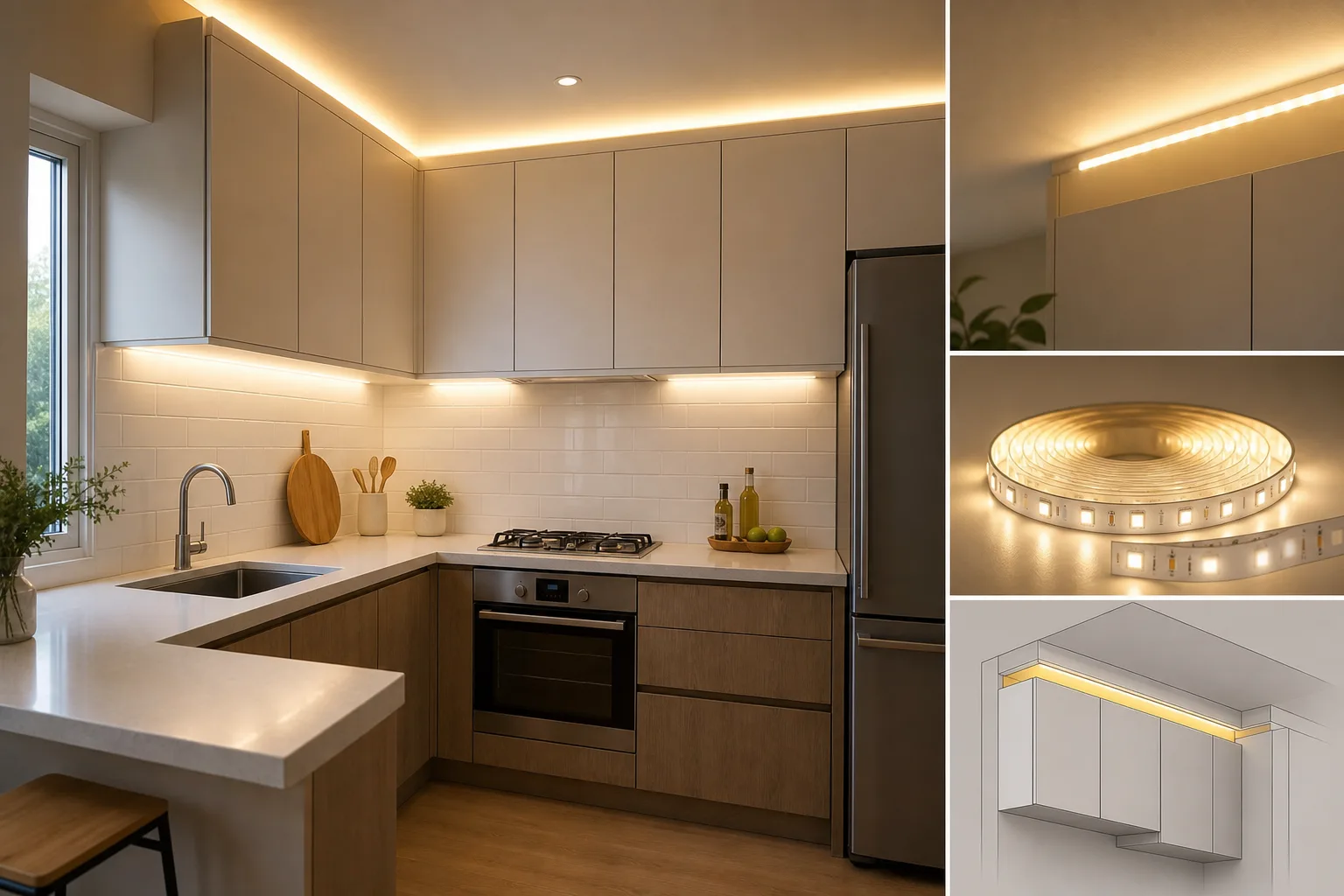
If there is a gap between your upper cabinets and ceiling, add LED strip lighting above the cabinets. This technique creates an upward glow that draws the eye vertically, making a small kitchen feel taller and less boxed in. It also softens the hard edges of cabinetry at night.
Use dimmable strips so the effect can shift from subtle accent lighting to practical background illumination. Avoid exposed dots of light by choosing diffused LED tape or installing the strip inside a shallow channel. This option works especially well with styling inspired by these above kitchen cabinet decor ideas for high ceilings.
4. Add a Small Pendant Over an Island or Peninsula
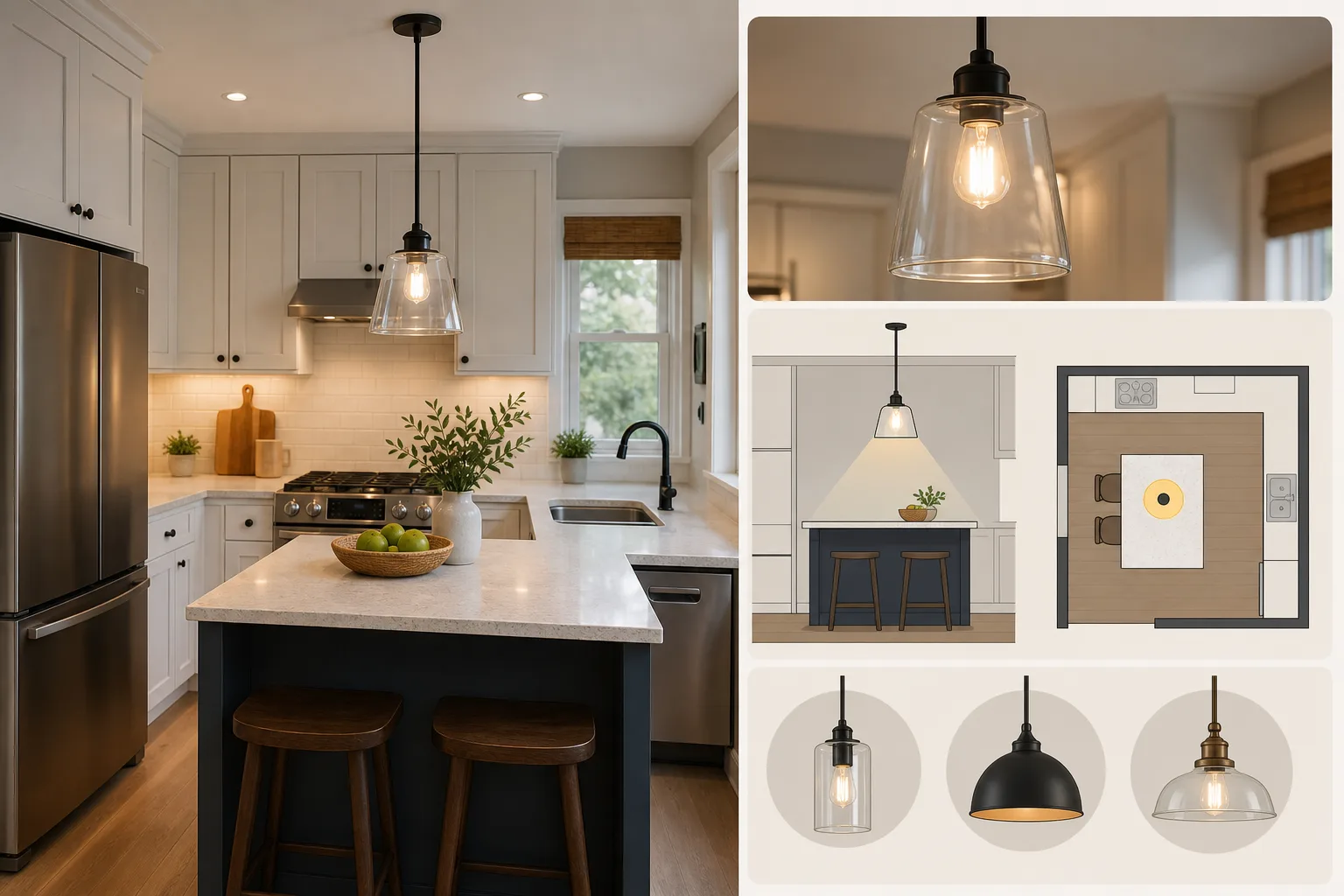
A pendant can define an island or peninsula without overwhelming a compact kitchen. The key is proportion. Choose one small pendant, a narrow linear pendant, or two mini pendants instead of a large statement fixture that blocks sightlines.
For a typical small island, hang the bottom of a pendant about 30 to 36 inches above the countertop. Use a dimmer so the fixture can provide bright task lighting during meal prep and softer light when the island becomes a dining or homework zone. Clear glass, open metal frames, and light-colored shades preserve an airy appearance.
If you are still planning the layout, explore these small kitchen ideas with an island to see how lighting can support a compact central workspace.
5. Choose Recessed Lights for a Clean, Open Ceiling
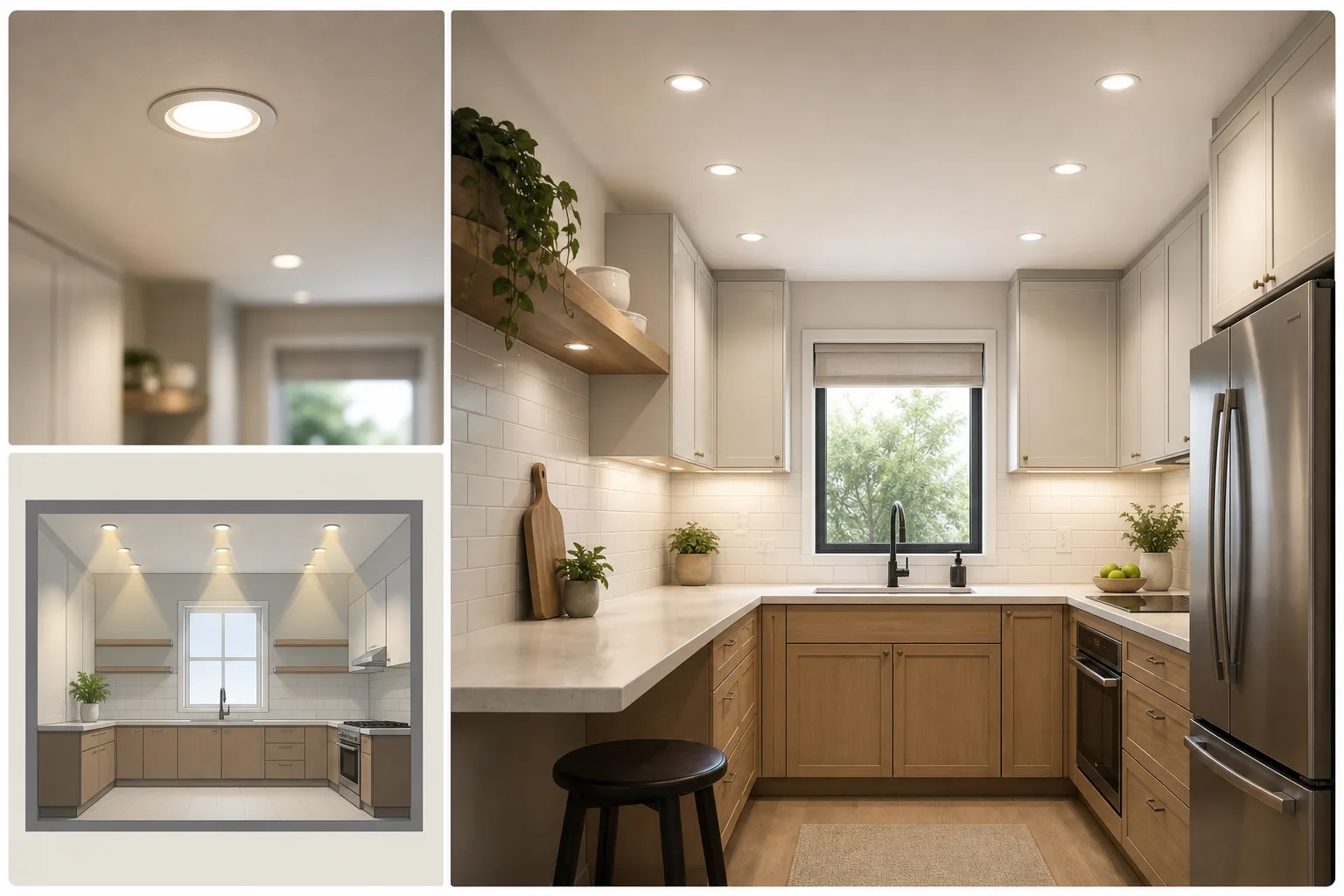
Recessed lighting is ideal when you want strong general illumination without visual bulk. Small 4-inch LED recessed lights work particularly well in compact kitchens because they can be spaced to cover the room evenly while maintaining a streamlined ceiling.
Do not place recessed lights in a simple grid without considering cabinet placement. Instead, position them so light falls in front of upper cabinets and directly over work areas. A light located behind you while you stand at the counter will cast your shadow over the workspace. Aim for balanced coverage, then use under-cabinet lights to eliminate remaining shadows.
For a low-ceiling kitchen, recessed LEDs can make the room feel less crowded than hanging fixtures. Select dimmable bulbs or integrated fixtures compatible with a quality LED dimmer.
6. Brighten the Sink With Focused Lighting
The sink is one of the most-used work zones in the kitchen, yet it is often poorly lit. If it sits under upper cabinets, a small recessed light or adjustable spotlight placed in front of the cabinets can dramatically improve visibility. In a kitchen with a window over the sink, add a fixture for nighttime use rather than relying only on daylight.
A petite pendant over the sink can be attractive when ceiling height and layout allow. Keep it narrow and hang it high enough that it does not interfere with the view or cabinet doors. For a simpler solution, under-cabinet lighting on either side of the sink can provide excellent task illumination.
7. Light Open Shelves From Below or Above
Open shelves can prevent a small kitchen from feeling top-heavy, and integrated shelf lighting makes them even more effective. A slim LED strip mounted beneath each shelf adds gentle light to dishes, glassware, cookbooks, or decorative objects. It also gives the wall more dimension.
Use this technique selectively. Lighting every shelf in a very small kitchen may look overly busy. One illuminated shelf near a coffee station, breakfast nook, or feature wall is often enough. For more ways to make a compact wall work harder, see these small kitchen wall decor ideas.
8. Add Lighting Inside Glass-Front Cabinets
Glass-front cabinets can feel lighter than solid upper cabinets, especially in a small room. Interior cabinet lighting enhances that effect by adding a warm glow and reflecting light through the glass. It is particularly useful for displaying everyday white dishes, clear glassware, or a curated collection.
Use small LED puck lights or concealed strip lights at the top front of the cabinet. Warm white bulbs prevent the display from feeling cold or showroom-like. Put the lights on a separate switch or smart control so they can serve as low-level evening lighting after the main lights are off.
9. Use Toe-Kick Lighting for a Floating Effect
Toe-kick lighting is installed beneath base cabinets, where the cabinet meets the floor. Though subtle, it creates a floating effect that makes base cabinets appear lighter and the floor area feel more expansive. It is also useful as a nighttime navigation light.
LED tape lights are the most common option. Choose a concealed placement and a dimmable driver. This feature is especially valuable in a galley kitchen or apartment kitchen where a bright overhead light can feel harsh late at night.
10. Make a Breakfast Nook Feel Intentional
A compact dining corner benefits from its own light source. A small pendant, plug-in wall sconce, or flush-mount fixture helps separate the nook from the cooking zone, making the kitchen feel more thoughtfully designed. This visual zoning is useful in open-plan homes and studio apartments.
For a round table, center a single pendant above it. For a narrow banquette or rectangular table, try a small linear fixture or two tiny pendants. Keep the fixture width narrower than the table so it looks balanced. Find layout inspiration in our guide to small kitchen breakfast nook ideas.
11. Use Wall Sconces When Ceiling Wiring Is Limited
Wall sconces are smart small kitchen lighting ideas for spaces where adding ceiling wiring is difficult or expensive. They can illuminate a breakfast nook, a sink wall, open shelving, or a coffee station without taking up counter space. Plug-in sconces are especially renter-friendly, and many modern options have fabric-covered cords that look intentional.
Select slim sconces with adjustable arms if you need flexible task lighting. For a more decorative effect, choose a compact shade that directs light upward and downward. Place sconces where cabinet doors and appliance doors will not hit them.
12. Create a Better Coffee Station With Task Lighting
A dedicated coffee zone becomes more useful when it has its own lighting. Install an under-cabinet light above the machine, add a small sconce beside floating shelves, or use a compact rechargeable lamp if no wiring is available. A focused light makes early mornings easier and helps the station feel like a purposeful feature rather than counter clutter.
Keep the counter organized so the lighting can shine. These small kitchen coffee station ideas offer practical ways to create a polished daily brew zone.
13. Select Light Fixtures With Open, Airy Shapes
In a small kitchen, fixture shape matters as much as brightness. Opaque, oversized shades can visually interrupt the room, while open-frame pendants, clear glass globes, and slim metal profiles allow sightlines to continue. The result is a less crowded look.
This does not mean every fixture must disappear. A beautiful pendant can still add personality, especially if the rest of the room is simple. Just keep the scale appropriate and avoid multiple competing statement pieces. If you choose a bold fixture, let it be the visual focal point.
14. Use Mirrors and Reflective Surfaces to Multiply Light
Lighting works best when the room has surfaces that can reflect it. A glossy backsplash, pale countertop, satin-finish cabinet paint, glass cabinet doors, and stainless steel accents can all bounce light around a compact kitchen. Even a small mirror on an adjacent wall can make a narrow kitchen feel wider.
You do not need to make every finish shiny. Balance reflective elements with warm wood, textured tile, or matte hardware so the room still feels comfortable. Updating cabinet fronts, hardware, and surfaces can also help improve brightness; consider these kitchen cabinet makeover ideas without painting for approachable options.
15. Choose the Right Bulb Color Temperature
Color temperature changes the mood of your kitchen. It is measured in Kelvin (K), and choosing the right range is one of the easiest ways to improve a lighting scheme.
- 2700K: Warm and cozy; best for traditional, farmhouse, and evening-focused kitchens.
- 3000K: Warm-neutral; a versatile choice for most US homes and cabinet colors.
- 3500K to 4000K: Clean and crisp; useful for modern kitchens and precise food prep.
- 5000K and above: Very cool daylight; often too stark for residential kitchens.
For consistency, use similar color temperatures across ceiling, under-cabinet, and accent lights. Mixing a warm pendant with cool blue-white task lights can make finishes look mismatched.
16. Put Every Lighting Layer on a Dimmer
Dimmers make a small kitchen more adaptable. Bright light is useful when you are cooking, cleaning, or searching through cabinets. Softer light is better for entertaining, late-night snacks, and early-morning coffee. Ideally, place ambient, task, and accent lights on separate dimmers so you can adjust each layer independently.
Confirm that both the bulbs and the dimmer are LED-compatible. Incompatible components can cause flickering, humming, or limited dimming range. Smart dimmers offer voice and app control, but a standard wall dimmer remains an affordable, reliable upgrade.
17. Add Motion-Sensor Lighting in High-Use Areas
Motion-sensor lights are a practical addition to small kitchens, particularly inside pantries, under cabinets, and near the toe-kick. Rechargeable magnetic light bars can be installed in minutes and are useful in rental homes. They switch on when you enter the room or open a cabinet, then turn off automatically.
Use warm, low-lumen models for nighttime guidance. Bright, cool sensor lights can feel jarring when you walk in for a glass of water after dark. In deep storage zones, sensor lighting makes it easier to find items and reduces the need for bulky countertop lamps.
18. Use Portable Lamps for Flexible, Low-Commitment Light
Small rechargeable table lamps have become a popular solution for kitchen counters, open shelves, and breakfast nooks. They add a soft pool of light without electrical work and can move wherever they are needed. A cordless lamp is especially helpful in a tiny apartment kitchen with limited outlets.
Choose a compact, damp-rated or kitchen-appropriate design, and keep it away from the sink and stovetop. On a counter, place it in a corner that does not interfere with food preparation. It can make a kitchen feel more like a living space while providing gentle ambient light.
How to Plan Lighting for a Small Kitchen
Before buying fixtures, walk through your kitchen at different times of day. Notice where shadows fall, which counters you use most, and whether the room feels too bright or too dark at night. Then create a simple plan:
- Establish ambient light. Start with a ceiling fixture or recessed lights that illuminate the full room.
- Add task light. Prioritize under-cabinet lighting, the sink, the range, and any island or peninsula.
- Include one accent layer. Choose toe-kick, cabinet interior, shelf, or above-cabinet lighting.
- Control the layers separately. Dimmers and smart switches make a huge difference.
- Keep the scale restrained. In a compact room, a few well-placed fixtures outperform too many decorative lights.
If your entire kitchen is short on space, lighting should be part of a larger strategy that includes clear counters, smart storage, and light-reflecting finishes. Our guide to very small kitchen ideas on a budget can help you prioritize affordable upgrades.
Small Kitchen Lighting Mistakes to Avoid
- Using only one overhead fixture: This leaves work surfaces in shadow and creates a flat, cramped look.
- Choosing fixtures that are too large: Oversized pendants can crowd a small ceiling and block visual flow.
- Ignoring color temperature: Inconsistent bulbs can make cabinets and backsplash colors look off.
- Skipping dimmers: A kitchen needs different light levels for cooking, cleaning, dining, and relaxing.
- Putting recessed lights behind the cook: Placement should brighten counters from the front, not cast shadows over them.
- Forgetting about glare: Bare bulbs and glossy counters can cause uncomfortable reflections if fixtures are poorly positioned.
FAQ: Small Kitchen Lighting Ideas
What is the best lighting for a small kitchen?
The best approach combines a bright ceiling fixture or recessed lights with under-cabinet task lighting. Add one accent layer, such as toe-kick or cabinet lighting, to create depth and make the room feel larger.
How many lights should a small kitchen have?
Most small kitchens need at least two lighting layers: ambient lighting for the room and task lighting for countertops. A third accent layer is optional but can make the space feel more polished and flexible.
What color light makes a small kitchen look bigger?
Warm-neutral light around 3000K usually makes a small kitchen feel inviting and bright without looking yellow or overly cool. Pair it with light-reflecting surfaces and evenly distributed fixtures for the most spacious effect.
Are pendant lights good for small kitchens?
Yes, as long as they are properly scaled. Use mini pendants, a slim linear pendant, or one compact fixture over an island, peninsula, or small dining table. Avoid large shades that interrupt sightlines.
Can renters add kitchen lighting without hardwiring?
Yes. Plug-in under-cabinet lights, rechargeable motion-sensor bars, plug-in sconces, and cordless table lamps can improve a rental kitchen without permanent electrical changes. Always follow the product instructions and lease rules.
Final Thoughts
The most effective small kitchen lighting ideas are not about adding the most fixtures. They are about adding the right light in the right places. Begin with even ambient illumination, make counters brighter with under-cabinet lights, and use a subtle accent layer to add depth. With thoughtful scale, consistent bulb color, and dimmable controls, even the smallest kitchen can feel brighter, larger, and far more enjoyable to use.
