
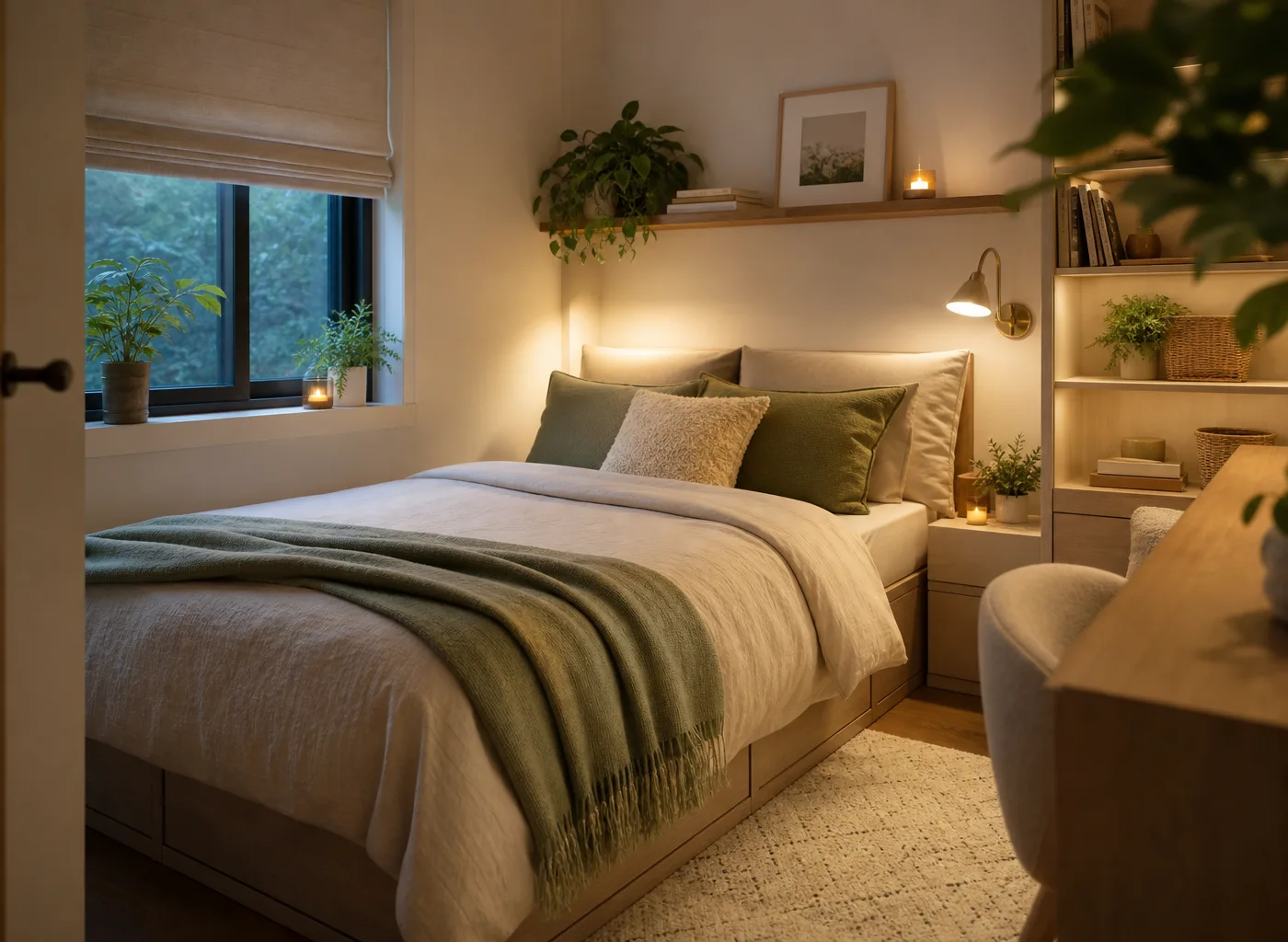
A compact bedroom does not have to feel cramped, plain, or purely practical. In fact, limited square footage can make it easier to create a snug, restful space with a sense of intention. The key is to balance softness with function: choose furniture that earns its footprint, use lighting to set a calm mood, and keep visual clutter under control.
These small cozy bedroom ideas are designed for apartments, guest rooms, dorm-sized spaces, and any bedroom where every inch matters. Whether your style is modern, traditional, minimalist, or cottage-inspired, you can use these ideas to make a small room feel warm, personal, and easy to live in.
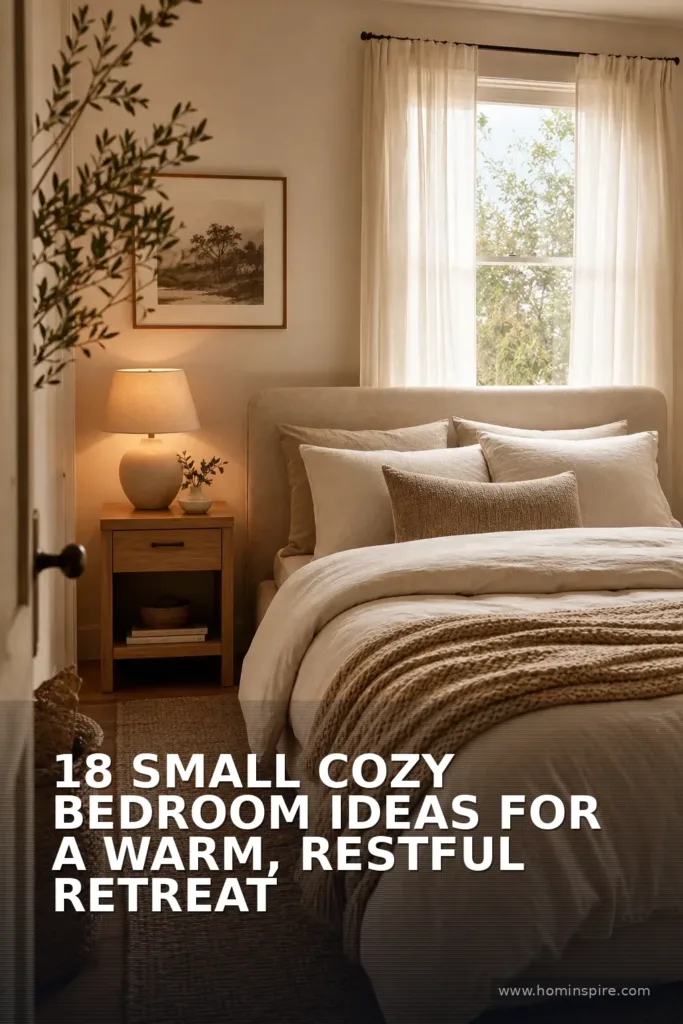
1. Start With a Soft, Cohesive Color Palette
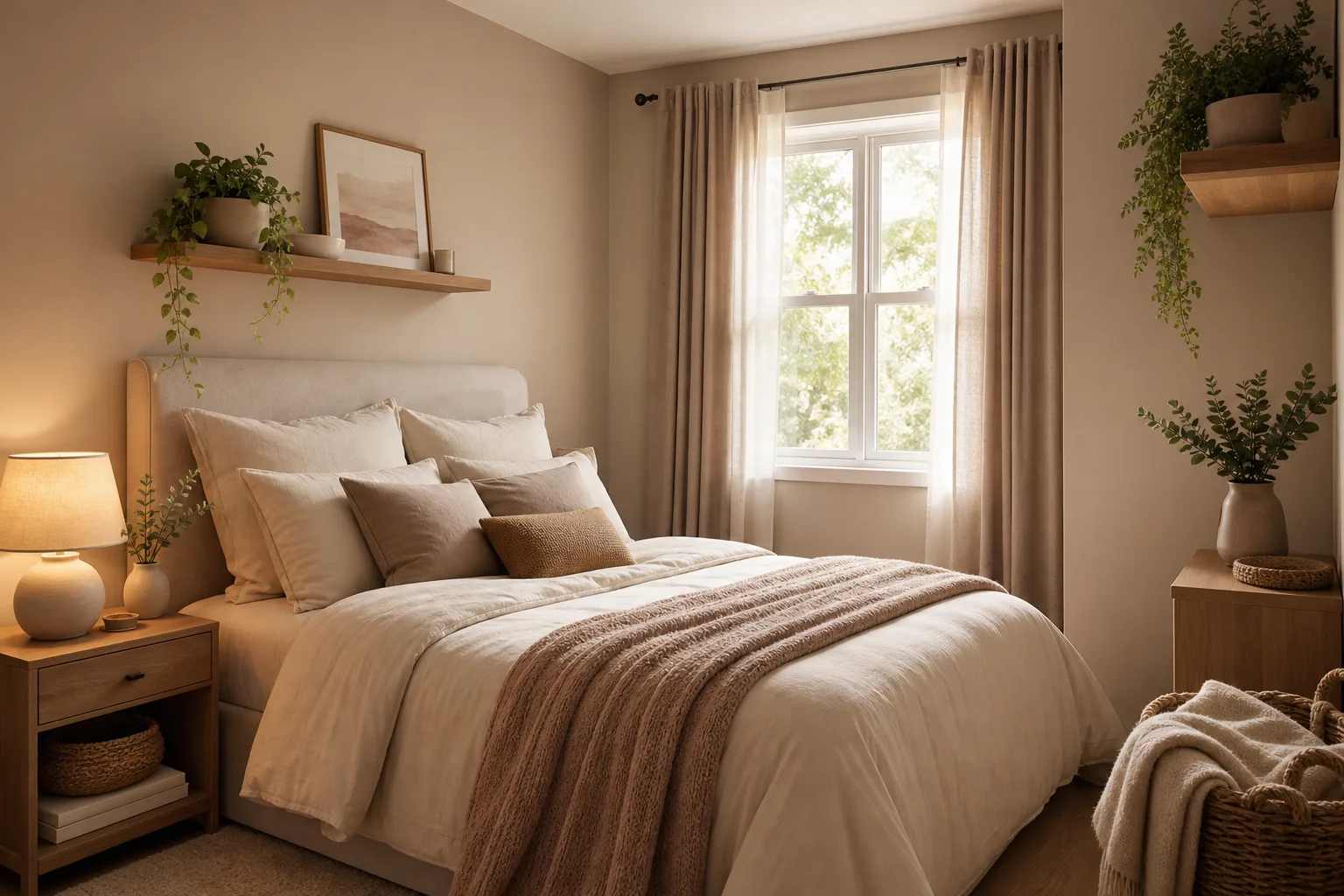
Color has an immediate effect on how large and restful a bedroom feels. Soft neutrals such as warm white, cream, oatmeal, taupe, and pale gray are reliable choices because they reflect light while keeping the atmosphere gentle. If you prefer more color, try muted shades such as dusty blue, sage, blush, clay, or soft olive.
For a cohesive result, repeat two or three tones across the walls, bedding, curtains, rug, and decor. This does not mean everything must match exactly. A layered mix of similar shades creates depth without visual noise. In a very small room, consider painting the walls, trim, and doors in the same color to blur hard edges and make the space feel more continuous.
2. Choose the Right Bed Size for the Room
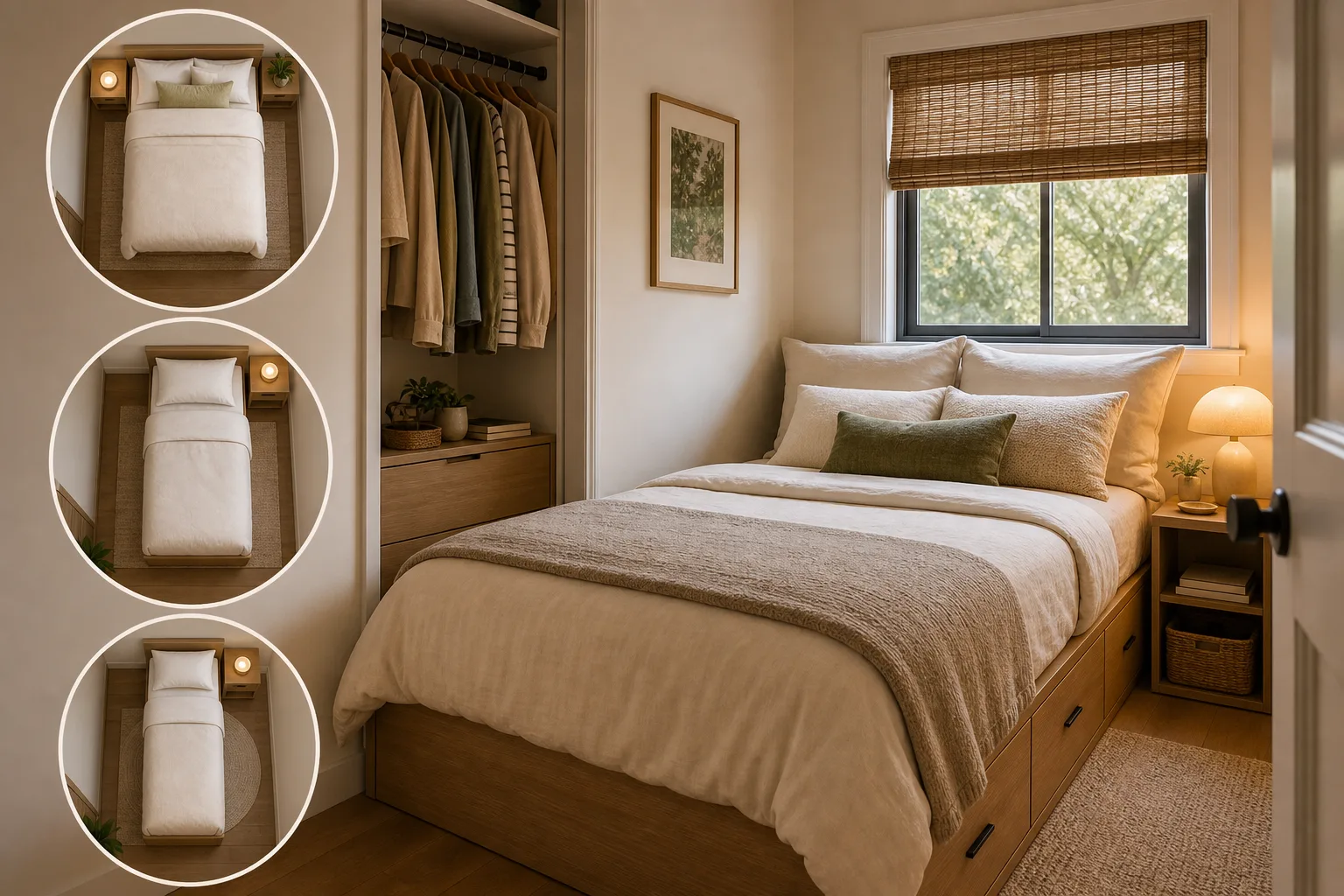
A bed should be comfortable, but it should not consume every available inch. A full-size bed can be a practical alternative to a queen in a small primary bedroom, especially if keeping walkways clear is a priority. In a guest room, a daybed or twin bed may offer better flexibility.
Before buying, map the bed footprint with painter’s tape on the floor. Aim for a comfortable path around at least one side and at the foot of the bed. If possible, position the bed on the longest uninterrupted wall. This usually creates the most balanced arrangement and leaves room for storage or a narrow nightstand.
3. Use an Upholstered or Textured Headboard
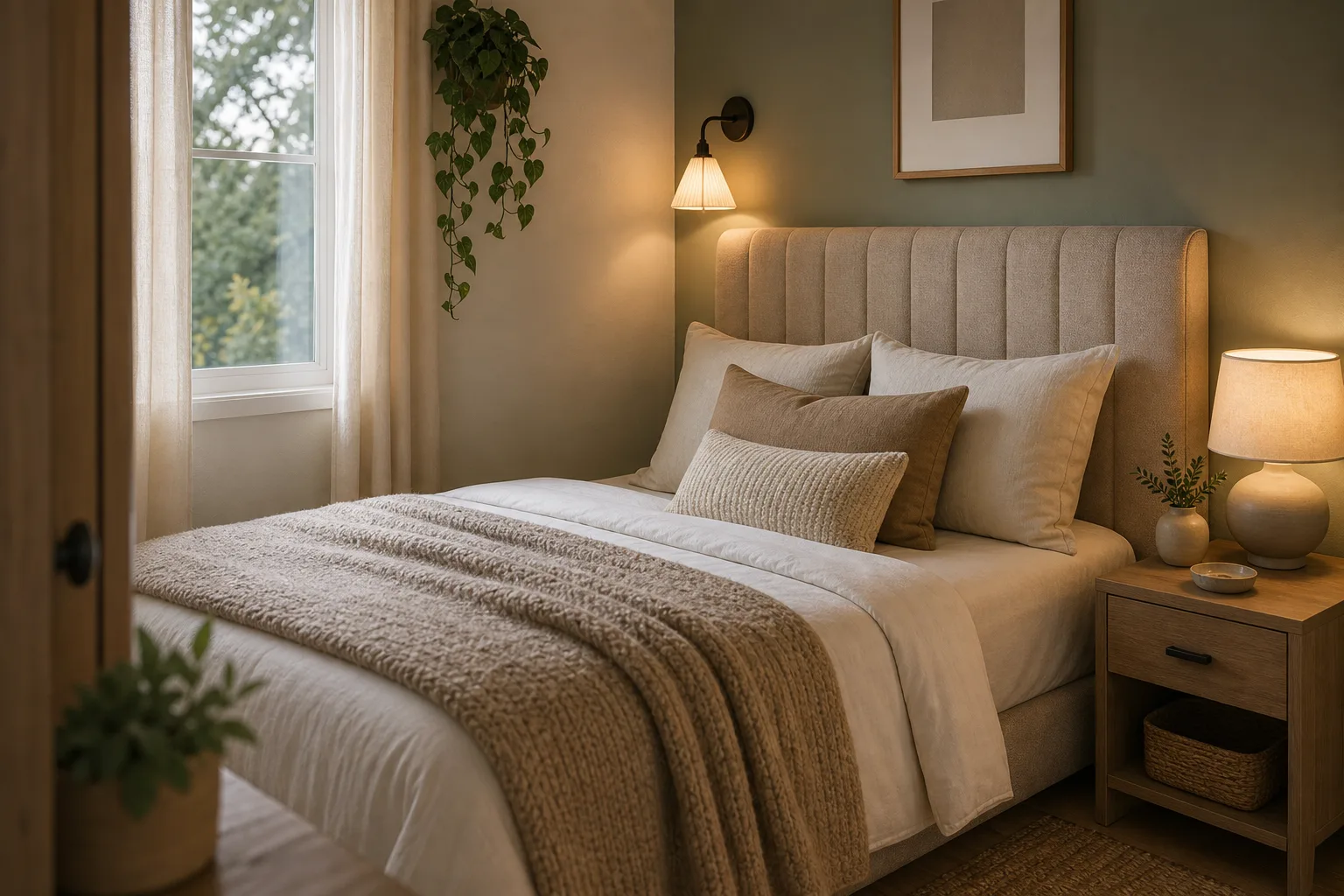
A headboard is one of the fastest ways to make a modest room feel more finished and inviting. Upholstered linen, velvet, boucle, or cotton headboards bring softness to a room full of hard surfaces. A wood headboard with a warm stain can add similar visual warmth in a more rustic or organic space.
If a standard headboard is too bulky, make one with a wall-mounted fabric panel, peel-and-stick wallpaper behind the bed, or a painted arch. These options define the sleeping zone without taking up valuable floor space.
4. Layer Bedding for Instant Comfort
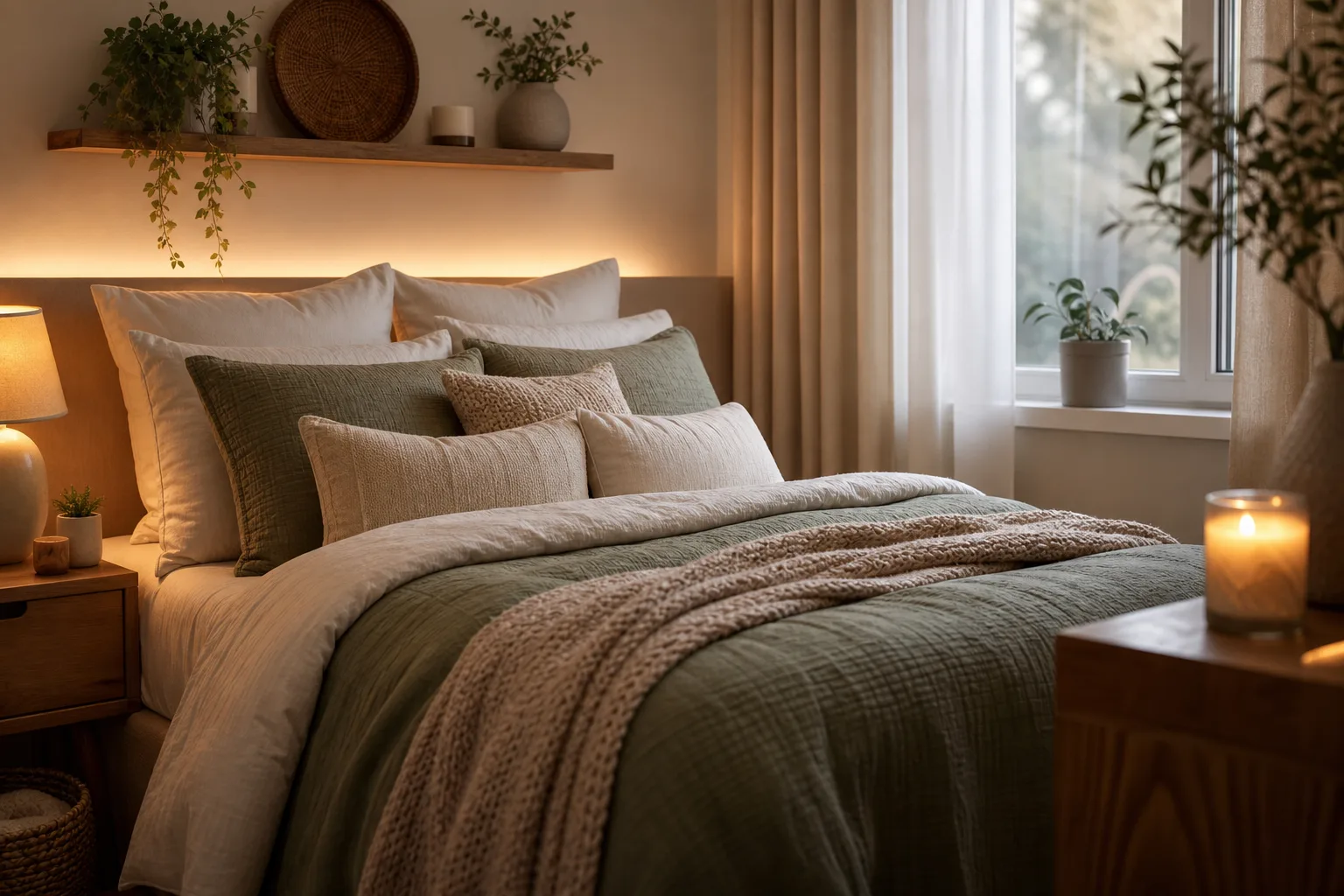
Cozy bedrooms are built with texture. Begin with breathable sheets, then add a quilt, duvet, or coverlet in a relaxed fabric such as washed cotton or linen. Finish with a folded throw blanket and a few pillows in varied but complementary textures.
In a small bedroom, avoid piling on so many decorative pillows that making the bed becomes a chore. Two sleeping pillows, two larger shams, and one accent pillow are often enough. The goal is a bed that looks inviting while remaining simple to use every day.
5. Add a Rug That Extends Beyond the Bed
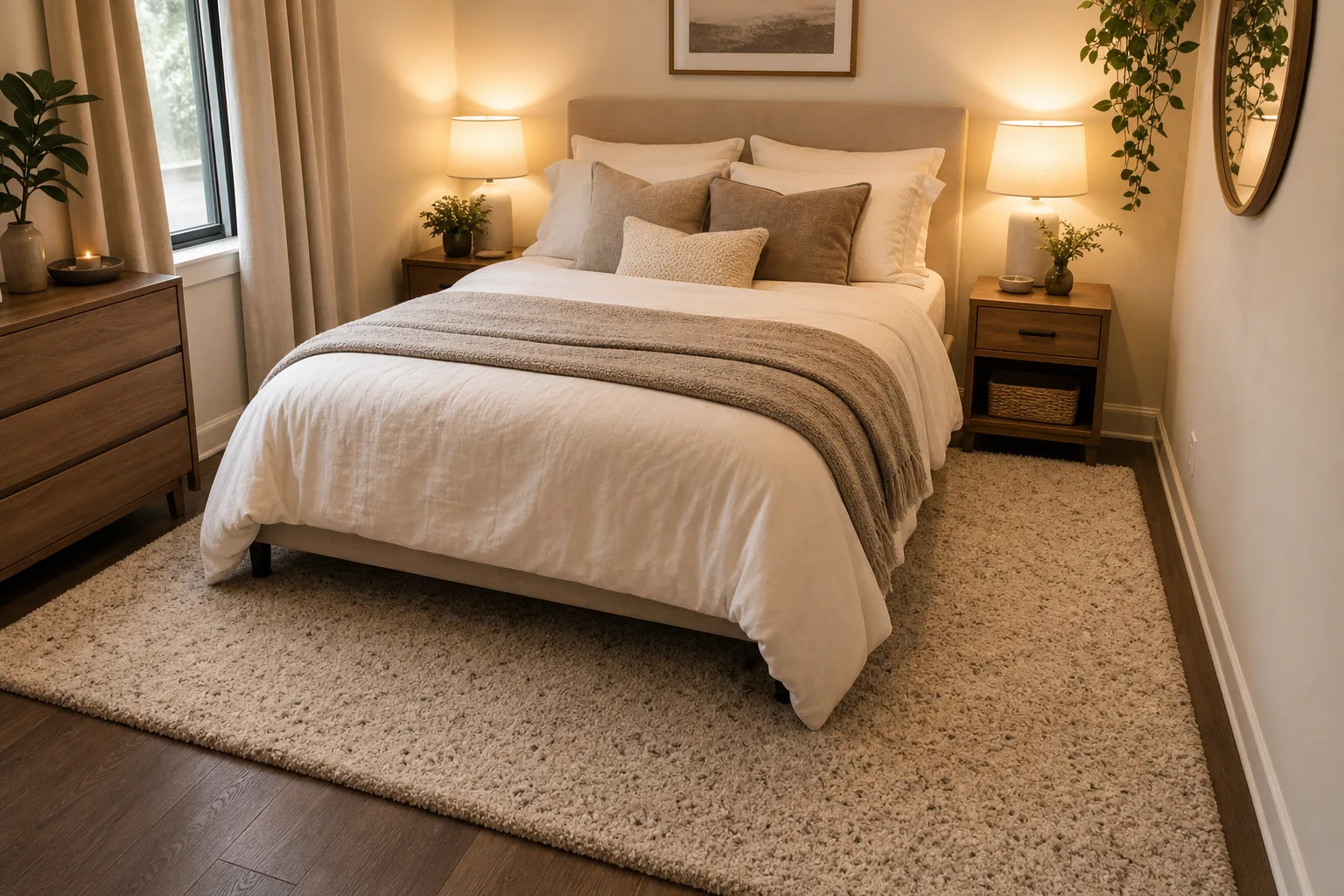
A soft rug makes a small bedroom feel grounded and more comfortable underfoot. For a full or queen bed, a 5-by-8-foot or 6-by-9-foot rug often works well, depending on the layout. Place it under the lower two-thirds of the bed so it extends along both sides and the foot.
If a large rug is not in the budget, use two slim runners on either side of the bed. Choose a low-pile or flatwoven option if your door clearance is limited. Subtle patterns can add personality, while a solid rug helps maintain a calm, uncluttered look.
6. Create Layers of Warm Lighting
One overhead fixture rarely makes a bedroom feel cozy on its own. Use at least two additional light sources, such as bedside lamps, wall sconces, a plug-in pendant, or a small floor lamp. This gives you the flexibility to brighten the room for getting dressed or lower the light for winding down.
Choose warm-white bulbs around 2700K for a softer, more relaxing glow. Dimmers are especially valuable in a small bedroom because they allow one fixture to serve several purposes. Avoid harsh, cool-toned bulbs that can make a restful room feel clinical.
7. Save Surface Space With Wall Sconces
Wall-mounted sconces free up nightstand space for essentials such as a water glass, book, and phone. Plug-in sconces are a renter-friendly choice because they do not require hardwiring. Many styles have swing arms or adjustable shades, making them useful for nighttime reading.
Mount sconces high enough that the light falls comfortably over the bed rather than directly into your eyes. For a polished look, hide or neatly route cords with cord covers painted to match the wall.
8. Pick Slim, Multiuse Nightstands
In a compact room, a nightstand does not need to be large. A narrow table, small cabinet, wall-mounted shelf, or even a petite stool can work well. Look for a piece with a drawer or closed compartment if you tend to accumulate chargers, hand cream, medication, or reading glasses.
If there is room on only one side of the bed, use a nightstand there and install a floating shelf or sconce on the other side. Symmetry can be pleasant, but functionality matters more in a small layout.
9. Take Advantage of Under-Bed Storage
The area beneath the bed is prime storage space, especially in a room without a large closet. A storage bed with drawers is a streamlined option. You can also use lidded bins, low rolling containers, or vacuum bags for off-season clothes, extra bedding, and spare towels.
Choose matching containers to make the storage look intentional when it is visible. Avoid overfilling the area; under-bed storage works best when you can still access items without pulling everything out.
10. Use Vertical Space Thoughtfully
When floor space is limited, look up. Tall, narrow bookcases, vertical dressers, wall hooks, and floating shelves can provide storage while preserving walking room. Use shelves for a restrained mix of books, framed photos, a trailing plant, and a small catchall tray.
Do not fill every wall. Empty space is important in a cozy bedroom because it gives the eye a place to rest. One well-styled vertical storage area is more calming than multiple crowded surfaces.
11. Make Closet Storage Work Harder
An organized closet can dramatically improve how a small bedroom feels. Add a second hanging rod for shorter items, use slim velvet hangers, and store folded pieces in labeled bins or shelf dividers. Hooks on the inside of the door can hold bags, belts, robes, or tomorrow’s outfit.
Try to keep bulky items and rarely used clothing elsewhere if possible. The less overflow you have in the bedroom itself, the easier it is to maintain a tranquil environment.
12. Add Curtains High and Wide
Hanging curtains closer to the ceiling rather than directly above the window makes the room appear taller. Extend the rod several inches beyond the window frame so the panels can stack mostly off the glass when open. This maximizes daylight, which helps a small room feel more open.
For coziness, choose lined curtains in linen, cotton, or a soft woven fabric. If outside light affects sleep, add blackout panels or a blackout roller shade behind decorative curtains. The combination gives you both atmosphere and practical light control.
13. Use Mirrors to Bounce Natural Light
A mirror can make a small bedroom appear brighter and more spacious, particularly when placed opposite or adjacent to a window. A full-length mirror is useful for getting dressed and adds vertical interest. A rounded mirror above a dresser can soften the straight lines of a compact room.
Be mindful of what the mirror reflects. Position it toward a window, an attractive wall, or a neatly made bed instead of a cluttered corner.
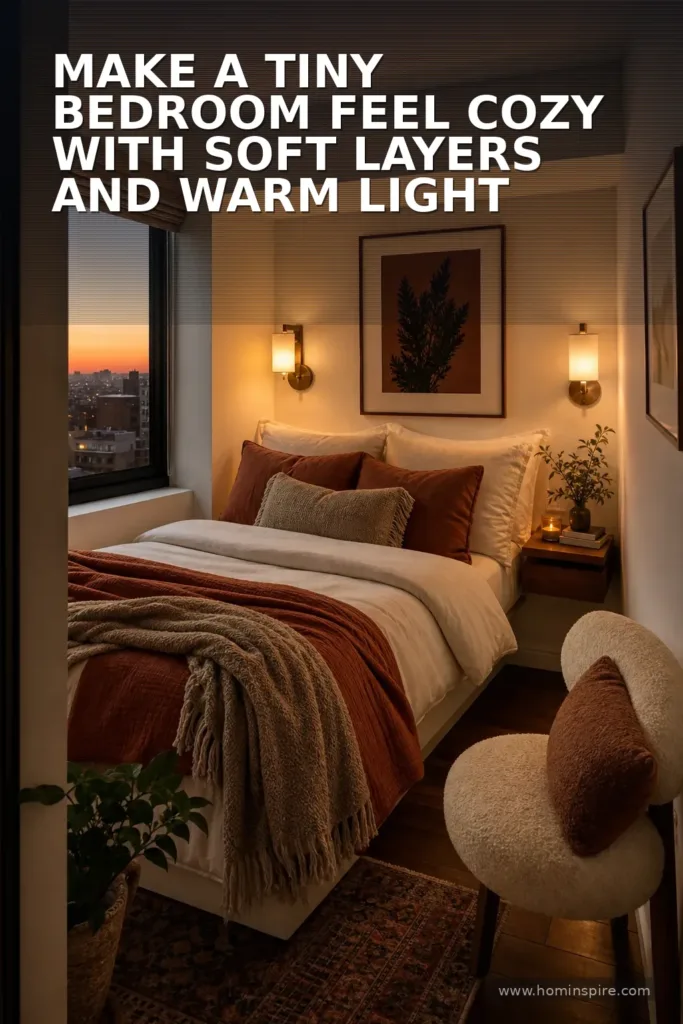
14. Keep the Furniture Profile Light
Bulky furniture can visually overwhelm a small bedroom even when it technically fits. Consider pieces with raised legs, open bases, slim frames, or light-toned finishes. These allow more of the floor to remain visible, which creates a more open impression.
A wall-mounted desk, narrow dresser, or storage bench at the foot of the bed can be more useful than a large traditional furniture set. Buy only what supports your actual routines.
15. Build a Tiny Reading or Wind-Down Corner
If your layout allows, a small chair, floor cushion, or upholstered bench can make the bedroom feel like a true retreat. Pair it with a compact lamp and a small side table or wall shelf. Even a single comfortable spot for reading can make a room feel more intentional.
If there is no room for extra seating, create the same feeling with a bedside reading setup: a supportive pillow, adjustable sconce, and a small basket for books or magazines.
16. Bring in Natural Materials
Natural textures help a small bedroom feel warm rather than sterile. Try a woven basket for blankets, a wood picture frame, a ceramic lamp base, a linen shade, or a rattan tray on the dresser. These details add tactile interest without requiring bold color or large decorative objects.
Plants can contribute to the effect as well. A small pothos, snake plant, or low-maintenance faux plant adds life to a shelf or dresser. Keep plant placement simple so it does not become another item competing for limited surface space.
17. Display Meaningful Decor, Not Excess Decor
A cozy room should feel personal, but too many accessories can quickly make it feel crowded. Edit decor down to items you genuinely enjoy: a few favorite photos, a piece of art, a sentimental object, or a small collection of books. Group smaller objects on a tray to make them look purposeful rather than scattered.
One larger piece of art above the bed often has more impact than a busy gallery wall. If you love a gallery arrangement, use matching or coordinated frames and leave enough breathing room between pieces.
18. Create a Simple Evening Reset Routine
The coziest bedroom ideas are not only about decorating; they also make the room easier to maintain. Spend five minutes each evening putting clothing in the hamper, returning dishes to the kitchen, clearing the nightstand, and straightening the bedding. This small habit prevents a compact room from becoming visually overwhelming.
Use a basket for extra throw blankets, a tray for bedside essentials, and a designated charging spot for electronics. When everything has a home, your bedroom can stay calm even during a busy week.
How to Make a Small Bedroom Cozy Without Making It Look Smaller
The most successful small cozy bedrooms combine a few warm elements with a disciplined approach to scale. Focus on soft lighting, comfortable bedding, one or two meaningful decorative moments, and closed storage for everyday clutter. Choose furniture that is proportional to the room, and leave clear paths around the bed whenever possible.
You do not need to fill every corner to make a room feel complete. A thoughtfully edited bedroom often feels more luxurious than one packed with furniture and decor. Start with the bed, lighting, and storage, then add textiles and personality in layers. The result will be a small space that feels comforting, functional, and distinctly yours.
FAQ: Small Cozy Bedroom Ideas
What colors make a small bedroom feel cozy?
Warm whites, creams, taupes, muted greens, dusty blues, and soft clay tones can make a small bedroom feel cozy. Choose a limited palette and repeat it through walls, bedding, curtains, and accessories for a calm, connected look.
How can I make my small bedroom look bigger and cozier?
Use light or mid-tone wall colors, hang curtains high and wide, add a mirror near a window, and choose furniture with slim or raised profiles. Then add coziness with warm lighting, layered bedding, a soft rug, and natural textures.
What is the best bed for a small bedroom?
The best bed is the largest size that still allows comfortable movement in the room. Storage beds, platform beds with a simple frame, and daybeds are especially practical because they reduce the need for additional furniture.
How do I add storage to a small bedroom?
Use under-bed bins or drawers, vertical shelving, wall hooks, floating nightstands, and closet organizers. Prioritize closed storage for everyday items to keep the room looking peaceful and uncluttered.
How many pillows should a cozy small bed have?
Keep it practical: two sleeping pillows, two shams, and one accent pillow are usually enough. A folded throw at the foot of the bed adds texture without creating too much bulk.
