
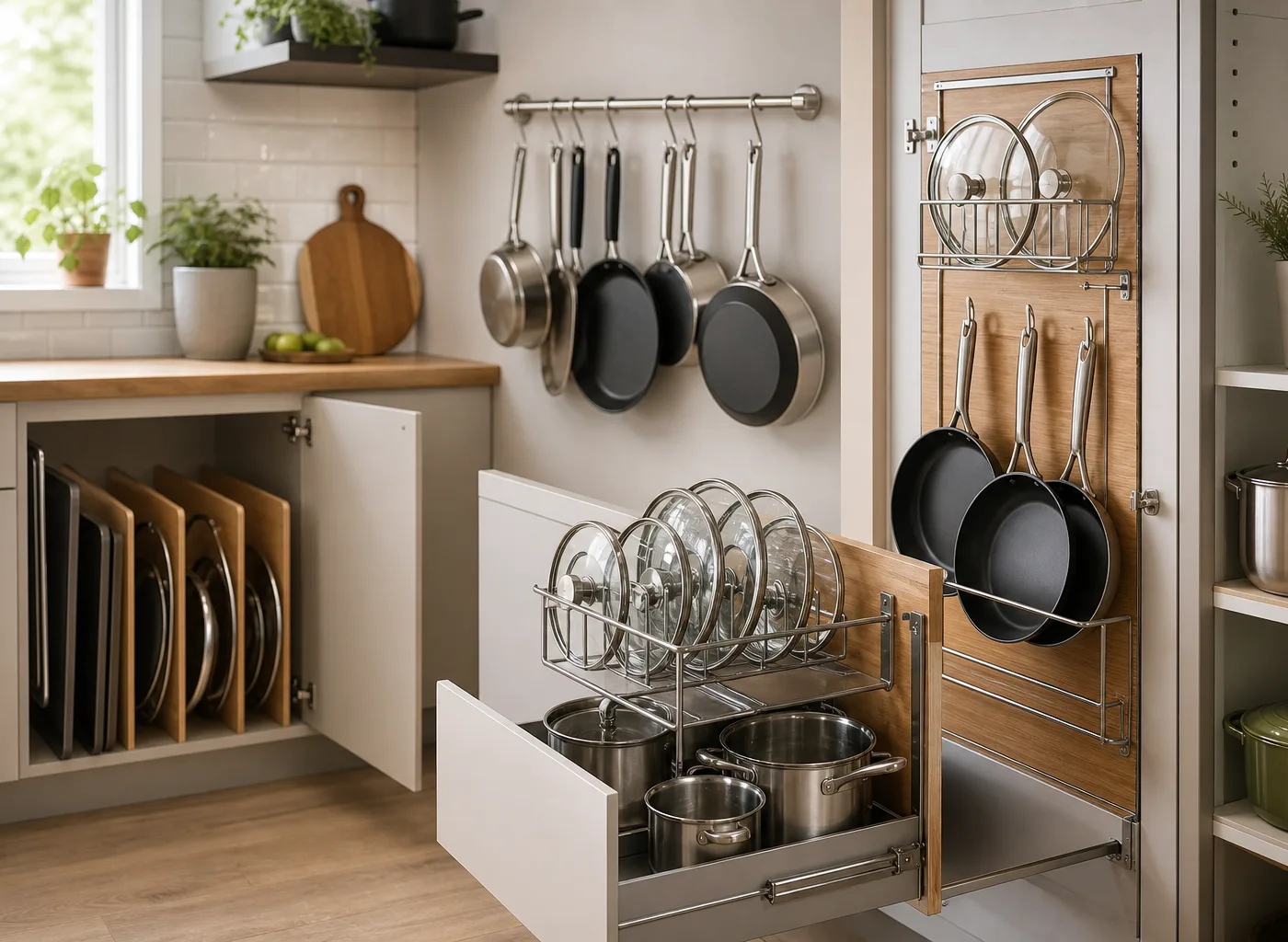
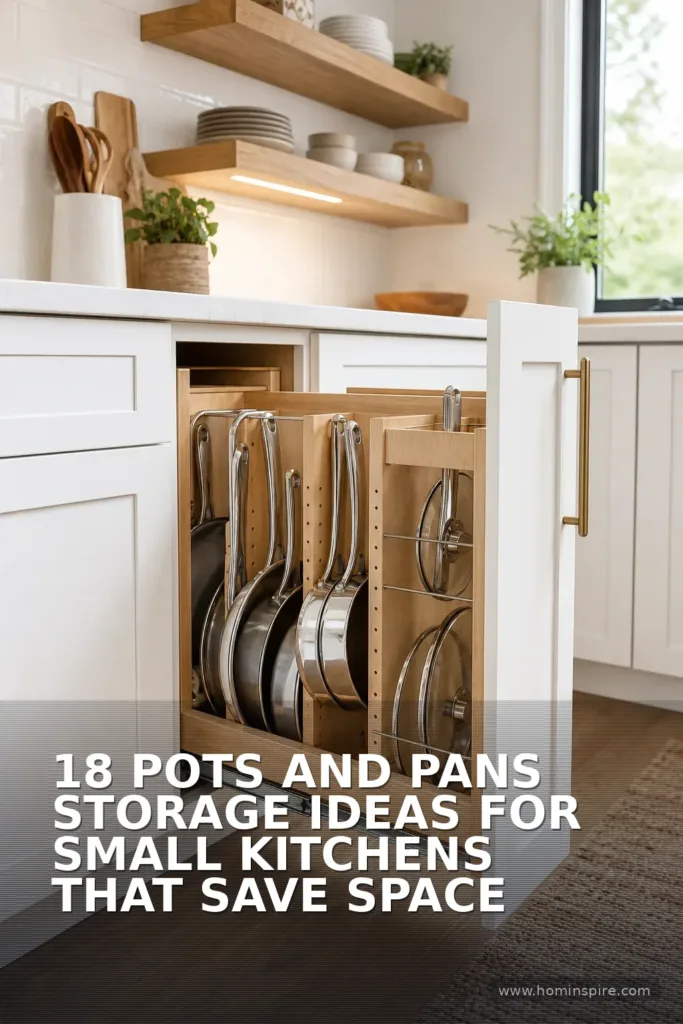
Finding practical pots and pans storage ideas for small kitchens can make cooking feel far less frustrating. Bulky cookware is essential, but it can quickly take over lower cabinets, clutter the oven, and create unstable stacks that are hard to reach. In a small kitchen, the goal is not simply to fit every pan somewhere. It is to create a storage system that keeps your most-used pieces accessible, protects your cookware, and preserves valuable prep space.
The best solution depends on your kitchen layout, cabinet depth, cooking habits, and whether you own or rent. A shallow drawer may need a vertical organizer, while an apartment kitchen may benefit from removable hooks or an over-the-door rack. Start by reducing duplicate cookware, then use the storage options below to give every pot, pan, and lid a dedicated home.
Start by Editing Your Cookware Collection
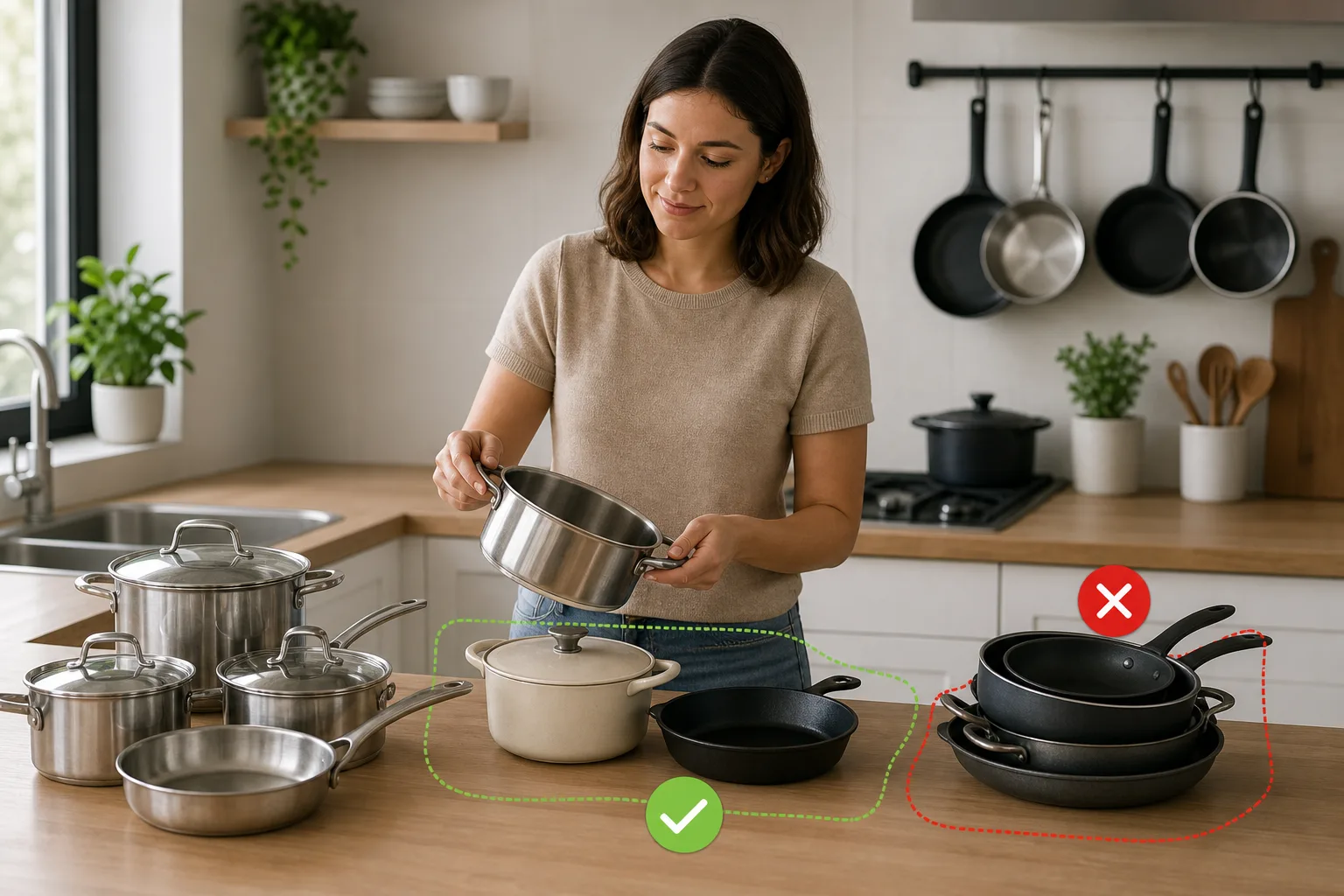
Before buying organizers, take every pot, pan, lid, baking sheet, and skillet out of its current storage spot. This simple step shows you how much space you actually need. Many small kitchens become crowded because they hold several pans that do the same job.
A practical everyday collection may include a large skillet, a small skillet, a saucepan, a stockpot or Dutch oven, and one sauté pan. Your needs may vary, of course, but consider donating or storing elsewhere any damaged, rarely used, or duplicate pieces. If you only use a specialty roasting pan twice a year, it does not need the most convenient cabinet location.
Also separate cookware by frequency of use. Keep everyday pans within easy reach of the stove. Place occasional entertaining pieces, large stockpots, and seasonal bakeware on higher shelves, in deep cabinets, or in another nearby storage area.
1. Store Frying Pans Vertically in a Cabinet
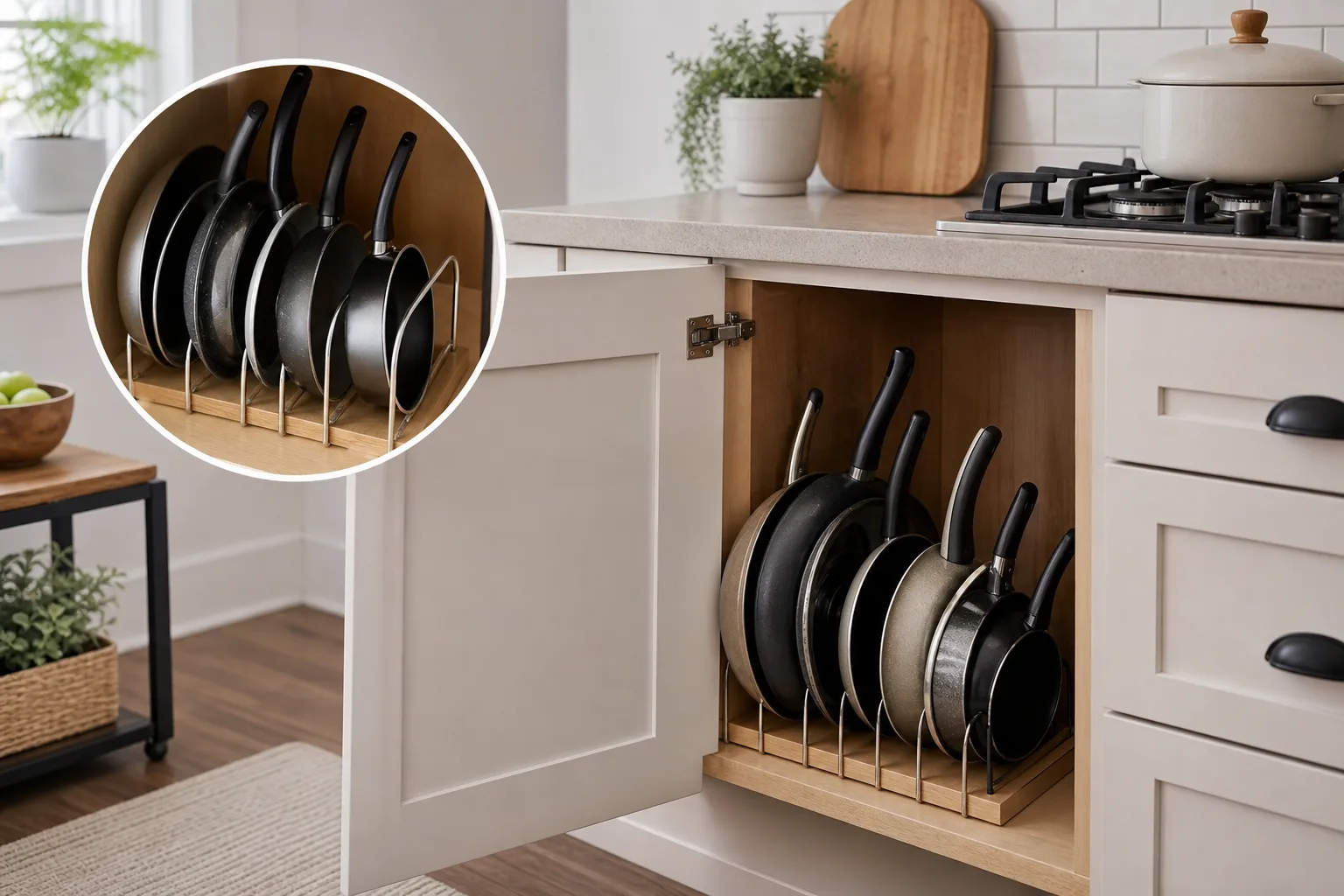
Vertical storage is one of the most effective pots and pans storage ideas for small kitchens because it eliminates heavy, noisy stacks. Use a wire pan rack, adjustable divider, or sturdy file-sorter-style organizer inside a lower cabinet. Place skillets, griddles, and sauté pans on their sides so you can slide out the one you need without lifting everything above it.
Look for an organizer with wide slots that can handle pan handles and different cookware sizes. If your cabinet is tall enough, choose an expandable rack that mounts to the cabinet base or side wall. For a no-installation option, a freestanding vertical rack works well in many standard base cabinets.
2. Add Pull-Out Cabinet Shelves
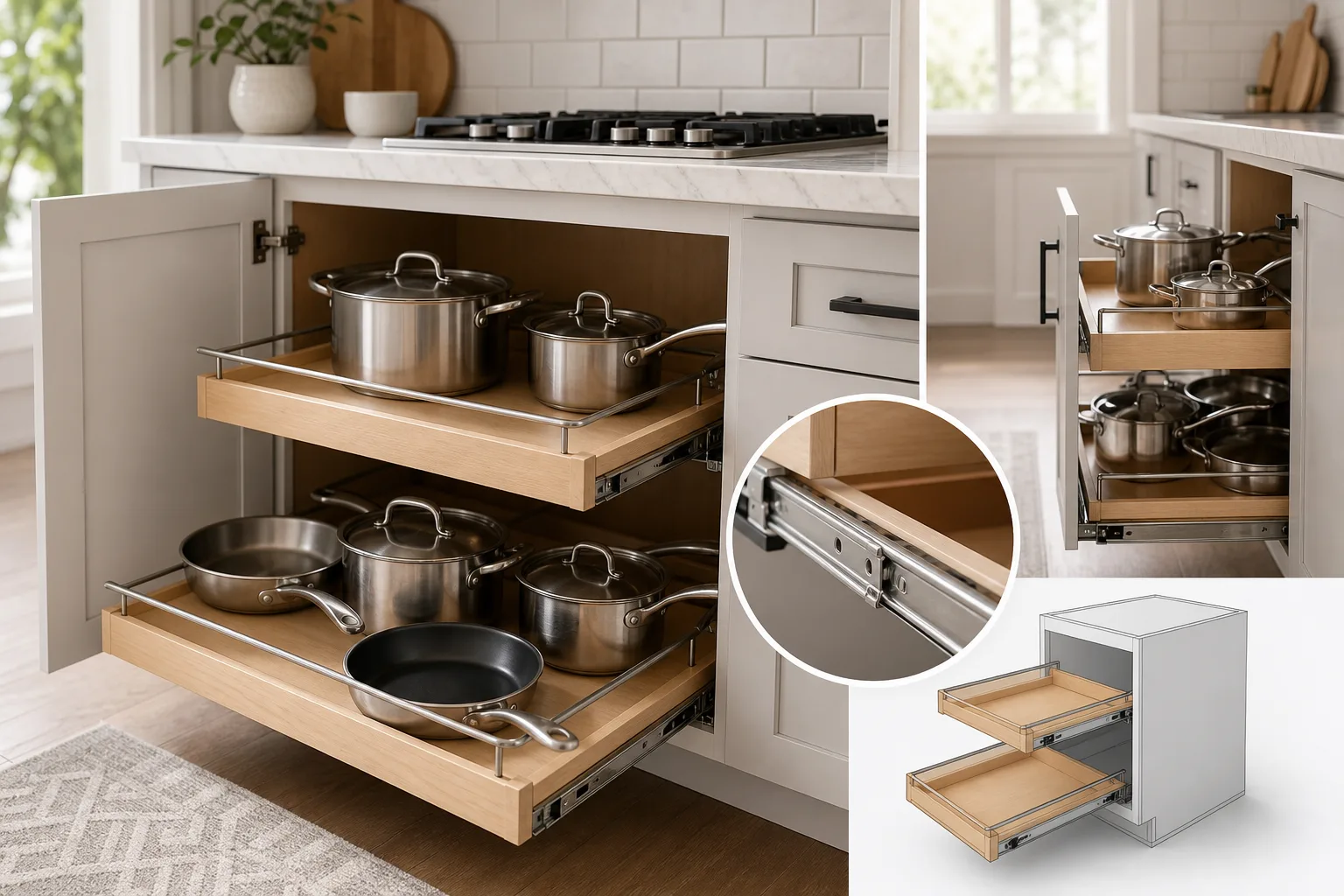
Deep lower cabinets often waste space because items disappear behind the front row. Pull-out shelves or sliding baskets bring pots and pans forward, making the full cabinet easier to use. They are especially helpful for heavy Dutch ovens, stockpots, and cast-iron cookware that are awkward to lift from the back of a shelf.
Install a full-width pull-out shelf for stacked pots, or use two narrower pull-outs to separate everyday cookware from lids and accessories. Measure the cabinet interior carefully, including the clearance around door hinges, before ordering. Soft-close pull-outs are convenient, but even basic sliding shelves can make a major difference.
3. Use a Deep Drawer for Pots and Pans
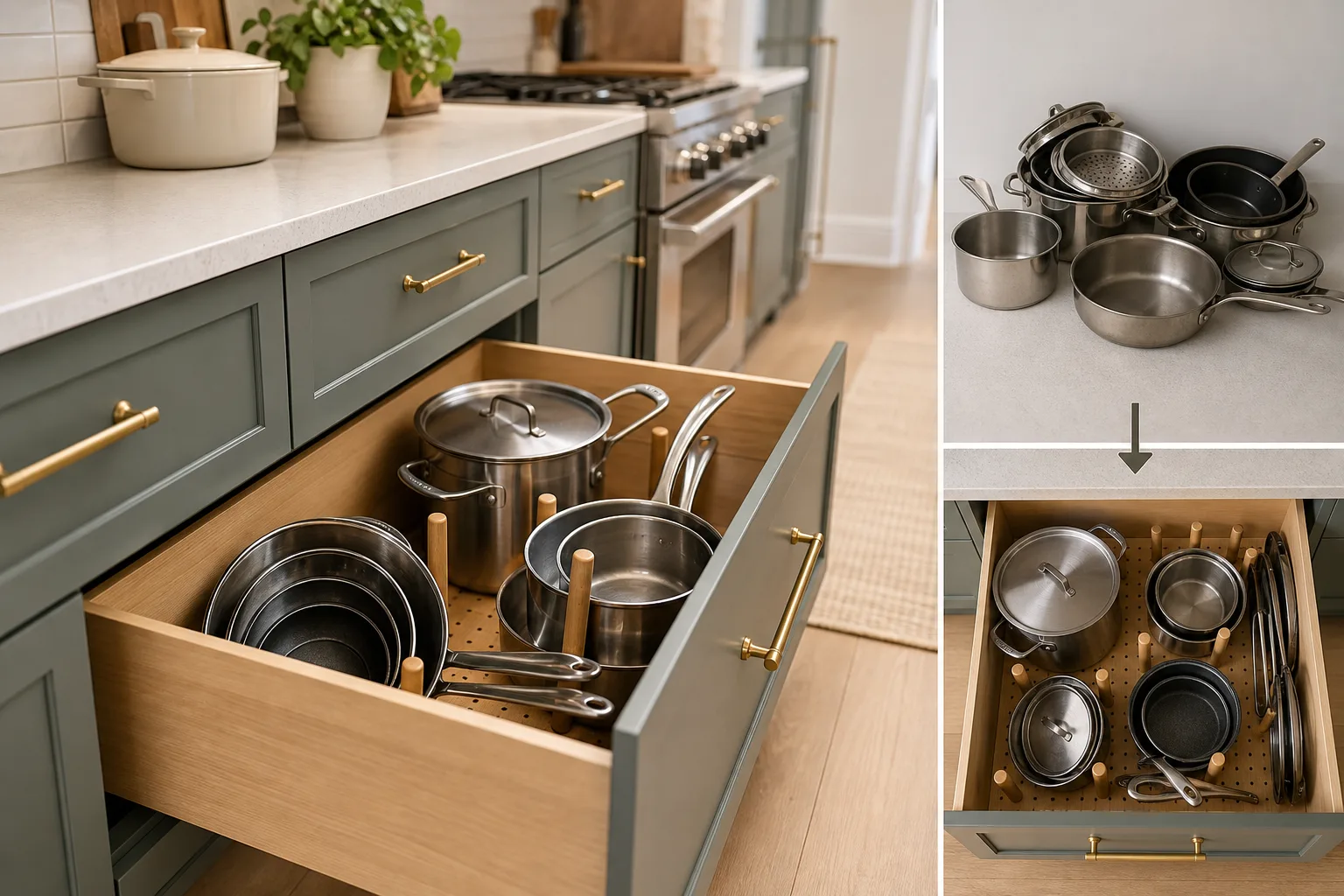
If your kitchen has deep drawers near the range, turn one into a cookware drawer. Drawers allow you to see pots from above and avoid kneeling to search through a cabinet. Arrange larger pots in a single layer when possible, nesting only pieces that are used together.
Add non-slip drawer liner to prevent cookware from shifting. Adjustable peg systems are another useful option for keeping stacks secure. Reserve a separate narrow drawer or section for handles, trivets, and smaller lids so the main drawer stays easy to navigate.
4. Install Lid Organizers Inside Cabinet Doors
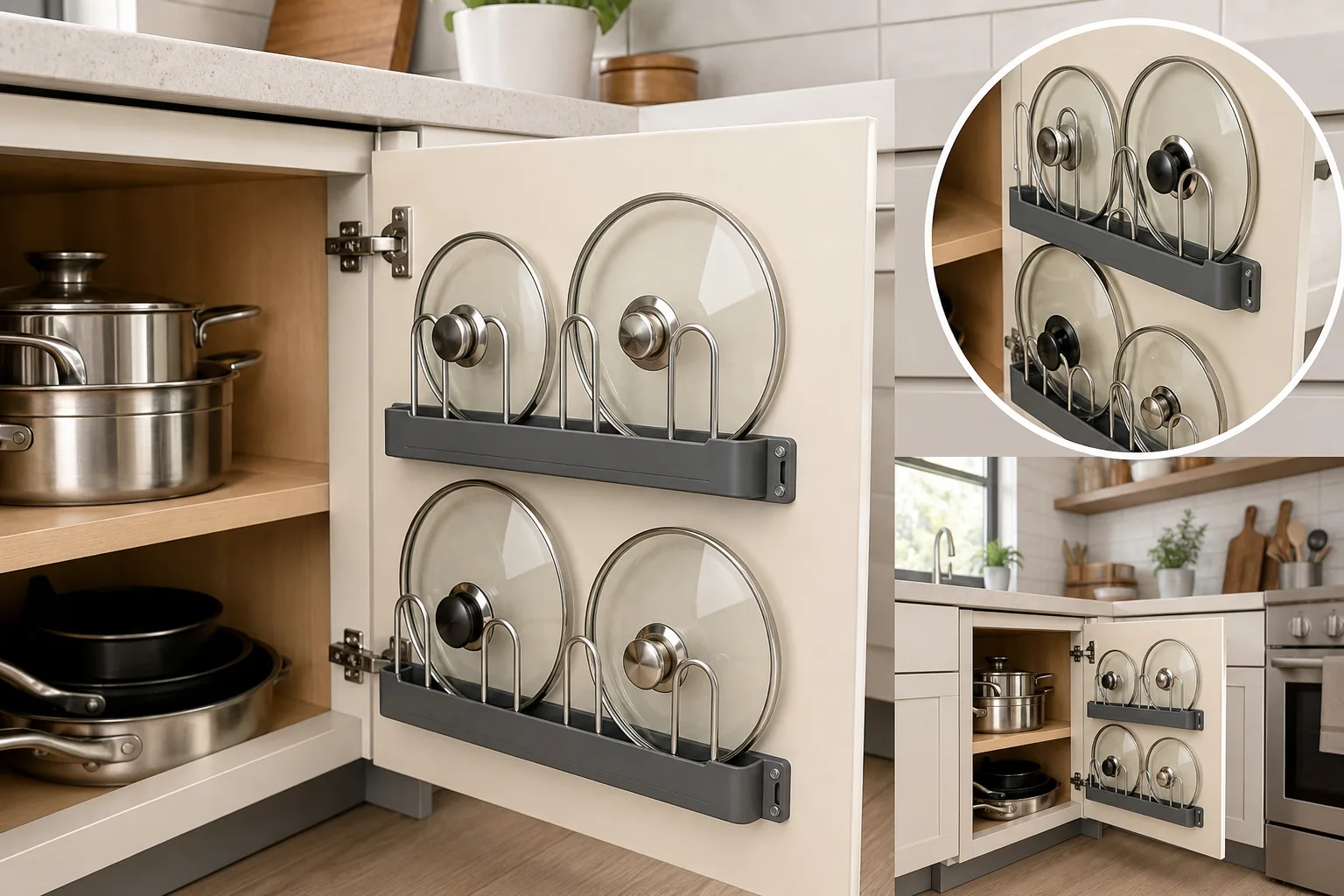
Lids are often the real source of cookware chaos. They slide around, take up shelf space, and make it difficult to remove a pot without an avalanche. An inside-the-door lid rack keeps them upright and visible while freeing the cabinet shelf for cookware.
Choose a rack designed for cabinet doors and check its depth before installation. The cabinet needs enough clearance for the lids to sit behind a closed door without hitting pots or shelves. For renters, adhesive lid holders or removable over-the-door racks can offer a useful alternative. For more removable solutions, see these renter-friendly kitchen storage ideas without drilling.
5. Create a Dedicated Lid Drawer
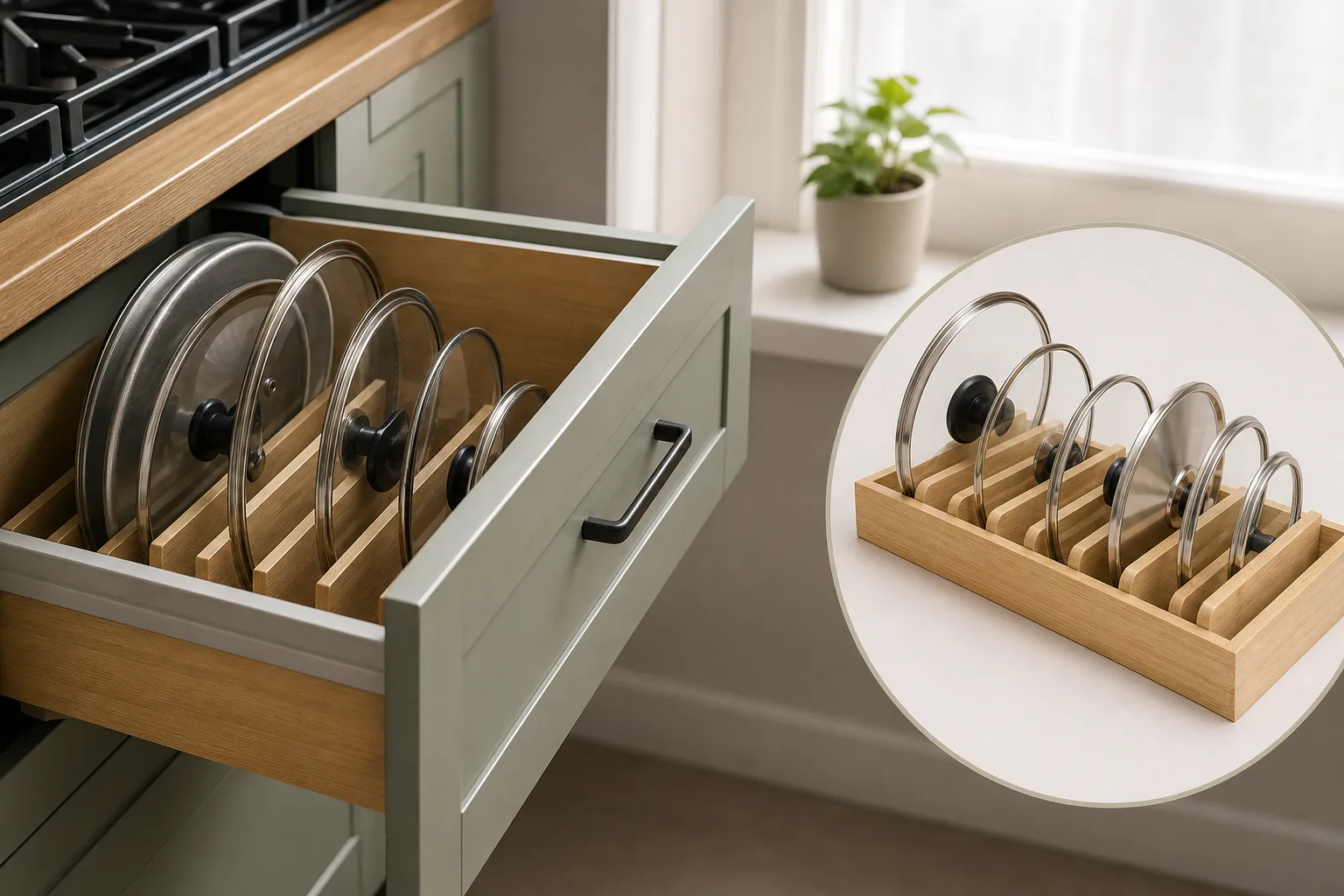
If cabinet doors are too narrow for a rack, a shallow drawer can become a highly functional lid station. Store lids vertically in an adjustable bamboo divider, metal rack, or pegboard drawer insert. Group them by size and keep matching pot-and-lid sets near each other.
This approach works particularly well for glass lids, which can chip if they are loosely stacked. It also prevents the common problem of storing lids upside down on top of pots, where they collect dust and create unstable piles.
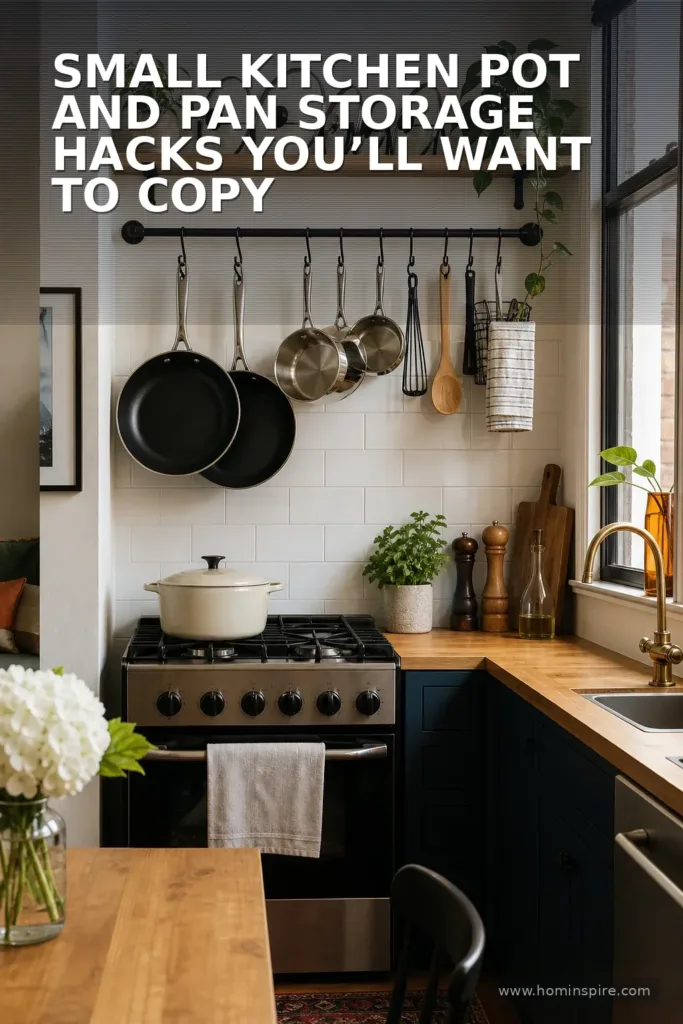
6. Hang a Wall-Mounted Pot Rack
When cabinets are limited, walls can provide valuable vertical storage. A wall-mounted pot rack turns frequently used cookware into an accessible display while freeing a cabinet for food, dishes, or small appliances. Install the rack on an open wall near the cooking zone, but leave enough distance from the range to keep handles out of the way.
Use wall studs or appropriate heavy-duty anchors because pots and pans can be surprisingly heavy. Hang only your most attractive and most-used pieces, such as stainless steel pans or enameled Dutch ovens. Keeping the display edited makes it look intentional rather than crowded.
7. Try a Ceiling Pot Rack in the Right Layout
A ceiling-mounted rack can be useful in a small kitchen with an island, peninsula, or open floor area. It uses otherwise unused overhead space and can hold several pans without sacrificing cabinets. However, this option is best for kitchens with adequate ceiling height and a secure structural mounting point.
Avoid hanging a rack over a tight walkway, low table, or narrow galley kitchen where it may become an obstacle. Choose a compact rack rather than an oversized restaurant-style model. In a small room, a simple oval or narrow bar rack usually looks lighter and functions better.
8. Use a Pegboard for Flexible Cookware Storage
A pegboard offers flexible storage that can evolve as your cookware collection changes. Mount it on an open wall, the side of a cabinet, or inside a pantry area. Strong hooks can hold skillets, saucepans, utensils, and even cutting boards, while small baskets can corral pot holders and trivets.
For a cleaner look, paint the pegboard to match your wall or cabinet color. Space hooks far enough apart that pans do not knock together. A pegboard is also a smart choice for awkward narrow walls that cannot accommodate shelves or large racks.
9. Make Use of the Side of Your Refrigerator
The side of a refrigerator can be an overlooked storage zone, especially in apartment kitchens. Magnetic hooks or a strong magnetic rail may hold lightweight pans, lids, measuring cups, and utensils. This is best for lighter cookware, not heavy cast iron or large stockpots.
Before relying on magnets, test your refrigerator surface and check the weight rating of the accessory. Keep the arrangement tidy and avoid placing items where they interfere with a nearby cabinet door or traffic path. This small trick can free up just enough cabinet room for the cookware you use daily.
10. Add an Over-the-Door Pantry or Cabinet Rack
Over-the-door organizers are not only for spices and cleaning supplies. A sturdy version can store pot lids, lightweight baking pans, cooling racks, and narrow skillets. Use one on a pantry door, utility closet door, or even the inside of a larger cabinet door if the hardware allows.
Be mindful of weight and door clearance. Avoid loading an over-the-door rack with heavy cookware that could strain the door or rattle every time it moves. This option is ideal for the flat, awkward items that are difficult to stack neatly.
11. Turn a Rolling Cart Into a Cookware Station
A slim rolling cart is an excellent choice for kitchens with little built-in storage. Use the bottom shelf for heavier pots, the middle shelf for pans or mixing bowls, and the top shelf for oils, cooking tools, or a small prep surface. Roll it beside the stove while cooking, then tuck it into a corner, pantry, or dining nook afterward.
Choose a cart with locking wheels and a sturdy metal or wood frame. Open carts work best when items are organized in bins or stacked neatly. If visual clutter is a concern, use a cart with drawers, doors, or fabric bins to hide less attractive cookware.
12. Store Pots on Top of Cabinets, Strategically
The space above upper cabinets can hold cookware that is used only occasionally. Large stockpots, roasting pans, and special serving pieces are good candidates, as long as they are clean and easy to retrieve safely. Use matching baskets or lidded bins to keep smaller pieces from looking messy.
Do not store everyday pans above cabinets. Reaching overhead with a heavy pot is inconvenient and potentially unsafe. This area should be reserved for lightweight or infrequently used items, not the skillet you use every morning.
13. Use the Oven as Backup Storage Carefully
Storing a few baking sheets or a roasting pan in the oven is common in compact kitchens, but it should be a backup solution rather than your main cookware system. The biggest risk is forgetting an item is inside before preheating.
If you use the oven for storage, keep only oven-safe items there and place a visible reminder on the oven controls. Never store plastic organizers, paper products, or anything that could melt or burn. Whenever possible, move everyday cookware to a cabinet, rack, or cart instead.
14. Add Under-Shelf Baskets in Tall Cabinets
Many cabinets have unused vertical air space above short stacks of cookware. Under-shelf baskets slide onto an existing shelf and create a second layer for lightweight pans, lids, or dish towels. They are inexpensive, removable, and do not require permanent installation.
Use these baskets for flatter pieces rather than very heavy pots. For example, store small frying pans on the shelf below and their lids or splatter screens in the basket above. This creates a simple zone without wasting the upper half of the cabinet.
15. Keep Cookware Near the Stove, but Not Necessarily Under It
Convenience matters in a small kitchen. The best storage location is usually within one or two steps of the range, but that does not always mean the cabinet directly below it. A nearby drawer, wall rail, rolling cart, or adjacent cabinet may work better depending on your layout.
Arrange your kitchen by task zones. Keep pots and pans near the cooktop, utensils near the prep area, and food containers near the refrigerator. This reduces unnecessary movement and makes a compact kitchen feel more efficient. If you are planning a broader layout refresh, these small kitchen design ideas on a budget can help you make better use of every inch.
16. Protect Nonstick and Delicate Cookware While Storing It
Small kitchens often require nesting cookware, but unprotected stacking can scratch nonstick coatings and dull polished finishes. Place felt pan protectors, silicone mats, cork trivets, or even clean dish towels between stacked pans. This is a small step that helps cookware last longer.
For cast iron, make sure pans are completely dry before stacking to prevent rust. Store heavy pans low to the ground and avoid placing them on flimsy pull-out organizers that are not rated for their weight.
17. Use a Narrow Base Cabinet More Efficiently
A narrow cabinet beside the oven or sink may seem too small for pots and pans, but it can be ideal for baking sheets, skillets, griddles, and cutting boards. Add vertical dividers to turn the space into a dedicated slot storage area. This keeps flat cookware upright, visible, and easier to grab.
If the cabinet is tall and narrow, install adjustable dividers rather than fixed ones. That lets you change the arrangement if you replace cookware or need room for a larger pan later.
18. Keep Countertop Cookware Storage Minimal
Leaving a beautiful Dutch oven or frequently used skillet on the counter can be practical, but too much cookware quickly makes a small kitchen feel crowded. Limit countertop storage to one or two pieces that earn their place through daily use or decorative value.
A tray can help contain a small collection of cooking essentials, such as a utensil crock, oil bottle, and salt cellar, while keeping the rest of the counter clear. For more ways to keep surfaces functional, explore kitchen counter decor ideas without clutter.
How to Choose the Best Storage Solution for Your Kitchen
Choose storage based on the space you have, not on a one-size-fits-all organizing trend. Measure cabinet interiors, drawer depth, wall space, and available clearance before buying anything. Then consider these practical guidelines:
- For deep lower cabinets: Use pull-out shelves, sliding baskets, or vertical pan racks.
- For shallow drawers: Store lids, splatter screens, and smaller pans with dividers.
- For rental kitchens: Choose freestanding racks, carts, over-the-door systems, and removable hooks.
- For kitchens with empty walls: Install a pegboard, wall rail, or securely mounted pot rack.
- For tiny apartment kitchens: Prioritize multi-purpose cookware and vertical storage.
- For visual calm: Hide most cookware in cabinets and display only a curated selection.
Apartment dwellers can find additional compact-space solutions in these small kitchen ideas for apartments. The key is to make your storage easy to maintain. An organizer only works if you can put every pan back quickly after dinner.
A Simple Small-Kitchen Cookware Storage Plan
For many homes, the most efficient setup is a combination of storage methods. Keep everyday frying pans vertically in the cabinet closest to the stove. Store pots in a deep drawer or pull-out shelf below or beside the range. Put lids in a door-mounted rack or shallow drawer. Use wall storage for one or two frequently used pans, and relocate large entertaining pieces to a high cabinet or another storage area.
This layered approach avoids overloading any single cabinet and keeps your kitchen feeling calm. Once cookware is organized, you may be surprised by how much room you gain for pantry staples, food containers, and prep space.
FAQ: Pots and Pans Storage Ideas for Small Kitchens
What is the best way to store pots and pans in a small kitchen?
The best method is usually a combination of vertical pan storage, pull-out cabinet shelves, and separate lid organization. Keep everyday cookware close to the stove and store rarely used pieces in less accessible areas.
Should pots and pans be stacked or stored vertically?
Vertical storage is generally easier because you can remove one pan without disturbing the others. If you need to stack pans, place soft pan protectors or towels between them to prevent scratches.
Where can I store pots and pans if I have no cabinet space?
Use a wall-mounted rack, pegboard, rolling cart, ceiling rack, or sturdy freestanding organizer. Renters can also use removable hooks, over-the-door racks, and no-drill storage systems.
How do I organize pot lids in a small kitchen?
Store lids vertically in a drawer divider, cabinet-door rack, freestanding lid holder, or over-the-door organizer. Keeping lids separate from pots prevents unstable stacks and makes matching pieces easier.
Is it safe to hang pots and pans on the wall?
Yes, as long as the rack is properly installed into wall studs or with anchors rated for the full weight of the cookware. Use quality hooks and avoid overloading the rack, especially with cast-iron pieces.
Can I store pots and pans in the oven?
You can store oven-safe cookware in the oven temporarily, but it is not ideal for everyday organization. Always check the oven before turning it on, and never store flammable, plastic, or non-oven-safe items inside.
