
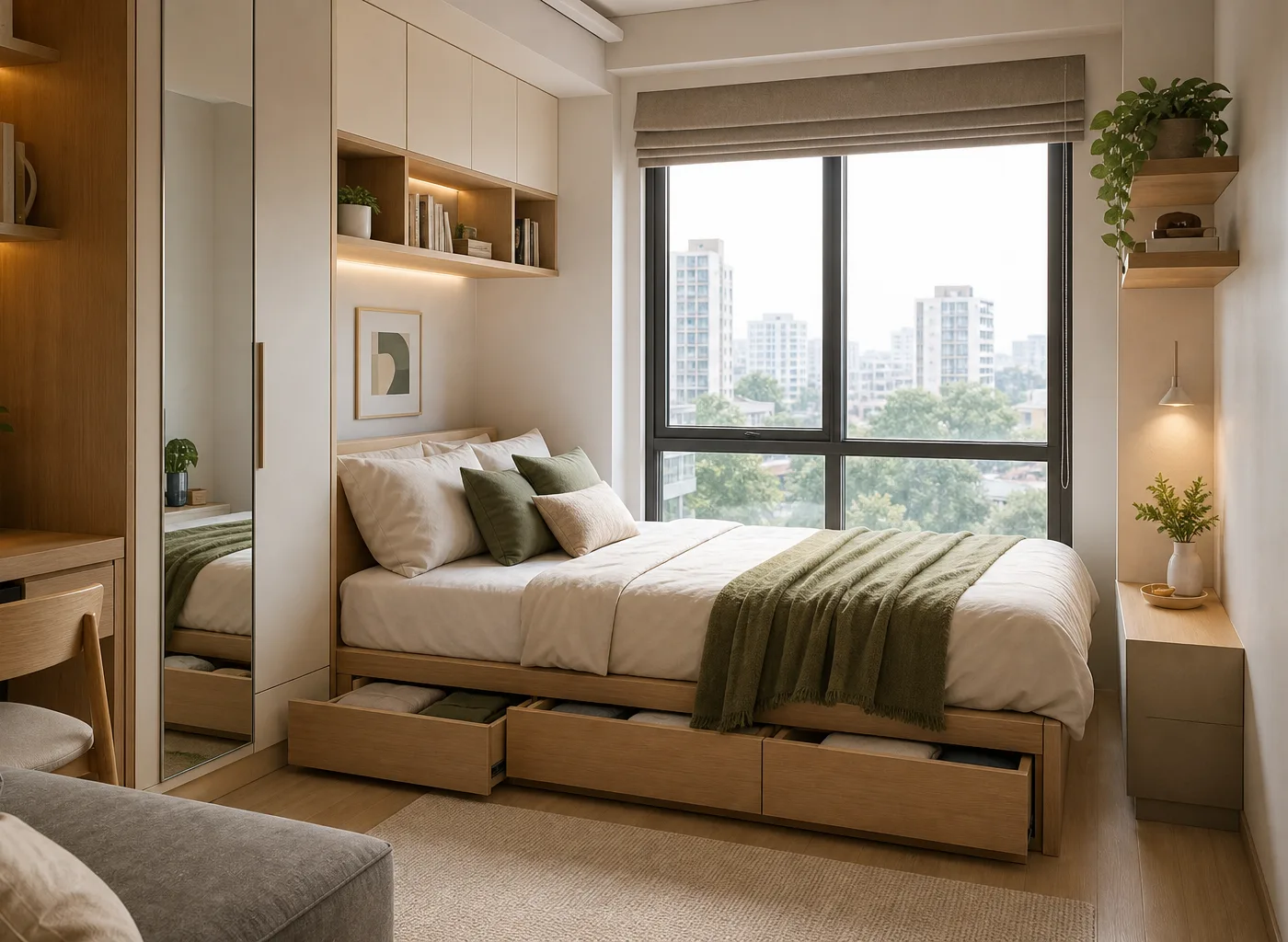
A small apartment bedroom has to work harder than a larger room. It may need to be a place to sleep, get dressed, store clothing, read, work, and unwind—all within a limited footprint. The answer is not filling every open inch with furniture. Instead, the best small apartment bedroom ideas make the room feel intentional: every piece earns its place, visual clutter is controlled, and comfort remains the priority.
Whether you rent a studio, share a compact city apartment, or simply have a small primary bedroom, these ideas can help you create a room that feels open, personal, and practical.
1. Start With a Layout That Protects Walking Space
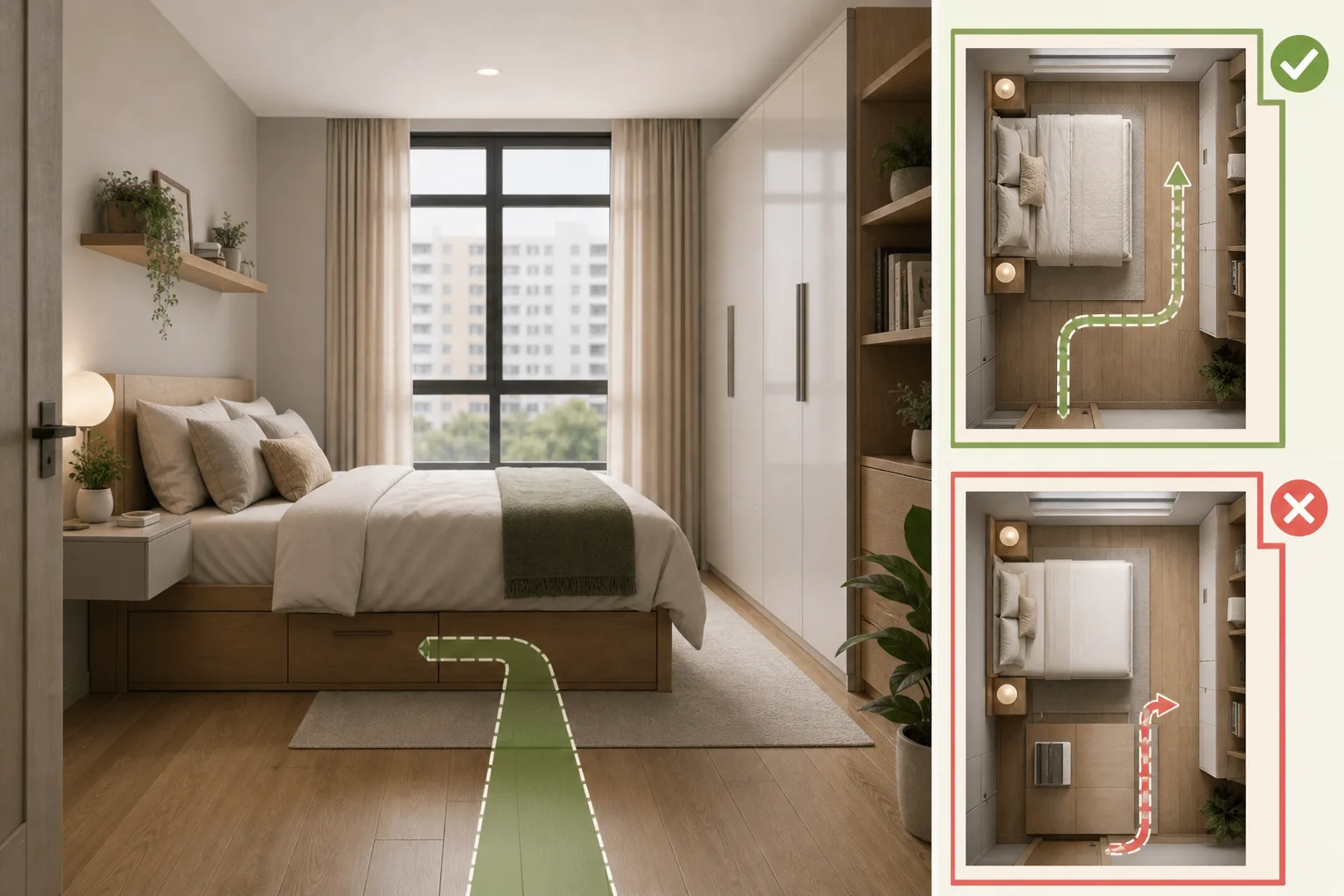
Before buying storage bins or new decor, evaluate the layout. A clear route from the door to the bed and closet makes a small bedroom feel easier to use immediately. Try to keep at least one side of the bed accessible, even if the other side sits close to a wall.
Place the bed on the longest uninterrupted wall whenever possible. This often creates a more balanced arrangement and leaves room for a narrow dresser, bedside shelf, or laundry hamper. If the room is extremely tight, pushing one side of the bed against the wall can be a sensible tradeoff.
2. Choose the Right Bed Size for the Room
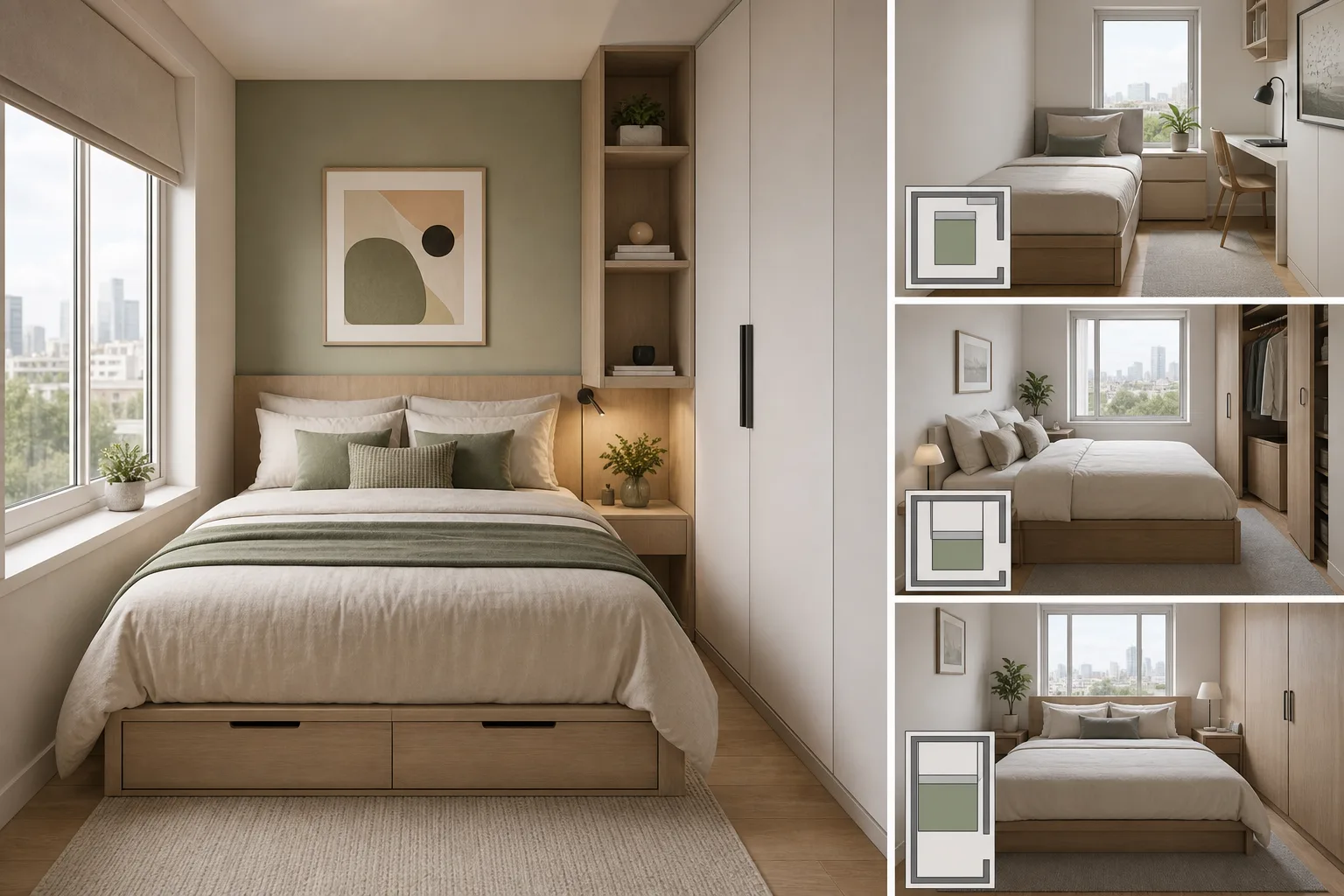
A bed should be comfortable, but it should not overwhelm the entire room. In many apartment bedrooms, a full-size bed provides a better balance of sleep space and floor space than a queen. A daybed or twin XL can be especially useful in a studio or multipurpose room.
If you already own a queen bed, make it work by choosing slim surrounding furniture. Skip oversized nightstands, wide benches, and a bulky footboard. A simple platform bed with clean lines can look substantially lighter than a traditional bed frame with a tall, heavy headboard.
3. Use an Under-Bed Storage System
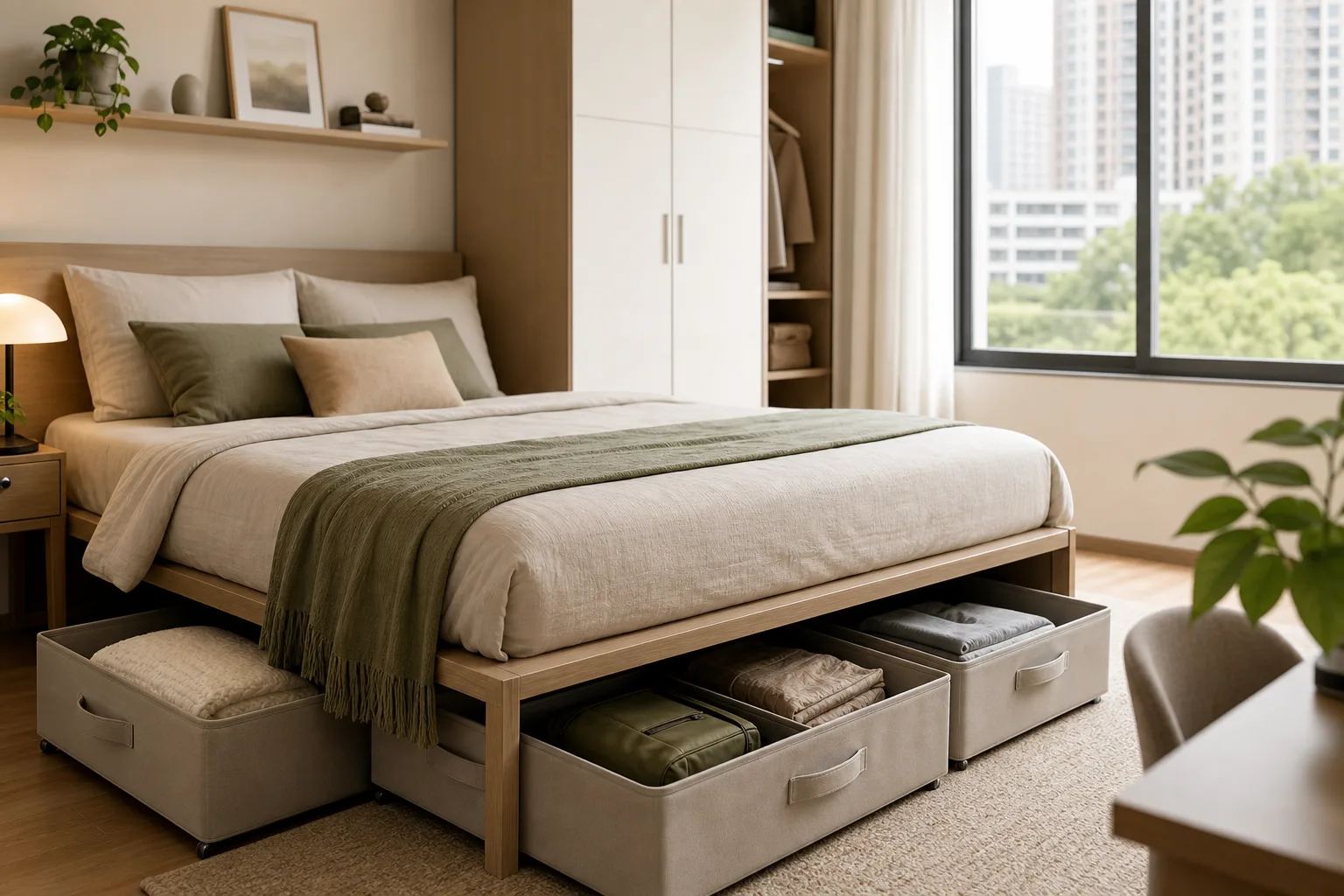
The space beneath the bed is among the most valuable storage areas in a small apartment bedroom. A storage bed with built-in drawers is ideal, but low-profile containers can work just as well under a standard frame. Use this zone for off-season clothes, extra bedding, shoes, luggage, or rarely used items.
Choose matching lidded bins or vacuum storage bags so the area stays tidy. If your bed sits too low, inexpensive risers can create enough clearance for shallow containers. Just make sure the frame remains stable and the added height still feels comfortable.
4. Replace Bulky Nightstands With Wall-Mounted Options
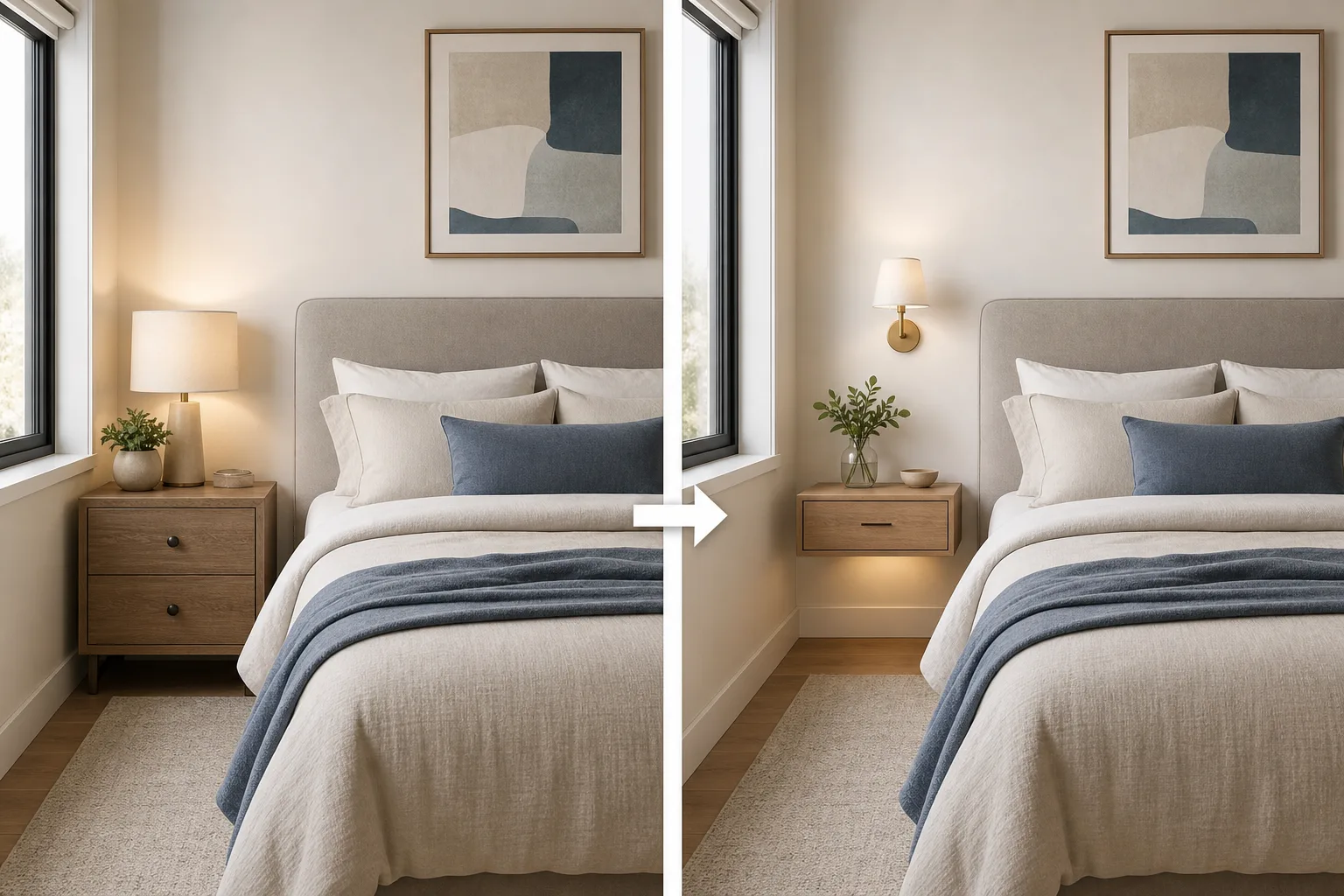
Traditional bedside tables can consume more floor area than a small bedroom can spare. A floating shelf, narrow wall-mounted drawer, or compact bedside caddy provides a landing spot for essentials without crowding the floor.
Keep only what you use at night: a phone charger, book, glasses, water, and perhaps a small lamp. If you prefer a conventional table, choose one with a lower shelf or drawer so it provides storage as well as surface space.
5. Think Vertically From Floor to Ceiling
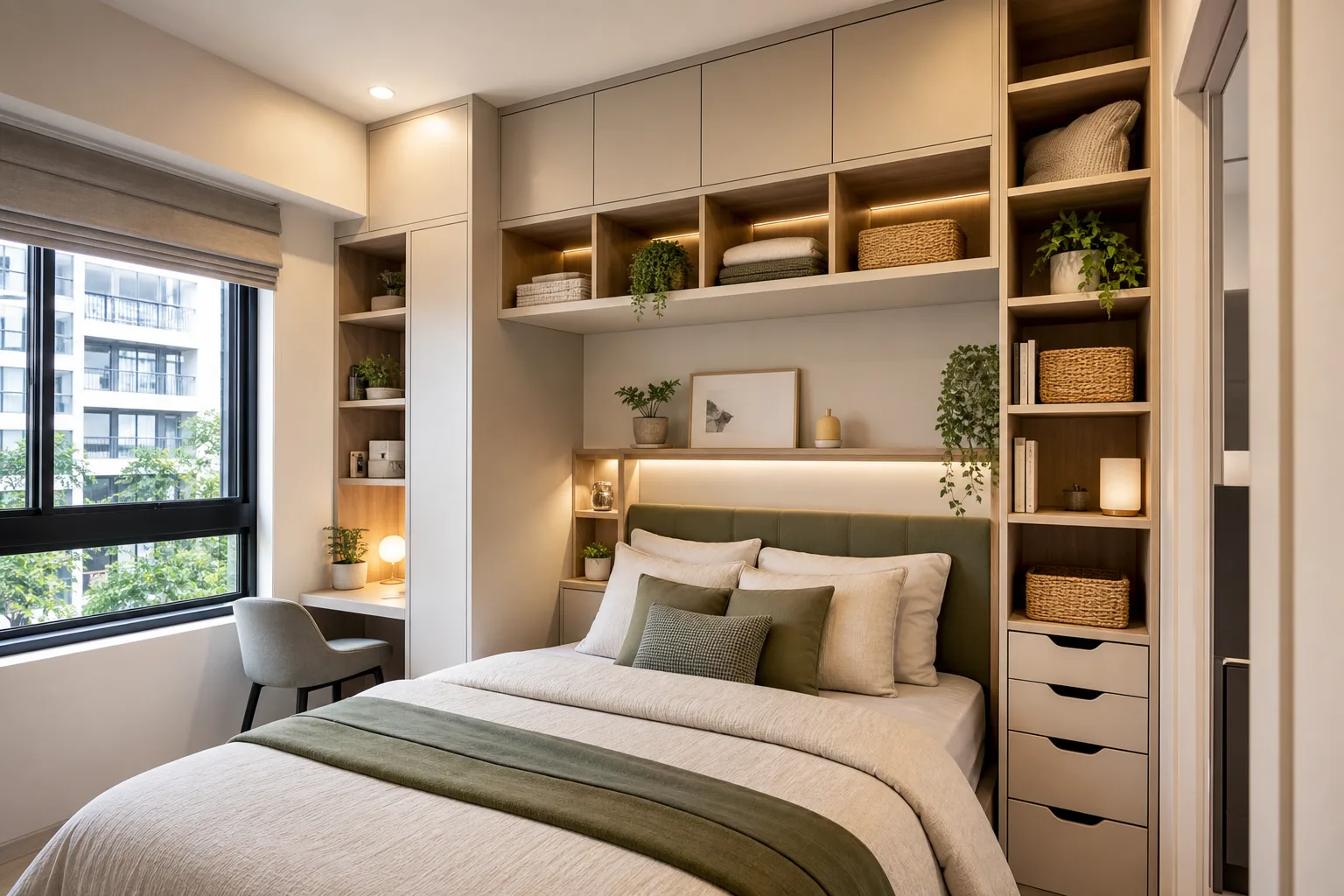
When square footage is limited, vertical space becomes your best friend. Tall bookcases, wall-mounted shelves, hooks, and cabinets draw the eye upward while adding useful storage. A narrow shelving unit beside the bed can hold books, baskets, and decorative items without requiring the footprint of a wide dresser.
Install shelves above a desk, dresser, or even the headboard, but avoid making every wall feel packed. Leave some blank wall space so the room can breathe. In a rental, use removable adhesive hooks or damage-free picture strips where appropriate.
6. Use a Headboard That Adds Function
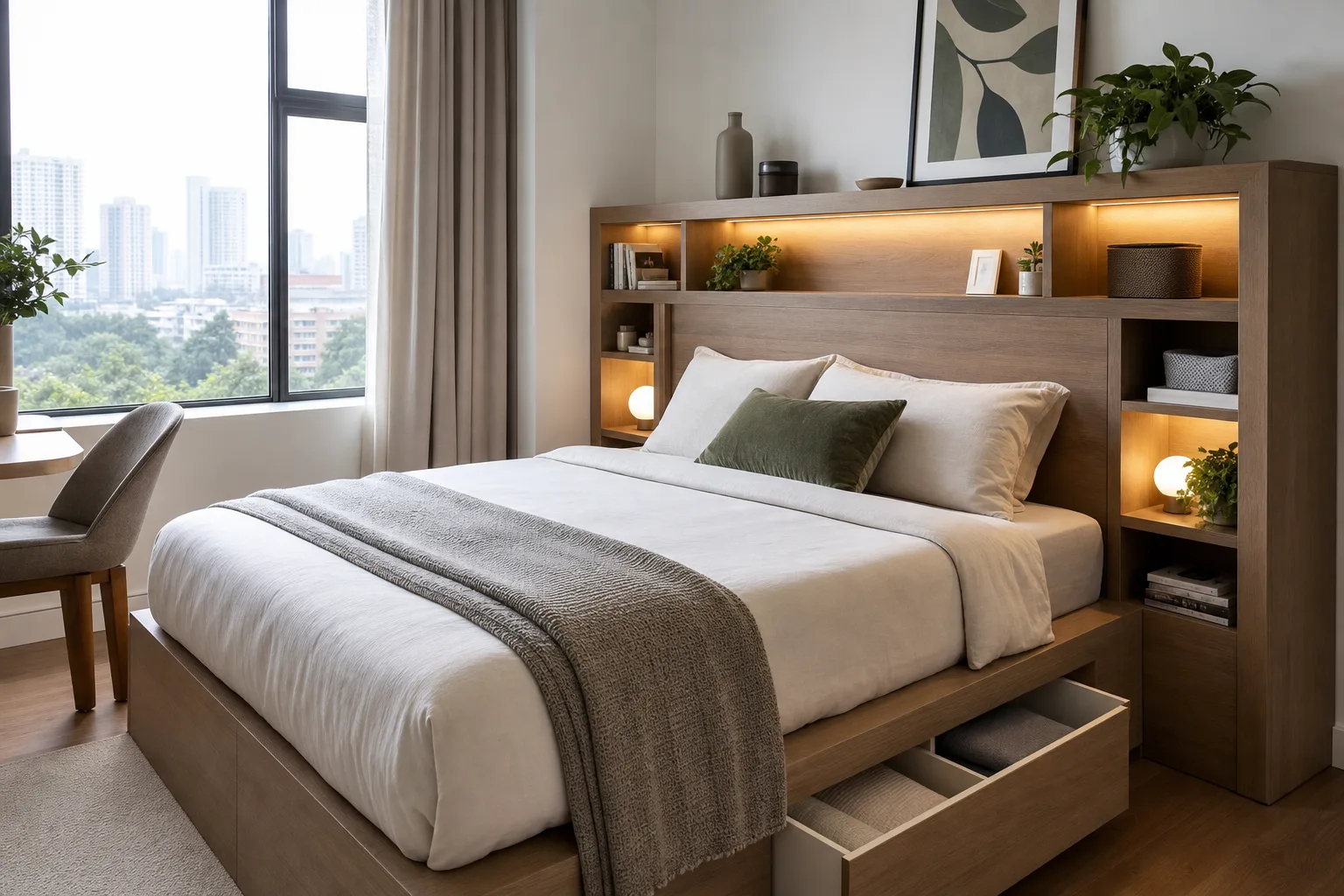
A headboard can do more than frame the bed. Consider a slim bookcase headboard, an upholstered headboard with built-in pockets, or a simple wall-mounted ledge above the pillows. This creates storage for books, artwork, and small personal items without adding another furniture piece.
For a softer look, hang a fabric panel or create an upholstered wall treatment behind the bed. It delivers the visual warmth of a headboard while taking up virtually no floor space.
7. Select Multifunctional Furniture Carefully
Multifunctional furniture is useful in a small apartment, but only when it solves a real problem. An ottoman with hidden storage can hold blankets and act as seating. A storage bench may work at the foot of the bed if there is enough clearance. A narrow desk can double as a vanity with a mirror above it.
Avoid buying multipurpose pieces simply because they seem clever. Large convertible furniture can still create clutter if it is too big for the room or difficult to use every day. Prioritize items that serve at least two needs without adding visual weight.
8. Make a Small Closet Work Harder
Apartment closets are often shallow, narrow, or frustratingly limited. Start by editing what you keep there, then add systems that multiply usable space. A second hanging rod can create room for shirts, skirts, and folded pants. Shelf dividers prevent stacks from toppling, while hanging organizers keep accessories visible.
Use matching slim hangers to fit more clothing on the rod and create a cleaner look. Store seasonal pieces in labeled bins on the top shelf or under the bed. Over-the-door organizers are also useful for shoes, bags, beauty products, or cleaning supplies.
9. Choose Light Colors, but Add Contrast
Light paint colors can help reflect natural light and make a compact bedroom feel more open. Warm white, soft beige, pale gray, muted blue, and light greige are dependable choices for apartment bedrooms. Painting the ceiling a similarly light shade can reduce visual breaks and make the room seem taller.
That does not mean the room must be all white. Add contrast through bedding, framed art, a dark lamp, or a patterned rug. A few darker accents provide depth and prevent the space from feeling flat or overly sterile.
10. Keep Window Treatments Airy
Natural light is a major asset in a small bedroom. Avoid covering it with thick, dark drapes unless you truly need blackout conditions. For privacy and softness, try sheer curtains layered with blackout roller shades. Mount curtain rods close to the ceiling and extend them beyond the window frame to make windows appear wider and ceilings taller.
If you need better sleep, choose blackout curtains in a light neutral color rather than heavy, high-contrast fabric. The room can still feel bright during the day while remaining dark at night.
11. Layer Your Lighting
One overhead fixture rarely makes a small bedroom feel inviting. Layered lighting creates flexibility and reduces harsh shadows. Start with ambient light from a ceiling fixture, then add task lighting beside the bed and accent lighting where useful.
Wall sconces or plug-in swing-arm lights are especially practical because they free bedside surfaces. A small table lamp, dimmable bulb, or warm LED strip under a shelf can make the room feel more restful after dark. Select bulbs around 2700K for a warm, cozy glow.
12. Add Mirrors With a Purpose
Mirrors reflect light and can make a bedroom feel visually deeper, but placement matters. A full-length mirror on the back of a door is a practical choice for getting dressed. A large mirror across from a window can bounce daylight farther into the room.
Do not add mirrors solely to fill every blank surface. One well-placed mirror is usually more effective than several small ones, which can make a compact room feel busy.
13. Use a Rug to Define the Sleeping Zone
A rug adds softness, color, and definition, especially in a studio apartment where the bedroom shares open space with living areas. For a queen bed, an 8-by-10-foot rug often works well if the layout allows. In tighter rooms, place a smaller rug under the lower two-thirds of the bed or use runners on each side.
Choose a low-pile rug that is easy to vacuum and does not interfere with doors. A subtle pattern can hide everyday wear while adding personality without overwhelming the room.
14. Reduce Visual Clutter
In a small apartment bedroom, visual clutter can make the room feel smaller faster than almost anything else. Keep open surfaces mostly clear and group small items in trays, baskets, or drawers. Conceal charging cables with clips or cable boxes, and avoid using the floor as long-term storage.
Try a simple rule: if an item does not support sleep, getting dressed, storage, or genuine enjoyment, it may belong elsewhere. Regular editing is more effective than searching for ever more storage products.
15. Create a Mini Work Area Only if You Need One
Working from bed can blur the boundary between rest and work. If your apartment layout requires a bedroom office, make it as compact and contained as possible. A wall-mounted desk, a narrow console, or a fold-down desk can provide a dedicated surface without dominating the room.
Use a chair that tucks fully underneath and store supplies in a drawer or lidded box at the end of the day. If possible, face the desk toward a wall or window instead of toward the bed, helping create a mental separation between work and sleep.
16. Use Curtains to Soften a Studio Sleeping Area
In a studio apartment, curtains can establish privacy and make the bed feel like a distinct bedroom. Ceiling-mounted tracks or tension systems allow you to close off the sleeping zone without permanent construction. Choose light-filtering fabric if you want separation without blocking daylight.
For a more polished result, hang curtains from ceiling height and select panels that reach the floor. This creates a tailored, intentional look and can visually heighten the space.
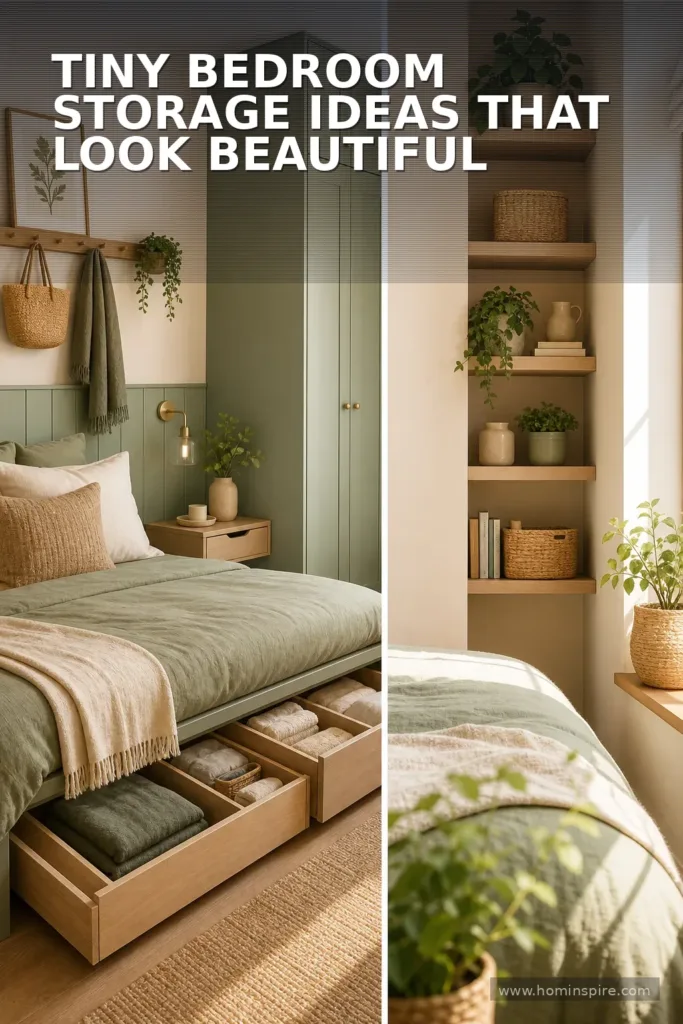
17. Embrace One Statement Wall
A small bedroom does not need to be completely plain. A single accent wall behind the bed can add dimension without closing in the space. Consider removable wallpaper, vertical paneling, a muted paint color, or a large-scale mural in soft tones.
Keep the rest of the room relatively simple. When the bed wall is the feature, you can use restrained bedding and minimal decor elsewhere for a balanced effect.
18. Choose Bedding That Looks Tailored
Overly bulky bedding can make a compact bed—and the whole room—feel crowded. Choose a comforter or duvet that fits the mattress well, then layer in texture through a throw blanket and two or three accent pillows rather than a mountain of decorative cushions.
Solid or small-scale patterned bedding is often easier on the eye in a tiny room. Linen, cotton, and washed quilts can add a relaxed feel without the volume of very thick comforters.
19. Use Baskets for Flexible Storage
Baskets offer attractive, movable storage for blankets, laundry, workout gear, extra pillows, and miscellaneous items. They are especially useful in rentals because they require no installation and can move with you. Use a covered basket when you want to hide clutter, or an open woven basket for frequently used textiles.
Limit yourself to a few coordinated baskets. Too many small containers can look like clutter rather than organization.
20. Decorate With Fewer, Larger Pieces
Many tiny decorations scattered around the room can create a fragmented, crowded look. Instead, choose fewer pieces with more impact: one large art print above the bed, a sculptural lamp, or a substantial plant if the light allows.
This approach makes the room feel curated rather than overfilled. It also simplifies cleaning, which matters in a bedroom with limited surfaces.
21. Make Rental-Friendly Upgrades
You can personalize an apartment bedroom without risking your security deposit. Removable wallpaper, peel-and-stick wall decals, temporary sconces, adhesive hooks, and renter-friendly curtain solutions all offer meaningful visual improvement. Swapping outdated light fixtures may also be possible, but check your lease and save the original fixture for move-out.
Even simple updates—new cabinet knobs on a built-in wardrobe, a better shower-curtain-style room divider, or upgraded curtain panels—can make a basic apartment feel more like home.
22. Build Comfort Into Your Daily Routine
The most successful small apartment bedroom is not just organized; it supports rest. Keep a water carafe nearby, use soft bedside lighting, choose breathable sheets, and make the bed each morning. These small habits help the room feel calm even when the apartment itself is busy.
For more compact-space inspiration, explore these very small bedroom ideas, practical small bedroom ideas on a budget, and warm small cozy bedroom ideas.
Small Apartment Bedroom Ideas: A Quick Planning Checklist
- Measure the room, doorway, closet, and bed before purchasing furniture.
- Keep a clear path through the bedroom.
- Use under-bed, vertical, and closet storage before adding more furniture.
- Choose slim, multifunctional pieces with a clear purpose.
- Prioritize layered lighting and natural light.
- Limit open-surface clutter and oversized decor.
- Use textiles, art, and lighting to add personality without taking up floor space.
A compact bedroom can still feel generous when the design supports how you actually live. Focus on circulation, hidden storage, comfortable lighting, and a restrained palette, then add personal details that make the room feel unmistakably yours.
Frequently Asked Questions
How can I make a small apartment bedroom look bigger?
Use light-reflective colors, keep walkways clear, choose furniture with slim profiles, and add a mirror opposite or near a window. Vertical storage and curtains hung close to the ceiling also help create the impression of more height and space.
What is the best bed for a small apartment bedroom?
The best option depends on the room dimensions and your sleeping needs. A storage platform bed is often ideal because it combines sleeping space and hidden storage. In a very tight room, a full-size bed, daybed, or twin XL may preserve more usable floor area than a queen.
How do I add storage to a bedroom with no closet?
Use a combination of an under-bed storage system, a freestanding wardrobe or garment rack, tall shelving, wall hooks, and a dresser. Choose closed storage where possible to reduce visual clutter and make the room feel calmer.
Should a small bedroom have a desk?
Include a desk only if you need a dedicated workspace and cannot place it elsewhere. Choose a narrow, wall-mounted, or fold-down design, and keep work supplies contained so the bedroom can still feel restful at the end of the day.
What colors work best in a small apartment bedroom?
Soft neutrals and light, muted shades such as warm white, pale beige, light gray, soft blue, and gentle green work well because they reflect light. Add depth with a few darker or richer accents in bedding, artwork, or lighting.
