
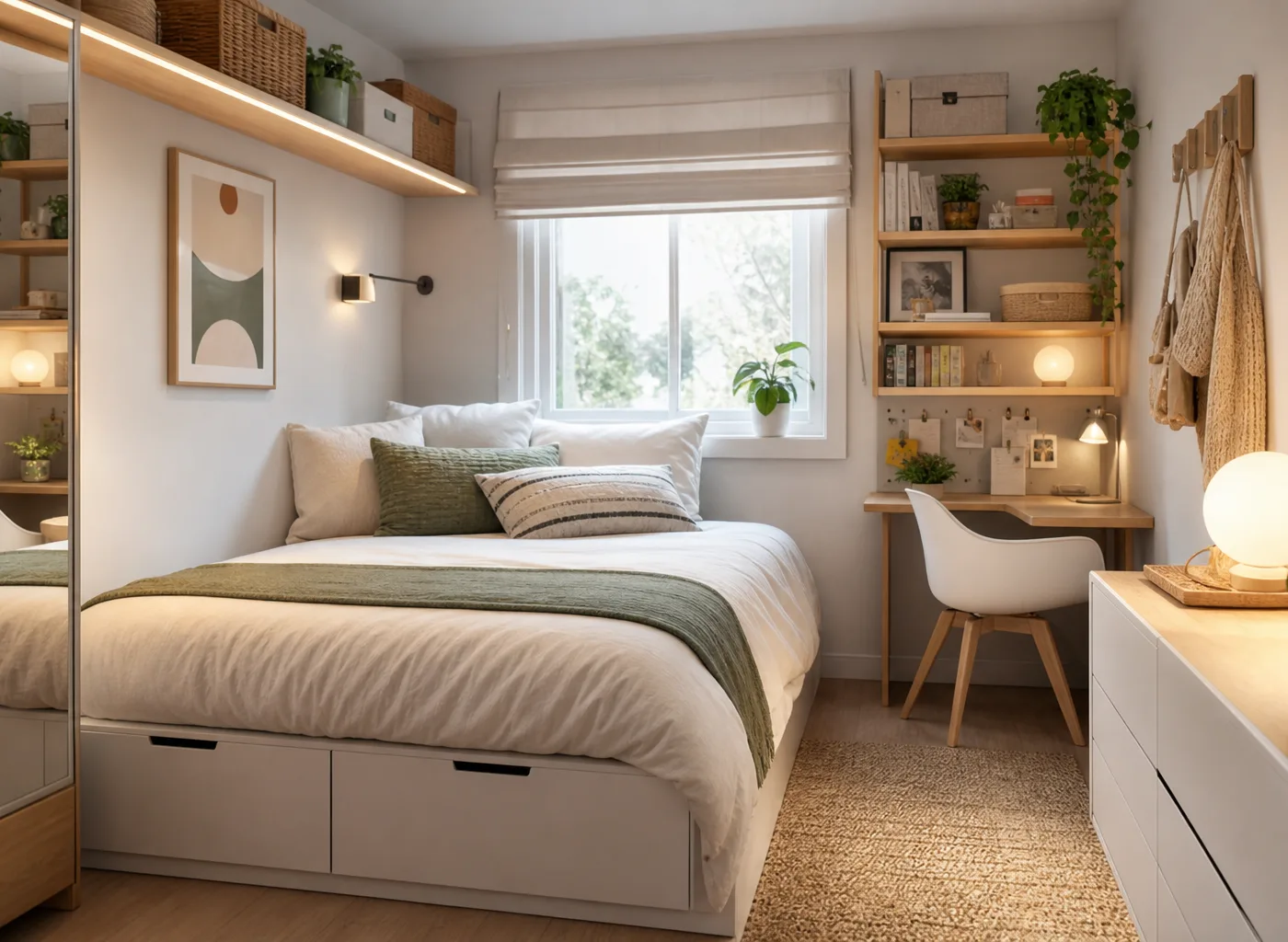
A small bedroom does not need a major renovation, custom furniture, or an unlimited decorating budget to feel inviting. In fact, the most effective updates are often simple: clearing visual clutter, choosing furniture with more than one purpose, improving the lighting, and making better use of vertical space.
These small bedroom ideas on a budget are designed for renters, first-time homeowners, students, and anyone who wants a more comfortable room without overspending. Start with the changes that solve your biggest daily frustration, whether that is a lack of storage, a cramped layout, or a room that simply feels dull.
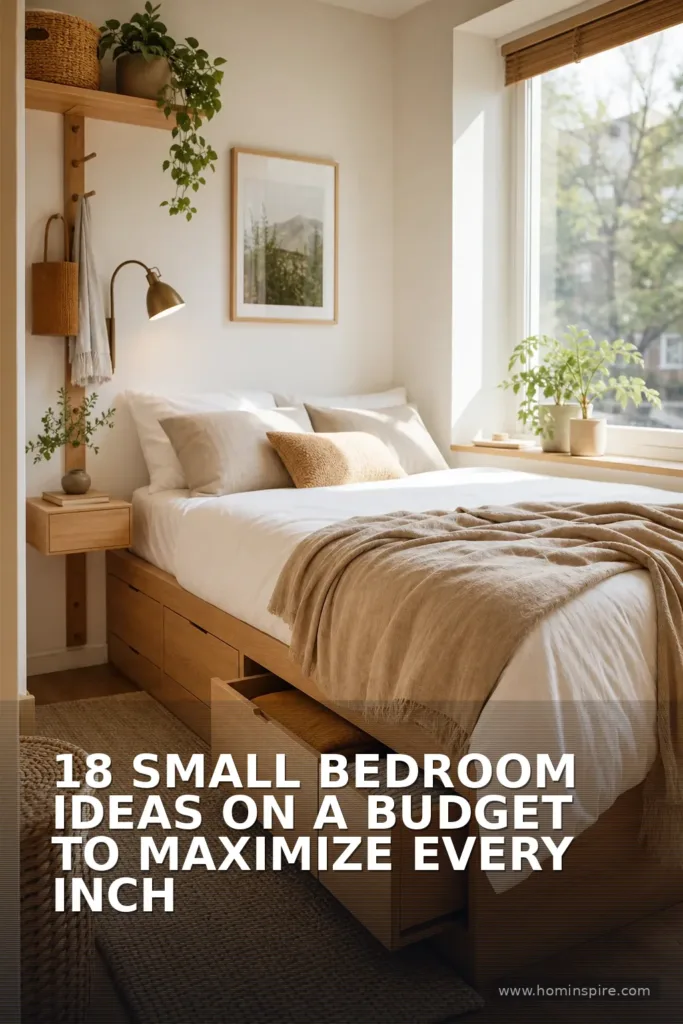
1. Begin With a No-Cost Declutter
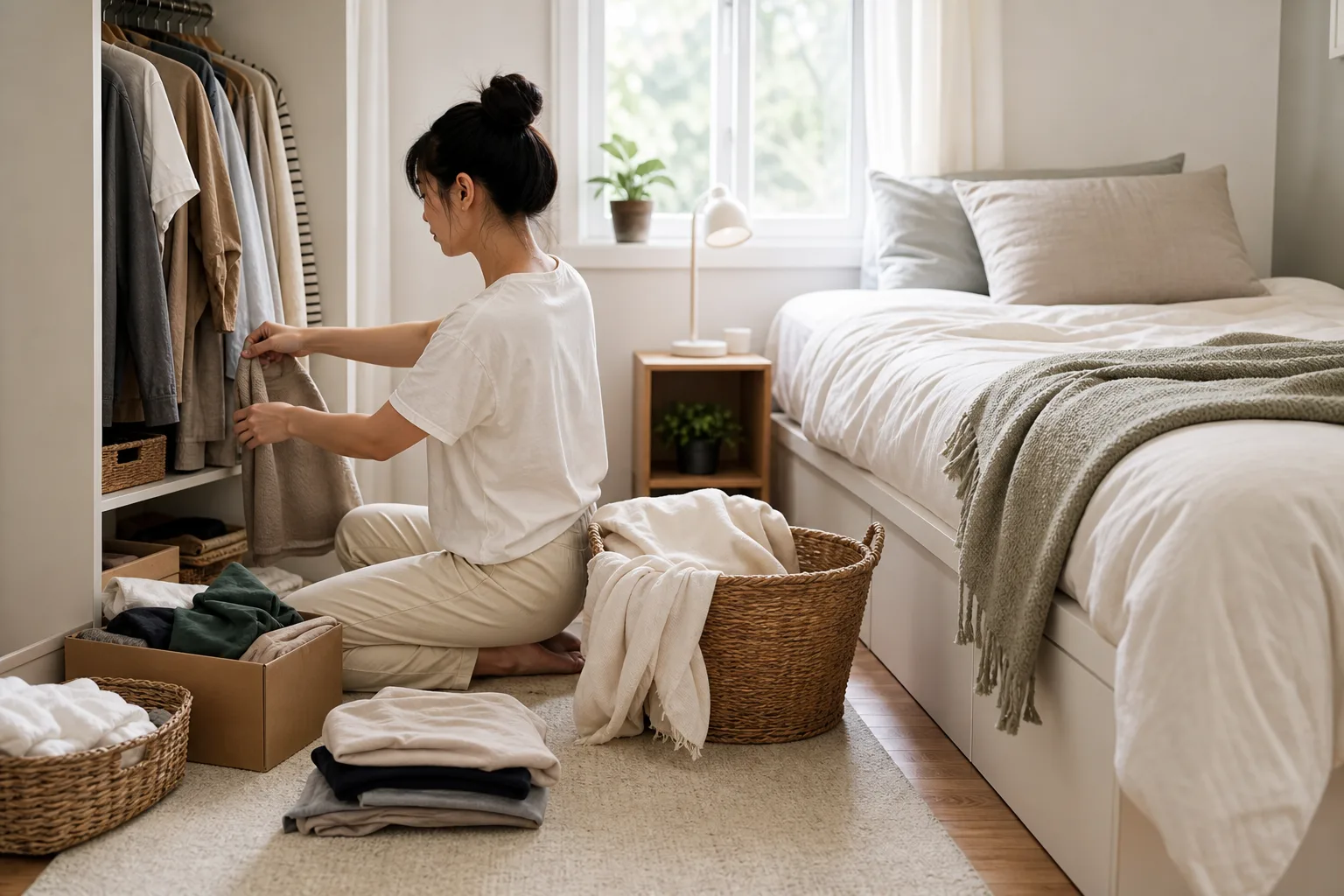
Before buying a single basket, shelf, or pillow, remove what does not belong in the bedroom. Small rooms look crowded quickly because every object takes up a noticeable amount of visual space. Gather laundry, paperwork, cups, cables, unused decor, and clothing that has accumulated on chairs or floors.
Then decide what needs to stay accessible. Keep daily essentials close by, store occasional items out of sight, and donate or discard things you no longer use. This one step can make the room feel larger immediately, and it helps prevent spending money on storage for items you do not need.
2. Rearrange the Layout Before Purchasing Furniture
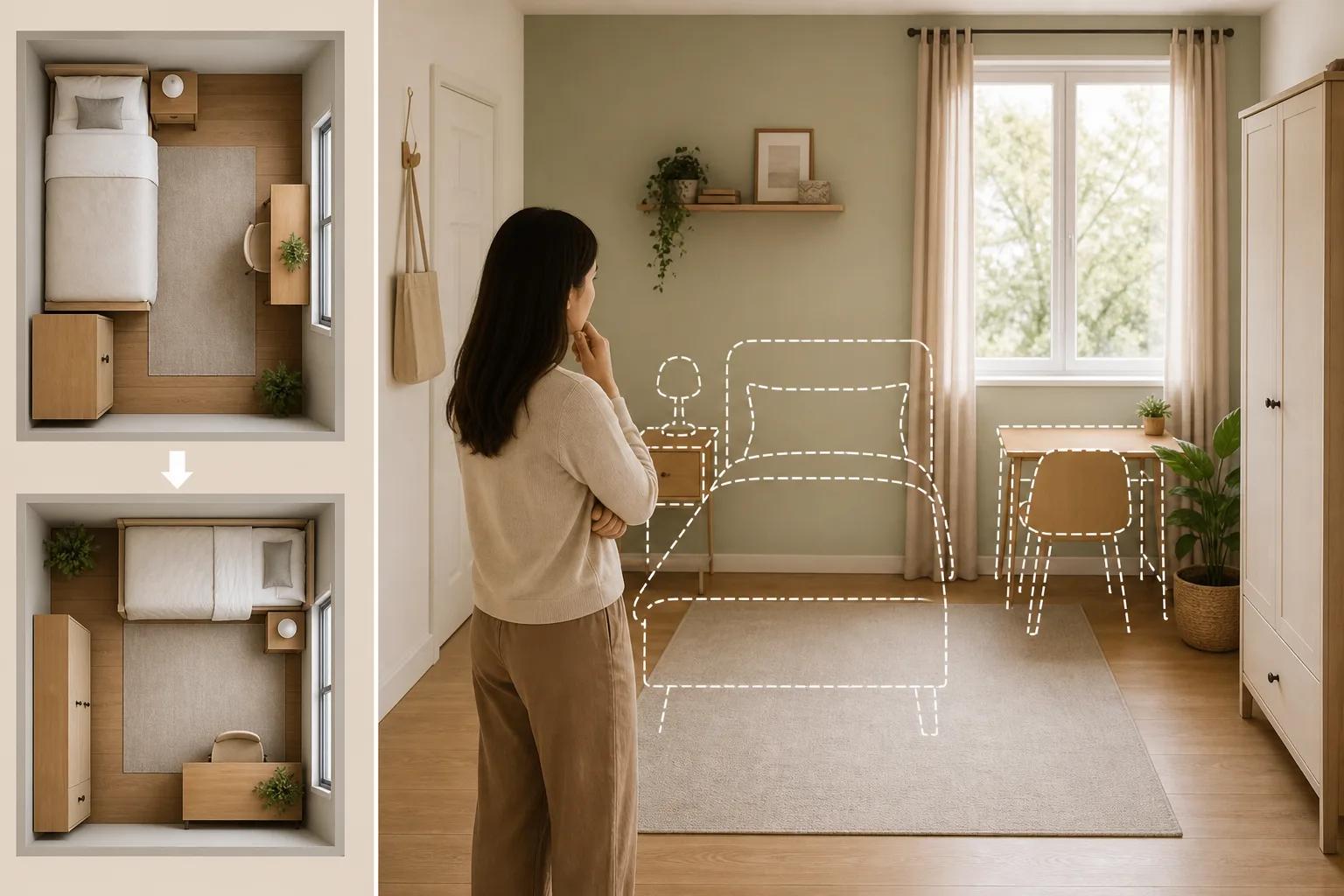
A better furniture layout costs nothing. In most small bedrooms, the bed is the largest piece, so position it first. Place it against the longest uninterrupted wall when possible, leaving a clear walkway from the door to the bed and closet. Avoid blocking windows, radiators, or closet doors.
If a centered bed leaves awkward narrow gaps on both sides, push it into a corner or closer to one wall. That may free enough floor space for a slim desk, laundry hamper, or bedside surface. Test several arrangements before deciding that you need new furniture.
3. Use Light Paint or a Strategic Accent Wall
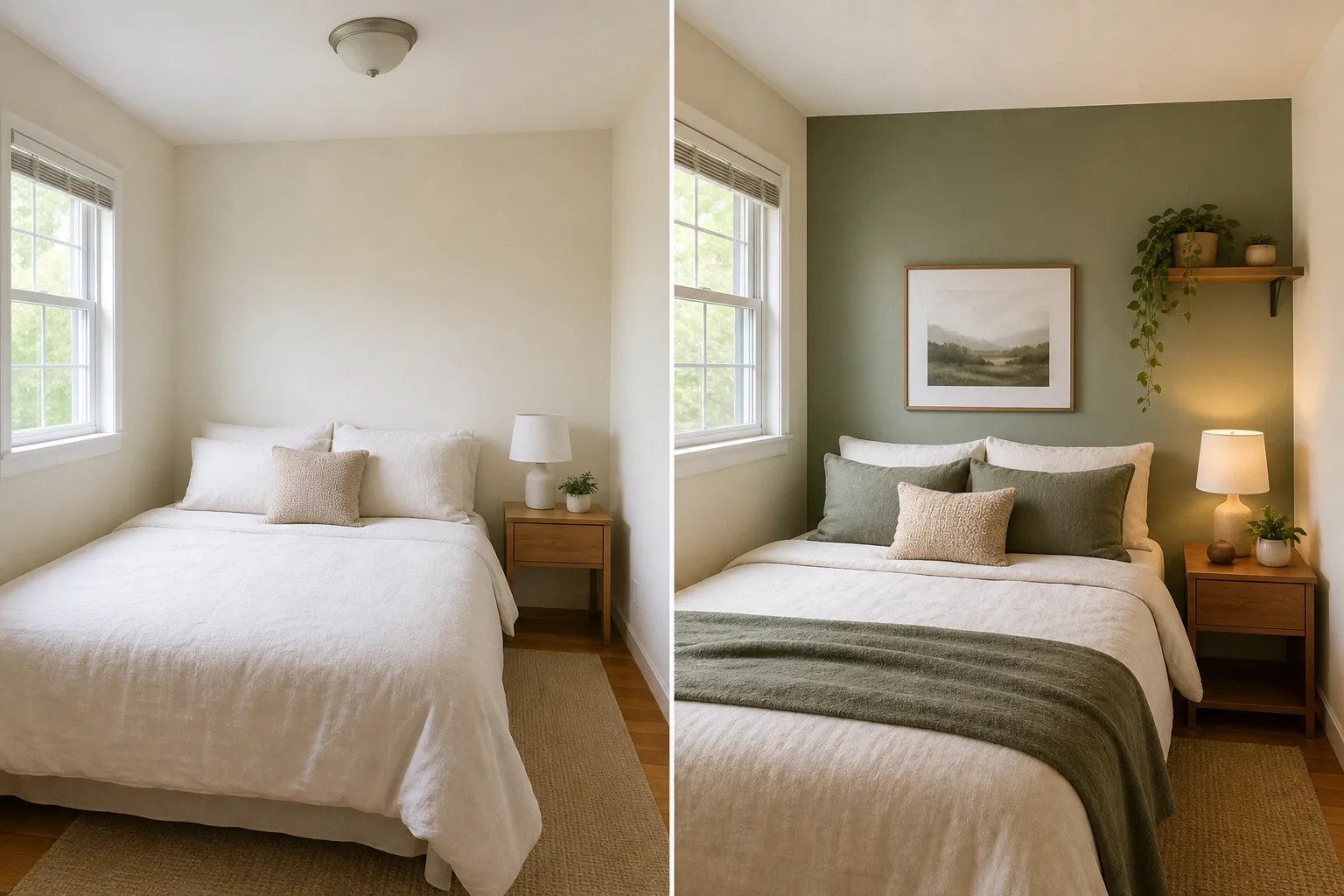
Paint is one of the most budget-friendly ways to transform a bedroom. Soft white, warm beige, pale gray, muted blue, and gentle green can help bounce light around the room. Choose an undertone that works with the room’s natural light: warmer shades suit cool or north-facing spaces, while cooler shades can balance intense sun.
You do not have to paint every wall. A single accent wall behind the bed, a painted arch, or a simple color-blocked headboard can add personality with one sample pot or a small amount of leftover paint. For renters, removable wallpaper on one wall can create a similar focal point, though it is wise to test it in an inconspicuous spot first.
4. Make the Bed Work Harder With Under-Bed Storage
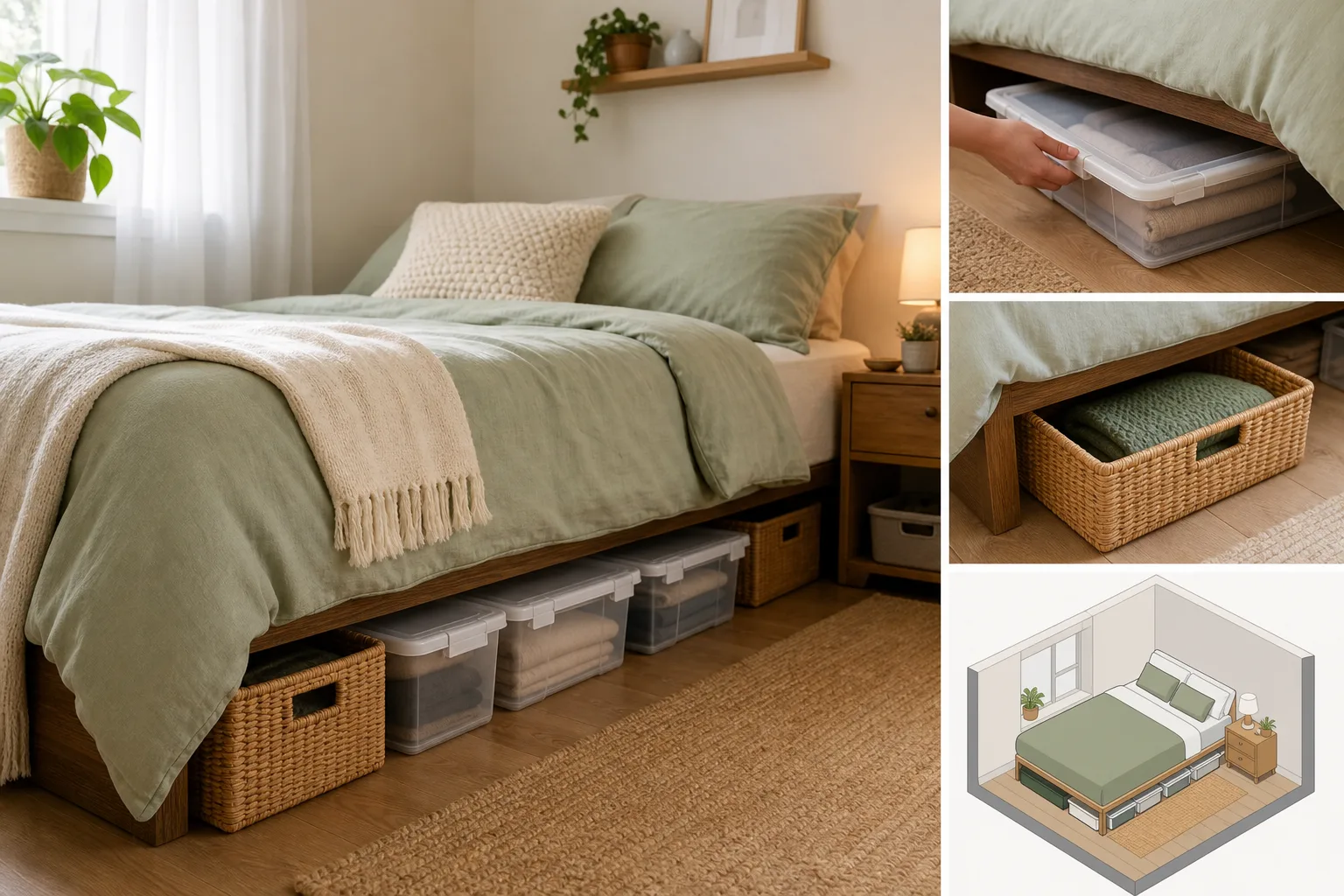
The area beneath the bed is valuable square footage, especially in a room without a large closet. Use low rolling bins, zippered fabric bags, or clear storage containers for off-season clothing, extra bedding, shoes, and luggage. Clear containers make it easier to identify what you own, while fabric bags are useful for soft goods.
If your bed sits too low, inexpensive risers can create extra clearance. Choose sturdy risers rated for the weight of your bed frame and mattress, and make sure the bed remains stable. A bed skirt or fitted valance can conceal storage bins and make the setup look more intentional.
5. Choose a Small Nightstand With Storage
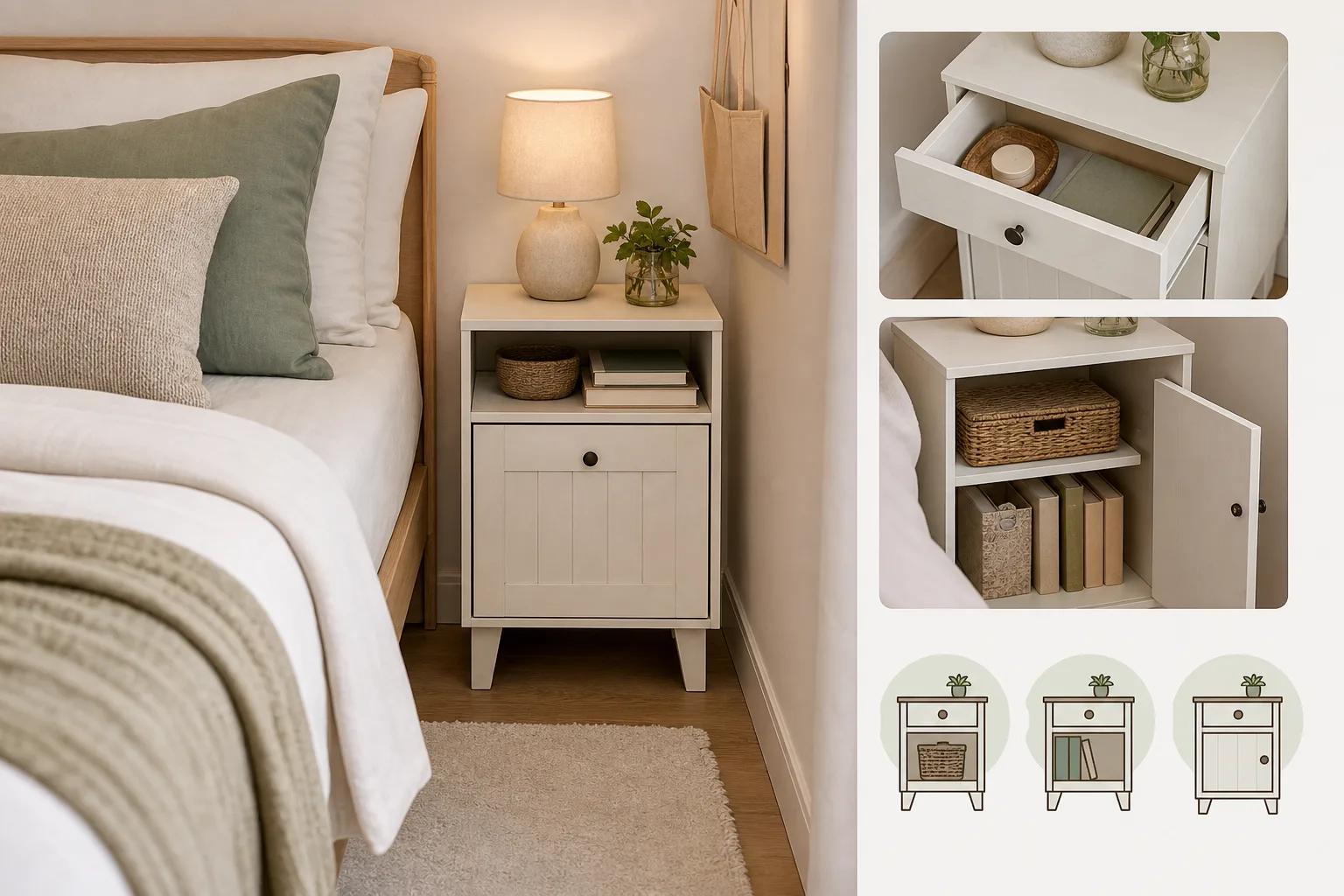
A bulky nightstand can consume precious floor space. Instead, look for a narrow table with a drawer, a small cabinet, a wall-mounted shelf, or even a sturdy stool with a basket underneath. The goal is to provide a landing spot for a glass of water, phone, book, and lamp without creating a clutter magnet.
If there is only room on one side of the bed, use one nightstand and balance the other side with a floor lamp, wall sconce, or small ledge. Matching furniture is not required; visual balance matters more than a perfect furniture set.
6. Install Floating Shelves to Free Up the Floor
Walls are often underused in small bedrooms. Floating shelves above a desk, dresser, or bedside area can hold books, framed photos, a small plant, and practical items such as a charging station. Choose shallow shelves so they do not intrude into the room.
Keep shelves edited. A crowded wall can make a small bedroom feel busier rather than larger. For a cleaner look, group similar items together and leave some open space between objects. If you rent, consider lightweight removable shelves only where permitted, or use a freestanding narrow bookcase instead.
7. Swap Table Lamps for Wall-Mounted Lighting
Lighting can take up more usable surface area than you realize. Plug-in wall sconces are an affordable alternative to hardwired fixtures and can free up a nightstand completely. Look for versions with swing arms or adjustable heads so you can direct light toward a book without lighting the entire room.
Adhesive LED puck lights, clip-on reading lights, and rechargeable sconces are other low-commitment options. Use warm white bulbs, generally around 2700K to 3000K, for a relaxed bedroom atmosphere. A mix of ambient, task, and accent lighting will feel more comfortable than relying on one bright overhead fixture.
8. Add a Mirror to Multiply Light
A mirror will not physically expand a bedroom, but it can make the space appear more open by reflecting daylight and the view beyond the room. Place a mirror opposite or adjacent to a window when possible. A full-length mirror also eliminates the need for a separate dressing area.
Thrift stores, flea markets, and neighborhood resale apps can be excellent sources for inexpensive mirrors. Do not overlook a dated frame; a coat of paint can give it a fresh look. Secure any large mirror properly, especially in homes with children or pets.
9. Use Curtains to Make the Ceiling Feel Higher
Hanging curtains a few inches below the ceiling and extending the rod beyond the window frame creates the illusion of a taller, wider window. This is a low-cost styling trick with a substantial visual payoff. Choose curtain panels that nearly reach the floor for the most elongated effect.
Sheer or light-filtering curtains preserve privacy while allowing daylight in. If you need darkness for sleep, layer them with budget blackout panels or use blackout liners. Avoid very heavy, dark drapes in a room with limited natural light unless you want a deliberately moody look.
10. Create a DIY Headboard or Painted Bed Feature
A headboard gives a bed visual structure, but it does not have to be expensive. You can make a simple upholstered version from plywood, foam, fabric, and a staple gun, or repurpose old doors, shutters, or a room divider. A large piece of art, a woven textile, or a peel-and-stick mural can also define the bed wall.
For the lowest-cost option, paint a rectangle, arch, or half-circle behind the bed. This provides the same focal-point effect without taking up any floor space. Use painter’s tape and measure carefully for clean lines.
11. Look for Multifunctional Furniture Secondhand
In a small room, every furniture piece should earn its footprint. A storage bench can hold linens and provide seating. A desk can double as a vanity. A narrow dresser can serve as a nightstand if it fits the layout. Folding tray tables, nesting tables, and C-shaped side tables are also useful when you need flexibility.
Check local thrift stores, Facebook Marketplace, estate sales, and Buy Nothing groups before buying new. Solid wood pieces with cosmetic wear can often be cleaned, painted, or fitted with new hardware for far less than the cost of new furniture.
12. Use Baskets and Bins to Control Open Storage
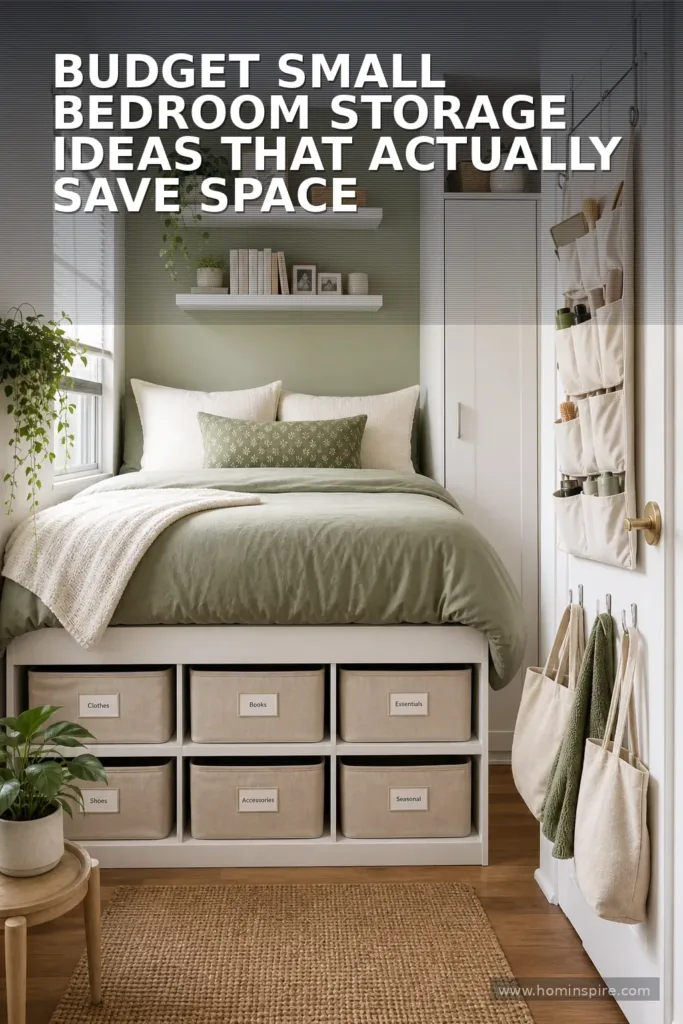
Open shelving is affordable and practical, but it can look messy without containment. Matching or coordinating baskets turn shelves into organized storage for socks, accessories, beauty products, chargers, and books. Label bins if multiple people share the space or if you tend to forget what is stored where.
You do not need a collection of expensive designer baskets. Simple fabric cubes, cardboard magazine files, wire bins, and thrifted baskets can work well together if they share a restrained color palette. Limit the number of colors to keep the room visually calm.
13. Maximize the Back of the Door
The back of a bedroom or closet door is a smart place for lightweight storage. An over-the-door organizer can hold shoes, hair tools, accessories, cleaning supplies, or small folded items. Hooks are helpful for robes, bags, hats, and tomorrow’s outfit.
Do not overload the door, and check that the organizer does not interfere with closing it. This small upgrade is especially useful in bedrooms where the closet is shallow or non-existent.
14. Make a Small Closet More Efficient
A closet can usually store more without becoming more crowded. Start by using matching slim hangers, which take up less room than thick plastic or wooden ones. Add a second hanging rod for shorter garments such as shirts and skirts. Shelf dividers, hanging shelves, and clear shoe boxes can prevent stacks from toppling over.
Reserve the highest shelf for luggage and seasonal items. Store only the current season at eye level. This makes mornings easier and prevents the closet from spilling into the rest of the bedroom.
15. Add a Large Rug for Definition, Not Clutter
A rug can make a small bedroom feel finished and cozy, but a tiny rug floating in the middle of the floor may make the room feel fragmented. If your budget allows, choose a rug large enough to extend beyond the lower two-thirds of the bed. Alternatively, use two small runners on either side of the bed.
Neutral rugs with a subtle pattern are forgiving of everyday wear and can unify mixed secondhand furniture. Washable rugs are practical for pet owners, children, and high-traffic spaces.
16. Keep Decor Intentional and Personal
Small bedrooms benefit from fewer, more meaningful decorative items. Choose one or two pieces of wall art you genuinely enjoy, display a favorite photograph, and add a small plant if the room has adequate light. A tray on the nightstand can corral daily essentials and make the surface look tidy.
Rather than buying many small decor pieces, update textiles. An affordable duvet cover, pillow covers, throw blanket, or new curtains can change the mood of the room quickly. Stick to a limited palette of two or three main colors to create a cohesive result.
17. Hide Cords and Charging Clutter
Visible cords can make even a clean room feel disorganized. Use adhesive cable clips along the back of a nightstand or desk, a cable sleeve for grouped wires, and a small cable box for power strips. A charging station inside a drawer or basket can keep devices from taking over the bedside area.
This is a small detail, but it improves both appearance and function. Keep electrical safety in mind: do not overload power strips, run cords under rugs, or use damaged cables.
18. Build the Room in Phases
The best budget bedroom makeover is rarely completed in one shopping trip. Make a short priority list: perhaps decluttering comes first, followed by better lighting, then under-bed storage, and finally paint or textiles. Set a realistic monthly amount and look for secondhand finds over time.
Taking a gradual approach gives you a chance to live with each change and avoid impulse purchases. For more inspiration on making compact sleeping spaces feel warm and restful, explore these small cozy bedroom ideas.
How to Plan a Budget Small Bedroom Makeover
A simple plan helps you spend where it matters. Measure the room, including window placement, door swings, closet access, and the dimensions of furniture you already own. Next, identify the single biggest issue: insufficient storage, poor lighting, an awkward bed placement, or a lack of personality.
Spend first on solutions that improve everyday use. Storage bins, curtain rods, lighting, and a better layout often have more impact than decorative accessories. Save receipts, compare prices, and consider whether an item can serve more than one function. A well-organized, comfortable small bedroom is not about filling every corner; it is about making each corner useful.
FAQ: Small Bedroom Ideas on a Budget
How can I make a small bedroom look bigger on a budget?
Declutter first, use light or mid-tone colors, hang curtains high and wide, add a mirror near a window, and keep a clear walking path. Under-bed storage and wall-mounted shelves reduce floor clutter, which makes the room feel more open.
What is the cheapest way to decorate a small bedroom?
Rearranging furniture, decluttering, and shopping your home cost little or nothing. After that, paint, pillow covers, thrifted artwork, a mirror, and improved lighting are affordable updates with a high visual impact.
How do I add storage to a tiny bedroom without a closet?
Use under-bed bins, a garment rack, a narrow dresser, wall shelves, over-the-door organizers, and lidded baskets. Choose vertical storage where possible and keep only frequently used items within easy reach.
Should a small bedroom have dark or light colors?
Light colors usually make a small bedroom feel brighter and more open, especially if natural light is limited. However, dark colors can work beautifully when used intentionally on one accent wall or throughout a room that has good lighting and a cozy, dramatic style.
What furniture is best for a small bedroom?
Choose compact, multifunctional pieces such as a storage bed, narrow nightstand, wall-mounted shelf, slim dresser, storage bench, or desk that doubles as a vanity. Measure carefully and prioritize a clear path around the bed.
