
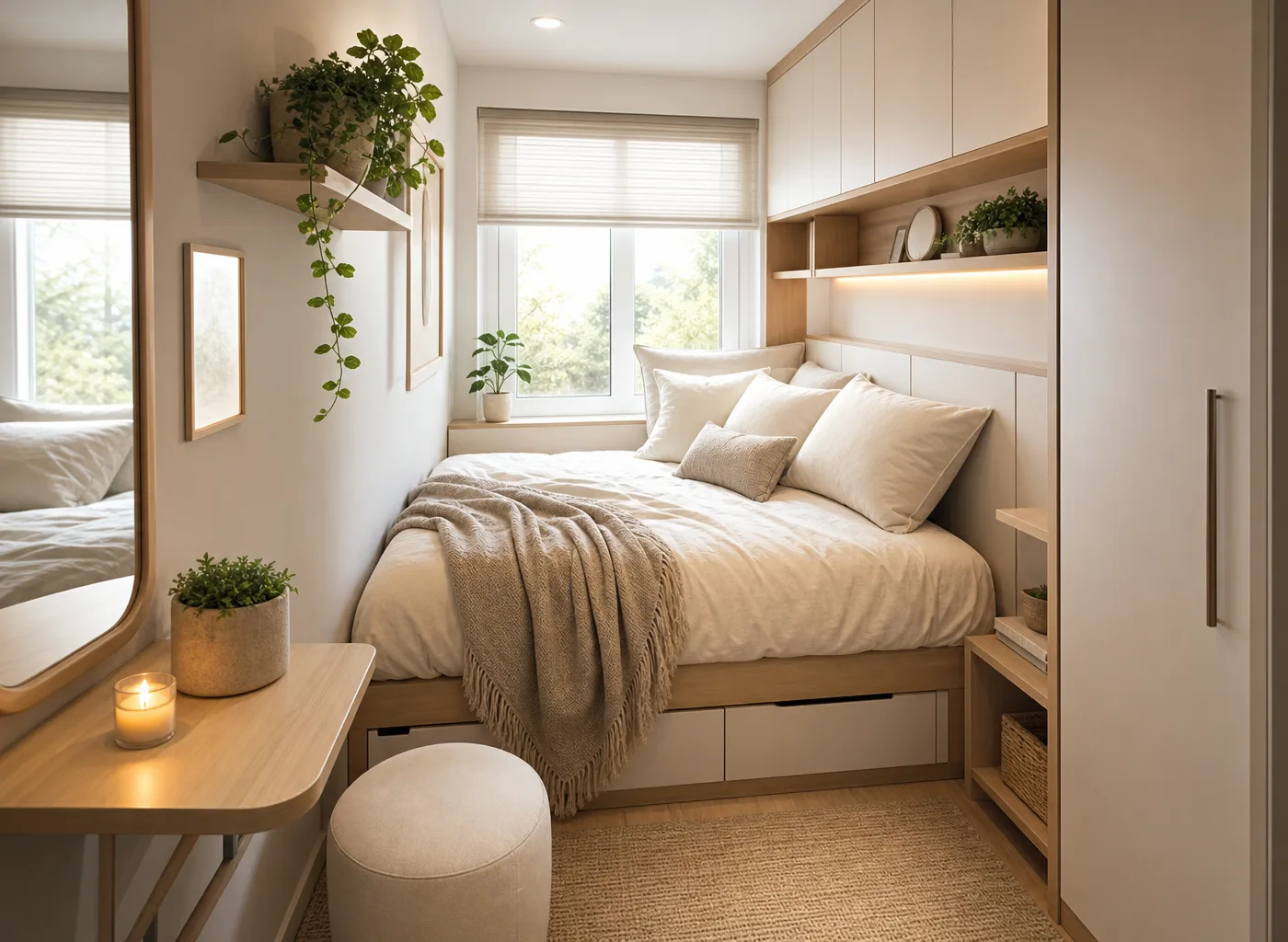
A very small bedroom can be comfortable, functional, and stylish—it simply needs a more intentional plan. When floor space is limited, every item has to earn its place. The right bed size, storage strategy, lighting, and color choices can make a compact room feel less crowded without sacrificing personality.
These very small bedroom ideas focus on practical solutions for apartments, guest rooms, kids’ rooms, dorm-style spaces, and older homes with tight layouts. Use the ideas that fit your room, your budget, and the way you actually live.
1. Start With the Best Bed Size for the Room
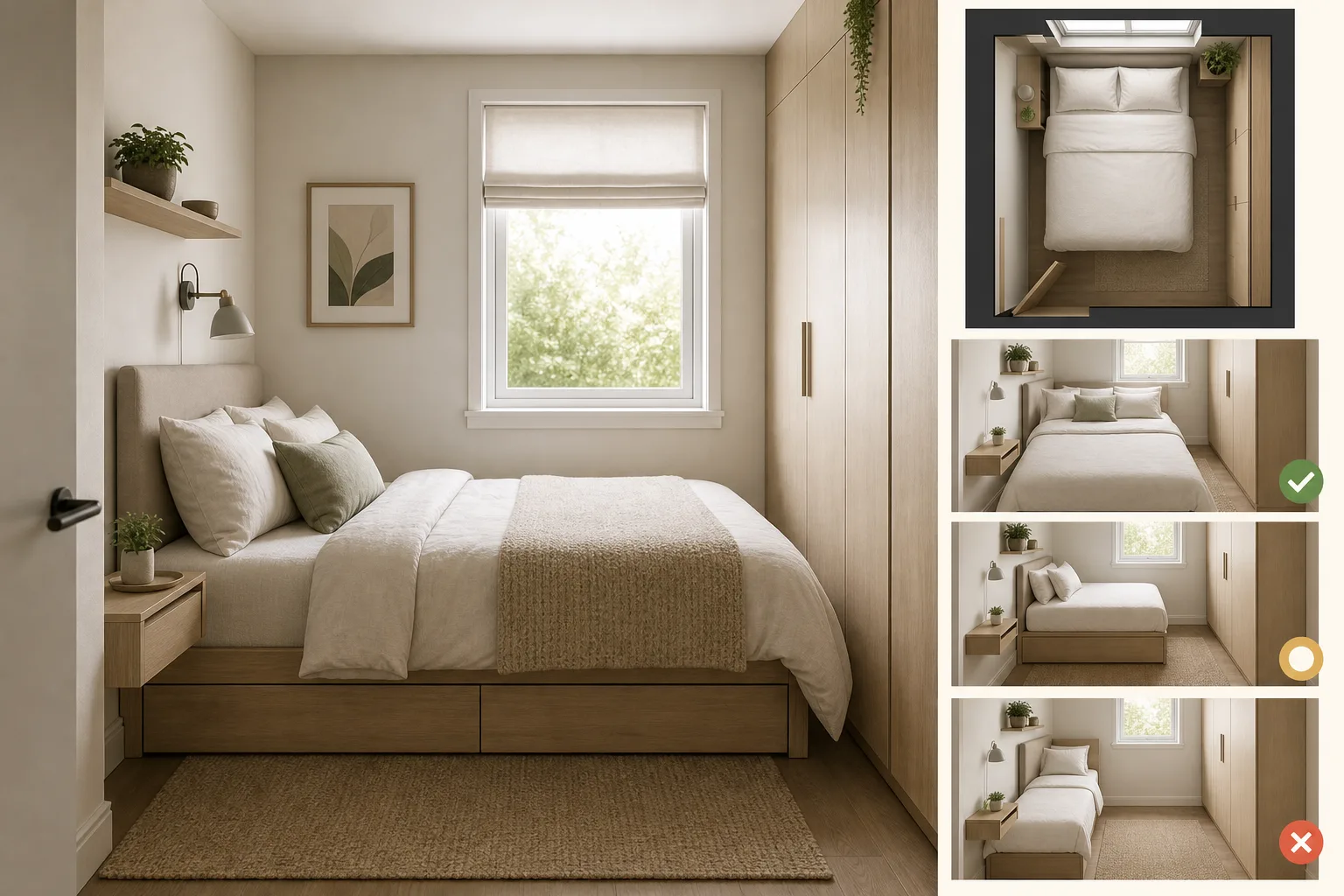
The bed is usually the largest piece in a bedroom, so it should be the first decision—not the last. A king bed can overwhelm a small room, while a full or queen may leave enough space for a narrow nightstand, a dresser, or a clear walking path.
Before buying furniture, mark the bed’s footprint on the floor with painter’s tape. Include room for opening doors, pulling out drawers, and walking around the bed. If the room is exceptionally tight, consider a twin XL, full bed, daybed, or Murphy bed instead of forcing in a larger mattress.
2. Place the Bed Where It Creates a Clear Path
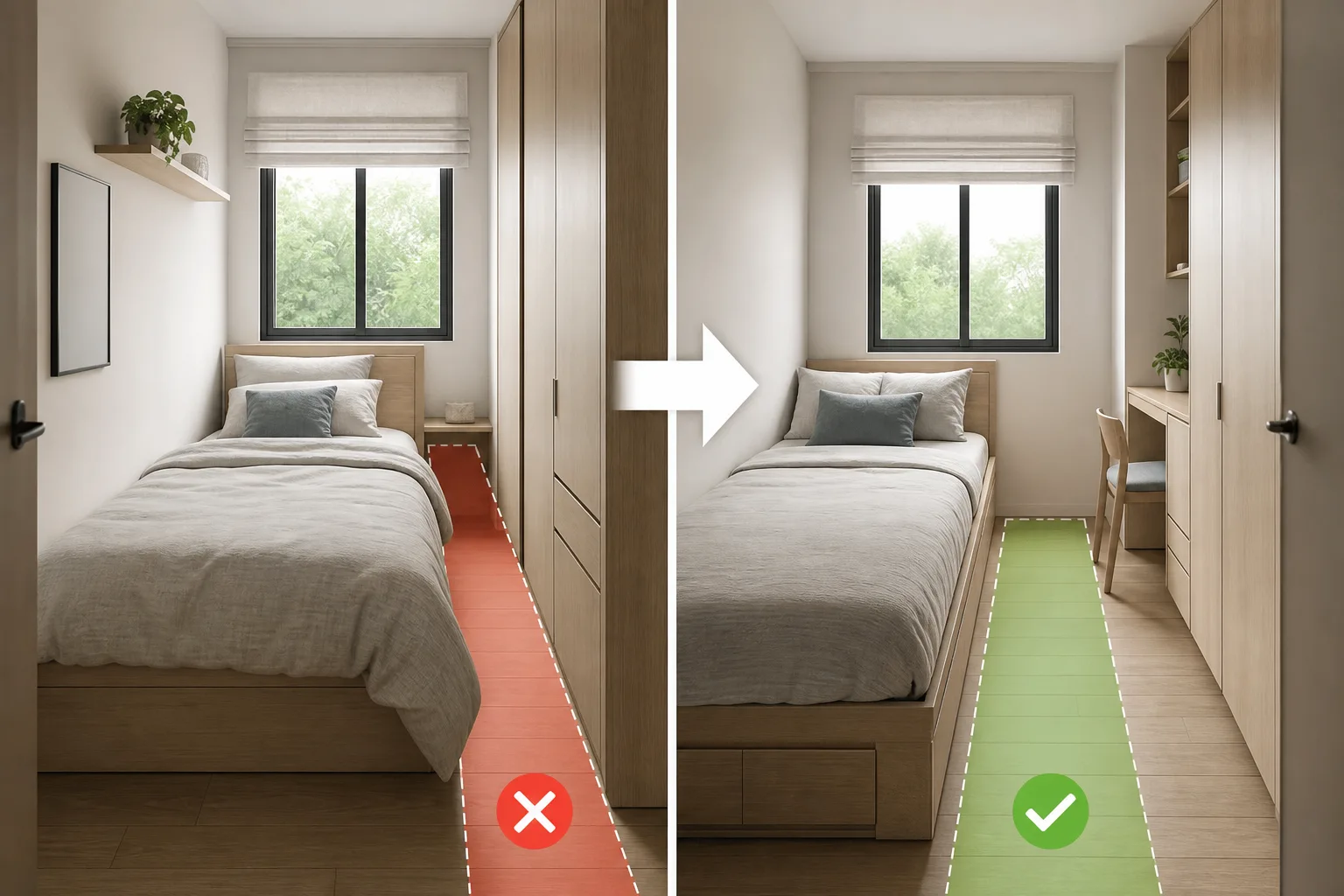
In many small bedrooms, centering the bed on the longest uninterrupted wall is the simplest layout. It creates visual balance and leaves a more natural route from the door to the closet or window.
That said, symmetry is not always the priority. Pushing the bed into a corner can be the right move in a narrow room, especially for a child, teenager, or single sleeper. The goal is to protect usable floor area and avoid an awkward obstacle course around the mattress.
3. Choose a Bed With Built-In Storage
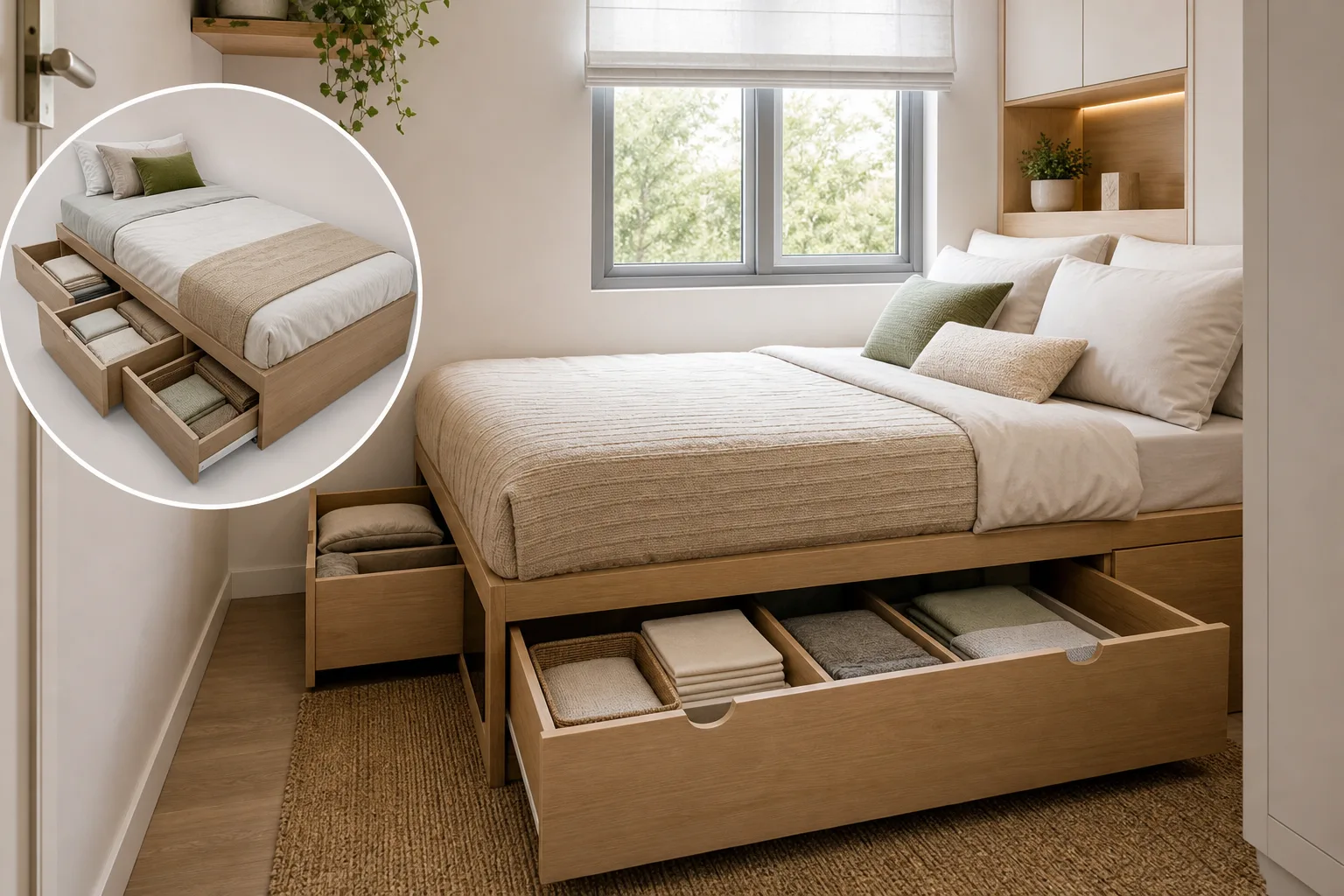
A storage bed turns unused space below the mattress into valuable hidden organization. Look for drawers, lift-up hydraulic platforms, or open cubbies depending on what you need to store. Drawers are convenient for folded clothing, while a lift-up base works well for seasonal bedding, suitcases, and less frequently used items.
If you already own a standard bed frame, use low-profile bins under the bed. Choose matching lidded containers or fabric zip bags so the area looks orderly rather than like overflow storage.
4. Use Vertical Space All the Way Up
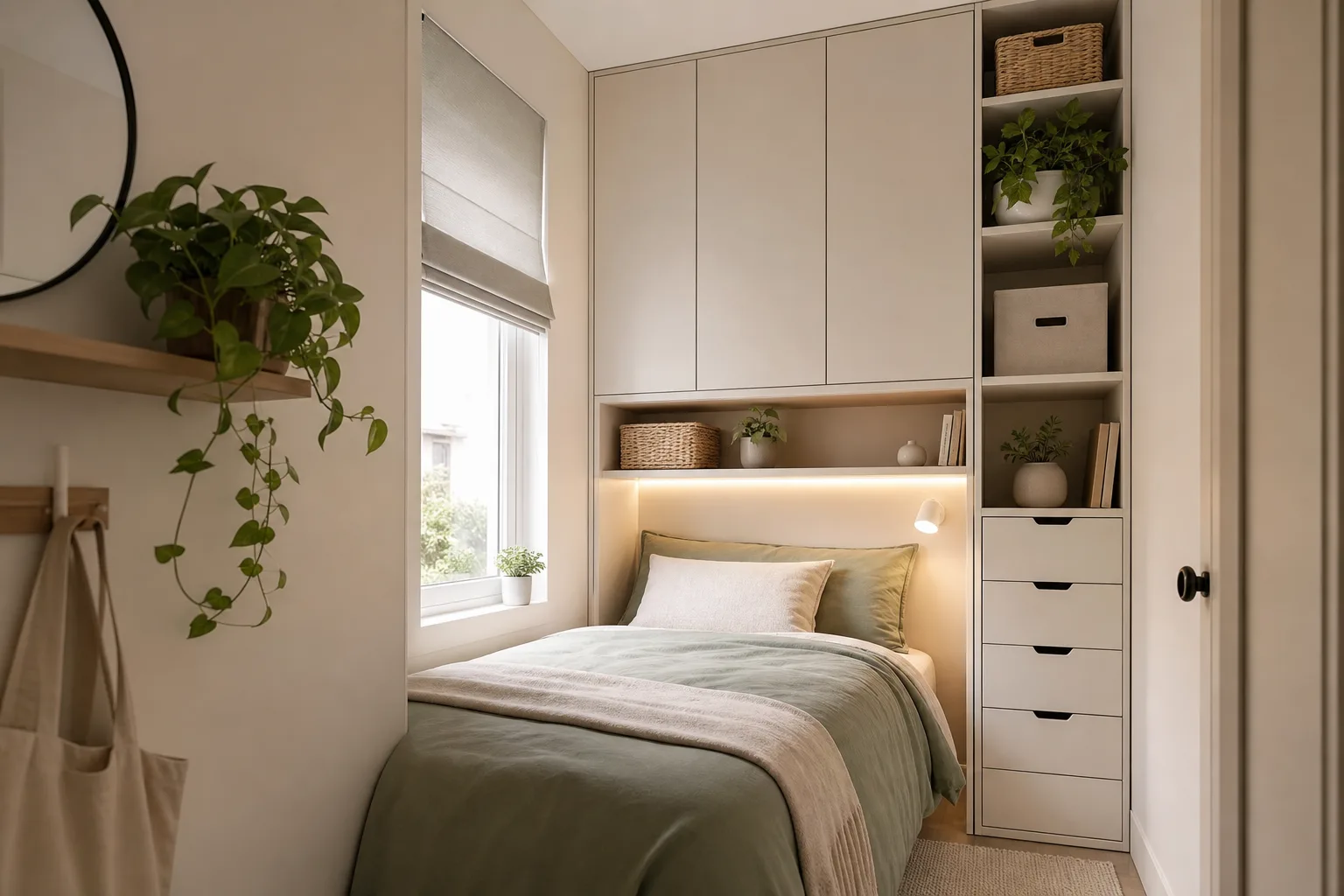
Small rooms often have more wall height than they use. Install shelves above a desk, dresser, or headboard to hold books, framed photos, baskets, and small decor. A tall, narrow bookcase can offer considerably more storage than a wide low cabinet while taking up less floor space.
Keep upper shelves for lighter, less frequently needed belongings. For a calmer appearance, use a limited number of matching baskets or closed boxes rather than displaying every item in the room.
5. Swap Bulky Nightstands for Wall-Mounted Options
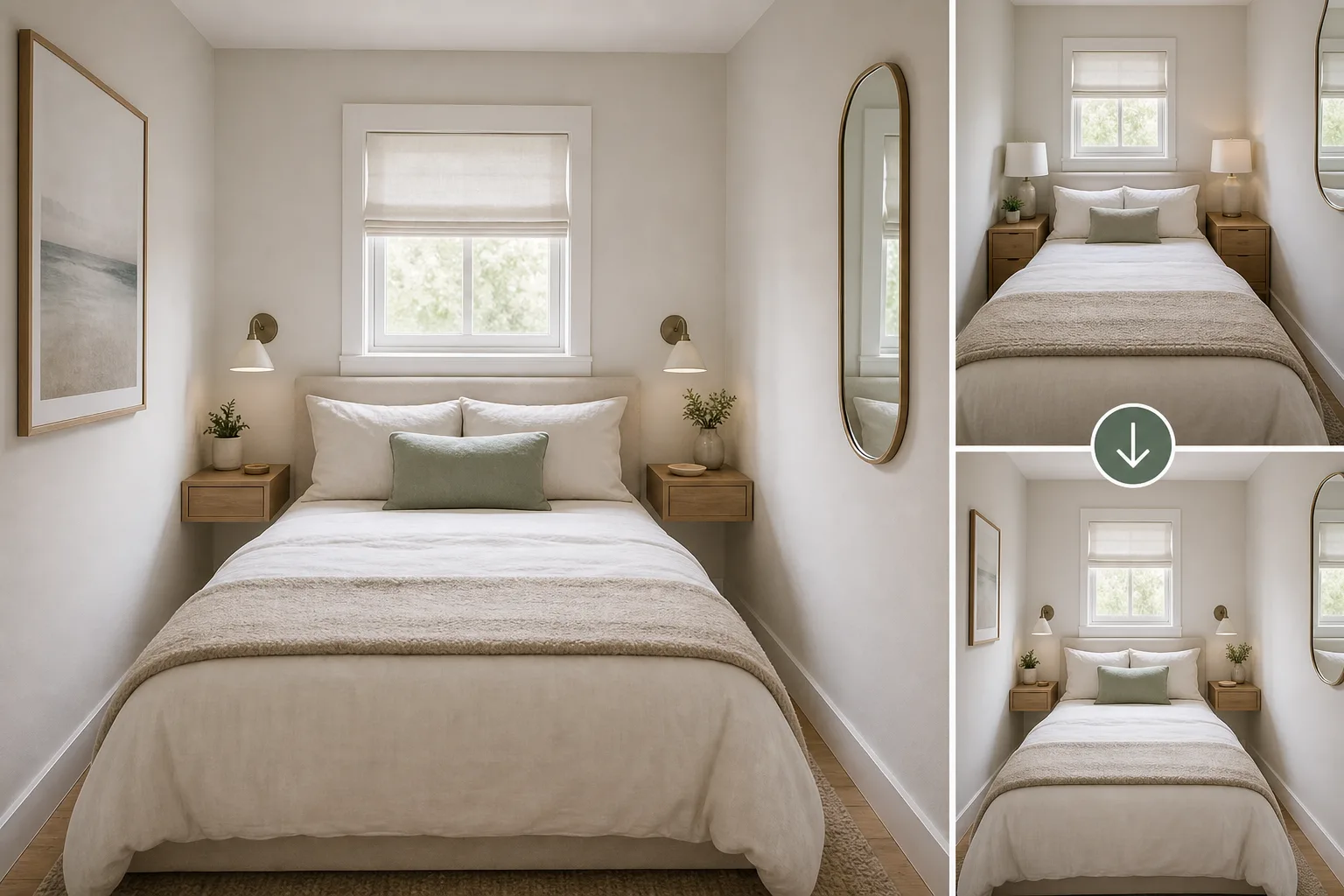
Traditional nightstands can consume precious inches on both sides of the bed. Floating shelves, narrow ledges, or wall-mounted drawers provide a surface for a phone, water glass, glasses, and a book without crowding the floor.
A small wall sconce or plug-in reading light above each side of the bed can replace table lamps as well. This combination makes a very small bedroom feel more open and is especially helpful when the bed has little clearance beside it.
6. Try a Headboard With a Purpose
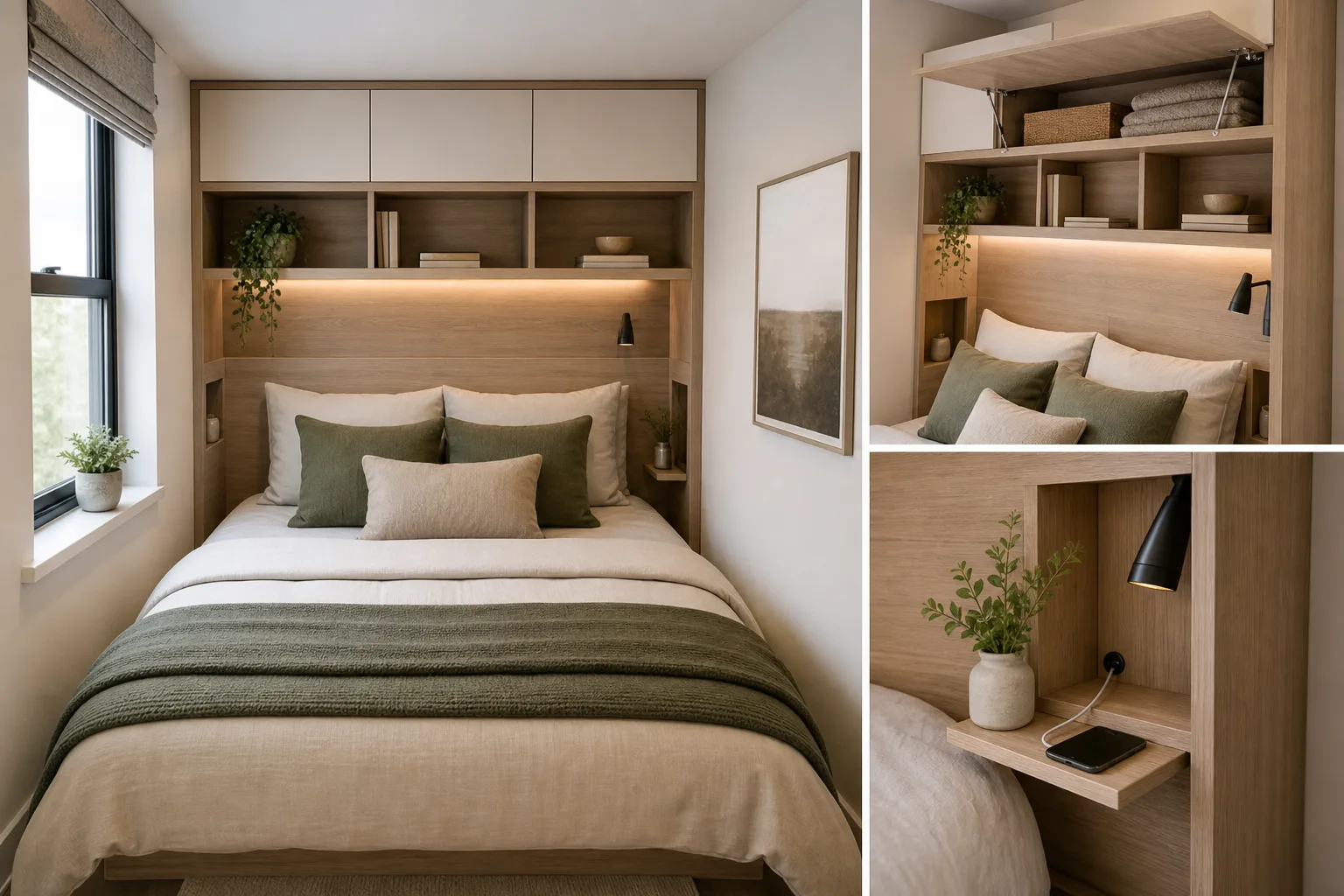
A headboard does not have to be purely decorative. Choose one with slim shelving, integrated cubbies, or concealed storage. In a compact bedroom, even a narrow shelf behind the pillows can serve as a spot for a reading light, a charging cable, and a few personal objects.
If storage is already covered, an upholstered headboard can still be useful because it adds softness and makes the bed feel intentional. Choose a low-profile design to avoid making the wall look heavy.
7. Replace a Dresser With a Closet System
A disorganized closet creates clutter everywhere else. Make the closet work harder with a second hanging rod, shelf dividers, hanging organizers, labeled bins, and slim matching hangers. This may allow you to remove a large dresser from the bedroom altogether.
Use the highest shelf for off-season pieces, luggage, or extra linens. Keep everyday clothing at eye level and sort it by category so getting dressed does not turn into a daily search. A well-planned closet is one of the most effective very small bedroom ideas because it reduces the need for additional furniture.
8. Use a Narrow Dresser or Tall Chest
If you need dresser storage, prioritize height over width. A tall chest uses vertical space and leaves more open floor around it. Look for a narrow model with drawers that fully extend, since deep drawers can be harder to use in a tight walkway.
A small dresser can also double as a bedside table if the layout only has room for one. Keep the top mostly clear so it feels like a functional surface rather than another clutter zone.
9. Add Mirrors to Expand Light and Depth
Mirrors do not physically enlarge a room, but they can make it feel brighter and more spacious by reflecting daylight and views. Place a full-length mirror opposite or adjacent to a window when possible. A mirrored closet door can have a similar effect without requiring another furniture piece.
Choose one generously sized mirror rather than several small ones. Too many small reflective accents can make a tiny room feel visually busy.
10. Keep the Color Palette Light but Not Bland
Light neutrals, soft whites, warm beige, pale gray, muted blue, and gentle green can help a small bedroom feel airy. Painting the walls, trim, and ceiling in closely related tones reduces visual breaks and creates a more continuous look.
However, a small room does not need to be all white. A deeper accent wall behind the bed can add depth, while a warm earthy shade can make a compact room feel cozy rather than cramped. The key is to limit competing colors and repeat a few tones throughout the space.
11. Let Curtains Make the Ceiling Feel Higher
Hang curtain rods several inches above the window frame, ideally closer to the ceiling if proportions allow. Use long curtains that reach the floor. This simple styling move draws the eye upward and makes the walls appear taller.
For limited natural light, choose lightweight linen-look panels or sheer curtains. If you need darkness for sleep, layer blackout shades behind them instead of relying on heavy, bulky drapes alone.
12. Layer Lighting Instead of Relying on One Ceiling Fixture
A single overhead light can create shadows that make a small bedroom feel flat or cave-like. Add layers: ambient ceiling lighting, focused task lighting for reading or dressing, and a warm accent light for atmosphere.
Wall sconces, clip-on lamps, small table lamps, and LED strips inside a closet are all useful options. Use warm white bulbs for a restful feel, generally in the 2700K to 3000K range. Dimmer switches or smart bulbs make it easier to shift from bright morning light to a softer evening setting.
13. Choose Furniture With Legs
Furniture raised off the floor allows more of the room to remain visible, which can make the space feel less boxed in. A legged bed frame, open-base nightstand, or slim desk creates a lighter look than solid, floor-hugging pieces.
This does not mean every item must have exposed legs. Balance is important. One grounded piece, such as an upholstered bed, can work beautifully when paired with lighter storage and seating.
14. Use Multifunctional Furniture
In a very small bedroom, a piece that serves two purposes is often better than two separate pieces. Consider a storage bench at the foot of the bed, an ottoman that holds blankets, a desk that functions as a vanity, or a daybed that doubles as a sofa in a studio apartment.
For a guest room, a sleeper chair or compact daybed may provide more flexibility than a permanent large bed. Select multifunctional items carefully, though: too many transforming pieces can make the room feel temporary and complicated.
15. Create One Small, Intentional Work Zone
If your bedroom must include a workspace, keep it visually contained. A wall-mounted desk, shallow console table, or fold-down desk can provide a useful work surface without dominating the room.
Use vertical organizers above the desk and tuck the chair fully underneath when it is not in use. At the end of the day, clear the desktop so the room can return to feeling like a place for rest rather than a permanent office.
16. Reduce Visual Clutter With Closed Storage
Open shelving is useful, but too much exposed storage can make a small bedroom feel chaotic. Use drawer units, lidded baskets, closet bins, and storage boxes for cables, toiletries, paperwork, and miscellaneous items.
Choose a simple organizing rule: if an item is not attractive or used daily, give it a closed home. This approach makes cleaning easier and protects the room’s calm visual flow.
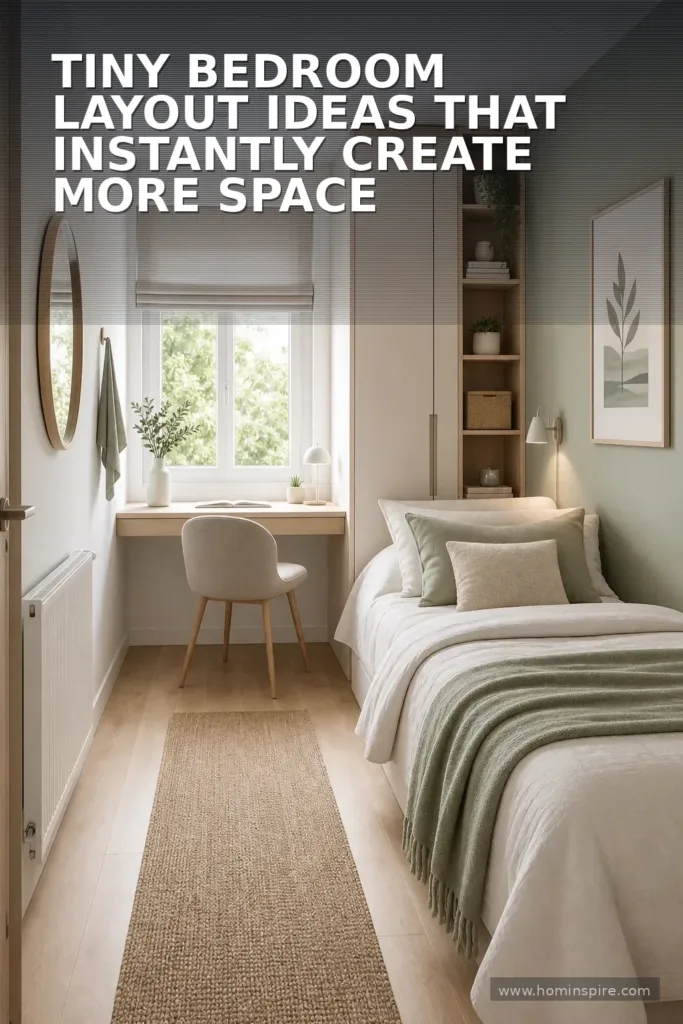
17. Keep Decor Scaled to the Room
Small-scale furniture does not always mean tiny decor. One large piece of art above the bed can look cleaner than a crowded gallery wall. Similarly, a single medium-size rug may define the sleeping zone better than several small rugs scattered around the room.
Limit decorative objects to a few meaningful pieces. A plant, framed artwork, textured throw, and attractive lamp may be all a tiny bedroom needs to feel personal.
18. Use a Rug to Define the Sleeping Area
A rug adds warmth and helps anchor the bed, especially in a room with hard flooring. In most layouts, place a larger rug under the lower two-thirds of the bed so it extends beyond each side. This creates a softer landing spot in the morning.
If there is no room for a large rug, use runners along each side of the bed or a small rug at the foot. Avoid a rug that is too small for the furniture arrangement, as it can make the room feel fragmented.
19. Make the Door Area Work Harder
The back of the bedroom door is often underused. Add over-the-door hooks for robes, bags, or tomorrow’s outfit. A slim organizer can hold shoes, accessories, or beauty products, but avoid overloading it with too many visible items.
If you are renovating, a pocket door or outward-swinging door may free up floor space. For renters, simply ensuring the door can open fully without hitting furniture will improve everyday usability.
20. Edit Before You Organize
No storage product can solve a bedroom that holds more than it reasonably can. Before adding shelves, bins, or furniture, edit what you own. Donate clothes that no longer fit your lifestyle, move rarely used items elsewhere, and remove furniture that has no clear purpose.
Think of open floor space as a design feature. Leaving a little breathing room around the bed and doorway can make a major difference in how the room feels.
Very Small Bedroom Layout Tips
Every room is different, but these guidelines can help you avoid common layout mistakes:
- Keep a clear path from the door to the bed and closet whenever possible.
- Measure furniture, door swings, windows, and radiator locations before purchasing anything.
- Use the longest wall for the bed if it creates the best circulation.
- Choose one main storage zone, usually the closet or a tall wall unit, instead of scattering storage around the room.
- Do not block natural light with a tall dresser or bookcase if another wall is available.
- Leave some empty wall space so the room does not feel packed from floor to ceiling.
Budget-Friendly Ways to Improve a Tiny Bedroom
You do not need a complete renovation to make a small bedroom more functional. Start with low-cost changes: declutter, rearrange the bed, add under-bed bins, replace mismatched hangers, install adhesive hooks, and use plug-in sconces instead of buying new nightstands.
A fresh coat of paint, longer curtains, and one larger mirror can also have a noticeable impact. For more affordable projects and storage-focused upgrades, explore these small bedroom ideas on a budget.
How to Make a Very Small Bedroom Feel Cozy
Space-saving choices should not make a bedroom feel sterile. Bring in comfort through texture: soft bedding, a washable rug, linen-look curtains, a knit throw, and warm lighting. Keep the palette cohesive so these layers feel soothing instead of overwhelming.
Personal details matter, too. A favorite framed print, a small bedside book stack, or a plant can make a minimal room feel lived in. If you want more ways to combine compact design with a restful atmosphere, see these small cozy bedroom ideas.
FAQ: Very Small Bedroom Ideas
How do you fit a bed in a very small bedroom?
Begin by selecting the smallest bed size that comfortably suits the sleeper. Position it on the longest wall or in a corner, depending on which option leaves the clearest walkway. Use wall-mounted lighting and floating bedside shelves to avoid needing bulky furniture beside the bed.
What colors make a very small bedroom look bigger?
Light, low-contrast colors usually make a small bedroom feel more open. Soft white, cream, beige, pale gray, muted blue, and light green are good options. You can still use darker colors as an accent, particularly behind the bed, as long as the rest of the palette remains simple.
Is it better to use a large or small rug in a tiny bedroom?
A properly sized rug is usually better than an undersized one. A medium or large rug placed under the lower portion of the bed can make the layout feel unified. If that does not fit, use two narrow runners beside the bed rather than one tiny rug floating in the middle of the room.
How can I add storage to a bedroom with no closet?
Use a combination of a storage bed, tall dresser, garment rack or wardrobe, wall shelves, and lidded under-bed containers. Closed storage is especially helpful because it keeps clothing and everyday items from creating visual clutter.
Can a very small bedroom have a desk?
Yes. Choose a shallow desk, wall-mounted desktop, or fold-down desk. Keep supplies in vertical wall organizers, use a chair that slides fully under the surface, and clear the desk after work so it does not interfere with the room’s restful purpose.
Final Thoughts
The best very small bedroom ideas are not about squeezing in more furniture. They are about choosing fewer, smarter pieces and using every available inch with intention. Prioritize a comfortable bed, easy circulation, concealed storage, layered lighting, and a simple visual palette. With those foundations in place, even the smallest bedroom can become a practical retreat that feels inviting every day.
